

What do you think?

Exit Wounds
Set in modern-day Tel Aviv, a young man,Koby Franco, receives an urgent phone call from a female soldier. Learning that his estranged father may have been a victim of a suicide bombing in Hadera, Koby reluctantly joins the soldier in searching for clues. His death would certainly explain his empty apartment and disconnected phone line. As Koby tries to unravel the mystery of his father's death, he finds himself piecing together not only the last few months of his father's life but his entire identity. With thin, precise lines and luscious watercolors, Rutu Modan creates a portrait of modern Israel, a place where sudden death mingles with the slow dissolution of family ties.
Exit Wounds is the North American graphic-novel debut from one of Israel's best-known cartoonists. Modan has received several awards in Israel and abroad, including the Best Illustrated Children's Book Award from the Israel Museum in Jerusalem four times and Young Artist of the Year by the Israel Ministry of Culture. She is a chosen artist of the Israel Cultural Excellence Foundation.
Exit Wounds is the North American graphic-novel debut from one of Israel's best-known cartoonists. Modan has received several awards in Israel and abroad, including the Best Illustrated Children's Book Award from the Israel Museum in Jerusalem four times and Young Artist of the Year by the Israel Ministry of Culture. She is a chosen artist of the Israel Cultural Excellence Foundation.
168 pages, Paperback
First published January 1, 2006
About the author
Rutu Modan
27 books190 followersRutu Modan (Hebrew: רותו מודן) was born in Tel-Aviv in 1966. In 1992 she graduated cum laude from the illustration program at the Bezalel Academy of Art and Design in Jerusalem. Shortly after graduating, she began regularly writing and illustrating comic strips and stories for Israel's leading daily newspapers, as well as editing the Israeli edition of MAD magazine with Yirmi Pinkus. Together, they founded Actus Tragicus, an internationally acclaimed collective and independent publishing house for alternative comic artists, in 1995. The following year she collaborated with Israeli author Etgar Keret on her first graphic novel, Nobody Said it Was Going to Be Fun, an Israeli bestseller. Rutu has worked as an illustrator for magazines and books in Israel and abroad, with illustrations published in The New York Times, New Yorker and Le Monde, among many other renowned publications.
She has received much recognition for her work, including four Best Illustrated Children's Book Awards from the Israel Museum in Jerusalem. The Israel Ministry of Culture named Rutu Modan the Young Artist of the Year in 1997, and she was one of the contributors to the Eisner-Nominated Actus Tragicus anthology Jet Lag in 1999. In 2001 she won the Andersen Award for Illustration from the International Board on Books for Young People in Basel, Switzerland, and was nominated for the Ignatz Award for Best Story and Promising New Talent for her story "Bygone" in Flipper, Vol. 2 (Actus Tragicus / Top Shelf.) She has been a chosen artist of the Israel Cultural Excellence Foundation since 2005, and in 2006 she was nominated for the Angoulême Festival's Goccini Award, granted to a scriptwriter whose past year's work deserves special praise.
She has received much recognition for her work, including four Best Illustrated Children's Book Awards from the Israel Museum in Jerusalem. The Israel Ministry of Culture named Rutu Modan the Young Artist of the Year in 1997, and she was one of the contributors to the Eisner-Nominated Actus Tragicus anthology Jet Lag in 1999. In 2001 she won the Andersen Award for Illustration from the International Board on Books for Young People in Basel, Switzerland, and was nominated for the Ignatz Award for Best Story and Promising New Talent for her story "Bygone" in Flipper, Vol. 2 (Actus Tragicus / Top Shelf.) She has been a chosen artist of the Israel Cultural Excellence Foundation since 2005, and in 2006 she was nominated for the Angoulême Festival's Goccini Award, granted to a scriptwriter whose past year's work deserves special praise.
Ratings & Reviews
Friends & Following
Create a free account to discover what your friends think of this book!
Community Reviews
Displaying 1 - 30 of 523 reviews

June 7, 2017
A suicide bombing in Hadera, Israel
An unidentified body
A missing father
A missing lover
A missing lover
A missing lover
A missed chance.
An unidentified body
A missing father
A missing lover
A missing lover
A missing lover
A missed chance.

October 17, 2017
I wonder why this doesn't get as much love as The Property? Both are so good but if anything I loved this one more. I'm a sucker for that Tintin style that Modan works in. Everything looks great even though so much of the story takes place in mundane places: bus stops, non descript highways, unkempt apartments. There are so many panels that would look amazing as album covers. That cover shot of Numi from below or plunging into the waves.
She's such a great character. And so is Koby as the son of a distant and disappointing father. The plot is good too: part detective story, part road trip/buddy flick and part something else. It was even better on rereading when things made more sense and you see how carefully the pieces fit together.
My edition also has an interview with Modan by Joe Sacco. I haven't read any of his stuff but I think being a comics artist himself meant his questions were more illuminating. She answers with a lot of interesting details that shed light on her own personality and process in creating Exit Wounds and earlier works.
Maybe other reviewers don't like it as much because that tree really looks way too tall but they're too polite to say it. I know it can't be the way Modan draws tears because there's nothing in this book that compares to the gusher in The Property!
She's such a great character. And so is Koby as the son of a distant and disappointing father. The plot is good too: part detective story, part road trip/buddy flick and part something else. It was even better on rereading when things made more sense and you see how carefully the pieces fit together.
My edition also has an interview with Modan by Joe Sacco. I haven't read any of his stuff but I think being a comics artist himself meant his questions were more illuminating. She answers with a lot of interesting details that shed light on her own personality and process in creating Exit Wounds and earlier works.
Maybe other reviewers don't like it as much because that tree really looks way too tall but they're too polite to say it. I know it can't be the way Modan draws tears because there's nothing in this book that compares to the gusher in The Property!

March 31, 2009
The art is not that interesting, and the story is not that profound. The main character is constantly living his life as defined by his childhood, and then the negative aspects of his childhood (father) comes back to confront him in indirect ways. Toward the end, the main character overcomes this, supposedly grows up and starts anew. That's about it. Now you don't actually need to read it.

October 26, 2023
3-1/2
This is an odd story about a young man searching for his very unreliable father -- unreliable in all meanings of the word. It was interesting, and I liked the ending, but I didn't enjoy it as much as The Property, and if this had been the first Rutu Modan book I read, I'm not sure I would have looked for anything else by her. Still, this was gripping and darkly funny. Take a look for it if this review has made you curious. :-D
This is an odd story about a young man searching for his very unreliable father -- unreliable in all meanings of the word. It was interesting, and I liked the ending, but I didn't enjoy it as much as The Property, and if this had been the first Rutu Modan book I read, I'm not sure I would have looked for anything else by her. Still, this was gripping and darkly funny. Take a look for it if this review has made you curious. :-D

April 8, 2021
Руту Модан -- сучасна ізраїльська коміксистка, відома своїми стріпами й соціальними мальописами. Живе й працює то в Тель Авіві, то в Лондоні, але завжди незмінно створює свої соціальні (хоча тут більш влучним є слово "життєві"), часто дуже іронічні мальписи. Словом, Модан далеко не остання людина, яка створює графічні романи, перший з яких має дуже влучну й багаторівнену назву "Вихідні рани" (Exit Wounds). Зрештою, це й перше моє знайомство з її стилем, манерою оповіді, яке було більш аніж вдалим.
У цьому дебютному мальописі йдеться про таксіста Кобі Франко, який раптом дізнається, що його батько загинув внаслідок терористичної атаки на вокзалі в Хедері. Однак тіла чи інших доказів нема, тому Кобі доводиться самому шукати свого батька чи хоча б якісь натяки на його смерть. Рідна сестра знаходиться за океаном, має своє життя, але емпатії до батька особливо не виражає. Тим більше дивно, що зовсім чужа людина, висока й дещо незграбна дівчина Нумі, готова допомогти Кобі в його цілі. Виявляється, що в Нумі з батьком Кобі зустрічались, тому не ясно чи це спроба допомогти молодому симпатичному хлопцеві, чи все ж намір закрити гештальт. Так чи так, вони їздять від однієї точки до іншої, щоб розбіратись із усім цим, спільно й окремо взагалі зрозуміти дещо про життя в Ізраїлі.
Руту Модан поєднує у своїй манері кращі риси оповідача, глибоко занурюючи в психологічний стан своїх героїв, позбавляючи їх будь-якої ідеалізації і сентименталізму. Якась недолугість, недоречність її персонажів так добре пасують атмосфері Вуді Алена чи раннього Джима Джармуша, де витончений абсурд межує із строгим соціальним тлом. Основне ж, що усі персонажі без винятку виглядають справжніми. Тут не буде любові з першого погляду, а постійні недомовки й невдалий секс десь на окраїні світу. Тут не буде щасливого кінця, бо Кобі так і не побачить батька. Як сказала Руту в інтерв'ю Джо Сакко, людям легше прийняти думку про те, що їх другі половинки померли чи загинули, аніж просто їх залишили.
До цього додаємо ще особливий колорит Ізраїлю, який давно вже "живе поза терористичним контекстом". Ізраїльтяни настільки звикли до терактів та війни, що навіть не цікавляться, хто її зініціював, що відбувається по той бік червоної зони. Це вже повсякдення, яке так давно вплетене в реальність Ізраїлю, що його вже ніхто не помічає. Руту не ідеалізує свій народ, тому легко іронізує, навіть висміює штучний поділ євреїв та не-євреїв, коли герої приїжджають на цвинтар, де цей принцип діє як своєрідний маркер між своїми та чужими. Діє за замовчуванням, але від того не стає менш ксенофобським. Не скажу, що для Модан важливо відповісти на питання "Що значить бути євреєм чи єврейкою сьогодні?", але важливо окреслити реальність завдяки побуту, діалогам, окремим деталям.
Відчуття присутності в мальописі просто неймовірне, а особливо це дивно, адже Модан працює лаконічними, навіть дещо відстороненими лініями. Ця традиція особливо притаманна європейській класичній школі (згадаємо хоча б Ерже), де глибина емоцій досягається завдяки відшліфованому за роки мінімалізму. Читачеві доведеться не відволікатись на зайве, а фокусуватись на невербальній мові тіла, яка часто більш красномовна, аніж репліки в хмаринками чи просто закадровий монолог. Кольори в мальописі м'які, без особливих відтінків чи акцентів, тому окремі епізоди, особливо в інтер'єрі, нагадують сучасний дизайн. Це й не дивно, бо Руту довгий час працювала в дизайні, малюючи ілюстрації, шаржі й просто якусь візуальну рекламу для замовників.
Якщо ви справді шукаєте не банальний, а живий та емоційний, повністю завершений графічний роман, то "Вихідні рани" для цього підходить ідеально. Історія настільки цікава, що вона наче сама рухає нас від сторінки до сторінки, хоча якихось глобальних подій у ній взагалі нема. У цьому й шарм, бо наше життя це не виняткові епохальні події, а буденні поїздки містом, знайомства з людьми, розлука з людьми. А десь між цим ми стараємось зробити щось більше, аніж можемо, щоб наші рани загоїлись якомога швидше.
У цьому дебютному мальописі йдеться про таксіста Кобі Франко, який раптом дізнається, що його батько загинув внаслідок терористичної атаки на вокзалі в Хедері. Однак тіла чи інших доказів нема, тому Кобі доводиться самому шукати свого батька чи хоча б якісь натяки на його смерть. Рідна сестра знаходиться за океаном, має своє життя, але емпатії до батька особливо не виражає. Тим більше дивно, що зовсім чужа людина, висока й дещо незграбна дівчина Нумі, готова допомогти Кобі в його цілі. Виявляється, що в Нумі з батьком Кобі зустрічались, тому не ясно чи це спроба допомогти молодому симпатичному хлопцеві, чи все ж намір закрити гештальт. Так чи так, вони їздять від однієї точки до іншої, щоб розбіратись із усім цим, спільно й окремо взагалі зрозуміти дещо про життя в Ізраїлі.
Руту Модан поєднує у своїй манері кращі риси оповідача, глибоко занурюючи в психологічний стан своїх героїв, позбавляючи їх будь-якої ідеалізації і сентименталізму. Якась недолугість, недоречність її персонажів так добре пасують атмосфері Вуді Алена чи раннього Джима Джармуша, де витончений абсурд межує із строгим соціальним тлом. Основне ж, що усі персонажі без винятку виглядають справжніми. Тут не буде любові з першого погляду, а постійні недомовки й невдалий секс десь на окраїні світу. Тут не буде щасливого кінця, бо Кобі так і не побачить батька. Як сказала Руту в інтерв'ю Джо Сакко, людям легше прийняти думку про те, що їх другі половинки померли чи загинули, аніж просто їх залишили.
До цього додаємо ще особливий колорит Ізраїлю, який давно вже "живе поза терористичним контекстом". Ізраїльтяни настільки звикли до терактів та війни, що навіть не цікавляться, хто її зініціював, що відбувається по той бік червоної зони. Це вже повсякдення, яке так давно вплетене в реальність Ізраїлю, що його вже ніхто не помічає. Руту не ідеалізує свій народ, тому легко іронізує, навіть висміює штучний поділ євреїв та не-євреїв, коли герої приїжджають на цвинтар, де цей принцип діє як своєрідний маркер між своїми та чужими. Діє за замовчуванням, але від того не стає менш ксенофобським. Не скажу, що для Модан важливо відповісти на питання "Що значить бути євреєм чи єврейкою сьогодні?", але важливо окреслити реальність завдяки побуту, діалогам, окремим деталям.
Відчуття присутності в мальописі просто неймовірне, а особливо це дивно, адже Модан працює лаконічними, навіть дещо відстороненими лініями. Ця традиція особливо притаманна європейській класичній школі (згадаємо хоча б Ерже), де глибина емоцій досягається завдяки відшліфованому за роки мінімалізму. Читачеві доведеться не відволікатись на зайве, а фокусуватись на невербальній мові тіла, яка часто більш красномовна, аніж репліки в хмаринками чи просто закадровий монолог. Кольори в мальописі м'які, без особливих відтінків чи акцентів, тому окремі епізоди, особливо в інтер'єрі, нагадують сучасний дизайн. Це й не дивно, бо Руту довгий час працювала в дизайні, малюючи ілюстрації, шаржі й просто якусь візуальну рекламу для замовників.
Якщо ви справді шукаєте не банальний, а живий та емоційний, повністю завершений графічний роман, то "Вихідні рани" для цього підходить ідеально. Історія настільки цікава, що вона наче сама рухає нас від сторінки до сторінки, хоча якихось глобальних подій у ній взагалі нема. У цьому й шарм, бо наше життя це не виняткові епохальні події, а буденні поїздки містом, знайомства з людьми, розлука з людьми. А десь між цим ми стараємось зробити щось більше, аніж можемо, щоб наші рани загоїлись якомога швидше.

October 13, 2015
In a weird way this seems to me an all mixed up retelling of Jane Eyre, with its plain heroes, one wealthy, one poor, and the mystery person in the attic (very metaphorical and something of a stretch, but why not.) There is something of Bronte and Dickens in it, because it's a comic novel, with a lot of realism and a touch of absurdity and magic. But while there are hints of some of the classics in it, it is so contemporary and Israeli, leaving the reader to navigate a sad, funny and brutish world on their own. With restraint but also the mischief and deeper meaning that comes when a storyteller is enjoying the process, Modan tells the tale of Numi and Koby.
Modan's a great artist and has a unique voice, by which I mean colors, styles, silences and surprises. The cover and the front matter bring us immediately into the world of the story a little off-balance, which is I think, how we stay. Compelling and tonally strange, the cover draws attention away from a certain bombing in the bottom row of panels toward a large closeup of Numi, her body turned toward us, her face turned away, her unglamorous hair blowing in the breeze. She's so close, her puffy red coat is almost pressed against the glass of a camera. This frame takes up most of the cover and though our attention is first attracted by Numi, as our eyes follow her gaze, we see, at a certain distance, standing by his cab, Koby, looking small, unsure of himself, almost innocent.
Inside there are a few understated title pages. One has a very sweet portrait of Numi, interrupted and finished on the next page, opposite a white page with a strip of cityscape at the center, city washed out in salmon or pink, and people in full color, going about their daily lives, though not as prominent as the stop light.
It is not just that mundane life is set against the horror of a bombing, but that we feel a very strong pull away from big events into the private worlds of people who still must make sense of their own, small lives. They are not heroes in any typical sense of the word, far from it, but their disconnection becomes the central focus of the story, even as they try to clumsily piece together a story of a bombing in a cafe that got very little notice in the press. (The comedy of it reminds me a tiny bit of "Manhattan Murder Mystery").
The book has only four chapters, which feels very deliberate and almost seasonal, though I wish there were a few more. Each chapter title page has a white background with two characters in the middle of some kind of action or conversation. The first chapter it's Numi and Koby talking on a park bench. The second, Koby and his aunt, carrying groceries and talking. The third, Koby and Numi swimming. And the fourth, Numi's dogs (big enough to be great danes, but spotted like dalmatians) alert to some kind of danger.
Once we get to the opening sequence of panels, we already have many of the pieces of the puzzle, and Modan wastes no time setting up the story and also very skillfully introduces us to characters and their dynamics...There has been a bombing. Koby's father appears to have disappeared, but he's so often out of the picture, inconsistent and unsteady in his contact, that nobody believes he's really gone. Numi contacts Koby trying to figure out what happened to his father, and Koby is forced to confront his ambivalence, bitterness, selfishness, and a desire and hope for connection that he's long shoved to the background of his somewhat pitiful life.
More I will not say. I highly recommend this book. Also, below is a goodreads review I really liked.
https://www.goodreads.com/review/show...
Modan's a great artist and has a unique voice, by which I mean colors, styles, silences and surprises. The cover and the front matter bring us immediately into the world of the story a little off-balance, which is I think, how we stay. Compelling and tonally strange, the cover draws attention away from a certain bombing in the bottom row of panels toward a large closeup of Numi, her body turned toward us, her face turned away, her unglamorous hair blowing in the breeze. She's so close, her puffy red coat is almost pressed against the glass of a camera. This frame takes up most of the cover and though our attention is first attracted by Numi, as our eyes follow her gaze, we see, at a certain distance, standing by his cab, Koby, looking small, unsure of himself, almost innocent.
Inside there are a few understated title pages. One has a very sweet portrait of Numi, interrupted and finished on the next page, opposite a white page with a strip of cityscape at the center, city washed out in salmon or pink, and people in full color, going about their daily lives, though not as prominent as the stop light.
It is not just that mundane life is set against the horror of a bombing, but that we feel a very strong pull away from big events into the private worlds of people who still must make sense of their own, small lives. They are not heroes in any typical sense of the word, far from it, but their disconnection becomes the central focus of the story, even as they try to clumsily piece together a story of a bombing in a cafe that got very little notice in the press. (The comedy of it reminds me a tiny bit of "Manhattan Murder Mystery").
The book has only four chapters, which feels very deliberate and almost seasonal, though I wish there were a few more. Each chapter title page has a white background with two characters in the middle of some kind of action or conversation. The first chapter it's Numi and Koby talking on a park bench. The second, Koby and his aunt, carrying groceries and talking. The third, Koby and Numi swimming. And the fourth, Numi's dogs (big enough to be great danes, but spotted like dalmatians) alert to some kind of danger.
Once we get to the opening sequence of panels, we already have many of the pieces of the puzzle, and Modan wastes no time setting up the story and also very skillfully introduces us to characters and their dynamics...There has been a bombing. Koby's father appears to have disappeared, but he's so often out of the picture, inconsistent and unsteady in his contact, that nobody believes he's really gone. Numi contacts Koby trying to figure out what happened to his father, and Koby is forced to confront his ambivalence, bitterness, selfishness, and a desire and hope for connection that he's long shoved to the background of his somewhat pitiful life.
More I will not say. I highly recommend this book. Also, below is a goodreads review I really liked.
https://www.goodreads.com/review/show...

June 18, 2018
I never read reviews before I read a book because doing so generally colors my opinions of said books. But sometimes I wish I had, and this is one of those times. I'm not well-versed enough in graphic novels to really critique them as well as I would like, and had I read the reviews of this book before I started, I feel I would have picked up on a lot more.
Modan's art is very simple and spare, but she still manages to convey quite a bit of emotion in these simple lines. I can well identify with Koby and his frustration with his father not knowing who he was as a person and not even seeming to care because I have a mother like that, though it boggles my mind that any parent can be so disassociated from a child they created. It's an ache that never goes away, even if you know that you're better off without that person in your life. I understand Koby's frustration too at never being able to confront his father; there's never any closure. But sometimes you just have to walk away.
Modan's portrayal of Numi is also pretty spot-on, especially when she says, "There's advantages of the way I look. When no-one expect anything of you they leave you alone and you can do whatever you want" (page 119). I've found that to be very true, especially as a heavy woman. You're pretty much invisible, which has its advantages.
It's a bit unsettling for me as an American, living in an era where kids are being gunned down in schools and seeing the outrage over it, to read this graphic novel that portrays Israelis as becoming numb to all the death and suicide bombings that occur so often. The receptionist at the morgue is almost gleeful that they're to receive eight more bodies today; it means the morgue workers keep busy.
I was initially disappointed in the ending, but the more I think about it, the more I like how open-ended it is. It speaks of hope and redemption. And I enjoy that it's Numi catching Koby, instead of the other way around, like it typically is portrayed in stories.
I definitely recommend this one.
Modan's art is very simple and spare, but she still manages to convey quite a bit of emotion in these simple lines. I can well identify with Koby and his frustration with his father not knowing who he was as a person and not even seeming to care because I have a mother like that, though it boggles my mind that any parent can be so disassociated from a child they created. It's an ache that never goes away, even if you know that you're better off without that person in your life. I understand Koby's frustration too at never being able to confront his father; there's never any closure. But sometimes you just have to walk away.
Modan's portrayal of Numi is also pretty spot-on, especially when she says, "There's advantages of the way I look. When no-one expect anything of you they leave you alone and you can do whatever you want" (page 119). I've found that to be very true, especially as a heavy woman. You're pretty much invisible, which has its advantages.
It's a bit unsettling for me as an American, living in an era where kids are being gunned down in schools and seeing the outrage over it, to read this graphic novel that portrays Israelis as becoming numb to all the death and suicide bombings that occur so often. The receptionist at the morgue is almost gleeful that they're to receive eight more bodies today; it means the morgue workers keep busy.
I was initially disappointed in the ending, but the more I think about it, the more I like how open-ended it is. It speaks of hope and redemption. And I enjoy that it's Numi catching Koby, instead of the other way around, like it typically is portrayed in stories.
I definitely recommend this one.

March 5, 2022
Dostala som ako darček pod stromček z Knižného Klubu a som strašne rada, že ho môžem vlastniť. Výborné všetko - príbeh, ktorý ma držal v napätí, plnokrvné postavy so svojim suchým humorom a niekedy drsným prejavom, a oplatí sa tento komiks čítať už len kvôli kresbe.

September 20, 2009
Modan draws superbly with a familiar Herge clear line style, but the simplicity is deceptive - she manages to animate her characters with astonishing skill, right down to the slightest gesture, glance or stance. Her story is subtle, complex, wonderfully paced. It is highly personal yet fair and and insightful. Modan has managed something rare in this medium- to write with passion without falling back into introspective (and self indulgent) auto-biography.
So this book would work as either art or as text, but the synthesis achieves a fully realised, deeply experienced world in which the characters exist and live on beyond the book. The entry of gifted women like Modan into this male dominated world is opening up entirely new vistas and is bringing Graphic Novels into full maturity as a literary medium. Very exciting. I cannot recommend this book strongly enough to the enthusiast of mature graphic novels or the novice who is put off by the rows of comics of butch men in tights.
So this book would work as either art or as text, but the synthesis achieves a fully realised, deeply experienced world in which the characters exist and live on beyond the book. The entry of gifted women like Modan into this male dominated world is opening up entirely new vistas and is bringing Graphic Novels into full maturity as a literary medium. Very exciting. I cannot recommend this book strongly enough to the enthusiast of mature graphic novels or the novice who is put off by the rows of comics of butch men in tights.

June 11, 2021
Ancora sconosciuta
Alla scoperta di Rutu Modan: non convintissima dopo questo primo contatto, i disegni non mi piacciono particolarmente e anche la storia, che invece mi sembrava molto bella, finisce per scivolare via senza sussulti in un finale che, anche se si rivela sorprendente, non riesce a stupire fino in fondo.
Tre stelle e mezza.
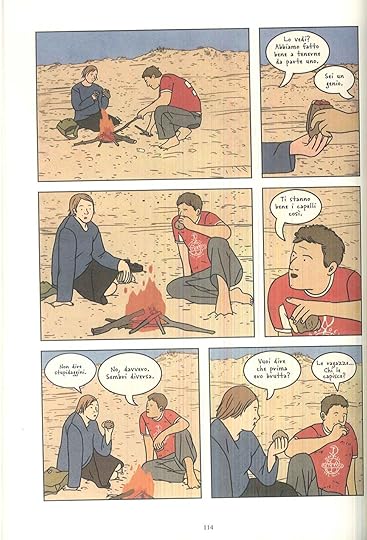
Alla scoperta di Rutu Modan: non convintissima dopo questo primo contatto, i disegni non mi piacciono particolarmente e anche la storia, che invece mi sembrava molto bella, finisce per scivolare via senza sussulti in un finale che, anche se si rivela sorprendente, non riesce a stupire fino in fondo.
Tre stelle e mezza.

July 9, 2021
תל אביב, 2002. בחורה פונה לקובי פרנקו, נהג מונית, וטוענת שהרוג לא מזוהה בפיגוע הוא אביו, שאיתו הוא לא היה בקשר.
לא אהבתי את סגנון הציור וגם לא הבנתי מה מטרת הסיפור או את הסוף.
לא אהבתי את סגנון הציור וגם לא הבנתי מה מטרת הסיפור או את הסוף.

December 5, 2015
This graphic novel probably deserves much more analysis than I'll give it here, but deserves a spot on every comic-enthusiast's shelf. Modan's art is expressive despite, vibrant, and beautifully depicts Israel and the characters that occupy the city of Tel Aviv. It follows a young man, Koby, who's approached by his elderly father's young lover, Numi. She claims that his father was killed in a terrorist attack a month ago, and is the only unidentified body. Reluctantly, Koby accompanies Numi on an adventure/investigation to discover if it was indeed Koby's father that was killed.
I enjoyed this graphic novel for its outstanding art, but also Modan's depiction of Israeli citizens' casual reaction to violence. She creates a real sense that this terrorist attack is par for the course for this citizens, and that Koby & Numi's quest is one that could have been undertaken by anyone in the city. It was also appreciated to see Modan do away entirely with the manic-pixie-dream-girl trope and have Numi be a fully fleshed-out character in this short graphic novel. This one is definitely worth your time!
I enjoyed this graphic novel for its outstanding art, but also Modan's depiction of Israeli citizens' casual reaction to violence. She creates a real sense that this terrorist attack is par for the course for this citizens, and that Koby & Numi's quest is one that could have been undertaken by anyone in the city. It was also appreciated to see Modan do away entirely with the manic-pixie-dream-girl trope and have Numi be a fully fleshed-out character in this short graphic novel. This one is definitely worth your time!

September 19, 2016
Koby Franco, taksist u Tel-Avivu, saznaje da mu je otac možda žrtva bombaša samoubojice u Haderi pa s vojnikinjom Numi, koja ga je, čini se, bolje poznavala, nevoljko kreće u otkrivanje istine.
Zvuči dovoljno zanimljivo, ali priča je obrađena kao u kakvom hipsterskom ljubavnom filmu: neuvjerljivo, nedorečeno, bez emocija i s likovima koji kao da su od kamena.
Crtež također nije dojmljiv, naprotiv, ružan je i pomalo amaterski.
Ipak, strip zadržava pažnju i da se čitati, jer očekuješ zanimljiv rasplet - kojeg, međutim, nema. Nema ni smislenog kraja jer je autorica valjda htjela izbjeći klišeje, ali nije mogla smisliti ništa bolje pa je strip jednostavno prekinula u jednom trenutku. Strip bi trebao biti i o emocionalnom sazrijevanju glavnog lika, ali i to je prikazano loše pa na kraju nije sigurno da li je zreliji ili samo očajniji.
Dakle, daleko je to od hvalospjeva koji krase korice, nema tu ni "dubokog i bogatog, humanog i nesentimentalnog pogleda na slabosti društva, međuljudske odnose", niti je to "priča koja će vas dirnuti.", ali ima par humorističnih scena koje uspiju nasmijati, pa zato ipak prolazna ocjena.
Zvuči dovoljno zanimljivo, ali priča je obrađena kao u kakvom hipsterskom ljubavnom filmu: neuvjerljivo, nedorečeno, bez emocija i s likovima koji kao da su od kamena.
Crtež također nije dojmljiv, naprotiv, ružan je i pomalo amaterski.
Ipak, strip zadržava pažnju i da se čitati, jer očekuješ zanimljiv rasplet - kojeg, međutim, nema. Nema ni smislenog kraja jer je autorica valjda htjela izbjeći klišeje, ali nije mogla smisliti ništa bolje pa je strip jednostavno prekinula u jednom trenutku. Strip bi trebao biti i o emocionalnom sazrijevanju glavnog lika, ali i to je prikazano loše pa na kraju nije sigurno da li je zreliji ili samo očajniji.
Dakle, daleko je to od hvalospjeva koji krase korice, nema tu ni "dubokog i bogatog, humanog i nesentimentalnog pogleda na slabosti društva, međuljudske odnose", niti je to "priča koja će vas dirnuti.", ali ima par humorističnih scena koje uspiju nasmijati, pa zato ipak prolazna ocjena.

June 2, 2021
A good read. Liked the graphics drawn by Rutu and her sensibility and sensuality.
As it is said, Men will be Men, thus Gabriel and his son, Kobey and me, myself, all are connected by the same sense of manhood. We all fall in love with Numi, the girl.
She is not very attractive in usual sense; she is subdued, and lonely and she is without the womanly habits of creating fuss. But, Numi is determined and she is very caring too.
When the old Gabriel gone missing after the suicide blast in a cafeteria, Numi called his son Kobey, a cab driver to help her to trace out Gabriel. Numi, a young girl thought that Gabriel loved her. Kobey, didn’t have a very high respect for his father for reasons and thus initially, he was reluctant to accompany Numi. However, they went to the cafeteria to search for a witness who can offer some clue about the where abouts of the old man. But, of course, there is more of it...
I liked the particular scene where Numi fondly said, 'Don't look at it' (read: 'herself'), and 'Like father like Son!' It is sensual and reminds me a lot of my past love. I wish if I had my 'Numi' beside me.
As it is said, Men will be Men, thus Gabriel and his son, Kobey and me, myself, all are connected by the same sense of manhood. We all fall in love with Numi, the girl.
She is not very attractive in usual sense; she is subdued, and lonely and she is without the womanly habits of creating fuss. But, Numi is determined and she is very caring too.
When the old Gabriel gone missing after the suicide blast in a cafeteria, Numi called his son Kobey, a cab driver to help her to trace out Gabriel. Numi, a young girl thought that Gabriel loved her. Kobey, didn’t have a very high respect for his father for reasons and thus initially, he was reluctant to accompany Numi. However, they went to the cafeteria to search for a witness who can offer some clue about the where abouts of the old man. But, of course, there is more of it...
I liked the particular scene where Numi fondly said, 'Don't look at it' (read: 'herself'), and 'Like father like Son!' It is sensual and reminds me a lot of my past love. I wish if I had my 'Numi' beside me.

September 20, 2011
One of these reviewers pointed out that the artwork isn't that great, and the story isn't that profound. I can definitely understand that opinion, and I couldn't agree with it less. Very little happens in Exit Wounds, yes. But also, in a beautifully subtle and intelligent way, everything happens. Perhaps the most exciting thing about it is that it is clearly the work of an artist who has much more to give, and the generosity to deliver. Rutu Modan easily deserves a seat with Dash Shaw, Jeffrey Brown, and the many other rising stars of "alternative" comics.

April 1, 2021
Įdomus komiksas apie Izraelį, gana neįprasta matyti kai moterys tarnauja kariuomenėje, ir šiaip visai kitokios iliustracijos. Istorija patiko, tik ties pabaiga galėjo būti labiau ištempta, bet visumoje patiko.

May 4, 2016
Re-reading this book in preparation for an artist talk with Modan in a few day, and actually enjoying it more than the first time around. Modan has a way of writing real people doing real things, having real relationships, and you sense that outside of the panels they are actually living real lives. That's a rare quality in comics, and the closest I can come to something that compares are the graphic novels by Anneli Furmark, which are sadly, so far, not available in English.
Exit Wounds is an enthralling little story and even though it is very evidently fictional, you can sense that Modan has used things from her own life and her own family in making the characters come to life. There is a strength in the resilience in them going about with their lives and getting to grips with their often mundane problems, as world politics and suicide bombings continue around them.
As someone from Sweden, which has not been at war for more than 200 years, trying to understand how it must be to live in Israel is pretty hard. But reading this gives me some sort of insight, the main feeling being that for the most part it's all very similar, on a general, human level. And besides that, it's a damn good story, one that would make a great film.
Exit Wounds is an enthralling little story and even though it is very evidently fictional, you can sense that Modan has used things from her own life and her own family in making the characters come to life. There is a strength in the resilience in them going about with their lives and getting to grips with their often mundane problems, as world politics and suicide bombings continue around them.
As someone from Sweden, which has not been at war for more than 200 years, trying to understand how it must be to live in Israel is pretty hard. But reading this gives me some sort of insight, the main feeling being that for the most part it's all very similar, on a general, human level. And besides that, it's a damn good story, one that would make a great film.

April 6, 2010
Quite a good one: subtle and powerful.
Set in modern Israel, Koby is a taxi driver living and working with his aunt and uncle in Tel Aviv. He gets a strange message one day and drives to meet a fare - an Israeli soldier named Numi. Numi has been searching for Koby for weeks; she believes that Koby's estranged father (and her lover) was killed in a recent cafe suicide bombing. Koby is reluctant to become involved in the investigation, but Numi slowly convinces him.
It's a pure Israeli book: the dialogue is not fluffy and kind. The reality is not sugar-coated and glossy. It's hard, real and prickly.. Just like the sabra ... and it is not until the resolution that some of the softer interior is revealed.
Beautiful artwork and unique story. The characters were really "fleshed out" in a short amount of time, and they seemed so real and believable.
Set in modern Israel, Koby is a taxi driver living and working with his aunt and uncle in Tel Aviv. He gets a strange message one day and drives to meet a fare - an Israeli soldier named Numi. Numi has been searching for Koby for weeks; she believes that Koby's estranged father (and her lover) was killed in a recent cafe suicide bombing. Koby is reluctant to become involved in the investigation, but Numi slowly convinces him.
It's a pure Israeli book: the dialogue is not fluffy and kind. The reality is not sugar-coated and glossy. It's hard, real and prickly.. Just like the sabra ... and it is not until the resolution that some of the softer interior is revealed.
Beautiful artwork and unique story. The characters were really "fleshed out" in a short amount of time, and they seemed so real and believable.

February 11, 2013
In the world of graphic novels aspiring for serious reception, the redemptive theme (with a political / family / existential sub-text - Asterios Polyp is a good example of the last variety) has emerged as a key genre within the genre. Usually, the redemptive theme is mixed with another strong graphic novel theme - that of the 'biopic' (Persepolis is an example, sort of).
Exit Wounds is a decent one. It is a not a biopic, which is a relief. Here we see a treatment that is contextual, related to a particular event, almost like a short story. Looked at that way, it is quite fresh-feeling for a graphic novel. Though the artwork and bubble work is simplistic, it goes well with the simplicity of the story. And a decent story at that, one that says just what is sufficient.
Exit Wounds is a decent one. It is a not a biopic, which is a relief. Here we see a treatment that is contextual, related to a particular event, almost like a short story. Looked at that way, it is quite fresh-feeling for a graphic novel. Though the artwork and bubble work is simplistic, it goes well with the simplicity of the story. And a decent story at that, one that says just what is sufficient.

August 6, 2007
This is yet another realistic graphic novel written for adults exploring the themes of awkward love and broken familial relationships. The drawing is simple yet "realistic" and very colorful, which caught my eye. The characters are mildly compelling, but could have been more so. I don't feel that Exit Wounds really turned over any new ground in the genre; a man finds love, abandons it because of his own issues, and then, in the end, has to take a leap of faith to hold onto the good thing he's found. I've read this same plot in many other books and graphic novels in particular, it seems.

December 10, 2020
Bolo to velmi zvlastne tento pribeh, kde sa hladal otec.
Mozno zomrely, mozno nie.
Jednoduche obrazky s tazkou temou. Normalne si este musim premysliet, co dodat!
Mozno zomrely, mozno nie.
Jednoduche obrazky s tazkou temou. Normalne si este musim premysliet, co dodat!

June 2, 2021
Exit Wounds.
Enter average rating.
Subpar writing, average indie art. Very abrupt ending. Could be so much more...
Also, the worst drawn female character ever in comics. Holy giraffe...
Enter average rating.
Subpar writing, average indie art. Very abrupt ending. Could be so much more...
Also, the worst drawn female character ever in comics. Holy giraffe...

December 21, 2021
I’ve read Modan’s The Property before, so I sort of new what to expect with this book, both story wise and art wise, and sure enough, this was done very much in the same vein. Albeit, on a more basic scale. This book was Modan’s English language debut and it’s shorter in length, and to an extent in range, than the Property, but it still has that terrific realism and verisimilitude that she brings to storytelling with art that may seem simplistic at first, but it in fact very effective.
The story is about a man who gets dragged into searching for his estranged father aby his father’s much younger lover, a very tall young woman from a very wealthy family. The two protagonists end up being the proverbial odd couple searching for a man who was apparently a total player, a man who himself never makes an appearance within the pages.
The initial suspicion is that he might have been a victim of a suicide attack, which is a something as ubiquitously and uniquely Israeli tragedy much like America has with its school shootings. It’s interesting the way that gets treated culturally – like something fairly ordinary, something people just learn to live with. It makes you consider the way societies evolve to accommodate their dark sides.
The entire book, all Modan’s writing, really, is just interesting from a purely cultural perspective, but I also like her writing, the matter-of-factness of it, her style of storytelling, like a good indie or a good foreign movie.
There’s also a very good long interview with the author at the end of the book, all about her career specifically and the state of comic business in Israel in general. Very interesting and definitely worth a read. Recommended.
This and more at https://advancetheplot.weebly.com/
The story is about a man who gets dragged into searching for his estranged father aby his father’s much younger lover, a very tall young woman from a very wealthy family. The two protagonists end up being the proverbial odd couple searching for a man who was apparently a total player, a man who himself never makes an appearance within the pages.
The initial suspicion is that he might have been a victim of a suicide attack, which is a something as ubiquitously and uniquely Israeli tragedy much like America has with its school shootings. It’s interesting the way that gets treated culturally – like something fairly ordinary, something people just learn to live with. It makes you consider the way societies evolve to accommodate their dark sides.
The entire book, all Modan’s writing, really, is just interesting from a purely cultural perspective, but I also like her writing, the matter-of-factness of it, her style of storytelling, like a good indie or a good foreign movie.
There’s also a very good long interview with the author at the end of the book, all about her career specifically and the state of comic business in Israel in general. Very interesting and definitely worth a read. Recommended.
This and more at https://advancetheplot.weebly.com/

March 4, 2020
Read 03/03/2020
This wasn’t especially easy to rate. The art wasn’t that interesting, it was very King of the Hill-esque. Like I said, boring. Few & simple lines. Not very expressive faces. Just very minimal and basic. There’s still something to be said for the fact that even in this very minimalist style, with hardly more than a few slashed lines making up each drawing, that any expression at all can be recognized in these character’s faces at all. But somehow these characters manage to emote sadness, anger, wistfulness, bitterness, self consciousness, and a surprisingly vast array of feelings and emotions.
To sum it up: A bomb. An unclaimed John Doe. An absent father. His much younger mistress. A search for answers.
These things come to a head when a young girl named Numi shows up in Koby’s life suddenly with some info. She is the much younger lover of his absentee father Gabriel, & she believes him to be the victim of a terrorist attack somewhere near Tel Aviv. Her reasoning being that she a)saw a scarf she knitted him on the news coverage for the bombing b)there is one male body that has been unidentified c)Gabriel usually calls her after any terrorist attacks or bombings to make sure she was ok and d)she hasn’t heard from him. There’s bitterness with Koby over his father’s past behavior, before and after the death of his mother, fights and things. But mostly Gabriel has been MIA, and Koby isn’t in the forgiving mood. He’s pretty much disinterested in trying to help Numi, sort of like “fuck it, if he’s dead he’s dead but knowing him he’ll probably show up randomly sometime down the line.” (That’s not really a quote, it’s more like a summation of his vibe via a made up quote.)But curiosity gets the better of him and ends up involved in Numi’s search. Long story short, their efforts produce basically nothing but they finally manage to track down a woman who was supposedly in or near the explosion when it happened.
It comes out that she was ALSO Gabriel’s former lover, someone he was also meeting with romantically for awhile but then abruptly dropped off & was never seen or heard from again. This woman is responsible for the scarf 🧣 having been at the scene. Gabriel had given it to her once when she was cold.
Numi, understandably upset, finally detecting & recognizing Gabriel’s pattern of cheating, walking out and disappearing. Is forced to conclude that the bitter sentiments and assumptions Koby has had of his father are likely all true. It’s all very sad and painfully awkward, and what sort of secondhand romantic sentiments had been developing between Koby & Numi is cut short when Numi makes a mostly harmless but sorta off kilter comment. Koby, ever brooding & angry & moody, throws a rude little tantrum and Numi finally summons up the self respect it takes to get up & leave. All seems to be wrapped up between them until Koby receives a check from his father, half of the $$ from having sold his house. Resurrected! He follows this trail of crumbs to yet ANOTHER woman. Only this woman is Gabriel’s wife, has photo evidence of it, and speaks of him as if he is a deeply religious Jewish man who’s late for dinner, & she is his very religious, conservative housewife counterpart preparing his dinner. She knows of Koby, invites him to wait. Gabriel doesn’t show. Surprise surprise. Or NOT. (knowing what we know of him can only assume he’s out gallivanting with a 4th or 5th girlfriend.) Koby leaves before ever coming face to face with his father, seemingly deciding to keep the check that he had until then adamantly refused out of spite. Rushes to share the news with Numi who now refuses to see him. You know. Self respect and stuff. She spent the entirety of this novel chasing after Koby, begging him to help her, come with her, to not be angry, letting him treat her carelessly, buuuut everyone has their breaking point I guess, & Numi has reached hers. Koby apologizes. Numi is still angry. But Koby had to jump a wall in order to reach her so now he is stuck up in a tree and asking for help. Numi tells him to just jump down, that he doesn’t need a ladder and she will catch him. He jumps. The end.
Ooo. Symbolism.
More or less a typical story, set in a slightly atypical setting. (I mean it was Tel Aviv not Los Angeles.) A POS dad who hasn’t been around. Cheater. Liar. Clueless women being led on. It’s a pretty common storyline, Gabriel is a pretty common guy. There’s lots of people who are like Gabriel, & plenty of clueless women and injured damaged hearts. It’s a story we’ve all heard before. There were some interesting bits, some unusual bits, but all in all the artwork was underwhelming and not visually stimulating, tho I’m sure to some extent the sobering dullness of the art was intentional. To evoke a sort of tortured, bleak, damaged feeling, because that’s a lot of what this is. Stark realities of life. Lies and the corresponding pains. And so on and so forth. The little romance served as the novel’s sole source of light or joy, every relationship in this story for every single person involved is forced, cracked, or defective in some way. It’s like as if the author is telling us that life sucks and so do most people, but that there shining jewels there for the people willing to take them.
I get it. I see like, how people think this is touching. Or profound, or whatever. But ultimately just wasn’t my cup of tree. There just weren’t enough good things to make me bump this to higher than 3 stars.
This wasn’t especially easy to rate. The art wasn’t that interesting, it was very King of the Hill-esque. Like I said, boring. Few & simple lines. Not very expressive faces. Just very minimal and basic. There’s still something to be said for the fact that even in this very minimalist style, with hardly more than a few slashed lines making up each drawing, that any expression at all can be recognized in these character’s faces at all. But somehow these characters manage to emote sadness, anger, wistfulness, bitterness, self consciousness, and a surprisingly vast array of feelings and emotions.
To sum it up: A bomb. An unclaimed John Doe. An absent father. His much younger mistress. A search for answers.
These things come to a head when a young girl named Numi shows up in Koby’s life suddenly with some info. She is the much younger lover of his absentee father Gabriel, & she believes him to be the victim of a terrorist attack somewhere near Tel Aviv. Her reasoning being that she a)saw a scarf she knitted him on the news coverage for the bombing b)there is one male body that has been unidentified c)Gabriel usually calls her after any terrorist attacks or bombings to make sure she was ok and d)she hasn’t heard from him. There’s bitterness with Koby over his father’s past behavior, before and after the death of his mother, fights and things. But mostly Gabriel has been MIA, and Koby isn’t in the forgiving mood. He’s pretty much disinterested in trying to help Numi, sort of like “fuck it, if he’s dead he’s dead but knowing him he’ll probably show up randomly sometime down the line.” (That’s not really a quote, it’s more like a summation of his vibe via a made up quote.)But curiosity gets the better of him and ends up involved in Numi’s search. Long story short, their efforts produce basically nothing but they finally manage to track down a woman who was supposedly in or near the explosion when it happened.
It comes out that she was ALSO Gabriel’s former lover, someone he was also meeting with romantically for awhile but then abruptly dropped off & was never seen or heard from again. This woman is responsible for the scarf 🧣 having been at the scene. Gabriel had given it to her once when she was cold.
Numi, understandably upset, finally detecting & recognizing Gabriel’s pattern of cheating, walking out and disappearing. Is forced to conclude that the bitter sentiments and assumptions Koby has had of his father are likely all true. It’s all very sad and painfully awkward, and what sort of secondhand romantic sentiments had been developing between Koby & Numi is cut short when Numi makes a mostly harmless but sorta off kilter comment. Koby, ever brooding & angry & moody, throws a rude little tantrum and Numi finally summons up the self respect it takes to get up & leave. All seems to be wrapped up between them until Koby receives a check from his father, half of the $$ from having sold his house. Resurrected! He follows this trail of crumbs to yet ANOTHER woman. Only this woman is Gabriel’s wife, has photo evidence of it, and speaks of him as if he is a deeply religious Jewish man who’s late for dinner, & she is his very religious, conservative housewife counterpart preparing his dinner. She knows of Koby, invites him to wait. Gabriel doesn’t show. Surprise surprise. Or NOT. (knowing what we know of him can only assume he’s out gallivanting with a 4th or 5th girlfriend.) Koby leaves before ever coming face to face with his father, seemingly deciding to keep the check that he had until then adamantly refused out of spite. Rushes to share the news with Numi who now refuses to see him. You know. Self respect and stuff. She spent the entirety of this novel chasing after Koby, begging him to help her, come with her, to not be angry, letting him treat her carelessly, buuuut everyone has their breaking point I guess, & Numi has reached hers. Koby apologizes. Numi is still angry. But Koby had to jump a wall in order to reach her so now he is stuck up in a tree and asking for help. Numi tells him to just jump down, that he doesn’t need a ladder and she will catch him. He jumps. The end.
Ooo. Symbolism.
More or less a typical story, set in a slightly atypical setting. (I mean it was Tel Aviv not Los Angeles.) A POS dad who hasn’t been around. Cheater. Liar. Clueless women being led on. It’s a pretty common storyline, Gabriel is a pretty common guy. There’s lots of people who are like Gabriel, & plenty of clueless women and injured damaged hearts. It’s a story we’ve all heard before. There were some interesting bits, some unusual bits, but all in all the artwork was underwhelming and not visually stimulating, tho I’m sure to some extent the sobering dullness of the art was intentional. To evoke a sort of tortured, bleak, damaged feeling, because that’s a lot of what this is. Stark realities of life. Lies and the corresponding pains. And so on and so forth. The little romance served as the novel’s sole source of light or joy, every relationship in this story for every single person involved is forced, cracked, or defective in some way. It’s like as if the author is telling us that life sucks and so do most people, but that there shining jewels there for the people willing to take them.
I get it. I see like, how people think this is touching. Or profound, or whatever. But ultimately just wasn’t my cup of tree. There just weren’t enough good things to make me bump this to higher than 3 stars.

October 18, 2025
Exit Wounds follows Koby, a young man in Tel Aviv who gets a sudden call from a soldier saying his estranged father might have died in a suicide bombing. From there, the book becomes a sort of quiet search; not only for the truth about what happened, but also for who his father really was. As Koby digs through the pieces of his father’s life, he ends up confronting parts of himself too.
What I loved most was the art. Modan’s drawings are so clean and expressive, and the watercolor style adds a warmth that makes even the small moments feel meaningful. Honestly, the artwork carries the story in many places.
The plot, though, can feel a bit disjointed. Some parts drag or feel a little tedious, and there were moments where I wasn’t totally sure where the story wanted to go. But even with that, it’s still an interesting and emotional read.
Overall, it’s a beautifully illustrated graphic novel with a slightly uneven story, but one that stays with you, especially because of the art.
What I loved most was the art. Modan’s drawings are so clean and expressive, and the watercolor style adds a warmth that makes even the small moments feel meaningful. Honestly, the artwork carries the story in many places.
The plot, though, can feel a bit disjointed. Some parts drag or feel a little tedious, and there were moments where I wasn’t totally sure where the story wanted to go. But even with that, it’s still an interesting and emotional read.
Overall, it’s a beautifully illustrated graphic novel with a slightly uneven story, but one that stays with you, especially because of the art.

January 10, 2021
Me ha gustado mucho este comic. Estaba dudando entre ponerle cuatro estrellas o cinco de valoración. Y en realidad la historia sería para cuatro pero le doy una más por la conjunción entre el aspecto gráfico de Rutu Modán -el color (precioso)- y la edición de Astiberri, desde el formato (me lo imaginaba mucho más pequeño), las cubiertas con textura, hasta el gramaje de las páginas.
A este comic ya le tenía ganas desde hacía muuucho tiempo. Cualquier tema medianamente interesante que trate sobre el conflicto Árabe-Israelí (leer Vals con Baschir y no leer Crónicas de Jerusalen) me llama la atención poderosamente y me atrae.
La historia está muy bien armada, y aunque tiene un corte y un caracter intimista se ve claramente reflejado el ambiente, las maneras de vivir... el contexto al fin y al cabo de la vida en el Israel actual.
Y después la historia es corta, intensa, pero muy bien hilada. Fantaseé en algún momento de la lectura con que ciertas conversaciones, como la de la playa, se prolongaran durante más de 500 páginas y así nos dejarían shockeados, espachurrados contra nuestros sofás, y me vi por mas de un instante como editor-autor en otra dimensión haciendo un experimento-barrabasada por el estilo, porque me pareció eterno ese momento.
Este comic es de una ligereza y a la vez de una profundidad importantes.
Ya estoy buscando más de Rutu Modán.
A este comic ya le tenía ganas desde hacía muuucho tiempo. Cualquier tema medianamente interesante que trate sobre el conflicto Árabe-Israelí (leer Vals con Baschir y no leer Crónicas de Jerusalen) me llama la atención poderosamente y me atrae.
La historia está muy bien armada, y aunque tiene un corte y un caracter intimista se ve claramente reflejado el ambiente, las maneras de vivir... el contexto al fin y al cabo de la vida en el Israel actual.
Y después la historia es corta, intensa, pero muy bien hilada. Fantaseé en algún momento de la lectura con que ciertas conversaciones, como la de la playa, se prolongaran durante más de 500 páginas y así nos dejarían shockeados, espachurrados contra nuestros sofás, y me vi por mas de un instante como editor-autor en otra dimensión haciendo un experimento-barrabasada por el estilo, porque me pareció eterno ese momento.
Este comic es de una ligereza y a la vez de una profundidad importantes.
Ya estoy buscando más de Rutu Modán.

April 12, 2020
Świetna obyczajówka ze współczesnym Izraelem w tle. Typowa dla Modan prosta kreska i ciepła kolorystyka. Wrażenie robią kadry, w których postać wyróżniona jest kolorem, a wszystko co w tle tonie w szarości. Generalnie jej styl wydaje się mocno selektywny. Momentami mam wrażenie, że zarysowuje mocne kontury postaci na podstawie fotografii, a resztę uzupełnia już według uznania. To tak, jakby Herge zaczął tworzyć dla małych niezależnych wydawnictw.
Jest tu trochę pokręconych relacji rodzinnych, dochodzenie w sprawie przeszłości ojca i budzące się uczucie. Mimochodem dowiadujemy się, że ktoś stracił dziecko i gdzieś wybuchają bomby. Obserwujemy ludzi, którzy w jakiś okrutny sposób oswoili się z zagrożeniem czy rosnącą liczbą ofiar. Z jednej strony wszystko wyważone, subtelne, często zaledwie zarysowane, z drugiej łatwo zarzucić brak wyraźnego głosu sprzeciwu czy może oskarżenia winnych tego stanu rzeczy, ale to już kwestia wyborów autorki i pytanie czy każde dzieło osadzone w tym kontekście musi być deklaracją polityczną. "Rany wylotowe" to w mojej ocenie bardziej rzecz o tym jak żyje się w tej trudnej rzeczywistości z perspektywy zwykłego człowieka, niż potrzeba jakichś wielkich słów czy uogólnień i chyba dlatego ta historia wydaje się tak prawdziwa
Jest tu trochę pokręconych relacji rodzinnych, dochodzenie w sprawie przeszłości ojca i budzące się uczucie. Mimochodem dowiadujemy się, że ktoś stracił dziecko i gdzieś wybuchają bomby. Obserwujemy ludzi, którzy w jakiś okrutny sposób oswoili się z zagrożeniem czy rosnącą liczbą ofiar. Z jednej strony wszystko wyważone, subtelne, często zaledwie zarysowane, z drugiej łatwo zarzucić brak wyraźnego głosu sprzeciwu czy może oskarżenia winnych tego stanu rzeczy, ale to już kwestia wyborów autorki i pytanie czy każde dzieło osadzone w tym kontekście musi być deklaracją polityczną. "Rany wylotowe" to w mojej ocenie bardziej rzecz o tym jak żyje się w tej trudnej rzeczywistości z perspektywy zwykłego człowieka, niż potrzeba jakichś wielkich słów czy uogólnień i chyba dlatego ta historia wydaje się tak prawdziwa

February 13, 2014
A taxi driver in Tel Aviv is confronted with a mystery involving the potential death of his estranged father. In the process he gets to know a young woman who is the daughter of wealth.
Modan's illustrations are crisp, and clean, with bright, stark color work. The characters are well fleshed out and absolutely imperfect. In some ways the story feels inevitable. In other ways it takes some unexpected turns. The character of the father comes to life in a somewhat surprising way.
It didn't seize my soul, but I enjoyed reading it, and I recognize the merits of this story.
Modan's illustrations are crisp, and clean, with bright, stark color work. The characters are well fleshed out and absolutely imperfect. In some ways the story feels inevitable. In other ways it takes some unexpected turns. The character of the father comes to life in a somewhat surprising way.
It didn't seize my soul, but I enjoyed reading it, and I recognize the merits of this story.

December 15, 2021
יש לספר הזה איזה ניחוח אבסורדי-פנטסטי-ישראלי שאפשר למצוא רק ברומנים הגרפיים של רותו מודן
אבל משהו בספר הזה פשוט לא ברמה של שני הרומנים הבאים
יכול להיות שהנושא פחות נגע לליבי
אולי כי הסיפור היה פשוט היחיד שלה שלא יכולתי להזדהות איתו בנימה מסוימת
ואולי כי הסיום פשוט היה פתוח ולא מספק
קריאה שנייה:
יש משהו נורא עצוב לקרוא שלא התחברתי אל הספר בפעם הראשונה בגלל שהוא הרגיש לי כל כך אבסורדי
לפני כמה שבועות למדתי שבאנדרטה בתחנת המשטרה בשדרות עדיין מסומן אלמוני בשמות הנרצחים כי עדיין לא יודעים מי הוא.
ופתאום?
פתאום הספר לא נראה כל כך מנותק וקר ממני.
אבל משהו בספר הזה פשוט לא ברמה של שני הרומנים הבאים
יכול להיות שהנושא פחות נגע לליבי
אולי כי הסיפור היה פשוט היחיד שלה שלא יכולתי להזדהות איתו בנימה מסוימת
ואולי כי הסיום פשוט היה פתוח ולא מספק
קריאה שנייה:
יש משהו נורא עצוב לקרוא שלא התחברתי אל הספר בפעם הראשונה בגלל שהוא הרגיש לי כל כך אבסורדי
לפני כמה שבועות למדתי שבאנדרטה בתחנת המשטרה בשדרות עדיין מסומן אלמוני בשמות הנרצחים כי עדיין לא יודעים מי הוא.
ופתאום?
פתאום הספר לא נראה כל כך מנותק וקר ממני.

December 28, 2018
I like the simple yet effective artwork and it has the makings of a good story, but it’s so rushed and eager to wrap things and people up that in the end I’m not convinced.
Displaying 1 - 30 of 523 reviews