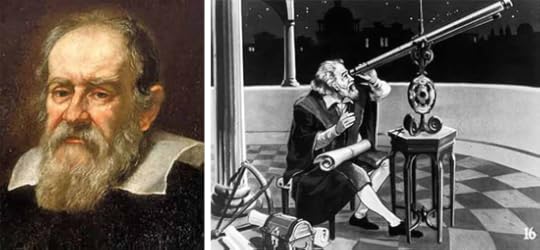
Μια διορατική προσέγγιση της ζωής του Γαλιλαίου, ενός από τους μεγαλύτερους επιστήμονες στην Ιστορία, που ρίχνει νέο φως στις ανακαλύψεις του και στον τρόπο που αντιμετωπίστηκε από τους αρνητές της επιστήμης. Η ιστορία του Γαλιλαίου είναι σήμερα πιο επίκαιρη από ποτέ. Βρισκόμαστε εν μέσω πολυσχιδών κρίσεων, όπως για παράδειγμα η κλιματική αλλαγή, διότι η επιστήμη αμφισβητείται ή αγνοείται. Ο Γαλιλαίος αντιμετώπισε αυτό το πρόβλημα πριν από τετρακόσια χρόνια. Οι ανακαλύψεις του, βασισμένες σε προσεχτικές παρατηρήσεις και έξυπνα πειράματα, ήρθαν σε σύγκρουση με τη συμβατική γνώση και τις διδαχές της Εκκλησίας εκείνη την εποχή, με αποτέλεσμα τα βιβλία του, ύστερα από μια κραυγαλέα καταπάτηση της ελευθερίας της σκέψης, να απαγορευτούν από τις εκκλησιαστικές Αρχές. Ο δρ Μάριο Λίβιο βασίζεται στην προσωπική του επιστημονική εξειδίκευση και εμβαθύνει στον τρόπο που ο Γαλιλαίος κατέληξε στα τολμηρά συμπεράσματά του για τον κόσμο και τους νόμους της φύσης. Ο Γαλιλαίος ήταν ένας από τους πιο σημαντικούς ανθρώπους πίσω από την επιστημονική επανάσταση. Πίστευε ότι κάθε μορφωμένος άνθρωπος θα έπρεπε να γνωρίζει την επιστήμη τόσο καλά, όσο τη λογοτεχνία, και επέμενε να απευθύνεται στο ευρύ κοινό εκδίδοντας τα βιβλία του στα ιταλικά και όχι στα λατινικά. Ο Γαλιλαίος έφτασε στο σημείο να δικαστεί επειδή αρνούνταν να αποκηρύξει τις επιστημονικές πεποιθήσεις του. Αποτελεί έμπνευση για τους επιστήμονες αλλά και για όλους όσοι σέβονται την επιστήμη, η οποία, όπως τονίζει ο Λίβιο, απειλείται ακόμα και στις μέρες μας.
This is my 6th book by Mario Livio and I must say, he does not disappoint.
The present book is a thoroughly and thoughtfully biography of Galileo Galilei. The span of time covered here is from childhood until his last days and beyond, because his work and trial had implications until in our days.
As the author states: “[…] I am convinced that present-day readers will be amazed to discover how relevant Galileo’s story is for today. In a world of governmental antiscience attitudes with science deniers ay key positions, unnecessary conflicts between science and religion, and the perception of a widening schism between the humanities and the sciences, Galileo’s tale serves, first of all, as a potent reminder of the importance of freedom of thought.” *
We learn a lot about his works, correspondence with different other scientists, facts about his private life, and also about the economic, social and political context of those times.
The writing style is very fluent and the way he presented Galileo’s life made the book a very compelling read. And, as always, the number of notes and bibliographical references is astonishing – 20% of the book.
Always a pleasure to read, I recommend all his books wholeheartedly.
* may be subject to change upon publication
>>> ARC received thanks to Simon & Schuster via NetGalley <<<
I forgot to write a review on this book. Silly me. I enjoyed it as it was very informative and readable. Never had parts where I was bored by it but at the same time not a new favorite, but recommends it anyway
This is an extraordinary and fascinating book. I am glad I requested it and somehow was approved for the ARC.
The book itself is not a biography of Galileo, although his life is explored from the beginning to the unspeakable trials at the end of his long life. Livio's emphasis on the book is Galileo's struggle to present scientific information to a world dominated by the Catholic church and all the other science deniers of his time. Livio points at a parallel to modern times and the battle of scientific evidence about climate change, and those who choose to deny it.
He also points out the clashes between the evolution and creationist theories which may never be resolved. At least, not during my lifetime. Let's remember that it was until 1992 (only about 350 years later) that Pope John Paul II recognized the church had given Galileo an unfair trial, and that it was possible for science and religion to coexist. That is a long time to admit that you made a big mistake.
Galileo printed his observations and studies in Italian. His goal was to provide scientific information to everyone interested and capable of understanding it. He refused to write things in Latin to prevent only a few individuals who may not have chosen to share it. Mario Livio chose to do the same for us, laymen people and wrote this thorough and highly researched book to share the knowledge in a language we can understand, should we be interested in the topic. And we should be. Because if we don't listen to science, if we continue (in the general sense of we) ignoring the facts presented ad nauseam by scientific research, we will end up messing up the only planet we have to live in. It does not matter if there may be an "Earth-like" planet 12 million light-years away. We are not going to make it there on time.
Galileo--with the rudimentary tools and artifacts available during his lifetime--achieved wonders that were both exciting and threatening. Threatening to those in power who were afraid to lose control of the people. Ignorance is bliss, they say. Ignorance is still a tool used by our current powerful entities to maintain people in the dark.
How many modern Galileos are there being silenced? How many of those are being mocked or ignored, or ridiculed for their warnings about climate change? Furthermore, happening right now, it is impossible to address the denial from many people in positions of power to address and prevent the spread of viruses such as the COVID-19.
This book is relevant in modern times, as history tends to repeat itself. Sometimes we need to look back before moving forward.
I received an ARC from Simon & Schuster and NetGalley in exchange for an honest review. I can't wait to get a physical copy of this book and be able to access the images in color that are included in it.
I'm feeling generous and giving this book 3 stars, BUT it isn't really a biography, and there's no rhyme or reason (to my mind) of how the book evolves. There is no real time line, it jumps around a lot, and evolves into a critique of the Holy See and how unfair the popes, cardinals, etc., were to Galileo -- which they were. But I was expecting a more traditional bio of his life. I did learn a lot about Galileo and his arguments with the Catholic Church, and about Copernicism v Ptlolemaic, etc.
From the title, there are no prizes for guessing the position Mario Livio takes in this work. The writing is clear and unambiguous: on the one hand it can be seen as preaching to the converted; on the other hand it is solicitous for non-believers in science to reconsider their position.
Livio is deeply concerned by the increasingly anti-intellectual stance much of the modern western world seems to be taking towards intellectual pursuit, and hopes that by reviewing a significant event that happened some 400 years ago we mighty all learn a little more about humanity’s perpetual struggle to acquire reliable knowledge, as close to the truth as possible, in its dealings with the world in general, to act as the most reliable guidelines available for our continued survival and well-being.
Seeing “opposing” stances as relating only to either/or possibilities tends to lead us to more confronting and more destructive reactions: it is as if only one side must “win”. Consequently either side also tends to become more aggressively dismissive of the other (Galileo is no exception) and faults can be seen all round. A calmer, more considerate approach is required: more both/and rather than either/or. We all of us need to accept that toleration of (and, indeed, acceptance of) alternative approaches is the better way forward.
Both Science and the Humanities are equally important and perfectly valid approaches to our understanding of our applications to the realities we inhabit, as well as any other ideology or religious undertaking. Insisting on one or the other is not the way for peaceful negotiations, nor useful as a way forward.
Μία ιδιαίτερη βιογραφία του Γαλιλαίου υπογράφει ο αστροφυσικός και ευπώλητος ανά τον κόσμο συγγραφέας Mario Livio με τίτλο «Ο Γαλιλαίος και οι αρνητές της επιστήμης». H συνέχεια της κριτικής σ το Literature
Exactly what the title promises: not a full biography, but a discussion of how Galileo's scientific discoveries were denied by the church because they contradicted the teachings of the church, with frequent references to modern cases of denial of science, particularly global climate change. There is nothing I can see as "wrong"* with this story, but I think it oversimplifies as "science" vs "science deniers", when Galileo in fact had plenty of enemies among other "scientists". (See, for example, Cause, Experiment, and Science: A Galilean Dialogue, Incorporating a New English Translation of Galileo's Bodies That Stay Atop Water, or Move in It, which explains how Galileo angered other "scientists" long before his telescope work.) The problem wasn't totally "science" vs "religion", but also Galileo's ego vs. everyone else. He remains extremely important, and I greatly admire him, for the insistence on putting experiment above tradition. He did turn out to be right about a lot, but he seemed to be just as pig-headed about things he got wrong (such as his explanation for tides.)
* OK, maybe one error. I think the book stated that the Copernican system was superior to the Ptolemaic system because it didn't require epicycles. Not true. Since both assumed planets move in circles, not ellipses, epicycles were needed in each system.
I was a bit torn between 4 stars and 5… but … I honestly can’t think of a reason NOT to give it 5 stars. I really liked the narrator. He had just the right emphasis and pauses so I felt I could follow along better than most fact-heavy books. I actually read this is one day, as I didn’t want to put it down.
I found myself not only appreciating Galileo’s many achievements, but also a sense of knowing him as a person. This strengths, and also his faults.
The author starts the book asking aloud the question “why write another book about Galileo?”
I’m so glad the author decided to do just that. I really liked the style of writing, and what felt a full understanding of the science but the person… and even tied it in with several current issues of today. (I’m reading in 2023. Published in 2020. Still relevant.)
An interesting story, ploddingly told, with an unnecessary connection to modern-day science denial. As far as I'm concerned, there were two main issues: 1. It's a good story that just wasn't told particularly well. It was a little hard to get through; not horribly, but just without any particular change of pace. Galileo's experiments, trial, and house arrest are all told in the same consistent manner, which makes keeping interest in the book really difficult. I get that you don't necessarily want to dramatize or build up to events in a historical book, but... you have to keep up _some_ interest. If it was facts we were looking for, we'd be looking elsewhere. 2. The connection to science denial was ironically "definite", and in my opinion, defeats the purpose of what we should take away from Galileo's persecution. The point of Galileo's new scientific approach is that anything is up for experimentation and for proving a new model better than the existing model; nothing is set in stone because an authority figure says so or because it's popular knowledge among the intellectuals. Instead, Livio seems to argue that subjects like fake news and climate change are no longer up for debate because they've already been determined to be true, and we then have to work off of that assertion.
For an interesting comparison, one opposition to Galileo's findings that the moon was not flat was to question if this was actually true, or if it was an artifact of the telescope itself. The book discounts this as if it's not a very valid argument, but it really is an important question -- how do you know that . Even after people agreed that the moon was flat and that it wasn't an artifact of a telescope, we still wouldn't _KNOW_ that the moon wasn't flat until we actually got there. I think this all speaks to a misunderstanding about the laws of nature: they're just the best models we can come up with that seem in-line with what we've arranged. A law of nature isn't True, even Newtonian physics breaks down at the macro- and micro- levels; it's just a useful way to think about the world in that it has utility. We say that we "know" some things, for example we know that the force of gravity exists, but it could all be wrong when a better theory is made that encompasses our current understanding of gravity.
The point here is that it's okay to say that we know that something is true, but it is not to say that you can no longer investigate a phenomenon because we "know" that current knowledge is true. In addition, the predictability of subjects like climate change (the author uses this example a lot, so I do as well) is negligible compared to the scientific accuracy of the things we know to be "true". I think we need some sense of scale here before we start asserting that something is true, and I hesitate to say that anything shouldn't be investigable (for example, go ahead and investigate flat earth theory -- I think it's a waste of time, but go for it).
Another little bit that concerned me was a really bad strawman argument for this point: he frames that science deniers state Galileo was told he was wrong, but was right, and because they are told they are wrong also, they are also right. I think this is an absolutely ridiculous claim to make; the argument that's being made is that people telling them they are wrong _does not mean they are wrong_, not that they are necessarily right. It's an "absence of truth" thing, which the author might have learned about as a concept had they, yaknow, scienced.
For what it's worth, I don't disagree with the science points in the book, personally. I disagree with the assertion that science is ever worked out, and that there is a point where accepted knowledge becomes truth.
Mucha tinta ha fluido sobre Galileo. Toda merecida, porque su ejemplo de lucha por la verdad y contra la autoridad sigue mas vivo que nunca.
- Galileo escribió en italiano porque deseaba que todos tuvieran acceso a sus ideas. Incluso Newton, varios anos después, escribió sus Principia en latín. - Galileo fue en contra de casi todo lo que se aceptaba como correcto en mecánica y astronomía, contradiciendo los escritos de Aristoteles respaldados por el establishment (a.k.a. la iglesia) por dos mil anos. - Galileo, devoto cristiano, reconoció la biblia como algo limitado, como fuente de salvación y no como manual de la realidad física. - Galileo introduce la matemática para explicar sus descubrimientos. - Galileo invento la ciencia experimental.
Tal vez con menos detalles biográficos que otras biografías, esta del astrónomo Mario Livio se concentra justamente en estos aportes revolucionarios de Galileo. Y si bien intenta introducir paralelos con la situación actual mundial y el alza de numerosos movimientos anti-ciencia (climate change deniers, anti-vaxers, flat earthers, and just plain fascist narcissistic presidents), creo que este aspecto, el que necesitaba justamente una voz mas fuerte, mas bien se queda corto.
A very thorough book about the life of Galileo Galilei - what happened, when and on what circumstances. Mr Livio has taken upon himself to provide us with detailed back-ground of the most important beliefs and attitudes of the influencial people of Galileo's time, who designed the course of his fate. Just so that we would be able to fully understand why he was such a remarcable person, way ahead of his time, and why his scientific claims were so violently fought against back then. It also reminds us that on some level nothing much has really changed. Even though our school books today are undeniably promoting the heliocentric world model, general acceptance of this understanding has not come easily.
Antes das minhas impressões sobre a obra avaliei que vale a pena transcrever dois trechos do livro que considerei especialmente pertinentes. Vamos a eles:
“Depois das numerosas observações de Galileu e da confirmação de suas descobertas por outros astrônomos, ninguém mais poderia argumentar de forma convincente que o que se via pelo telescópio devia ser uma ilusão de ótica e não uma representação fiel da realidade. A única defesa que restava para aqueles que se recusavam obstinadamente a aceitar as conclusões indicadas pelo peso cada vez maior dos fatos empíricos da fundamentação científica era rejeitar a interpretação dos resultados com base quase unicamente em ideologias políticas ou religiosas. Se essa reação parece perturbadoramente semelhante à negação atual de algumas pessoas da realidade das mudanças climáticas ou da teoria da evolução por meio da seleção natural, é porque ela é”. O autor ao final do capítulo 1: “Rebelde com causa”.
“Como no caso de Galileu (e também os de Darwin, Einstein e outros cientistas) demonstrou, devemos confiar na ciência; os riscos são simplesmente altos demais para não o fazermos. Podemos, e devemos, ter uma discussão séria sobre precisamente o que fazer no sentido de lidar com as consequências das descobertas científicas, como as ameaças representadas pelas mudanças climáticas (por exemplo, elevação do nível do mar e aumento dramático na frequência de eventos climáticos extremos). Não deveria, no entanto, haver mais debates sobre se as mudanças climáticas são reais, sobre o que as está causando e sobre se não fazer nada é uma opção. “Ironicamente, alguns negadores das mudanças climáticas tentaram até mesmo argumentar que o esmagador consenso da comunidade de geociências sobre uma mudança climática causada pelo homem é, em si, uma “falácia lógica”, citando o caso de Galileu. O argumento é o seguinte: como, em sua época, Galileu foi ridicularizado e sofreu perseguição de uma maioria por causa de suas opiniões, mas mais tarde provou estar certo, as atuais opiniões minoritárias sobre as mudanças climáticas que estão sendo criticadas também devem estar certas. Na verdade, essa falsa lógica tem até nome: “falácia de Galileu”. A falha na “falácia de Galileu” é óbvia: Galileu estava certo não porque foi ridicularizado e criticado, mas porque as evidências científicas estavam do seu lado”. O autor no capítulo 5: “Toda ação tem uma reação”.
Galileu Galilei (1564/1642) nascido na cidade de Pisa que hoje faz parte da Itália, foi um dos maiores cientistas de todos os tempos. Astrônomo, físico, matemático e, por que não dizer, filósofo, pensador, polemista, ele revolucionou a visão que nós, seres humanos, tínhamos do universo e do nosso planeta. Ao reforçar e aperfeiçoar as descobertas do astrônomo polonês Copérnico (1473 / 1543), Galileu ousou defender o heliocentrismo, a esfericidade da Terra e o movimento desta em torno do sol num contexto em que a toda poderosa Igreja Católica Apostólica Romana defendia as ideias de Aristóteles (384 AC / 322 AC) e de Ptolomeu (90 / 168) que reforçariam o geocentrismo presente, de acordo com uma visão ortodoxa, nas sagradas escrituras. Outro ponto que teria atritado ainda mais Galileu com a Igreja Católica, foi a defesa do atomismo uma vez que a chefia da “cristandade” não aceitava a existência dos átomos, completamente incompatível com o criacionismo e com a transubstanciação inerente ao dogma da Eucaristia. Galileu, portanto, foi uma das maiores vítimas dos “negadores da ciência”, hoje genericamente intitulados “negacionistas” que negam a eficácia das vacinas, o aquecimento global, a evolução das espécies e até defendem, pasmem, o absurdo “terraplanismo”. O livro, portanto, é exemplar para demonstrar que devemos ficar atentos para que o que Galileu sofreu não mais se repita. É de cortar o coração e provocar um nó na garganta ler os trechos que descrevem como um brilhante Galileu, embora idoso, doente e cansado, foi obrigado por agentes das trevas ligados à “Santa” Inquisição que o ameaçavam de prisão e tortura, a renegar tudo o que ele havia descoberto após anos de pesquisas sérias, e a ler, de joelhos, um dos documentos mais infames e repugnantes já elaborados cujos trechos mais marcantes reproduzo a seguir:
“Eu Galileu, filho do falecido Vicenzo Galilei, de Florença, aos 70 anos de idade, levado pessoalmente a julgamento, ajoelhando-me diante de vós, Eminentíssimos Cardeais Inquisidores Gerais contra a depravação herética em toda a Cristandade, tendo diante de meus olhos e tocando com as mãos os Evangelhos Sagrados, juro que sempre acreditei, acredito agora, e com a ajuda de Deus acreditarei no futuro em tudo o que a Santa e Apostólica Igreja sustenta, prega e ensina. [...]Abandono por completo a falsa opinião do copernicanismo e [...] com um coração sincero e uma fé genuína, abjuro, amaldiçoo e abomino os erros e heresias acima mencionados e, em geral, todo e qualquer erro, heresia e seita contrários à Santa Igreja.”[...]
Curiosamente Galileu foi “reabilitado” pelo papa João Paulo II em 31 de outubro de 1992. O papa então declarou: “A maioria dos teólogos não percebeu a distinção formal que existe entre as Sagradas Escrituras em si e sua interpretação, e isso os levou a transpor indevidamente para o campo da doutrina religiosa uma questão que na verdade pertence à pesquisa científica”. O evento foi festejado mundo afora: “Depois de 350 anos, Vaticano diz que Galileu estava certo: a terra se move” (New York Times), “É oficial: a Terra gira em torno do sol, até para o Vaticano” (Los Angeles Times). Mas, vozes mais críticas não viram razões para festejar: “O fato de o papa continuar a se considerar uma autoridade capaz de dizer algo relevante sobre Galileu e sua ciência mostra que, para o papa, nada mudou. Ele está se comportando exatamente da mesma maneira que os que julgaram Galileu, cujo erro ele agora reconhece”. (Antonio Beltran Marí, historiador espanhol) O autor deste excelente livro é o astrofísico, escritor e palestrante italiano Mario Livio. A obra proporciona leitura fluida e é dotada de um encadeamento lógico e instigante de informações relevantes acerca da vida, da obra e dos dramas de Galileu a despeito de exigir, em alguns momentos, um pouco de esforço da grande maioria dos leitores que não são versados em astrofísica. Leitura obrigatória nestes tempos em que as trevas do negacionismo voltam a nos rondar.
I didn't really connect with this book like I hoped I would. It tells the story of Galileo's trial which has been documeneted well and told many times elsewhere (as the author acknowledges), but the twist is meant to be how he applies the narrative to shine light on what is happening in our current political climate: science is being shut down and shaded to only say what is convenient to those in the leadership roles. Unfortunately I felt this part of the book was weakest, as there would be extensive Galileo stuff, and then a paragraph at the end of the chapter to say- yes this stuff is still happening. I think I was expecting more specific modern examples and and extended discussion about resolutions rather than simply drawing a general parallel.
It took me. While to finish this short book because, although the topic interests me, I found the author’s writing a bit boring; or maybe it’s just my regular dislike of biographies at play. However, it reconfirmed my strong conviction that religion and the belief in a “higher supernatural power” is one of the worst inventions of humanity, used and abused by the powerful so as to remain powerful.
Interesting, well-written narrative of Galileo's travails with religion. Much like Thomas Jefferson, he could not quite get himself to refute the existence of gods, however, also like Jefferson, he did as much as he could to move the world towards truth while keeping himself and his family alive--no small feat for either of them!
This book is ok, although the time it spends on his actual trial is brief. Certainly comparisons to the COVID response now are more apt than to climate change deniers. It's even more stupid and political. It is not a biography but does include many key aspects of his life. The focus is really on the response to his writings and discoveries.
Interesting look at Galileo's life and work, as well as the opposition and censorship he was subjected to at the hand of the Church, culminating in his trial which is recounted in quite some detail. Livio draws clear parallels between the Church's blatant attempts to dismiss and suppress Galileo's ideas and discoveries that questioned conventional beliefs of the time and modern day science deniers' efforts to discredit climate science, evolution, and more in favour of clinging to and disseminating faith- and wishful thinking-based theories. Dragged a bit at times, but otherwise a good read.
Interesting history of the life of Galileo focusing on his infamous trial. I had no idea that it took until 1992 for the Roman Catholic church to admit he was right. There are some parallels with the present climate of science denialism. Namely if the pope is unqualified to determine the accuracy of astronomy, neither is a minister qualified to make pronouncements on the subject of epidemiology and aerosols.
Excelente livro para curiosos pela vida e obra de Galileu, onde o autor Mário Livio escreve de forma simples mas coloquial. Além de tudo isto, que por sinal em nada é pouco, mostra-nos ainda que muito da luta de Galileu pela verdade científica é ainda hoje uma luta constante, mesmo quando a ciência nos mostra de forma clara.
In depth discussion of his trial and a bit of its relationship to the modern (read trump) science denial and fact-free attitude of his followers and administration.
Leitura fácil para o tema, me surpreendi com o quão fácil foi. Trás um aspecto menos mítico de Galileu e quase parece um livro de ficção. Foi realmente muito bem escrito
A really interesting and intriguing book that tells the tale of a truly great scientist forging ahead to his own detriment in the face of some very stupid, stagnant, non-thinking, short sighted naval gazing religious idiots who, unfortunately, had the power and used it. Coupled with previous reading on Copernicus I found this fascinating including the lengths the church would go to in order to stifle debate, free thought and maintain their power base. The author draws some very valid parallels with the science and resistance surrounding climate change which begs the question- what has changed? Well played Galileo & Mario Livio.
I was curious about Galileo and his contribution to the scientific world. This book didn't quite satisfy my biographic curiosity as it focused more on the second half of the title "the Science Denier" and really drew parallels between Galileo's times and contemporary events. However, as a work focused on the dangers of denying those things obviously before our eyes, it was really interesting to see how things are playing out similar to how they did 400 years ago.
I did finish the book shocked and saddened by the over-reaching nature of religious figures. Taken in the context of the ongoing Reformation and the early indications of a shift of power from Rome, it's a bit easier to understand how something like the assertion that we live in a heliocentric (sun-centered) system rather than a geocentric (Earth-centered) system could cause such a stir. With these shifts, one must accept that scripture could be interpreted differently than the commonly held beliefs of the Church at the time. These echoes of individual faith perhaps struck a bit too close to Martin Luther's teachings. However, the extent the pursued and persecuted Galileo seems wildly disproportionate to the "crimes" he committed (as late as the 1960s there were still those who refused to exonerate Galileo).
As a firm believer that "all things all things denote there is a God; yea, even the earth, and all things that are upon the face of it, yea, and its motion, yea, and also all the planets which move in their regular form do witness that there is a Supreme Creator (link)," I finished the book more convinced than ever that science and religion isn't an "either/or" proposition, but can easily be an "and" situation. We can come to better appreciate the nature and goodness of God through our increased understanding of science. I'm willing to accept that I won't always be able to explain apparent differences, but I also accept I/we don't know everything (yet) and perhaps what seems like an incongruity today will be obvious and harmonious in the future.
Interesting book. I liked how Livio explained the since behind Galileo's discoveries. I didn't always like how Livio broke from the story of Galileo to draw parallels to modern scince-religion interactions but I see where he's coming from.
If you are looking for a lot of detail about the life of Galileo, this is a good book for you. If you are looking for more on present-day science deniers (like me), you might disappointed, as I was.