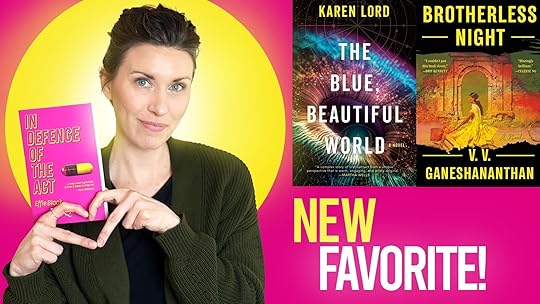
In this searing novel, a courageous young woman tries to protect her dream of becoming a doctor as civil war devastates Sri Lanka.
Jaffna, 1981. Sixteen-year-old Sashi wants to become a doctor. But over the next decade, a vicious civil war tears through her home, and her dream spins off course as she sees her four beloved brothers and their friend K swept up in the mounting violence. Desperate to act, Sashi accepts K's invitation to work as a medic at the field hospital for the militant Tamil Tigers, who, following years of state discrimination and violence, are fighting for a separate homeland for Sri Lanka's Tamil minority. But after the Tigers murder one of her teachers and Indian peacekeepers arrive only to commit further atrocities, Sashi begins to question where she stands. When one of her medical school professors, a Tamil feminist and dissident, invites her to join a secret project documenting human rights violations, she embarks on a dangerous path that will change her forever.
Set during the early years of Sri Lanka's three-decade civil war, Brotherless Night is a heartrending portrait of one woman's moral journey and a testament to both the enduring impact of war and the bonds of home.
V. V. Ganeshananthan is the author of Brotherless Night and Love Marriage, which was longlisted for the Women's Prize and named one of the best books of the year by The Washington Post. Her work has appeared in Granta, The New York Times, and The Best American Nonrequired Reading, among other publications. A former vice president of the South Asian Journalists Association, she has also served on the board of Asian American Writers' Workshop, and is presently a member of the board of directors of the American Institute for Sri Lankan Studies and the Minnesota Prison Writing Workshop. She teaches in the MFA program at the University of Minnesota and co-hosts the Fiction/Non/Fiction podcast on Literary Hub, which is about the intersection of literature and the news.
“Imagine the places you grew up, the places you studied, places that belonged to your people, burned. But I should stop pretending that I know you. Perhaps you do not have to imagine. Perhaps your library, too, went up in smoke.”
In 1981 Jaffna, sixteen-year-old Sashikala “Sashi” Kulenthiren dreams of becoming a doctor just like her eldest brother Niranjan and her late grandfather, who was a renowned physician in Colombo. But as the civil war in Sri Lanka intensifies and violence ensues between the warring factions- the Sinhalese government and the Tamil militants who are fighting for an independent state free of persecution of the Tamils, life as she has known it shall be changed forever. When one of her brothers loses his life in an act of anti-Tamil violence and two of her brothers and a family friend join the “movement” Sashi finds herself making choices and being drawn into a life she had never imagined for herself- a medical student also working as a medic for those serving in the movement. As she bears witness to the politics, the violence, and the activism of the 1980s she eventually embarks on exposing the true plight of civilians caught in the crossfire between the warring factions of the Sinhalese government, Tamil militants and the Indian peacekeeping forces through the written word with the help of one of her professors taking risks that could endanger her life and those of her associates.
“I want you to understand: it does not matter if you cannot imagine the future. Still, relentless, it comes.”
Brotherless Night by V.V. Ganeshananthan is a compelling read. Set in the early stages of Sri Lanka’s three-decade civil war, the author takes us through the turbulence of 1980s Jaffna/Colombo, including Black July and its aftermath, combining historical fact with fiction. The author writes with passion yet does not fill the pages with any excess – be it words or sentimentality. Narrated in the first person by our protagonist, Sashi, the tone is direct, often matter-of-fact, yet there is much depth to the words, the characters and their stories. At times, this book reads as a true account rather than a work of fiction. This is one of those rare books that is difficult to read yet impossible to put down.
“It did not occur to me to count or prove, to measure our losses for history or for other people to understand or believe. I did not collect the evidence of my own destroyed life; I did not know people would ask me for it.”
4.5⭐️
Many thanks to the author, Random House Publishing Group and NetGalley for the digital ARC of this exceptionally well-written novel. All opinions expressed in this review are my own.
*** Congrats on winning the 2024 Women's Prize for Fiction!
'Brotherless Night,' an ambitious novel about Sri Lankan civil war, wins $150K prize - NPR The Carol Shields Prize for Fiction, honoring literature by women. ---------------
There is a civil war going on in Sri Lanka in 1981- and sixteen-year-old Sashi reveals what it means to be swept up in the violence and confusion. The good guys are ruthless, people she loves take incredibly cruel actions, and Sashi finds that even following her conscience has regrettable consequences. Author V. V. Ganeshananthan casts us as witnesses alongside Sashi to the scorched earth unfolding in the wake of the fight.
Here there is no righteous way to fight a pure fight for justice. Sashi loses her brothers and friends to the Tamil Tigers, the revolutionary group rising up in response to the oppression forced upon them by the Sinhalese majority. As a medical student she is recruited to help but discovers the leaders stooping to tactics no better than the enemies they are fighting.
It is not new to see lives obliterated by war. In “Brotherless Night” this pain is strikingly brought to life through the eyes of Sashi, a beautifully realized character who reminds us horror is often suffered by humanity in places not necessarily illuminated by our newsfeed or social media trends.
Thank you Random House Publishing and NetGalley for providing an advance reader copy in exchange for an honest review. #BrotherlessNight #NetGalley
I rate this historical fiction book a solid 4 stars. It is set during the Sri Lankan civil war, between the Sinhalese majority and the Tamil minority. The war lasts more than 25 years. The book centers on one Tamil family and how the vicious war affects them. Both sides kill and torture civilians. The narrator is 16 year old Sashi in 1981. She wants to be a doctor, a very difficult goal in a male dominated society. The title comes from night spent worrying about her missing oldest brother, Niranjan. He has gone to find a safe place for the family while Sinhalese rioters are murdering Tamil civilians. Two quotes: Quote from a revered teacher: "Open your books, read while you can, and remember: there are people in our country who would burn what we love and laugh at the flames. " Life in an underground bunker: "When we ran to the bunkers we tried to remember to carry our torches so that we could check for snakes. Sometimes there were cobras in the bunkers; sometimes after a storm foul smelling water filled them and we rose from them rank and cold." Thanks to Random House for sending me this eARC through NetGalley. #BrotherlessNight #NetGalley. Update 6-14-2024: This book has just won The Women's prize for Fiction. Explanatory quote from the Guardian: " The Women’s prize for fiction, which is now in its 29th year, describes itself as “the greatest celebration of female creativity in the world”. It was set up in 1995, in the wake of an all-male Booker prize shortlist in 1991. The nonfiction prize was announced last year, after research commissioned by the Women’s Prize Trust found that female nonfiction writers are less likely to be reviewed or win prizes than their male counterparts."
With immense compassion and deep moral complexity, V. V. Ganeshananthan brings us an achingly moving portrait of individual and societal grief. “I want you to understand,” the narrator of BROTHERLESS NIGHT insists, and by the end of this blazingly brilliant novel, we do: that in a world full of turmoil, human connections and shared stories can teach us how—and as importantly, why—to survive.
Winner of the Women's Prize for Fiction 2024 A social realist novel about a young woman growing up in the 1980's during the Sri Lankan Civil War: Set mostly in Jaffna, our narrator is teenage Sashi who works hard to become a doctor, but her Tamil family gets swept up in the turmoil around them. Early in the fights between the Sinhalese dominated state and Tamil separatist groups, Sashi's oldest brother is killed, then the two younger brothers join the Tamil Tigers, while Sashi herself starts to work in the hospital, helping the wounded.
The story is rather straightforward and does not add many aesthetic tricks, but the memoir-esque sound with the many passages that read like contemporary reportage has a chilling, intense effect. A particularly stellar example is how Ganeshananthan describes the global media spectacle around the public hunger strike until death of Thileepan (in the book, Sashi is his childhood friend and medic standing on the stage with him during is suicide through starvation that ultimately took twelve days). As the Tamil Tigers fight with other separatist groups and become more and more radicalized, Sashi's loyalty is tested, and she ponders what her role in the war should be.
Ganeshananthan, a past vice president of the South Asian Journalists Association and a director of the American Institute for Sri Lankan Studies, is not only strong when detailing historic events, the evocation of inner conflict and political complexity is also stellar. This is an instructive story about how the fight for the freedom of the underdog can become corrupted, and how a good cause can be perverted and be turned against the very people it originally claimed to speak for. The fractured groups that fight each other divide families and challenge the moral consciousness of those trying to figure out what's the morally right thing to do.
This would make a worthy winner of the Women's Prize, and a worthy entry for the Booker.
I felt inspired and proud that such voices of dissent were able to speak out in their own way. Voices that spoke for all the people that were caught in the literal crossfire. People who found out their heroes were going to coerce, threaten, steal from and kill them. Whose solidarity would cause many a family to lose its children,.... definitely what was being done to the Tamils by the government was not acceptable, it was malevolent and evil.. but what rose up to counter this evil was not the solution, the solution itself demanded unfair and cruel sacrifices of its own. I feel heard because I never lived through the war but I heard about it, saw and read about it... I felt left out because I was deemed not Tamil enough.. but also appalled at the hero worship and guilty commemoration of so many sacrificed. It was a proud identity marker for many...and created a sea of survivor's guilt, untreated PTSD, and unspoken trauma. For others the admiration of the Tigers came with bravado, agression, coercion, fear, with sorrow, with disappointment but also for many it was all they had. They did not dare believe it could have been any other way...my heart breaks for the countless who did not survive and those who continue to be tortured, killed, and disappeared... there is no black and white in war... only blood.
For the writing style: I would say that sometimes the characters felt 1D or detached...it floundered a little after K's fast... and the reminiscing of characters gone could have been clearer... I was bracing myself for the lurid details of the horrid and numerous rapings that occurred where the Tamil media was happy to grotesquely detail and take images of... but V.V. managed to give them their dignity while not hiding it either.
An important book about a teenage girl who aspires to be a doctor, whose dreams get caught in the crossfires of the Sri Lankan Civil War. V.V. Ganeshananthan does a great job of portraying the devastating and horrifying mistreatment of the Tamils in this context. I also thought she effectively showed the unfairness of when our individual desires clash with dire situations outside of our control. Unfortunately I found the writing style a bit dry and stilted, which lowered my enjoyment of the book even though I recognize its necessity.
ETA: I need to add just a few words; I cannot stop thinking about what I have read, learned and experienced, as though firsthand. Atrocities were committed by all involved—the government, the terrorist groups, the Indian peacekeepers and the UN that failed to act. In shining a light on all sides, the book is balanced and fair.
*******************
Lynne, a GR friend, recommended this to me. I trust her opinion. Once again, her advice has proved to be right!
This is a book of historical fiction. It's about the Sri Lankan War. The war began in 1983. On May 18, 2009, President Mahinda Rajapaksa declared its end. Twenty-six years it took. Over one million were killed and millions of Sri Lankans, mainly minority Tamils, were displaced as refugees both inside the country and abroad.
We meet the central protagonist, Sashi, at the age of sixteen. She spills boiling water over her body. A friend, passing by on the street, hears her screams. A medical student, he improvises, covering her burns with the whites of eggs. She too studies to become a doctor. To save lives, any person´s life, is what she wants to do. Her brothers are drawn into the Tamil Tigers terrorist movement. Saving life and terrorism are placed side by side. The exigencies of both are laid bare.
The book is informative. The characters and their life stories pull the reader in. The prose is alternately informative, eloquent and moving. The focus on Sashi and her family gives readers a connection to the many who struggled and suffered. Compassion is what the reader feels. My eyes teared up, not just once but repeatedly. This talented author delivers here a novel that both teaches and moves readers emotionally. I am impressed.
I tend to read classics. Why? Because the probability is high that they are good. A classic must pass the test of time. I bet my bottom dollar that this book will one day become a classic. It’s that good! The book came out this year, at the start of 2023! It makes clear to me that excellent literature is being written today.
You must read this book. No review I write can do it justice. It teaches and wrings your heart.
I listened to the audiobook narrated by Nirmala Rajasingam. Her accent fits the telling of the tale. Names are not always easy to snap up. This is because they were unfamiliar to me. You recognize them after a while. Four stars for the audio narration.
"Open your books, read while you can, and remember: there are people in our country who would burn what we love and laugh at the flames."
Brotherless Night is deeply moving historical fiction that reads like a memoir.
I listened to the audiobook and was swiftly transported to 1980s Jaffna in Sri Lanka, where 16-year-old Sashi is aspiring to be a doctor in a male-dominated society. Unfortunately, Sashi’s medical studies are halted by a civil war, but she continues to learn after accepting a position working as a medic at a field hospital for the Tamil Tigers, which, she says, you know as “the terrorists”.
This work of political and historical fiction introduced me to a time, place, and war that I am unfamiliar with, but quickly grounded me with an understanding of the unrest between the Sinhalese majority and the Tamil minority, which Sashi and her family are.
I found this a very conflicting and human story. It’s so steeped in history and written in such an intimate, personal way that I had to continually remind myself I was listening to fiction, not a memoir. Highly recommend!
--
My deepest gratitude to the Carol Shields Prize for sending me a finished copy of this book to celebrate the prize.
This is the first book I've read about Sri Lanka. I remember near daily headlines while getting ready for work on NPR talking about the Tamils and the war, the atrocities, the human costs, the genocides. This book helped resurrect those memories and connect a lot of dots for me.
I hope a lot of people read this book. I think many people in the US are unaware of Sri Lanka as a country. I know that might sound perplexing, but it's only been in the last decade that people have stopped asking me where Korea is and looking at me with confusion when I tell them I'm Korean. That's just in the cities. In the more rural areas, well, let's just say I was once referred to as a Kreen because they were unable to say Korean. So I'd love more people to know Sri Lanka and all the other lesser known countries, cultures, and histories that make up this beautiful world.
On the other, more dismal hand, it feels like the description of what the US is about to face someday soon. Politics are so hot right now. Perhaps books like this can be effective cautionary tales for us. Then again, it would require people reading, and reading, these days, are highly discouraged by those in power.
PS - loved the little trivia fact about using cracked eggs to treat burn wounds!
i can see how high quality this book is but sadly it was wrong place wrong time for me! it took me foreverrr to read but i would recommend if you're interested as it was just the opposite of what i actually wanted to be reading these past weeks
Brotherless night is set in 1981 and takes place during the Sri Lankan civil way. The story centers around 16-year-old Sashi. Sashi dreams of becoming a doctor just like her eldest brother but after the violence of the war begins, her entire world and everything she knows turns upside down. Sashi soon becomes swept up in the violence and starts to fight for everything she loves.
The book takes us to a first-hand account of the horrors of war. As painful as this story is to read, it's even more frightening that this happened. Sri Lankans were a part of this horrific war that lasted three decades and never once did they receive any aid from the United Nations. Brotherless Night is an absolute must-read and a story that I will not be forgetting any time soon. V.V. Ganeshananthan did a masterful job not only crafting this story and setting but also with her characterization. I highly recommend Brotherless Night to all!
Brotherless Night taught me that as an outsider, I'm quick to condemn others for acts of violence but ultimately what would I do if we were in that situation? Wouldn't I also fight to protect not only the place we call home but also my loved ones?
Brother less Night was published on January 3, 2023 so it is available now! Many thanks to Random House and Netgalley for the gifted copy!
Brotherless Night is an absolute triumph. It is a masterpiece, giving us one woman's perspective of the Sri Lankan Civil War, and simultaneously showing us how in that one perspective lies everything. It is the story of coming of age into a world that becomes increasingly fragmented and horrific, where every lesson comes at a painful cost, and every lovely memory seems to exact an exorbitant price. And yet despite the pain, there is so much beauty in this book, at a fundamental, granular level. Every sentence is stunning, bringing a complicated world and unforgettable characters to life.
But it feels wrong to reduce Brotherless Night to its aesthetic achievements when it feels so crucial, so important, so much more than its sentences or characters, its symbols or arcs. This is a book that feels like a whole world, filled with vital questions and the kind of wrenching heartbreak that stays with you long after the book has closed. I feel certain that if I met Sashi on the street, I would recognize her. This is a novel that works the particular alchemy of the best fiction: it feels like life, but more so.
I will be pressing Brotherless Night into everyone's hands, because you need to read this book immediately.
Thank you to Random House and NetGalley for an advance review copy in exchange for an honest review. All opinions are my own.
Set in Sri Lanka, we follow our protagonist Sashi from 1981 to 2009. She's sixteen when we met her, she has 4 brothers, and the civil war between the Tamils and Sinhalese is brewing.
If you like to learn via fiction, this is the book, especially if like me, you enjoy a good armchair travel.
What struck me most here was how often these stories have the same plot beats. People are marginalised, and the resistance groups are formed to fight for their people. As war escalates, as time passes, the resistance groups lose sight of their people, in many cases turn on their people. Every day citizens get dragged into the conflicts, traitors are accused and pulled from their beds, and stones are thrown within the same party. And the UN, well, the UN does what it does best, condemns from the comfort of its offices, and counts the deaths.
While we chant 'Never Forget', it appears we never learn. The cycle continues to repeat itself globally.
This book is as brutal and unflinching as you'd expect war to be. The fact that this is so recent and still bubbling away makes this an important read.
This book is timely, poignant, and cutting, and I can see why other readers have rated it so highly. Something about the writing, though, just didn't pull me in fully.
The book follows Sashi, a young Tamil girl growing up on Sri Lanka's Jaffna peninsula, the heart of the Tamil resistance movements -- the most notable, of course, being the Tigers. She has four brothers, loving parents, and a dream of becoming a doctor. But as war rises, she and all those around her must make their choices: give everything up to join the movement and fight for independence, or risk everything by dissenting against their methods.
This book is written like a memoir, told from a first person perspective and speaking directly to the reader at times. Sashi recounts the story of her life in the leadup to and outbreak of war, and she documents all the horrors she witnesses along the way. It's a trauma-packed story, one that exposes the human cost of conflict and holds both governments and militants accountable. The author captures the complexity and nuance of life as a civilian caught between two immovable forces, the ever-present feeling of being watched, the desire to do what's right but the grey area of figuring out what that right thing is. If someone asks you to do the right thing, but for the wrong reasons, what do you do? All of that was so well handled in this book.
It's hard for me to explain why I didn't get immersed into the story like other readers have. I don't like memoirs, and even though this is fiction it's in a memoir style, so I think that may be why. I find that because memoirs relay real world events, they can have a sort of quality where instead of a plot and character arc driving the story forward, it can be more of a list of things that occurred to the characters ("first this happened, and then this happened, and then this happened" and so on). Sashi's narration also had long blocks of explanations of what was happening in her life (telling rather than showing), with the most active scenes being the most traumatic, violent parts, which I think may have made it harder for me to connect with the characters during those slower, more intimate parts about family, school, and relationships.
I think this may be a 3.5 for me, balancing the importance of this novel with the fact that it just didn't click for me personally.
I think I have to add another category to my list of Goodreads warning signs: a new, super highly rated book about an Important Topic ™ where all the effusive but light on details reviews end with a good old “tHaNk yOu tO nEtGalLeY”. Happened with River Sing Me Home recently and this is just the next example.
Brotherless Night isn’t terrible - in fact, it started off very strong and I was very engaged with the story for, I don’t know, the first 1/4 of the book or so - but once you strip away the fact that the time period of Sri Lankan history this is about is harrowing, there really wasn’t much depth to the characters.
My biggest problem was with the main character, Sashi. It took me a while to realise I disliked her, but I think my main issue was that her characterisation was extremely weak from a writing standpoint. There was too little introspection on her part about the often paradoxical and difficult aspects of living through a civil war, and because I found her actions unsupported by well written thought processes or feelings, I thought her vapid and bland. There was also not enough depth to the breakup and increasing dysfunctionality of her family, which was the most interesting aspect of the book (instead of Sashi’s adventures at the Tamil Tiger hospital and how she suddenly turned into an investigative journalist) and should’ve been the focal point of the whole narrative. You get no sense that Sashi is truly conflicted about having two cold blooded killers as brothers or about working in a hospital that supports her brothers’ murderous political movement. I didn’t even get a sense of whether she supported the Tamil cause whatsoever beyond “well my brothers and my crush are part of it”. In fact, her motivations remain completely opaque and left me thinking she didn’t even know what to be conflicted about and just wasn’t very smart. My sense at the end was that all her actions were driven by her being in love with her childhood crush turned Tamil Tiger mouthpiece instead of her having actually put any thought into anything, which I’m pretty sure wasn’t meant like that and is just bad writing.
So yeah. If you’re like me and don’t know much about the Sri Lankan civil war, this provides a candid view into the Tamil civilian perspective even though, again, it was severely lacking in introspection. Overall I found it fairly disappointing and it sure didn’t live up to the 5* hype. 4* for the first couple chapters, 2* for the rest of the book.
I largely completed this one via audio. I traditionally don’t review my audio books as I don’t believe I can give a fair assessment of things I absorb via my ears :)
However, I went to audio as I wasn't engaging with the writing style and in this case the narrator was an excellent mediator of the story. I have read three books on the Sri Lankan civil war, first and foremost of these is This Divided Island: Stories from the Sri Lankan War which is an excellent work of non-fiction, the second is the Booker prize winning The Seven Moons of Maali Almeida which I admit to struggling with. Its hard to know where to position Brotherless Night , it is not as structurally daring as Seven Moons but it gives a more sobering accounting of events. However as an engaging piece of fiction I found it wanting in some respects.
This novel is hard to critique because the story it tells is so important both as an accounting of a period of time in Sri Lankan history but also as a way to reflect upon some of our current conflicts.
One of the best books I’ve read. My favorite quotes:
“You won’t read about that anywhere,” the driver says. “That doesn’t mean it didn’t happen” (pg. 340).
“I want you to know, I can still see it, how radiant Anjali looked sitting there, sipping her cup of tea. What can I tell you about in the presence of such a warm person? No one looking at the sun thinks about how swiftly it can be eclipsed” (pg. 290).
Time: “Time seized and contracted. Did the clocks themselves shudder? In 1988 we wrote by candlelight” (pg. 275).
Death: “I breathed again, and _ did not. It was the first moment in which such a thing was possible, and the sharp quickening pain of it stunned me. How swiftly the world reshaped itself!” (pg. 254). “I would have told you that I went with him into the endless country of that trapped breath, a place where neither of us could cry out or make any human sound” (pg. 255).
Truth: “I find the weeping of animals worse than the weeping of people because the grief of animals is nearly inconsolable. One can talk to a person, even lie to a person, and tell them everything will be all right…But you cannot lie to a weeping dog; an animal’s body knows the truth” (pg. 215).
Medicine: “I want to be a doctor to help as many people as possible,” I said. “Like my grandfather did, in Colombo. I think everyone deserves medicine. It’s a kind of safety, and if I can make anyone feel safer, that’s the kind of work I want to do” (pg. 162).
I find this is a difficult book to summarize and even more difficult to rate. I will also mention that I was listening to this book first while traveling through Laos, a country obliterated in a war they were not even party to, and where people are still regularly maimed and killed by unexploded clusterbombs 50 years after the end of the secret war and later in Vietnam, and I imagine that the setting impacted my read.
I often do not love historical fiction because it bends real and momentous events to fit some ultimately tiny story. I get why writers do that. The bigger historical moment is too much for people to grasp without a patient and talented writer as a guide, and it is takes less talent and work to instead create a tiny story to anchor things and humanize the whole. The tale of ordinary people provides order for people who may know personal pain and loss but who have not faced any real uncontrolable external challenges - war, hunger homelessness, natural disaster, the violent sudden loss of many. At the same time though shrinking these stories to bite sized "we were pure and innocent bystanders and then the Nazis killed my husband and I feel sad but I have pluck" narratives diminishes the real story. There should not be order, the story should not be comprehensible because it is the inhumanity, the senselessness, the randomness, the moral greyness of living in extremis, that is what is important. Certainly there are other great pieces of historical fiction that get this, but the majority do not. This book though rolls around in the greyness. It does not allow us to look at words like "terrorist" or "doctor" or "brother" or "friend" and then make assumptions about goodness or badness or likely responses to stimuli based on or feelings about those charged labels. That is what I loved most about this book. At the center of events is Sashi, a lively Tamil girl whom we meet as a teen. She has a loving mother, a kind if absent father, four brothers, a grandmother and a best friend all of whom she adores, and maybe even a boy who will be a great love someday. For now her focus is on passing her qualification exams to go to medical school -- a goal shared by her best friend and already reached by the maybe future boyfriend. And then the government steps up its brutal repression of the Tamil people with a frenzy of mass murder, and the Tamil rise up in defense. Nearly all the men and boys in Sashi's life join the Tamil Tigers and pain and loss become her only constants. Sashi's med school studies and the impact of a professor there whom she sees as a role model help her to see life's complexities and to see her human behavior in a larger context. Sashi needs to navigate a world where at first right and wrong become unclear, and later where right and wrong cease to matter.
The author does a very good job of explaining the Sri Lankan civil war, which most people outside the region know little about, and I appreciated her historical rigor. I also appreciated the author's restraint. This book is filled with emotional moments, and I got to have those moments without the narrator telling me how to feel. As people lose family members and spouses, as they watch beloved people die by choice for the cause a lesser writer would have described their pain and sadness in great detail. But why? As a reader I don't want to read about feeling, I want to feel. The steadiness of the prose (which is not to say that it is cold or detached, just not overwrought) made me imagine and inhabit moments that I would have guessed were unimaginable. Empathy rather than schmaltz is a good thing.
One more note, the narrator of this audiobook was perfect for this book - she was very matter-of-fact in her reading without ever sounding wooden or detached.
As I read on I found this book to be quite compelling and wonderfully written. It turns out our author was an investigative reporter in her prior life. The investigations here and questions she raised and the morality questions and processes she and her colleagues put into place were very interesting.Her interactions with her cast of characters were terrific - the Tamil Tigers; the medical students, her patients and a teacher who became her mentor and the teachers husband who became a colleague too. And there was her friend K who she loved from childhood, her parents and grandmother and her 4 brothers and school mates. It was quite intense sometimes. So many changes. War can do that in so many ways. It brings harm to people as we know. And let’s not forget ( how can we) the harm and cruelty- to women often. It was there too in the Tamil war and was included here though it was not the only focus of the book. I wanted to call this out as it was upsetting at times because it was portrayed so honestly. And there could be people reading this that this part could be difficult for. This author had a lot of integrity and discretion . She understood the human condition and field of emotions, struggles and the impact of war on individuals and her country. This book spoke to me the more then the 2 recent Booker award books on Sri Lanka It was a long war and her writing -though fiction sounded so personal and real. It brought the war home to me thru Sashi’s life (the main character.)
To me it was very slow in the beginning. I put it down for a couple of weeks and when I picked it up again it took me until chapter 7 to get engaged. But once I was engaged I couldn’t put it down. I am so glad I didn’t put it down for good. This was a gem. The ending needed editing. I thought about that. This book must of been very difficult to write. It was a long war. It must of taken a lot of energy and research. It’s not a memoir - it’s fiction and thus a different process. And yet it felt so real. I listened to an interview with her after I finished the book. It took her 20 years to write it. The editing in and flow of the book were so well done. How does one end a book that you put so much of your life into? Is there ever an ending to war for those who went through it?
Most of the events in this novel take place during the first decade of Sri Lanka’s nearly three-decade civil war, pitting minority Tamil against majority Sinhalese. As the novel opens in 1981, Sashi is a 16-year-old, studying hard, with plans to become a doctor. She has four brothers, but, as you might suppose from the title, fate will not necessarily be kind. The novel is told from Sashi’s point of view, and even though in the opening pages we learn she is recalling past events from the vantage of 2009 in NYC, the story unfolds with a vivid and urgent immediacy. Fairly early on in the book, a wave of anti-Tamil riots rips through Colombo, with Sinhalese mobs indiscriminately killing, raping, burning, looting and unleashing horror. This is the trigger for the formation of the Tamil Tigers and a number of other separatist groups who take up arms to establish an independent Tamil state in the north and west of the country. What sticks with me the most is how blood is on everyone’s hands: the Sinhalese majority government, of course; the Tamil fighters who engage in indiscriminate bombing campaigns against civilian targets and in retributive Tamil-on-Tamil assassinations of those deemed too moderate or affiliated with a competing rebel group; Indian peacekeepers sent into the country allegedly to protect (fellow Hindu) Tamils; and finally, the UN, in the final days of the conflict in 2009, for allowing the almost unimaginable horror of hundreds of thousands of civilians being rounded up and used as completely disposable shields between the opposing armed sides in the conflict.
I well remember downtown Toronto being brought to a virtual standstill for several days in early 2009 by hundreds of Tamil protesters who used their bodies to block major traffic arteries. I was entirely ignorant of events in Sri Lanka and I am ashamed now to remember being mostly annoyed by the inconvenience of being unable to get around freely. This novel makes heartbreakingly clear the horrific reality on the ground in Sri Lanka that those protestors (in Toronto and in major cities around the West) were trying to bring to the world’s attention.
Evil is not limited by what you can personally imagine. from Brotherless Night by V. V. Ganeshananthan
Brotherless Night is a shattering novel. It reads like a memoir, the narrator’s voice so direct and real, or a journalistic retelling of a true story. I have read books that touched on the Sri Lanka Civil War between the majority population Sinhalese and the Tamil minority. Ethnic violence by the Sinhalese against the Tamil resulted in a backlash; the Tamil Tigers arose, over time becoming equally as fearsome in their civilian attacks. Boys were taken hostage, forced to serve in the army of one side or the other. India’s peacekeeping force tried to disarm both sides; the Tigers attacked them with suicide bombers. The conflict went on for decades.
In this novel, I was transported deep into the experiences of civilians who are inspired to action, either to defend their people or to serve all people. They witness first hand terrorism and suffering, all the horror of war. Friends turn on friends, student against teacher, siblings are divided, families displaced.
The novel begins before the war when Sashi and her brother and his friend K are preparing to study medicine, meeting up at the library. When the beloved older brother is killed in an attack, two of her brothers and the friend join the Tamil Tigers. When the Sinhalese round up village boys and takes her youngest brother, her mother and the woman of the village gather in protest. “What will we do when the men are speechless,” the leader cries out, demanding the boys’ release.
Sashi wants nothing more than to heal. She is drawn to volunteer in a Tamil field hospital, treating cadre and civilian victims of the war. Faced with one moral choice after another, Sashi is drawn into overt and covert activities. When a patient, a victim of a horrific attack, wrecks her revenge in a dramatic way, Sashi is moved to become political.
Hundreds of thousands of civilians were caught between the armies while the United Nations and the world watched without sending aid.
Ganeshananthan’s novel is hard to put down and hard to read.
I received a free egalley from the publisher through NetGalley. My review is fair and unbiased.
Brotherless Night tells the story of Sashi, a medical student, and her family, including four brothers, who are caught up in the unrest, violence, and ultimately, war in Sri Lanka in the 1980s. They are Tamil in a majority Sinhalese country. Sashi adores her brothers, three of whom become involved with the organization working for Tamil independence.
This book was a bit out of my typical comfort zone, but it is good to mix it up once in a while. A fictional account that reads like a memoir, It is a tough story because so much of what occurs is not fiction. It really happened and continues to happen all over the world as in so many cases the revolutionaries fighting for independence turn out to be as dangerous as the oppressors as does the outside forces that intervene.
This account of man’s injustices to his fellow man is beautifully written and engrossing. The author writes of unimaginable atrocities with sensitivity and pathos. Despite the wrenching honesty of the novel, the strength of those who survive is powerful and somehow uplifting.
In "Brotherless Night," Ganeshananthan delivers a searing historical narrative of Sri Lanka's brutal civil war. Through the first-person perspective of Sashikala Kulenthiren (Sashi), readers are immersed in the life of a young woman coming of age in the Tamil city of Jaffna, starting in 1981.
Ganeshananthan adopts a direct, almost journalistic style, providing a visceral account of how the war ravages Sashi's family and community. This is combined though with the intimacy of memoir that sensitively conveys the personal, familial and relationship damage that the war inflicts. The tension and complementarity between these styles is at the heart of this work's literary merit.
Despite the turmoil, Sashi remains resolute in her ambition to become a doctor. Guided by dedicated teachers and mentors, she gains acceptance into medical school, aspiring to alleviate the suffering and 'do no harm' amidst the chaos of war. However, her values and commitments are challenged as her brothers become embroiled in the conflict, joining Tamil militant separatist groups, notably the Tamil Tigers. Additionally, the nuanced depiction of her relationship with a close friend and potential love interest, identified as "K," who rises to prominence as a leader within the Tigers, adds depth to the narrative. The exploration of Sashi's evolving feelings towards "K" and her struggle to reconcile his involvement with the Tigers constitutes a compelling aspect of the novel.
As the conflict escalates, Sashi becomes entangled in the political divisions among the resistance groups, disrupting her studies at Jaffna University. Eventually, she is recruited by K to serve as a medic in a makeshift field hospital, providing aid to both fighters and civilians, including children caught in the crossfire.The exploration of moral ambiguity and accountability through Sashi's complex motivations is exceptionally well executed.
Ganeshananthan does not flinch from confronting the moral complexities of the conflict, portraying how Tamil factions resort to surveillance, assassinations, and the murder of civilians to enforce ideological purity. The narrative is punctuated by heartbreaking losses as Sashi witnesses the devastation inflicted upon her loved ones, including family members, friends, and mentors.
The novel vividly captures the terror of government-sponsored riots in Colombo, where Sashi and her grandmother (Ammammah) narrowly escape murderous mobs targeting Tamils. Their ordeal includes the burning and destruction of her grandmother's home. Throughout this narrative, the depictions of the relentless bombings, massacres, detentions, and rapes foreground the grim daily reality faced by the characters. Ganeshananthan's writing has a quality of ruthless restraint, intensifying the emotional impact of these events.
Despite a glimmer of hope with the arrival of Indian peacekeeping forces in 1987, their presence only exacerbates the violence, with the Indian army inflicting their own massacres and rapes. "Brotherless Night" painfully portrays the disproportionate burden borne by women in the conflict, depicting their resilience in struggling to maintain community and protect their families amidst the chaos.
Through Sashi's unwavering commitment to truth-telling, Ganeshananthan meets the challenge of preserving the memories of the war's victims amid efforts to erase their history. Sashi's reflections while living in New York in the late 1990s powerfully capture the struggle to reconcile with the atrocities witnessed and the desire to assert an accountability for the haunting memories. Sasha's refusal throughout the novel to 'look away', to keep telling the story as truthfully as she can is Ganeshanathan's impossible response to the horrors of this war,
"To begin you must put one foot in front of the other, one word after another word, one story after another story. Have you ever tried to record this kind of history? No sooner would we write something down than the Tigers or the Indians or the Sri Lankan Army would follow in our wake, trying to erase it. I had asked Anjali and Varathan to teach me how to collect the truth. They showed me that this was something I could learn only by talking to ordinary people, by asking them questions, by waiting and listening".
Ganeshananthan asks how do we confront and hold ourselves accountable to the terrible history of the Sri Lankan civil war? How do we honour and remember the victims? After escaping to New York in the late 1980s and building a life as a Dr, confronting the news of the war's final stages Sashi reflects,
"What would you do not to remember something like this? Not to know it? Not to walk around this ripe, living city every day, full of this irrational death? When I walk by central park all I see is how many bodies it might contain. It's the same size as the place where the civilians were trapped. Look around us - all the people moving, and eating, and talking. Laughing. Arguing. Catching taxis, entering subway stations. I thought I would burst."
The book concludes with a powerful meditation on storytelling's role in bearing witness to tragedy, offering a fictionalized account that transcends historical documentation. Ganeshananthan's narrative prompts readers to consider whose stories they choose to believe and how long they are willing to listen, challenging us to confront the uncomfortable truths of war.
"This is the one next to it on the shelf. I can promise you there will be another, and another. Whose stories will you believe? For how long will you listen? Tell me why you think you are here, and that will be as true as anything I can say."
In the current global context of ongoing conflicts, such as in Gaza, Ganeshananthan's narrative serves as a sharp reminder of the imperative to bear witness to human suffering. Brotherless Night denies us the privileged complacency of 'looking away'. For its compelling narrative and thought-provoking exploration of accountability in the midst of the moral ambiguities and complexities of such wars, "Brotherless Night" deserves consideration as a worthy recipient of the Women's Prize for Fiction.
The problem I have with the five star scale on Goodreads--or at least the way I rate books on it--is there is no way to distinguish "excellent" from "everyone must drop everything and read this book now." The five stars for Brotherless Night is more along the lines of the later. It is a devastatingly powerful, moving and complex portrayal of the Sri Lankan civil war.
The book is mostly set in the Tamil city of Jaffna and told in the first person by a woman named Sashikala (Sashi) Kulenthiren who is 15 when it starts and on track to attend medical school--which she eventually does. She has four brothers who are all caught up and affected by the civil war in different ways, all of which in turn affect her.
The story begins just before the Sri Lankan civil war starts as the discrimination against Tamils is growing culminating in the "Black July" pogroms against the Tamils in the summer of 1983. Following this the Tamil Tigers grow in power and Jaffna (and other areas) effectively secede from government control. The main narrative ends in 1989 when the narrator flees the country. All of this is bookended by a prologue and last chapter set in New York as the narrator looks from afar at the brutal ending of the civil war.
The book presents a feminist perspective on all of these events with one woman saying "Unlike men, [women] were not interested in credit, only success, and laid their plans accordingly." These women successfully organize a march to free their sons (something Sashi's father passively avoided), document human rights abuse through a series of "Reports," teach medical school classes under terrible conditions, and much more.
The men are much more mixed. In some ways the V.V. Ganeshananthan presents a morally complex portrait of people fighting back against the harassment, discrimination and killings they have been subjected to but then themselves engaged in extreme acts of violence, including against Tamils who are in different factions, are insufficiently supportive of their movement or even critical of it.
The book depicts some extraordinary characters: someone called Sir who teaches Sashi, K. who leaves medical school to become a leader in the Tamil Tigers and Anjali a medical school professor and highly principled human rights activist (evidently based on a real person).
Interestingly, and I assume this was by design, the four brothers are no depicted nearly as vividly, especially since one of them dies relatively early in the book and two others leave for the Tamil Tigers and only return home for brief visits where they are largely silent, especially about some of the horrors that we hear about them perpetrating.
Many of the characters meet brutal ends, much more often at the hands of the Tamil Tigers who either murder them or order them to die. But there is no shortage or portrayal of the brutality of the Sri Lankan regime or the Indian "peace keepers".
Ultimately it is the civilian victims--some of whom take extraordinary and courageous risks to fight back (including the narrator)--who are unambiguously and without any moral complexity the heroes of this account.
Strongly recommend this book. (For perhaps an even more bleak account of the Sri Lankan civil war, with a much narrower aperture of a short period of a few people caught in the conflict, I also highly recommend The Story of a Brief Marriage.)
This novel takes its time in the beginning to establish a warm family atmosphere - I knew going into it that this was going to be a wrenching war story, so I really appreciated the early opportunity to live quietly and intimately with Sashi and her family, and learn the daily rhythms of life in pre-war Jaffna. Sashi was an earnest, quiet, hard-working person, as a teenager and an adult, and she remained a strong anchor for me, even as she herself was beset by mental and physical turmoils of war. I don't know much about this war, but the author deftly gave me a sense of the political complexities of the conflict, not through info dumping or explication, but by showing characters who struggle through those confusions themselves, sometimes finding resolution in dogma, or more often searching but not finding resolution. There were two reasons this wasn't a 5 star book for me:
Ganeshananthan is a Sri Lankan/American writer who creates a compelling voice for the first-person protagonist describing her experiences as a sister, daughter and medical student living through the Sri Lankan civil war of the 1980s and 1990s. I enjoyed The Seven Moons of Maali Almaidi, and found this book to be a great complement. Ganeshananthan’s linear storytelling and authentic-seeming narrator clarified the war’s complex history and made for an intimate exploration of how the war affected women. I’m happy to see this book won the 2024 Women’s Prize for Fiction.
“But then the lights winked out across the peninsula, as boy after boy I had known and loved was extinguished or gone.” (p. 94)
Although this novel moves slowly, and reads like a nonfiction account of the 1983-2009 Sri Lanken Civil War, it is powerful, heartbreaking, and unforgettable. From the perspective of a young woman training to become a doctor, one whose family is torn apart by the resulting conflict and violence, we see how government intolerance and oppression of ethnic minorities can result in countermobilization, terrorism, and the loss of a generation of young men to the “call of militancy.” In turn, we see the dark side of militant mobilization—how power corrupts its leadership, just as it corrupts any other organization, how ideology blinds ideologues to their role in atrocities, and how militants end up hurting the very people they are supposed to represent and protect.
“Perhaps my brothers will be the ones sent to kill me, or worse, collect me.” (p. 189)
We see how families are pulled into war, being forced to give up their homes, to feed and house militants, to contribute money to militancy, to doctor hurt terrorists, and even to serve unwillingly as human shields in the midst of bullets and bombs. We see how soldiers and “peacekeepers” become murderers and rapists, and how culture can doubly victimize victims of sexual assault by considering them ruined. We see the backstory of what leads people to become suicide bombers. And we see how lives and relationships that might have turned out very differently—that might have been filled with happiness and love—are snuffed out.
“Don’t you ever think about the other life we might have had? … I would have spent the other life with you.” (pp. 227-228)
“I wanted the life on the other side of the war’s looking-glass, the future we might have had, and which no longer existed.” (p. 267)
OTHER MEMORABLE QUOTES:
“Open your books, read while you can, and remember: there are people in our country who would burn what we love and laugh at the flames.” (p. 43)
“Ask the clock for mercy; I promise, there is none—only a day on which your loved one is dead, and another, and another, and another after that.” (p. 84)