

What do you think?

Mississippi Blue
Set in the fictional town of Orson, Mississippi, Mississippi Blue follows the investigation of Mary-Lee Hastings, the six-year-old daughter of upstanding citizen and preacher, Mark Hastings, who disappears without a trace one hot summer night in June, 1969.Detective DuBois and newly appointed Detective Carolina Waterson answer the call as the town’s secrets start coming out—and decades of fear, hatred, racism, and violence are revealed. All the while, The Thing—an unspeakable beast not of this world—waits and watches.
Enter Seth Barton, a man with a very special ability. An ability that lets him see a different side of Orson, a side he calls The Blue, only reachable by plunging himself into the deep waters of the Mississippi. He finds an unlikely partner in Detective Waterson, and together they race to defeat The Thing and rescue Mary-Lee before the town comes crumbling down around them.
Enter Seth Barton, a man with a very special ability. An ability that lets him see a different side of Orson, a side he calls The Blue, only reachable by plunging himself into the deep waters of the Mississippi. He finds an unlikely partner in Detective Waterson, and together they race to defeat The Thing and rescue Mary-Lee before the town comes crumbling down around them.
272 pages, Kindle Edition
Published July 30, 2020
About the author
Brittany Johnson
5 books54 followersBrittany Johnson is the author of Mississippi Blue. Carrying a deep love for horror and southern gothic, she writes novels, short stories, and poetry. Her writing tool of choice? A seventy-year-old typewriter named Roland.
Ratings & Reviews
Friends & Following
Create a free account to discover what your friends think of this book!
Community Reviews
Displaying 1 - 30 of 42 reviews

January 2, 2022
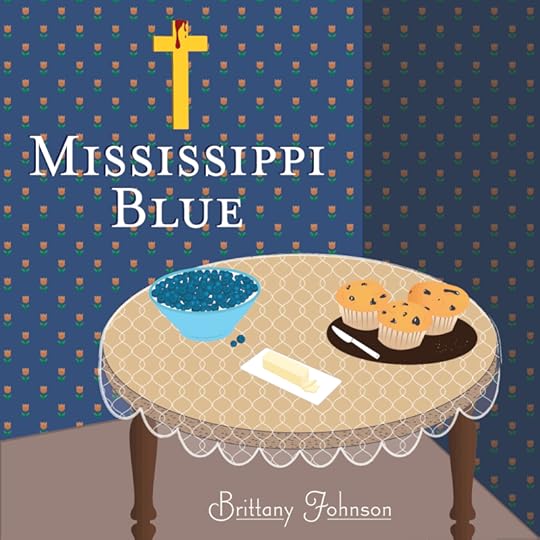
Mɪssɪssɪᴘᴘɪ ʙʟᴜᴇ, by Brittany Johnson, is blueberry cornbread muffins slathered with honey butter.
They were meant for your daughter.
Warm, delicious cornbread muffins stuffed with melt-in-your-mouth blueberries. A fresh stick of homemade honey butter swarms the air with its sweet, tantalizing scent.
Muffins she didn’t get a chance to try. Because when you called her name, when you went to her bedroom door, when you checked every last place in her room,
(ᴛʜᴇ ʙᴇᴅ, ᴛʜᴇ ᴄʟᴏsᴇᴛ, ᴇᴠᴇɴ ᴛʜᴇ ᴛᴏʏ ᴄʜᴇsᴛ)
those muffins sat, untouched on the kitchen table.
The muffins were a first for you, a recipe found hidden in an old, unmarked box from your grandmother. The cornmeal was no surprise, you can hear her words now, drift through the room like a waft of smoke. 𝐴 𝑡𝑟𝑖𝑐𝑘 𝑜𝑓 𝑡ℎ𝑒 𝑡𝑟𝑎𝑑𝑒, 𝑔𝑖𝑣𝑒𝑠 𝑖𝑡 𝑡ℎ𝑎𝑡 𝑠𝑜𝑢𝑡ℎ𝑒𝑟𝑛 𝑡𝑤𝑎𝑛𝑔.
Now, those same blueberry muffins taunt you from their position at the table. Stacked high like a great big wall, closing in on you. No way to get to the other side.
A relic of the past.
How many days has it been?
How many sleepless nights?
Head in hands.
Head on table.
No escape.
All ALONE.
And A L O N E is a wide mouth of a word, so big it attempts to swallow you whole.
You let it, no fight left in your sallow skin, your emaciated face, your skeletal limbs, taken from under the dim light flickering above.
And now ᴛʜᴇ ʙʟᴜᴇ passes over your eyes, bruises your world with its sick haze.
In this old, dusty reality you shove each muffin into your mouth. The grit of the cornmeal sticks to your teeth, feels more like gravel than crumbs, boulders now.
Cʀᴜɴᴄʜ
Cʀᴜɴᴄʜ
Sɴᴀᴘ
and you don’t know if it’s the cornmeal or the bones of your teeth that you’re chewing on now.
But what you do know, what you can see, is that pink fleshy man crawling toward you, underneath the table now, grasping your bony ankles and pulling you
Dᴏᴡɴ
Dᴏᴡɴ
Dᴏᴡɴ
Follow @booksasmeals for more horror reviews!

February 3, 2022
Mississippi Blue is a potent genre medley that blends period drama escapism with creature horror haunts. Following the mysterious disappearance of the preacher’s daughter in the fictional town of Orson, Mississippi, Author Brittany Johnson orchestrates a strong cast of characters and strings together a gripping storyline in this powerhouse debut.
“Orson wasn’t an easy place to go missing, especially if you were the daughter of a white preacher man. In fact, a child (a white child, mind you) hasn’t disappeared in a good twenty-four years or so.”
It was the summer of ‘69, and we’re not singing Bryan Adams. We’re talking about the time period of the story, and the many real problems that plague said period, for when preacher Mark Hastings tries to break through the barrier of Deep South segregation by opening the doors of his church to those of color, such a decision isn’t taken lightly by those who embrace the long-ago status quo of woe, and just might be related to his missing Mary-Lee.
“The town lived in its happy little southern way, poorest county or not, with segregation in tip-top shape, according to the majority of the white folk. It was far easier to blame their misfortune on those who looked at the world differently.”
A strong case can be made that this book’s greatest strength is how it captures the essence of the era. Argue either way, this book is exceptional, no doubt a standout. The writing reads with a fluid conversational lilt, staying true in tone and texture to the time and place of the story. Occasionally our senses are so stimulated, we’re able to feel and smell the sticky Mississippi humidity while listening to the soundtrack of cicadas and crickets . . . if not another creature on lurk in the night.
“But she listened too close and a sound, a peculiar, unsettling sound crawled into her ears, making her body instantly tense and her breath catch mid-inhale.”
Brittany Johnson’s writing voice screams with scary current talent and pounds distant drums with down-the-road potential. There are subtleties and nuances to the storytelling that perhaps only a keen-eyed writer can appreciate, let alone even notice, and the characterization techniques throughout the tale are superb. One section in particular, specifically when Rita is brought to life in chapter 22, is probably the best chapter I’ve read in the Indie sphere when it comes to characterization. No exaggeration, it’s pure gold. We not only get to know everything we need to know and like about Rita, we also see what could easily be the strongest weapon in the Author’s repertoire.
“Rita wondered one of those nights alone in her room if she’d be any good at writing. The thought gave her goose pimples, terrified and excited her all at the same time — a good kind of thrill, the kind that life was made of. She got that same sensation the moment before Kennedy first leaned in and kissed her.”
A remarkably well-executed scene is when Detective Carolina Waterson encounters The Thing at the barn, battling not only the demons of her past, but most importantly in the present moment the evil entity with nothing but bad intentions. Indeed, the impressive weaving of a traumatic flashback intensifies an already very tense juncture in the story, adding heartfelt depth to — and another reason to root for — Waterson’s character.
“How fitting for it to be in the same place. Repression could not act, it could not buffer, it could not keep the old blackened pain away, though it tried, reality flickering back in for seconds at a time, the barn looking at her with its weeds taken to it, coursing over its ravaged and weathered planks, like tears down a mother’s embittered face. It mocked Carolina with bewitching windows for eyes, glass knocked in.”
Powerful and dramatic, capped off with an endearing conclusion, the Deep South tale of Mississippi Blue hides a diamond in its depth: a polished storyteller by the name of Brittany Johnson.
“Orson wasn’t an easy place to go missing, especially if you were the daughter of a white preacher man. In fact, a child (a white child, mind you) hasn’t disappeared in a good twenty-four years or so.”
It was the summer of ‘69, and we’re not singing Bryan Adams. We’re talking about the time period of the story, and the many real problems that plague said period, for when preacher Mark Hastings tries to break through the barrier of Deep South segregation by opening the doors of his church to those of color, such a decision isn’t taken lightly by those who embrace the long-ago status quo of woe, and just might be related to his missing Mary-Lee.
“The town lived in its happy little southern way, poorest county or not, with segregation in tip-top shape, according to the majority of the white folk. It was far easier to blame their misfortune on those who looked at the world differently.”
A strong case can be made that this book’s greatest strength is how it captures the essence of the era. Argue either way, this book is exceptional, no doubt a standout. The writing reads with a fluid conversational lilt, staying true in tone and texture to the time and place of the story. Occasionally our senses are so stimulated, we’re able to feel and smell the sticky Mississippi humidity while listening to the soundtrack of cicadas and crickets . . . if not another creature on lurk in the night.
“But she listened too close and a sound, a peculiar, unsettling sound crawled into her ears, making her body instantly tense and her breath catch mid-inhale.”
Brittany Johnson’s writing voice screams with scary current talent and pounds distant drums with down-the-road potential. There are subtleties and nuances to the storytelling that perhaps only a keen-eyed writer can appreciate, let alone even notice, and the characterization techniques throughout the tale are superb. One section in particular, specifically when Rita is brought to life in chapter 22, is probably the best chapter I’ve read in the Indie sphere when it comes to characterization. No exaggeration, it’s pure gold. We not only get to know everything we need to know and like about Rita, we also see what could easily be the strongest weapon in the Author’s repertoire.
“Rita wondered one of those nights alone in her room if she’d be any good at writing. The thought gave her goose pimples, terrified and excited her all at the same time — a good kind of thrill, the kind that life was made of. She got that same sensation the moment before Kennedy first leaned in and kissed her.”
A remarkably well-executed scene is when Detective Carolina Waterson encounters The Thing at the barn, battling not only the demons of her past, but most importantly in the present moment the evil entity with nothing but bad intentions. Indeed, the impressive weaving of a traumatic flashback intensifies an already very tense juncture in the story, adding heartfelt depth to — and another reason to root for — Waterson’s character.
“How fitting for it to be in the same place. Repression could not act, it could not buffer, it could not keep the old blackened pain away, though it tried, reality flickering back in for seconds at a time, the barn looking at her with its weeds taken to it, coursing over its ravaged and weathered planks, like tears down a mother’s embittered face. It mocked Carolina with bewitching windows for eyes, glass knocked in.”
Powerful and dramatic, capped off with an endearing conclusion, the Deep South tale of Mississippi Blue hides a diamond in its depth: a polished storyteller by the name of Brittany Johnson.

August 12, 2020
A breakout Deep South horror story. This book kept me up at night.
Johnson knocks it out of the park with her debut novel about The Thing in the woods and the seemingly quaint southern town it terrorizes.
It starts with the disappearance of little Mary-Lee Hastings, the preacher's daughter, and quickly accelerates into one hell of a roller coaster ride. The State P.D. is called in, and the secrets start coming out--and decades of fear, hatred, racism, and violence are revealed. All the while, The Thing waits and watches.
Enter Seth Barton, a man with a very special ability. An ability that lets him see a very different side of Orson, a side he calls The Blue, only reachable by plunging himself into the deep waters of the Mississippi. He finds an unlikely partner in Detective Carolina Waterson, and together they race to defeat The Thing and rescue Mary-Lee before the town comes crumbling down around them.
Johnson's tale is masterfully woven, with each chapter filling in the spaces between Orson's inhabitants and slowly building the tension until the story feels taut as a bow string. Her characters feel as alive as you or me, and The Thing will give you nightmares.
If you like horror, I have three words for you: READ THIS BOOK. (But maybe not at night right before bed.)
Johnson knocks it out of the park with her debut novel about The Thing in the woods and the seemingly quaint southern town it terrorizes.
It starts with the disappearance of little Mary-Lee Hastings, the preacher's daughter, and quickly accelerates into one hell of a roller coaster ride. The State P.D. is called in, and the secrets start coming out--and decades of fear, hatred, racism, and violence are revealed. All the while, The Thing waits and watches.
Enter Seth Barton, a man with a very special ability. An ability that lets him see a very different side of Orson, a side he calls The Blue, only reachable by plunging himself into the deep waters of the Mississippi. He finds an unlikely partner in Detective Carolina Waterson, and together they race to defeat The Thing and rescue Mary-Lee before the town comes crumbling down around them.
Johnson's tale is masterfully woven, with each chapter filling in the spaces between Orson's inhabitants and slowly building the tension until the story feels taut as a bow string. Her characters feel as alive as you or me, and The Thing will give you nightmares.
If you like horror, I have three words for you: READ THIS BOOK. (But maybe not at night right before bed.)

March 30, 2022
This is a really good tale about the mean things in life and the way to survive them, any means possible! With a good mixture of Stephen King’s It, Stranger things and some Mississippi Burning, Brittany wrote this incredible but also heartbreaking story!
A mixture of horror, a police detective story, a war tale and deep southern stories of racism by the Ku Klux Klan… that’s best how to describe this indie-horror debut by Brittany Johnson.
As it plays in 1969, in the south of the US (in a town called Orson which is a great name for a town and a great tribute to Welles), so racism plays a big part, also lack of women’s rights… (unfortunately 6 decades later these issues still exist, not only in the US) so I love how Brittany tackles these issues in this book and kind of gives it a twist of her own in a way that’s unbecoming to the bigots and racists (in this story)
But all this proves that the biggest, cruelest horror does not exactly come from the creatures and spectres created by writers, but is everyday horror. War, murder, religious killing, racism and what more… and this is something we get to see in this novel!
Full review: http://looneybooks79.blog/2022/03/30/...
A mixture of horror, a police detective story, a war tale and deep southern stories of racism by the Ku Klux Klan… that’s best how to describe this indie-horror debut by Brittany Johnson.
As it plays in 1969, in the south of the US (in a town called Orson which is a great name for a town and a great tribute to Welles), so racism plays a big part, also lack of women’s rights… (unfortunately 6 decades later these issues still exist, not only in the US) so I love how Brittany tackles these issues in this book and kind of gives it a twist of her own in a way that’s unbecoming to the bigots and racists (in this story)
But all this proves that the biggest, cruelest horror does not exactly come from the creatures and spectres created by writers, but is everyday horror. War, murder, religious killing, racism and what more… and this is something we get to see in this novel!
Full review: http://looneybooks79.blog/2022/03/30/...

March 28, 2022
This book is reminiscent of a history of the deep south, combined with elements seen in stories like Stranger Things, and IT.
It is deliberately paced, in that it does take a while to weave through and introduce the characters, the setting, and the time in which the story takes place. Because there are so many elements to apply to make this setting understood, particularly by those who don't live in the area, it did feel a bit slow.
However, characters like Carolina, Rita, Samuel, and Seth made for such an interesting dynamic.
It follows a large cast of characters as they navigate Orson, Mississippi after a child goes missing. There are supernatural elements woven into our own human history that are ugly and stained.
I did have a bit of a tougher time getting into and remaining in this book, perhaps because I read it on a Kindle.
3.5 Rounded up for Goodreads.
It is deliberately paced, in that it does take a while to weave through and introduce the characters, the setting, and the time in which the story takes place. Because there are so many elements to apply to make this setting understood, particularly by those who don't live in the area, it did feel a bit slow.
However, characters like Carolina, Rita, Samuel, and Seth made for such an interesting dynamic.
It follows a large cast of characters as they navigate Orson, Mississippi after a child goes missing. There are supernatural elements woven into our own human history that are ugly and stained.
I did have a bit of a tougher time getting into and remaining in this book, perhaps because I read it on a Kindle.
3.5 Rounded up for Goodreads.

January 10, 2022
If this novel is any indication, Brittany Johnson is a writer to keep your eyes on. Right off the bat I was impressed with her vivid descriptions that are ripe with atmosphere and manage to bring the South to life in a way that experienced authors would envy. Johnson transports us to a harrowing world filled with racism, religion, and Eldritch monstrosities. There are passages so expertly crafted, so hauntingly beautiful, you’ll want to mark them and hang them on your wall. Here is an author who knows how to use the words at her disposal to her advantage. Johnson does a fantastic job at writing characters that walk off the page and investing us in their stories. And there’s not just one or two, the book jumps around, giving us vantage points of an ensemble cast which breathes life into the rural town of Orson, Mississippi. I wouldn’t call the book perfect (I’d give it a solid 4.5 stars), there are nitpicky things I could whisper about in the night, but I’ll round up for good measure just because I was so impressed with this excellent debut. The book did its job: convert me into a Brittany Johnson fan, and I will be eagerly awaiting her next release.

March 25, 2022
TW: racism, homophobia, sexism/misogyny, sexual abuse
1969 in the segregated south a young white girl goes missing and two police officers are put on the case. Running into a wall of silence with the residence, and at odds with each other the deck is stacked against them. Frustrated, and at the end of their ropes the town has more secrets to uncover: a monstrous being crawls out of the well to terrorize the residents. It becomes a race to get the girl back in time, but potentially at great personal risk. This very much has a southern gothic supernatural atmospheric tone where the town itself is more the main character then any one person is. As you peel away the layers of this story you discover that there is far more to this life then meets the eye.
1969 in the segregated south a young white girl goes missing and two police officers are put on the case. Running into a wall of silence with the residence, and at odds with each other the deck is stacked against them. Frustrated, and at the end of their ropes the town has more secrets to uncover: a monstrous being crawls out of the well to terrorize the residents. It becomes a race to get the girl back in time, but potentially at great personal risk. This very much has a southern gothic supernatural atmospheric tone where the town itself is more the main character then any one person is. As you peel away the layers of this story you discover that there is far more to this life then meets the eye.

January 18, 2022
This is a book that I’m going to really try to write a review for but I don’t think I can possibly do it any justice. There’s a chapter somewhere midway through that has the character named Rita finding out she enjoys writing. This is such a not good and vague description of the scene, but I want to point to this because to me, that scene encapsulated the whole book in the most perfect way. Brittany Johnson can WRITE. She can write characters that are so fleshed out and full you’re not sure these characters don’t exist. This scene with Rita shows a character finding who they are, a character who is going through turbulent life events(to say the very least), using this scene Brittany Johnson expresses the growth, changes, and emotional journeys we take with her characters in this book. This book reminds me of Jaws in all the best ways. There’s a shark?!?! No there’s not a shark you goofball, if there were a shark wouldn’t it be on the cover? To me the book Jaws represents characters being forced to face things in their lives and make changes to themselves accordingly. The shark in Jaws plays the background nudge that shoves everyone in that direction. The big difference here is the horror aspect of the book, “The Thing” is doing a whole lot more than just nudging. Much like the other characters in the book, “The Thing” has a presence and feel all it’s own. Whenever “The Thing” is mentioned or appears in the story it is instantly under your skin and will burrow down in and take a nap for awhile until it needs to come back and remind you. Playing like the worlds creepiest background track that is silently pushing every character in their own ways, “The Thing” will be something that you’re thinking about even when it’s bot in proximity to what is going on in the story. Great read, I look forward to reading Brittany Johnson’s future work and watching her become one of the most highly thought of horror writers putting words on pages. K thx.

March 20, 2022
In the dead of night, in the deep south town of Orson, a small girl goes missing, and that ain't even the beginning of the strange hell descending upon Orson. Brittany Johson's debut novel is a powerful and evocative tale of horrors both otherwordly and all too human, written with an accomplished author's sensitivity and attention to detail. Mississippi Blue reads like True Detective by way of Twin Peaks, with a decidedly southern twang. There's a lot of evil in the small town of Orson, the kind that lurks within deep, ancient wells and the black hearts of the bigoted, the kind Brittany brings to life with unflinching and evocative skill.
January 2, 2022
Wow, this was an easy 5 star read. Brittany is a tremendously talented writer, the characters are believable, I felt for everyone. It's emotional, raw and tender. I didn't want to leave the characters (my favorites being Rita & Samuel) when I closed the book. Give this book a shot-- you won't be disappointed.
*PLUS, there were like maybe 2 grammatical errors I could find in the entire book. That's about the same or LESS than traditionally published books.
*PLUS, there were like maybe 2 grammatical errors I could find in the entire book. That's about the same or LESS than traditionally published books.

May 22, 2022
Yall, I had my heart BLESSED in Orson, Mississippi and If you're from the South, you know that could have a million different meanings. Thankfully, Brittany Johnson's "Mississippi Blue" serves as the ultimate guide to all things Southern Gothic.
"Mississippi Blue" is a following of blood soaked literary morsels set out to lead its readers off the beaten path, and into the woods where social issues, revenge, strange disappearances, generational trauma, and THE THING all await, eager to obliterate their next victims. By way of exemplary character development, a dizzying, evocative setting, and masterful multiperspectivity, Brittany Johnson bypasses writing a story, instead creating an entire world dripping with intricacies; One her readers may escape to, but will never truly escape from. Not once does she shy away from difficult subject matter, choosing to boldly confront the horrors of reality through the eyes of her characters without once sacrificing sensitivity, humanity, and grace. She crafts imagery so vivid, readers are left to wonder if they did, in fact, take a trip to the dead heart of Mississippi. Welcome to Orson.
"Mississippi Blue" shows its teeth, and once it's found its prey, there's no going back. You belong to Orson. You belong to THE BLUE.
"Mississippi Blue" is a following of blood soaked literary morsels set out to lead its readers off the beaten path, and into the woods where social issues, revenge, strange disappearances, generational trauma, and THE THING all await, eager to obliterate their next victims. By way of exemplary character development, a dizzying, evocative setting, and masterful multiperspectivity, Brittany Johnson bypasses writing a story, instead creating an entire world dripping with intricacies; One her readers may escape to, but will never truly escape from. Not once does she shy away from difficult subject matter, choosing to boldly confront the horrors of reality through the eyes of her characters without once sacrificing sensitivity, humanity, and grace. She crafts imagery so vivid, readers are left to wonder if they did, in fact, take a trip to the dead heart of Mississippi. Welcome to Orson.
"Mississippi Blue" shows its teeth, and once it's found its prey, there's no going back. You belong to Orson. You belong to THE BLUE.

April 17, 2022
MISSISSIPPI BLUE by Brittany Johnson was a fun and delightful supernatural southern gothic read. The evil of the story was deftly spread amongst the objectively terrible people, the good folks who fell from grace, as well as the monsters deep within the unknown recesses of the netherworld, all leading to their own undoing.
The novel has everything you need, including southern hospitality, pseudo-southern hospitality, dark family secrets that a small town knows but never speaks of, and a touch of the southern Jesus gone awry. It’s reminiscent but not derivative of Stephen King’s work, with a satisfying ending. Read it if you like memorable characters and rich descriptions of an often ridiculed geographical location.
The novel has everything you need, including southern hospitality, pseudo-southern hospitality, dark family secrets that a small town knows but never speaks of, and a touch of the southern Jesus gone awry. It’s reminiscent but not derivative of Stephen King’s work, with a satisfying ending. Read it if you like memorable characters and rich descriptions of an often ridiculed geographical location.
August 15, 2020
This novel has everything I love to read about, murder, mystery, and suspense! All with the perfectly described setting in the Deep South. I can't believe this is the author's first book. She takes you effortlessly into the character's lives, making their experience real, her style is interesting and easy to read. Get ready to be on the edge of your seat and wanting more. I will definitely be looking for her next release. I am hooked! My new fave!
September 8, 2020
Part horror, part mystery, part historical fiction, there's something for everyone in this debut from a fresh, new author. You don't want to miss it!

February 13, 2022
Short version: Brittany Johnson (BJ) has ensnared and bewitched my body and soul by creating a world so tangible, characters so authentic, monsters so freaking creepy, and issues that overlap and intertwine to make potentially one of my favorite stories that I’ve read in a long time.
Long version: Mississippi Blue (MB) had me within the first two chapters, easily, but what kept my attention was the work that BJ put in to describe the character that was Orson, MS. I felt like I’d been there before, I felt like I’d dealt with those same miserable hot and muggy nights that keep you awake.
I thought it pretty brave for her to dive right into complicated subjects like race, feminism, sexual assault, domestic violence, and religious issues, but I was surprised and happy so that each of those topics were handled with care and used in a way that was necessary to tell the story that she needed to tell. There were several moments that were so closed minded, so racist and despicable but also believable and inherent to the characters that it made my blood boil.
The monster in this story will sneak into your thoughts and drift into your nightmares. Though I’m not exactly an expert on monsters, the language astounding this creature was never repetitive, it was vague, all consuming, and testifying, and that’s exactly what I like in old fashioned horror.
BJ’s writing is fantastic. I am dumbfounded that this is her debut novel, and I look forward to being her cheerleader for many many years to come.
Long version: Mississippi Blue (MB) had me within the first two chapters, easily, but what kept my attention was the work that BJ put in to describe the character that was Orson, MS. I felt like I’d been there before, I felt like I’d dealt with those same miserable hot and muggy nights that keep you awake.
I thought it pretty brave for her to dive right into complicated subjects like race, feminism, sexual assault, domestic violence, and religious issues, but I was surprised and happy so that each of those topics were handled with care and used in a way that was necessary to tell the story that she needed to tell. There were several moments that were so closed minded, so racist and despicable but also believable and inherent to the characters that it made my blood boil.
The monster in this story will sneak into your thoughts and drift into your nightmares. Though I’m not exactly an expert on monsters, the language astounding this creature was never repetitive, it was vague, all consuming, and testifying, and that’s exactly what I like in old fashioned horror.
BJ’s writing is fantastic. I am dumbfounded that this is her debut novel, and I look forward to being her cheerleader for many many years to come.

December 9, 2023
A powerful, wonderfully written story, mixing elements of southern horror and mystery. A magnificent achievement for a first novel!
May 1, 2022
I’ve put off this review, not for lack of caring: quite the opposite. I want to do this masterpiece justice. I’ve come to terms with the fact that no review I write will come close to portraying the absolute depth of my feelings toward this book. If I weren’t already married to such an incredible man, I’d marry this book right here. It’s a thing, isn’t it? Didn’t a woman marry a tree once? I digress..
Mississippi Blue is a layered story full of dark truths, vivid imagery, relatable characters, and inspiration galore. I don’t even know where to begin. My mind was blown, my heart was melted, and I became so wrapped up in this story, my soul has yet to leave the deep waters of the Mississippi.
This is a book I’ll cherish forever. It contains everything I love in a good story: beautiful prose, Southern gothic vibes with a hefty dose of religious horror, tastefully executed historical relevance, authentic characters worthy of haunting your dreams, and soul-touching events that leave you breathless.
Despite my pitiful attempt to relay the gloriousness these pages hold, I implore you to pick up a copy of your own.
I will return soon with a BookTube video review where I’ll read my absolute favorite (non-spoiling) passage. In the meantime, follow @noctiscriptor, read her incredible work, and allow her talent to reach the innermost depths of your being (I’m absolutely not being dramatic when I say that).
A million stars out of five. ✨
Mississippi Blue is a layered story full of dark truths, vivid imagery, relatable characters, and inspiration galore. I don’t even know where to begin. My mind was blown, my heart was melted, and I became so wrapped up in this story, my soul has yet to leave the deep waters of the Mississippi.
This is a book I’ll cherish forever. It contains everything I love in a good story: beautiful prose, Southern gothic vibes with a hefty dose of religious horror, tastefully executed historical relevance, authentic characters worthy of haunting your dreams, and soul-touching events that leave you breathless.
Despite my pitiful attempt to relay the gloriousness these pages hold, I implore you to pick up a copy of your own.
I will return soon with a BookTube video review where I’ll read my absolute favorite (non-spoiling) passage. In the meantime, follow @noctiscriptor, read her incredible work, and allow her talent to reach the innermost depths of your being (I’m absolutely not being dramatic when I say that).
A million stars out of five. ✨

January 5, 2023
A powerful, thought-provoking debut! This book will make you feel things. If you don’t feel something reading this book, there’s something wrong with you. This book angered me in places and made me ponder how we can make this world a better place. The year this book takes place is 1969, a different place and time. It made me appreciate how far we have come since then, but it also made me wonder that we still have so far to go. This book’s primary subject was racism, but there were other tough subjects, such as sexual assault, male chauvinism, kidnapping, and child abuse, to list a few. There were a lot of topics Johnson juggled, but she handled all the subjects masterfully. And I haven’t even touched on the supernatural element of “The Blue” and The Thing--a creature stalking throughout the book--which was a bonus storyline. One of my favorite things about reading this book is how Brittany got into the minds of her characters. Whatever they were going through, whether it was fear, hatred, or racism (the ones bestowing that hate and the ones it was happening to), you experienced everything they dealt with. You felt it all. And I know it is the writer’s job to do this, but Brittany had a unique way of describing feelings I’ve never experienced before in someone’s writing. That made this book a special and memorable read for me. I enjoyed my trip to Orson, Mississippi. I’m not going to say it was smooth; it was an extremely bumpy ride because of the subject matter inside these town limits. But, Brittany, you have my respect.

February 27, 2022
Johnson is a brillant writer and her debut novel, Mississippi Blue, is nothing short of amazing. This book goes beyond the horror genre, bringing complex characters and an even more complex era to life. Johnson’s writing is so powerful, you’ll be drawn into her world within the first pages, and the gripping story behind the supposedly quaint town of Orson will haunt you long after you finished reading the last word.

January 12, 2022
Mississippi blue by Britney Johnson
An amazing written debut set in the Deep South in the town of orson Mississippi.
Mississippi Blue follows the investigation of Mary-Lee Hastings, the six-year-old daughter of upstanding citizen and preacher, Mark Hastings, who disappears without a trace one hot summer night in June, 1969.
Detective DuBois and newly appointed Detective Carolina Waterson answer the call as the town’s secrets start coming out—and decades of fear, hatred, racism, and violence are revealed. All the while, The Thing—an unspeakable beast not of this world—waits and watches
It was surprisingly scary and made me want to sleep with the lights on!
At many points in the book I was blown away that this novel was a debut! It’s so elegantly written and completely absorbed me that I forgot I was reading! This book is far better than books by authors with 20+ books!
My favorite line was “They didn't need any tree-hugging hippies from Liberalville coming down to mess anything up. “
I laughed out loud reading the beginning but soon after I was terrified.
I am so glad I was able to read and review this and I will definitely be purchasing her next novel!
An amazing written debut set in the Deep South in the town of orson Mississippi.
Mississippi Blue follows the investigation of Mary-Lee Hastings, the six-year-old daughter of upstanding citizen and preacher, Mark Hastings, who disappears without a trace one hot summer night in June, 1969.
Detective DuBois and newly appointed Detective Carolina Waterson answer the call as the town’s secrets start coming out—and decades of fear, hatred, racism, and violence are revealed. All the while, The Thing—an unspeakable beast not of this world—waits and watches
It was surprisingly scary and made me want to sleep with the lights on!
At many points in the book I was blown away that this novel was a debut! It’s so elegantly written and completely absorbed me that I forgot I was reading! This book is far better than books by authors with 20+ books!
My favorite line was “They didn't need any tree-hugging hippies from Liberalville coming down to mess anything up. “
I laughed out loud reading the beginning but soon after I was terrified.
I am so glad I was able to read and review this and I will definitely be purchasing her next novel!

February 10, 2022
Hey good-readers,
I had the opportunity to read Brittany Johnson’s debut novel this past January and what a nice surprise this was. It takes place in the fictional town of Orson, Mississippi and follows a wide cast of characters as they struggle to make sense of their life while dealing with frightening and supernatural occurrences, including the disappearance of children. From the first page, the town of Orson becomes a character, an antagonist to the people living there. It instantly reminded me of Derry, the setting for Stephen King’s IT. What’s surprising in that comparison is that it works.
What amazed me the most about this book, other than the atmospheric environment, is Brittany Johnson’s voice as a new author. Her writing style is brave, raw and powerful, making the characters and their struggles real and immediate. This was a great read and I can’t wait to read more from this author. Recommended.
I had the opportunity to read Brittany Johnson’s debut novel this past January and what a nice surprise this was. It takes place in the fictional town of Orson, Mississippi and follows a wide cast of characters as they struggle to make sense of their life while dealing with frightening and supernatural occurrences, including the disappearance of children. From the first page, the town of Orson becomes a character, an antagonist to the people living there. It instantly reminded me of Derry, the setting for Stephen King’s IT. What’s surprising in that comparison is that it works.
What amazed me the most about this book, other than the atmospheric environment, is Brittany Johnson’s voice as a new author. Her writing style is brave, raw and powerful, making the characters and their struggles real and immediate. This was a great read and I can’t wait to read more from this author. Recommended.

February 25, 2022
The Blue beckons, lost souls locked in lament, and a crooked Thing that crawls up from the well with bent spine and gnashing maw, seeking whom it may devour.
I feel like this novel combines several genre tropes, and it just works perfectly and fits the tone. It's a hardboiled detective story, it's a ghost story, and it's a horror story with a centerpiece monster that you won't soon forget.
Johnson crafts each line of prose carefully and with interwoven meaning, and one thing I loved: the book focuses heavily on the theme of racism in the not too distant past, and how internalized hate that is left to spread roots does nothing but blister and bloat the spirit.
Heavy themes, heartfelt character studies, and a late night float in the Blue, where life & the absence of life intermingle.
I feel like this novel combines several genre tropes, and it just works perfectly and fits the tone. It's a hardboiled detective story, it's a ghost story, and it's a horror story with a centerpiece monster that you won't soon forget.
Johnson crafts each line of prose carefully and with interwoven meaning, and one thing I loved: the book focuses heavily on the theme of racism in the not too distant past, and how internalized hate that is left to spread roots does nothing but blister and bloat the spirit.
Heavy themes, heartfelt character studies, and a late night float in the Blue, where life & the absence of life intermingle.

December 30, 2022
What felt a little meandering at first, sharpens into a keen, emotional point by its finale. Maybe there was still a little splinter of disconnect between the “normal” and paranormal story threads, but damn if I wasn’t a fan of both sides of the narrative.
September 29, 2020
I want to join in with my praise for this Brittany Johnson’s debut novel. Wow! What a remarkable accomplishment! I usually don’t pick up horror fictions but I was pleasantly surprised how historical and thrilling the story turned out to be. Development of each character and how the “Thing” comes and goes throughout the story were so well thought out. The description of the old South was also very detailed and real. I had to wonder how Brittany knew all this since I only met and knew her in Pacific Northwest. And please don’t skim through the fighting scenes. Brittany actually knows how to kick and punch too.
To be honest, I picked up this book because I know the author and I was already biased in liking it for that reason. But this book truly turned out to be more than that. I was woo-ing and ahh-ing at the beginning picturing and being conscious Brittany I know wrote this. But soon after, it became one of those books that you cannot put down once you start reading. I could almost start to smell the humid hot air of the South, hear the sounds of each character with a heavy Southern accent, and the horror of characters who encountered the “Thing”. The story of each character deepens, intertwines and captivates....I really got sucked into the story fast like “Thing” took little Mary-Lee down to the dark well. Even if you are not a horror reader, I highly recommend this book. I will guarantee it will take you to the town or Orson in late 60’ where the horror and mystery unfold in front of you. I cannot wait for her next novel.
To be honest, I picked up this book because I know the author and I was already biased in liking it for that reason. But this book truly turned out to be more than that. I was woo-ing and ahh-ing at the beginning picturing and being conscious Brittany I know wrote this. But soon after, it became one of those books that you cannot put down once you start reading. I could almost start to smell the humid hot air of the South, hear the sounds of each character with a heavy Southern accent, and the horror of characters who encountered the “Thing”. The story of each character deepens, intertwines and captivates....I really got sucked into the story fast like “Thing” took little Mary-Lee down to the dark well. Even if you are not a horror reader, I highly recommend this book. I will guarantee it will take you to the town or Orson in late 60’ where the horror and mystery unfold in front of you. I cannot wait for her next novel.

March 9, 2022
Pssst! I've got something to share with you guys...this is only the second book since joining booksta a little over a year ago... that made me... cry.
It mainly follows the investigation of a missing little girl, Mary-Lee in Orson, Mississippi. But like the Mississippi River ( the BLUE), this story has many branches that interweave, showing the reader the bigger picture. It's a terrifying picture.
It's 1969 and segregation is still a thing, the Klan, though a small faction now, still brings terror and death to those deemed lesser. Police are useless. Enter: Detective Carolina Waterson and Detective Dubois from out of town to aid the investigation. Carolina is a strong woman, holding her own in a world that still thinks her being in an authority position is just a joke. She's a strong woman, but will her past with Orson, MS do her in???
You see, there are many elements to this story, and as a horror fan I loved the supernatural element. There are beautiful stories that run parallel to the ugly. Which makes the ugly parts all the more terrifying...But so I don't spoil anything, that is all I'll say.
Do get this one and bump it up your TBR. I was gifted this, had no intention of buying it until summer since I'm on a book buying ban, but damnnn am I happy this one landed in my lap. It's going to stick with me, and will be one of the few I read multiple times.
It mainly follows the investigation of a missing little girl, Mary-Lee in Orson, Mississippi. But like the Mississippi River ( the BLUE), this story has many branches that interweave, showing the reader the bigger picture. It's a terrifying picture.
It's 1969 and segregation is still a thing, the Klan, though a small faction now, still brings terror and death to those deemed lesser. Police are useless. Enter: Detective Carolina Waterson and Detective Dubois from out of town to aid the investigation. Carolina is a strong woman, holding her own in a world that still thinks her being in an authority position is just a joke. She's a strong woman, but will her past with Orson, MS do her in???
You see, there are many elements to this story, and as a horror fan I loved the supernatural element. There are beautiful stories that run parallel to the ugly. Which makes the ugly parts all the more terrifying...But so I don't spoil anything, that is all I'll say.
Do get this one and bump it up your TBR. I was gifted this, had no intention of buying it until summer since I'm on a book buying ban, but damnnn am I happy this one landed in my lap. It's going to stick with me, and will be one of the few I read multiple times.

July 19, 2022
I first stumbled upon Brittany Johnson on an online writing platform in 2020. Her stuff was good, very good…TOO good, so I made a note to keep an eye on her, and now I have finally taken my trip to The Blue. What I found was a horror story peppered with the grit and grime of a crime novel, but laced with a magical realism that plays deadpan off the page, weaved seamlessly into beautiful prose that shifts between hard-boiled and a haunting lyricism. The descriptions are powerful. Scenes play off the page cinematically. I could envision the cinematography—wide shots of southern countryside, a dreary darkening landscape—lingering shots like horror flicks used to have in the 70s and 80s, building a real sense of dread. And from page one there is the feeling of dread lurking between every line. A danger hovers ominously over the town of Orson, Mississippi—omniscient, malevolent, waiting. It lurks, it leers, and is supernatural to boot.
Some of the plot points are familiar, but there’s no familiar formula here, as the twists keep the reader guessing. A child goes missing. Outside detectives are called in to help. A vengeful father takes matters into his own hands. The case goes sideways. The detectives are hit hard personally. So at times the book reads like a comfortable police procedural, but it’s a trick. Suddenly there’s this creature in the woods. And this thing called “The Blue”. There’s even a love story or two. That the action plays over the realistic backdrop of a rural southern town in the 60s works very well, as in the midst of a supernatural terror, both racism and cultural mores play havoc on the lives of all parties involved, making for some very complex characters. And by the end, several characters end up crossing stage left and stage right, their lives tangled up in the madness one way or another. Mysteries unfold organically as the story builds. And it all leads to a white-knuckle heart-scorcher of a third act that left this reader raw and emotionally ravaged, which I always appreciate.
Take a trip to the Blue. Get lost in it. You won’t be disappointed. And props to Johnson for a stellar debut. I hesitate to use the terms up-and-coming or breakout-star in reference to a new talent, as who knows when one may appear like a flash in a pan and then wither like a hothouse flower. But we’re not getting rid of Brittany Johnson anytime soon. She’s here for the long haul. And I’m glad. She has much to tell us.
Some of the plot points are familiar, but there’s no familiar formula here, as the twists keep the reader guessing. A child goes missing. Outside detectives are called in to help. A vengeful father takes matters into his own hands. The case goes sideways. The detectives are hit hard personally. So at times the book reads like a comfortable police procedural, but it’s a trick. Suddenly there’s this creature in the woods. And this thing called “The Blue”. There’s even a love story or two. That the action plays over the realistic backdrop of a rural southern town in the 60s works very well, as in the midst of a supernatural terror, both racism and cultural mores play havoc on the lives of all parties involved, making for some very complex characters. And by the end, several characters end up crossing stage left and stage right, their lives tangled up in the madness one way or another. Mysteries unfold organically as the story builds. And it all leads to a white-knuckle heart-scorcher of a third act that left this reader raw and emotionally ravaged, which I always appreciate.
Take a trip to the Blue. Get lost in it. You won’t be disappointed. And props to Johnson for a stellar debut. I hesitate to use the terms up-and-coming or breakout-star in reference to a new talent, as who knows when one may appear like a flash in a pan and then wither like a hothouse flower. But we’re not getting rid of Brittany Johnson anytime soon. She’s here for the long haul. And I’m glad. She has much to tell us.

January 25, 2023
This is one of the most powerful horror books I have read to date. It was horrific and gut-wrenching. It dove head first into issues that still plague this country and the state I live in... whether we want to see it that way or not.
1969, small town Orson, Mississippi. Though fictitious, it could've been my own small town back then. Human monsters roamed the streets along with an actual monster, taking and killing their children. This book focuses on one kidnapped child in particular, little Mary-Lee Hastings, daughter of a prominent preacher-man.
There were a lot of characters in this book, and most had their own deep stories that went hand in hand alongside the main story. Each one wove intricate webs that all lead towards a cataclysmic ending. I devoured this book, and by the end, it had devoured me. It made me very emotional and, at times, very angry.
I usually don't pick up books that contain the content that this one did, but I trusted Brittany as an author, and I trusted my husband, who also loved it. I appreciated how Brittany tackled each issue head-on. There were many hard to swallow events, but the fact that these things actually happened/still happen is what made them even harder to swallow. If this can be said about this sort of content, she did a beautiful job writing it.
For someone who has never lived in Mississippi, much less visited, Brittany absolutely NAILED it. Whether it was describing the people of the town or even something as simple as the weather, it was perfect. I felt as if I was living in this town, experiencing everything alongside every character. This is definitely one of those books that you just have to experience for yourself. If I could handle the content, I feel like most of my horror friends could too. I can not recommend this book enough. Please be aware of content warnings, though.
One final thought. This is Brittany's debut novel. That fact BLEW my mind. This book was better than some seasoned author's seventh and eighth books I've read. It was just that damn good.
Rating: 💙💙💙💙💙/5
1969, small town Orson, Mississippi. Though fictitious, it could've been my own small town back then. Human monsters roamed the streets along with an actual monster, taking and killing their children. This book focuses on one kidnapped child in particular, little Mary-Lee Hastings, daughter of a prominent preacher-man.
There were a lot of characters in this book, and most had their own deep stories that went hand in hand alongside the main story. Each one wove intricate webs that all lead towards a cataclysmic ending. I devoured this book, and by the end, it had devoured me. It made me very emotional and, at times, very angry.
I usually don't pick up books that contain the content that this one did, but I trusted Brittany as an author, and I trusted my husband, who also loved it. I appreciated how Brittany tackled each issue head-on. There were many hard to swallow events, but the fact that these things actually happened/still happen is what made them even harder to swallow. If this can be said about this sort of content, she did a beautiful job writing it.
For someone who has never lived in Mississippi, much less visited, Brittany absolutely NAILED it. Whether it was describing the people of the town or even something as simple as the weather, it was perfect. I felt as if I was living in this town, experiencing everything alongside every character. This is definitely one of those books that you just have to experience for yourself. If I could handle the content, I feel like most of my horror friends could too. I can not recommend this book enough. Please be aware of content warnings, though.
One final thought. This is Brittany's debut novel. That fact BLEW my mind. This book was better than some seasoned author's seventh and eighth books I've read. It was just that damn good.
Rating: 💙💙💙💙💙/5

August 1, 2022
3.5/5
This is my first time reading something by this author, and I had a good time!
Mississippi Blue is about a fictional town called Orson in the 60's and how the disappearance of a little girl affected the area. As detectives struggle to figure out who or what could have done such an unspeakable act, they discover something much darker than they ever could have imagined.
Okay, so I think what drew me to this work is that it's an interesting mix of crime, suspense, and paranormal fiction. I don't read much crime fiction at all despite loving true crime, but I always like to broaden my horizons when the opportunity strikes.
I really liked The Thing and the concept of the Blue. It gave the novel a Stranger Things kind of vibe that I just ate up.
I also really loved all the depth we get from the characters. They each have a painful backstory, and delving into those stories made the citizens of Orson three dimensional.
On the other hand, I felt like too much emphasis may have been placed on the characters and not enough on the plot. Some of the passages felt long winded to me, and it made the story drag in places, especially when there was action or dialogue involved. I also wanted more focus on the paranormal side of things, but there was enough present to keep me going. Keep in mind, I'm an individual who enjoys more plot focus than character focus, so this is just my personal preference.
Overall, Johnson did a great job of capturing the spirit of the 60's in this paranormal crime thriller, and I'm definitely going to keep an eye out for her other works in the future. If this sounds like something you'd enjoy, give it a try!
This is my first time reading something by this author, and I had a good time!
Mississippi Blue is about a fictional town called Orson in the 60's and how the disappearance of a little girl affected the area. As detectives struggle to figure out who or what could have done such an unspeakable act, they discover something much darker than they ever could have imagined.
Okay, so I think what drew me to this work is that it's an interesting mix of crime, suspense, and paranormal fiction. I don't read much crime fiction at all despite loving true crime, but I always like to broaden my horizons when the opportunity strikes.
I really liked The Thing and the concept of the Blue. It gave the novel a Stranger Things kind of vibe that I just ate up.
I also really loved all the depth we get from the characters. They each have a painful backstory, and delving into those stories made the citizens of Orson three dimensional.
On the other hand, I felt like too much emphasis may have been placed on the characters and not enough on the plot. Some of the passages felt long winded to me, and it made the story drag in places, especially when there was action or dialogue involved. I also wanted more focus on the paranormal side of things, but there was enough present to keep me going. Keep in mind, I'm an individual who enjoys more plot focus than character focus, so this is just my personal preference.
Overall, Johnson did a great job of capturing the spirit of the 60's in this paranormal crime thriller, and I'm definitely going to keep an eye out for her other works in the future. If this sounds like something you'd enjoy, give it a try!
June 1, 2022
Wow, what a debut novel from Brittany Johnson. The way it's written feels meticulously crafted, weaving through multiple character POVs, to draw you into this setting -- the fictional town of Orson, Mississippi that is terrorized by more than just a bunch of hideous individuals. The story takes place in 1969 and is rife with racism and misogyny. Johnson doesn't shy away from depicting just how cruel and disgusting this time in history was while other authors likely would try to soften things a bit. This novel feels REAL.
Johnson doesn't make the entry point easy either. Characters are introduced frequently in the book's beginning with a slither of backstory, so little that you almost scratch your head at first. Who is this? What are they doing? What are they talking about? As the book progressed, I found myself flipping back to previous chapters to gain more context from those earlier chapters. I think this is a deliberate choice so that not everything comes off as an immediate exposition dump. Rather, these characters are living at this point in time, and we're joining them in the moment. Don't fret though! Questions get answered.
Also, and this is going to sound weird. But the writing can be so good at times that it trips you up, and you need to reread some lines just to make sure you're taking everything in and savoring it. Once you get used to Johnson's style, it's off to the races with a story that builds with tension, grit, and mystery. It all comes together with a satisfying and emotional ending.
There's a lot more I could say, but I don't want to spoil anything.
⭐️⭐️⭐️⭐️⭐️ out of 5. Fear Nerd says, "Check it out!"
Johnson doesn't make the entry point easy either. Characters are introduced frequently in the book's beginning with a slither of backstory, so little that you almost scratch your head at first. Who is this? What are they doing? What are they talking about? As the book progressed, I found myself flipping back to previous chapters to gain more context from those earlier chapters. I think this is a deliberate choice so that not everything comes off as an immediate exposition dump. Rather, these characters are living at this point in time, and we're joining them in the moment. Don't fret though! Questions get answered.
Also, and this is going to sound weird. But the writing can be so good at times that it trips you up, and you need to reread some lines just to make sure you're taking everything in and savoring it. Once you get used to Johnson's style, it's off to the races with a story that builds with tension, grit, and mystery. It all comes together with a satisfying and emotional ending.
There's a lot more I could say, but I don't want to spoil anything.
⭐️⭐️⭐️⭐️⭐️ out of 5. Fear Nerd says, "Check it out!"
July 30, 2025
I've entered the Blue and came back to tell all about it! Dang, why did I wait so long to read this book??
Brittany Johnson is an excellent writer. The character development in this book reminded me of Stephen King. The lore definitely pulled me in right from the start. I had no clue what I was getting myself into.
Highly recommend for people who love historical horror. Not that this is 'historical' per say, but it takes place in the 60s in the Jim Crow south, and it's history that should not be forgotten.
Brittany Johnson is an excellent writer. The character development in this book reminded me of Stephen King. The lore definitely pulled me in right from the start. I had no clue what I was getting myself into.
Highly recommend for people who love historical horror. Not that this is 'historical' per say, but it takes place in the 60s in the Jim Crow south, and it's history that should not be forgotten.
Displaying 1 - 30 of 42 reviews