From the ancient world to contemporary popular culture, the wolf has held a special place in our storytelling and artistic traditions. What is it about wolves - and by extension, werewolves and animal shape-shifters - that we find alluring and frightening in equal measure? What does the wolf represent? Why do so many different cultures have their own version of the lycanthrope and their own stories of animal transformation? Why are we fascinated by tales of children raised by wolves?
In the 10 lectures of Wolves and Werewolves in History and Popular Culture, author and teacher Shannon Scott will take you around the world to explore the many ways humans have created and shared stories of wolves, shape-shifting, and lycanthropy. Through these many places and cultures, you will see why the wolf has represented different things to different people across time; whether the wolf is a symbol of fear or fascination - or a little bit of both - it has certainly had an impact on art, history, and more.
As you dig into the history of wolves and werewolves throughout the world, you will engage
Charles Perrault’s famous “Little Red Riding Hood”, and many of its later permutations across several centuries; The werewolf in Romance literature of the Medieval Period; American conceptions of the wolf in literature and its relationship to the treatment of wolves in the in reality; The werewolf as “femme fatale” in Victorian literature and beyond; “Real” lycanthropy and the stories of feral children, in both fiction and reality; Werewolves in film and contemporary literature, and more. As you will see, while our conceptions of the wolf and its close relative the werewolf have shifted over time, their stories still manage to sink their claws into our collective imagination.
Pop culture lectures are usually pretty fun. But to be honest, I struggled a bit with staying interested with this one.
Shannon Scott takes us on a trip through...well, wolves and werewolves. She has a very feminist slant in several lectures which I thought was both cool in some places and somewhat overreaching in others. And by that, I mean that some of the things she said didn't quite track with what other lecturers who were experts in particular subjects (Norse myths, or historical witchcraft for example) had said in their lectures. Her facts seemed a little more Wikipedia and a little less academia. Which just leads me back to the same old conclusion that no one is an expert in everything, AND you can pretty much cite random facts/histories/legends/events to show them in whatever light you happen to want to see them in. Maybe she has better lectures elsewhere?
This did make me curious to learn more about real-life wolves & read Guy Endor's The Werewolf of Paris, but other than that...? I don't know. Whatever I was hoping for, this wasn't it.
Jauks (un gadalaikam atbilstošs) ieskats vilku un vilkaču vietā sabiedrības vēsturē, literatūrā un citos medijos. Bija tiešām interesanti, uzzināju jaunas lietas.
Both more and less interesting than I thought it would be
If you're into this stuff Shannon Scott is gonna site you some sources you might not have found anywhere else. A lot of food for thought. but as a pure entailment read (listen) it gets flat before the end. Never the less, I was absolutely loving it before it started to get old. But it wrapped up just before I quit, so that counts as a win. not as much fun as her How Horror Works in Books and Film, but maybe more academical.
Werewolves have never been my favourite creature; I'm much more of a vampire girlie. So, when I first saw this title, I added it out of curiosity, but without the conviction that I would eventually get to it. I picked it up on a whim while tending to my bookshelves, and it ended up being one of my favourites of the great courses so far!
First, I loved the narrator, her way of speaking, of explaining, her voice, her passion for the topic and the way she was thorough at conducting her research. I also loved that she published a list of all the books, movies and other productions mentioned in the audiobook on her website: it helped me add some of them to my lists as I couldn't always write correctly the names or titles. (I would have loved if she had done for the same for another of her courses, How Horror Works in Books and Film; she hasn't yet, but I'm not despairing!) Here is the link to get to it: https://sf-scott.com/wolves-and-werew...
Then, I loved that I learnt so much, that she goes back to the Middle Ages and talks about one of my favourite texts of this period, the Bisclavret by Marie de France! I was completely swept into the course - and I now badly want a physical copy of it all to treasure, but that's another matter. I loved that she reads passages, that she quotes, that she analyses: it was so good!! I'll probably listen to it once more to take notes, as I probably didn't retain everything I could from this first listen, but I definitely had a great time and proceeded to go on with her as a narrator with the other audiobook mentioned earlier about the functioning of horror.
Of course, the werewolf interests me much more now and I wanted to read both non-fiction and fiction books about it!
Wolves and Werewolves in History and Popular Culture הוא קורס קצר על הדרך שבה התרבות האנושית הפכה את הזאב לחיה עמוסה מדי. הוא לא קורס מושלם, ולא תמיד אחיד, אבל הוא מצליח להראות דבר אחד היטב: הזאב כמעט אף פעם אינו רק זאב. הוא הפחד שהתקופה צריכה לראות מול העיניים. לסקירה מפורטת בעברית ואנגלית קישור לבלוג שלי -
I was so impressed by the scope and breadth of this series. So many excellent examples and a compelling argument about the various ways the wolf has been influential in our myth and even in American history.
This 10 lecture Great Courses Audible Original was a fun & informative mini-course, though it suffered somewhat from cramming too much into too few lectures. This resulted in less depth on certain topics than the listener (assuming a geeky, dark-lit-obsessed listener!) might wish. Still, it did cover the subject pretty comprehensively, with a feminist focus to some lectures.
I was happy to find out about a few authors & films I'd missed out on, & enjoyed the sweep of information. The lecturer has apparently done a similar course for actual university students, & is quite enthusiastic about her subject.
I acquired this as part of the Audible Plus catalog, free with my membership. As such, I found it very worth my time -- though perhaps not meriting a full credit purchase. Most werewolf enthusiasts will probably find something new here, & medieval or Victorian lit lovers might enjoy it as well.
Shannon Scott’s Wolves and Werewolves in History and Popular Culture—an Audible Original "Great Course"—is a masterclass in "monstrology." Spanning ten lectures, Scott moves beyond the surface-level scares of Hollywood to examine why the wolf and the lycanthrope have remained such potent symbols in the human psyche for millennia.
The Breakdown Scott, a scholar who has spent years researching the "beast within," structures the series with academic rigor but maintains the engaging tone of a favorite professor. She successfully connects disparate threads: from the terrifying trials of the "loup-garou" in early modern France to the subversive feminist undertones of Victorian "she-wolves."
Highlights include:
Historical Context: The deep dive into how real-world wolf biology and human-wolf conflicts shaped the folklore of the Middle Ages.
Literary Analysis: Insightful readings of classics like Charles Perrault’s Little Red Riding Hood and more obscure Victorian gems that use the werewolf to explore Victorian anxieties about gender and evolution.
Pop Culture Evolution: A look at how the monster transitioned from a symbol of religious sin to a metaphor for adolescence and repressed desire in modern film and music (referencing everything from Ginger Snaps to Shakira).
What Works The series shines when it explores the monstrous "Other." Scott is particularly adept at showing how werewolf stories were often used to demonize marginalized groups—whether through the lens of colonialism in the Americas or the policing of female behavior in Europe. Her passion for the subject is infectious, and the production quality is crisp, making for an easy, immersive listen during a commute or a "spooky season" afternoon.
Room for Improvement While the historical and Victorian sections are incredibly dense and rewarding, the series feels a bit rushed when it hits the late 20th and 21st centuries. Some listeners might wish for more time spent on the explosion of "paranormal romance" or the massive shift in werewolf cinematography from the 1980s onwards. At times, the transition between "real wolves" and "mythological werewolves" can feel slightly jarring, as the course balances two very different types of history.
Final Verdict If you are looking for a simple list of scary movies, this might be more academic than you bargained for. However, for those who want to understand why we keep telling these stories and what they reveal about our own humanity, Scott’s course is an essential addition to your library. It is an insightful, haunting, and thoroughly researched journey into the woods.
Key Takeaway: A must-listen for folklore buffs and horror fans who want to understand the cultural "claws" that werewolves have kept in our imagination for centuries.
Reflections and lessons learned: “Now don't try to kid me, mancub I made a deal with you What I desire is man's red fire To make my dream come true” The Jungle Book
Growing up I enjoyed the fairy tales (often enemy), a game of request a watch check from a senior responsible representative (helpful but wily enemy), Jack London book covers (friend) and my own daft wolf like Alsatian Kody (a very good friend). Overall when I saw wolves in safari parks/zoos I didn’t fear them, but would only want to cuddle the intense looking, coarse furred beauties. Fairly sedate pack animals that have a special recognisable form of communicating, and will only attack when the situation goads them… I might start howling more you know?
The notion of animorphism/lycanthropy/therianthropy (all new words to me!) is represented in so many forms in books/tv/film but all essentially about transformation which makes it so interesting, and so many lupine based shapeshifters (great phrase). Many are covered and discussed through this series of thought provoking lectures - not sure how many I’ll be following up on but some interesting topics. Just what I wanted for a themed Halloween read. And David Thewliss was definitely the best thing about the Potter films…
In the 10 lectures within this audiobook, author and teacher Shannon Scott takes you around the world exploring the stories humans have created about wolves, shapeshifting, and lycanthropy. She talks about folklore, Brother’s Grimm fairy tales, movies, books, and so much more.
This was a very interesting look at wolves and werewolves. I enjoyed the delve into the history behind the creation of werewolves and other types of shifters. It was fascinating and I loved how she referenced everything from folklore, romantic literature from the Medieval period, to modern songs like Shakira’s “She Wolf”.
If you are a fan of wolves and werewolves, I suggest listening to this audiobook. It presents the history behind this creature that is now such a huge icon in horror movies, pop culture, and in paranormal romance books.
Very deep and fascinating dive into wolves, both real and of the shape-shifting variety. I would love to have taken one of Ms. Scott's classes in college. I would love to take one now if they would let me in.
This set of 10 lectures is what the Great Courses series is all about. I felt like I had taken a great class without the pressure of a final at the end.
From the very first literary references, through fairy tales, gothic and enlightenment treatments of the theme, movie monsters, up through the latest modern novels and short stories, this is an exhaustive exploration of societal and literary treatment of the shape-shifter as well as the much misunderstood wolf. I can't praise this set of 10 lectures enough. Ms. Scott not only really knows her subject, but she presents it very well in such a way that is compelling and fascinating. Not all professors can do this.
I would say more but there was just so much great material here that I wouldn't know where to start.
It’s October, so what better to read than a set of Great Courses lectures on the subject of Wolves and Werewolves? It’s a great subject, but way too many of the lectures were focused on the ancient origins of wolf stories then on the modern popular cultural representations of them. More has probably been written on werewolves in the last twenty years than in the 2000 before that and only the last lecture in the series really touches on these modern representations. I think a better balance would have been to squeeze the first nine lectures into four or five and devote the last half of the book to modern popular culture.
This took a long time to get through because the first few lectures seemed to be trying to draw the listener in by talking about the sexual nature of the werewolf. The professor was too detailed in the sexual implications of werewolves and I was thinking of abandoning the audiobook. Instead, I left it alone for a while. When I returned the rest of the audiobook seemed to have settled down. Maybe it was me. I might have been in a bad mood.
The professor did go into minute detail about the idea of werewolves in history and popular culture. Her voice was fine, but not exactly inspiring. In the end I was glad I hung in there with this audiobook.
1. wolf transformations: a cross cultural collage 2. wolves in fairy tales and folklore 3. reimagining wolves in contemporary fairy tales 4. the courtly werewolf 5. American conceptions of wolves and wilderness 6. she-wolves 7. the Victorian werewolf 8. Lycanthropy, Madness, and Identity 9. raised by wolves 10. the curse of the lone wolf and the strength of the pack
found family =⇒ wolf pack. DUH. face palms. Why have I not thought about this before?
rolls eyes, of course the Trump admin took wolves OFF the endangered list, then organised a hunt, handed out 20k hunting licenses, held it during MATING season, so they killed a lot of pregnant females, and cut the population by an estimated quarter - I feel sick.
This was a very entertaining course. It's one of the few that I would listen to again. The narrator does a superb job of mixing historical facts with pop culture facts that plays into the Werewolf mythos. And the facts about Wolves in general was very educational. They are beautiful beast that would should not only fear but also respect and take note that man is more monster and a threat to the wolves than they are to humans. Preservation is needed for this species.
Not sure what I will listen to next but whatever it is I hope it is just as captivating as this course. It made driving to work and back home so much more less stressful as I let myself get immersed in the audio.
One more Halloween listen - this one a Great Course about Wolves and Werewolves. The author and narrator is a professor at the University of St Thomas in Minnesota. In a series of 10 half hour lectures, she takes us from Little Red Riding Hood to werewolves in modern cinema and music. She goes over both the actual stories and theories regarding how they were composed and why people are so fascinated by them. I knew most of the stories, but not all that much else about it. I found this really interesting, and not just because of the season.
picked this as a quick listen for halloween month, and it worked like that, even though i felt some of the interpretations for some of the myths and stories were a bit of a stretch. i think i would have also liked more focus on the old stories and myths rather than the more modern retellings, these usually just end up diluting the original meaning and can actually corrupt more interesting old cultural aspects. modern people desperately want things to be cool, and not much else, and made them a lot of whatever in this attempt.
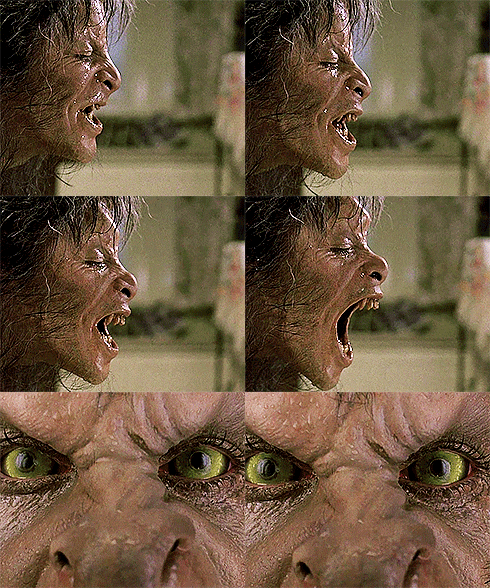
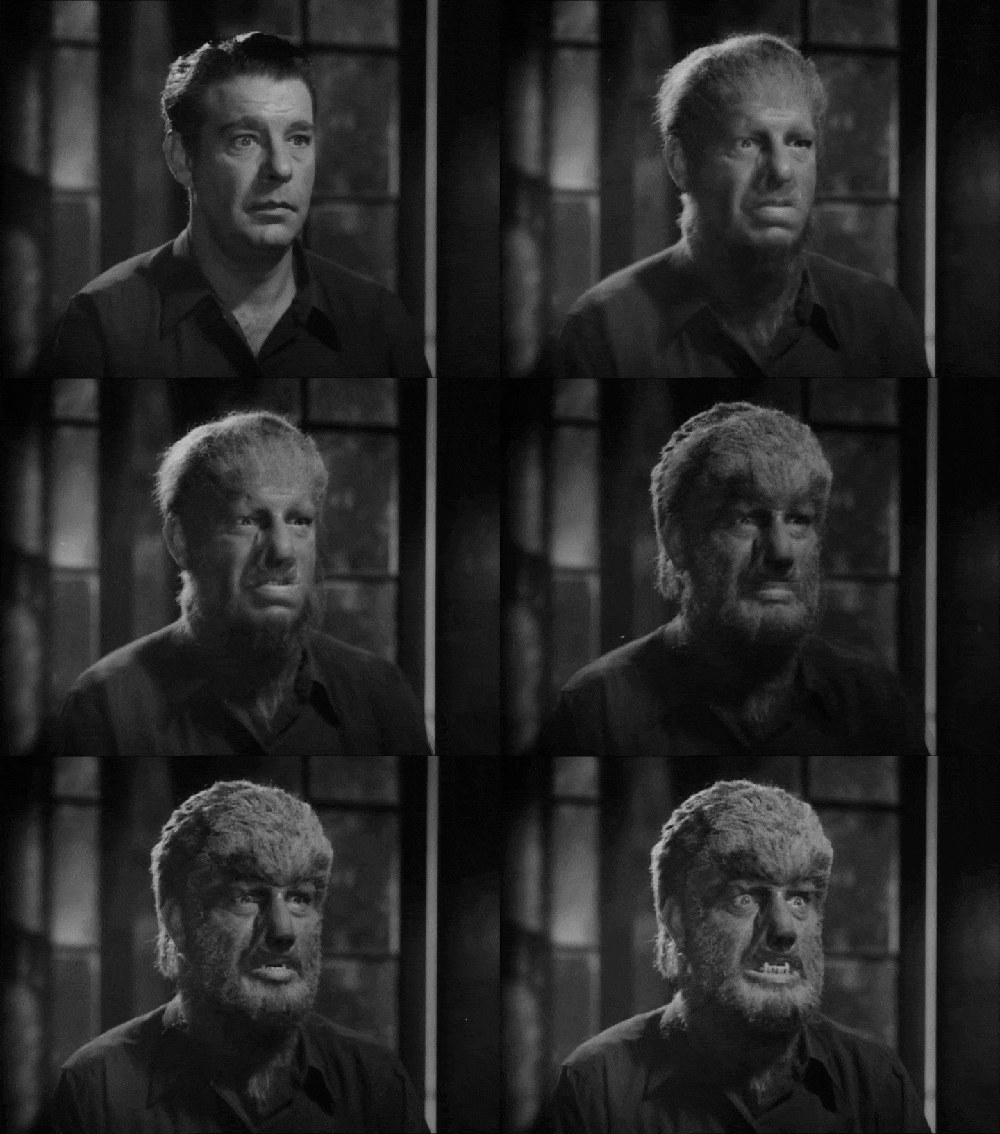
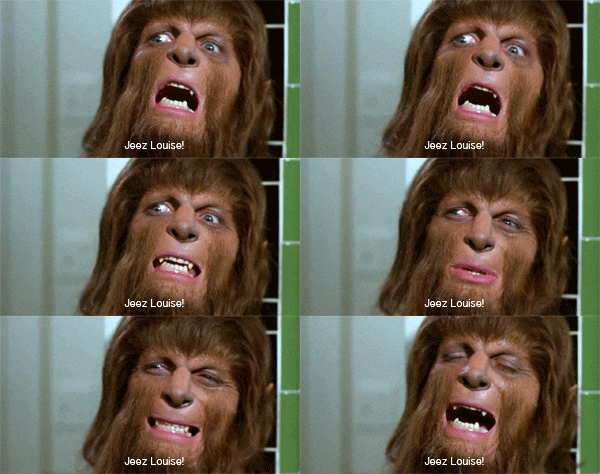
I read this for spooky season, and I have no regrets other than wishing I’d listened sooner. This entry into the Great courses catalogue made me want to sit down and have a werewolf movie marathon based on the films mentioned and throughly analyzed. Unfortunately, I didn’t Finnish listening until November, when all my movie marathons became Christmas-centered. Alas, maybe next year I will give this another listen.
Loved this one, with all its inclusions of fairytale wolves, and pop culture references, down to where wolves fit in with the world historically. Some of the more fanciful stories are a bit grisly, but Ms. Scott thankfully doesn’t delve into gruesome detail. This Great Courses installment was much more interesting for me than some of the others, and I genuinely looked forward to listening, finishing it very quickly. Definitely recommend if you’re at all interested in wolves or werewolves.
A short academic lecture and study and exploration of werewlvoes in myth, folklore, and even modern stories and movies and tv and video games!!! What could be better?
My only wish is that it could be longer. I could listen/read/study this all day and night! The professor/author/narrator is wonderful.
Interesting, but with fewer facts and more retellings of stories than I would have liked. Sometimes I wasn’t clear on what conclusions were actually being drawn from the examples given. Still interesting and worth listening to if you like the topic. Just not my favorite of the Great Courses I’ve listened to so far.
This was a freebie and worth the price. Not a bad book and mildly entertaining. There were a few neat trivia items and some good literary history. I could recommend it to someone who has an interest in the werewolf, vampire genre.
I think the book had great narration but it just wasn't my cup of tea. I decided to put it down halfway through. Nevertheless, for anybody who is mildly interested in the topic of werewolves, I would recommend them to give this book a try.
This is teaching at its best. Shannon Scott brings the legend oft he werewolf alive and very relevant. She guides you through the cultural history and the roots in folklore were an eye opener for me. This is one of those rare things, an entertaining and informative experience. Highly recommended.
A very interesting and engaging audiobook. Highly recommend to anyone with an interest in wolves and/or werewolves. I enjoyed the exploration of the werewolf figure throughout different times in history.