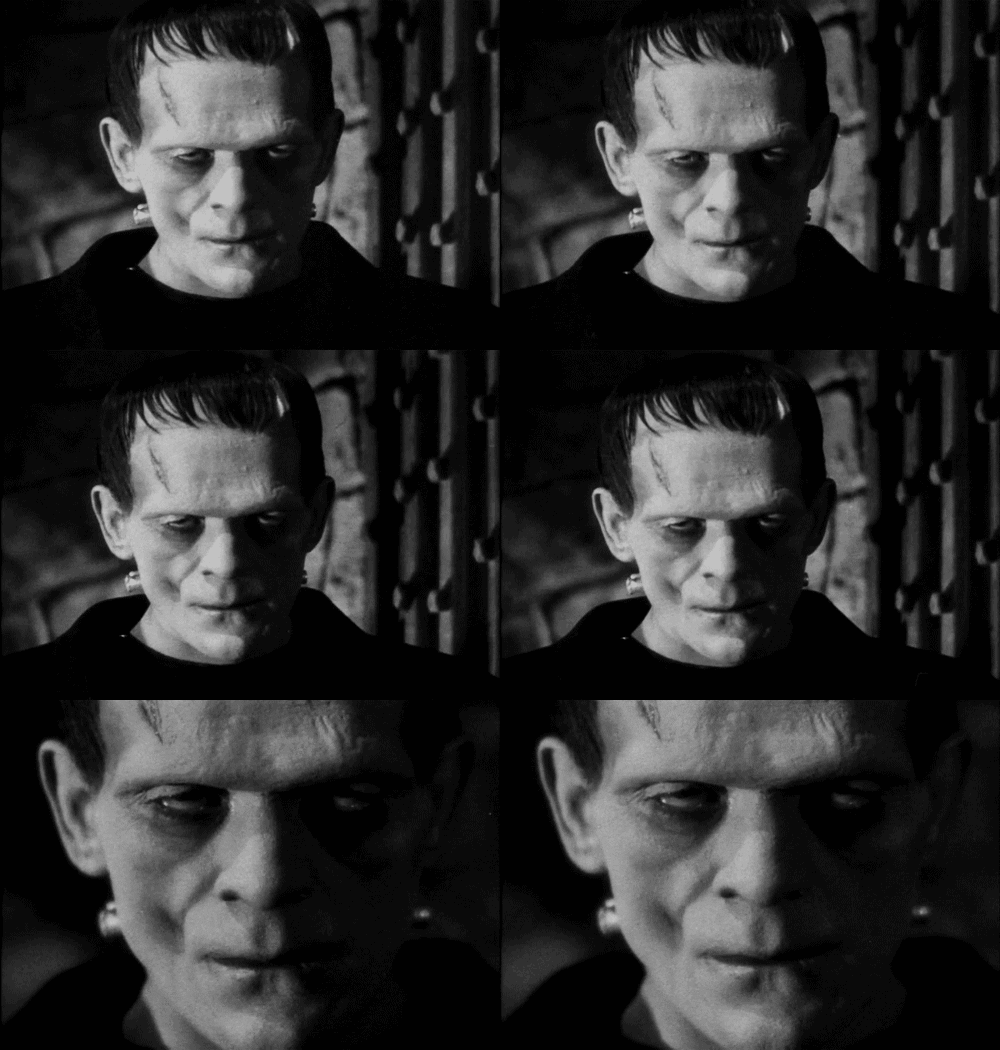
Cackling witches in Puritan communities calling forth Satan. Sea serpents squirming along coasts to snack on bathers. Ape creatures slinking through forests and leaving behind mysterious footprints.
In America, tall tales of monsters walking among us have existed for hundreds of years. Real or fictional, human or inhuman, monsters and other terrors directly reflect the events within American culture. As a society changes, its anxiety changes—and its monsters change, as well. Thus, any confrontation with America’s monsters is, in truth, a confrontation with the history of fear in America.
Grab a flashlight and go monster hunting in the safe company of Adam Jortner, award-winning professor of religion at Auburn University, with the 10 eerie and illuminating episodes of American Monsters. You’ll encounter chilling tales of living houses, sentient plants, psychotic toys, brain-eating zombies, and otherworldly beings whose mere name is enough to drive people insane. Along the way, you’ll learn how monster stories change how Americans think and what Americans do, how they shape the history of our country, and what secrets about human nature these inhuman monsters can share.
American monsters are mythical, but in many ways monster stories are frighteningly real. The most terrifying thing about them: what they reveal about the monsters within us.
Adam Jortner studies the transformation of religious and political life in the early United States. His book, The Gods of Prophetstown: The Battle of Tippecanoe and the Holy War for the American Frontier, examines the rise of the Shawnee Prophet Tenskwatawa and his new religion on the Indiana frontier in the 1800s. Jortner argues that Tenskwatawa’s religious vision created a new definition of community and power that ultimately coalesced into a viable political alternative for Native Americans in the Old Northwest. The book follows the creation of this movement and its fraught relationship with the new United States and Indiana’s ambitious territorial governor, William Henry Harrison. The relationship between the two men ultimately shaped the War of 1812 and the fate of the American frontier. Gods won the 2013 James Broussard Best First Book Prize from the Society of Historians of the Early American Republic (SHEAR).
His current research interests include new religions in the early republic, deism, witchcraft, the decline of magic, and Native American prophets; he currently teaches classes on American religion, politics, and the Age of Jefferson. He is working on a manuscript on the politics of miracles in the early republic.
Dr. Jortner has received fellowships from the Charlotte W. Newcombe Foundation, the McNeil Center for Early American Studies at the University of Pennsylvania, the Massachusetts Historical Society, the Kentucky Historical Society, and the Redd Center for Western Studies.
What makes an American monster? Well for starters, they have to be citizens. <--I kid, I kid!
So Adam Jortner talks about the fictional monsters in books, movies, and urban legends that Americans created (or made their own version of) and why. Like, how do our monsters correlate to our societal fears?
To be honest, I'd never thought about it much. Which is where all these neat little lectures come in and open up interesting new ideas to me that serve as a springboard to get me to sniff around and look at the world in a different way. And while I don't know that I necessarily believe monsters always have to have a deeper psychological meaning to us, Jortner made some good points and got me to think a bit deeper. At least for a few minutes.
This would probably make a long car trip a bit less monstrous. Recommended
I picked this up as a short audiobook to fill out my October horror reading theme. It ended up taking me 4 days to finish though, not because it wasn't interesting, but because my attention span is OOH LOOK SHINY!!
Anyway, I did like this, but I actually wish that it had been a bit more in depth on some of the origins of the "monster". I really like the examination of how cultural shifts and norms create the "other" that morphs into the "monster" to terrify the masses.
Mildly interesting. Mostly disappointing. Instead of educating on American monsters, he lightly dips into so many “monster” categories and only does so in a way to demonstrate his points, not to truly explore or evaluate. I was bugged throughout and eventually ended a couple of chapters early.
i really enjoyed this audiobook! i learned a lot about the history of fictional monsters and how they evolved throughout the years. i liked how the author went into depth about how racism and prejudice played into the evolution of the horror genre. overall, this was a great listen
This started out so promising. Nosedived into constant speculation delivered as fact. I finished it solely to meet my goal for the year. What annoyed me the most was how every single monster and horror story had a deeper economic/racial meaning. Maybe, just maybe Freddy or Jason is just a slasher film and had nothing to do with economics.
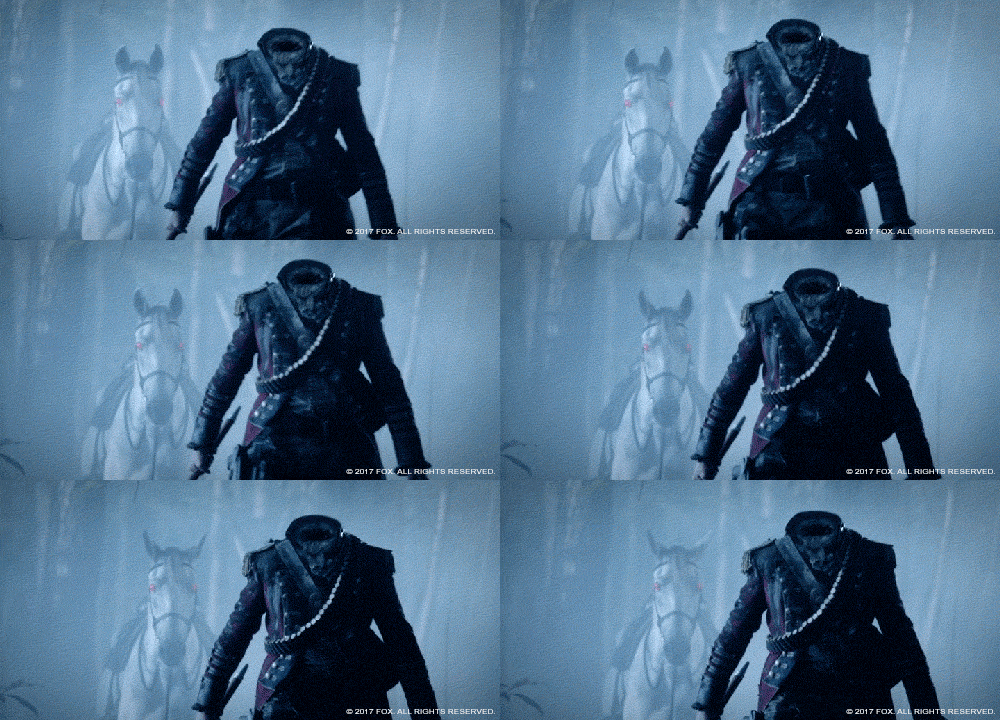
And he missed the point and charm of the Legend of Sleepy Hollow while also mispronouncing Katrina’s name.
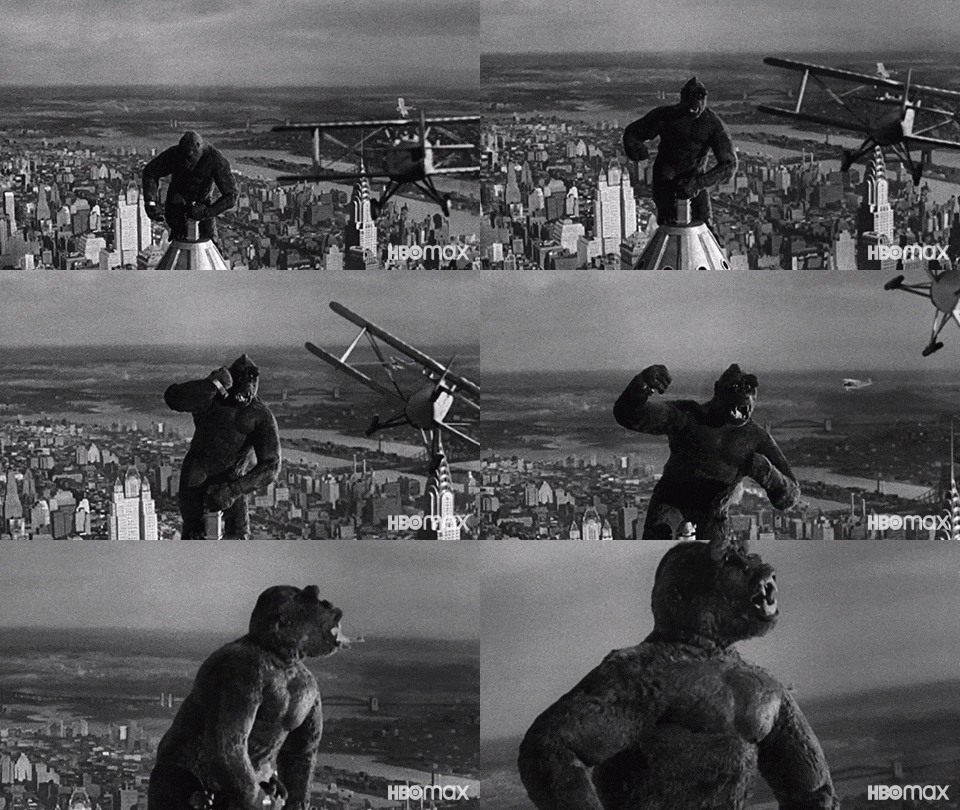
CRT is definitely a mental illness. Somehow King Kong was popular not because of mass unemployment and novel graphics but because white Americans apposed mixed marriages and wanted to see white cops shot a giant guerrilla.
I did like how the author tied the popularity of myths and monsters to historical sentiments but most interpretations using country wide racism were a complete stretch.
In American Monsters, Adam Jortner discusses the real and fictional monsters that have been created in America and how they are related to the history of fear in America. He discusses monster stories, movies, cryptozoology, and the Salem Witch Trials.
So this audiobook was not what I was expecting, but it was still very interesting. The discussion of the creation of these monsters and how they impacted the world was fascinating, especially since a lot of the times they caused big changes. I found the sections about horror movies and how they impacted history to be very fascinating because I used to be a huge campy horror film fan.
Another great thing about the audiobook was that Jortner did discuss racist elements for these monsters, especially in Lovecraft’s stories, and in movies like King Kong. I think this was a great inclusion because a lot of people may not catch the racist elements in these movies/stories. My only real complaint with this audiobook was that some of the connections that Jortner presented seemed a little thin, but since this is my first look at something like this it could be that I just don’t know enough about monsters' impacts on the world. I still really enjoyed the connections he made because it made me think about monsters differently and how they have impacted history.
Overall, this was an interesting and very different look at monsters. If you want to learn about potential ways monsters have impacted history, I suggest you check out this audiobook.
I cannot recommend this series highly enough. It is so engaging and fascinating and puts your favorite film and literary monsters into their historical and pop culture context. It's so full of fun facts! Like, that Dan Aykroyd's dad was a Spiritualist and that they used his notes in creating Ghostbusters. :o
If art is a mirror to the attitudes of the era in which it was produced, then, argues Adam Jortner, the monsters of those eras reflect the unique fears of the times that produced them.
Horror is probably the one genre I'm interested in more for the history and the subtext of it than in its actual works (though I do enjoy a good psychological horror or ghost story every now and then). I do agree with Jortner's premise, and so I was quite interested to see what all of these monsters might represent.
This is a short lecture series, starting in the time of the Salem witch trials and concluding in the present day with the dawning of Internet horror. Jortner is an engaging lecturer, and I enjoyed the variety of the subjects covered - ghost stories, moral panics, Spiritualism and Bigfoot and more. I would have enjoyed going a bit more in depth on some of the later subjects though. I would have been interested to hear more about his thoughts about serial killers and creepypastas for example.
This started off really interesting (as far as the subject goes). I'm not a big monster/horror fan, but my husband is -- and this seemed interesting enough to me from an historical standpoint that after the first couple lectures, I actually looked forward to the rest.
That was when the lecturer decided to get woke. Suddenly, everything was about race, and occasionally gender, with some slander against conservative values sprinkled in. It felt like he was viewing American cinematic history though woke-colored glasses, scrutinizing innocent plot points for the slightest whiff of modern political sensibilities. Also, he took his interpretations WAY too seriously, assigning motives to the creators that I can virtually guarantee never crossed their minds.
When we saw that the last lecture included the phrase, "post-truth," we decided we knew well enough where he was headed and decided to save ourselves the annoyance.
I thoroughly enjoyed the stories section, as my background is in the Psychology of Religion. He brings up unique and fascinating histories of American folklore, as well as social commentary. My only critique is that he doesn't approach it from a neutral standpoint. He is very critical of the conservative, Christian culture that some of these stories originate from. I understand that portraying history can air some of the dirty laundry, but I disagree that critical theory is the lens to do such. I also think his rant on democracy was very un-immersive and more opinion based than factual, as he was keen to point out facts in the entirety of the book.
This entire review has been hidden because of spoilers.
American Monsters is a fascinating and often unsettling exploration of how early Americans understood evil, fear, and the supernatural. Adam Jortner traces the cultural history of monsters, both literal and metaphorical, and shows how beliefs in demons, witches, and supernatural threats were deeply intertwined with religion, politics, and power in early American society.
What I appreciated most was how Jortner treats monsters not as curiosities but as meaningful cultural symbols. The book makes a compelling case that fears of the supernatural shaped real social behaviours, justified violence, and reinforced boundaries around race, gender, and belief. There are moments where the analysis feels especially sharp, particularly when examining how ideas of monsters were used to define who belonged and who did not.
At times, the prose leans towards the academic, and a few sections felt denser than necessary, which slowed my reading slightly. While the depth of research is impressive, I occasionally wished for more narrative flow or concrete storytelling to balance the more theory driven sections.
Overall, this is an intelligent and thought provoking read that offers a fresh perspective on American history and belief systems. Ideal for readers interested in cultural history, religion, or the darker edges of how societies construct fear. A strong four stars for its originality and insight.
If you enjoy a good horror story, this book will teach you a lot about where those images come from in America, and how they have been cultivated over the history of the nation. It’s a very quick but fascinating read. In addition to looking at the historical roots of things like spirits and witches, Jortner also spends a great deal of time looking at how movies, televisions, and novels have shaped the images. The popularity of monsters, and the way that those monster stories are told, has a lot to do with the stresses, fears, and problems of American society. Therefore, it should not be surprising that racism and civil rights are often underlying themes of the monster tale. Another fascinating theme is whether or not we can really govern ourselves when the people in charge in the stories often show themselves to be idiots. American isolationism, the Cold War, the proper role of science in our society… all of these themes pop up again and again as do stories about what happens when teens or women start to get a little independence in our dangerous world. Each section fascinated me and my only complaint is that the book wasn’t longer.
One again captured by the name, I decided to give American Monsters a listen. This book takes a look at the monsters of America, how what they have said about the American people.
I had expected a look at monsters in a brief, zoological way. Instead this lecture explored monsters in a sociological way. Some monsters are created as a result or racism and bigotry, while others are a response to wars or the fear of nuclear animation.
As a big cryptic lover, I thought the analysis on big foot was very interesting. Much of the Bigfoot evidence relies on appreciating the moral character of the person who is sharing their experience. It's interesting to reflect on my belief of cryptic through this lense
This was a great listen, it’s just a shame it was so short! The evolution of the horror concept is extremely detailed, so I’m not sure what else could have been added though. One thing I will say though, is that some of what is discussed might not qualify as "monsters" for some people. But don’t let that put you off, the history of witchcraft in antiquity through to postmodern horror and slasher flicks is absolutely fascinating. Anybody with even a passing interest in cryptozoology or the horror/monster genre in general will find this well worth their time.
Was this a book? Not exactly, but one of the Great Courses classes from Audible. I enjoyed this, even though there’s not too much new in here. It did make me add two new books to my ever growing to read list, but I take points off for a misreading of Washington Irving’s “The Legend of Sleepy Hollow.” An interesting listen.
This was so interesting to listen to. I really enjoyed seeing how the landscape of the time impacted on the 'monsters' of the day and how the changing world and views changed the fears and monster.
The author did a great job of going from the Salem Witch Trials to current movies to describe "American Monsters." He was very easy to listen to, and he placed all of the monsters in historical context, i.e., what were we as Americans afraid of at that time.
Throughly enjoyed!!! This is about how monsters in the media depict our cultural fears of a given time! You can’t tell me aliens aren’t real though Mr. Jortner THE TRUTH IS OUT THERE
I really liked it. It was super interesting to learn the connections, intricacies and history of so many monsters, folk lore and legends. Reminded me a lot of Lore podcast by Aaron Mahnke. I truly enjoyed it. I wish it came with a PDF to follow along. Well worth your time.
Very interesting audible original about the history of Halloween/witches/monsters and ghosts. I particularly enjoyed the chapter on spirits and how the idea of them have changed through the centuries. Quick listen and perfect for this time of year!
Series of lectures that explore the role of "monsters" in American culture and history. The term "monster" comes from the same root as the word "demonstrate" and Jortner explores what our monsters reveal about American culture through from the Puritans up to the present day.
I had read before about how the monsters in our movies and books reflect the fears of the times in which they were created-- for example sci fi of the 50's reflecting fear of nuclear power or monsters from another world reflecting our fear of invasion from nations perceived to be hostile to us. However Jortner goes a bit deeper than merely cultural when he ties the Salem witchcraft scare to more recent satanic/satanic cult scares, characterizing both as a belief in an invisible conspiracy (magical or demonic) and in the process showing how we have always been swayed by conspiracy theories and that the lack of evidence merely causes the believers to become more entrenched--because in their mind the lack of evidence reinforces their belief of how power the conspiracy is!
Rejection of science because it conflicts with what we believe or because it contradicts the story of a witness perceived to be credible (because they profess what we already believe to be true) supported the accusations of witchcraft in Salem, alleged satanic cults in daycares that proved groundless, as well as sightings of UFO's, Bigfoot, Slender Man, and other legends.
My family visited Salem a few weeks ago and we all were moved by the memorial in honor of the victims of the witchcraft trials. Elie Weisel gave the dedication which must have been moving and profound. Part of the memorial consists of the last words of the victims etched into the ground. However, the walls around the memorial pass over the words, breaking off the sentences in mid word---symbolizing the powerless victims and that no one was listening to them.
We are (and maybe have always been) so bombarded with conspiracy theories of countless varieties that I think we lose sight of the fact these movements damage our society as a whole and can cost the victims their freedom or even their lives. It is too easy to dismiss as silly and harmless but the harm is real.
The author even says towards the end this is a "lighthearted" subject. Well it should have been, dude. However, this is really just a political witch hunt (pun intended). Every author, director, horror character whether it be in print or on screen is really just cajoling the dimwitted masses to be racist zombies (pun) and vote for Reagan and keep minorities down and keep women down and keep you in support of the government and blah blah blah. If I want to be depressed I will watch the news. This is not a fun escape but just a rambling and waaaay depressing guide to why you should hate yourself if you have a bit of Caucasian in you. He tears apart everyone from Lovecraft to King to Freddie Kruger and Jason (hey wait a second, didn't they just kill caucasians?). Way to turn a fun topic into a slog designed to create self-loathing. This is all that is wrong with academia, wearing excrement colored glasses and seeing evil conspiracy everywhere. Were some of the things he said true? Absolutely. Was some of it Jortner's manipulation to fit his narrow-minded hypothesis? Absolutely. My only question is why did I listen to the whole thing?
I saw this lecture series was free with my Audible membership and it has everything I love: history of legend and lore, monsters, aliens, cryptozoology. It starts off great, but it quickly devolves into the author stretching waaaay too far to fit these things into his thoughts on politics and society. Really disappointing.
Dr Jortner presents a very entertaining set of lectures dealing with myths and monsters from American stories and movies. It was easy getting lost in the narrative and take a sometimes serious, sometimes humorous look at what goes bump in the night...
One of those cases where someone can just ramble incoherently and nonsensically and apparently get published. Don't urinate on my parade (of loving old and new monster movies). This is drivel
Another great folklore lecture series focusing on horror in America through the ages. Lots of interesting facts and takeaways from this. Highly recommend