First off, I am shamelessly invested in this show. I take my schedule during the season seriously, which sometimes goes so far as to partake in media blackouts to avoid spoilers. I religiously listen to podcasts that cover the show, specifically Dave Neal, Bachelor Fantake, Nick Viall, and Roses and Rosé (RIP). My hope for this book was that I could be as entertained by it as I am by the show and it’s networks of fandom. Instead, I was as deeply disappointed as viewers are when they watch their favorite contestant step out of the limo first on finale night. As with the viewer, who is met with the deceit of knowing their favorite is not the final rose winner, I too, was met with deceit reading this book. I had to begrudgingly get through this book the way serious viewers get through night one antics, worried if I didn’t finish it I would miss something good. I am confused why it is so highly rated on Good Reads and hope that my review can better inform those wondering if they should pick it up - the answer is no!
Though the premise of the book that the Bachelor is a sport was interesting, it is not a fresh idea or anything most people haven’t deduced already. In the introduction, the players were broken down into different audiences, labels used throughout the book; the first audience (the Bachelor), the second audience (the female contestants), the third audience (the producers), and the fourth audience (the viewers). I would have preferred if they just called each group what they are, especially in later chapters when I kept forgetting who was who. They were playing a long game though in setting up all of the show elements as pieces of the sport.
The Little Bit of Good
In the first chapter, each section gave a short description of the elements of the show that could be enjoyed by nonviewers and viewers alike. There were some gems in the descriptions of the elements but for the most part if you watch the show these are redundant. The dramatic and embellished writing in the first chapter was fun and I wanted more lines like the one below:
“Over countless millennia of the evolution of human courtship, these botanical icons of love and devotion became the most common gift of romance in our society and they are the lifeblood of The Bachelor. They make up the in-game currency…”
Most of the first chapter was enjoyable to read, but I think the authors got carried away by the end of it and into the rest of the book. The result being that most of the book was superfluous.
The Tone
The authors’ voice was really awkward to me. It was really hard to tell if it was meant to be serious, satire, sarcastic, or mocking. The writers of this book host a podcast called, “Game of Roses” but I am not too familiar with it. Perhaps if you are an avid follower of the podcast, the tone might have been easier to decipher. From a literary perspective, it should be able to stand alone. There were lines like, “Tears often equate to screen time and can even become your main personality trait.” This has to be a joke, but it was hard to tell in the context of which it is written. The line below is an example that highlights why I found the tone to be so disingenuous, but unable to put a label on it:
“If a given episode isn’t about you, make sure you comment on the posts of whoever it is about on the Bachelor Instagram. Always insert yourself into whatever the main conversation is from week to week, especially if it’s not about you.”
The Content
The book is a culmination of the retelling of events you have probably already watched on TV and meaningless statistics derived from those events. The charts were somewhat informative and all of the statistics probably should’ve just gone in them for better organization. The statistics were not very impressive as they just tallied anytime something happened they wanted to measure. If you want statistics on the franchise that have value and important social commentary, follow Bachelor Data on Instagram. I think this book tried to steal their premise, but lacking expertise, made it way less interesting.
The book lacks any original ideas since the retelling of events/ scenes and stats take up all the space. Did I expect a critical analysis that was well articulated in a book about the Bachelor, from people who watched every episode back to back in a really short period of time? My answer is a firm, yes. There are a number of podcasts I follow that are well informed, critical, and thoughtful. If the book was formatted differently, it might have made for a good encyclopedia of Bachelor seasons. Instead, it was a wasted opportunity for the writers to combine their stats with the history of the show and make a book filled with meaningful analysis and commentary.
The Writing
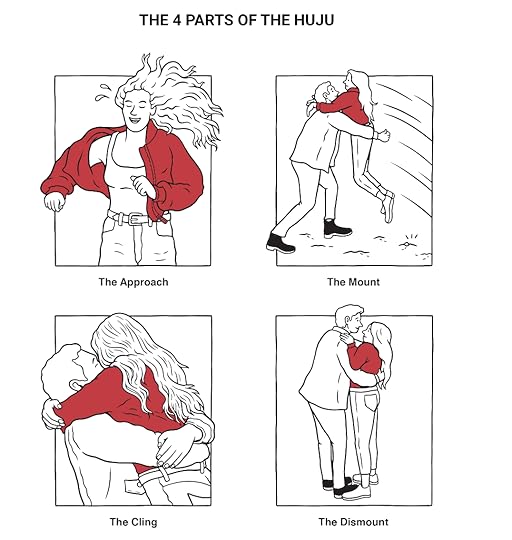
The authors got overly excited and ran away with some ideas that didn’t come off well in the book. There is a whole section on what they name HUJU, the hug jump, notorious on one-on-ones in the franchise. Multiple pages are written to break down how to run, jump, and hug someone. Just one example of unnecessary things that took up too much space.
It is really rare that I complain about a book giving the reader too much credit, but this book really forgot what the average person will know with regards to the lineage of seasons and episodes. They often made references like, “...occurred in Season 17”, the name of the Bachelor would’ve been helpful. The “Bachelor Lexicon” also gave the reader too much responsibility to remember all of their made up acronyms, trying to make their lexicon more significant when it does not need to exist at all. Know your audience, I am reading a book about the Bachelor to be entertained, not to be flipping back and forth to a glossary of words that only exist in this book. More on that to follow.
It is hard to decide what was the worst thing about this book, but the use of made up acronyms might have been it. The goal of making a lexicon to abbreviate different events and ideas was excessive. Maybe it made sense during their viewing marathon, but as a reader it didn’t translate well. Here are some examples that had my head spinning because they were so awkward and forgettable; 4TRR, 4TWR, GTTC, HUJU, IFI, MOTF. They also took commonly used terms like two-on-one and changed them to 2O1. Bachelor Nation already has slang for those things, their lexicon was too forced.
The final chapter titled, Being Complicit, was meant to take a critical look at racism in the franchise and felt to me like lip-service. They open it up by saying,
“We’ve always had a complicated relationship with The Bachelor and we wanted to take one final chapter to address that before the end of the book because we have talked to plenty of other fans who have felt the same way.”
The tone is more somber, but I just didn’t buy it. It was more of the same from these authors - retelling and stats. There was little to no discussion on misogyny and sexism in the franchise, as they mentioned, would be discussed as well. At the end of it is one wishy-washy paragraph that talks about how the show needs to change. They are still going to watch it but only to hold it accountable and ensure the producers don’t use viewer cuts to behave worse than they do now. The whole section was anticlimactic considering it was just a retelling of producer manipulated racial plots and Rachel Lindsey and Matt James' seasons. It also recapped the fallout with Chris Harrison. There are intriguing race related statistics like screen time not included in the book. Telling people who watch the Bachelor that the producers are horrible and manipulative is not new. The authors should tell us how and why it is a problem, which can be effectively done using stats they are so fond of.
Overall
I gave this book two stars on account of being impressed by the sheer discipline of the authors watching every episode and making extensive notes (and stats!). The title is, “How to Win the Bachelor: The Secret to Finding Love and Fame on America’s Favorite Reality Show” and I guess they do that if you can determine what is sincere advice. There was too much content dedicated to stuff that no one will care about unless they are taking this book as genuine gospel for getting on the show and trying to win. I wouldn’t even recommend the book be used that way because of the tone discrepancies.
This book is a good example that just because you can watch every episode of the Bachelor and do simple math on a wide range of scenarios doesn't mean you should. As a nonfiction, it failed to meet any of the genre requirements; it didn't inform, explain, teach, or persuade.
As for the ending, which alluded to moving on to do the Bachelorette in the same vein, I will not be picking up that book. That is because I never want to read an entire chapter again that loops the words, “Then”, “And then” over and over to tell, verbatim, what happened on a TV show until I fall asleep and wake up with my beloved e-reader having fallen on the floor and my face fresh with couch impressions.
The book closes out one of the final chapters with this uninformed and abysmal quote:
“And in some ways we’ve seen firsthand how much more influential social media and reality TV are than traditional sports. We’ve never had a pro football player in the White House, but we have had a reality TV star who used twitter to win an election.”
Does this sound like people who even care about the events that they wrote about in the, “Being Complicit” Chapter?