mors (genitive mortis) (fem.) [Latin]: 1. corpse 2. death 3. annihilation
John French returns to the Siege with Mortis, the fifth installment in the eight-part-series that caps off the Horus Heresy. That gives French the distinction of 1. being the first author to write two Siege novels and 2. being the author to kick off both the first and last half of the series. Mortis functions therfore somewhat as the Midpoint of the overarching story.
Going into a new Siege novel, I'm always interested to discover what this novel will be *about*. Every novel is about a new phase of the Siege, obviously, but every author adds lots of nuance, thematic substance and personal, distinctive flavour that's not predetermined by the "historic" bullet points they have to cover.
What's Mortis about, then? And is it good?
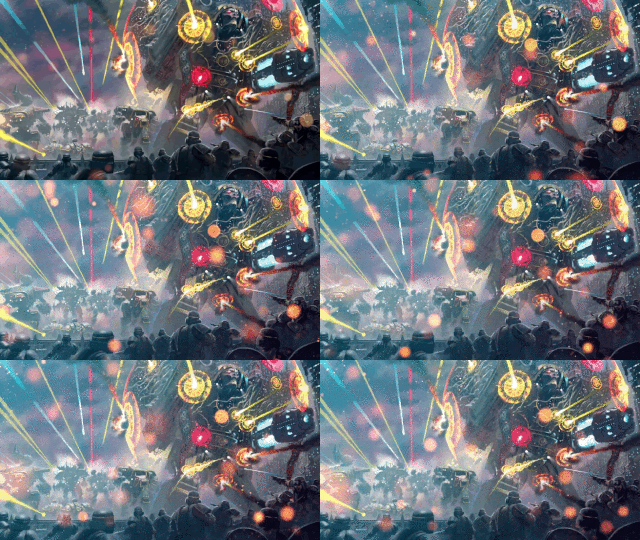
Starting with the obvious (we all saw the cover): this is about the clash of the Titans, which are finally loosed upon the battlefield in full strength. The loyal Titan Legios and Knight Houses gather around Legio Ignatum to walk into apocalyptic battle against the god-machines of Horus. French takes his time to set the scene and slowly build towards the epic showdown between Legio Ignatum and their nemesis, and the battles are all engaging, exciting or fearsome, pulling out surprises and twists whenever it could start to go stale or become too one-note.
Hence the title: Mortis, as in Legio Mortis, the Death Head's, the first and most terrible of the Traitor Legios that walks against the defenders of the Palace.
The build-up to and eventual clash between the Titans takes up only roughly a third of the novels' page count, in my estimat. Which is more than enough, believe me - Mortis is the longest Siege-novel yet, even longer than Abnett's Saturnine, so there's more than enough room for French to deliver on the "This Is The One About Titans"-part of his work assignment. But it allows him also plenty of room for various other story threads: Oll Persson and his crew on their odyssey through time, space and the madness beyond the battlefields. Shiban Khan, shot from the sky and heavily wounded in the final moments of the last book, on a seemingly endless track across the wastelands. Katsuhiro, our man on the ground, experiencing ever deeper hells in the trenches of the war. Mauer, an intelligence officer of a newly formed department, hunting for a solution to the psychic blight that threatens to destroy humanity from the inside. All these stories, including the Titans', share the motif of the Journey Into The Underworld: characters experiencing a fall, a descent, or a journey of themselves and, indeed, a transformation of the world itself, into a hopeless Tartarus or a treacherous Elysium. Even the battles between the Titans quickly develop from the usual shock-and-awe, submarine-esque cat-and-mouse clashes into a what feels like a Princep's feverish nightmare.
Hence the title: Mortis, death, the threshold and gateway to the realm of Hades and all the wonders and horrors under his reign.
The novel functions also, as I've mentioned above, as the Midpoint of the series as a whole, or rather as the second half of the Midpoint after Saturnine. It's a book of endings: about the end of the rational, physical warfare masterminded by the generals of the IV and VII Legions, which peaked with the Saturnine Gamble of the last book, giving way to the battle of the supernatural and the mythical. About the end of the time of the Great Crusade and the Emperor's Imperium, giving way to something even more desperate, even more cruel, even more callous. About the end of the world as these characters knew it, giving way to the final birthpangs of what will become the dystopia of the 41st millenium.
Hence the title: Mortis, the annihilation of that which is, making way for that which will be.
It's therefore the perfect book to call the curtain on the first and start off the final half of the Siege and therefore the final moments of the Horus Heresy itself, 15 years its first novel was released. It sets the stage for the final three books tonally and thematically and plays into the strengths of its author, while still delivering all the bombast that one can expect from these stories. I particularly liked that it didn't make the latter it's main focus and instead told a thematically consistent story about desperation and defiance heavily influenced by the Greek myths that Oll Persson so often reminisces about.
After some bumps in the early parts of the road, the Siege as a series is now in full swing and is starting to form up to an impressive shape. I am more excited for the final three books than ever before. Hats off to John French to coming back for more and managing to nail it again. No backward step.