Jump to ratings and reviews
Rate this book

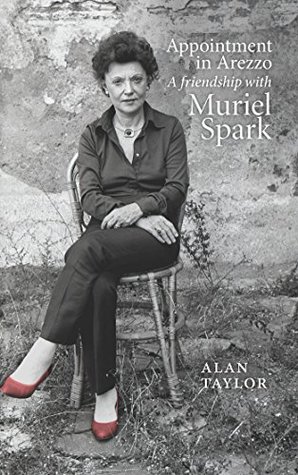
Appointment in Arezzo: A friendship with Muriel Spark

Rate this book
A Scottish journalist offers rare insight into the life and mind of the renowned expat author in this "beguiling, fascinating memoir" (The Guardian, UK).In 1990, Alan Taylor traveled to Arezzo, Italy, to interview one of the greatest novelists of the 20th century. That interview evolved into a close friendship between Taylor and Muriel Spark that lasted until her death in 2006. In this intimate, anecdotal, admiring and indiscreet memoir, Taylor charts the course of Spark's life, revealing her as she really was.Once, Spark commented sitting over a glass of chianti at the kitchen table, that she was upset that the academic whom she had appointed her official biographer did not appear to think that she had ever cracked a joke in her life. Here, Taylor sets the record straight about this and many other things. With sources ranging from notebooks kept from his first encounter with Muriel and the hundreds of letters they exchanged over the years, this is an invaluable portrait of one of Edinburgh's premiere novelists.

244 pages, Hardcover

First published November 2, 2017

9 people are currently reading
180 people want to read

About the author

Alan F. Taylor

14 books9 followers

Ratings & Reviews

What do you think?
Rate this book

Friends & Following

Create a free account to discover what your friends think of this book!

Community Reviews

5 stars
65 (27%)
4 stars
95 (40%)
3 stars
61 (25%)
2 stars
10 (4%)
1 star
6 (2%)
Displaying 1 - 30 of 44 reviews
Profile Image for Chrissie.
2,811 reviews1,418 followers
December 21, 2017
This book has two titles:
1.Appointment in Arezzo: A friendship with Muriel Spark and
2.Appointment in Arezzo: My Life with Muriel Spark
The first is more accurate. The author of this book and Muriel Spark shared a friendship, but it extended over only the last decade and a half of Muriel Spark’s life. The book is not a comprehensive biography of Spark. It is instead a memoir of Taylor’s recollection of times spent together with his friend. A book based on friendship cannot be considered objective. This must influence how one views Taylor’s information.

In 1990, Alan F. Taylor, a Scottish journalist, author and editor, had an appointment to meet Muriel Spark in Arezzo, Tuscany, a city about 80 km from Florence. Sharing a common Scottish heritage, a friendship was kindled and less than a year later, in August, Taylor, his wife and two children were invited to house-sit for Muriel and her companion Penelope Jardine. The two women planned to travel, to escape the sizzling summer heat.

So who is Penelope? Painter and sculptor, Penelope Jardine, had begun as a secretary to Muriel Spark. Their friendship had grown. One day, Muriel came to visit Penelope at her house San Giovanni in Civitella, near Arezzo, and there she came to live for the last thirty years of her life. The two women claim that their relationship was deep, but not lesbian. At Muriel Spark’s death in 2006, Penelope became the sole benefactor of Spark’s estate. Spark’s son, Robin, inherited nothing.

In 1937 Muriel had married Sydney Oswald Spark and the couple had moved to Rhodesia, today Zimbabwe. Robin was born in 1938. In 1940 the marriage ended. Sydney got custody of their child, which I found rather strange since Sydney was said to be manic depressive and prone to acts of violence. Robin came to be raised by his maternal grandparents in Scotland and Spark did help support him. In my view, money is not a substitute for time with another.

Muriel, originally Presbyterian, converted to Roman Catholicism in 1954. Between mother and son, a dispute arose regarding the religious affiliation of Muriel’s mother, Adelaide Hyams. Robin, of the Orthodox Jewish faith, claimed his maternal grandmother was Jewish. Muriel claimed she was Presbyterian. He would not agree to DNA testing. The dispute became a storm, a storm that forever destroyed a healthy relationship between mother and son. This is covered in a chapter of the book, but what we are given is Muriel’s point of view as expressed by her to Taylor. That Muriel’s father was Jewish is not disputed. On finishing the chapter, I am left with many unanswered questions and unable to form an opinion on their dispute.

Biographical details pertaining to Muriel’s upbringing, education and childhood are mentioned, but always through a colored lens.

The author focuses upon Spark’s manner of writing. He draws parallels between her stories, her views and her life. I particularly appreciated what he saw in her books Loitering with Intent and A Far Cry from Kensington, my two favorite books by Spark. Taylor does not discuss all her books, only a smattering. On the whole, I agree with the conclusions he draws concerning her writing.

Spark kept her husband’s surname after their divorce. She liked it because it has spark, just as her writing does. Her writing is without sentimentality. It is matter of fact. Her dialogs wonderfully reflect how people actually talk. Spark observed people and filed away in her memory these observations for future use in her books. Before writing a book, she invested hours of research. This I had not been aware of. Current events, legal procedures and places reappear in her books accurately portrayed.

Spark’s personality and her views on how one should live one’s life come through. She thought, life is what you make of it. One should expect no favors. She was critical of snobbery. While she always considered herself first and foremost a Scott, she was preternaturally curious, and she needed to leave home to fully develop her own individuality. Stephen Schiff at the New Yorker notes that while God is there in all her books, he never shows himself on the page. Spark’s views are there to be seen, if you look. Her views are never hammered in. Humor abounds.

There are many references to Spark’s contemporaries. That Taylor is a journalist by career is evident. Name-dropping? Yes, but those mentioned are people Spark knew and rubbed shoulders with.

Originally, Muriel Spark gave permission to Martin Stannard to write her official biography. This she later regretted, refused publication of what he had written and on her death, gave publication approval rights to Penelope. So, is Stannard’s book a book to be read or isn’t it? According to Wiki and A.S. Byatt, “…she (Jardine) was very upset by the book and had to spend a lot of time going through it line by line, to try to make it a little bit fairer.”

The audiobook is very well read by Alex Walker. It is simple to follow. He has a strong Scottish accent, which I find appropriate.

I enjoyed reading this book, but it has left me with more questions than I had when I started, which isn’t necessarily bad.
Profile Image for Laura.
7,137 reviews606 followers
January 8, 2018
From BBC Radio 4 - Book of the Week:
A colourful portrait of one of the twentieth century's great writers. When journalist Alan Taylor travelled to the Italian town of Arezzo to interview Muriel Spark, it was the beginning of a friendship which would last for years. On regular visits to her Italian villa and on trips accompanying the author to literary festivals across Europe Taylor gained a unique insight into the character of this fascinating artist.

Episode 2 of 5
After striking up a friendship with his subject, journalist Alan Taylor meets Muriel Spark's Tuscan social circle and tackles head-on rumours about the author and her long term companion, sculptor Penelope Jardine.

Episode 3 of 5
Journalist Alan Taylor accompanies his friend Muriel Spark on her triumphant return to America. Invited to attend the 75th birthday celebrations of the New Yorker Magazine, an early publisher of her work, the author's memories turn to life in 1960s New York.

Episode 4 of 5
Age catches up with author Muriel Spark as relations with her son reach breaking point.

Episode 5 of 5
After Muriel Spark's triumphant return to her hometown for the Edinburgh Book Festival, Alan Taylor reflects on his friendship with the peerless writer.

Abridged by Laurence Wareing
Read by Paul Higgins
Producer: Eilidh McCreadie.


http://www.bbc.co.uk/programmes/b09k0p9z
Profile Image for Fionnuala.
889 reviews
Read
June 8, 2019
I liked this book a lot. Alan Taylor doesn't try to be Muriel Spark's biographer but instead acknowledges that he is simply her friend. In addition to being a friend, he is a very insightful reader of her novels and of her autobiography, and the text contains a great selection of quotes from her work combined with his own reflections. Inevitably, of course, because her novels reveal quite a bit of her life experiences, he does comment on her life along the way. But you always sense him editing his comments, asking himself if she would like this or that anecdote. His respect for his friend seems to be his governing principle. It's a good principle.

Some insights I particularly liked, and which reflected my own feelings about her writing :
Loitering With Intent has long been one of my favourites of Muriel’s novels. Published in 1981, when she was sixty-three, it features a young woman called Fleur Talbot who, when we first meet her, is sitting in an old graveyard in Kensington writing a poem. The year is 1950, the date 30 June. At that time, and in that place, Muriel, like her budding heroine, was on the cusp of realising herself, of emerging from poverty and giving wing to her own extraordinary talent. Two literary shades haunt Loitering With Intent. One is the Apologia of Cardinal Newman. The other is Benvenuto Cellini’s Vita, from which Muriel quotes on several occasions. It was the reprobate goldsmith of the Renaissance who declared that all men ‘of whatsoever quality they be’ should once they have passed the age of forty attempt ‘to describe their life with their own hand’. Cellini is Fleur’s ‘beloved’. She likes everything about him, good and bad, and is willing to overlook his many shortcomings: his spells in prison, his numerous nefarious escapades, his scrapes with other smiths and sculptors, ‘his homicides and brawls’. But what in particular draws Fleur – and Muriel – to him is his love of art and his fidelity to his calling. One day, muses Fleur, determined to follow in his gilded footsteps, ‘I’ll write the tale of my life. But first I have to live.’

In a very real sense Muriel’s life is to be found in her work. She always said that if anyone wanted to know about the person behind the prose and poems they had only to read them closely and imaginatively. She is there, in the times and places and characters, in the way she uses language, in the choice of words and the construction of sentences, in the tone of voice, above all in the philosophy of existence. Whenever I want to hear her speak I open a page at random of any of her novels and there she is, loud and clear, note perfect.
Profile Image for Bettie.
9,976 reviews5 followers
January 15, 2018


http://www.bbc.co.uk/programmes/b09k0p9z

Description: A colourful portrait of one of the twentieth century's great writers. When journalist Alan Taylor travelled to the Italian town of Arezzo to interview Muriel Spark, it was the beginning of a friendship which would last for years. On regular visits to her Italian villa and on trips accompanying the author to literary festivals across Europe Taylor gained a unique insight into the character of this fascinating artist.
Profile Image for Jean-Luke.
Author 3 books488 followers
November 12, 2025
Largely a snapshot of Spark's later years in Tuscany, where she shared a house with artist, friend, and travel companion Penelope Jardine. Alan F. Taylor, a Scottish journalist, became a friend and occasional guest and published this sparse memoir more than a decade after Muriel Spark's death. Large portions of the book are only tangentially connected to Taylor's friendship with Spark, and merely regurgitate points from Curriculum Vitae, Spark's autobiography, or books by other writers. The biographical information he presents might have been dug up by any biographer, friend or not, and at times seems like padding for what could have been an article. I love a brief biography, but then sell it as such.

I never knew that Spark had trouble completing The Takeover (one of her worst novels), the finished manuscript of which caught fire in the process of having it photocopied, or that she was friends with Iris Murdoch, and hated John Bayley, Iris's husband, with a passion. But is this insight which only a friend could have provided?

Martin Stannard began an authorized biography of Spark in the 1990s, and her thoughts on it (she wasn't happy with it, despite her admiration for Stannard's Waugh biography) probably won't be found in that or another full-fledged biography. I'm not even sure it's appropriate here. Most people would not like the more unsightly elements of their past raked up for critical examination, and Taylor including this anecdote, without any more specific details as to Spark's objections, seems like an attempt to give his studiedly inoffensive memoir greater merit.

I didn't think my love for Muriel Spark could grow any more fervent—it did, and someone needs to publish a collection of her letters, pronto. I used to love personal-connection-memoir-cum-biographies of this sort, but most lack heft and I am less enamored than I used to be (although I will still be giving Marijane Meaker's Highsmith: A Romance of the 1950's a go). Given Spark's abhorrence for John Bayley's memoirs of Iris Murdoch, what would she have made of this one?

Happiness is not a state to whoch Muriel aspired. She thought itnoverrated and believed the quest for it was doomed to result in didappointment and worse. For what could you do with happiness once you had found it? Hang on to it? Aspire to be even more happy?
Profile Image for Beth Bonini.
1,418 reviews324 followers
February 13, 2018
“No life can be wholly recaptured in words. Something is always missing or unnecessarily included, or over-emphasised, or mis-recalled or made more of, or less of, than it merits. Scott Fitzgerald said that there never could be a good biography of a good novelist, because if he is any good he is too many people; Muriel would certainly have agreed with him.”

I am a keen reader of biographies, and female writers are probably my favourite subjects. I most recently read about Daphne du Maurier, and the chameleon like qualities of her personality were much emphasised. Alan Taylor makes the same point about Muriel Spark. He notes that her physical appearance changed frequently, and that there was always an ‘unearthly, elusive air’ about her. But he also suggests that ‘at her core Muriel was immutable’. I think that I judge biographies primarily on the author’s ability to make that subject come alive for me, but I also want some insightful analysis: something that rings true. Like du Maurier, Spark made writing the absolute centre of her life. Everything was grist for the creative mill. Everything that happened to her, everything that she observed, was carefully interpreted and then turned up as subject matter in her books. Taylor does not even attempt to connect all of the dots between the life and art, but he does manage to impart a strong sense of Muriel Spark as he knew her.

I read this book in an unusual way; I read half of it, then I saw Alan Taylor speak at Daunt Books on February 8, and then I read the second half of it. Taylor’s Scottish voice, his sense of humour and wonderful storytelling, his many anecdotes about Muriel Spark (mostly taken from the book), then infused my reading of his subject on a different level. This biography is not meant to be exhaustive; and it certainly isn’t. Taylor does touch on subjects like Muriel’s Edinburgh childhood and her sticky and difficult relationships with her ex-husband and son Robin, but mostly he focuses on ‘late-period’ Muriel when he actually knew her. He focuses on Muriel Spark as a writer and a friend. Taylor was a frequent guest to her home in Tuscany, and he also accompanied her on several trips: to New York City (where she had a long association with The New Yorker), to Prague and to Edinburgh. He seems keen to dispel several myths that sprang up about Muriel - the subject of her Jewishness, for one thing, and also her reclusivity - and his motivations seem to be primarily personal, because he knew how vexed Muriel was about these inaccuracies, and not just to set the historical/biographical record straight.

Taylor’s admiration for his subject always shines through, but he stops short of veneration. Although he aims more for the illuminating detail than a more comprehensive scope, I did feel that he provided some insight into one of the more original and distinctive voices of the 20th century.
Profile Image for Nigeyb.
1,486 reviews408 followers
June 23, 2018


I'm a recent convert to Muriel Spark's work. I'd already heard an abridged BBC radio adaptation of Alan Taylor’s Appointment in Arezzo: A friendship with Muriel Spark when I picked this up as an Audible deal of the day.

I also plan to read Muriel Spark: The Biography very soon.

Appointment in Arezzo: A friendship with Muriel Spark is a concise book about Alan Taylor’s friendship with Muriel Spark. He got to know her towards the end of her life but they clearly got on well, and so he became a trusted friend and confidant.

I'd already heard the best bits of this book via the radio adaptation so needn't have bothered with this unabridged version, but it still remains a good potted history of her work and life, and it also convinced me she made a charming companion and loyal friend.

Interestingly, having authorised Martin Stannard to write her official biography she quickly regretted the decision, and also hated most of what he wrote about her. Once, she commented sitting over a glass of chianti at the kitchen table, that she was upset that Martin Stannard did not appear to think that she had ever cracked a joke in her life.

If you are attracted to Muriel or her work then this is an interesting if inessential memoir that will bring you closer to the real Muriel.

3/5

Profile Image for Vicki Kondelik.
200 reviews3 followers
June 15, 2018
In Appointment in Arezzo, Scottish journalist Alan Taylor writes about his friendship with Muriel Spark, author of The Prime of Miss Jean Brodie, during the last decade and a half of her life. Taylor first met Spark in 1990, when he interviewed her in Arezzo, a city near her home in rural Tuscany. The two of them got along well as soon as they met, and soon afterwards Spark invited Taylor, his wife, and their two children to house-sit for her and her longtime companion Penelope Jardine while they traveled to escape the fierce heat of the Italian summer. Taylor includes beautiful descriptions of Spark’s house, which was called San Giovanni, and the countryside around it. Eventually, Taylor started accompanying Spark on her travels, including a trip to New York to celebrate an important anniversary for the New Yorker magazine, where much of Spark’s early work was published, and a visit to the Edinburgh International Book Festival, where, towards the end of her life, Spark gave a reading to a sold-out audience.

This is not a biography of Spark, but a memoir of Taylor’s friendship with her. You do learn many details of her life, though, and Taylor gives the reader an excellent sense of her personality as well as her writing routine. He discusses her complex relationship with her native Scotland. She came to appreciate Scotland only when she was no longer living there. Taylor writes of Spark’s early, and brief, marriage to an abusive husband and her estrangement from her only son, Robin. In a fascinating, and very sad, chapter, he writes of how the hostility between Spark and her son came about. For inexplicable reasons, Spark’s husband was given custody of Robin after their divorce, so he and Spark never knew each other well. Then, late in Spark’s life, Robin, who became Orthodox Jewish, insisted that Spark’s maternal grandmother was Jewish, when in fact she was not. Spark’s father was Jewish, but not her mother. This mattered very much to Robin, because Jewishness is inherited from the mother, not the father. Their correspondence on the subject grew increasingly contentious and led to a complete rupture between them. In the end, Spark left her estate to her companion Penelope Jardine, and not to Robin. Taylor also explores Spark’s relationship with Jardine. They met at a hairdresser’s salon in Rome, and Jardine became a secretary to Spark. Taylor says that, despite rumors to the contrary, they were not lesbian lovers, but very close friends.

This book will delight anyone who enjoys Spark’s writing, or even people who have just read The Prime of Miss Jean Brodie, or seen the movie. We learn that Miss Brodie was inspired by an actual teacher that Spark had at a girls’ school in Edinburgh, and that the school in The Prime of Miss Jean Brodie was closely modeled after the school Spark attended. Also, if you love Italy, you will enjoy this book because of Taylor’s wonderful descriptions of the Italian countryside. For a biography of Spark, there are other choices, even though, from what Taylor says, readers might want to avoid the “official” biography by Martin Stannard. Spark came to regret giving Stannard access to her papers, and she said she did not recognize the person Stannard wrote about in his book. Taylor’s book is, above all, a story of a longtime friendship, and I highly recommend it.
833 reviews8 followers
Read
August 9, 2018
Slim volume of Taylor's 20 plus year friendship with Muriel Spark. The combative Scot lived in Italy with Penny a sculptor and artist and they offered Taylor the use of their villa one summer. He travelled with Spark and escorted her to writers' conventions in her later years and he provides a bare bones sketch of her life along the way. Spark had a short marriage in the 1940s that produced one son. Unfortunately her relationship with Robin was soured by religion. Born a Jew but turned Catholic Spark only ever really had one faith-writing. She produced novels and short stories for 50 years beginning with a short story that one a contest in the Observer in 1952. The winning prize money was 250 pounds. She bought a dress and a complete set of Proust with it.
Profile Image for Ana.
468 reviews1 follower
March 9, 2019
This was a very easy read but it also proved to be a very slight read.

It's not meant to be a biography of Ms. Spark as the author only knew her for the last 15 years or so of her life.
Rather it's meant to be an account of the author's personal friendship with Ms. Spark.

But then it got a bit confusing.

I thought at times, Mr. Taylor wrote a bit too much about Ms. Spark's life - bits that he wasn't present at or that predated their relationship.

At other times, I thought he told us too little about their friendship, giving us bits of atmospheric detail but not that much about personal exchanges.

I think it might add a little to the bibliography growing around Ms. Spark, but it's not really meant for a reader with a casual interest in Ms. Spark, aka me.
Profile Image for Ruth.
34 reviews4 followers
May 11, 2020
As a huge Muriel Spark fan, I was very excited to see this arrive in the shop a couple of years ago, though I've only just got around to reading it.

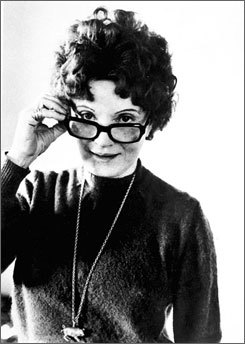
Sometimes I struggle with what seems like the often rather tenuous presumptions a biographer is forced to make as soon as they move away from documented facts; it feels particularly unfair when the subject is dead and cannot set the record straight. But at the same time it's always really fascinating to get an insight into the lives of people you admire, particularly if those lives have been unusual or eventful. Take one look at a black and white photo of the glamorously coiffed Muriel Spark living in Rome in the 60's, and you definitely want to know more.

So in many ways this book, which is really more of Alan Taylor's own memoir of his meetings with Spark than a proper meticulously researched biography, with all the filling in of gaps that that would entail, is a good compromise.

Taylor met Spark when he visited her in Tuscany to write an article on her in 1990. One gets the strong impression that Muriel Spark would not have suffered fools gladly, so it might be that some of my misgivings about Taylor are misplaced, because she certainly seems to have liked and trusted him. There followed many house-sittings and holidays, and Taylor was a reliable companion and helper at the few literary events Spark attended in her later years. There's some amusingly breathless name dropping and descriptions of the luxurious lifestyle that Spark (and therefore Taylor) enjoyed on these trips.

The strangest episode is the description of the feud between Spark and her sone Robin, who does sound a bit of a blister.

Overall, this is an interesting insight, albeit partisan and gossipy, into one of our greatest writers.
Profile Image for fran ☻.
393 reviews10 followers
February 15, 2021
I was loaned this book by one of my sweet neighbours, as they knew I liked reading a lot. It’s not a book I would have picked up myself, but it was a lovely book to have been given the opportunity to read.

I’ve never heard of Muriel Spark and her books until reading this. Told from Alan Taylor’s point of view, this book not only tells about her early life and how she came about becoming a writer, but also the friendship he built with her.

Full of facts but also anecdotes, I found myself liking the character and personality of an author I’ve never read material of. (And of whom I’m considering to trying to a book from) I particularly liked the verbal painting of the Italian scenery when Taylor goes to visit Muriel in Florence.

This book was a nice break from what I usually go for!
Profile Image for Jane Gregg.
1,196 reviews15 followers
Read
June 27, 2021
A beautiful portrait in detail of one of our greatest.
Profile Image for Till Raether.
418 reviews227 followers
December 26, 2022
This is chatty and friendly and nice to read, but it should've been a magazine article.
Profile Image for Anne Fenn.
964 reviews21 followers
June 14, 2025
I enjoyed reading about the writer. It’s informative, has a personal friendship at its heart, makes it a nice read.
561 reviews14 followers
August 11, 2018
An interesting and accessible account of the authors relationship over many years with the iconic author Muriel Spark who emerges as an indomitable eccentric living in self imposed exile in Tuscany
Profile Image for Catie.
1,598 reviews53 followers
January 12, 2018
I’ve read a couple of Sparks novels, so when I saw this biography I decided to pick it up. I enjoyed learning more about her, especially about the inspiration behind many of her works. I found several passages throughout comical, moving and memorable. I also loved the many references to not only her novels (several of which I’ve now added to my TBR), but also authors and books she read and admired.

Favorite Quotes:

“I believe I have liberated the novel in many ways, showing how anything whatsoever can be narrated, any experience set down, including sheer damn cheek. I think I have opened doors and windows in the mind, and challenged fears – especially the most inhibiting fears about what a novel should be.”

“In A Room with a View, E. M. Forster talks of Italy’s ‘pernicious charm’, and I first felt its effect that luminous morning as the sun’s restorative rays began to alight on the smooth, foot-polished flagstones and marble benches.”

“Her approach to novel-writing was to wait like a cat until she was ready to start and then, when she was satisfied that she done all the necessary research and thinking, she would ‘pounce’. She once wrote that she envied cats’ ability to purr, which she took as a sign of supreme contentment.”

“Her reading was unprogrammed, serendipitous”

“She was always eager to pass on such pearls of wisdom, a trait which I suspected she inherited from her mother. It was Cissy Camberg, for example, who said that if you didn’t learn how to do housework you would never be called upon to do any. No one accepted this fiat as enthusiastically as Muriel. Once, as Penny related, she did attempt to make a bed, which led to cracked ribs. Quite how this happened was never explained.”
Profile Image for Rick.
200 reviews25 followers
February 2, 2018
This is the perfect memoir for the subject. Funny, gossipy (in a good way), elliptical and revealing - Muriel Spark is presented by a friend, honestly, lovingly and with enjoyment. The fact so much of Alan Taylor's narrative concerns conversations around a kitchen table gives his memories warmth and truth.

I would recommend this to all, as just an enjoyable memoir, whether you know Spark or not.
69 reviews3 followers
April 13, 2018
Muriel Spark did not much fancy being the subject of a biography, fearing the kind of biography that 'adheres relentlessly to fact, faithfully recounting all that undoubtedly happened and nothing that perhaps happened...' which must have been a bit daunting for fellow Scot Alan Taylor when he set out to capture some of the life and times of this revered writer. The fact that for almost 20 years he was a close friend of Spark might have complicated things still further for him; but it also lends this very readable biography a certain authenticity.
Taylor does not begin, thankfully, at the beginning of Spark's life and plow relentlessly on; but rather from when he first met her, in the later stages of her life, in the Tuscan town of Arezzo, close to where she and her companion, Penelope Jardine, had set up home. Importantly, throughout the biography he tries to give a sense of what Muriel was really like, not just what she did, and had done to her, and by whom. For fans of Spark's writing, there are insights into her writing process, and the people, places and experiences that inspired her writing, from the douce environs of Edinburgh, to the buzzing cities which she loved, including the capital of her adopted homeland, Italy. Scott Fitzgerald said that there could never be a good biography of a good novelist, because if he is any good he is too many people. This is undoubtedly a good biography, by a good writer, of a writer who was much, much more than good.
Profile Image for Angie.
254 reviews29 followers
July 19, 2018
I really enjoyed this memoir, a celebration of a long friendship between author Alan Taylor telling of his first meeting with Muriel Spark for a Scotsman interview which resulted in years of letters, shared holidays and this fascinating portrait of Spark. We the reader are given an insight into Muriel’s identity not only as a writer but also as a Scot looking back on her early Edinburgh years. Despite spending most of her life abroad in New York and then her latter years in Italy, her Scottish heritage stayed with her and this comes through in Taylor’s recollections.

She was direct, fun and culture-loving. She collected art and enjoyed good food and friends. She was interested in people and what makes them tick and this always comes across in her writing which is why I love her books. Her style always concise with startling frankness and poignancy. It was great to read of her later years and how she remained such a character into her old age.

I was at art college with Spark’s son Robin in Edinburgh in the 1980’s and he was an odd character, quiet and solitary. It was sad to read some of the letters between mother and son whose relationship seemed to have always been overshadowed by the effects of a bullying ex-husband (for Muriel) seen by the son in a completely different light. They never bonded and what a tragedy that seems knowing what a bright creative light she was.

Short but very sweet read.
Profile Image for Rae.
280 reviews25 followers
June 9, 2018
Appointment in Arezzo, A Friendship with Muriel Spark does exactly as the title suggests, with journalist and author Alan Taylor concentrating on the period when he played a significant part in Spark’s life, both as confidante and supporter.

Just as in her short, witty novels Spark shines a forensic light on her characters, so Taylor brings their creator, in the final few decades of her life, into sharp focus. Taylor’s fondness for Spark as a person and fellow Scot is obvious, as is his admiration for her writing. Yet, this doesn’t mean he shies away from illuminating the disastrous relationships she had with both her husband and son. However, it was the intimate details of her professional life I found most interesting; where she found her inspiration, her writing routine, her discipline and dedication to her craft, the people she met in the course of her career.

As Taylor was loyal to Spark, so Appointment in Arezzo makes the perfect companion to Spark’s autobiography, Curriculum Vitae, which focuses on her earlier life and, as she liked to say, formation. Filled with wonderfully dry Scottish humour, Appointment in Arezzo is a must read for those striving to get to know the very many sides of Dame Muriel Spark.
Profile Image for Damian.
Author 11 books332 followers
July 17, 2025
I am a devotee of Muriel Spark and had, somehow, convinced myself I'd read this book. I was glad I hadn't. It was a treat--bringing to life the redoutable Muriel (as the author was privileged to call her). Her work takes up more space than her biography, as it did in real life. Taylor is clear about her single-mindedness and her devotion to her craft. He describes her as cat-lie in her writing, prowling around idea and research for many months maybe longer before writing a draft in a matter of weeks. This book deepened my respect for her genius. It is also great on place--Arezzo is brought to life, the burning summers and freezing winters. Taylor is rightly protective of his genius friend and respectful too. I did want to know more--when he says that Muriel and her lifelong 'companion' Penny aren't a couple I find myself thinking 'ok...but how did they feel about the fact many people thought they were?' Beyond mere nosiness, I wanted to know what these questions (and presumptions) of ientity felt like for a writer so concerned with how we create and recreate our sense of self.

Above all, this book made me wish I'd been Muriel's friend too--sitting talking in her messy rambling italian kitchen with her and Penny and Taylor and all their sparkling witty pals. A pleasure.
Profile Image for Patricia.
583 reviews4 followers
June 15, 2018
This is a pleasant enough little book detailing the writer's friendship with Muriel Spark. He chooses to tell us things like how the snow plough took some of the surface off the drive way in the Tuscan house where Spark lived and left a muddy drive way when the snow melted. We learn what they bought at the supermarket, meals they shared, the time when the wine in the house ran out but there was some in an out building so everyone breathed a sigh of relief. Not much of moment.

Spark emerges as a little bit conscious of her dignity and reputation although it may be the writer being too conscious of these things. I quite like some of her books but I didn't find myself warming to her in these pages.

He describes the break down in relations with her son in a lot of detail and that sounds distressing. I wonder if she would have approved. But it is clearly hard to hit the right note in a brief account of your relationship with a famous writer. Do you talk about the snow plough or an awful family breakup? I found it easy to read but I wondered why I bothered.
732 reviews
October 26, 2018
I heard Alan Taylor speak on Muriel Spark at a lecture in her old school in Edinburgh, James Gillespie's (25.10.18). After the talk he signed copies of his memoir Appointment In Arezzo. His talk gave a fascinating insight into the life of the Edinburgh novelist and the friendship they shared over 16 years, from 1990 until her death.
His book opens with their first meeting in Arezzo in 1990 when he goes to interview her for the Scottish newspaper he worked for. They hit it off - 'Blood speaking to blood' - and they remain firm friends to the end of her life. In the book he covers her whole life in a series of anecdotes and biographical sketches and the reader is left with a real sense of Spark, something which might not be achieved even by a more detailed and exhaustive biography.
Taylor writes well and the reader has a sense this is a book that Spark herself might have appreciated, as it conveys with warmth a unique view of her character and personality.
This entire review has been hidden because of spoilers.
Profile Image for Claudia.
142 reviews7 followers
November 24, 2023
This is a lovely personal memoir drawing on the author's freindship with Muriel and her companion, Penelope, and many trips to visit them in their secudled tumble down house annexed to an old church in Tuscany. What's not to love? We get a wonderfully vivid sense of Spark and the way she lived her life and dedicated herself to her work. It made me desperate, not just to read more of her work than I already have, but to visit Tuscany again. I felt I got closer to her in these fond and humourous reminiscences than I would in any dry, factual biography, including the official one which Spark lived to regret sanctioning. Taylor's consideration of her art, too, is sensitive and deepened my understanding. An easy, fun book to read but one which gives sufficient weight to the enormous artist at its core.
Profile Image for DJ .
264 reviews21 followers
November 18, 2019
Firstly let me say that I did start to enjoy this book from the halfway point, I cannot truly say that I gleaned any new insight or information from this work but I would recommend it to anyone who is just discovering Ms Sparks works.

For my own view sadly I feel that Alan Taylor was rather tense at the start of writing this work and thus it came across as rather pompous - fortunately I have heard the Good Gentleman speak in person on several occaisions and know this is not his natural default - I would advise going to hear him speak of Muriel Spark after reading this so that you can hear his deep and true affection for her, which does not seem to have come through in this work.

And if you do read or hear him may I recommend the rather perfect and underread THE DRIVERS SEAT.
948 reviews8 followers
March 29, 2021
Appointment in Arezzo by Alan Taylor - Very Good

Back in 2018 I set myself the challenge of reading everything written by and about Muriel Spark for her 100th birthday year.... I almost got there. I read all the novels, short stories, poems, her memoir and Martin Stannard's epic Biography. I ran out of steam for this one and kept putting it off - especially as I thought it would be 'just' another biography. Well, it is and it isn't. It's Alan Taylor's memories of their friendship and so there are things included that I knew from Curriculum Vitae and the biography, but it paints a much more human picture of Muriel from a man that obviously cared deeply for his friend. Wish I hadn't put it off now.
Profile Image for Penny.
74 reviews5 followers
February 28, 2021
For lovers of The Prime of Miss Jean Brodie this is a fascinating introduction to the author and her continued writing well into her 80's. With a conflict between Jewishness and Catholicism, which in turn led to a worse conflict with her only son her life was not without controversy. Nonetheless, author Alan Taylor clearly bonded with this fellow Scot and was able to accompany her on many exciting jaunts to America, Scotland and Arezzo, in Tuscany where she chose to spend most of her final years.
Reading this encourages me to re-read Miss Brodie and also one of her later books called 'Loitering with Intent'
177 reviews
September 23, 2019
This is a really interesting, warm and erudite study of Muriel Spark’s later years in Italy, interspersed with earlier recollections of her life and times. I haven’t read any MS (yet) but after reading this introduction to her I shall be seeking out some of the novels mentioned here. This short study covers her relationships with family (especially her son), her early life, friendships, literary circles and much more. The author tells the story without embellishment, with a great degree of partiality and with good humour too. An excellent read.
Displaying 1 - 30 of 44 reviews

Can't find what you're looking for?

Get help and learn more about the design.