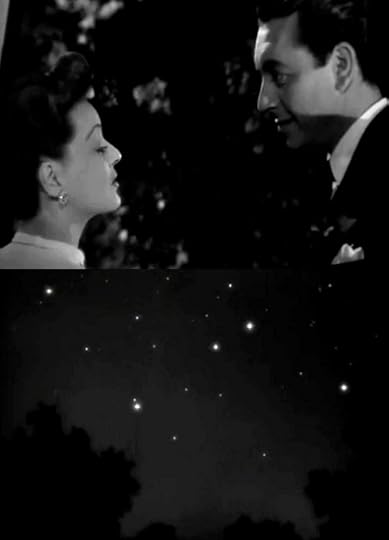
"Don't let's ask for the moon! We have the stars!" The film that concludes with Bette Davis's famous words, reaffirmed Davis's own stardom and changed the way Americans smoked cigarettes. But few contemporary fans of this story of a woman's self-realization know its source. Olive Higgins Prouty's 1941 novel Now, Voyager provides an even richer, deeper portrait of the inner life of its protagonist and the society she inhabits. Viewed from a distance of more than 60 years, it also offers fresh and quietly radical takes on psychiatric treatment, traditional family life, female desire, and women's agency.
Boston blueblood Charlotte Vale has led an unhappy, sheltered life. Lonely, dowdy, repressed, and pushing 40, Charlotte finds salvation at a sanitarium, where she undergoes an emotional and physical transformation. After her extreme makeover, the new Charlotte tests her mettle by embarking on a cruise—and finds herself in a torrid love affair with a married man which ends at the conclusion of the voyage. But only then can the real journey begin, as Charlotte is forced to navigate a new life for herself. While Now, Voyager is a tear-jerking romance, it is at the same time the empowering story of a woman who finds the strength to chart her own course in life; who discovers love, sex, and even motherhood outside of marriage; and who learns that men are, ultimately, dispensable in the quest for happiness and fulfillment.
Olive Higgins Prouty (1882–1974), like many of her characters a wealthy Bostonian, was the author of ten novels, including Stella Dallas (1923), which became the basis for three films and a long-running radio serial. A graduate of Smith College, Prouty endowed a writer's scholarship at Smith that was received by Sylvia Plath, who later portrayed her patron unflatteringly in The Bell Jar.
Though Olive Higgins Prouty is primarily remembered as a romance novelist, she was also a poet, writing her poetry whenever and wherever she could. Her poems were never published during her lifetime, as they were much more intimate writings than the novels she wrote professionally. Perhaps because she could put more of herself into her poetry than in her novels, Prouty’s poems are powerful and emotional, revealing ideas radical for the time in which they were written. Her children, Richard Prouty and Jane Chapin, published her poems in a very limited release in 1997.
Prouty was born in Worcester in 1882 to Katherine Chapin and Milton Prince Higgins, who would raise one of Worcester’s most prominent, and one of Worcester Polytechnic Institute’s most important, families. The Higgins family residence was at the corner of West Street and Salisbury Street, where WPI’s Goddard Hall now stands. Prouty spent most of her childhood deeply connected to WPI as her father was superintendent of the Washburn shops and supervised its very construction. Milton and Katherine Higgins had four children in total, all of whom would go on to make generous contributions to WPI, including Higgins Laboratories, Higgins House, Sanford Riley Hall, a scholarship, and a library fund. Milton Higgins was not only prominent in the development of WPI, but he was also an entrepreneur, buying the Norton Emery Wheel Co. with George Alden in 1885 and serving as its president until his death in 1912.
Prouty’s mother was also an active member of the growing Worcester community. Katherine was the superintendent of the Sunday school at the First Congregational Church and insisted upon Olive joining the church at age thirteen. Katherine was also the founder of the Parent Teachers Association, having spoken in many states for the PTA throughout her lifetime.
Prouty was close to her parents despite their busy professional lives, and speaks of her time in Worcester and at WPI with great fondness. Though she had an early interest in rhyme, Prouty did not have much early success at school, and the anxiety that resulted was a precursor to nervous troubles that would come later in her life.
Nevertheless, Olive Higgins graduated from Smith College in 1904 with a Bachelor of Arts degree in Literature and returned to Worcester determined to start a writing career. Prouty feared that her marriage to Lewis Prouty would hinder her attempts to write professionally, but Lewis turned out to be supportive and introduced Olive to the editor who would publish her first stories. The Proutys moved to Brookline, Massachusetts soon after their marriage in June, 1907.
Prouty’s first novel Bobbie, General Manager was published in 1913. She tried to keep up with her writing, but by 1920 Prouty was feeling more and more torn between her writing and her duties to her family. As the Proutys were quite prosperous, Olive had trouble balancing the social obligations that came with prosperity with her family obligations and still having time to write. When her third daughter Anne died in 1919, she decided to devote herself to the care of her children.
Prouty’s youngest daughter Olivia was very dear to her, possibly more so than her other two surviving children. In both her published and unpublished works, she rarely mentioned Richard or Jane, but she wrote quite a bit about Olivia. Olivia’s death in 1923 of encephalitis devastated Prouty, and the nervous breakdown that resulted led her to spend some time at the Riggs Foundation in Stockbridge, Massachusetts. Her psychiatrist, Dr. Austen Fox Riggs, encouraged her to treat her writing professionally, and Prouty was immeasurably grateful for the new freedom that afforded her.
Stella Dallas, one of Prouty’s most famous works, was published around this time. It was eventually made into a play in 1924, then a radio serial, and then its first movie incarnation in 1925. In 1937 it was remade with Barbara Stanwyck, and Be
Though this is not an actual LGBTQ text, I consider it as a book popular with the gay lens since it is also an iconic film starring Bette Davis. Book #3 in celebrating June 2023 pride month.
I read this timeless melodrama when I was a teenager (in 1997) when somehow, I managed to obtain an antique paperback copy. I am assuming like many contemporary readers of “Now, Voyager”, readers like me have flocked to this novel after having seen the iconic Bette Davis film- which happens to be my favorite Bette Davis role, and one of the reasons why she is my favorite actress.
Paul Henreid and Claude Rains are equally iconic as Jerry and Dr Jacquith. I was thrilled to find it republished with glossy gorgeousness through the Femme Fatales series!
However I don’t think Charlotte Vale is a femme fatale at all :)
The story of self-sacrifice, access to compassionate mental health care through Dr. Jacquth without judgment and draconian methods of treatment (i.e., electroshock therapy for depression) through the power of self awareness and mental health counseling makes both the film and this book a classic ahead of its time.
As an adult who has watched the movie repeatedly over the course of 20 odd years, the film’s themes and topics have become more relevant than ever in the 2020s.
For anyone who has not seen the 1942 film, I actually suggest a viewing of that first before delving into Prouty’s novel. Her novel is not in linear narration, it’s written in Charlotte’s point of view: often in interior monologues of depression, struggle, and finally liberation and the strength to live her authentic life.
The book writes about the ruling classes of old New England society more deeply than the film. For example, when Charlotte has an affair with Officer Leslie during a trip with Mrs. Vale, her mother- her mother has the engagement broken off when she takes Charlotte to the slums of Birmingham, England where Leslie’s family is from to establish that their class differences would not be up to their upper crust New England standard.
Also, Jerry Durrance, Charlotte’s love interest later- would be someone who is of the middle-class sector, a family man whose entire family works, whereas Charlotte is born from the powerful Vale family of Boston.
Also the setting of the cruise in the book takes place in Europe whereas the film is in South America.
The film omits these class differences and makes a choice simply to focus on the will they, won’t they aspect of Charlotte and Jerry’s courtship.
Jerry’s own mental breakdown happens, and this is omitted from the film. Finally, when Charlotte adopts Jerry’s daughter Tina, his wife Isobel is much more conciliatory and meets Charlotte before allowing Tina to move in with her. She and Mrs. Vale are much more humanized in the novels as strict New Englanders with a penchant for the unsentimental and ruling with their iron fists.
The film only mentions Isobel in passing, as a cruel insensitive harpy; and Mrs. Vale is a tyrannical matriarch played by the wonderful Dame Gladys Cooper.
What I love about this book- and the film, is the queer coded actions and themes that are hidden through the veneer of New England repression and subtlety. Like Edith Wharton, Prouty writes a lot- but then establishes that Charlotte choosing a life of independence, and adopting an unwanted child like herself can be code for the chosen family which many LGBTQ families are made of.
As a child I wished I had an Aunt Charlotte who could’ve taken me away from my family and provided me with the privileges and love that someone as selfless and thoughtful as she was.
No wonder gay men flocked to this movie- the idea of being adopted by this generous, powerful older woman who at the first half of the book, transforms from the ugly duckling to a wise, and weary Cinderella, who is uneasy about her newfound position in life as a caregiver, but cares and gives, nonetheless.
I am always on the lookout for novels of classic movies I have seen in the past especially ones that I loved, and in doing this I came across Now, Voyager! Usually when a story is turned into a movie there are many changes to fit the ideas of the producers/ directors, and this story had very little changes. The most dramatic change is the male leading character who in the movie is played by Paul Henrid & if you know that actor you could not see him as the American J.D. in the least. In the movie he has a sophisticated grace of a Frenchman which is one reason I enjoy his movies, and J.D. is down to earth red blooded American male who is quite complex in his life and ways. One the other hand Bette Davis was/is Charlotte Vale to a T. I was able to imagine her in this story with some more highlights that are always present in the novel. This in my mind is a great love story and being a romantic at heart, it fits the bill. I prefer romance of yesterday to the "in your face" romance of today, though I am sure there are a fair amount that are wholesome but my passion is older book. Loved it.
Lux Radio Theater May 10, 1943 with Ida Lupino and Paul Henrid.
1941 Starts on a cruise ship, a relationship, almost a romance, between a middle aged spinster (she's probably 35) and a married man and father (probably 45). She used to be fat with ugly eyebrows, but she had a successful makeover. Doesn't end as a romance though, the book is too smart for that. Olive Higgins Prouty also wrote Stella Dallas, which I read. This and that are both classic movies. Apparently this title, Now, Voyager, is a line from a Walt Whitman poem.
Everyone knows about this movie and of course "Jerry, let's not ask for the moon. We already have the stars". But how many of you knew that this was a book first? Huh? Not only is it a book, but it's actually the third is a series of five books! Right? The things we learn. (Also foxes don't hibernate.)
Charlotte Vale is the daughter of the wealthy Boston Vales. She is considerably younger then her three older brothers, having been a slight miscalculation in the old birth control cycle. As a result she is raised by older parents and she becomes the shy, awkward, ugly duckling and spinster aunt. This is the '30's so I'm guessing that she's like 24 when they decide on the spinster title.
Charlotte goes to a sanatorium for her nerves. There she meets a great doctor who tells her that she doesn't have nerves, just a horrid mother. Though he doesn't say that, he is ethical after all. More suggests it. Then Charlotte goes on a cruise to practice her newfound skills.
She meets Jerry (yep from the quote) who is married to a horrid woman of his own. They have a great time together and Charlotte really blossoms into her true self. Don't worry, she and Jerry don't have an affair. The book is all about honor after all. But they have a true love. It gives Charlotte the confidence to come back to Boston and stand up to her mother, gently of course, and become a great person who contributes to society and even gets invited to join several Bridge clubs. This is apparently a big deal.
I picked this book up because I loved the movie. I also loved this book. It's got that great style with a lot of innuendos about people having vulgar language without poor Olive having to actually write the ghastly words. Also, like many books from that time, there's a lot of concern about clothes and hatbands which I find hilarious.
Four stars might be a little high, but this classic pulp lived up so nicely to its reputation I wanted to reward it. Truly a Delightful Romp with some real social commentary underneath the trappings of a classic women's novel.
It's being newly marketed as "pulp" and I suppose it is, but I tend to think of pulp has having some seedy elements -- murder, blackmail -- really, a gun should show up somewhere. This book is far too civilized for stuff like that. It's "women's fiction" -- kind of a romance, but entirely centered on the inner life of the female protagonist. I was amazed at how closely the movie stuck to the book, with many of the best lines of dialogue lifted straight from the novel.
Now, Voyager is the third installment in the Vale family saga written by Prouty in the 1930s and 1940s. This book is about Charlotte Vale, the spinster aunt and her incredible transformation.
After a nervous breakdown, Charlotte is sent to Cascade to recover. It is a forward-thinking, psychiatric facility in the early 1940s. Her doctor, Dr. Jaquith, then sends Charlotte on a cruise alone to try out the coping skills she learned. Charlotte has never been anywhere without her domineering mother and so this is an extraordinary new experience for her. At first she is shy and self-depreciating, but then she meets J.D. Durrance and her entire perspective changes about life and especially about love.
I really enjoyed this book. I saw about 3/4 of the movie a while ago and just loved Betty Davis as Charlotte. I love old black and white movies. But the book gave me so much more. I thought Charlotte's character gained so much strength and self-worth as the story progressed. At first she was resistant because of the way she had been treated all her life, but as she found that she was worthy of love and respect, she really found her footing.
The romance is heart-breaking and beautiful as she falls for Durrance, a married man. This is how a romance should be written. The heroine is enhanced by the hero, but not defined by him or his love. I don't want to give away too much for those who haven't seen the movie or read this book. But it is great, great, great!
The settings are so appropriate. The first half of the book is set on the cruise ship and the various beautiful locations near the Mediterranean. It is almost a fairy tale setting that stands in stark contrast to the life Charlotte returns to in the second half of the book.
The ideas of individual freedoms and expression and responsibility are interwoven without seeming preachy. It is interesting to think of these ideas being so radical for women, especially by today's standards.
This is such a wonderful romance and I highly recommend it. The movie is great too.
I had a hard time finding this book at the library, but I finally did. It is the most popular of the Vale books. The other books in the series are most likely out of print, but I'm still looking. Now, Voyager hints at the other Vale family members and their various trials. I'm eager to get into their lives as well.
The White Fawn (1931), Lisa Vale (1938), Now, Voyager (1941), Home Port (1947), and Fabia (1951), all focusing on the same fictional family. http://www.valetales.info/
Charlotte Vale is a young woman from a wealthy Boston family who is bullied by her domineering widowed mother, played by Gladys Cooper. Under this tyranny, Charlotte has become a tearful, frumpy,and miserable who lives at home and, addicted to "Cigarettes and medicated sherry and books my mother won’t allow me to read."
After a stint in a sanatorium with Dr. Jasquith, Charlotte comes out of her shell and elects to go on a cruise. Aboard ship she meets Jerry and falls in love, despite his being married. They enjoy a brief tryst in Rio before returning to the States. Where and what will she doe next?
(SOME SPOILER WARNING)
Well, I won't spoil the twists that come on. It is quite interesting, also quite controversial for all its Kitsch frontery. Is it feminist? It presents a feminist conundrum of liberating yourself, and it gives the charecters emotional depth. On the other hand ostensibly, the answer to female mental anguish is heterosexual romance, weight loss, and cosmetics.
But this sexpot isn’t the real Charlotte either. Her metamorphosis isn’t complete until she comes into power over herself. At the end Charlotte Vale, confirmed spinster, strides down the stairs of the home she has inherited, windows flung open to the starlight. It could even be considered the first ever Ace story I know of on the LGBTQ spectrum.
181013: read this book several years ago, just saw it on library shelf, remembered the movie, took out a lit crit book on it at the same time. perhaps this has to do with it being once so popular, wanted to read what romantic fantasy was like back then. perhaps this is why I remember it fondly. inspired another look at the movie, some searching for other books of the same series- feminist press- as a counterbalance to the misogynist crime pulps that appeared then, this gives a good idea of what women want, what men were not aware of. had been thinking it would be degraded romance as its progeny, found it much more, wonder how I can enjoy this so much but not Jane Eyre...
Šarlot i Džeri su svojevrsni prototip Džesija i Selin, sa dodatkom transformacije dostojne Andersenovog "Ružnog pačeta" koju 80+ godina, od adaptacije ovog romana, gledamo kako na velikom tako i malom ekranu. Ovaj Linklater vajb tzv. Tihe generacije mi je svakako, uz svu melodramu, draži od Ričardovog koji je, pardon my French, precenjen.
I'd recommend this book to anyone who anyone who enjoys "quaint" 1940s romances or has an interest in feminist literature. The movie with Bette Davis is much better (although quite faithful to the story), but the book is certainly an entertaining quick read.
DNF at 35%. I can’t seem to get into this one. I know the film adaptation so well, and love it, that it might be a case of the adaptation being, in general, too close to the source material. In addition, this having been published in 1941, the style of the narrative is very of its time, and honestly I just am not feeling this level of severely strained angst.
I just loved this book and it took me by surprise because of the background of wealthy Olive Higgins Prouty sponsoring Sylvia Plath (who turned on her in the most ungenerous and spiteful way) that if she writes as well in her other romance genre, perhaps it was Plath mocking prose that she couldn't herself do? THIS book is so much more memorable and well written in my view, I think it is as perhaps a bit what Linda Pastan said and that was something like "I won a first place at Smith and big deal? Plath won a 2nd, but who remembers me?" We LOVE Linda Pastan and Ted Hughes, sorry but I maintain that Hughes was the better of the two in poetry and dedicated his life to raising their children and making amends. Plath wanted to be the "perfect wife and mum" whereas Prouty was a feminist and a real not faux one in the way that feminists tried to make Plath into a heroine and Hughes into the devil. The truth was, he was a player, she knew that--she was a player and a suicide. Can't wait to reread the Bell Jar, but don't cheat yourself by only watching the Bette Davis (the book is very much written in a way ideal for a screen play) but READ this, to me it is a wonderful and exciting read.
It's not that I didn't appreciate the book itself, but nothing beats Bette Davis. I think that's the problem with having watched the movie before the book, because the movie was fairly close to the book. Except, I recall it being set in the Caribbean, but then it was probably because of the war in Europe.
I would have said it was a basic romantic plot, with a makeover and all, but the hero is no one's idea of a hero. He's a wimp - he starts an affair with a woman he knows is emotionally vulnerable, without being able to commit to leaving his wife. He leaves her, and when she's getting back on her feet he comes back again. In the book, he calls himself a cad, and I agree completely. Charlotte gives him credit for what is really due her, just as she takes the blame for all the ills that happen to people around her.
It was a little frustrating, especially since there was no Bette Davis to tide me over the drama. But it was worth a read considering that its heroine is a free spirit once she is unchained from her anxieties. It's also refreshing to hear psychological advice of the live your life type, it can't have been too prevalent in the 40s.
'O Jerry,' she said when she could trust her voice. 'Don't ask for the moon! We have the stars!' Except for some changes in pacing and some fleshing out of some minor characters I was pleasantly surprised at how close the movie had stuck with the book. The biggest change was that I actually liked Jerry much better in the book. Paul Henreid was a great actor, but I felt he was overshadowed by Claude Raines' Dr. Jaquith. In addition, although Bette Davis didn't look like how the character was depicted, she totally embodied the character as portrayed by the author. So happy to have read this to be able to get a better understanding behind the characters. Can't believe I found it at a library book sale. You never know when treasures will turn up.
I have always loved the Bette Davis/Paul Henreid movie, which I have probably seen 20+ times, but was never sure if I wanted to read the book. One usually loves the book and hates the movie or visa versa. I was pleasantly surprised to find that most of the dialog in the movie was the same as in the book and with only a few differences, such as which side of the Atlantic the cruise was on, the story was basically the same. I still teared up at the end like I do when I watch the movie. I am so glad I read this book. Definitely a chick book like the movie is a 40's chick flick, but worth the time.
Such a romantic story, about a young woman who is completely dominated by her mother and is unable to fend for herself. When she is given help in the end she goes on a cruise, falls in love with a married man, but still "finds herself" and lives a much happier and more fulfilled life. Old fashioned romantic novel, but well written and one that I loved as a teenager when I first read it.
I have the CD of this movie with Bette Davis and Paul Heinreid and have lost count how many times I’ve watched it. I finally decided to read the book to see how closely the movie tied with the book—perfect! Both book and movie should be watched and read.
I almost put it down at one point because the 1940s-style bantering was getting on my nerves, but I soldiered on and wholly enjoyed it. Can't wait to see the movie (again) on TCM on Feb. 19!
Now, Voyager is a book by Olive Higgins Prouty. But it’s also a movie starring Bette Davis, which just so happens to be one of my favorite movies, but the book came first and that’s what we’re here to talk about: the book.
But to be honest, the book and the movie are almost carbon copies of each other. Sure there are minor differences, but the film adaptation sticks very closely to its source material. Odds are, if the characters up on screen are talking, the words they’re saying came from the book’s pages.
So the story. Basically, Now, Voyager tells the tale of Charlotte Vale, a miserable frumpy sad sack who suffers a nervous breakdown and, after spending some time in a sanatorium, emerges from the other side thoroughly changed. She’s now capable, confident, outgoing … oh, and conventionally attractive, too. But what I love about the story is, a drop in poundage and a fancy makeover don’t immediately bring with them the skills it takes to navigate the world. So often in books and movies, a character switches out their glasses for contacts, runs a comb through their hair, and BAM. Totally new person. Not so for Charlotte. She’s just as shy and self-depreciating in her designer frocks and quaffed hair as she was in her 1940s equivalent of a muumuu. It’s the relationships she gradually forms that cause her to break out of her shell little by little.
But the one place where book and movie do differ significantly is how they begin. The movie opens with Charlotte still at home and still under her mother’s control. We see her mental break, we check in with her at the sanatorium, and then the story shifts to her venturing out on her own by way of a cruise. And when the new and improved Charlotte is finally revealed via that amazing camera pan (up from her shoes all the way to the top of her hat), it’s a Cinderella moment for the ages. We appreciate it so much because we’ve gotten to know lumpy bumpy unibrow Charlotte.
The book, on the other hand, begins with her already on the ship, already transformed. She reminisces about her time at home and the breakdown that led to her stay in the facility, but we aren’t fully transported there and I found that to be a little disappointing. Then again, Now, Voyager is the third book in a series and from what I’ve heard, Sad Charlotte was a supporting character in the previous two. So it might have seemed redundant for readers at the time if the book had taken time right off the bat to establish Charlotte as dowdy and put-upon.
In any event, it’s amazing that this book came out in 1941, given the positive things it has to say about therapy, psychiatry, and mental illness. As taboo as those subjects are in 2026, I can’t imagine how much more so they would’ve been eighty-some years ago. The book also teaches us that progress is not always linear. Sometimes all it takes is a single occurrence, one bad day, and we feel like we’re back at the starting line, with all of our accomplishments seemingly amounting to nothing.
Now, Voyager is often referred to as a love story. And I would agree with that. There's eye-batting, luscious lip-locks, and passionate embraces aplenty. But what the book is really about is learning to love YOURSELF, and that's the most important thing!
I discovered Now, Voyager by Olive Higgins Prouty from the classic film starring Bette Davis. Surprisingly, the novel follows the movie closely and is just as beautiful as the film, so I had to select this fantastic novel for the Silver Petticoat Book Club.
In what should be a modern classic, Now, Voyager tells the story of Charlotte Vale and her path to self-discovery as a woman. Dominated by her mother, Charlotte has always lived a repressed and sheltered life.
Her entire Boston blueblood family sees her as fat, dowdy, and a spinster. She, too, sees herself as unworthy of love at 40. But after a nervous breakdown, she goes to a sanatorium and, over time, has a complete transformation.
It’s more than just the typical makeover plot where suddenly she’s skinny, pretty, and worthy of love. There’s an element of that, but it’s more psychological and emotional.
You’re inside Charlotte’s mind and feel what she feels. Her anxiety and depression, the relief that someone could see the real her, and the awe in finding Charlotte’s version of freedom.
As this is more a character story than a romance, don’t expect a typical HEA. Nevertheless, like the classic film, the love story is epic and haunting and ends on the same line: “Don’t let’s ask for the moon! We have the stars!”
Charlotte and Jerry’s story is poetic and sad because they can’t be together. After all, he’s already married. What’s beautiful about their love is that it’s not some torrid affair. These are two people making noble sacrifices to do what’s right.
Furthermore, I appreciated that in the novel, unlike the film, there is more focus on Jerry’s own nervous breakdown and work problems. You recognize why he fully understands Charlotte so fully thanks to the inner character’s thoughts. You know why he’s the one who can truly see someone who had always been invisible and mistreated and also without judgment.
Overall, Now, Voyager is a gorgeous novel that deserves as much recognition as the film. If you love classic movies with a memorable love story and a dynamic leading character, Now, Voyager is a perfect read.
Content Note: PG-like for an implied affair and emotional abuse. Also, be aware that this book reflects the time it was written.
While searching for a different book on my To Read list I spotted the spine of this book, vaguely recalling the movie from babysitting nights long ago. After reading the Foreword explaining what pulp fiction means and the importance of those books authored by women in the 1930s and 1940s I checked out the book. It was a well written story of the transformation of a woman in 1941 and her voyage of self discovery. I am glad to have had the opportunity to read a previously untried genre.
It's been ages since I've seen the movie, but I remember enjoying the sentimental romance at the time. As with other female authors of the day (like Vera Caspary), it is a joy to discover their early feminism and coded ways of defying the status quo. Yes, there are familiar tropes here - and many probably the templates that later became standard - but also an authentic immersion in the culture of the period. As is usually the case, the movie version simplified the issues (especially the class/ wealth divides) and the book gives the reader a richer look into our protagonists inner growth through her internal thoughts.
Charlotte Vale, of the Boston Vales, is the only daughter, and much younger than her brothers. She is the spinster aunt, and lives to serve every beck, call, and whim of her mother, the domineering matriarch of the family, who has never actually liked her daughter. Charlotte, weighed down by the stress of constantly being subjected to the criticism and demands of her mother, and the hen-pecking from many of her relatives, has a nervous breakdown. After several months in a sanitarium called The Cascades under the care of the kind Dr. Jacquith, Charlotte embarks on a cruise. On the cruise she is thrown together with J.D., an unhappily married man. They develop feelings for one another, and share a few deep kisses, but in the end, their passion is left unfulfilled. Back in Boston, Charlotte resumes her role in her mother's household, but she insists that she will no longer let her personality by subsumed by her mother's. She gets engaged, encounters J.D. again, and ends up caring for his youngest daughter....
My rating, maybe 2.5 stars if I'm feeling generous. I love the movie with Bette Davis, Paul Heinreid, and Claude Rains, and the movie was made quite true to the book. So, why such a low score for the book? I'm not sure, but somehow I'm more willing to write off the melodrama and plot holes for a classic movie. In a book, it just seems like such a cheesy, histrionic novel.
Who knew that one of my favorite movies was originally a novel? Well of course I should have known since that's where so many movie ideas come from, but Olive Higgins Prouty books aren't exactly jumping off the shelves at your local bookstore. Oh do I love this movie. I'm a sucker for a makeover, always, and the transformation of Charlotte Vale (Bette Davis in the film) is a doozy! And Paul Henreid, with that delectable European accent, lighting two cigarettes at once? Sigh. It could almost make a girl go back to smoking. I suppose I should be discussing the book rather than the film, but guess what? They are virtually interchangeable. I was surprised at how the movie strictly adheres to the novel...dialogue, plot, setting and all. So while I enjoyed that to a degree, because I'm such a fan of the film, it did make reading the book slightly less interesting, as I knew just what to expect at every moment. Nonetheless, the story of the metamorphosis of spinsterish, repressed Charlotte into an independent womean in control of her life for the very first time, a transformation helped by the delicate and sustaining love of JD, a man she meets on a cruise, is touching and uplifting and achingly sad and shows that even when you don't get everything you want there are still paths to happiness.