

What do you think?
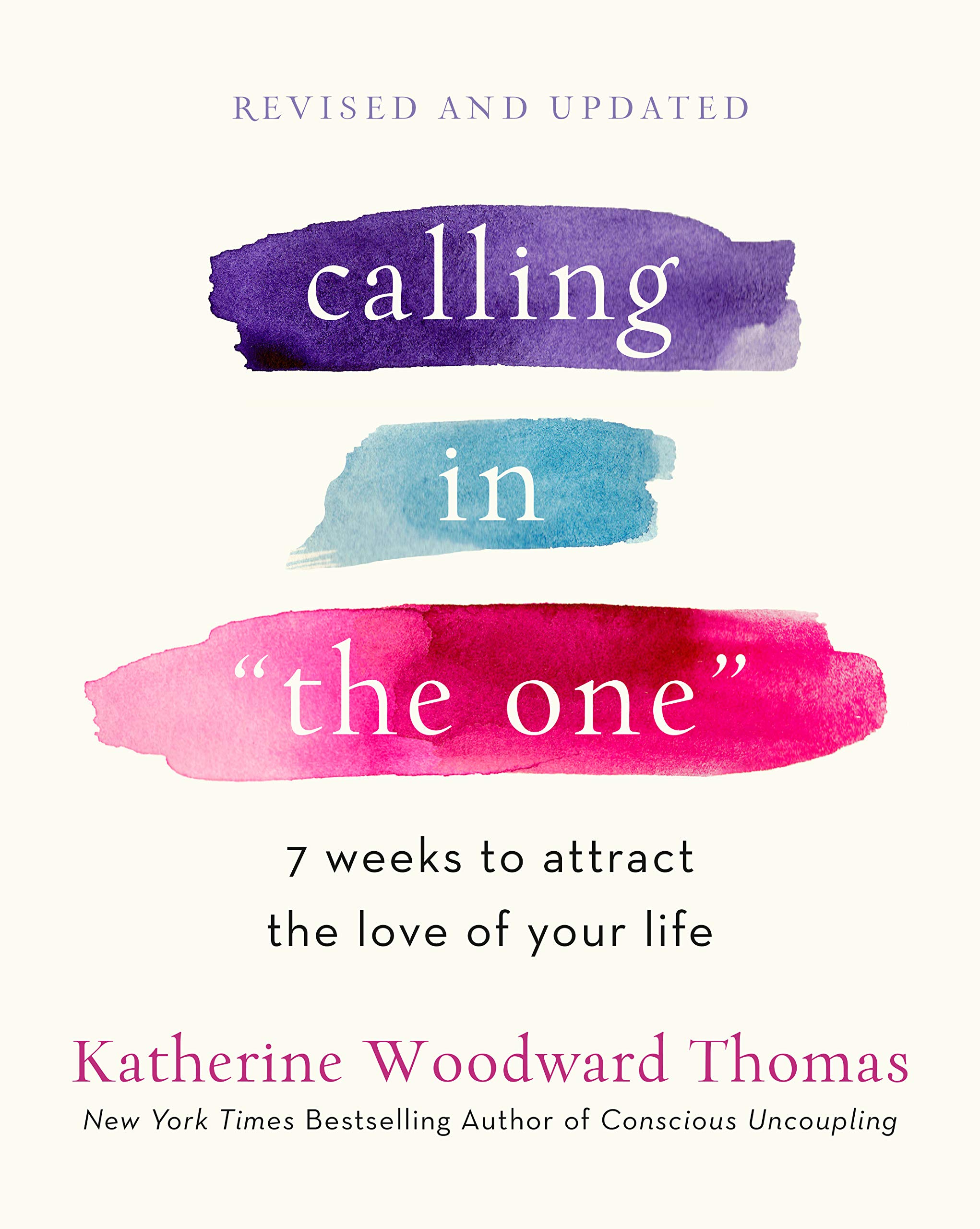
Calling in "The One" Revised and Expanded: 7 Weeks to Attract the Love of Your Life
The classic guide to finding love and creating life-altering miracles of happiness and fulfillment, now revised and updated with new insights, stories, teaching points, and transformational exercises.
Are you frustrated by stymied relationships, missed connections, and the loneliness of the search for someone to spend the rest of your life with? In this classic, updated guide to finding deep happiness in love, licensed marriage and family therapist Katherine Woodward Thomas bridges the gap between wanting to find true love and being truly available to create a fulfilling relationship. Love-seekers today have to deal with a precarious terrain of dating and partnering that seems to encourage a lack of commitment and clarity. Calling in “The One” will empower you to have a radically different experience by shifting your painful patterns in love from the inside out, graduating you from unsatisfying relationships and unleashing your power to manifest the happy, healthy love you desire.
Based on the Law of Attraction, which is the concept that we attract what we’re ready to receive, the provocative yet simple forty-nine-day program includes a daily lesson, a corresponding practice, and instructions for putting that lession into action in your life. Manifesting meditations, powerful visualizations, and clarifying journal exercises will lead you to recognize and release your hidden inner obstacles to love and help you grow beyond them. At the end of the course, you will be in the ideal state of mind to go out into the world and find your "One."
An inspirational approach that offers a life-affirming philosophy on relationships, Calling in “The One” is your guide to finding and keeping the love you seek.
Are you frustrated by stymied relationships, missed connections, and the loneliness of the search for someone to spend the rest of your life with? In this classic, updated guide to finding deep happiness in love, licensed marriage and family therapist Katherine Woodward Thomas bridges the gap between wanting to find true love and being truly available to create a fulfilling relationship. Love-seekers today have to deal with a precarious terrain of dating and partnering that seems to encourage a lack of commitment and clarity. Calling in “The One” will empower you to have a radically different experience by shifting your painful patterns in love from the inside out, graduating you from unsatisfying relationships and unleashing your power to manifest the happy, healthy love you desire.
Based on the Law of Attraction, which is the concept that we attract what we’re ready to receive, the provocative yet simple forty-nine-day program includes a daily lesson, a corresponding practice, and instructions for putting that lession into action in your life. Manifesting meditations, powerful visualizations, and clarifying journal exercises will lead you to recognize and release your hidden inner obstacles to love and help you grow beyond them. At the end of the course, you will be in the ideal state of mind to go out into the world and find your "One."
An inspirational approach that offers a life-affirming philosophy on relationships, Calling in “The One” is your guide to finding and keeping the love you seek.
393 pages, Kindle Edition
Published May 11, 2021
About the author
Katherine Woodward Thomas
15 books121 followersKatherine Woodward Thomas, M.A., LMFT, was a New York Times bestselling author, award-winning licensed psychotherapist, and pioneering teacher in the field of transformational psychology. Through her groundbreaking books Calling in "The One," Conscious Uncoupling, and What's TRUE About YOU, along with her transformative courses and professional coach training programs, Katherine helped hundreds of thousands of people transform their relationships, graduate from old patterns, and create lives rooted in love, purpose, and possibility.
Her books have sold more than 600,000 copies worldwide, sparking cultural movements and redefining how we approach love, relationships, and conscious endings. Her work has been featured in The New York Times, Time, The Wall Street Journal, The Washington Post, and on The Today Show, reaching millions of people around the world.
Katherine's final book, What's TRUE About YOU, represented the culmination of decades of professional experience and the transformational work that had become her greatest passion. Through her Future Forward Frameworks™, Katherine offered a new approach to helping people move beyond the patterns of the past and consciously create a brighter future.
Today, Katherine's legacy continues through her timeless teachings, an expanding network of Certified Coaches, and a vibrant global community committed to creating lives—and a world—rooted in love, healing, and possibility.
Her books have sold more than 600,000 copies worldwide, sparking cultural movements and redefining how we approach love, relationships, and conscious endings. Her work has been featured in The New York Times, Time, The Wall Street Journal, The Washington Post, and on The Today Show, reaching millions of people around the world.
Katherine's final book, What's TRUE About YOU, represented the culmination of decades of professional experience and the transformational work that had become her greatest passion. Through her Future Forward Frameworks™, Katherine offered a new approach to helping people move beyond the patterns of the past and consciously create a brighter future.
Today, Katherine's legacy continues through her timeless teachings, an expanding network of Certified Coaches, and a vibrant global community committed to creating lives—and a world—rooted in love, healing, and possibility.
Ratings & Reviews
Friends & Following
Create a free account to discover what your friends think of this book!
Community Reviews
Displaying 1 - 30 of 94 reviews

September 6, 2021
Holy shit. Please ignore the extremely cheesy book title!! This one was recommended to me by a friend after my breakup and I thought I was reading the book but the book was reading me!! Lots of wisdom and insight on the law of attraction and becoming the love you want to receive. I’m about to recommend to all my single friends truly amazing read!

November 23, 2021
What this is: A seven week self-guided course that requires doing about 30-60 minutes a day of reading and writing and exercises every morning.
Who should do it: people who've done years of trauma therapy already but are struggling to find either a (good) partner or friends (this doesn't need to be romantic), or people without a real trauma/abusive relationship history.
I just completed this course over the suggested seven weeks. Overall, this is a wonderful course, and I really had fun with it. I didn't allow myself to look ahead, and doing a different thing first thing in the morning each day felt like a therapy advent calendar! I also think it genuinely did change my life. I did it more for friends than a romantic partner, and the material is really applicable for both, so I did it for both. Despite that it says it takes 20-30 minutes a day, the shortest day was 20min and several were over an hour.
There are two main things, though, that I think you should know before reading/doing this:
1) This book isn't accurately advertised. For those of you who have done prior trauma therapy reading, this is effectively a Stage 3 (by Herman) trauma therapy book. If you have a history of abusive relationships or had abusive parents and you read this book before doing any therapy, it might actually hurt you more than help. Stage 1 is when you start going to therapy, leave abusive relationships, learn how to cope in healthy ways with your trauma, and stay safe. Stage 2 is where you delve deeply into your past experiences of trauma. Stage 3 is the final stage where you learn how to be in healthy conflict with others and reintegrate into community. If you had abusive parents or have had a string of abusive relationships and have never gone to therapy, I'd recommend a book like "Toxic Parents" instead, not this one. If you have done that work previously, though, then this book will basically tell you what you need to do and learn now, which is really helpful!
2) The basic premise of this book is that if you have been single (or friendless) for a long time, then on some level you actually don't really want a partner/friends The book then helps you explore all the things holding you back from actually wanting/going after what you think you want. It is, however, difficult to say "accept responsibility for all your problems" to someone without victim blaming them, and I do think there are moments here where the author does some victim blame-y stuff, and you need to be ready to just brush off some of her words. In other instances too, sometimes you need to translate what she says a bit, including her mentions of "God" if you're an atheist.
So if you either don't have much history of trauma and abuse, or you have done lots of work on your history of trauma and abuse, then I recommend this book. It's really helpful for improving your capacity to be loving and happy while still maintaining boundaries.
Who should do it: people who've done years of trauma therapy already but are struggling to find either a (good) partner or friends (this doesn't need to be romantic), or people without a real trauma/abusive relationship history.
I just completed this course over the suggested seven weeks. Overall, this is a wonderful course, and I really had fun with it. I didn't allow myself to look ahead, and doing a different thing first thing in the morning each day felt like a therapy advent calendar! I also think it genuinely did change my life. I did it more for friends than a romantic partner, and the material is really applicable for both, so I did it for both. Despite that it says it takes 20-30 minutes a day, the shortest day was 20min and several were over an hour.
There are two main things, though, that I think you should know before reading/doing this:
1) This book isn't accurately advertised. For those of you who have done prior trauma therapy reading, this is effectively a Stage 3 (by Herman) trauma therapy book. If you have a history of abusive relationships or had abusive parents and you read this book before doing any therapy, it might actually hurt you more than help. Stage 1 is when you start going to therapy, leave abusive relationships, learn how to cope in healthy ways with your trauma, and stay safe. Stage 2 is where you delve deeply into your past experiences of trauma. Stage 3 is the final stage where you learn how to be in healthy conflict with others and reintegrate into community. If you had abusive parents or have had a string of abusive relationships and have never gone to therapy, I'd recommend a book like "Toxic Parents" instead, not this one. If you have done that work previously, though, then this book will basically tell you what you need to do and learn now, which is really helpful!
2) The basic premise of this book is that if you have been single (or friendless) for a long time, then on some level you actually don't really want a partner/friends The book then helps you explore all the things holding you back from actually wanting/going after what you think you want. It is, however, difficult to say "accept responsibility for all your problems" to someone without victim blaming them, and I do think there are moments here where the author does some victim blame-y stuff, and you need to be ready to just brush off some of her words. In other instances too, sometimes you need to translate what she says a bit, including her mentions of "God" if you're an atheist.
So if you either don't have much history of trauma and abuse, or you have done lots of work on your history of trauma and abuse, then I recommend this book. It's really helpful for improving your capacity to be loving and happy while still maintaining boundaries.

July 13, 2021
This book came into my life when I needed it. I expected it to be directly about dating which I’m not a big fan of but I was open minded because the book was recommended to me by a friend. But it was so much more than that. It’s more of a program that walks you through the journey of self love. It was profound and helpful in so many ways. I feel deep gratitude for this book.
Anyone who is looking to work through their past and rewrite their internal narrative to see themselves in a more loving way should absolutely read this.
Anyone who is looking to work through their past and rewrite their internal narrative to see themselves in a more loving way should absolutely read this.

July 26, 2023
I gave this book a solid try. For days & days I tried to fight off this feeling that I fundamentally disagreed with most of the author’s orientations toward dating but ultimately, after I got about halfway through, I realized I simply didn’t agree with many of the practices she enlisted in the book. My two biggest qualms are: the author makes it clear in the beginning that this book is for everyone (all gender identities and sexual orientations) but it’s not. It’s written for straight women. Which is fine, I just would have appreciated a more forthcoming stance on that. Second, many of her practices involve adopting a posture of waiting and making room for our partners- this may brief well, but the more she dives into this, the more I realized she is not in the business of creating spaces where the reader can enjoy being single. She really lost me when she instructed the reader to make the space we live in less feminine in an effort to “be ready” for the man we call in. Something about that didn’t sit right with me; call me a feminist but I’m not interested in altering my space to make an imaginary man more comfortable.
I WOULD recommend this book for those who haven’t yet undergone self-reflection, personal therapy, etc. She does offer some thought provoking questions we can ask ourselves about patterns in our life. However, I have been in therapy for some time (a privilege, truly) and am also a therapist myself. This being said, her ideas of self-reflection felt far from ground breaking. I’d much rather learn how to soak up every rich moment of singleness rather than cater my space and existence to imaginary partners.
In hindsight, this book is not written for folks like me and that’s ok, I just shouldn’t have read it (or spent money on it really).
I WOULD recommend this book for those who haven’t yet undergone self-reflection, personal therapy, etc. She does offer some thought provoking questions we can ask ourselves about patterns in our life. However, I have been in therapy for some time (a privilege, truly) and am also a therapist myself. This being said, her ideas of self-reflection felt far from ground breaking. I’d much rather learn how to soak up every rich moment of singleness rather than cater my space and existence to imaginary partners.
In hindsight, this book is not written for folks like me and that’s ok, I just shouldn’t have read it (or spent money on it really).

July 17, 2022
I tried the original of this book on Kindle and never made it through. I recommend having a physical copy of this one and reading the revised version.
This book is definitely woo-woo. I would say a full third to half of this book is examining *your* role in your problematic relationships and who *you* need to forgive and who *you* are blaming even in toxic and unhealthy relationships. I’m all for examining yourself and seeing how empowering it can be to walk away from a position that’s no longer serving you and examining the ways it was. But it was approaching victim blaming for me. I just think some people you date are toxic and you didn’t manifest being there. That just is what it is.
That being said, there was a lot I did like in this book and parts of it lined up with what I was working on in therapy, which is cool. I did clean out a drawer. I bought two placemats. My biggest takeaway is trying to act from my power center, not from being triggered. It’s easy for me to just say fuck this and remove myself from dating situations. That’s not what a confident, powerful person would do.
Still single though! 😂 I’d recommend if it sounds of interest to you. It was nice having something to do (I’m a workbook girl - Venus in Virgo) when I didn’t have dates lined up. At least I was thinking about what I wanted and dating.
This book is definitely woo-woo. I would say a full third to half of this book is examining *your* role in your problematic relationships and who *you* need to forgive and who *you* are blaming even in toxic and unhealthy relationships. I’m all for examining yourself and seeing how empowering it can be to walk away from a position that’s no longer serving you and examining the ways it was. But it was approaching victim blaming for me. I just think some people you date are toxic and you didn’t manifest being there. That just is what it is.
That being said, there was a lot I did like in this book and parts of it lined up with what I was working on in therapy, which is cool. I did clean out a drawer. I bought two placemats. My biggest takeaway is trying to act from my power center, not from being triggered. It’s easy for me to just say fuck this and remove myself from dating situations. That’s not what a confident, powerful person would do.
Still single though! 😂 I’d recommend if it sounds of interest to you. It was nice having something to do (I’m a workbook girl - Venus in Virgo) when I didn’t have dates lined up. At least I was thinking about what I wanted and dating.

June 26, 2023
A cheesy and unfortunate title for a really good book w good tools!

January 12, 2022
Each day is a new chapter with an exercise to read. The first chapter made me grin when I did the exercise. 2nd chapter made my heart region hurt which gave me a lot to think about. 3rd chapter was speaking out on one of my boundaries to someone in my life. Yikes, not pleasant at the time but rather powerful. On to chapter 4. So far this book has been hitting it out of the park.
June 21, 2022
Don’t let the title fool you, it’s great. I give it four stars for the low-key affiliation with “The Secret”/higher- power doctrine that I found unnecessary simply because the concepts and exercises are useful no matter what your relationship with a god/higher power to be. I used the exercises and in the book to really get to the root of my relationship issues, and it set me up for success to find my current boyfriend (hopefully life partner!) I recommend this to all my single friends who, like me, struggle with repeated bad patterns and frustration in the dating world. You best be ready to find your mans or womans or partner when you are done with this book cuz they are a’comin! 🏃♂️

February 26, 2025
I didn't follow the books directions, which isn't a huge surprise knowing me, but I love the premise of the book. If you've been struggling to find a romantic partner or make friends for quite some time this is a good one. I feel like this book is kind of a last ditch effort- like when you've put in the work in therapy, been on dates, putting in an effort to make/keep friends, then this book pretty much calls you out on your bullshit and asks the hard questions and forces you to think about what you really want.
November 29, 2025
Okay so backstory on starting this book, a girl on tiktok jokingly gave a review and some friends and I looked up the reviews of this book and thought, why not, nothing else is working for us. So flash forward 7 weeks and too many journal entries later, here we are. Overall I actually enjoyed the daily reading, it got a little slow in the middle and there were too many journal activities for my liking but we got through it. The first 2 weeks and the last week I found the most useful and interesting. So now I guess I just wait for a boyfriend? Wish me luck!

September 8, 2023
A good friend recommended this, and despite the hokey title, it actually offered a lot of practical wisdom and advice on how to improve self-love, self-esteem, and self-concept which I found to be surprising (since this is centered mostly around ushering in romantic love) but valuable. I’ve been on a bit of a personal growth journey lately and it never hurts to open your mind to new ways you can invite love (of all kinds) into your life.
And at its core, that’s what this book does: it helps you think of fresh ways to do that. It gets you to shift perspective, try different approaches, be more open to possibility, and self-reflect. And I am always a proponent of that!
And at its core, that’s what this book does: it helps you think of fresh ways to do that. It gets you to shift perspective, try different approaches, be more open to possibility, and self-reflect. And I am always a proponent of that!

August 21, 2023
This book started off with some great prompts that really had me thinking about my past approaches to relationships and then dived into a week straight of insisting my caregivers were the problem and the prompts were JUST about childhood/caregivers. Actually, I know where a lot of my trauma and issues surrounding relationships stemmed from and it was being sexually assaulted at 22. It was literally exhausting analyzing my barely there daddy and mommy issues and I actually threw this book in the garbage. I’m sure it’s helpful for some people but not me.

March 12, 2024
After starting this book nearly two years ago and then stopping half way through, I can finally say I finished!
Wonderful read—this book is magic and I will miss the structure it provides to my journey of welcoming more love into my life. Reading with a book club helped me stay on course. There is so much to unpack in this book that I could easily re-read it a few more times. Like one of my fellow book club participants said, “this book is like scripture.”
More than a self-help book, provides concrete ways to help you reframe what you’ve been told and believed about love and “the one”, but in a way that also empowers you.
Highly recommend to all who are in a journey of finding their “one.”
Wonderful read—this book is magic and I will miss the structure it provides to my journey of welcoming more love into my life. Reading with a book club helped me stay on course. There is so much to unpack in this book that I could easily re-read it a few more times. Like one of my fellow book club participants said, “this book is like scripture.”
More than a self-help book, provides concrete ways to help you reframe what you’ve been told and believed about love and “the one”, but in a way that also empowers you.
Highly recommend to all who are in a journey of finding their “one.”

March 13, 2024
I can’t say enough good things about this book!!! It is more of a workbook than just a sit and read type book. Katherine Thomas guided me through what it takes to love myself and other people with an open and honest heart through 49 days of lessons and almost as many journal entries/meditations/practices. The way she said things just made so much sense and helped me really understand the principles she was teaching. I felt so connected to her, almost like she was there with me through each lesson. This book came into my life at a time that I really needed it and I have seen a beautiful and rich transformation in myself since first starting it seven weeks ago. So grateful. 🩵

March 29, 2023
Seven weeks felt a bit long, especially when I would miss a day and it eventually turned into 10 or 12 weeks. However, this definitely taught me a lot about perseverance having to dedicate a piece of my time to the book every day. I feel like I've learned a lot about myself and my perspective on relationships and though it is scary, I feel ready to put myself out there. Future partner, where you at?
December 31, 2024
5 stars
Hands down one of the best books I've ever read. I bought this for myself for my birthday back in January 2024. I didn't decide to pull it off my shelf until 10/14/24. It took me longer than 7 weeks, as some days I skipped if I were busy or out of town, but today on 12/31/24 I completed it, and can say I will miss reading this. I've never highlighted and underlined so many beautiful quotes in a book before. This book is truly precious.
Hands down one of the best books I've ever read. I bought this for myself for my birthday back in January 2024. I didn't decide to pull it off my shelf until 10/14/24. It took me longer than 7 weeks, as some days I skipped if I were busy or out of town, but today on 12/31/24 I completed it, and can say I will miss reading this. I've never highlighted and underlined so many beautiful quotes in a book before. This book is truly precious.

July 9, 2024
Read this with my girlfriends. Gosh just such thought provoking journal prompts and hours of incredible conversations. Therapy in a book. It’s aimed at single people but we have found it valuable for anyone to get to know themselves more and push themselves to show up more healthily in relationships (platonic or otherwise). Highly recommend, especially in a partner read situation
December 27, 2023
Ok the title looks kinda embarrassing on my Goodreads lol, but this is seriously a good book for self-development. It just tells you how to create the best version of yourself. I’d recommend this to anyone, not just to people who wanna find a partner

February 20, 2026
i am freeing myself from this book and its so called healing exercises- i get more out of talk therapy than i do out of this book. i'll drop it off at my local library hopefully someone can use it to call in their one but i won't be.

July 28, 2026
It was a good read, made me think deeply about relationships. Every chapter seemed to relate perfectly to where I was in my life at the time. Will I find love now? I guess we will have to find out. Have to keep putting in the work. Be who you want to date.
December 15, 2022
The end is just the beginning with this book! I’m looking forward to reviewing my notes and lessons that had me feeling stuck or panicked 😆
October 5, 2023
wow I can’t believe I actually made it to the end!!! I feel like I’ve learned or reinforced a lot of valuable lessons that have helped me become a better version of myself
January 30, 2024
Absolutely life changing. Recommend this to EVERYONE even in relationships!!! So powerful and like therapy!
March 9, 2024
Took me about 10 weeks to read but genuinely loved it. Was so insightful and helped me look within myself for the answers I was searching for. I will be recommending this to friends.

May 11, 2026
Phenomenal, practical, and insightful. Don’t be fooled by the title. This is a workbook that can change your life. I got around to reading it when I had already done lots of very similar work, but the work for growth never stops. This was just confirmation and motivation to keep going.
Be the love you want in your life. As simple and as hard as that.
Be the love you want in your life. As simple and as hard as that.
April 7, 2025
I recommend over some other fluffier love books because there are actual action items. Journal entry suggestions. List making. Visualizations of certain parts of your past and future love / partner, etc. Made up of many short chapters with different angles and "weeks" of steps to guide the reader to prepare for a partner. Some to help overcome past relationship trauma, childhood and letting go of past, etc.
*I'm not religious and this book tended to quote Christian prayer and God-like terms too often for me personally, but I was able to skip over them and get what I needed out of each chapter all the same.
*I'm not religious and this book tended to quote Christian prayer and God-like terms too often for me personally, but I was able to skip over them and get what I needed out of each chapter all the same.
August 27, 2023
This book quite literally transformed my outlook and perspective in what I thought was love and to be a loving person. Whether you are single, dating, taken, and or even married, I think anyone can benefit from this book to not only be a better partner but to be a better person for yourself. What an amazing book! The journal entries helped me release so much I didn’t realize I was still holding onto. I’ve been recommending it to all my friends, especially the ones that are still trying to find their person. Wow, 10/10!
November 19, 2023
I bought this book as a joke after my latest breakup wrecked me in ways I have never experienced for. I thought it would be like cast a spell but it is actually a book that helps you work through past traumas from failed relationships to childhood disappointments. You have to do the work in order to truly reflect on the walls you’ve built. While I didn’t meet the love of my life after 7 weeks, I have a better understanding of who I want to be with and how to be comfortable and confident giving and receiving the love I want and deserve.

May 2, 2024
DNF
I was half way through the book and I just couldn’t do this. The book has some valuable inputs, very small snippets of them but mostly it tinges on victimisation. Most of the advices given border around making you feel like a victim and keeps you in a sad low place. Then it acts like giving a hand to help you. I couldn’t take it after a while.
I was half way through the book and I just couldn’t do this. The book has some valuable inputs, very small snippets of them but mostly it tinges on victimisation. Most of the advices given border around making you feel like a victim and keeps you in a sad low place. Then it acts like giving a hand to help you. I couldn’t take it after a while.

September 19, 2022
I highly recommend checking out this review (https://www.goodreads.com/review/show...) before picking this book up.
Displaying 1 - 30 of 94 reviews