

What do you think?

I Cried, You Didn't Listen
California spends $400,000,000 annually to incarcerate children as young as 12 years old. Every year, the price of a four-year education at Stanford University buys each of these children horrifying physical, sexual, and psychological abuse behind the walls and fences of the California Youth Authority.
At the age of nine, a family tragedy split up Dwight Abbott’s family, and forced him into the hands of the California Youth Authority. This is the chilling chronicle of his life behind bars—a story of brutality and survival; a dark journey showing how the systematic abuse of incarcerated children creates a cycle of criminal behavior that usually ends with prison or death.
In its first serialization, I Cried, You Didn’t Listen won a Project Censored award for stories that are significant, yet under-reported in the mainstream media. This second edition contains an introduction by Books Not Bars, new pieces by the author, and writing from more recent victims of the CYA.
Dwight Abbott, has been in and out of prison since his childhood. He is now serving multiple life sentences in Salinas Valley State Prison in Soledad, CA.
At the age of nine, a family tragedy split up Dwight Abbott’s family, and forced him into the hands of the California Youth Authority. This is the chilling chronicle of his life behind bars—a story of brutality and survival; a dark journey showing how the systematic abuse of incarcerated children creates a cycle of criminal behavior that usually ends with prison or death.
In its first serialization, I Cried, You Didn’t Listen won a Project Censored award for stories that are significant, yet under-reported in the mainstream media. This second edition contains an introduction by Books Not Bars, new pieces by the author, and writing from more recent victims of the CYA.
Dwight Abbott, has been in and out of prison since his childhood. He is now serving multiple life sentences in Salinas Valley State Prison in Soledad, CA.
180 pages, Paperback
First published January 1, 1991
About the author
Dwight Edgar Abbott
10 books8 followersDwight "Sonny" Abbott was born within a secure Middle-Class family and was misplaced in the thick of California's abusive penal system.
At the age of nine, a family tragedy split up Dwight Abbott’s family, and forced him into the hands of the California Youth Authority. This is the chilling chronicle of his life behind bars—a story of brutality and survival; a dark journey showing how the systematic abuse of incarcerated children creates a cycle of criminal behavior that usually ends with prison or death.
In its first sterialization, I Cried, You Didn’t Listen won a Project Censored award for stories that are significant, yet under-reported in the mainstream media. This second edition contains an introduction by Books Not Bars, new pieces by the author, and writing from more recent victims of the CYA.
Dwight Abbott, has been in and out of prison since his childhood. He is now serving multiple life sentences in Salinas Valley State Prison in Soledad, CA.
“This is a searingly honest book — read it if you have the courage. Dwight Edgar Abbott’s story will reveal more about the self-fueling horrors of incarceration than would ten of the average criminology texts. For years this book has circulated as an almost cult underground document, a simple key to explaining the complex wretched mess that is the American criminal justice system.” —CHRISTIAN PARENTI, author of Lockdown America, The Soft Cage and The Freedom
“Sadly, Dwight’s experience echoes the stories of the thousands of young people still warehoused and dehumanized in California, but also serves powerful testament to the need for a 180 degree shift in how we deal with young people in trouble.” —VAN JONES, Executive Director, Ella Baker Center for Human Rights
At the age of nine, a family tragedy split up Dwight Abbott’s family, and forced him into the hands of the California Youth Authority. This is the chilling chronicle of his life behind bars—a story of brutality and survival; a dark journey showing how the systematic abuse of incarcerated children creates a cycle of criminal behavior that usually ends with prison or death.
In its first sterialization, I Cried, You Didn’t Listen won a Project Censored award for stories that are significant, yet under-reported in the mainstream media. This second edition contains an introduction by Books Not Bars, new pieces by the author, and writing from more recent victims of the CYA.
Dwight Abbott, has been in and out of prison since his childhood. He is now serving multiple life sentences in Salinas Valley State Prison in Soledad, CA.
“This is a searingly honest book — read it if you have the courage. Dwight Edgar Abbott’s story will reveal more about the self-fueling horrors of incarceration than would ten of the average criminology texts. For years this book has circulated as an almost cult underground document, a simple key to explaining the complex wretched mess that is the American criminal justice system.” —CHRISTIAN PARENTI, author of Lockdown America, The Soft Cage and The Freedom
“Sadly, Dwight’s experience echoes the stories of the thousands of young people still warehoused and dehumanized in California, but also serves powerful testament to the need for a 180 degree shift in how we deal with young people in trouble.” —VAN JONES, Executive Director, Ella Baker Center for Human Rights
Ratings & Reviews
Friends & Following
Create a free account to discover what your friends think of this book!
Community Reviews
Displaying 1 - 30 of 40 reviews
November 16, 2009
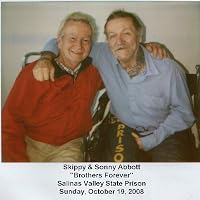
I may be biased, as I am Dwight Abbott's (Sonny's) brother, Skippy. However, I can assure that what my brother tells you of his treatment, as a child in these "correctional" institutions is FACT!
I was raised with Sonny, as well being there many of the times he gained freedom (mostly through escape.) Man's inhumanity to man; in this case, children; exists and is hidden behind Lies, shame, guilt and embarrassment. Those who claim this abuse does not exist have exchanged the Lie for the Truth. We live in a sick world. Do not be taken in by those whose Lord is the Father of Lies!
Know the Truth: Dwight Abbott is exposing it to the Light. It is now your choice where to take "I Cried and You Didn’t Listen"! At the very least, examine yourself. The Reason you were exposed to this book is greater than you might think at this point. With Conviction, Danny Abbott
I was raised with Sonny, as well being there many of the times he gained freedom (mostly through escape.) Man's inhumanity to man; in this case, children; exists and is hidden behind Lies, shame, guilt and embarrassment. Those who claim this abuse does not exist have exchanged the Lie for the Truth. We live in a sick world. Do not be taken in by those whose Lord is the Father of Lies!
Know the Truth: Dwight Abbott is exposing it to the Light. It is now your choice where to take "I Cried and You Didn’t Listen"! At the very least, examine yourself. The Reason you were exposed to this book is greater than you might think at this point. With Conviction, Danny Abbott

May 16, 2013
Referenced frequently in the "Defense of Honor" section of Vollmann's Rising Up and Rising Dow, this auto-biographical look into the hellacious California Youth Authority and the damage it has done for 60+ years to young people is not an easy read. Systematic brutality, sanctioned and condoned rape (by both inmates and councilors) and the overall worst example of what rehabilitation should be, Abbott tells a horrifying story that I had to read in small doses.
In the afterword, the author opines about the state of California's rehabilitation of its youths: "I feel strongly - am convinced - that since children are no longer safe, "civilization" has ceased to exist.
I recommend this book to all truth seekers, but be forewarned - it will certainly take you down another notch in how you feel about humankind.
In the afterword, the author opines about the state of California's rehabilitation of its youths: "I feel strongly - am convinced - that since children are no longer safe, "civilization" has ceased to exist.
I recommend this book to all truth seekers, but be forewarned - it will certainly take you down another notch in how you feel about humankind.

March 16, 2015
Physically exhausted, psychologically numb and emotionally fragile, your incarcerated children are crying out in their anguish, and you don’t hear them, you are “too busy!” They are left to feel they are standing inside a cosmic toilet that you are about to flush!
Even more so today than the years I’ve written about, everywhere inside juvenile prisons, children are forced to experience a never-ending gauntlet of abuse... Boys as young as 8-9 are forced to fight, viciously like wild animals, during their journey to survive a system in which the odds are stacked high against them. It is they, the children, the most gentle and tender of spirits among us, who become the most terrible when fighting to keep their souls.
It is inconceivable that children are treated this way, even today, and we close our eyes. Yes, of course, it's much easier to look away, because when we look within juvenile prisons, what we see is a reflection of our incompetence to protect our children, to raise them well with care and love. We don't like to see the very image of our indifference or our cruelty.
There can be no keener revelation of a society's soul than the way in which it treats its children. -Nelson Mandela
Read this book. It costs only $0.79. Please, read it! It's so easy to condemn the little thugs and tell: "He deserved it all. It was his fault. He just had to stop fighting against the other convicts and to become a good boy. But he is incorrigible."
No one, NO ONE, would be able to do much better than Dwight did considering how things went for him (how things go for most of the children institutionalized in those juvenile jails). Dwight was only nine when he was sent to CYA for the first time. And he did nothing wrong to be sent there. It was because his parents' car accident. Probably no one could babysit him while his parents were in hospital. Someone thought a good idea to send him to that place where he was brutalized and raped during the first hours after his arrival. And the wardens looked somewhere else during this time! Poor little boy!
As Books not Bars reviewed:
It is shocking, haunting and brutal. Although it is a rare and valuable document, what is exceptional is not Dwight Abbott's experience, but his clarity and courage in sharing that experience. Dwight tells the disturbing tale of a very young child, first committed to the care of the state because of family tragedy and bad luck. Once institutionalized, he must learn to live within the cruel dynamics of a system that grants power through violence and leaves children at the mercy of predatory adults. He is continually faced with the need to choose between dehumanizing options: Be predator or be prey. Even in Dwight's description of racialist violence we see the effect that the social system has had on him – cementing stereo-types and prejudices that become self-fulfilling prophesy. Dwight's account is terrifying. Upon reading it, one must recognize that, faced with the stark choice between victimizing another and being a victim oneself, the morals and values that make sense in freedom fall away. Perpetrating violence appears as the best option for self-preservation. This is the fundamental dynamic at work in Dwight's institutional life. I Cried, You Didn't Listen shows that, within incarcerating institutions, violence in all its forms – sexual assault, cliques, crews, gangs, emotional abuse – is essentially about power and control both over and above one’s own sense of self.
I've also seen many videos about juvenile jails lately like these:
https://www.youtube.com/watch?v=XuE5c...
https://www.youtube.com/watch?v=hgHYA...
https://www.youtube.com/watch?v=B8c1L...
https://www.youtube.com/watch?v=PAS4u...
Jails are conterproductive. They're supposed to transform criminals in good citizens, but they transform everybody in worse criminals. Is it really what you want? Even for your children? Prisons are tools of vengeful societies. That's all! It's so uncivilized, uncaring and unimaginative. I can't understand that countries that considered themselves as the best civilizations are still throwing people in jails and forgetting them there. What could happen to them there, nobody cares.
Read this book and imagine yourself in Dwight's shoes. If you still don't understand after that, you're basket cases.

August 20, 2016
Of course, being a minority person of color, I was initially wary of this book by a founding member of the Aryan Brotherhood, but decided to give it a chance and resolved to read it cover to cover, keeping an open mind. I was pleased to discover a poignant story, that while not begging for sympathy and making excuses, effects the reader emotionally and holds nothing back, laying his soul bare for all to see. There was mention of race, where it was relevant to Mr. Abbott's childhood, and taken in the right context, 1940s/1950s America, was not overwhelming or offensive. He was just a little boy then, who according to his brother had never come in contact with other races until he was hauled off to juvie despite being born and raised in Los Angeles, and when your introduction to people of another color is a punch in the mouth, you are understandably wary. Whether the perpetrator was White or Black, he makes sure you know that in general supposed caregivers were corrupt and predatory in nature, the main focus of the memoir, either condoning abuse or dishing it out. Little Sonny endured years of repeated vicious physical assaults, deprivation, isolation, molestation and rapes during his unlawful detention under the charge of adults charged with looking after and rehabilitating him into a productive member of society(as if he were some street urchin hooligan hauled in from Compton!). They supposed "specialists" did the exact opposite. Time and again, Sonny tried to flee and find his way home to the family that loved him, only to be hunted down like a serial killer and dragged back to some questionable institution, even to the Funny Farm in one instance, to worse abuses. A child who does not learn to hate and fight in those circumstances is a dead man, the prey of all sorts of demented abusers. Mr. Abbott survived this profoundly broken and corrupt youth system to tell the tale, while many other children did not make it and were silenced forever succumbing to unimaginable cruelty and deprivation. His story, despite his actions as an adult and infamous reputation, is very important and must be shared, told, and its' warnings taken very seriously. I have heard many parents threaten their misbehaving children with juvenile hall,my own included, but after reading this book I am convinced such a thing is the worst that could ever be done to a child. If people knew what really went on in those institutions, it would be a scandal of the highest order. To think of how coldly the supposed "Greatest Nation On Earth' treats its' own most vulnerable citizens while bemoaning the plight of 3rd world children! Over half a century since little Sonny Boy first walked into his first as a scared and lonely child, nothing has changed and American children of all colors and creeds continue to languish and suffer in hidden away lock-ups that most developed nations would not deem fit for a dog let alone a human being.
Thank you, Mr. Abbott, for this amazing book.
Thank you, Mr. Abbott, for this amazing book.

December 20, 2007
This book has moved me so deeply. It's about Abbott's experiences in the California Youth Authority from the ages of 9 to 17 years old. For reasons beyond his control, the state placed him in hell. In the CYA, he endured every conceivable type of abuse--from rape to violent assaults from guards and other incarcerated youth. There are very poignant chapters--such as the guard who helped him escape from a mental-abuse institution to the love he and another prisoner shared before it was cut tragically short. He talks about his experiences in a very candid way without shame. It is only the very last few pages where he makes any kind of analysis:
I grew up in this "system" that society created, and continues to stand by. From that juvenile system, I've evolved into a man unable to feel sorry for not having reservations when I curl my finger over a gun's trigger, a man who does not regret feeling not even a flicker of remorse after committing a violent crime.
Until you decide to do whatever you must to make your world one where your children are properly cared for, are lovingly nurtured by all in contact with them, and kept from the baggage of your private personal problems, I am the best result you can hope for--half good, half monster.
And the above is only a few paragraphs. Since reading this book, I've been corresponding with Sonny, the name he prefers, for the better part of 6 months. If you'd like to read his Christmas Card, please check out this link: Merry Christmas from Dwight "Sonny" Abbott T-88033.
Please read this book and then act.
PS. You can write Sonny at:
Salinas Valley State Prison
Dwight Abbott, #T-88033
Facility A 1-109L
PO Box 1050
Soledad, CA
93960-1050
I grew up in this "system" that society created, and continues to stand by. From that juvenile system, I've evolved into a man unable to feel sorry for not having reservations when I curl my finger over a gun's trigger, a man who does not regret feeling not even a flicker of remorse after committing a violent crime.
Until you decide to do whatever you must to make your world one where your children are properly cared for, are lovingly nurtured by all in contact with them, and kept from the baggage of your private personal problems, I am the best result you can hope for--half good, half monster.
And the above is only a few paragraphs. Since reading this book, I've been corresponding with Sonny, the name he prefers, for the better part of 6 months. If you'd like to read his Christmas Card, please check out this link: Merry Christmas from Dwight "Sonny" Abbott T-88033.
Please read this book and then act.
PS. You can write Sonny at:
Salinas Valley State Prison
Dwight Abbott, #T-88033
Facility A 1-109L
PO Box 1050
Soledad, CA
93960-1050

June 20, 2009
I read this book since I am currently working with the juvenile justice system. The California Youth Authority (CYA) as the author describes it no longer exists. Due in large part to the type of abuses described by the author, CYA was supposed to be overhauled, & only minors who commit serious/violent felonies, such as rape, robbery, and murder, can be committed there.
I do not dispute in any way the tale told by the author or the abuses he suffered, but I find the novel a little self-serving. There is absolutely no doubt the author's young exposure to Los Angeles County Juvenile Hall and CYA forever altered his life and how he dealt with others, but at some point, he should hopefully have felt he was accountable for some of his own behavior. Given that he is now serving four consecutive life-terms in state prison, I'm guessing that didn't happen. I also find it ironic that the author would tell us all that happened to him as a minor, but he neglects to mention what happened to cause him to spend the rest of his life in prison not to mention his heavy involvement with the Aryan Brotherhood prison gang.
The author makes a point to repeatedly mention that CYA is not helping kids & the money should be spent elsewhere. I agree; however, the State of California must not think so, because while CYA does not have as many minors committed there as they used to, they sure didn't divert the money they were spending for those minors to the agencies that are still dealing with them. All of his wisdom also fails to mention how we deal with minors who continue to commit significant criminal acts because they know the State of California will not sent them to CYA unless they basically kill someone. What to do with those kids?
I do not dispute in any way the tale told by the author or the abuses he suffered, but I find the novel a little self-serving. There is absolutely no doubt the author's young exposure to Los Angeles County Juvenile Hall and CYA forever altered his life and how he dealt with others, but at some point, he should hopefully have felt he was accountable for some of his own behavior. Given that he is now serving four consecutive life-terms in state prison, I'm guessing that didn't happen. I also find it ironic that the author would tell us all that happened to him as a minor, but he neglects to mention what happened to cause him to spend the rest of his life in prison not to mention his heavy involvement with the Aryan Brotherhood prison gang.
The author makes a point to repeatedly mention that CYA is not helping kids & the money should be spent elsewhere. I agree; however, the State of California must not think so, because while CYA does not have as many minors committed there as they used to, they sure didn't divert the money they were spending for those minors to the agencies that are still dealing with them. All of his wisdom also fails to mention how we deal with minors who continue to commit significant criminal acts because they know the State of California will not sent them to CYA unless they basically kill someone. What to do with those kids?
February 15, 2009
While this book is extremly difficult to read, I feel like it is really important for people to read it to understand the injustice in the California Youth Authority, now known as the Department of Juvenile Justice (DJJ). Abbott's story of a misplacement in the CYA leads to him developing survival mechanisms to the abuse he faces which are increasingly violent. This book is a good story for understanding how people become violent when violence is committed against them.
March 24, 2009
OH
MY
GOD
This book is unbelievable, but I believe it if you know what I'm saying. It's an incredible account of a boy's experience inside several "correctional facilities" that were designed for boys under 18 who were charged with criminal offenses or simply had nowhere else to go, specifically in California.
This boy, if he's still around, is now a relatively old man, having been born 8 years before my parents, which will make him 67 this October (he mentions his birthday several times in the book) and serving the first of four consecutive life sentences. His account, according to the intro and preface, was probably written over a number of years while he was in prison. The narrative begins when he was 9 years old.
I was totally engrossed reading this and finished it over a few days (not very long, maybe 150 pgs.)--I just bought it from Big Idea bookstore in Pittsburgh last week (it's published by AK Press). I don't have it on me at the moment, but Dwight described himself as a pretty typical kid growing up in California in the 1940s and 50s. His parents were caring and loving and had a successful business. It seems Dwight (who is white, by the way) considered himself a pretty typical kid in a typical American family.
As a result of a freak situation, he ended up in a place called "Juvenile hall" or some such term: his aunt, who was supposed to be caring for Dwight and his siblings while his parents were away, was drunk and unresponsive when neighbors came over to check on things. The neighbors called the cops, concerned for the kids, and they were all sent to different state youth institutions temporarily. Knowing who he is now and the crimes he's committed throughout his life (he only details his experiences from 9-17 in this book, but mentions that he killed people as an adult), you might think Dwight came from an abusive family or that he ran away and lived on the streets, etc. But Dwight blames his criminal behavior as solely having begun and been reinforced by California state "correctional" institutions.
Even though things have obviously changed since the 50s on all fronts including law enforcement, Dwight maintains that they have not changed for the better for youth who become incarcerated today. His story may not be every prisoner's story, but it probably happens more than any of us who have not been incarcerated would think or want to believe. And I think that those who don't have experience with law enforcement are one intended audience. This book is extremely graphic and disturbing in its descriptions of the kinds of abuse perpetrated behind closed doors in the prison system (also funded by state and federal tax dollars), there's no doubt. But that's what this book needs to be. Most probably will find it more disturbing based on the age of those who Dwight is describing, especially in how they are abused by the adults who are supposed to be helping them to recover from their so-called devious ways to returned to society as rehabilitated.
There are so many things I could say about this book, but I don't have much time. What Dwight has written has profoundly affected me and disturbed me about what can happen in the prison industrial complex in this country. I haven't believed in the prison system as helping anyone for quite some time, but this book has given me a lot of incite into specifically what happened to an individual. Dwight's style is very bare-bones, matter-of-fact, and intimate in its detail, and it's probably the closest I'll get to an experience in prison without actually being there. His is not a political tirade against the state as much as its an emotional account of his experiences with adults and peers inside a cannibalizing system. It gives me an appreciation not only of the massive and blind power law enforcement has over the citizenry, especially children, but also of my own relative freedom and what potential I have to act in my own personal interests as well as those who are marginalized.
I could never recommend this book enough to anyone who thinks they could read it without being so disturbed as to close it before they finish. You have to be prepared to deal with the graphic descriptions and realization that somebody actually experienced this. I have never been physically abused, and never been emotionally or psychologically abused to this extreme, so this book was shocking to me. May it be as shocking to those who decide to read it. May it inspire many to act against the atrocities described within.
Note: I think the book was published in 2005, so there's a chance Dwight is still around. He chose to publish his contact information in the back of the book and encouraged readers to write him with questions and comments.
MY
GOD
This book is unbelievable, but I believe it if you know what I'm saying. It's an incredible account of a boy's experience inside several "correctional facilities" that were designed for boys under 18 who were charged with criminal offenses or simply had nowhere else to go, specifically in California.
This boy, if he's still around, is now a relatively old man, having been born 8 years before my parents, which will make him 67 this October (he mentions his birthday several times in the book) and serving the first of four consecutive life sentences. His account, according to the intro and preface, was probably written over a number of years while he was in prison. The narrative begins when he was 9 years old.
I was totally engrossed reading this and finished it over a few days (not very long, maybe 150 pgs.)--I just bought it from Big Idea bookstore in Pittsburgh last week (it's published by AK Press). I don't have it on me at the moment, but Dwight described himself as a pretty typical kid growing up in California in the 1940s and 50s. His parents were caring and loving and had a successful business. It seems Dwight (who is white, by the way) considered himself a pretty typical kid in a typical American family.
As a result of a freak situation, he ended up in a place called "Juvenile hall" or some such term: his aunt, who was supposed to be caring for Dwight and his siblings while his parents were away, was drunk and unresponsive when neighbors came over to check on things. The neighbors called the cops, concerned for the kids, and they were all sent to different state youth institutions temporarily. Knowing who he is now and the crimes he's committed throughout his life (he only details his experiences from 9-17 in this book, but mentions that he killed people as an adult), you might think Dwight came from an abusive family or that he ran away and lived on the streets, etc. But Dwight blames his criminal behavior as solely having begun and been reinforced by California state "correctional" institutions.
Even though things have obviously changed since the 50s on all fronts including law enforcement, Dwight maintains that they have not changed for the better for youth who become incarcerated today. His story may not be every prisoner's story, but it probably happens more than any of us who have not been incarcerated would think or want to believe. And I think that those who don't have experience with law enforcement are one intended audience. This book is extremely graphic and disturbing in its descriptions of the kinds of abuse perpetrated behind closed doors in the prison system (also funded by state and federal tax dollars), there's no doubt. But that's what this book needs to be. Most probably will find it more disturbing based on the age of those who Dwight is describing, especially in how they are abused by the adults who are supposed to be helping them to recover from their so-called devious ways to returned to society as rehabilitated.
There are so many things I could say about this book, but I don't have much time. What Dwight has written has profoundly affected me and disturbed me about what can happen in the prison industrial complex in this country. I haven't believed in the prison system as helping anyone for quite some time, but this book has given me a lot of incite into specifically what happened to an individual. Dwight's style is very bare-bones, matter-of-fact, and intimate in its detail, and it's probably the closest I'll get to an experience in prison without actually being there. His is not a political tirade against the state as much as its an emotional account of his experiences with adults and peers inside a cannibalizing system. It gives me an appreciation not only of the massive and blind power law enforcement has over the citizenry, especially children, but also of my own relative freedom and what potential I have to act in my own personal interests as well as those who are marginalized.
I could never recommend this book enough to anyone who thinks they could read it without being so disturbed as to close it before they finish. You have to be prepared to deal with the graphic descriptions and realization that somebody actually experienced this. I have never been physically abused, and never been emotionally or psychologically abused to this extreme, so this book was shocking to me. May it be as shocking to those who decide to read it. May it inspire many to act against the atrocities described within.
Note: I think the book was published in 2005, so there's a chance Dwight is still around. He chose to publish his contact information in the back of the book and encouraged readers to write him with questions and comments.

July 16, 2015
Some parts of this story I just couldn't read the in detail event of sexual abuse - so I skipped a few pages it made me physically ill to know ppl in charge could treat any child or anyone for that matter ,it saddens me to my core that this happened to Dwight and so many other children , horrific things done by the very ppl that's suppose to protect & care for them - so wrong on so many levels !! I pray that someday the rehabilitation center be shut down and ppl working there past or present be charged with the horrific crimes and torture to these Kids and they be punished , karma will haunt them , they should be locked away and the key thrown away . And get treated 10 times worse thann they dished out everyday for the rest of their days!!Apparently this place only hired child abusing child molesters , rapist. It's so sad that one turn of events ( the crash ) set a path of heartache , abuse , a nightmare from hell for Dwight & his family !! So shocking that once he entered the center it changed the course of his life forever, had he been treated fair and humanely - his life could have turned so different This shouldn't have ever happened to begin with causing him a life of torment and so much heartache for his parents & siblings .

August 22, 2015
Truth does hurt!!!!
There are no words to express my own feelings upon completion of this book. I think shocking will fit anyone who reads this. The author calls black what it is, BLACK. Some readers may be offended, some disbelieving and some torn between the two. Reality is stark, it is written and it is in your face but it is what we have come to anticipate. Society are no longer protected from the degradation and horror of what humans do to one another and this exceptionally rare look at reality is tragically needed. Time to evaluate correction, punishment and most importantly, BOTH sides of the circumstances at issue. You cannot read this book and not be touched. While it is raw and upsetting, it is also insight you wouldn't get from the Sunday papers. Well done Dwight Abbott, you have opened a hoard of eyes.
There are no words to express my own feelings upon completion of this book. I think shocking will fit anyone who reads this. The author calls black what it is, BLACK. Some readers may be offended, some disbelieving and some torn between the two. Reality is stark, it is written and it is in your face but it is what we have come to anticipate. Society are no longer protected from the degradation and horror of what humans do to one another and this exceptionally rare look at reality is tragically needed. Time to evaluate correction, punishment and most importantly, BOTH sides of the circumstances at issue. You cannot read this book and not be touched. While it is raw and upsetting, it is also insight you wouldn't get from the Sunday papers. Well done Dwight Abbott, you have opened a hoard of eyes.

January 16, 2010
I actually got this book for free from an order with AK press. Needless to say, it changed me. I have passed this book along to many people, and everyone who has read it has experienced the same feelings; shock, awe, compassion for a prisoner.

April 8, 2015
No words to describe how I feel now. This is... Read it! Just read it if you want to know.

June 28, 2023
Indescribably sad. Frustratingly hopeless.
What a vicious vortex of pain.
I know, just like child abuse cases on every level in homes where active case workers are assigned, things in the juvenile systems will never change or get better. They are irreparably broken.
If there were a way to fix it, it would have been done by now. That is fact.
To the children who are unseen and unheard, I wish there were a way I could rescue you all.
My you have strength. You are not broken.
What a vicious vortex of pain.
I know, just like child abuse cases on every level in homes where active case workers are assigned, things in the juvenile systems will never change or get better. They are irreparably broken.
If there were a way to fix it, it would have been done by now. That is fact.
To the children who are unseen and unheard, I wish there were a way I could rescue you all.
My you have strength. You are not broken.
August 24, 2018
Excellent. Very hard to take in.
Highly recommended, if you can handle the horrifying truth. This is heart wrenching. Sad and rivoting. I become physically shaken.
Highly recommended, if you can handle the horrifying truth. This is heart wrenching. Sad and rivoting. I become physically shaken.
January 9, 2025
Everyone should read this book. It is so eye opening. I don't think any words could do justice to its impact on me.

June 5, 2007
The author of this book states that he wrote it while in solitary confinement. It's a trip into his childhood, where he came of age in California's Juvenile system. It takes place throughout his childhood years, beginning with an early stay at age 6 (along with a rape by a counselor). The rest is his teenage years spent trying to survive the brutal system of rape, violence, and sadistic counselors (also known as prison guards).
It's very chilling. I couldn't peel myself away from this book, even though it has graphic descriptions of rapes and brutal fights between gangs of boys not even old enough to shave. The fact that the author even survived that system, which incidentally took place in the 1960s, impresses me. When I was a teenager, a few friends of mine ended up in a juvenile drug rehab center at Horsham, PA, and afterwards they were extremely shaken up. It turned out later they had been raped. Not much has changed in the last 40 years.
Abbott and his companion quickly rise to the top of the ruling prison gang, which he uses to attempt several escapes. Each time, he nearly makes it. It's amazing that he goes for his parents, who are totally excluded from being able to help their boy. He forms a love relationship with his companion which he must hide in order to survive. The counselors maintain the order by daily beatdowns and shake-ups, and when it comes down to it, the boys are treated exactly like adults. The prison system makes people have to fight for their survival almost daily, or be pushed to a fate of worse than death.
It makes the reader wonder why anyone thinks that prisons can reform any person. Trapping someone in a room and punishing them for years with the most sadistic people doesn't seem like a good way to reform anyone. In the end, prison, for adults or kids, really just sweeps the problem of emotional disturbance underneath the carpet. Nowadays, a few million reside in United States prisons, the largest such population in the world (even more than China, which has 5 times the population). We're at a time when the ruling classes think it's better to completely separate millions into boxes than to even give a carrot to oppressed communities.
Dwight Abbott remains in jail today, and he says he wouldn't be there unless the Juvenile Youth Authority had twisted him as a human being to the point where the only place he could exist was in a prison. They destroyed him as a teenager at a critical point in any human being's development. Why? If you want a window into how a person can be destroyed, read this book. At the same time, if you want to see how a person can keep some amount of love and hope for a better day (away from the prison), read this book as well.
It's very chilling. I couldn't peel myself away from this book, even though it has graphic descriptions of rapes and brutal fights between gangs of boys not even old enough to shave. The fact that the author even survived that system, which incidentally took place in the 1960s, impresses me. When I was a teenager, a few friends of mine ended up in a juvenile drug rehab center at Horsham, PA, and afterwards they were extremely shaken up. It turned out later they had been raped. Not much has changed in the last 40 years.
Abbott and his companion quickly rise to the top of the ruling prison gang, which he uses to attempt several escapes. Each time, he nearly makes it. It's amazing that he goes for his parents, who are totally excluded from being able to help their boy. He forms a love relationship with his companion which he must hide in order to survive. The counselors maintain the order by daily beatdowns and shake-ups, and when it comes down to it, the boys are treated exactly like adults. The prison system makes people have to fight for their survival almost daily, or be pushed to a fate of worse than death.
It makes the reader wonder why anyone thinks that prisons can reform any person. Trapping someone in a room and punishing them for years with the most sadistic people doesn't seem like a good way to reform anyone. In the end, prison, for adults or kids, really just sweeps the problem of emotional disturbance underneath the carpet. Nowadays, a few million reside in United States prisons, the largest such population in the world (even more than China, which has 5 times the population). We're at a time when the ruling classes think it's better to completely separate millions into boxes than to even give a carrot to oppressed communities.
Dwight Abbott remains in jail today, and he says he wouldn't be there unless the Juvenile Youth Authority had twisted him as a human being to the point where the only place he could exist was in a prison. They destroyed him as a teenager at a critical point in any human being's development. Why? If you want a window into how a person can be destroyed, read this book. At the same time, if you want to see how a person can keep some amount of love and hope for a better day (away from the prison), read this book as well.

September 13, 2016
Very interesting
I feel very bad for all Sonny and all the boys in the book. Was a good read. Crazy that that abuse goes on!
I feel very bad for all Sonny and all the boys in the book. Was a good read. Crazy that that abuse goes on!
June 25, 2012
I couldn't put this book down. I actually read it in one sitting.
To know that our young children have, and still do, go through these same expierences as Dwight Abbott is very chilling.
This story tells of a young boy, through no fault of his own, was thrown into the California Youth Authority system and the physical, emotional and sexual abuse he suffered, not only at the hands of his "peers" but by those entrusted to care for them.
It's easy to see why this man learned at a young age not to trust adults - every one of those he did try to learn to trust turned out to disappoint him.
I did some research and found that some of the youth facilities Dwight talks about have since been closed down because of the abuse that was finally uncovered.
I recommend this book to everybody - especially if you know of a young person whose life is straddling that fence. Maybe reading what the outcome of the wrong side of that fence will result in they just may decide to hop back over to the other side.
Follow up with the second book, CONSEQUENCE: the aftermath and see what happened when this author stayed on the wrong side of the fence.
To know that our young children have, and still do, go through these same expierences as Dwight Abbott is very chilling.
This story tells of a young boy, through no fault of his own, was thrown into the California Youth Authority system and the physical, emotional and sexual abuse he suffered, not only at the hands of his "peers" but by those entrusted to care for them.
It's easy to see why this man learned at a young age not to trust adults - every one of those he did try to learn to trust turned out to disappoint him.
I did some research and found that some of the youth facilities Dwight talks about have since been closed down because of the abuse that was finally uncovered.
I recommend this book to everybody - especially if you know of a young person whose life is straddling that fence. Maybe reading what the outcome of the wrong side of that fence will result in they just may decide to hop back over to the other side.
Follow up with the second book, CONSEQUENCE: the aftermath and see what happened when this author stayed on the wrong side of the fence.
September 18, 2007
I also cried, however, from reading not writing or experiencing the events that occurred in this autobiography. The California Youth Authority (CYA) deals out heavy doses of physical, sexual, and verbal abuse to Dwight E. Abbott and fellow imprisioned (as I'm sure the CYA still does). Abbott and others incarcerated who are not at the bottom rungs at prison society prepetuate violence within their communities, often encouraged by guards as a means of social control. This is a quick read and not light - although the author frequently writes about violence casually.

September 13, 2016
Good book, well written, but horrible to read.
It wasn't horrible because it was a bad book, just for subject matter. Even if the writer exaggerated the way kids are (or were) treated in the California Youth detention facilities, which I doubt, it is just too horrid to realize the Hell these young people are forced to survive in.
Even though this was difficult to read about, it is quite informative, and a real eye-opener. I'll never think the same about juvenile detention. I would never have imagined it could be this terrible.
How naive we can be.
It wasn't horrible because it was a bad book, just for subject matter. Even if the writer exaggerated the way kids are (or were) treated in the California Youth detention facilities, which I doubt, it is just too horrid to realize the Hell these young people are forced to survive in.
Even though this was difficult to read about, it is quite informative, and a real eye-opener. I'll never think the same about juvenile detention. I would never have imagined it could be this terrible.
How naive we can be.
October 2, 2009
After having read I Cried, You Didn’t Listen several years ago, recently I went in search of another copy to share with a friend. Much to my dismay I found that AK Press had taken it out of print. However, much to my delight I came across a recently revised edition by Abbott that is now available at Amazon.com. This edition contains numerous photographs that were originally lacking, an introduction and afterward by the author, and concluding with comments by Abbott’s brother, Danny.

December 23, 2014
Years ago, when I was probably about 14, my brother-in-law gave me his copy of this book to read because he said it was his favorite one that he owned. I didn't know how heartbreaking and horrifying this book would be and I can't count how many times it made me cry. How could something so horrible and damaging be considered justice? Everyone would benefit from reading this book; these are real events that happened and continue to happen to others everyday

April 3, 2015
this is a must read for anyone especially those who want to have children or want to have any positive impact on any child's life....give the child a loving atmosphere and he/she will love you right back....emotional , personal and so vividly described that you will feel everything young Dwight went through...just make the time for it...it is short but has a powerful impact on how children should be tended for
Thank you Dwight
Thank you Dwight
May 22, 2015
Overwhelmingly Honest
Sonny's story is one of immense sadness. Put into a world he didn't deserve in the first place, he had to learn on his own to survive and then to take on another's survival when he meets a boy who will become a brother to him. I'm so sorry our world did this to him and continues to do this to kids in every state. I cried thru most of this book, however, I'm glad that I read it and I thank Sonny for putting it out there. I can't wait to read his next book
Sonny's story is one of immense sadness. Put into a world he didn't deserve in the first place, he had to learn on his own to survive and then to take on another's survival when he meets a boy who will become a brother to him. I'm so sorry our world did this to him and continues to do this to kids in every state. I cried thru most of this book, however, I'm glad that I read it and I thank Sonny for putting it out there. I can't wait to read his next book
February 18, 2016
How to remove the human part
There are still questions after reading this story. A sweet, young son is sent to juvenile detention because his parents were temporarily injured. Because physical and sexual abuse became routine events, Dwight responded to violence and has been in prison ever since. It is amazing what adults do to children to torture instead of protect. An eye opener.
There are still questions after reading this story. A sweet, young son is sent to juvenile detention because his parents were temporarily injured. Because physical and sexual abuse became routine events, Dwight responded to violence and has been in prison ever since. It is amazing what adults do to children to torture instead of protect. An eye opener.
September 22, 2017
The most insightful book I've ever read
The book was a difficult book to read not in form but content. Bluntly honest, graphic, and believable. I've never had a book to move me so. "I cried; You didn't listen" in my house could be entitled "We cried and cried; Hubby had to listen". This is actually my third time to read the book so I decided it was time to write a review.... definitely a must read
The book was a difficult book to read not in form but content. Bluntly honest, graphic, and believable. I've never had a book to move me so. "I cried; You didn't listen" in my house could be entitled "We cried and cried; Hubby had to listen". This is actually my third time to read the book so I decided it was time to write a review.... definitely a must read

November 21, 2009
Almost hard to believe because of the severity of the abuse the juveniles endure. Although there have been some changes in the juvenile justice system, the Division of Youth Corrections still has a long way to go in order to actually help "correct" youth instead of encouraging delinquent behavior. Quick read but difficult to get through due to the intense descriptions.
November 19, 2015
I cried, you didn't listen
Very well written, but Sonny and all the other boys that had to survive such horrible treatment is such a crime to them and all the hundreds of others. They stole their souls. Hope every last one of those evil pedofiles, rapests, abusers, and torchurers, have suffer horribly while dying...no peace in their conchense.
Very well written, but Sonny and all the other boys that had to survive such horrible treatment is such a crime to them and all the hundreds of others. They stole their souls. Hope every last one of those evil pedofiles, rapests, abusers, and torchurers, have suffer horribly while dying...no peace in their conchense.

October 21, 2015
Innocents lost
This story is so sad and makes me so angry at the justice system. If it wasn't for this so called system there would be less troubled children in the world today. It is so easy to turn a blinds eye. We need to grow balls and fight for the innocent.
This story is so sad and makes me so angry at the justice system. If it wasn't for this so called system there would be less troubled children in the world today. It is so easy to turn a blinds eye. We need to grow balls and fight for the innocent.

November 11, 2015
Shocking
This book kept me on the edge of my seat. It definitely is a page turner. It absolutely shocked me at the cruelty shown to innocent children by the ones they should have been able to trust. As soon as I furnished this book I bought the sequel.
This book kept me on the edge of my seat. It definitely is a page turner. It absolutely shocked me at the cruelty shown to innocent children by the ones they should have been able to trust. As soon as I furnished this book I bought the sequel.
Displaying 1 - 30 of 40 reviews