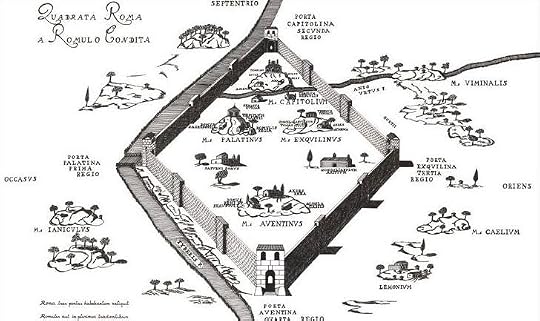
Una collana che invita a un primo incontro con tutte le immortali storie di dei, uomini ed eroi che sono il fondamento delle grandi civiltà del mondo. Due bambine che giurano davanti al vecchio nonno morente di non abbandonarsi mai e di aver sempre cura l'una dell'altra, un perfido zio che vuole a tutti i costi essere re, due trovatelli, cari agli dei, che alla fine diventano principi. Così nasce Roma. Così la racconta Laura Orvieto, come un intreccio di piccole e appassionanti storie, una più bella dell'altra. Età di da 8 anni.
WONDERFUL!!!!!!!! What more can I say about? I had "to nail and drag" my son into this mandatory reading, 300 pages for a 10-year-old can sometimes be too many, but being a book requested by his teacher, fundamental for the examination school at the end of fifth grade (italian school system)...... we went under a full vacation reading time together😉 (Obliged him!!) "With chains 😱😉" , because he starts to read books and then give up on them, but this time he was fascinated by history, perfectly suitable for children or teens from 10/11 years old and up, the writing is very clear and linear, so much so that the numerous characters remain well in their temporal dowel and family descent. We read about the foundation of Lavinio, Alba longa, the clear historical exhibition of Romulus and Remus, the various exhibitions of Plutarco and Tito Livio on the foundation of Rome... The suspicion of the name "Ruma" and its Etruscan origin.... the origin of the famous seven Roman hills. The formation of the most important and ancient noble Roman families... All is written like a tale and giving back perfectly the historical facts to the young readers I could continue through pages and pages, in spite of a book without even a figure, it is absolutely worth the reading if you want to know the birth of the Roman people in a simple and linear way. Very good and wonderful writing by Laura Orvieto! Laura Orvieto
STUPENDO!!!!!!! cosa posso dire di piu? ho dovuto inchiodare e strascinarmi mio figlio in questa lettura obbligatoria, 300 pagine per un bambino di 10 anni posso a volte essere tante, ma essendo un libro richiesto dalla sua maestra, fondamentale per l' esamino interno scuola di fine quinta elementare...... sotto di lettura ci siamo messi 😉 Con le catene, perchè lui inizia i libri e poi li molla, ma questa volta è rimasto affascinato dalla storia, perfettamente adatto ai bambini e ragazzini dai 10/11 anni in su, scrittura chiarissima e molto lineare, tanto che i numerosi personaggi rimangono bene nel loro tassello temporale e discendenza familiare.. Abbiamo letto della fondazione di Lavinio, di Alba longa, la chiara esposizione storica di Romolo e Remo, le varie esposizioni di Plutarco e Tito Livio sulla fondazione di Roma... Del sospetto del nome "Ruma" e della sua origine etrusca....l'origine dei famosi sette colli romani. La formazione delle piu' importanti e antiche famiglie nobili romane... Il tutto scritto sotto forma di racconto/favola e adattata quindi ai giovani lettori, nel rispetto dei fatti storici. Potrei continuare per pagine e pagine, a dispetto di un libro senza neanche una figura, vale assolutamente la pena se volete conoscere la nascita del popolo romano in modo semplice e lineare. Stupenda la scrittura di Laura Orvieto!
I have to thank Ines for her review of this book which led me to get it and read it.
I bought it when I read her review, a while back. I don’t know why I wanted to read it, since, in difference to Ines, I did not have to drag my son to read it with me. But I thought that it would be good for improving my Italian and then my impending trip to Rome offered the opportunity to finally pull it out and read it. It is an excellent introduction to the city, and it also offered me a suitable reassuring and amiable tone if I was going to deal with the anxiety of entering a plane in times of the Covid pandemia.
I particularly enjoyed the seamless way in which the not completely known facts and the various versions of legends were welded together in this clear, measured tale. For there is a gentleness, even if violence is not entirely out of its pages. The story is populated by kings, princes and princesses, mistaken identities, legendary kingdoms, sacred spaces, and even if there are scenes of mass rapes (the Sabines) these are presented as necessary happenings in the unfolding of a justifiable destiny.
There is also a pervading tone of morality and of justice. Acts bring consequences and sense of justice gradually develop into a set of a welcome set of laws. Entertaining and didactic then.
But it is particularly the language that shapes the tale into that of a fairy tale. This is due to not just rhetorical beginnings such as Più di mille e pie di duemila anni fa.., but also the simplicity of the world in which fields are green, skies are blue, forests are dark, flowers have scent, and there is clear water in the sea.
While reading it, I became more curious to trace the various sources for several of the episodes or the for the legends Orvieto chose to include. But that is a task I leave for later.
All in all, a lovely tale by Laura Orvieto (1876-1953), a Jewish writer from Milan who out of the stories she told her own children published several other tales apart from this one. La Nascita was published in 1927 but I may well pick her earlier Storie della storia del mondo from 1911.
L’autrice ci racconta con semplicità la storia romanzata della nascita di Roma. Non mi è mai piaciuta questa parte di storia ma lei ha saputo abilmente narrarla. Certo se avessi letto questo libro nel periodo scolastico avrei fatto uno sforzo in più per studiare questo periodo storico. Mi sento di non dare un gran voto solo perché non amo tale periodo ma considerando lo sforzo impiegato dalla scrittrice mi posso ricredere ed aumentare il valore di questo testo.
Les légendes des premiers temps de Rome sont racontées comme si nous y vivions. Un ouvrage à mettre entre toutes les mains des latinistes, qui nous permet de voir la fondation de Rome et de découvrir les strates de la société et le quotidien des citoyens à travers Servius et Plistinius.