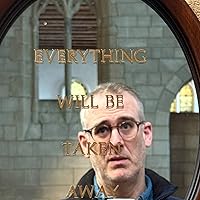
I never read nor heard of a Jerzy Kosinski, even though i was told he was popular in his time, so i didn't really care to read about who he was. But given the fact that the teacher i most admired in my years of being officially taught in the "higher" education system of American Universities was the teacher who wrote this book--i took the time to read it long after i was just a student. And i can truly say, not only as a student of literature, but as a citizen of this world--as Socrates would proclaim he was--I enjoyed it. And I found it remarkable for what it tries to display, an examination of a most complicated form of being which regarded itself as an "author" of his world.
Imagine being thrown to the streets at the age of five from--and by--the protected realm of your "loving" family. Imagine witnessing the apprehension of fascism as it was by those who were for it, and those who only went with it to remain alive. Imagine yourself running. Imagine no time for a book that could explain why it is so...
Did Jerzy Kosinski lie about his life, when he was writing a fiction about it? Maybe he understood that any great tragedy had to include within it the death of its progenitor. Maybe those who wanted to prosecute him for how his ego--so proclaimed as it was in his books--was not who he was, knew what they had to do to react like this against him. Perhaps it was because of his insistence of what he could do--like when he showed off to his college roommate that he could take a brush and rub it vigorously against his erect and throbbing penis--that he didn't really achieve what he wanted to do in his make-believe world. How many among us have gone through surviving fascism at its peak and then found ourselves betraying a socialism that we wanted so much to believe in in the first place? Could we have become the sensual and enigmatic figure Kosinski was to his older, wealthy wife? Could we have entertained the "upper" class of the crust of what was known back then as the New York intelligentsia? Could we have fooled the young college students--or there equivalent "for-hires"--in believing that what they were translating was a "literature" and not what was only being told to them, as they heard it and reported it?
These, and more questions to follow, are presented in this book.