
What do you think?
Rate this book


272 pages, Hardcover
Published May 18, 2021
In 2020, after trillions of dollars in military expenditures and multiple wars, a virus originating in a Chinese “wet market” would inflict even more economic and human damage. Overcoming the most lethal threats of the twenty-first century—at least those threats that pose the greatest risk to the health and well-being of the average citizen—will require staying the itchy trigger finger of militarized statecraft. Ultimately, achieving true security will require embracing a broader “whole of government” and “whole of nation” set of tools that reflect the full strength of America.If Jane Harman had been on stage at the Oscars instead of Chris Rock, an out of control actor with anger issues would have failed to land the slap heard round the world. Harman would have ducked. It is clear from reading Insanity Defense that she has mastered the pugilistic art of the bob and weave. And as she does so, and despite her legislative career as a Democrat, it appears that her sweet science strategy has her tending to circle to the right.
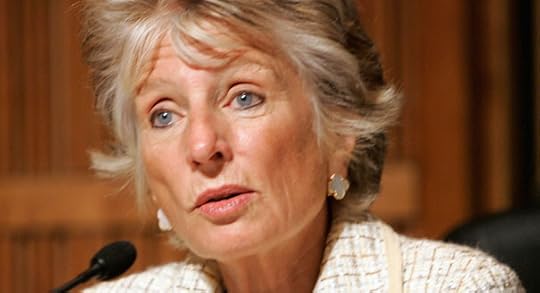
My work in the defense and intelligence space spans more than three decades, and I am vexed by the fact that policies designed to protect America are actually making us less safe. I call this “insanity defense”: doing the same thing again and again and expecting it to enhance our security.Her look at the last thirty years includes five administrations, Bush 41, Clinton, Bush 43, Obama, and Trump, pointing out how she believes they failed on foreign policy, taking on several security issues that she believes have not been adequately addressed. Trump is mentioned more than once, and not positively, but is given less attention than his predecessors. More attention to his impact on US military and intelligence policy would have been most welcome. The memoirish bits have to do with her work on committees and other positions she has held dealing with military and intelligence issues. There is nothing in here about her personal life other than events relating to her runs for office and other policy-related jobs she has held.
As far as Addington was concerned, when Article II said that “the executive Power shall be vested in a President,” well, that was the end of it—all power, not some power or whatever power Congress provided or allowed. The concept of the “unitary executive,” once an obscure theory at the right fringe of legal thinking, would become the operating manual for the Bush presidency when it came to security policy. I called this a “bloodless coup”—a dramatic power shift in government that occurred almost entirely out of view at the time. Addington was always courtly and polite with me personally. But when it came to any role for Congress, his answer was always a very firm no.Harman’s solutions for future improvement rely on somehow finding again the holy grail of bipartisanship. I believe that she was blinded to the extant political realities by her prior experience of meaningful bi-partisanship. Newt Gingrich killed it, and Mitch McConnell incinerated the body. Harman appears to be living in a bit of a time warp, in which she does not recognize that the civil bipartisanship that allowed Ronald Reagan and Tip O’Neill to be friends has taken a hard uppercut to the chin and is lying unconscious on the mat. She certainly should be aware. It was that partisanship that some say drove her from Congress in 2011. And yet…
The greater Obama’s frustration with recalcitrant Republican majorities—first the Tea Party–dominated House, then the Mitch McConnell–led Senate—the more he would exercise executive action on a range of issues.As if it were Obama’s frustration and not Republican intransigence that was at fault. McConnell left him no option, having publicly declared that he would oppose all bills favored by the White House. It takes two for bipartisanship, and Obama certainly tried, but Harman is blaming the victim here. (duck)
I look at what went wrong—and could go right again—through the lens of my own experience: how political moderates became first hunted and then an endangered species, caught in the crossfire between the far left and the far right. The punishment for bipartisanship became harsh and immediate. The business model shifted from working together to solve urgent problems facing the country to blaming the other side for not solving the urgent problems.Yet more worthless both-sidism from Harman. Just look at the range of opinions in the Democratic party and then look at the Republicans. Only one party is purging moderates. (sucker punch)
One of many mysteries about Cheney is how someone who had risen to House minority whip while a congressman from Wyoming could become so contemptuous of the institution he once helped lead.This is not at all a mystery. Cheney was hungry for power, by any means possible. That the author fails to see or admit this speaks to either a surprising naivete or a willful ignorance. She cites her early experience of him as gracious but then cites a far cry from the obsessive almost maniacal figure he would be portrayed as, not that he was, but as he was portrayed as. (bob) She goes on to tell of asking VP Cheney directly to expand from two the list of Representatives currently kept informed about a spy project called Stellar Wind (a domestic spying program with a very shaky legal foundation) and his one word answer, “No.” She does a similar thing with Jeremy Bremer re the disastrous de-Baathification program he signed off on in Iraq, trying to lay blame on higher-ups. So what? Even if they ordered him to do it, he still did it. The man could have resigned if he opposed the order. (weave)
One of the least known yet most consequential documents filed immediately after 9/11 was a memorandum of notification to Congress, commonly referred to as a “finding,” which announced that the CIA would be conducting operations that would not be acknowledged. At the time, this notification, submitted on September 17, 2001, seemed pro forma; we all took it as a given that aggressive covert activity would—indeed, must—be part of our response to the horrific attacks. Yet this same finding would cover the CIA black sites, enhanced interrogations, and targeted killings abroad for nearly two decades.


