

What do you think?
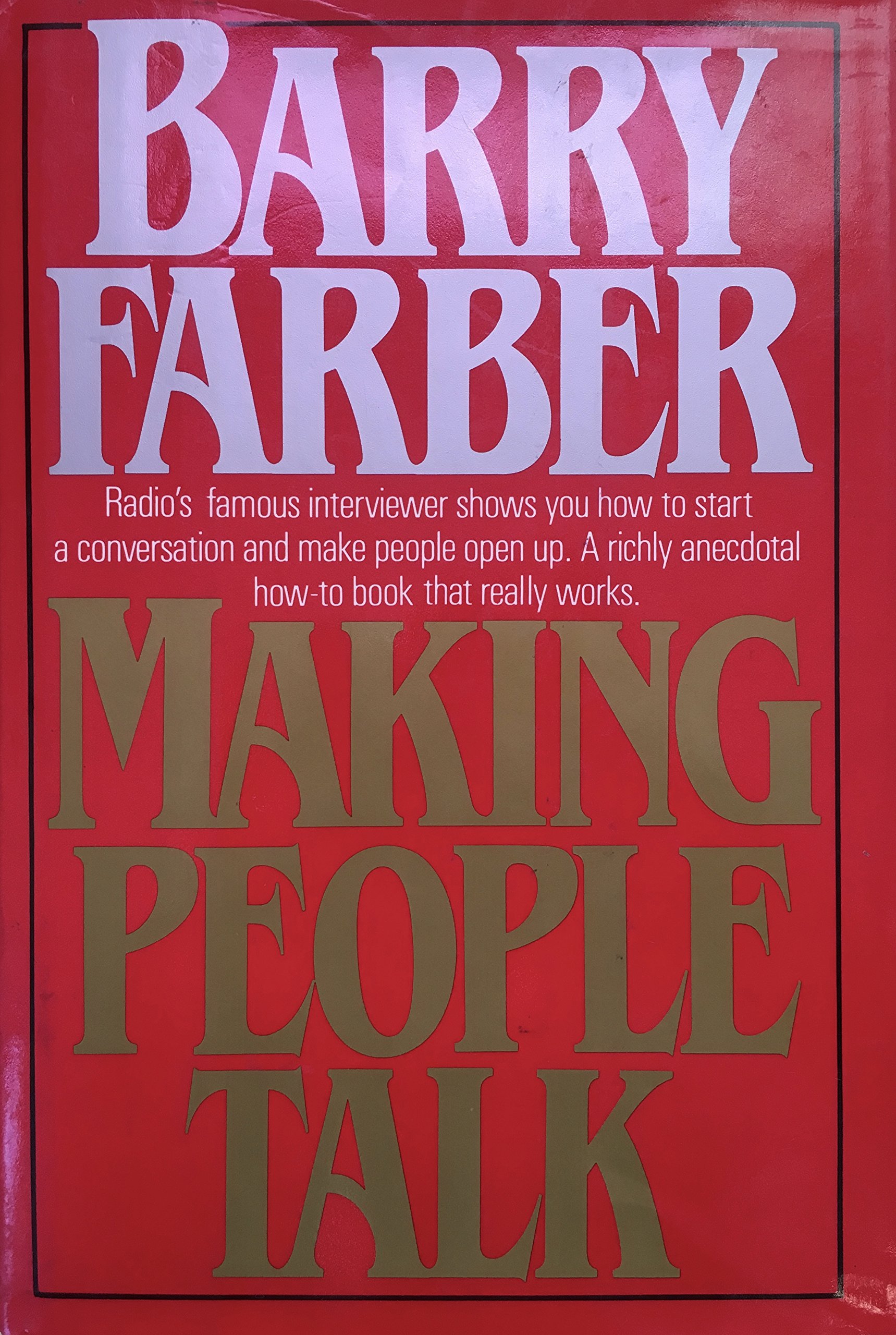
Making People Talk: You Can Turn Every Conversation into a Magic Moment
One of America's leading radio talk-show hosts reveals the secrets of creating and sustaining lively and fun conversation, explaining how to ask for advice, and how to encourage people to talk about themselves
263 pages, Hardcover
First published June 1, 1987
Ratings & Reviews
Friends & Following
Create a free account to discover what your friends think of this book!
Community Reviews
Displaying 1 - 11 of 11 reviews

February 2, 2019
Too much incoherent. Couldnt follow at all, though i felt like there was some gold here and there. Not my liking of presenting ideas for sure

November 19, 2024
MAKING PEOPLE TALK HIGHLIGHTS
- [ ] #1 You may not get the opportunities you deserve and desire // if you don’t get people to open up.
- [ ] #2 Appearance is the anthem. Conversation is the ball game // present yourself well or else you’ll never get the chance to be heard.
- [ ] #3 In what other university except the Real World do you get A’s and Honors with nothing but a little scrap of knowledge? // Impress people from small countries by knowing the slightest thing about their country. Diminishing returns for larger countries. But you can always say “No kidding, I’ve heard so much about {Italy} lately. I hope I can spend some time there. Tell me, if you had seventy-two hours to spend getting to know Alabama, how would you use those hours to best advantage?
- [ ] #4 “Haven’t seen a paper in days” relegates you to the same netherworld as “I’m no good until I’ve had my coffee” and “Thank God it’s Friday.” Not hanging crimes, mind you. Just crimes. // In modern times this has kinda flipped. Avoiding the toxic news is often a point or pride, and news junkies are somehow masochistic and not keeping their energy within their circle of control.
- [ ] #5 You will get only the jump, the edge, the benefit of the doubt. And that’s plenty. Wherever you swing your conversational pickax, there’s gold.
- [ ] #6 It takes three words. They are, Penetrate the Ostensible.
- [ ] #7 Forgive me for a minute. I’m trying to decide if I’ve ever seen a view before to match. // complimenting the view from somebody’s apartment. Better way of putting it than “Nice view!”
- [ ] #8 Isn’t it old hat to him? At what point in his tenancy of that apartment will he get tired of hearing how great that view is? The answers are, respectively, no and never!
- [ ] #9 People who wouldn’t do things for the proverbial love or money frequently do them for a third, less celebrated, but equally potent persuader: attention.
- [ ] #10 Please, stand with me here and pretend we’re having an interesting conversation. I don’t happen to know anybody here, and I don’t want to be seen standing alone! // This was shown as a demonstration of being a social climber. I do think, however, it can be negative social proof to be alone too long at a social gathering. The key, I think, is to be genuinely curious and sharing good vibes with EVERYBODY, not just the people you want something from, and then you get the positive social proof anyway of not being a loner, but in a less calculated kind of way.
- [ ] #11 Conversation can acquire thrill power of near-erotic magnitude! And it may be plunged into and enjoyed by anyone in the proximity of another person at almost any time without disrobing, breaking a vow, or getting yourself all out of breath—or slapped, or shot, or arrested, or diseased. // Conversation is the greatest pleasure that you can share infinitely, with anyone, without getting fat, hooked on drugs or in jail.
- [ ] #12 The interesting lesson is that every single person present at a gathering, if he were to go into a voluntary trance and meditate upon all the things he could do to make your ambitions congeal, could come up with a list of potential favors that would qualify him to wear a sign on his head that said, “I may not look like much, but believe me, pal, I’m well worth your getting to know.” // Everybody can probably help you in some way if you care about them and then they care about you in return.
- [ ] #13 And the less “likely”-looking they are, the more they appreciate someone reaching out, taking that painful initiative, breaking their crust, and Making Them Talk.
- [ ] #14 All the obvious angles are obvious and therefore of low candlepower.
- [ ] #15 Have you considered another possibility instead? Many a conversation has been saved and stimulated and even sent soaring by on-the-other-hand-ing: someone shifting the conversational spotlight to more interesting parts of the stage.
- [ ] #16 Hollywood’s seen a lot of different kinds of people, but so far they haven’t yet seen a fourth-rate writer who doesn’t agree with a producer who says he’s the most underrated talent in town.
- [ ] #17 It’s fun. It’s fulfilling. Never leave an ostensible unpenetrated.
- [ ] #18 Italian waiters nonetheless instinctively promote you. Take a seat in any restaurant in Italy and watch. The waiter will address you as Dottore (doctor), Commendatore (commandant).
- [ ] #19 With a schedule like you must have, how do you manage to get in all your required business reading?
- [ ] #20 I’m always curious to learn if successful people sought their present businesses or stumbled into them.
- [ ] #21 The difference is confidence, certainty of acceptance and success.
- [ ] #22 Asking someone’s advice as a means of winning him and getting him talking will, likewise, hurt some consciences for the same reason. It’s too easy.
- [ ] #23 Asking for “advice” is a fascinating tactic; some say a secret weapon. Young politicians probably learn the power of advice even before young businesspeople.
- [ ] #24 Asking for advice is one individual’s most dignified form of unconditional surrender to another. It beats the military salute, Japanese bowing, the Chinese kowtow, the handing over of a sword.
- [ ] #25 Hold the interest of, and “handle,” exceptionally beautiful women.
- [ ] #26 The request for advice is seductive bait indeed.
- [ ] #27 If you’re not tortured with thoughts of all the advantages you’re sacrificing by choosing privacy, then by all means keep your protective seal unperforated.
- [ ] #28 It’s going nowhere. You, too, are having a rough time because you didn’t ask for this conversation, you know you’re doing badly, and you resent doing badly in a game you didn’t want to get into in the first place.
- [ ] #29 The “Kernersville” line in your case goes something like, “Real estate? How great! It hasn’t been twenty-four hours since I was wondering about something in real estate I’ll bet you know all about.”
- [ ] #30 Are the celebrities of real estate you read about in all the papers really the biggest, or just the best publicized? // In every profession people probably have big opinions about the big players so that can be an extremely easy way to get somebody talking. Even lower lift than advice, you just get them to approve or disapprove and say what they like.
- [ ] #31 Here’s someone wise enough to grasp my wisdom in an admirably short period of time. // what people think when you ask for their advice.
- [ ] #32 No drug on earth has such swift and visible effect as your injection of “Maybe you can help me with a little advice.” Or “Would you mind being my consultant here for a few seconds?”
- [ ] #33 It’s best to stick to Elicitation of Expertise with lawyers and doctors. Ask the lawyer how he views recent Supreme Court rulings. // don’t directly ask them to help you with your divorce or backache.
- [ ] #34 Ask Whom he admires most in the research field at the moment, and in history; if he’s ever witnessed a medical “miracle.”
- [ ] #35 Could you tell me what mistakes most new lawyers make when they’re trying a case in court? People are really excellent at pointing out others’ mistakes. // this is too easy, but it could take the convo in a negative direction.
- [ ] #36 What are the mistakes beginning trial lawyers make in the courtroom? // could switch out lawyers with {whatever field the person is in}
- [ ] #37 It’s important that we put each other on each other’s “evening news.” Go ahead and ask them questions that will make them feel the cameras are focused, the microphones adjusted, and a meaningful audience.
- [ ] #38 “I need your advice” is a no-lose burst. “I’d like to know what you think.” “Your thoughts would be valuable.” “May I borrow your expertise for a minute?” “Maybe you can help me out with a problem?”
- [ ] #39 The objective is to get as far away from “Nice place you got here” and occupy the high ground. Much better than lobbing in a compliment, kerplunk, is starting with an assumed compliment built into your remark, then asking an intelligent question or making an intelligent comment from there. // if they answer your followup question, that means the assumed compliment is an accepted frame, and there’s no pressure to fill in the empty space of how to respond to a compliment. Cool!
- [ ] #40 Conversational sparklers are free, and nobody stoops to pick them up.
- [ ] #41 Some jewels and other mineral wealth lie right there on the surface or glisten at you in the shallow creek bed. Others you have to dig for. You’ve got to dig to appreciate the payoffs of coloring.
- [ ] #42 Just because the electronic revolution persuaded the many to shut up and listen to the few does not mean the human ear has lost the ability to be stimulated by ingenious, colorful—or merely different—modes of expression.
- [ ] #43 Know well the blessings of good sexual arousal, gastronomical arousal, and visual arousal of all kinds. Those arousals are limited. You can’t haul off and enjoy them as much as you please with whomever you please at any and all times that please you. You can, though, please every single ear that comes within range of your speech, and harvest.
- [ ] #44 If you were really good at it, you might be asked to double-date with a football player in a convertible. // the cool kids in highschool invited him along because he could elevate the vibe with good conversation.
- [ ] #45 “Gee, I wish I’d said that” is part of your “wardrobe.” It’s you. Write it down. // stealing lines that resonate with you is okay.
- [ ] #46 If a joke illustrates or fortifies a point, it need not be as funny to be effective.
- [ ] #47 Then you’re not being witty; you’re trying to be funny. And that, Mark Twain told us, is the difference between lightning and the lightning bug!
- [ ] #48 [A brutal translation of the not so nice conversation opener ‘what do you do?’ ]You and your works are not known to me, and I sense from your overall persona that you are of a level in life where that happens a lot, so I presume you’ll not take umbrage at my asking forthrightly how you manage to support yourself and your dependents. Hold it a while. You can always ask what somebody does. // Try to hold off asking people “what do you do” and even better, find out obliquely through context as you get to know them.
- [ ] #49 Fully 95 percent of all mouths should be shut down for repairs!
- [ ] #50 Say, “Jiu yang, jiu yang.” That means, “I have long heard of you and your lustrous reputation.” That’s nice. Ridiculous, but nice. // A chinese way of greeting. I want to use this. Or a silly way to translate it would be “I’ve heard of you!” with a wink in your eye, and see where the conversation goes from there.
- [ ] #51 But try to keep that direct question unasked, until the point where it becomes strained if you don’t know what he does.
- [ ] #52 Secret agents can be trained to withstand torture, surely you can train yourself not to let your physical // boredom show.
- [ ] #53 Alabama! I’ve heard so much about Alabama lately. I hope I can spend some time there. Tell me, if you had seventy-two hours to spend getting to know Alabama, how would you use those hours to best advantage?
- [ ] #54 You know, Mary Lou,” he said, “for a fat girl you don’t sweat much when you dance!”
- [ ] #55 (people in a hurry) Hurry will cross streets against heavy traffic to ask, “What happened to your foot?” // if somebody has a physical ailment like a wheelchair, do not ask them about it right away. They get that 100 time per day, or just ignored. Take mercy on them and don’t make them explain their medical situation because it is repetitive and boring. This is also true for pretty much anyone with a funny name or something that stands out obviously (very tall) etc. Be creative and see past the most obvious thing and bring the conversation to a point that let’s them express their actual personality.
- [ ] #56 If someone’s undergone a painful divorce, there are questions he’d rather be greeted with than, “Where’s your better half?”
- [ ] #57 To keep a person you don’t particularly like from realizing you don’t like him requires better acting ability than most of us have. Alas, like drivers who swear they drive better after a few drinks, we don’t notice our impairment.
- [ ] #58 Nowhere is the Golden Rule more necessary than in the area of inadvertently annoying others. We know hitting others hurts, so we don’t hit. We know pinching, gouging, biting, jabbing hurts, so we refrain. We sally in and annoy, however, blither-ingly innocent of ill intent. We just don’t think before we talk.
- [ ] #59 Whose style is preferable? That’s an easy one. It’s the style of whichever of the parties is the one who’s supposed to wind up saying yes. // defer to the directness preference of the “intimidator”. Going too familiar will burn bridges.
- [ ] #60 If you’re intimidated, say so. But say so not as one who’s intimidated, but as a connoisseur of intimidation commenting upon the rare vintage of intimidation being served. “I’m sure some seemingly cool people have occupied this chair before, but I’ve got to tell you, it’s hard not being intimidated when you realize the opportunity that sitting in this chair represents.”
- [ ] #61 If England’s wars were won on the playing fields of Eton, dates.
- [ ] #62 Nothing is easier than deciding which encounters you find difficult.
- [ ] #63 The objective is to get as far away from “Nice place you got here” and occupy the high ground. Much better than lobbing in a compliment, kerplunk, is starting with an assumed compliment built.
- [ ] #64 A good way to get things started is by opening with the highest honest compliment you can come up with delivered squarely between the eyes of the Intimidator.
- [ ] #65 A compliment should be brief, blunt, specific, and above all accurate.
- [ ] #66 One man’s coward is another man’s “hero with the strength to show.
- [ ] #67 If he keeps the subject alive, if he begs for more, then you’re allowed to dance back on stage for one short little encore. Don’t forget, though—you have a job to do in that interview. // If you have an agenda in an interview, don’t go too far off topic just because they like that topic.
- [ ] #68 It’s a good idea always to leave some money unspent, some liquor undrunk, and some knowledge unbrandished.
- [ ] #69 Love at first sight—the works—but strictly about them out there, third parties, abstract principles in general, lofty theories. Never let on that you’re talking “how about you and me?” until you get what the diplomats call the clear response from the other side.
- [ ] #70 You really intimidated the bartender by describing that drink from Bermuda. Did you intend to? “Was I hallucinating, or did you just congratulate that woman for taking a man away from you? Can you teach me how to be that secure?” // observational opener with an implied compliment AND asking for advice. Damn!
- [ ] #71 You know how some husbands and wives well into their eighties have such a warmth between them—they walk around holding hands and smiling at each other. And others the same age continually look at their mates and growl. “Some people, according to a psychologist who studied it, actually ‘take a snapshot’ with their minds the instant they see someone, and that becomes their ‘official photo.’” // interesting at face value, and as conversation fuel to ask people.
- [ ] #72 The other ones who don’t work like that look at him and say, “What in hell am I doing with this old goat?” “Which kind are you?”
- [ ] #73 She’s carrying her bag or whatever in her right hand, he should be sure to walk on that side. If he happens to be on the side where her hand is free, he should cross over to the side where it’s not. If she views him as someone she might someday choose to share intimacy with, she will subconsciously shift whatever she’s carrying over to her other side—in order. // ping to see if she likes you
- [ ] #74 It has a bad name: pickup. Sour grapes, I say. What kind of bigotry is it that suggests that those you’re officially introduced to.
- [ ] #75 “Ernest, meet Linda,” says the hostess. “Ernest is a commodities broker. Linda acts and paints.” Do not, Ernest, turn up that fire in your face and say, “Oh, you’re an actress? What have you acted in?” Do not say, “You paint, huh? Imagine that. Where can I see your paintings?” If Linda had ever starred, or even bit-played, in anything recognizable, that hostess would have emblazoned that fact right up there in the “headline” of her introduction. And if her paintings had hung anywhere except on her own walls and. // be sensitive that the majority of people in the creative/fun careers are not the top 1% famous people, so don’t ask questions that make them have to qualify themselves negatively.
- [ ] #78 If you can’t have a recognizable actor or painter, then at least have an actor and a painter.
- [ ] #79 They all blundered in and asked, “Actress, huh? What are you in?”
- [ ] #80 They all seem to know it, and they give each other amnesty. The unwritten ethic in the air promises, “You don’t ask me, and I won’t ask you.” I’ll ratify your fantasy, you ratify mine.
- [ ] #81 “Do you know Herman, too? My dearest friend!” The odds, however, are not good. New restaurants, shows, organizations, and small businesses are more likely to fail than succeed. Likewise. // Avoid closed ended questions.
- [ ] #82 “Wouldn’t it be fun to continue this over dinner?” can do the trick.
- [ ] #83 Speed limits came first. Minimum speed limits—punishment for going too slowly—came much later.
- [ ] #84 “My ex-wife always told me I had a giveaway grin when I get around women I’d like to talk to. Take a look! What do you think? Have I got it licked?” // awesome flirty opener
- [ ] #85 “Can you tell whether a man is interested in you, or just being polite to the nearest woman at a party?”
- [ ] “How do most men go about their approach shots these days?”
- [ ] “Are they always obvious?”
- [ ] “About what percentage of them do it well?”
- [ ] “How long does it usually take you to decide whether or not you’re into somebody.
- [ ] #86 “How do you put him out of his misery if you know that’s as far as you care to go?”
- [ ] “How much depends on the man himself, and how much on how he conducts himself in trying to attract you?”
- [ ] “Has a man you’d already counted out ever made a comeback with you?” “How did he do it?”
- [ ] “What’s the most ingenious line a man ever used on you?” “Were you able to reward him for it?”
- [ ] “Do you do anything to try to rescue a man’s ego when you don’t want to pursue a relationship?”
- [ ] “Do you ever take the initiative and try to approach a man?”
- [ ] “Are you as obvious as you say the men are w
- [ ] #1 You may not get the opportunities you deserve and desire // if you don’t get people to open up.
- [ ] #2 Appearance is the anthem. Conversation is the ball game // present yourself well or else you’ll never get the chance to be heard.
- [ ] #3 In what other university except the Real World do you get A’s and Honors with nothing but a little scrap of knowledge? // Impress people from small countries by knowing the slightest thing about their country. Diminishing returns for larger countries. But you can always say “No kidding, I’ve heard so much about {Italy} lately. I hope I can spend some time there. Tell me, if you had seventy-two hours to spend getting to know Alabama, how would you use those hours to best advantage?
- [ ] #4 “Haven’t seen a paper in days” relegates you to the same netherworld as “I’m no good until I’ve had my coffee” and “Thank God it’s Friday.” Not hanging crimes, mind you. Just crimes. // In modern times this has kinda flipped. Avoiding the toxic news is often a point or pride, and news junkies are somehow masochistic and not keeping their energy within their circle of control.
- [ ] #5 You will get only the jump, the edge, the benefit of the doubt. And that’s plenty. Wherever you swing your conversational pickax, there’s gold.
- [ ] #6 It takes three words. They are, Penetrate the Ostensible.
- [ ] #7 Forgive me for a minute. I’m trying to decide if I’ve ever seen a view before to match. // complimenting the view from somebody’s apartment. Better way of putting it than “Nice view!”
- [ ] #8 Isn’t it old hat to him? At what point in his tenancy of that apartment will he get tired of hearing how great that view is? The answers are, respectively, no and never!
- [ ] #9 People who wouldn’t do things for the proverbial love or money frequently do them for a third, less celebrated, but equally potent persuader: attention.
- [ ] #10 Please, stand with me here and pretend we’re having an interesting conversation. I don’t happen to know anybody here, and I don’t want to be seen standing alone! // This was shown as a demonstration of being a social climber. I do think, however, it can be negative social proof to be alone too long at a social gathering. The key, I think, is to be genuinely curious and sharing good vibes with EVERYBODY, not just the people you want something from, and then you get the positive social proof anyway of not being a loner, but in a less calculated kind of way.
- [ ] #11 Conversation can acquire thrill power of near-erotic magnitude! And it may be plunged into and enjoyed by anyone in the proximity of another person at almost any time without disrobing, breaking a vow, or getting yourself all out of breath—or slapped, or shot, or arrested, or diseased. // Conversation is the greatest pleasure that you can share infinitely, with anyone, without getting fat, hooked on drugs or in jail.
- [ ] #12 The interesting lesson is that every single person present at a gathering, if he were to go into a voluntary trance and meditate upon all the things he could do to make your ambitions congeal, could come up with a list of potential favors that would qualify him to wear a sign on his head that said, “I may not look like much, but believe me, pal, I’m well worth your getting to know.” // Everybody can probably help you in some way if you care about them and then they care about you in return.
- [ ] #13 And the less “likely”-looking they are, the more they appreciate someone reaching out, taking that painful initiative, breaking their crust, and Making Them Talk.
- [ ] #14 All the obvious angles are obvious and therefore of low candlepower.
- [ ] #15 Have you considered another possibility instead? Many a conversation has been saved and stimulated and even sent soaring by on-the-other-hand-ing: someone shifting the conversational spotlight to more interesting parts of the stage.
- [ ] #16 Hollywood’s seen a lot of different kinds of people, but so far they haven’t yet seen a fourth-rate writer who doesn’t agree with a producer who says he’s the most underrated talent in town.
- [ ] #17 It’s fun. It’s fulfilling. Never leave an ostensible unpenetrated.
- [ ] #18 Italian waiters nonetheless instinctively promote you. Take a seat in any restaurant in Italy and watch. The waiter will address you as Dottore (doctor), Commendatore (commandant).
- [ ] #19 With a schedule like you must have, how do you manage to get in all your required business reading?
- [ ] #20 I’m always curious to learn if successful people sought their present businesses or stumbled into them.
- [ ] #21 The difference is confidence, certainty of acceptance and success.
- [ ] #22 Asking someone’s advice as a means of winning him and getting him talking will, likewise, hurt some consciences for the same reason. It’s too easy.
- [ ] #23 Asking for “advice” is a fascinating tactic; some say a secret weapon. Young politicians probably learn the power of advice even before young businesspeople.
- [ ] #24 Asking for advice is one individual’s most dignified form of unconditional surrender to another. It beats the military salute, Japanese bowing, the Chinese kowtow, the handing over of a sword.
- [ ] #25 Hold the interest of, and “handle,” exceptionally beautiful women.
- [ ] #26 The request for advice is seductive bait indeed.
- [ ] #27 If you’re not tortured with thoughts of all the advantages you’re sacrificing by choosing privacy, then by all means keep your protective seal unperforated.
- [ ] #28 It’s going nowhere. You, too, are having a rough time because you didn’t ask for this conversation, you know you’re doing badly, and you resent doing badly in a game you didn’t want to get into in the first place.
- [ ] #29 The “Kernersville” line in your case goes something like, “Real estate? How great! It hasn’t been twenty-four hours since I was wondering about something in real estate I’ll bet you know all about.”
- [ ] #30 Are the celebrities of real estate you read about in all the papers really the biggest, or just the best publicized? // In every profession people probably have big opinions about the big players so that can be an extremely easy way to get somebody talking. Even lower lift than advice, you just get them to approve or disapprove and say what they like.
- [ ] #31 Here’s someone wise enough to grasp my wisdom in an admirably short period of time. // what people think when you ask for their advice.
- [ ] #32 No drug on earth has such swift and visible effect as your injection of “Maybe you can help me with a little advice.” Or “Would you mind being my consultant here for a few seconds?”
- [ ] #33 It’s best to stick to Elicitation of Expertise with lawyers and doctors. Ask the lawyer how he views recent Supreme Court rulings. // don’t directly ask them to help you with your divorce or backache.
- [ ] #34 Ask Whom he admires most in the research field at the moment, and in history; if he’s ever witnessed a medical “miracle.”
- [ ] #35 Could you tell me what mistakes most new lawyers make when they’re trying a case in court? People are really excellent at pointing out others’ mistakes. // this is too easy, but it could take the convo in a negative direction.
- [ ] #36 What are the mistakes beginning trial lawyers make in the courtroom? // could switch out lawyers with {whatever field the person is in}
- [ ] #37 It’s important that we put each other on each other’s “evening news.” Go ahead and ask them questions that will make them feel the cameras are focused, the microphones adjusted, and a meaningful audience.
- [ ] #38 “I need your advice” is a no-lose burst. “I’d like to know what you think.” “Your thoughts would be valuable.” “May I borrow your expertise for a minute?” “Maybe you can help me out with a problem?”
- [ ] #39 The objective is to get as far away from “Nice place you got here” and occupy the high ground. Much better than lobbing in a compliment, kerplunk, is starting with an assumed compliment built into your remark, then asking an intelligent question or making an intelligent comment from there. // if they answer your followup question, that means the assumed compliment is an accepted frame, and there’s no pressure to fill in the empty space of how to respond to a compliment. Cool!
- [ ] #40 Conversational sparklers are free, and nobody stoops to pick them up.
- [ ] #41 Some jewels and other mineral wealth lie right there on the surface or glisten at you in the shallow creek bed. Others you have to dig for. You’ve got to dig to appreciate the payoffs of coloring.
- [ ] #42 Just because the electronic revolution persuaded the many to shut up and listen to the few does not mean the human ear has lost the ability to be stimulated by ingenious, colorful—or merely different—modes of expression.
- [ ] #43 Know well the blessings of good sexual arousal, gastronomical arousal, and visual arousal of all kinds. Those arousals are limited. You can’t haul off and enjoy them as much as you please with whomever you please at any and all times that please you. You can, though, please every single ear that comes within range of your speech, and harvest.
- [ ] #44 If you were really good at it, you might be asked to double-date with a football player in a convertible. // the cool kids in highschool invited him along because he could elevate the vibe with good conversation.
- [ ] #45 “Gee, I wish I’d said that” is part of your “wardrobe.” It’s you. Write it down. // stealing lines that resonate with you is okay.
- [ ] #46 If a joke illustrates or fortifies a point, it need not be as funny to be effective.
- [ ] #47 Then you’re not being witty; you’re trying to be funny. And that, Mark Twain told us, is the difference between lightning and the lightning bug!
- [ ] #48 [A brutal translation of the not so nice conversation opener ‘what do you do?’ ]You and your works are not known to me, and I sense from your overall persona that you are of a level in life where that happens a lot, so I presume you’ll not take umbrage at my asking forthrightly how you manage to support yourself and your dependents. Hold it a while. You can always ask what somebody does. // Try to hold off asking people “what do you do” and even better, find out obliquely through context as you get to know them.
- [ ] #49 Fully 95 percent of all mouths should be shut down for repairs!
- [ ] #50 Say, “Jiu yang, jiu yang.” That means, “I have long heard of you and your lustrous reputation.” That’s nice. Ridiculous, but nice. // A chinese way of greeting. I want to use this. Or a silly way to translate it would be “I’ve heard of you!” with a wink in your eye, and see where the conversation goes from there.
- [ ] #51 But try to keep that direct question unasked, until the point where it becomes strained if you don’t know what he does.
- [ ] #52 Secret agents can be trained to withstand torture, surely you can train yourself not to let your physical // boredom show.
- [ ] #53 Alabama! I’ve heard so much about Alabama lately. I hope I can spend some time there. Tell me, if you had seventy-two hours to spend getting to know Alabama, how would you use those hours to best advantage?
- [ ] #54 You know, Mary Lou,” he said, “for a fat girl you don’t sweat much when you dance!”
- [ ] #55 (people in a hurry) Hurry will cross streets against heavy traffic to ask, “What happened to your foot?” // if somebody has a physical ailment like a wheelchair, do not ask them about it right away. They get that 100 time per day, or just ignored. Take mercy on them and don’t make them explain their medical situation because it is repetitive and boring. This is also true for pretty much anyone with a funny name or something that stands out obviously (very tall) etc. Be creative and see past the most obvious thing and bring the conversation to a point that let’s them express their actual personality.
- [ ] #56 If someone’s undergone a painful divorce, there are questions he’d rather be greeted with than, “Where’s your better half?”
- [ ] #57 To keep a person you don’t particularly like from realizing you don’t like him requires better acting ability than most of us have. Alas, like drivers who swear they drive better after a few drinks, we don’t notice our impairment.
- [ ] #58 Nowhere is the Golden Rule more necessary than in the area of inadvertently annoying others. We know hitting others hurts, so we don’t hit. We know pinching, gouging, biting, jabbing hurts, so we refrain. We sally in and annoy, however, blither-ingly innocent of ill intent. We just don’t think before we talk.
- [ ] #59 Whose style is preferable? That’s an easy one. It’s the style of whichever of the parties is the one who’s supposed to wind up saying yes. // defer to the directness preference of the “intimidator”. Going too familiar will burn bridges.
- [ ] #60 If you’re intimidated, say so. But say so not as one who’s intimidated, but as a connoisseur of intimidation commenting upon the rare vintage of intimidation being served. “I’m sure some seemingly cool people have occupied this chair before, but I’ve got to tell you, it’s hard not being intimidated when you realize the opportunity that sitting in this chair represents.”
- [ ] #61 If England’s wars were won on the playing fields of Eton, dates.
- [ ] #62 Nothing is easier than deciding which encounters you find difficult.
- [ ] #63 The objective is to get as far away from “Nice place you got here” and occupy the high ground. Much better than lobbing in a compliment, kerplunk, is starting with an assumed compliment built.
- [ ] #64 A good way to get things started is by opening with the highest honest compliment you can come up with delivered squarely between the eyes of the Intimidator.
- [ ] #65 A compliment should be brief, blunt, specific, and above all accurate.
- [ ] #66 One man’s coward is another man’s “hero with the strength to show.
- [ ] #67 If he keeps the subject alive, if he begs for more, then you’re allowed to dance back on stage for one short little encore. Don’t forget, though—you have a job to do in that interview. // If you have an agenda in an interview, don’t go too far off topic just because they like that topic.
- [ ] #68 It’s a good idea always to leave some money unspent, some liquor undrunk, and some knowledge unbrandished.
- [ ] #69 Love at first sight—the works—but strictly about them out there, third parties, abstract principles in general, lofty theories. Never let on that you’re talking “how about you and me?” until you get what the diplomats call the clear response from the other side.
- [ ] #70 You really intimidated the bartender by describing that drink from Bermuda. Did you intend to? “Was I hallucinating, or did you just congratulate that woman for taking a man away from you? Can you teach me how to be that secure?” // observational opener with an implied compliment AND asking for advice. Damn!
- [ ] #71 You know how some husbands and wives well into their eighties have such a warmth between them—they walk around holding hands and smiling at each other. And others the same age continually look at their mates and growl. “Some people, according to a psychologist who studied it, actually ‘take a snapshot’ with their minds the instant they see someone, and that becomes their ‘official photo.’” // interesting at face value, and as conversation fuel to ask people.
- [ ] #72 The other ones who don’t work like that look at him and say, “What in hell am I doing with this old goat?” “Which kind are you?”
- [ ] #73 She’s carrying her bag or whatever in her right hand, he should be sure to walk on that side. If he happens to be on the side where her hand is free, he should cross over to the side where it’s not. If she views him as someone she might someday choose to share intimacy with, she will subconsciously shift whatever she’s carrying over to her other side—in order. // ping to see if she likes you
- [ ] #74 It has a bad name: pickup. Sour grapes, I say. What kind of bigotry is it that suggests that those you’re officially introduced to.
- [ ] #75 “Ernest, meet Linda,” says the hostess. “Ernest is a commodities broker. Linda acts and paints.” Do not, Ernest, turn up that fire in your face and say, “Oh, you’re an actress? What have you acted in?” Do not say, “You paint, huh? Imagine that. Where can I see your paintings?” If Linda had ever starred, or even bit-played, in anything recognizable, that hostess would have emblazoned that fact right up there in the “headline” of her introduction. And if her paintings had hung anywhere except on her own walls and. // be sensitive that the majority of people in the creative/fun careers are not the top 1% famous people, so don’t ask questions that make them have to qualify themselves negatively.
- [ ] #78 If you can’t have a recognizable actor or painter, then at least have an actor and a painter.
- [ ] #79 They all blundered in and asked, “Actress, huh? What are you in?”
- [ ] #80 They all seem to know it, and they give each other amnesty. The unwritten ethic in the air promises, “You don’t ask me, and I won’t ask you.” I’ll ratify your fantasy, you ratify mine.
- [ ] #81 “Do you know Herman, too? My dearest friend!” The odds, however, are not good. New restaurants, shows, organizations, and small businesses are more likely to fail than succeed. Likewise. // Avoid closed ended questions.
- [ ] #82 “Wouldn’t it be fun to continue this over dinner?” can do the trick.
- [ ] #83 Speed limits came first. Minimum speed limits—punishment for going too slowly—came much later.
- [ ] #84 “My ex-wife always told me I had a giveaway grin when I get around women I’d like to talk to. Take a look! What do you think? Have I got it licked?” // awesome flirty opener
- [ ] #85 “Can you tell whether a man is interested in you, or just being polite to the nearest woman at a party?”
- [ ] “How do most men go about their approach shots these days?”
- [ ] “Are they always obvious?”
- [ ] “About what percentage of them do it well?”
- [ ] “How long does it usually take you to decide whether or not you’re into somebody.
- [ ] #86 “How do you put him out of his misery if you know that’s as far as you care to go?”
- [ ] “How much depends on the man himself, and how much on how he conducts himself in trying to attract you?”
- [ ] “Has a man you’d already counted out ever made a comeback with you?” “How did he do it?”
- [ ] “What’s the most ingenious line a man ever used on you?” “Were you able to reward him for it?”
- [ ] “Do you do anything to try to rescue a man’s ego when you don’t want to pursue a relationship?”
- [ ] “Do you ever take the initiative and try to approach a man?”
- [ ] “Are you as obvious as you say the men are w

January 31, 2014
-A surprisingly good read from a out of print book. MPT discusses the tactics a successful talk show host used to "make people talk." It reminds me heavily of How to Win Friends and Influence People with more emphasis on conversation.
-His big point is "penetrating the ostensible" or making sure to talking and asking questions about interesting, original and thought provoking things. Farber then goes into great detail on the different ways to accomplish this.
-His big point is "penetrating the ostensible" or making sure to talking and asking questions about interesting, original and thought provoking things. Farber then goes into great detail on the different ways to accomplish this.
August 27, 2021
I was going to give this book two stars due to the sometimes hard to follow over explaining writing style but decided not to at the end for a few reasons.
First, the brief synopsis of all of the points reminded me that there were useful pieces of info littered through out (all though in my opinion it could be an article not a full book).
Second, the unsolicited and unexpected story of Malcolm X being friends with the author acted as a vehicle for me to build a stronger sense of trust with some of his ideas I may not have fully agreed with. The reason being if you can develop a strong relationship with a person so foreign to you in the way of politics, religion, etc. you have to be doing something right when it comes to making people talk.
All in all the advice boils down to attitude more so than actual techniques. The main point of the book being if you want the conversation to progress you have to be the one to fan the flames most; of the other ideas and stories stem from there.
First, the brief synopsis of all of the points reminded me that there were useful pieces of info littered through out (all though in my opinion it could be an article not a full book).
Second, the unsolicited and unexpected story of Malcolm X being friends with the author acted as a vehicle for me to build a stronger sense of trust with some of his ideas I may not have fully agreed with. The reason being if you can develop a strong relationship with a person so foreign to you in the way of politics, religion, etc. you have to be doing something right when it comes to making people talk.
All in all the advice boils down to attitude more so than actual techniques. The main point of the book being if you want the conversation to progress you have to be the one to fan the flames most; of the other ideas and stories stem from there.
December 11, 2021
So the story behind this book is that it's extremely hard to get right now. One way or another the book seems to no longer be printed, so the standard price is at least 200 euros.
I came across the book online and was curious about what the fuzz was all about. But I must honestly say that I am pleasantly surprised by the content.
it was written by a radio DJ/host in America where he explains his mindset when having a live conversation with someone; to start a fun, meaningful conversation with the most difficult guest and is therefore very insightful.
The book has a somewhat 'mysterious' image, partly because of the book's scarcity, but is definitely recommended for people who want to improve their social skills; but not worth the $200 I'm afraid.
I came across the book online and was curious about what the fuzz was all about. But I must honestly say that I am pleasantly surprised by the content.
it was written by a radio DJ/host in America where he explains his mindset when having a live conversation with someone; to start a fun, meaningful conversation with the most difficult guest and is therefore very insightful.
The book has a somewhat 'mysterious' image, partly because of the book's scarcity, but is definitely recommended for people who want to improve their social skills; but not worth the $200 I'm afraid.

February 12, 2024
Este libro perfectamente puede tener 50 páginas sin perder contenido valioso. El estilo de Barry Farber se vuelve un poco innecesario, a veces molesto y hasta confuso. Pero él mismo habla sobre esto en uno de sus capítulos “Add your wrinkles” que de hecho me gustó. Entre tanto relleno hay conceptos y consejos muy buenos.
Creo que el consejo más valioso y del que tengo algo de experiencia; “Assume the burden”. “El que quiera calor que avive las llamas” es decir, el que quiera conversar, y sacarle provecho a la conversación, que hable. La obligación de dar el primer y el segundo paso la tengo yo. Así también pasa en una interacción hombre-mujer. Es parecido a la verdad de que la mayoría de la gente quiere que tú seas el líder, porque liderar requiere más esfuerzo. La gente también quiere que tú seas el que asuma la carga de la conversación. “Force yourself to be conscious that there is a conversation locked up there somewhere between you and the person you are allegedly talking to and that it's your job to find it, free it, and let it prance. You will sponsor that conversation. You will nurture that conversation.”
Siguiendo el orden del libro estos son los consejos más valiosos:
1. Estar preparado, lo que Farber llama “Prepare your brief”. Simplemente hacer una investigación básica de los sujetos a quienes quieres hacer hablar, si uno tiene el tiempo de hacer esto es mejor, pero creo que en la realidad muchas veces no existe ese tiempo para prepararse, sin embargo muchas veces esa información nos llega por inercia, con frecuencia por la misma persona a la que uno quiere hacer hablar.
2. Estar preparado también significa saber sobre las noticias mundiales y estar al tanto de lo que está pasando actualmente, sin embargo creo que el consejo valioso está en “Penetrar lo aparente”. Recitar el titular de la noticia más relevante de la semana no es lo mismo que cuestionarlo y hacer de eso una conversación más interesante. Como dice Farber, muchas conversaciones se han salvado o evolucionado aplicando el método de cambiar la perspectiva a un mismo asunto; alguien cambiando el foco de la conversación hacia partes más interesantes del mismo tema.
3. La solicitud de consejos es una carnada muy seductora. “The request for advice is seductive bait indeed” “I need your advice” Esto va de la mano de lo que Farber llama “Elicitation of expertise” con preguntas genuinas sobre el tema de mayor experiencia del sujeto se puede hacer hablar mucho. “Tell me more. Im interested” otra frase con mucho poder según Farber.
4. El capítulo de “Add your wrinkles” es el que explica el estilo de escritura del Barry Farber, que en mi opinión lo usa en exceso. Sin embargo el consejo es valioso, simplemente hacer el esfuerzo por tener dichos, frases y clichés propios que vayan un poco más de lo que se oye diariamente. “Feliz como una lombriz” se lo sabe todo el puto mundo y no causaria ninguna gracia, pero “ mas feliz que un perro con dos colas” es más creativo. Barber aconseja tener unas notas con estas frases, aprenderlas de comedias, shows, películas o de otras personas y adoptarlas y adaptarlas a uno. “Hilarious? of course not. Hilarity is not intended, required or achieved. All we want is more colorful, thoughtful, amusing, different ways of saying the old familiar things that usually tempt cliches to come storming into our mental vacuum". "Be glad if a lot of what you hear makes you say “I wish i'd said that. With luck, skill effort and style, you will”
5. El capítulo “Annoy not” dice que la primera regla de la medicina es que el tratamiento no debe causar daños, y esa debe ser la primera regla de hacer hablar a las personas. Muchas personas pueden hacer preguntas que al parecer parecen inofensivas, solo para hacer conversación, pero algunas frases pueden hacer daño. “¿Qué hay de nuevo?” “¿A que te decidas?” Estas preguntas, aunque parezcan inocuas, pueden resultar hirientes o simplemente de mal gusto para muchas personas. “The ability to deal with others non-annoyingly may not seem like such a big deal, but it really is. Almost nobody can do it consistently.”
6. El estudio de los nombres, su origen y su significado puede servir como un tema de conversación divertido e interesante.
7. “Aperture of intimacy” Barry explica que cuando la conversación la quieres volver íntima, sexual o para atraer, el camino mas fácil es cuando la conversación se gira hacia temas de amor, lujuria, pasión, sexo, matrimonio, infidelidiad, celos, divorcio, chisme y escandalos de otras personas. Esto es muy cierto, a las personas les gusta hablar de relaciones, de las que tienen, de las que no tuvieron, de las que quieren, pero primero se tiene que alcanzar cierto nivel de confianza que se puede alcanzar en menos de 10 minutos.
8. Para la mayoría de las personas, hablar es más divertido que escuchar. Por eso es que saber escuchar y de verdad poner atención puede ser muy beneficioso. Las personas están hablando de lo que quieren hablar, y así nos están dando oportunidades y pistas para que sigan hablando. “Credit for knowledge increases in inverse proportion to the expectation that one might possess that knowledge”.
9. Un consejo valioso específicamente para mi, es usar cosas que me parecen ridículas, patéticas, o aburridas para mi beneficio. “You think it's ridiculous that somebody can get ego juice out of a 30 year-old touchdown? so what? You may also think Chile has a ridiculous shape and Iceland a ridiculous climate. Don't waste an erg on an instant ridiculing. Deal with it. Use it. Turn it all to your gain.”
“Ordinary listening is the most flattering kind of espionage”.

August 25, 2023
I don't get why some of the reviews here are negative or kinda negative. Maybe people don't have enough background in conversational skills (or whatever) to get a good feel for what Barry Farber is saying, or it's something else, but he gives some really good advice on how to make people talk. Maybe some of the ideas he puts forward are a bit abstract, but that's good because not every situation is the same. If you have an abstract idea in mind, you can use it as a guiding light and slowly go in the right direction. Developing any skill requires a lot of practice, and making people talk is no exception. I'd recommend this book to anyone willing to hone his/her conversational skills.

November 16, 2023
The book seems to be pretty useful. For example, I wrote down around 35 pieces of advice from it, some of the more or less obvious, some of them not at all.
However, all the good thoughts are scattered all across a book, written with let-me-show-you-how-eloquent-and-smart-I-am type of language.
At the end of the book, its author also decided that it was necessary to use some namesdropping on his readers.
However, all the good thoughts are scattered all across a book, written with let-me-show-you-how-eloquent-and-smart-I-am type of language.
At the end of the book, its author also decided that it was necessary to use some namesdropping on his readers.

December 7, 2021
Good lessons and stories but those can be summarized in ~100 pages vs. 300.
Lots of flowery and Old English writing not my style - yes I know its supposed to be more "interesting", which is obviously one of the main lessons and is indeed "interesting" at times, but mostly comes off as annoying.
Lots of flowery and Old English writing not my style - yes I know its supposed to be more "interesting", which is obviously one of the main lessons and is indeed "interesting" at times, but mostly comes off as annoying.

February 24, 2022
This book could've been half the length but ole Barry likes the sound of his own typing. There were definitely some decent lessons in this book. The problem was....getting through the stories and the babble to get to them.
May 14, 2025
One of the most underrated communications books of all time.
Displaying 1 - 11 of 11 reviews