

What do you think?

The Complete Western Stories
A collection of Leonard's 30 Western tales, this volume includes his very first story published - 'The Trail of the Apache' - as well as other tales spanning five decades of his work.
Paperback
First published January 1, 2004
About the author
Elmore Leonard
209 books3,881 followersElmore John Leonard lived in Dallas, Oklahoma City and Memphis before settling in Detroit in 1935. After serving in the navy, he studied English literature at the University of Detroit where he entered a short story competition. His earliest published novels in the 1950s were westerns, but Leonard went on to specialize in crime fiction and suspense thrillers, many of which have been adapted into motion pictures.
Father of Peter Leonard.
Father of Peter Leonard.
Ratings & Reviews
Friends & Following
Create a free account to discover what your friends think of this book!
Community Reviews
Displaying 1 - 30 of 319 reviews

November 2, 2018
C’ERA UNA VOLTA IL WEST

Bel western danese girato in Sudafrica nel 2014, tipico revenge movie: regia di Kristian Levring, “The Salvation”, con Mads Mikkelsen, Eva Green, Jeffrey Dean Morgan, Eric Cantona, Jonathan Pryce.
Sono sicuro che Terry Quinn non ha mai letto Butcher’s Crossing, altrimenti non direbbe che il miglior scrittore di western è Elmore Leonard.
Il romanzo di John Williams non solo è il miglior romanzo western che io abbia mai letto (molto probabilmente anche l’unico), ma è un capolavoro che fa a gara con quell’altra meraviglia che si chiama Stoner.
Però, Terry Quinn mi ha dato una gran bella dritta, perché questi racconti western di Elmore Leonard forse non sono un capolavoro, ma sono pur tuttavia davvero eccellenti, godimento puro e distillato, una magnifica lettura che vale il massimo dei voti.

Bello, insolito, divertente, per stomaci forti, questo western horror abbastanza splatter del 2015 si chiama “Bone Tomahawk”, diretto da S. Craig Zahler, con Kurt Russell, Patrick Wilson, Richard Jenkins, Matthew Fox.
Mi piace parafrasare quello che Leonard diceva di uno dei suoi personaggi più riusciti, Raylan Givens, l’ex minatore diventato sceriffo federale (da cui la piacevole e divertente serie TV “Justified” con Timothy Olyphant): è un tipo tranquillo, ma se gli fai tirare fuori la penna, lui spara parole e ti stende.
Che talento magistrale per la scrittura questo Leonard! Rapido, veloce, scarno, mai sprecare parole, pennellata larga quando serve ma più spesso pennello fino, trame intrecci storie situazioni paesaggi, ma ancora di più uomini e donne, personaggi, esseri umani. Un tocco, un gesto, uno sguardo, un movimento, un sopracciglio, un cappello che rimane dove non dovrebbe.

A tratti stupendo (la sequenza iniziale!), “Hostiles” di Scott Cooper con Chrisitian Bale, Rosamund Pike, Wess Studi e Timothée Chalamet. 2017.
Un racconto è più bello dell’altro, quello che precede è migliore di quello che segue che però è superiore all’antecedente.
Western. Molto insolito, spiazzante, Leonard spariglia. Un esempio per tutti: ne “I diavoli rossi” la cavalleria ha inseguito i chiricahua, è prevedibile che finisca a fucilate – e invece la situazione si risolve in una gara di bevute, a chi regge meglio la birra di mais (tizwin) – il giovane sottotenente alla sua prima missione di comando è un bevitore consumato e li stende tutti. Poi, certo, le pistole diranno la loro. Altrimenti che le indossano a fare?
Tutti ambientati tra la fine della Guerra di Secessione e al più tardi la fine del secolo, e tutti ambientati tra Arizona e New Mexico.
Western, ma spesso sembra una favola di Esopo, oppure una parabola presa dal vangelo. Western ma speziato e screziato di noir, gotico, ghost story.

Magnifica miniserie TV Netflix del 2018: “Godless”, creata da Scott Frank, sceneggiatore e regista di tutti e sette episodi, con Jack O’Connell, Jeff Daniels, Michelle Dockery, Sam Waterston, Scoot McNairy.
Leonard cominciò a scriverli quando aveva venticinque anni e lavorava in un’agenzia pubblicitaria (a trentasei anni si mise in proprio e aprì la sua propria agenzia che forniva testi, ma che sei anni dopo abbandonò definitivamente per dedicarsi alla scrittura a tempo pieno). Prima di essere raccolti in un’unica pubblicazione uscirono su riviste specializzate.
E certo non li definirei western revisionista (il western che preferisco): qui l’indiano, sempre presente, è più oggetto di fascino che di rispetto. Ma è quasi sempre descritto ubriacone, violento, scansafatiche, superstizioso, crudele.
D’altronde era presto per il revisionismo western che nasce a fine anni Sessanta, sull’onda della guerra del Vietnam e sulla contestazione (contro i padri, contro la borghesia, contro): Leonard pubblica il suo primo racconto nel 1951.

Bel western indy dalle atmosfere sospese del 2010: Kelly Reichardt, regina del cinema Sundance, dirige “Meek’s Cutoff”, insolito sin dal titolo, con la sua attrice prediletta (ma non mia) Michelle Williams, Bruce Greenwood,Paul Dano, Will Patton.
Qual è, cos’è l’irresistibile fascino del West? L’ultima frontiera? Ogni volta superare un nuovo confine? Ognuno ha le sue regole? Si fa quello che si deve fare? Lo sguardo di Clint Eastwood?
Will, forse ci resterai un po’ male, ma quando andrai in paradiso ci troverai un sacco di gente che proprio non ti aspettavi. Gente che è finita lassù in base ai criteri di Dio, e non degli uomini. Per quanto ne sai, rischi perfino di vederci Dick Maddox, anche se forse questo vuol dire pretendere un po’ troppo dalla pietà divina.

Wes Studi, l’indiano cinematografico per eccellenza, e Christian Bale in “Hostiles” di Scott Cooper. 2017.

“Hostiles” di Scott Cooper, con Christian Bale, Rosamund Pike, Wes Studi. 2017.
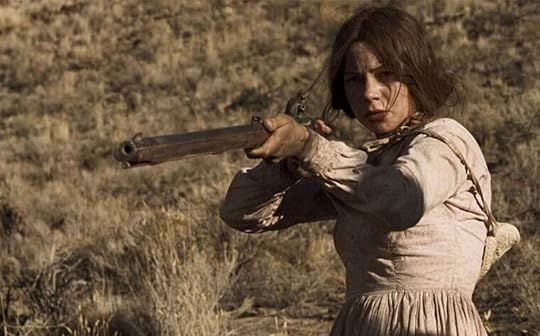
Michelle Williams in “Meek’s Cutoff” di Kelly Reichardt. 2010.

Michelle Dockery nella miniserie Netflix “Godless”, creata da Scott Frank. 2018.

Ancora Michelle Dockery nella miniserie Netflix “Godless”, creata da Scott Frank. 2018.
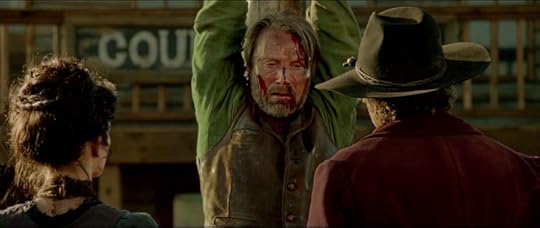
Mads Mikkelsen torturato da Jeffrey Dean Morgan (di spalle a sinistra anche la protagonista femminile Eva Green) in “The Salvation” regia di Kristian Levring. 2014.

Kurt Russell in “Bone Tomahawk di S. Craig Zahler. 2015.

“Bone Tomahawk di S. Craig Zahler. 2015.
Bel western danese girato in Sudafrica nel 2014, tipico revenge movie: regia di Kristian Levring, “The Salvation”, con Mads Mikkelsen, Eva Green, Jeffrey Dean Morgan, Eric Cantona, Jonathan Pryce.
Sono sicuro che Terry Quinn non ha mai letto Butcher’s Crossing, altrimenti non direbbe che il miglior scrittore di western è Elmore Leonard.
Il romanzo di John Williams non solo è il miglior romanzo western che io abbia mai letto (molto probabilmente anche l’unico), ma è un capolavoro che fa a gara con quell’altra meraviglia che si chiama Stoner.
Però, Terry Quinn mi ha dato una gran bella dritta, perché questi racconti western di Elmore Leonard forse non sono un capolavoro, ma sono pur tuttavia davvero eccellenti, godimento puro e distillato, una magnifica lettura che vale il massimo dei voti.
Bello, insolito, divertente, per stomaci forti, questo western horror abbastanza splatter del 2015 si chiama “Bone Tomahawk”, diretto da S. Craig Zahler, con Kurt Russell, Patrick Wilson, Richard Jenkins, Matthew Fox.
Mi piace parafrasare quello che Leonard diceva di uno dei suoi personaggi più riusciti, Raylan Givens, l’ex minatore diventato sceriffo federale (da cui la piacevole e divertente serie TV “Justified” con Timothy Olyphant): è un tipo tranquillo, ma se gli fai tirare fuori la penna, lui spara parole e ti stende.
Che talento magistrale per la scrittura questo Leonard! Rapido, veloce, scarno, mai sprecare parole, pennellata larga quando serve ma più spesso pennello fino, trame intrecci storie situazioni paesaggi, ma ancora di più uomini e donne, personaggi, esseri umani. Un tocco, un gesto, uno sguardo, un movimento, un sopracciglio, un cappello che rimane dove non dovrebbe.
A tratti stupendo (la sequenza iniziale!), “Hostiles” di Scott Cooper con Chrisitian Bale, Rosamund Pike, Wess Studi e Timothée Chalamet. 2017.
Un racconto è più bello dell’altro, quello che precede è migliore di quello che segue che però è superiore all’antecedente.
Western. Molto insolito, spiazzante, Leonard spariglia. Un esempio per tutti: ne “I diavoli rossi” la cavalleria ha inseguito i chiricahua, è prevedibile che finisca a fucilate – e invece la situazione si risolve in una gara di bevute, a chi regge meglio la birra di mais (tizwin) – il giovane sottotenente alla sua prima missione di comando è un bevitore consumato e li stende tutti. Poi, certo, le pistole diranno la loro. Altrimenti che le indossano a fare?
Tutti ambientati tra la fine della Guerra di Secessione e al più tardi la fine del secolo, e tutti ambientati tra Arizona e New Mexico.
Western, ma spesso sembra una favola di Esopo, oppure una parabola presa dal vangelo. Western ma speziato e screziato di noir, gotico, ghost story.
Magnifica miniserie TV Netflix del 2018: “Godless”, creata da Scott Frank, sceneggiatore e regista di tutti e sette episodi, con Jack O’Connell, Jeff Daniels, Michelle Dockery, Sam Waterston, Scoot McNairy.
Leonard cominciò a scriverli quando aveva venticinque anni e lavorava in un’agenzia pubblicitaria (a trentasei anni si mise in proprio e aprì la sua propria agenzia che forniva testi, ma che sei anni dopo abbandonò definitivamente per dedicarsi alla scrittura a tempo pieno). Prima di essere raccolti in un’unica pubblicazione uscirono su riviste specializzate.
E certo non li definirei western revisionista (il western che preferisco): qui l’indiano, sempre presente, è più oggetto di fascino che di rispetto. Ma è quasi sempre descritto ubriacone, violento, scansafatiche, superstizioso, crudele.
D’altronde era presto per il revisionismo western che nasce a fine anni Sessanta, sull’onda della guerra del Vietnam e sulla contestazione (contro i padri, contro la borghesia, contro): Leonard pubblica il suo primo racconto nel 1951.
Bel western indy dalle atmosfere sospese del 2010: Kelly Reichardt, regina del cinema Sundance, dirige “Meek’s Cutoff”, insolito sin dal titolo, con la sua attrice prediletta (ma non mia) Michelle Williams, Bruce Greenwood,Paul Dano, Will Patton.
Qual è, cos’è l’irresistibile fascino del West? L’ultima frontiera? Ogni volta superare un nuovo confine? Ognuno ha le sue regole? Si fa quello che si deve fare? Lo sguardo di Clint Eastwood?
Will, forse ci resterai un po’ male, ma quando andrai in paradiso ci troverai un sacco di gente che proprio non ti aspettavi. Gente che è finita lassù in base ai criteri di Dio, e non degli uomini. Per quanto ne sai, rischi perfino di vederci Dick Maddox, anche se forse questo vuol dire pretendere un po’ troppo dalla pietà divina.
Wes Studi, l’indiano cinematografico per eccellenza, e Christian Bale in “Hostiles” di Scott Cooper. 2017.
“Hostiles” di Scott Cooper, con Christian Bale, Rosamund Pike, Wes Studi. 2017.
Michelle Williams in “Meek’s Cutoff” di Kelly Reichardt. 2010.
Michelle Dockery nella miniserie Netflix “Godless”, creata da Scott Frank. 2018.
Ancora Michelle Dockery nella miniserie Netflix “Godless”, creata da Scott Frank. 2018.
Mads Mikkelsen torturato da Jeffrey Dean Morgan (di spalle a sinistra anche la protagonista femminile Eva Green) in “The Salvation” regia di Kristian Levring. 2014.
Kurt Russell in “Bone Tomahawk di S. Craig Zahler. 2015.
“Bone Tomahawk di S. Craig Zahler. 2015.

May 26, 2009
clint eastwood tells us that the only authentically original american art forms are jazz, blues, and the western. lemme up the ante and say that no other form reveals more about america than the western. and the great practitioners of the form (ford, mann, hawks, boetticher, peckinpah, leone, eastwood) tell us as much about america as any novelist, essayist, historian, or sociologist. maybe more. this 531 pg. tome is the fifth book of elmore leonard westerns i've read over the past two weeks -- a period that's been supplemented by townes van zandt's live at the ol' quarter, steve earle's train a'coming, bob wills and his texas playboys' king of western swing, and daily rounds of mezcal and dos equis... just because i was born a pale, neurotic jew from new york doesn't mean i can't pretend.

June 24, 2014
In the 1950s, Elmore Leonard was married with children and working as a copywriter on a Chevrolet account at Campbell-Ewald Advertising in Detroit. What he really wanted to do was support himself with his fiction. Already a fan of western movies, Leonard discovered he could get paid while he learned his craft by trafficking short pieces in a genre that was enormously popular on newsstands, as he recounts in the foreword, "from Saturday Evening Post and Collier's down through Argosy, Adventure, Blue Book, and probably at least a dozen pulp magazines, the better ones like Dime Western and Zane Grey Magazine paying two cents a word."
Leonard is a writer whose craft and facility with dialogue (as well as black, Hispanic and female characters) are qualities I've long admired. I'm not a big fan of the crime stories he'd become world famous for cranking out in the '80s and '90s, many of which fell into formula and self-parody. As for a gaggle of pulp westerns written during the Eisenhower administration, I expected them to be rigid and silly, full of good guys wearing white, bad guys in black and shrieking women tied up on train tracks.
The Complete Western Stories of Elmore Leonard is a treasure trove, a Christmas gift for lovers of pulp fiction. Thirty short stories, twenty-seven of them published during the '50s, are included, three of which Hollywood would get hold of: Three-Ten to Yuma (released as 3:10 to Yuma in 1957 and 2007), The Captives (released as The Tall T in 1957) and Only Good Ones (released as Valdez Is Coming in 1971).
Each short story is prefaced by their original titles -- if an editor opted for a more sensational one at publication -- as well as the magazine they appeared in and date. My favorites:
The Big Hunt (original title: Matt Gordon's Boy) in which buffalo hunter Will Gordon is victimized by some unscrupulous men who once took advantage of Will's father in the same manner. After losing his hides to these men, young Will devises a novel plan for getting his valuables back.
The Boy Who Smiled in which an Apache named Mickey Segundo watches his father lynched for a crime he didn't commit. Years later, working as an unassuming guide by the name Peza-a, Mickey is contracted by his father's killers to lead them on a hunting party.
Saint with a Six-Gun (original title: The Hanging of Bobby Valdez) in which Lyall Quinlan gets his break in law enforcement when hired to guard incarcerated gunman Bobby Valdez the week leading up to Valdez's hanging. Both sides of the law underestimate the green youngster.
The Longest Day In His Life in which Steve Brady spends his first day on the job as a stageline rep being robbed of his new suit and gun, being drawn on with a shotgun by the daughter of a business client, being recognized by a bandit he shot and testified against seven years ago and proposing marriage to the woman who almost shot him earlier.
The Kid (original title: The Gift of Regalo) in which an opportunistic horse trainer finds a mute Indian boy and decides to keep him as an indentured servant, until a young prospector determines the boy was stolen by Apaches at one time and now deserves humane treatment, even if it means shooting the kid's master.
Even this early in his career, Leonard demonstrates a sharp ear for character and dialogue. These aren't stories about some guy in a hat and something happens to him(!), but a guy in a hat who was a certain sort of man (!) and something happens to him. With this focus on character, I was invested in even the average stories. The historical detail is impeccable. Leonard specialized in a very specific place and time: the Arizona Territory of the 1880s. Cavalry garrisons, stagecoach runs and Apache resistance offer a different look and feel than most westerns; it's war territory, not the stock landscape of the wild west town.
At 528 pages, this mother lode took me two weeks to finish, but the stories are bite sized and a couple of them can fit into your commute or lunch break. If you don't cotton to the pulp western, or to the Elmore Leonard of Get Shorty, I recommend giving these pieces a try. Not every story is a keeper, but Leonard delivers what I crack open fiction for in the first place: vivid landscape, terse storytelling, character, dialogue and social justice.
Leonard is a writer whose craft and facility with dialogue (as well as black, Hispanic and female characters) are qualities I've long admired. I'm not a big fan of the crime stories he'd become world famous for cranking out in the '80s and '90s, many of which fell into formula and self-parody. As for a gaggle of pulp westerns written during the Eisenhower administration, I expected them to be rigid and silly, full of good guys wearing white, bad guys in black and shrieking women tied up on train tracks.
The Complete Western Stories of Elmore Leonard is a treasure trove, a Christmas gift for lovers of pulp fiction. Thirty short stories, twenty-seven of them published during the '50s, are included, three of which Hollywood would get hold of: Three-Ten to Yuma (released as 3:10 to Yuma in 1957 and 2007), The Captives (released as The Tall T in 1957) and Only Good Ones (released as Valdez Is Coming in 1971).
Each short story is prefaced by their original titles -- if an editor opted for a more sensational one at publication -- as well as the magazine they appeared in and date. My favorites:
The Big Hunt (original title: Matt Gordon's Boy) in which buffalo hunter Will Gordon is victimized by some unscrupulous men who once took advantage of Will's father in the same manner. After losing his hides to these men, young Will devises a novel plan for getting his valuables back.
The Boy Who Smiled in which an Apache named Mickey Segundo watches his father lynched for a crime he didn't commit. Years later, working as an unassuming guide by the name Peza-a, Mickey is contracted by his father's killers to lead them on a hunting party.
Saint with a Six-Gun (original title: The Hanging of Bobby Valdez) in which Lyall Quinlan gets his break in law enforcement when hired to guard incarcerated gunman Bobby Valdez the week leading up to Valdez's hanging. Both sides of the law underestimate the green youngster.
The Longest Day In His Life in which Steve Brady spends his first day on the job as a stageline rep being robbed of his new suit and gun, being drawn on with a shotgun by the daughter of a business client, being recognized by a bandit he shot and testified against seven years ago and proposing marriage to the woman who almost shot him earlier.
The Kid (original title: The Gift of Regalo) in which an opportunistic horse trainer finds a mute Indian boy and decides to keep him as an indentured servant, until a young prospector determines the boy was stolen by Apaches at one time and now deserves humane treatment, even if it means shooting the kid's master.
Even this early in his career, Leonard demonstrates a sharp ear for character and dialogue. These aren't stories about some guy in a hat and something happens to him(!), but a guy in a hat who was a certain sort of man (!) and something happens to him. With this focus on character, I was invested in even the average stories. The historical detail is impeccable. Leonard specialized in a very specific place and time: the Arizona Territory of the 1880s. Cavalry garrisons, stagecoach runs and Apache resistance offer a different look and feel than most westerns; it's war territory, not the stock landscape of the wild west town.
At 528 pages, this mother lode took me two weeks to finish, but the stories are bite sized and a couple of them can fit into your commute or lunch break. If you don't cotton to the pulp western, or to the Elmore Leonard of Get Shorty, I recommend giving these pieces a try. Not every story is a keeper, but Leonard delivers what I crack open fiction for in the first place: vivid landscape, terse storytelling, character, dialogue and social justice.

November 4, 2018
“Leonard’s special kind of tough guys were born in the Old West, where he polished his wise-cracking view of violence and morality on the workings of frontier justice…. Leonard knows the territory.” – Chicago Sun-Times
“Leonard was a writer of superior Westerns before he turned to crime, but all the elements of his Detroit, Miami, and Atlantic City novels are here: oblique dialogue, closely observed behavior, a certain sunny cynicism, a melancholy courage.” – Boston Globe
“I looked for a genre where I could learn how to write and be selling at the same time. I chose westerns because I liked western movies. From the time I was a kid I liked them.” – Elmore Leonard
Elmore Leonard (1925-2013) was born in New Orleans, but grew up in Detroit. In 1950, he graduated from the University of Detroit with degrees in English and philosophy. Early on, he wanted to be a writer – and he was – but it was writing copy for the Chevrolet account for the Detroit advertising agency that employed him.
In his spare time, however, early mornings before going to work and even during the day when he had a few minutes to spare from his work, he wrote stories – western stories set in the desert southwest. The irony is that he had never personally traveled to that region.
But as he said, he was looking for a genre where he “could learn how to write and be selling at the same time” and because "he liked western movies.” There was an additional reason.
The market for western stories in the fifties was a seller’s market due to the proliferation of so-called “pulp” magazines that specialized in publishing western stories, paying a grand total of two cents a word. In addition, there were the “men’s” magazines such as Argosy and others that paid a bit more, but the jackpot was won if the writer could get something published in a couple of “slick” magazines, The Saturday Evening Post and Collier’s, that paid best of all.
Despite never having been there, Leonard was drawn to New Mexico and, especially, Arizona as settings for his fiction. He liked the landscape and he was also interested in the intersection of Apache, Mexican, and Anglo cultures that existed there and that often resulted in a three-way conflict.
After his first story was rejected, he determined to make his stories as authentic as possible in terms of not only the land and people, but also guns, clothing, and horses. In Detroit he read books, but he also subscribed to the Arizona Highways magazine which provided him with pictures of the area, as well as “things I could put in and sound like I knew what I was talking about.”
His stories are densely populated with stage drivers, cynical lawmen, cavalry officers and troopers, and, one jump ahead of the lawmen or cavalry, Apaches and outlaws, all of whom are forced to deal with the heat, dust, and rugged landscapes of Arizona and New Mexico.
This anthology consists of thirty-one stories, twenty-eight of which were published between 1951 and 1956. Nearly all appeared in the low-paying pulps, four were published by Argosy, and only one appeared in The Saturday Evening Post.
Two of the stories became the basis for medium-budget classic movies: 3:10 to Yuma and The Captive (filmed as The Tall T), both released in 1957. (A remake of 3:10 to Yuma was released in 2007, but it isn’t as satisfying as the original. It is especially marred by the cartoonish climactic shoot-out that reminded me of Wile E. Coyote's attempts to capture the Road Runner.)
Leonard expanded one of the stories in the collection, Only the Good Ones, into a full-fledged novel in 1970, titled Valdez is Coming. The following year it was adapted for the screen. Leonard is on record as saying that among all the western stories that he had written that Valdez was his favorite.
In 1969, Leonard turned to crime fiction beginning with his first non-western novel, The Big Bounce. He made the transition because the market for western stories had dried up. It had been killed off when TV was swamped with western series from the mid-fifties to the early sixties which had the effect of killing off the demand for western stories in print and on the big screen, a trend that has intensified in the ensuing years.
"My objective has always been to write lean prose, authentic-sounding dialogue, and a plot, a story that comes out of the characters – because of who they are – rather than simply throwing characters into a tight situation…. To me, the characters are everything. I begin with them, and if a story doesn’t come out of their interactions, I don’t have a book [or story].” – Elmore Leonard
He achieved his objective early on in his writing career, beginning with the stories in this collection.
“Leonard was a writer of superior Westerns before he turned to crime, but all the elements of his Detroit, Miami, and Atlantic City novels are here: oblique dialogue, closely observed behavior, a certain sunny cynicism, a melancholy courage.” – Boston Globe
“I looked for a genre where I could learn how to write and be selling at the same time. I chose westerns because I liked western movies. From the time I was a kid I liked them.” – Elmore Leonard
Elmore Leonard (1925-2013) was born in New Orleans, but grew up in Detroit. In 1950, he graduated from the University of Detroit with degrees in English and philosophy. Early on, he wanted to be a writer – and he was – but it was writing copy for the Chevrolet account for the Detroit advertising agency that employed him.
In his spare time, however, early mornings before going to work and even during the day when he had a few minutes to spare from his work, he wrote stories – western stories set in the desert southwest. The irony is that he had never personally traveled to that region.
But as he said, he was looking for a genre where he “could learn how to write and be selling at the same time” and because "he liked western movies.” There was an additional reason.
The market for western stories in the fifties was a seller’s market due to the proliferation of so-called “pulp” magazines that specialized in publishing western stories, paying a grand total of two cents a word. In addition, there were the “men’s” magazines such as Argosy and others that paid a bit more, but the jackpot was won if the writer could get something published in a couple of “slick” magazines, The Saturday Evening Post and Collier’s, that paid best of all.
Despite never having been there, Leonard was drawn to New Mexico and, especially, Arizona as settings for his fiction. He liked the landscape and he was also interested in the intersection of Apache, Mexican, and Anglo cultures that existed there and that often resulted in a three-way conflict.
After his first story was rejected, he determined to make his stories as authentic as possible in terms of not only the land and people, but also guns, clothing, and horses. In Detroit he read books, but he also subscribed to the Arizona Highways magazine which provided him with pictures of the area, as well as “things I could put in and sound like I knew what I was talking about.”
His stories are densely populated with stage drivers, cynical lawmen, cavalry officers and troopers, and, one jump ahead of the lawmen or cavalry, Apaches and outlaws, all of whom are forced to deal with the heat, dust, and rugged landscapes of Arizona and New Mexico.
This anthology consists of thirty-one stories, twenty-eight of which were published between 1951 and 1956. Nearly all appeared in the low-paying pulps, four were published by Argosy, and only one appeared in The Saturday Evening Post.
Two of the stories became the basis for medium-budget classic movies: 3:10 to Yuma and The Captive (filmed as The Tall T), both released in 1957. (A remake of 3:10 to Yuma was released in 2007, but it isn’t as satisfying as the original. It is especially marred by the cartoonish climactic shoot-out that reminded me of Wile E. Coyote's attempts to capture the Road Runner.)
Leonard expanded one of the stories in the collection, Only the Good Ones, into a full-fledged novel in 1970, titled Valdez is Coming. The following year it was adapted for the screen. Leonard is on record as saying that among all the western stories that he had written that Valdez was his favorite.
In 1969, Leonard turned to crime fiction beginning with his first non-western novel, The Big Bounce. He made the transition because the market for western stories had dried up. It had been killed off when TV was swamped with western series from the mid-fifties to the early sixties which had the effect of killing off the demand for western stories in print and on the big screen, a trend that has intensified in the ensuing years.
"My objective has always been to write lean prose, authentic-sounding dialogue, and a plot, a story that comes out of the characters – because of who they are – rather than simply throwing characters into a tight situation…. To me, the characters are everything. I begin with them, and if a story doesn’t come out of their interactions, I don’t have a book [or story].” – Elmore Leonard
He achieved his objective early on in his writing career, beginning with the stories in this collection.

October 22, 2024
I still have half of this anthology left to read but it’s coming on Halloween and I need to read my usual October-November Horror or Supernatural tales of the season.
I will return to this anthology-hopefully by spring.
You will never in a lifetime find more entertaining and engaging Western stories and novellas than contained here.
Elmore Leonard was a master storyteller and these Western short stories & novellas were written back when he was first starting out as a professional writer of fiction.
You can’t possibly do better than this if you’re in the mood for unique takes on a traditional genre format.
Leonard -if not the best- ranks up there with the Top 10 Western authors of all time.
Highest Possible Recommendation
I will return to this anthology-hopefully by spring.
You will never in a lifetime find more entertaining and engaging Western stories and novellas than contained here.
Elmore Leonard was a master storyteller and these Western short stories & novellas were written back when he was first starting out as a professional writer of fiction.
You can’t possibly do better than this if you’re in the mood for unique takes on a traditional genre format.
Leonard -if not the best- ranks up there with the Top 10 Western authors of all time.
Highest Possible Recommendation

January 27, 2023
A wide ranging collection of westerns where you never quite know what you're going to get, though it's guaranteed to be gritty and full of dangerous lowlifes deserving of the grim fate they're likely to meet. The best of these, like Three-Ten to Yuma, are taut and suspenseful, full of dread and anticipation in the face of impending violence, and many like Saint with a Six-Gun have wry, often morbid twists that will leave you smiling. These stories hit hard and don't get bogged down in back stories or anything frivolous like romance or friendship.

March 19, 2019
This is a collection of Elmore Leonard’s short western stories written and published, in magazines, in the early 1950’s.
Before reading this book I can’t remember the last time I read a western novel.
This is a book that I have had in my library for years just waiting for me to pick it up. I am so glad that I finally got around to it, because it was great.
All very entertaining reads with a good pinch of morality thrown in. There are no stereotypical ‘good’ cowboys or ‘vile’ Indians or ‘sleazy’ Mexicans just people being people, some good some no so good.
In any collection of short stories there are usually a few that fall short of the mark but not so here, here every story is a small gem.
Of all the writing formats I think short stories would be one of the hardest to get right. The writer has 50 or 60 pages to create characters and plots that will hold the readers attention. Well Mr. Leonard does this in spades.
Don’t be put off by ‘western’ it’s so much more than that.
A highly entertaining 4/5 star read.
Before reading this book I can’t remember the last time I read a western novel.
This is a book that I have had in my library for years just waiting for me to pick it up. I am so glad that I finally got around to it, because it was great.
All very entertaining reads with a good pinch of morality thrown in. There are no stereotypical ‘good’ cowboys or ‘vile’ Indians or ‘sleazy’ Mexicans just people being people, some good some no so good.
In any collection of short stories there are usually a few that fall short of the mark but not so here, here every story is a small gem.
Of all the writing formats I think short stories would be one of the hardest to get right. The writer has 50 or 60 pages to create characters and plots that will hold the readers attention. Well Mr. Leonard does this in spades.
Don’t be put off by ‘western’ it’s so much more than that.
A highly entertaining 4/5 star read.

February 11, 2012
This is an abridged version of the book having only 11 stories in it. I don't think they're abridged, though. Read by Tom Wopath, Henry Rollins & David Strather & William Atherton. (I wrote those names down as I heard them. I have no idea if they're spelled correctly, but all of them were excellent readers.)
For some reason, I never equated Elmore Leonard with westerns. I'd forgotten who wrote Hombre. It's been a lot of years since I read the book, though I've probably watched the movie with Paul Newman in it a dozen times over the years & it is an old favorite.
One of the best things about Leonard's writing is that everyone in them are real people. Good/bad, black/white/red, male/female, they're not perfect in any way. They're strong, opinionated, & have reasons for being what they are. They get dealt a hand & play it out, often based on a past that is painted in with broad strokes, just enough to give them depth, but with enough detail left out for some wiggle room. I was never quite sure which way they'd go, but usually the author seemed to find a pretty unique path for them.
Blood Money - 3.5 stars - A good solid story to start the ball rolling. Typically well written & gritty about a bank robbery & what happens after. Exactly what I'd expect from Leonard.
Only Good Ones - Wow! 5 stars, a story of prejudice & vigilantism so unbelievable, but so starkly written that it felt true. Surely it was too stark & outrageous to be mere fiction
Trail of the Apache - 4 stars - another solid story with a bit more meat than the first. Government treatment of Indians & a pretty exceptional man that carried the orders out. There's duty, there's dedication, & then there is just being built a certain way. Add them together & Leonard came up with a very remarkable hero.
Trouble at Rindo Station - 3 stars. Not bad, but pretty similar on a lot of points to the other stories. If I hadn't just heard them, I probably would have rated it a bit higher.
The Boy Who Smiled - 3 stars. Serviceable & would have been more chilling if everything hadn't been telegraphed so far ahead.
The Tonto Woman - 4 stars. I loved the characters & the ending. It's not what I would expect from Leonard at all, but I loved it. It's the kind of story that makes you think about it after it's done.
Hurrah for Captain Early - 3 stars, maybe 4, but it could have been 5 & blew it. This was an excellent story in a lot of ways, but it got too scattered, tried to make too many points & wound up not really making any of them with the impact they deserved. Still, it wound up being a disappointment.
The Colonel's Lady - 4 stars - Wow! Great action with a great ending. I can't say more without a spoiler, unfortunately. I won't even post a spoiler, just tell you that you have to read it without knowing what is going to happen for the impact. Go read it now. Seriously. It's too cool not to.
Saint With A Six Gun - 4 stars. This is an excellent story where a young man learns some of the facts of life the hard way, but with a superb twist. It was thought provoking, but had a really fun twist, too.
You Never See Apaches - 3 stars. Not particularly interesting over all, but it does show Indians in a very good light. It was too obvious in most ways.
3:10 to Yuma - 3 stars. A much shorter story than I expected, so it didn't have the history of the movies which added to the impact. Basically, it's the last scene of the movies - sort of - just the walk from the hotel to the train.
This is definitely a 'must read' western collection. Highly recommended.
For some reason, I never equated Elmore Leonard with westerns. I'd forgotten who wrote Hombre. It's been a lot of years since I read the book, though I've probably watched the movie with Paul Newman in it a dozen times over the years & it is an old favorite.
One of the best things about Leonard's writing is that everyone in them are real people. Good/bad, black/white/red, male/female, they're not perfect in any way. They're strong, opinionated, & have reasons for being what they are. They get dealt a hand & play it out, often based on a past that is painted in with broad strokes, just enough to give them depth, but with enough detail left out for some wiggle room. I was never quite sure which way they'd go, but usually the author seemed to find a pretty unique path for them.
Blood Money - 3.5 stars - A good solid story to start the ball rolling. Typically well written & gritty about a bank robbery & what happens after. Exactly what I'd expect from Leonard.
Only Good Ones - Wow! 5 stars, a story of prejudice & vigilantism so unbelievable, but so starkly written that it felt true. Surely it was too stark & outrageous to be mere fiction
Trail of the Apache - 4 stars - another solid story with a bit more meat than the first. Government treatment of Indians & a pretty exceptional man that carried the orders out. There's duty, there's dedication, & then there is just being built a certain way. Add them together & Leonard came up with a very remarkable hero.
Trouble at Rindo Station - 3 stars. Not bad, but pretty similar on a lot of points to the other stories. If I hadn't just heard them, I probably would have rated it a bit higher.
The Boy Who Smiled - 3 stars. Serviceable & would have been more chilling if everything hadn't been telegraphed so far ahead.
The Tonto Woman - 4 stars. I loved the characters & the ending. It's not what I would expect from Leonard at all, but I loved it. It's the kind of story that makes you think about it after it's done.
Hurrah for Captain Early - 3 stars, maybe 4, but it could have been 5 & blew it. This was an excellent story in a lot of ways, but it got too scattered, tried to make too many points & wound up not really making any of them with the impact they deserved. Still, it wound up being a disappointment.
The Colonel's Lady - 4 stars - Wow! Great action with a great ending. I can't say more without a spoiler, unfortunately. I won't even post a spoiler, just tell you that you have to read it without knowing what is going to happen for the impact. Go read it now. Seriously. It's too cool not to.
Saint With A Six Gun - 4 stars. This is an excellent story where a young man learns some of the facts of life the hard way, but with a superb twist. It was thought provoking, but had a really fun twist, too.
You Never See Apaches - 3 stars. Not particularly interesting over all, but it does show Indians in a very good light. It was too obvious in most ways.
3:10 to Yuma - 3 stars. A much shorter story than I expected, so it didn't have the history of the movies which added to the impact. Basically, it's the last scene of the movies - sort of - just the walk from the hotel to the train.
This is definitely a 'must read' western collection. Highly recommended.

December 23, 2023
Segunda antología de relatos del oeste de Elmore Leonard que leo. Ya me fascinaron en su día de su primera antología recopilada por Valdemar en su colección Frontera "El tren de las 3:10 a Yuma", "El rastro de los apaches" e "Infierno en el Cañón del Diablo", pero no se quedan atrás relatos tan buenos en esta segunda recopilación como son: "Los cautivos", "El día más largo de su vida", "Entre rejas", "El chico", y "Los únicos buenos," publicado en el 61 y la segunda aparición de un aún más joven Valdez tras ese primer relato del 54 presente tb en esta 2da antología: "Un santo con revólver". Años después Leonard volvería a rescatar a Roberto Valdez como personaje para hacerlo protagonista de su novela "Qué viene Valdez", publicada junto a "Hombre", y que leeré tras hacer lo propio con su primera historia del oeste, "Los cazarrecompensas", que fue lo último de Leonard en ser publicado por Valdemar Frontera.
Otros relatos que me han gustado pero están un peldaño por debajo en calidad son: "Refriega en la posta de Rindo", "La hora de la venganza", "A sueldo de nadie", "El hombre con el brazo de hierro" y "La mujer tonto".
Sin duda recomiendo a cualquiera que sea entusiasta de este género a este autor que tb publicó una ingente cantidad de relatos y novelas del género negro. Sus obras son siempre entretenidas, manteniendo en vilo al lector, y muy cinematográficas. Por algo es que han sido adaptados algunos de sus ya mencionados títulos. Un 4'25 de 5⭐sheriff.
Otros relatos que me han gustado pero están un peldaño por debajo en calidad son: "Refriega en la posta de Rindo", "La hora de la venganza", "A sueldo de nadie", "El hombre con el brazo de hierro" y "La mujer tonto".
Sin duda recomiendo a cualquiera que sea entusiasta de este género a este autor que tb publicó una ingente cantidad de relatos y novelas del género negro. Sus obras son siempre entretenidas, manteniendo en vilo al lector, y muy cinematográficas. Por algo es que han sido adaptados algunos de sus ya mencionados títulos. Un 4'25 de 5⭐sheriff.

August 30, 2023
Full disclosure: I'm a fan of Westerns-- especially the classic films and books. So, too, am I a fan of Elmore Leonard. Consequently, I was jazzed to read this complete collection of his early publications in the genre.
Unfortunately, there is a certain green, unpolished quality to much of his early writing and, more importantly, a repetitiveness that quickly becomes apparent in these short stories. So much so that after reading a few, they began to blend together, losing some of the inherent pleasure in each.
Nevertheless, there were a few standouts, and one could perceive the foundations upon which Leonard would build his greatness in his later novels. Fans of the author, or those of Western novels / short stories (think Louis L'Amour) will likely appreciate this collection. Perhaps reading just one or two and leaving the book for a while, coming back for a "dip" when the mood strikes, is a better way to go than reading it cover to cover all at once. 3.5 stars rounded down for the repetitive and predictable nature of many of the stories.
Unfortunately, there is a certain green, unpolished quality to much of his early writing and, more importantly, a repetitiveness that quickly becomes apparent in these short stories. So much so that after reading a few, they began to blend together, losing some of the inherent pleasure in each.
Nevertheless, there were a few standouts, and one could perceive the foundations upon which Leonard would build his greatness in his later novels. Fans of the author, or those of Western novels / short stories (think Louis L'Amour) will likely appreciate this collection. Perhaps reading just one or two and leaving the book for a while, coming back for a "dip" when the mood strikes, is a better way to go than reading it cover to cover all at once. 3.5 stars rounded down for the repetitive and predictable nature of many of the stories.

March 16, 2021
Calore, polvere, cespugli spinosi
Mi sono trovata nel Far West perchè avevo voglia di evasione ed è stata una lettura ottima, superiore alle aspettative.
Ogni racconto è costruito con cura, dal punto di vista della verosimiglianza della storia e dei caratteri dei personaggi, che sono spesso molto ben caratterizzati dal punto di vista psicologico. Hollywood ha tratto vari film famosi da questi racconti, per esempio Quel treno per Yuma.
Sono racconti di avventura, quindi ci si aspetta una trama coinvolgente, ma c'è molto di più. Come racconta nella prefazione, l'autore si è documentato adeguatamente e in effetti è piuttosto interessante. Le storie si collocano negli stati USA al confine col Messico, nel periodo in cui i nativi avevano ormai perso la loro guerra di cacciatori-raccoglitori contro i bianchi coltivatori-allevatori. E' una cosa che mi fa sempre molta tristezza anche quando penso all'Europa di diecimila anni fa, in questo caso anche di più, data la sproporzione dei mezzi. I nativi erano in buona parte confinati in riserve sorvegliate, altri gruppi erano rifugiati in zone montuose più facilmente difendibili, dalle quali alcuni uscivano per occasionali razzie. Nel frattempo gli americani organizzavano le compagnie dei trasporti in diligenza, che curavano la qualità delle strade e dei punti di rifornimento. Di tanto in tanto i nativi prendevano qualche bambino o ragazzo, che, se tornava fra i bianchi, aveva i suoi problemi di reinserimento, come la signora del penultimo racconto.
In uno dei primi racconti ho sorriso leggendo che nel corpo a corpo fra un cowboy e un indiano, il primo veniva investito dal fetore (sic) del nativo: ho sorriso perchè probabilmente l'indiano sarà rimasto a sua volta tramortito dal fetore del cowboy, perchè non credo che l'igiene, per non parlare della freschezza della biancheria, fosse un interesse primario per la gente del mestiere. Ho apprezzato molto l'apertura e l'arguzia di Leonard, che in vari racconti lascia aperta la domanda su chi fosse più intollerante e barbaro, fra gli indigeni e gli americani: stessa distribuzione statistica, probabilmente. Ho apprezzato particolarmente alcuni racconti in cui erano presenti personaggi femminili che riuscivano a farsi accettare col loro comportamento dignitoso pur partendo da una situazione svantaggiata, cosa che non doveva essere facile: sono racconti molto superiori alla letteratura di genere.
Mi sono trovata nel Far West perchè avevo voglia di evasione ed è stata una lettura ottima, superiore alle aspettative.
Ogni racconto è costruito con cura, dal punto di vista della verosimiglianza della storia e dei caratteri dei personaggi, che sono spesso molto ben caratterizzati dal punto di vista psicologico. Hollywood ha tratto vari film famosi da questi racconti, per esempio Quel treno per Yuma.
Sono racconti di avventura, quindi ci si aspetta una trama coinvolgente, ma c'è molto di più. Come racconta nella prefazione, l'autore si è documentato adeguatamente e in effetti è piuttosto interessante. Le storie si collocano negli stati USA al confine col Messico, nel periodo in cui i nativi avevano ormai perso la loro guerra di cacciatori-raccoglitori contro i bianchi coltivatori-allevatori. E' una cosa che mi fa sempre molta tristezza anche quando penso all'Europa di diecimila anni fa, in questo caso anche di più, data la sproporzione dei mezzi. I nativi erano in buona parte confinati in riserve sorvegliate, altri gruppi erano rifugiati in zone montuose più facilmente difendibili, dalle quali alcuni uscivano per occasionali razzie. Nel frattempo gli americani organizzavano le compagnie dei trasporti in diligenza, che curavano la qualità delle strade e dei punti di rifornimento. Di tanto in tanto i nativi prendevano qualche bambino o ragazzo, che, se tornava fra i bianchi, aveva i suoi problemi di reinserimento, come la signora del penultimo racconto.
In uno dei primi racconti ho sorriso leggendo che nel corpo a corpo fra un cowboy e un indiano, il primo veniva investito dal fetore (sic) del nativo: ho sorriso perchè probabilmente l'indiano sarà rimasto a sua volta tramortito dal fetore del cowboy, perchè non credo che l'igiene, per non parlare della freschezza della biancheria, fosse un interesse primario per la gente del mestiere. Ho apprezzato molto l'apertura e l'arguzia di Leonard, che in vari racconti lascia aperta la domanda su chi fosse più intollerante e barbaro, fra gli indigeni e gli americani: stessa distribuzione statistica, probabilmente. Ho apprezzato particolarmente alcuni racconti in cui erano presenti personaggi femminili che riuscivano a farsi accettare col loro comportamento dignitoso pur partendo da una situazione svantaggiata, cosa che non doveva essere facile: sono racconti molto superiori alla letteratura di genere.

June 12, 2017
¡Quiero más... !

August 9, 2023
Before he found fame and influence as America's premier writer of crime fiction, Elmore Leonard cut his teeth writing Western pulp for various magazines in the 1950s. These short stories have all been collected in this book of Complete Western Stories, along with a couple he wrote during a brief foray back into the genre a few decades later. (Note: Leonard also wrote a number of Western novels, such as Hombre and Valdez is Coming, which are not included in this collection.)
As you would expect from such a clean writer, it's a tidy volume. There's never a bum note in the sequence of thirty stories, though naturally some are better than others. The vast majority are set in Arizona and the Apache territory in the 1880s, and depict standard Western scenarios – Apache ambushes, bounty hunting, stagecoach robberies and shootouts and the like. They're all drawn capably, though you might soon find yourself thirsting for more variety.
These are often safe stories, typical of a young writer finding his feet, and there's not much of the ingenuity and crackle with which Elmore Leonard would later win so many hearts. 'Three-Ten to Yuma', the tenth story, is the first to really show the snappy dialogue which became a trademark of this author. Other stand-out stories, such as 'The Captives', which has an excellent shootout at its end, do so by telling their standard story well, fulfilling the formula rather than transcending it. It's a solid and dependable collection and a good example of the writer's craft, but while Elmore Leonard left a mark on the Western genre, he didn't leave a unique and identifiable fingerprint.
As you would expect from such a clean writer, it's a tidy volume. There's never a bum note in the sequence of thirty stories, though naturally some are better than others. The vast majority are set in Arizona and the Apache territory in the 1880s, and depict standard Western scenarios – Apache ambushes, bounty hunting, stagecoach robberies and shootouts and the like. They're all drawn capably, though you might soon find yourself thirsting for more variety.
These are often safe stories, typical of a young writer finding his feet, and there's not much of the ingenuity and crackle with which Elmore Leonard would later win so many hearts. 'Three-Ten to Yuma', the tenth story, is the first to really show the snappy dialogue which became a trademark of this author. Other stand-out stories, such as 'The Captives', which has an excellent shootout at its end, do so by telling their standard story well, fulfilling the formula rather than transcending it. It's a solid and dependable collection and a good example of the writer's craft, but while Elmore Leonard left a mark on the Western genre, he didn't leave a unique and identifiable fingerprint.

December 9, 2017
I'm not big on audiobooks — whenever I hear a person reading a story aloud, I always hear their voice, but I just don't follow the story at all. I almost start listening to their voice as a kind of music. But I was feeling really down today (and, like, for the past several weeks already, holy hell), and purely accidentally I stumbled upon this podcast, LeVar Burton Reads. In this podcast, actor LeVar Burton reads various short stories. As it happens, I really like LeVar, and I also just finished watching Star Trek: The Next Generation, so I decided that this is a sign and I should give the podcast a listen.
I picked this short western story by Elmore Leonard, whose books I want to get into more deeply at some point. I did have the same problem of not following the story to a certain extent, but I think I got the main gist of it, and while the story itself wasn't too cheerful, it did help me take my mind off certain things, if only for a little bit, and just in general I really enjoyed listening to LeVar's awesome voice.
Anyway, I just wanted to share this little find with my Goodreads buddies. I know that many of you here would probably be into this kind of format. There are currently twelve short stories available, and more are coming starting next year. And it's all free! You can download the episodes on your phone or computer using any podcast app.
I picked this short western story by Elmore Leonard, whose books I want to get into more deeply at some point. I did have the same problem of not following the story to a certain extent, but I think I got the main gist of it, and while the story itself wasn't too cheerful, it did help me take my mind off certain things, if only for a little bit, and just in general I really enjoyed listening to LeVar's awesome voice.
Anyway, I just wanted to share this little find with my Goodreads buddies. I know that many of you here would probably be into this kind of format. There are currently twelve short stories available, and more are coming starting next year. And it's all free! You can download the episodes on your phone or computer using any podcast app.

July 21, 2012
In the 1950s there were two major figures in western noir; one was filmmaker Anthony Mann and the other was writer Elmore Leonard. Leonard's writing was so dark that several western magazines turned down his stories for that very reason.
In this excellent collection of stories you get frontier femme fatales like "The Colonel's Lady", tales of Injun justice in "The Big Hunt" and a young Mexican seeking revenge in "The Boy Who Smiled". The latter two stories mentioned are significant in that they address issues of racism amid a cowboy style setting, making it less didactic than any sermon.
While I never cared much for Leonard's modern crime writing I find his western tales to be totally tall and badass in the saddle.
In this excellent collection of stories you get frontier femme fatales like "The Colonel's Lady", tales of Injun justice in "The Big Hunt" and a young Mexican seeking revenge in "The Boy Who Smiled". The latter two stories mentioned are significant in that they address issues of racism amid a cowboy style setting, making it less didactic than any sermon.
While I never cared much for Leonard's modern crime writing I find his western tales to be totally tall and badass in the saddle.

February 5, 2012
“Three-Ten to Yuma,” still one of my favorites. Twelve pages long and riddled with more tension than you can stand. The rest of the entrants vary from solid to gold, Elmore Leonard doing what Elmore does best.
July 1, 2017
This is his short stories that he provided to a magazine to make a little bit of money.
I read 3:10 to Yuma as I have enjoyed the movie. The Books ending is not the same at all.
I read 3:10 to Yuma as I have enjoyed the movie. The Books ending is not the same at all.

July 5, 2023
All the wonderful foundations of excellent story telling. Amazing detail and character development in short stories with unpredictable twists & turns. Some of the language is very dated but most of the stories are from the 1950s & 1960s.
February 22, 2011
In the introduction, Elmore Leonard states that when he decided he wanted to be a writer, after college, he chose a genre he could learn to write while getting paid. Since he liked westerns, that's what he chose to start.
Of course it wasn't that easy.
His first effort was rejected and he decided a little research might be handy. His aim was for the higher paying magazines, Saturday Evening Post and Colliers. There were also a half dozen pulp magazines still in existence. There his early success was found.
Leonard expressed a liking for the American southwest and the Apache, not caring much for the high plains tribes. His first half dozen or so tales mixed the Apache with Union soldiers, various situations which turned a number of stereotypes on their ears. One, the green officer fresh out of West Point sure if he went by the rules, he could defeat those "savages." They are there to be sure, but a bit smarter in most cases.
Thirty stories in the collection, all but a few written and published in the early to mid-fifties. The last few spread out from the sixties to the nineties. 3:10 TO YUMA is here(made into two excellent movies with only minor changes to the story), The Captives(made into the film THE TALL T), and Only Good Ones which he later expanded into the novel Valdez is Coming!(made into the film starring Burt Lancaster).
Most early in his writing career, one can see the developing style and his way of putting the reader square into the story: the sweltering heat of the southwest desert country, the prejudices, and the valiant people of all stripe.
A most excellent collection.
Of course it wasn't that easy.
His first effort was rejected and he decided a little research might be handy. His aim was for the higher paying magazines, Saturday Evening Post and Colliers. There were also a half dozen pulp magazines still in existence. There his early success was found.
Leonard expressed a liking for the American southwest and the Apache, not caring much for the high plains tribes. His first half dozen or so tales mixed the Apache with Union soldiers, various situations which turned a number of stereotypes on their ears. One, the green officer fresh out of West Point sure if he went by the rules, he could defeat those "savages." They are there to be sure, but a bit smarter in most cases.
Thirty stories in the collection, all but a few written and published in the early to mid-fifties. The last few spread out from the sixties to the nineties. 3:10 TO YUMA is here(made into two excellent movies with only minor changes to the story), The Captives(made into the film THE TALL T), and Only Good Ones which he later expanded into the novel Valdez is Coming!(made into the film starring Burt Lancaster).
Most early in his writing career, one can see the developing style and his way of putting the reader square into the story: the sweltering heat of the southwest desert country, the prejudices, and the valiant people of all stripe.
A most excellent collection.

March 21, 2015
It took me way too long, but after this and Leonard's debut novel "The Bounty Hunters", I think you can count me as an unabashed fan. I remember reading this while waiting for my car to get fixed, with other people present in the waiting room, and I had to actively suppress saying out loud "Dat's cool!" when something cool happened.
Now, this almost visceral reaction happened about three pages into a story. Let it be a testament to the efficiency of Leonard's writing that I had, in three pages or less, gotten such an affinity for the characters and situation presented that I had to bite my tongue not to embarrass myself in public.
Leonard is no Tolkien (thankfully), but, for a writer who appreciates terseness and getting to the point, he was also surprisingly good at sketching landscapes, an inescapable factor in a good western story. After the first few shorts, I was thoroughly ingrained in the Arizona pecos and mountain ranges.
Another surprisingly positive thing -- especially for shorts mostly published in the 50s -- is how damn progressive Leonard was when it came to race and gender.
A few days ago, I dubbed him the anti-Whedon: everything's funny, but nothing's trying to be.
Now, this almost visceral reaction happened about three pages into a story. Let it be a testament to the efficiency of Leonard's writing that I had, in three pages or less, gotten such an affinity for the characters and situation presented that I had to bite my tongue not to embarrass myself in public.
Leonard is no Tolkien (thankfully), but, for a writer who appreciates terseness and getting to the point, he was also surprisingly good at sketching landscapes, an inescapable factor in a good western story. After the first few shorts, I was thoroughly ingrained in the Arizona pecos and mountain ranges.
Another surprisingly positive thing -- especially for shorts mostly published in the 50s -- is how damn progressive Leonard was when it came to race and gender.
A few days ago, I dubbed him the anti-Whedon: everything's funny, but nothing's trying to be.

August 30, 2020
Poche parole
Posso in tutta onestà dichiarare di essere praticamente immune al fascino del selvaggio West e del genere western in tutte le sue accezioni - se si eccettua un certo debole per Deadwood, ma lì c'è uno Ian McShane/Al Swearengen fuori parametro che lo pone al di là di epoca e genere. Ho conosciuto Elmore Leonard spinto dal fascino di uno dei suoi personaggi più celebri, Raylan Givens (leggete Fire in the Hole, consiglio spassionato. Poi gustatevi Justified, c'è mezza Deadwood lì), e ne ho apprezzato lo stile scorrevole, asciutto e preciso, l'attenzione alle dinamiche dei rapporti tra i personaggi - caratteristiche che si trovano in questi gustosissimi racconti western, tutti di qualità elevata, pur con i limiti legati agli anni di stesura (quasi tutti risalgono agli anni '50, non ci si può aspettare una sensibilità "moderna" nei confronti di indiani, donne, messicani e uomini di colore - anche se qualche sorpresa c'è).

Il mio West - Al Swearengen
Posso in tutta onestà dichiarare di essere praticamente immune al fascino del selvaggio West e del genere western in tutte le sue accezioni - se si eccettua un certo debole per Deadwood, ma lì c'è uno Ian McShane/Al Swearengen fuori parametro che lo pone al di là di epoca e genere. Ho conosciuto Elmore Leonard spinto dal fascino di uno dei suoi personaggi più celebri, Raylan Givens (leggete Fire in the Hole, consiglio spassionato. Poi gustatevi Justified, c'è mezza Deadwood lì), e ne ho apprezzato lo stile scorrevole, asciutto e preciso, l'attenzione alle dinamiche dei rapporti tra i personaggi - caratteristiche che si trovano in questi gustosissimi racconti western, tutti di qualità elevata, pur con i limiti legati agli anni di stesura (quasi tutti risalgono agli anni '50, non ci si può aspettare una sensibilità "moderna" nei confronti di indiani, donne, messicani e uomini di colore - anche se qualche sorpresa c'è).
Il mio West - Al Swearengen

May 8, 2013
Trenta racconti che sibilano come frecce apache o fischiano come le pallottole di un Remington; e davvero pochi vanno fuori bersaglio. Leonard illustra il Far West con piccoli e rapidi tocchi, in uno stile da pulp magazine, distribuendo qua e là pennellate di ghost story, noir, spy-story, perfino spaziando nella favola esopica e nella parabola evangelica; il risultato il più delle volte è eccellente.
Un'ottima compagnia prima di spegnere la luce del comodino; forse sognerete anche voi un attacco di sanguinari mescaleros che viene provvidenzialmente a vivacizzare un lunedì del vostro ufficio.
Segue meticolosa review, racconto per racconto, perchè di un libro così non si spreca una goccia.
La pista Apache - ✰✰✰✰✰
Gran personaggio, lo scout Eric Travisin. All'inseguimento di un gruppo di apache chiricahua lungo una scia di sangue.
L'amuleto - ✰✰✰✰✰
Se incontri lungo la strada il figlio di un capo Apache completamente ubriaco, o scappi o spari per primo. Gran racconto!
Otto giorni da Willcox - ✰✰✰✰
Una caccia all'oro finisce in una trappola nel canyon.
I diavoli rossi - ✰✰✰✰
Una battaglia serratissima tra esercito e indiani finita in una allegra bevuta. O quasi...
La moglie del colonnello - ✰✰✰✰✰
L'assalto alla diligenza, un classico; qui però il bandito è solo uno! Magistrale Leonard, costruisce con dovizia la "sorpresa" finale...
La legge dei perseguitati - ✰✰✰✰
Un racconto di fuorilegge, con tanto di iniziazione giovanile.
Stivali d'ordinanza - ✰✰✰✰✰
Bellissimo. La fuga disperata di un soldato in una ghost town, braccato da quattro apaches. Come un episodio, se guardato da un differente punto di vista, può generare un mito.
La miniera del frate - ✰✰✰✰✰
Fantastico! Leonard mette nel western una spruzzata di ghost story, e ne esce un capolavoro. Una miniera leggendaria, un indiano che ne conosce il segreto, un "buon samaritano" premiato, l'assedio dei banditi...
Ladri di bestiame - ✰✰✰✰✰
Di bene in meglio, questo scrittore non smette di stupirmi. Due fratelli dalla parte opposta della barricata; il proprietario del bestiame e il ladro. Finale "riparatore".
Quel treno per Yuma - ✰✰✰✰✰
Eroi duri e puri come Scallen sono sempre più in via d'estinzione. Rischiare la vita per la Giustizia, e per 150 miseri dollari... Questo racconto è giustamente tra i più noti; oltre alla consueta gustosa azione, un paio di finestrelle aperte alla riflessione, che non guastano.
Caccia grossa - ✰✰✰
La classica storia di vendetta; sullo sfondo, la caccia al bisonte.
Notte senza fine - ✰✰
Il racconto più confuso, sinceramente non saprei riassumerlo; forse ero io troppo stanco? boh...
Il ragazzo che sorrideva - ✰✰✰✰
Altra storia di resa dei conti, ma stavolta senza versare una sola goccia di sangue...
Maniere forti - ✰✰✰
Il vecchio duello tra giustizia e corruzione; che purtroppo non finisce mai, tanto meno alle nostre latitudini...
L'ultimo colpo - ✰✰✰✰✰
Splendido racconto, una spy-story ambientata durante la Gerra di Secessione. Leonard ha davvero setacciato tutto quel che si poteva, dal western...
Il baro - ✰✰✰✰✰
Un pulp germinale. Un gruppo di rapinatori braccati dalla posse dello sceriffo. La loro ultima partita a poker.
Stazione di cambio - ✰✰✰
Altro patchwork di luoghi comuni western; c'è il politico maneggione, lo scout incompreso, indiani, banditi e la bella.
La corda al collo - ✰✰✰✰
Una divertente storia tra le sbarre che ricorda un exempla di Esopo.
I tre banditi - ✰✰✰✰✰
Sul racconto lungo Leonard spacca. Una storia di ostaggi e riscatto avvincente, un ottimo plot per la trasposizione cinematografica del 1957.
L'uomo sbagliato - ✰✰✰
Quando la commedia degli equivoci rischia di portare al nodo scorsoio...
La donna di Tascosa - ✰✰✰✰✰
Credo proprio che questo sia il mio preferito. Il riscatto della meretrice - un tema sorprendentemente evangelico - è al centro di questa meravigliosa parabola western. Ok, l'eroe di turno distribuisce cazzotti e Leonard sforna un classicissimo happy ending; ma di mezzo c'è un figlio e una delicata ricostruzione famigliare, il coro dei giudizi e dei pregiudizi, il giudice saggio... Bellissimo!
Dietro le sbarre - ✰✰✰✰
Storia avvincente di una difficile convivenza in galera. Ed un tentativo di fuga finito sulla soglia...
Il momento della vendetta - ✰✰✰✰
Il genero alla conquista del suocero. Impresa ardua, specialmente nel West!
L'uomo con un braccio solo - ✰✰✰✰
Altro racconto di riscatto, l'uomo che esce dal tunnel di una depressione post menomazione.
Il giorno più lungo - ✰✰✰✰✰
Altro stupendo racconto lungo di Leonard, che miscela la nascita di un nuovo amore al riaffiorare di antiche ruggini. Il finale è il più "aperto" di tutti; si potrebbe interpretare infatti anche in modo fortemente drammatico...
Nagual - ✰✰✰✰
Qui troviamo anche il viejo che sembra pazzo ma la sa lunga; apparentemente è solo un 'testimone', ma alla fine dei conti si identifica come un personaggio chiave. Archetipo mccarthyano.
La camicia rossa - ✰✰✰
C'è spazio anche per il Mowgli del Far West. Niente di che.
Buoni e cattivi - ✰✰✰
Racconto incentrato sul razzismo, con la solita dose di giustizialismo.
La donna apache - ✰✰✰✰
Altro bel racconto di emancipazione femminile; la donna "marchiata" dai mojaves viene aiutata a riprendersi la sua dignità.
Il ritorno dell'eroe - ✰✰✰✰✰
L'abbraccio finale tra due reduci di guerra, il nero e il bianco, suggella il west antirazzista - certo edulcorato, ma appassionante - di Leonard.
Un'ottima compagnia prima di spegnere la luce del comodino; forse sognerete anche voi un attacco di sanguinari mescaleros che viene provvidenzialmente a vivacizzare un lunedì del vostro ufficio.
Segue meticolosa review, racconto per racconto, perchè di un libro così non si spreca una goccia.
La pista Apache - ✰✰✰✰✰
Gran personaggio, lo scout Eric Travisin. All'inseguimento di un gruppo di apache chiricahua lungo una scia di sangue.
L'amuleto - ✰✰✰✰✰
Se incontri lungo la strada il figlio di un capo Apache completamente ubriaco, o scappi o spari per primo. Gran racconto!
Otto giorni da Willcox - ✰✰✰✰
Una caccia all'oro finisce in una trappola nel canyon.
I diavoli rossi - ✰✰✰✰
Una battaglia serratissima tra esercito e indiani finita in una allegra bevuta. O quasi...
La moglie del colonnello - ✰✰✰✰✰
L'assalto alla diligenza, un classico; qui però il bandito è solo uno! Magistrale Leonard, costruisce con dovizia la "sorpresa" finale...
La legge dei perseguitati - ✰✰✰✰
Un racconto di fuorilegge, con tanto di iniziazione giovanile.
Stivali d'ordinanza - ✰✰✰✰✰
Bellissimo. La fuga disperata di un soldato in una ghost town, braccato da quattro apaches. Come un episodio, se guardato da un differente punto di vista, può generare un mito.
La miniera del frate - ✰✰✰✰✰
Fantastico! Leonard mette nel western una spruzzata di ghost story, e ne esce un capolavoro. Una miniera leggendaria, un indiano che ne conosce il segreto, un "buon samaritano" premiato, l'assedio dei banditi...
Ladri di bestiame - ✰✰✰✰✰
Di bene in meglio, questo scrittore non smette di stupirmi. Due fratelli dalla parte opposta della barricata; il proprietario del bestiame e il ladro. Finale "riparatore".
Quel treno per Yuma - ✰✰✰✰✰
Eroi duri e puri come Scallen sono sempre più in via d'estinzione. Rischiare la vita per la Giustizia, e per 150 miseri dollari... Questo racconto è giustamente tra i più noti; oltre alla consueta gustosa azione, un paio di finestrelle aperte alla riflessione, che non guastano.
Caccia grossa - ✰✰✰
La classica storia di vendetta; sullo sfondo, la caccia al bisonte.
Notte senza fine - ✰✰
Il racconto più confuso, sinceramente non saprei riassumerlo; forse ero io troppo stanco? boh...
Il ragazzo che sorrideva - ✰✰✰✰
Altra storia di resa dei conti, ma stavolta senza versare una sola goccia di sangue...
Maniere forti - ✰✰✰
Il vecchio duello tra giustizia e corruzione; che purtroppo non finisce mai, tanto meno alle nostre latitudini...
L'ultimo colpo - ✰✰✰✰✰
Splendido racconto, una spy-story ambientata durante la Gerra di Secessione. Leonard ha davvero setacciato tutto quel che si poteva, dal western...
Il baro - ✰✰✰✰✰
Un pulp germinale. Un gruppo di rapinatori braccati dalla posse dello sceriffo. La loro ultima partita a poker.
Stazione di cambio - ✰✰✰
Altro patchwork di luoghi comuni western; c'è il politico maneggione, lo scout incompreso, indiani, banditi e la bella.
La corda al collo - ✰✰✰✰
Una divertente storia tra le sbarre che ricorda un exempla di Esopo.
I tre banditi - ✰✰✰✰✰
Sul racconto lungo Leonard spacca. Una storia di ostaggi e riscatto avvincente, un ottimo plot per la trasposizione cinematografica del 1957.
L'uomo sbagliato - ✰✰✰
Quando la commedia degli equivoci rischia di portare al nodo scorsoio...
La donna di Tascosa - ✰✰✰✰✰
Credo proprio che questo sia il mio preferito. Il riscatto della meretrice - un tema sorprendentemente evangelico - è al centro di questa meravigliosa parabola western. Ok, l'eroe di turno distribuisce cazzotti e Leonard sforna un classicissimo happy ending; ma di mezzo c'è un figlio e una delicata ricostruzione famigliare, il coro dei giudizi e dei pregiudizi, il giudice saggio... Bellissimo!
Dietro le sbarre - ✰✰✰✰
Storia avvincente di una difficile convivenza in galera. Ed un tentativo di fuga finito sulla soglia...
Il momento della vendetta - ✰✰✰✰
Il genero alla conquista del suocero. Impresa ardua, specialmente nel West!
L'uomo con un braccio solo - ✰✰✰✰
Altro racconto di riscatto, l'uomo che esce dal tunnel di una depressione post menomazione.
Il giorno più lungo - ✰✰✰✰✰
Altro stupendo racconto lungo di Leonard, che miscela la nascita di un nuovo amore al riaffiorare di antiche ruggini. Il finale è il più "aperto" di tutti; si potrebbe interpretare infatti anche in modo fortemente drammatico...
Nagual - ✰✰✰✰
Qui troviamo anche il viejo che sembra pazzo ma la sa lunga; apparentemente è solo un 'testimone', ma alla fine dei conti si identifica come un personaggio chiave. Archetipo mccarthyano.
La camicia rossa - ✰✰✰
C'è spazio anche per il Mowgli del Far West. Niente di che.
Buoni e cattivi - ✰✰✰
Racconto incentrato sul razzismo, con la solita dose di giustizialismo.
La donna apache - ✰✰✰✰
Altro bel racconto di emancipazione femminile; la donna "marchiata" dai mojaves viene aiutata a riprendersi la sua dignità.
Il ritorno dell'eroe - ✰✰✰✰✰
L'abbraccio finale tra due reduci di guerra, il nero e il bianco, suggella il west antirazzista - certo edulcorato, ma appassionante - di Leonard.
November 18, 2017
5.0⭐ "Judge and jury wrapped into one hard-bitten, weathered face. His mind is the law, and he can be as calm as he pleases, knowing his way is the only way."
** Contains Spoilers**
On this, the eleventh installment (12th and final episode) of Sticher podcast's LeVar Burton Reads , we're gifted with "No Man's Guns" by Elmore Leonard. I know I put this one off for a while, but the truth is, I've been busy, sick, and putting off the inevitable end to this season because I love the podcast so much.
This story is the bee's knees. Like LeVar, I have a natural affinity for good westerns. Westerns put characters in a land with different rules, but strict moral code, and a lot of adversary. Leonard's story is choice. Short fiction this good is like going into a fast food place, ordering chicken, and finding that it tastes like it was cooked from scratch, savory and fulfilling.
I love this story so much because the characters just are who they are—not all good, not all bad. They all seem to be wrestling with something. Mitchell is dealing with his past, maybe a little war PTSD, and how his choices are affecting his future. Hyatt is dealing with this random Johnny who just cruises up innocently into his crime scene, and later, his revenge. And Claire is dealing with the fact that she's in a place and position she wants nothing to do with. God love Claire, she isn't in any of these circumstances willingly. And yet, you get the impression that she made these choices of her own free will. Been there, Claire, been there.
All these trials must come to a head, and the circumstances are just dragging it out of all of these guys. I happen to think this ending was just right, and after reading some macabre short fiction stories this week, it found me at just the right time.
The thing is, I don't think its exactly a practical ending, or a likely one, but the author wrote it as a perfect storm of choice and character. Innocent men with a death sentence always seem to go soberly in stories - I don't think that's likely in real life. But, in Mitchell's case, having gone to war and perhaps pretty emotionally exhausted by that, he asks Claire to get word to his father, and then legitimately makes peace with it. Vindictive men always seem to do the right thing at the last minute in stories - I don't think that's likely in real life. But, in Hyatt's case, I think he was always testing Mitchell's nerves and ego, and when he couldn't get a look at his colors, he figured they were at least colors worth preserving. I wish Leonard had dug into Hyatt a little more, I would have liked to have seen just a little more than that last minute change of heart.
What heart was in him to change?
The truth is, this was so wholesome and likable a tale, I would have gladly followed this cast into a full length novel. Maybe I need to read more Leonard, eh?
Great sound bites for this one. I know they were simple, but that's all that was called for. LeVar, not just through his talk and language, but through the stories themselves has made it clear that adults are his target audience. How lucky we are that LeVar has a musical soul and adds a touch of whimsy with the sound bites. They were so pleasant in "The Lighthouse Keeper" and in "No Man's Guns", the sounds of pattering hooves and crackling fires pulled me straight into the desert scape of the West.
I am sad to see this audiobook podcast take a break, but we wont be waiting long. LeVar Burton Reads is coming back January 16th, 2018. And, there is one last gift from the opening season - a bonus episode! Catch my review for that, coming soon.
** Contains Spoilers**
On this, the eleventh installment (12th and final episode) of Sticher podcast's LeVar Burton Reads , we're gifted with "No Man's Guns" by Elmore Leonard. I know I put this one off for a while, but the truth is, I've been busy, sick, and putting off the inevitable end to this season because I love the podcast so much.
This story is the bee's knees. Like LeVar, I have a natural affinity for good westerns. Westerns put characters in a land with different rules, but strict moral code, and a lot of adversary. Leonard's story is choice. Short fiction this good is like going into a fast food place, ordering chicken, and finding that it tastes like it was cooked from scratch, savory and fulfilling.
I love this story so much because the characters just are who they are—not all good, not all bad. They all seem to be wrestling with something. Mitchell is dealing with his past, maybe a little war PTSD, and how his choices are affecting his future. Hyatt is dealing with this random Johnny who just cruises up innocently into his crime scene, and later, his revenge. And Claire is dealing with the fact that she's in a place and position she wants nothing to do with. God love Claire, she isn't in any of these circumstances willingly. And yet, you get the impression that she made these choices of her own free will. Been there, Claire, been there.
All these trials must come to a head, and the circumstances are just dragging it out of all of these guys. I happen to think this ending was just right, and after reading some macabre short fiction stories this week, it found me at just the right time.
The thing is, I don't think its exactly a practical ending, or a likely one, but the author wrote it as a perfect storm of choice and character. Innocent men with a death sentence always seem to go soberly in stories - I don't think that's likely in real life. But, in Mitchell's case, having gone to war and perhaps pretty emotionally exhausted by that, he asks Claire to get word to his father, and then legitimately makes peace with it. Vindictive men always seem to do the right thing at the last minute in stories - I don't think that's likely in real life. But, in Hyatt's case, I think he was always testing Mitchell's nerves and ego, and when he couldn't get a look at his colors, he figured they were at least colors worth preserving. I wish Leonard had dug into Hyatt a little more, I would have liked to have seen just a little more than that last minute change of heart.
What heart was in him to change?
The truth is, this was so wholesome and likable a tale, I would have gladly followed this cast into a full length novel. Maybe I need to read more Leonard, eh?
Great sound bites for this one. I know they were simple, but that's all that was called for. LeVar, not just through his talk and language, but through the stories themselves has made it clear that adults are his target audience. How lucky we are that LeVar has a musical soul and adds a touch of whimsy with the sound bites. They were so pleasant in "The Lighthouse Keeper" and in "No Man's Guns", the sounds of pattering hooves and crackling fires pulled me straight into the desert scape of the West.
I am sad to see this audiobook podcast take a break, but we wont be waiting long. LeVar Burton Reads is coming back January 16th, 2018. And, there is one last gift from the opening season - a bonus episode! Catch my review for that, coming soon.

March 25, 2018
The Complete Western Stories gathers together thirty Elmore Leonard short yet impressive stories. Even the early stories in this collection show a remarkable gripping narrative and an authentic level of detail. There are weary rangers, ruthless Apaches, scout riders, military cavalry, bank robbers, gold seekers, cattle barons and scheming cowboys all mixed into the dust and blazing heat of the prairies. These are truly gripping stories with action and drama where tough loners with honourable moral codes make solemn decisions about life and death in the blazing heat of day and the freezing chill of night where any sound could be danger or destiny. This collection includes the truly electrifying 3.10 to Yuma – a lean and word-perfect piece that shows the sheer power of author Elmore Leonard within a classic short story format. Each story has its own individual merit and worth. Some even go beyond the Western genre such as The Man with the Iron Arm and delve into deeper subjects such as sexism and racism, making for truly fascinating reading. This collection also features the origin stories of later full-length novels and films such as The Tall T and Valdez is Coming. To summarise The Complete Western Stories is a great book to dip into and out of and is essential reading for any western genre fan or anyone curious what Elmore Leonard did before he mastered the crime genre. This short story collection shows another equally fascinating side of the great and much missed author.

October 6, 2009
I own the Kindle version of this book, and read these short stories on my iPhone.
After reading a few of these stories, I saw Elmore Leonard's growth as a short story writer. 'Trail of the Apache,' his first short story, was overlong and unsure about what point it intended to impress upon the reader. But 'Trouble at Rindo's Ranch,' 'Saint with a Six-Gun' and other stories he wrote later, were much more powerful and gripping. 'Three-Ten to Yuma,' for example, was a perfectly formed short story.
After reading a few of these stories, I saw Elmore Leonard's growth as a short story writer. 'Trail of the Apache,' his first short story, was overlong and unsure about what point it intended to impress upon the reader. But 'Trouble at Rindo's Ranch,' 'Saint with a Six-Gun' and other stories he wrote later, were much more powerful and gripping. 'Three-Ten to Yuma,' for example, was a perfectly formed short story.

March 9, 2019
VOTO:: 4,5
Bellissima raccolta di racconti, imprescindibile per tutti coloro che amano questo genere di letteratura: qui si può trovare davvero tutto ciò che gravita attorno all'epopea western, dai classici scontri tra cavalleggeri ed indiani a situazioni più insolite, che risultano comunque perfettamente inquadrate nel mondo in cui sono ambientate.
A prescindere dal coinvolgimento del lettore nei confronti dei singoli racconti, i quali risultano comunque abbastanza diversi e ben miscelati tra loro, è esemplare la capacità di Leonard di descrivere l'ambientazione selvaggiamente bella e, allo stesso tempo, desolante e spietata nella quale sono immersi i racconti: difficilmente si superano i confini dell'Arizona e del New Mexico.
Tra i racconti che più ho apprezzato, cito:
Otto giorni da Willcox
I diavoli rossi
Quel treno per Yuma
Il baro
Stazione di cambio
I tre banditi
Dietro le sbarre
L'uomo sbagliato
Il giorno più lungo
Nagual
La donna apache
Il ritorno dell'eroe
Bellissima raccolta di racconti, imprescindibile per tutti coloro che amano questo genere di letteratura: qui si può trovare davvero tutto ciò che gravita attorno all'epopea western, dai classici scontri tra cavalleggeri ed indiani a situazioni più insolite, che risultano comunque perfettamente inquadrate nel mondo in cui sono ambientate.
A prescindere dal coinvolgimento del lettore nei confronti dei singoli racconti, i quali risultano comunque abbastanza diversi e ben miscelati tra loro, è esemplare la capacità di Leonard di descrivere l'ambientazione selvaggiamente bella e, allo stesso tempo, desolante e spietata nella quale sono immersi i racconti: difficilmente si superano i confini dell'Arizona e del New Mexico.
Tra i racconti che più ho apprezzato, cito:
Otto giorni da Willcox
I diavoli rossi
Quel treno per Yuma
Il baro
Stazione di cambio
I tre banditi
Dietro le sbarre
L'uomo sbagliato
Il giorno più lungo
Nagual
La donna apache
Il ritorno dell'eroe

January 28, 2018
Elmore John Leonard Jr. (1925-2013) started his career as a professional writer by producing short Western stories for the pulp magazines. According to the introduction, Mr. Leonard’s first attempt was not very good and was rejected, whereupon he decided that next time he would do his research first. He focused on the Arizona Territory, because that part of the country had a strong draw for him, and he liked the Apaches best of the various tribes of Native Americans.
This volume presents the bulk of the stories in order of publication, rather than when they were written. Thus it begins with Elmore Leonard’s first published work, “Trail of the Apache.” Indian agent Travisin does his best to keep his Apache charges peaceful and moderately satisfied. He keeps his wits sharp through a bet with his lead scout Gatito that if the other man can ever touch his knife to Travisin’s back, he will win a bottle of whiskey. For the last two years, Gatito has not had alcohol.
The trouble arrives with Travisin’s new trainee, Lieutenant De Both. De Both himself is a decent enough fellow, though green in the ways of the West. But he’s escorting a band of Apache from another reservation, led by the renegade Pillo. The Army, in its infinite wisdom, has decided that Pillo and his rowdy comrades should be separated from their wives and families on Travisin’s reservation to calm them down.
To no one’s surprise, Pillo and his men are soon off the reservation with Gatito, and looking to gather other renegades to restart the Indian Wars. It’s up to Travisin, De Bolt, and the tracker known as Fry to stop them.
By the end of the 1950s, the pulp magazines had died, and the market for short Westerns had dried up. Mr. Leonard switched to primarily doing crime stories (You may remember Get Shorty.) But every so often, a Western collection would ask him to contribute, so there’s not quite a handful of such late stories. The last one published was “Hurrah for Captain Early!” which takes place in a small Arizona town which is having a return celebration for its hometown hero of the recent Spanish-American War.
The main character is Bo Catlett, a cavalryman who also served in the war. But since Mr. Catlett is black, there are those who don’t believe that he’s a veteran. In fact, they don’t believe that Mr. Catlett should be in town at all. And possibly not breathing. But Sergeant Major Bo Catlett has something to return to Captain Early, and maybe it would be okay if there was a little blood of an ignorant fool on it.
Like the other late-period stories, this one contains strong language that wasn’t allowed in the magazines, as well as the period racism. Taking place in the twilight of the Old West, it’s a suitable and somewhat cynical endpiece.
Of special interest to movie fans are the stories “Three-Ten to Yuma” and “The Captives” (which became The Tall T.) Both were considerably expanded from their original short format. In the former tale, a deputy marshal tries to get his prisoner aboard the title train with them both still alive despite their respective enemies. In the latter, a rancher who’s lost his horse hitches a ride aboard a stagecoach–which is promptly captured by outlaws, and he must use his wits to keep himself and at least one other passenger alive. Both are exciting and suspenseful.
Mr. Leonard was no stranger to dark humor, the best example of this in the current volume being “Cavalry Boots” in which a cowardly deserter becomes honored as the hero of a battle. Mostly because he’s not around to dispute it, but partially because he accidentally did save the day.
This edition has an extra story at the end, “The Treasure of Mungo’s Landing”, which wasn’t in the first edition because it couldn’t be proved it existed. Tracking down clues, it was discovered to have been printed under the wrong author’s name (Leonard Elmore) and in a different magazine than believed. The story itself is a nice tale of a man who discovers a robbery is about to be committed, and stops it only to be accused of the crime himself. The bad guy would have gotten away if he hadn’t let his greed and gloating get away with his common sense.
It’s thirty-one fine stories in all, ranging from talented newcomer quality to very good. There’s period depiction of Native Americans (not usually entirely negative) and some period sexism (plus a couple of attempted rapes.)
Recommended for Western fans, Elmore Leonard fans and fans of the TV series Justified, which was based on Mr. Leonard’s work.
This volume presents the bulk of the stories in order of publication, rather than when they were written. Thus it begins with Elmore Leonard’s first published work, “Trail of the Apache.” Indian agent Travisin does his best to keep his Apache charges peaceful and moderately satisfied. He keeps his wits sharp through a bet with his lead scout Gatito that if the other man can ever touch his knife to Travisin’s back, he will win a bottle of whiskey. For the last two years, Gatito has not had alcohol.
The trouble arrives with Travisin’s new trainee, Lieutenant De Both. De Both himself is a decent enough fellow, though green in the ways of the West. But he’s escorting a band of Apache from another reservation, led by the renegade Pillo. The Army, in its infinite wisdom, has decided that Pillo and his rowdy comrades should be separated from their wives and families on Travisin’s reservation to calm them down.
To no one’s surprise, Pillo and his men are soon off the reservation with Gatito, and looking to gather other renegades to restart the Indian Wars. It’s up to Travisin, De Bolt, and the tracker known as Fry to stop them.
By the end of the 1950s, the pulp magazines had died, and the market for short Westerns had dried up. Mr. Leonard switched to primarily doing crime stories (You may remember Get Shorty.) But every so often, a Western collection would ask him to contribute, so there’s not quite a handful of such late stories. The last one published was “Hurrah for Captain Early!” which takes place in a small Arizona town which is having a return celebration for its hometown hero of the recent Spanish-American War.
The main character is Bo Catlett, a cavalryman who also served in the war. But since Mr. Catlett is black, there are those who don’t believe that he’s a veteran. In fact, they don’t believe that Mr. Catlett should be in town at all. And possibly not breathing. But Sergeant Major Bo Catlett has something to return to Captain Early, and maybe it would be okay if there was a little blood of an ignorant fool on it.
Like the other late-period stories, this one contains strong language that wasn’t allowed in the magazines, as well as the period racism. Taking place in the twilight of the Old West, it’s a suitable and somewhat cynical endpiece.
Of special interest to movie fans are the stories “Three-Ten to Yuma” and “The Captives” (which became The Tall T.) Both were considerably expanded from their original short format. In the former tale, a deputy marshal tries to get his prisoner aboard the title train with them both still alive despite their respective enemies. In the latter, a rancher who’s lost his horse hitches a ride aboard a stagecoach–which is promptly captured by outlaws, and he must use his wits to keep himself and at least one other passenger alive. Both are exciting and suspenseful.
Mr. Leonard was no stranger to dark humor, the best example of this in the current volume being “Cavalry Boots” in which a cowardly deserter becomes honored as the hero of a battle. Mostly because he’s not around to dispute it, but partially because he accidentally did save the day.
This edition has an extra story at the end, “The Treasure of Mungo’s Landing”, which wasn’t in the first edition because it couldn’t be proved it existed. Tracking down clues, it was discovered to have been printed under the wrong author’s name (Leonard Elmore) and in a different magazine than believed. The story itself is a nice tale of a man who discovers a robbery is about to be committed, and stops it only to be accused of the crime himself. The bad guy would have gotten away if he hadn’t let his greed and gloating get away with his common sense.
It’s thirty-one fine stories in all, ranging from talented newcomer quality to very good. There’s period depiction of Native Americans (not usually entirely negative) and some period sexism (plus a couple of attempted rapes.)
Recommended for Western fans, Elmore Leonard fans and fans of the TV series Justified, which was based on Mr. Leonard’s work.

June 7, 2012
I loved this collection, inside and out.
There are some really gorgeous tales in here, and some really amazingly brutal and entirely historical stories of the old old West. Elmore Leeonard's dialog is razor sharp and ONLY what needs to be there. I love the progression through these as well, as he hits his stride and the 3:10 to Yuma is just absolutely perfect.
There are stories in here to break your heart, to figure out what real courage really is, and with the lovely plot twists that are utterly and beautifully character driven. I've always loved many of the Leonard villains as much as the heroes in the derived movies and TV series, and I find that they're just as personable and driven by their own circumstances and needs in these stories, if not more so.
Oddly enough what I treasure most about this treasury is one of the reasons I also love the Damon Runyon omnibus: While there are a few utterly brilliant stories that leave me in utter awe and despair of ever touching something that perfect in my writing, the others are really good but are not that penultimate expression of the form. Even the masters aren't *always* at their best, and even the not-best can be published and enjoyed.
There are some really gorgeous tales in here, and some really amazingly brutal and entirely historical stories of the old old West. Elmore Leeonard's dialog is razor sharp and ONLY what needs to be there. I love the progression through these as well, as he hits his stride and the 3:10 to Yuma is just absolutely perfect.
There are stories in here to break your heart, to figure out what real courage really is, and with the lovely plot twists that are utterly and beautifully character driven. I've always loved many of the Leonard villains as much as the heroes in the derived movies and TV series, and I find that they're just as personable and driven by their own circumstances and needs in these stories, if not more so.
Oddly enough what I treasure most about this treasury is one of the reasons I also love the Damon Runyon omnibus: While there are a few utterly brilliant stories that leave me in utter awe and despair of ever touching something that perfect in my writing, the others are really good but are not that penultimate expression of the form. Even the masters aren't *always* at their best, and even the not-best can be published and enjoyed.

May 19, 2012
I kept seeing Elmore Leonard's name on movies or TV shows that I liked. I had a vague notion that he wrote crime novels, so why would his name be on "Justified" or "3:10 to Yuma" or "Hombre"? Well, everyone starts somewhere, & the western genre was where Leonard started - waaaaaaay back in the 1950's ;)
I enjoyed reading the progression of his writing style & skill. By the end of the collection, his focus was more on the story than the description of the scene. And I appreciate his research into his subject area. My Arizona friends might like this collection.
The title suggests that this an exhaustive collection of his western stories, but it is only a collection of his short stories. I was disappointed to find Hombre missing, as well as others. I guess those are full length novels. Time to see if the library has them...
I enjoyed reading the progression of his writing style & skill. By the end of the collection, his focus was more on the story than the description of the scene. And I appreciate his research into his subject area. My Arizona friends might like this collection.
The title suggests that this an exhaustive collection of his western stories, but it is only a collection of his short stories. I was disappointed to find Hombre missing, as well as others. I guess those are full length novels. Time to see if the library has them...

May 27, 2014
The Complete Western Short Stories of Elmore Leonard completes for the time being. my compulsion with Elmore Leonard's work, which was always there, but which turned into nearly an addiction following his death . From modern Detroit and Miami to frontier Arizona, New Mexico, and Mexico, the Leonard's career traversed more time and space than perhaps any other American writer.
My answer to my tendency to pick a favorite from this group is "The Nagual." I'd give the award to "Tonto Woman," but I already picked it from When the Women Come Out To Dance, so it was declared ineligible. Besides, "Nagual" has a paranormal element to it that seldom appears in L's work, so I hereby hand over the statuette.
We're righteously lucky to have had this man in our midst.
My answer to my tendency to pick a favorite from this group is "The Nagual." I'd give the award to "Tonto Woman," but I already picked it from When the Women Come Out To Dance, so it was declared ineligible. Besides, "Nagual" has a paranormal element to it that seldom appears in L's work, so I hereby hand over the statuette.
We're righteously lucky to have had this man in our midst.
Displaying 1 - 30 of 319 reviews