

What do you think?

Travis McGee #18
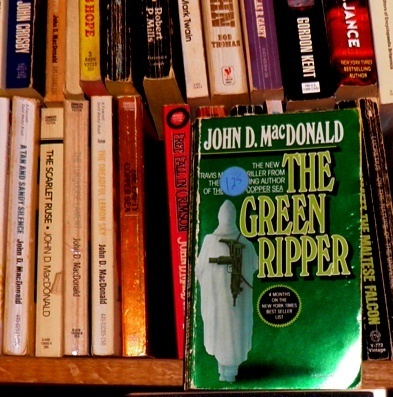
The Green Ripper
Beautiful girls always grace the Florida beaches, strolling, sailing, relaxing at the many parties on Travis McGee's houseboat, The Busted Flush. McGee was too smart--and had been around too long--for many of them to touch his heart. Now, however, there was Gretel. She had discovered the key to McGee--to all of him--and now he had something to hope for. Then, terribly, unexpectedly, she was dead. From a mysterious illness, or so they said. But McGee knew the truth, that Gretel had been murdered. And now he was out for blood...
320 pages, Mass Market Paperback
First published January 1, 1979
About the author
John D. MacDonald
585 books1,473 followersJohn D. MacDonald was born in Sharon, Pennsylvania, and educated at the Universities of Pennsylvania, Syracuse and Harvard, where he took an MBA in 1939. During WW2, he rose to the rank of Colonel, and while serving in the Army and in the Far East, sent a short story to his wife for sale, successfully. He served in the Office of Strategic Services (O.S.S.) in the China-Burma-India Theater of Operations. After the war, he decided to try writing for a year, to see if he could make a living. Over 500 short stories and 70 novels resulted, including 21 Travis McGee novels.
Following complications of an earlier heart bypass operation, MacDonald slipped into a coma on December 10 and died at age 70, on December 28, 1986, in St. Mary's Hospital in Milwaukee, Wisconsin. He was survived by his wife Dorothy (1911-1989) and a son, Maynard.
In the years since his death MacDonald has been praised by authors as diverse as Stephen King, Spider Robinson, Jimmy Buffett, Kingsley Amis and Kurt Vonnegut, Jr.. Thirty-three years after his passing the Travis McGee novels are still in print.
Following complications of an earlier heart bypass operation, MacDonald slipped into a coma on December 10 and died at age 70, on December 28, 1986, in St. Mary's Hospital in Milwaukee, Wisconsin. He was survived by his wife Dorothy (1911-1989) and a son, Maynard.
In the years since his death MacDonald has been praised by authors as diverse as Stephen King, Spider Robinson, Jimmy Buffett, Kingsley Amis and Kurt Vonnegut, Jr.. Thirty-three years after his passing the Travis McGee novels are still in print.
Ratings & Reviews
Friends & Following
Create a free account to discover what your friends think of this book!
Community Reviews
Displaying 1 - 30 of 272 reviews

July 25, 2015
When I was in college in the late eighties and the Iron Curtain was swaying in the changing wind, I had a political science professor who had ideas about clandestine groups sharing an underground network of training and weapons. He liked to talk to a few of us and said once, chillingly, about how he had proof that South American drug cartels were associated with Middle Eastern groups, their only connection seemingly their pledge to chaos and a new world order under new rules. Then he said the strangest thing of all, “Listen guys, if I ever come up missing or dead, don’t talk about this conversation, won’t be any better for you than it had been for me.”
And then graduation and a job and marriage and kids and years later … 9/11 and everything changed and I remember my old prof telling me about sleeper cells and furtive training and I thought, I’ll be damned – it was like he knew it would happen.
John D. MacDonald published The Green Ripper in 1979, his 18th Travis McGee novel and the one that won the mystery category (in its sole year of contention) The National Book Award. The first thing a reader will notice is the quality of MacDonald’s prose - he’s an exceptional writer.
The Green Ripper finds recurring protagonist Travis McGee in Florida and looking for revenge, which he finds a target for in the form of a religious cult with political and terroristic elements. The heart of the story is a description of a global network of nefarious training and weapons exchange.
MacDonald describes McGee as an adventure hero with some depth. McGee is really a 60s-70s protagonist, I don't see another leading man like him in today's fiction. MacDonald’s ubiquitous social and cultural observation asides make this more than a shoot ‘em up.
Good hero, good story and all held together with good writing. I’ll be back.
And then graduation and a job and marriage and kids and years later … 9/11 and everything changed and I remember my old prof telling me about sleeper cells and furtive training and I thought, I’ll be damned – it was like he knew it would happen.
John D. MacDonald published The Green Ripper in 1979, his 18th Travis McGee novel and the one that won the mystery category (in its sole year of contention) The National Book Award. The first thing a reader will notice is the quality of MacDonald’s prose - he’s an exceptional writer.
The Green Ripper finds recurring protagonist Travis McGee in Florida and looking for revenge, which he finds a target for in the form of a religious cult with political and terroristic elements. The heart of the story is a description of a global network of nefarious training and weapons exchange.
MacDonald describes McGee as an adventure hero with some depth. McGee is really a 60s-70s protagonist, I don't see another leading man like him in today's fiction. MacDonald’s ubiquitous social and cultural observation asides make this more than a shoot ‘em up.
Good hero, good story and all held together with good writing. I’ll be back.

July 2, 2008
When Travis McGee goes undercover it’s usually in a bed with some cute beach bunny, but this time McGee has a more serious reason. REVENGE!
The series has reached 1980 and with the free love and disco days gone McGee has settled down and is in a relationship with Gretel Howard. Just as he’s getting ready to sail off into the sunset with his lady love, Gretel tells McGee about having a chance encounter with a man she’d seen in an odd situation years before. Suddenly, Gretel dies of a mysterious illness. A heartbroken McGee is grieving hard when the appearance of a couple of strangers makes the circumstances of Gretel’s demise seem very sinister.
What’s a Sea Cock to do? Why, pretend to be someone else, go back to the place where Gretel originally met the mystery man and kill a whole bunch of people, of course!
This is a real departure from the rest of the series which usually featured Travis drinking some gin and bedding some babes as he went toe-to-toe with a ne’er-do-well who had swindled somebody. As the Reagan era dawned, it was almost like MacDonald could sense the wave of action heroes on the horizon and wrote a story that casts McGee in the mode.
That means getting Travis involved with a kooky plot featuring spy games and terrorism, and that’s just too much for a character like McGee who was at this best when working the cracks and crevices of American society while lamenting how the system was rigged. Travis even has a couple of moments in this where he admits that he’s over his head, and that even a cynical bastard like him can’t comprehend people willing to commit mass murder for vague ideological concepts.
Still, this one is a milestone in the series because it was such a marked contrast to the rest with the death of Gretel and the huge action movie like ending to it which, looking back now, makes me wonder how many Hollywood types read this and were influenced by the book’s last act. In the end, I think this one stands out for McGee readers just because it was so different from the rest of the series.
On a personal note, this is one of those milestone books in my own reading history. It came out when I was 10, and someone (I think my grandfather.) had a paperback copy laying around. I was at a point where the kiddie books had lost their appeal, and there was no young adult genre at the time so I would try to read the grown-up books with varying degrees of success.
This one intrigued me because of the cover. “Why does that ghost have a gun?” I wondered. And I tried to read it. Man, did I try to read it. But the opening chapter is about the economist Meyer gloomily telling Travis how the world’s dwindling resources and increasing population pretty much mean we’re all doomed. That’s not the kind of thing my young mind was looking for. So I finally gave up and thought I’d never know why that damn ghost had that gun. Years later when I was reading the Travis McGee series and came across The Green Ripper, I knew it instantly. It’s still one of the most iconic covers in my own memory so this one always brings about a rush of nostalgia whenever I see it.
The series has reached 1980 and with the free love and disco days gone McGee has settled down and is in a relationship with Gretel Howard. Just as he’s getting ready to sail off into the sunset with his lady love, Gretel tells McGee about having a chance encounter with a man she’d seen in an odd situation years before. Suddenly, Gretel dies of a mysterious illness. A heartbroken McGee is grieving hard when the appearance of a couple of strangers makes the circumstances of Gretel’s demise seem very sinister.
What’s a Sea Cock to do? Why, pretend to be someone else, go back to the place where Gretel originally met the mystery man and kill a whole bunch of people, of course!
This is a real departure from the rest of the series which usually featured Travis drinking some gin and bedding some babes as he went toe-to-toe with a ne’er-do-well who had swindled somebody. As the Reagan era dawned, it was almost like MacDonald could sense the wave of action heroes on the horizon and wrote a story that casts McGee in the mode.
That means getting Travis involved with a kooky plot featuring spy games and terrorism, and that’s just too much for a character like McGee who was at this best when working the cracks and crevices of American society while lamenting how the system was rigged. Travis even has a couple of moments in this where he admits that he’s over his head, and that even a cynical bastard like him can’t comprehend people willing to commit mass murder for vague ideological concepts.
Still, this one is a milestone in the series because it was such a marked contrast to the rest with the death of Gretel and the huge action movie like ending to it which, looking back now, makes me wonder how many Hollywood types read this and were influenced by the book’s last act. In the end, I think this one stands out for McGee readers just because it was so different from the rest of the series.
On a personal note, this is one of those milestone books in my own reading history. It came out when I was 10, and someone (I think my grandfather.) had a paperback copy laying around. I was at a point where the kiddie books had lost their appeal, and there was no young adult genre at the time so I would try to read the grown-up books with varying degrees of success.
This one intrigued me because of the cover. “Why does that ghost have a gun?” I wondered. And I tried to read it. Man, did I try to read it. But the opening chapter is about the economist Meyer gloomily telling Travis how the world’s dwindling resources and increasing population pretty much mean we’re all doomed. That’s not the kind of thing my young mind was looking for. So I finally gave up and thought I’d never know why that damn ghost had that gun. Years later when I was reading the Travis McGee series and came across The Green Ripper, I knew it instantly. It’s still one of the most iconic covers in my own memory so this one always brings about a rush of nostalgia whenever I see it.

May 4, 2018
Spring is finally here and it's time to work on my tan. John D. MacDonald published twenty-one Travis McGee mysteries (between 1964 and 1984) narrated by his weary "salvage consultant" who often agrees to locate missing persons or items, 52-foot houseboat The Busted Flush docked in Fort Lauderdale serving as McGee's office. MacDonald was one of the earliest authors to use themed titles for their series and his brilliant use of color not only offered a visual motif to help readers distinguish each one, but generated some of my favorite titles: Pale Gray For Guilt, The Long Lavender Look, Cinnamon Skin, etc.
Next up is The Green Ripper. Published in 1979, this entry picks up six months after The Empty Copper Sea, but rather than granting McGee the mobility and resources he's enjoyed in solving previous cases, here he goes on a mission of vengeance with little freedom to move and nothing to survive on but his wits. It's a darker novel and an immensely thrilling one. McGee is introduced aboard The Busted Flush in the winter of his discontent. Meyer has just returned from two months abroad at an economic conference and offers a pessimistic view of where the global economy is headed. Meanwhile, McGee's girlfriend Gretel Howard has moved out, taking a job in the north suburbs in order to maintain the space she feels their relationship needs.
Gretel works at a fitness resort as an instructor and office manager. She confides to McGee that while out on the jogging trail searching for a pin she'd lost, her boss Mr. Ladwigg raced his Toyota past her toward the airfield. In the car was a man she recognized and who recognized her: a cult leader she knew as Brother Titus. Gretel and her ex-husband confronted Brother Titus five years ago near a commune in California when her sister-in-law joined the so-called Church of the Apocrypha. Before McGee or Meyer investigate, Ladwigg falls dead biking. Gretel then presents at the hospital running a high fever. Her last words are "Trav, I feel so hot. I'm burning up. I feel terrible, Trav. Terrible."
I sought refuge in a child's dreaming. They had spirited her away, mended her, and would soon spring the great surprise upon me. She would come running, laughing, half-crying, saying, "Darling, we were just fooling you a little. That's all. Did we scare you too much? I'm sorry, Trav, dear. So sorry. Take me home."
On the way home she would explain to me how she had outwitted the green ripper. I had read once about a little kid who had overheard some adult conversation and afterward, in the night, had terrible nightmares. He kept telling his people he dreamed about the green ripper coming to get him. They finally figured out that he had heard talk about the grim reaper. I had told Grets about it, and it had found its way into our personal language. It was not possible that the green ripper had gotten her.
Returning to the Bahia Mar Marina from Gretel's memorial service in South Beach Park, McGee discovers two men waiting aboard his boat. They wear three-piece suits and despite their ignorance of marine protocol, convince McGee that they have the leverage to make him talk. They identify themselves as belonging to the Select Committee of Special Resources in the Senate Office Building. McGee answers their questions about his relationship with Gretel, omitting her sighting of Brother Titus. Something foreign in the dress and manner of his inquisitors strikes McGee as odd, and when Meyer checks them out, discovers no such committee or agents exist.
McGee and Meyer visit Gretel's employers and discover that these inquisitors showed up at the resort, using different names and questioning the office about an airplane that touched down there, whether anyone else but Ladwigg knew who was aboard. McGee and Meyer discover that before his death, Ladwigg quietly sold twenty acres to a consortium from Brussels. Meyer concludes that someone trying to cover all traces of Brother Titus murdered Ladwigg and Gretel with a toxin. McGee is dubious, but when he's summoned to a nearby hotel for a clandestine Q&A session with two real government agents investigating the spycraft in Ladwigg and Gretel's deaths, foul play is confirmed.
McGee hops a flight to San Francisco to bury Gretel's ashes at her family plot. Armed with a fake ID under the name "Thomas McGraw," cash and a background he's created for herself as a commercial fisherman, McGee heads to Ukiah and finds his way to the Church of the Apocrypha commune. He encounters seven able-bodied men and two women on patrol, armed with automatic weapons and allows himself to be taken prisoner. Claiming to be on a search for his missing daughter, McGee stays alive by impressing upon the cult leader, the infirm Brother Persival, that he knows seamanship and explosives and might be of use to them. McGee learns of the cult's capabilities, plans, links to foreign financing and imagines discussing it with his murdered girlfriend.
It has nothing to do with me, I told Gretel. I never think about stuff like this. It hurts my head. I think about the blue sea and tan ladies and straight gin with lots of ice. I think about how high out of the water a marlin might go, and how much of Meyer's chili I can eat, and how very good piano sounds in the nighttime. I think about swimming until I hurt, running until I wheeze, driving good cars and good boats and good bargains. Sure, I do my little knightlike thing, restoring goodies to the people from whom they were improperly wrested, doing battle with the genuinely evil bastards who prey on the gullible, helpless, and innocent. I was to keep on doing that from time to time, to support you and me, girl, in the style we like best, if you had consented. I know from nothing about terrorism, funny churches, and exotic murder weapons, like the one they killed you with.
But here I am. In a sense, I was hunting for you.
Published in a time when the Symbionese Liberation Army were grabbing headlines, the PLO was hijacking airlines and global economic collapse wasn't out of the question, John D. MacDonald's eighteenth entry in the Travis McGee series is a page turner, using the specter of domestic terrorism by groups who knew what they were doing as a plot engine. Even if though this scenario remains dark fantasy and seems far fetched today, the novel is a white knuckler all the way. The Men In Black who show up on The Busted Flush and the web of Murder Inc. proves an elusive enemy for McGee, aging in the ring in roughly the same time span as Muhammad Ali.
I had tried to give myself another advantage too. During the field exercises I had tried to keep going when it called for endurance, but I had dogged it when it was something calling for quick. I had blundered around when the order was for silent approach. When we ran the improvised obstacle course, I arranged to finish almost last every time. In unarmed combat, I let the men drop me with a certain amount of fuss and trouble. I was rounding off into top shape, putting on a nice edge. As I clumsied along, I studied each of them to see their flaws. Barry was muscle-bound from too much body building. Haris was very quick but without adequate physical strength. Sammy was too wildly energetic. He didn't plant himself for leverage, and he tried to move in too many directions at once. Ahman was quick and strong and crafty, once he had made up his mind, but he was prone to fatal hesitations. Chuck was the best of them, without a weakness except perhaps a tendency to exhibit more grace than was required, to turn his best profile toward an imaginary camera, to leap a little higher, spin more quickly than the exercise required.
Limiting his scope to real estate scams, drug smuggling and murder in South Florida would've doomed MacDonald to writing the same book over and over, so in spite of the far-fetched plot introduced here, I welcomed the change of scenery and stakes. McGee is stripped not only of his ocean, but of his Dr. Watson, with Meyer remaining behind in Fort Lauderdale, which puts the detective on a high wire without a net. Though set out on a mission of revenge, McGee still has to put in detective work to stay alive. As an undercover thriller, MacDonald does a terrific job mixing false identity and subterfuge in the cocktail shaker and producing another delicious drink: lean, mean and imaginative.
Next up is The Green Ripper. Published in 1979, this entry picks up six months after The Empty Copper Sea, but rather than granting McGee the mobility and resources he's enjoyed in solving previous cases, here he goes on a mission of vengeance with little freedom to move and nothing to survive on but his wits. It's a darker novel and an immensely thrilling one. McGee is introduced aboard The Busted Flush in the winter of his discontent. Meyer has just returned from two months abroad at an economic conference and offers a pessimistic view of where the global economy is headed. Meanwhile, McGee's girlfriend Gretel Howard has moved out, taking a job in the north suburbs in order to maintain the space she feels their relationship needs.
Gretel works at a fitness resort as an instructor and office manager. She confides to McGee that while out on the jogging trail searching for a pin she'd lost, her boss Mr. Ladwigg raced his Toyota past her toward the airfield. In the car was a man she recognized and who recognized her: a cult leader she knew as Brother Titus. Gretel and her ex-husband confronted Brother Titus five years ago near a commune in California when her sister-in-law joined the so-called Church of the Apocrypha. Before McGee or Meyer investigate, Ladwigg falls dead biking. Gretel then presents at the hospital running a high fever. Her last words are "Trav, I feel so hot. I'm burning up. I feel terrible, Trav. Terrible."
I sought refuge in a child's dreaming. They had spirited her away, mended her, and would soon spring the great surprise upon me. She would come running, laughing, half-crying, saying, "Darling, we were just fooling you a little. That's all. Did we scare you too much? I'm sorry, Trav, dear. So sorry. Take me home."
On the way home she would explain to me how she had outwitted the green ripper. I had read once about a little kid who had overheard some adult conversation and afterward, in the night, had terrible nightmares. He kept telling his people he dreamed about the green ripper coming to get him. They finally figured out that he had heard talk about the grim reaper. I had told Grets about it, and it had found its way into our personal language. It was not possible that the green ripper had gotten her.
Returning to the Bahia Mar Marina from Gretel's memorial service in South Beach Park, McGee discovers two men waiting aboard his boat. They wear three-piece suits and despite their ignorance of marine protocol, convince McGee that they have the leverage to make him talk. They identify themselves as belonging to the Select Committee of Special Resources in the Senate Office Building. McGee answers their questions about his relationship with Gretel, omitting her sighting of Brother Titus. Something foreign in the dress and manner of his inquisitors strikes McGee as odd, and when Meyer checks them out, discovers no such committee or agents exist.
McGee and Meyer visit Gretel's employers and discover that these inquisitors showed up at the resort, using different names and questioning the office about an airplane that touched down there, whether anyone else but Ladwigg knew who was aboard. McGee and Meyer discover that before his death, Ladwigg quietly sold twenty acres to a consortium from Brussels. Meyer concludes that someone trying to cover all traces of Brother Titus murdered Ladwigg and Gretel with a toxin. McGee is dubious, but when he's summoned to a nearby hotel for a clandestine Q&A session with two real government agents investigating the spycraft in Ladwigg and Gretel's deaths, foul play is confirmed.
McGee hops a flight to San Francisco to bury Gretel's ashes at her family plot. Armed with a fake ID under the name "Thomas McGraw," cash and a background he's created for herself as a commercial fisherman, McGee heads to Ukiah and finds his way to the Church of the Apocrypha commune. He encounters seven able-bodied men and two women on patrol, armed with automatic weapons and allows himself to be taken prisoner. Claiming to be on a search for his missing daughter, McGee stays alive by impressing upon the cult leader, the infirm Brother Persival, that he knows seamanship and explosives and might be of use to them. McGee learns of the cult's capabilities, plans, links to foreign financing and imagines discussing it with his murdered girlfriend.
It has nothing to do with me, I told Gretel. I never think about stuff like this. It hurts my head. I think about the blue sea and tan ladies and straight gin with lots of ice. I think about how high out of the water a marlin might go, and how much of Meyer's chili I can eat, and how very good piano sounds in the nighttime. I think about swimming until I hurt, running until I wheeze, driving good cars and good boats and good bargains. Sure, I do my little knightlike thing, restoring goodies to the people from whom they were improperly wrested, doing battle with the genuinely evil bastards who prey on the gullible, helpless, and innocent. I was to keep on doing that from time to time, to support you and me, girl, in the style we like best, if you had consented. I know from nothing about terrorism, funny churches, and exotic murder weapons, like the one they killed you with.
But here I am. In a sense, I was hunting for you.
Published in a time when the Symbionese Liberation Army were grabbing headlines, the PLO was hijacking airlines and global economic collapse wasn't out of the question, John D. MacDonald's eighteenth entry in the Travis McGee series is a page turner, using the specter of domestic terrorism by groups who knew what they were doing as a plot engine. Even if though this scenario remains dark fantasy and seems far fetched today, the novel is a white knuckler all the way. The Men In Black who show up on The Busted Flush and the web of Murder Inc. proves an elusive enemy for McGee, aging in the ring in roughly the same time span as Muhammad Ali.
I had tried to give myself another advantage too. During the field exercises I had tried to keep going when it called for endurance, but I had dogged it when it was something calling for quick. I had blundered around when the order was for silent approach. When we ran the improvised obstacle course, I arranged to finish almost last every time. In unarmed combat, I let the men drop me with a certain amount of fuss and trouble. I was rounding off into top shape, putting on a nice edge. As I clumsied along, I studied each of them to see their flaws. Barry was muscle-bound from too much body building. Haris was very quick but without adequate physical strength. Sammy was too wildly energetic. He didn't plant himself for leverage, and he tried to move in too many directions at once. Ahman was quick and strong and crafty, once he had made up his mind, but he was prone to fatal hesitations. Chuck was the best of them, without a weakness except perhaps a tendency to exhibit more grace than was required, to turn his best profile toward an imaginary camera, to leap a little higher, spin more quickly than the exercise required.
Limiting his scope to real estate scams, drug smuggling and murder in South Florida would've doomed MacDonald to writing the same book over and over, so in spite of the far-fetched plot introduced here, I welcomed the change of scenery and stakes. McGee is stripped not only of his ocean, but of his Dr. Watson, with Meyer remaining behind in Fort Lauderdale, which puts the detective on a high wire without a net. Though set out on a mission of revenge, McGee still has to put in detective work to stay alive. As an undercover thriller, MacDonald does a terrific job mixing false identity and subterfuge in the cocktail shaker and producing another delicious drink: lean, mean and imaginative.

August 12, 2024
It's Travis McGee. Nuff said.

February 22, 2025
"It has nothing to do with me, I told Gretel. I never think about stuff like this. It hurts my head. I think about the blue sea and tan ladies and straight gin with lots of ice. I think about how high out of the water a marlin might go, and how much of Meyer’s chili I can eat, and how very good piano sounds in the nighttime. I think about swimming until I hurt, running until I wheeze, driving good cars and good boats and good bargains. Sure, I do my little knight-like thing, restoring goodies to the people from whom they were improperly wrested, doing battle with the genuinely evil bastards who prey on the gullible, helpless, and innocent. I was going to keep on doing that from time to time,"
Travis McGee is a part-time investigator and full-time “salvage consultant” who for a fee will find what you are missing. Early novels are set squarely in the Sixties and find him aboard his houseboat, The Busted Flush, secured to a pier in Fort Lauderdale. When he isn’t in the midst of an investigation he says he is either out nights with the local ladies in the summer months or with the “snowbirds” in the winter months. He is definitely a creature of a certain time and place.
There are many of these novels (each with a particular theme of color) but this is one of the last of the series written close to 1980. McGee has grown older and, perhaps, matured. He is now in a monogamous relationship with a woman named Gretel. To further place this story in the timeline of recent history his friend Meyer is just back from a world economic meeting in Switzerland with the following report of doom and gloom.
"“How did the conference go?” I asked. He shook a weary head.
“These are bad days for an economist, my friend. We have gone past the frontiers of theory. There is nothing left but one huge ugly fact.”
“Which is?”
“There is a debt of perhaps two trillion dollars out there, owed by governments to governments, by governments to banks, and there is not one chance in hell it can ever be paid back. There is not enough productive capacity in the world, plus enough raw materials, to provide maintenance of plant plus enough overage even to keep up with the mounting interest.”
“What happens? It gets written off?”
He looked at me with a pitying expression. “All the major world currencies will collapse. Trade will cease. Without trade, without the mechanical-scientific apparatus running, the planet won’t support its four billion people, or perhaps even half that. Agribusiness feeds the world. Hydrocarbon utilization heats and houses and clothes the people. There will be fear, hate, anger, death. The new barbarism. There will be plague and poison. And then the new Dark Ages.”
“Should I pack?”
“Go ahead. Scoff. What the sane people and sane governments are trying to do is scuffle a little more breathing space, a little more time, before the collapse.” “How much time have we got?” “If nobody pushes the wrong button or puts a bomb under the wrong castle, I would give us five more years at worst, twelve at best. What is triggering it is the crisis of reduced expectations. All over the world people are suddenly coming to realize that their children and grandchildren are going to have it worse than they did, that the trend line is down. So they want to blame somebody. They want to hoot and holler in the streets and burn something down.”
“Whose side are you on?”
“I’m one of the scufflers. Cut and paste. Fix the world with paper clips and rubber bands.”
“Are you trying to depress me, old buddy?”"
Yes, this was a time of crisis when interest rates skyrocketed and things looked dire. Interesting to me because we survived and the world now has twice the human population it did then.
The story moves at a fast pace with the seriousness of Travis’ relationship with Gretel being at the core. The Fort Lauderdale area is in full "real estate development mode" and Gretel is involved in a very posh venture that has both large residences for sale and the accompanying areas for recreation and other community activities.
No sooner do we learn that she has seen a very unusual man out of her past, then she is dead and McGee is left without the future he had contemplated and the feeling that her death might have not been accidental.
"“We had a lot of intense time alone with each other. A couple of months aboard my houseboat. We talked a lot. We opened up to each other all the way. We tracked each other from childhood right on up to the moment. She was as apolitical as I am. We both lived in the world, and didn’t get too red-hot about who was running it. Maybe that’s wrong in your eyes. But it is the way she was and the way I am.”"
Some things change, but the value of history is that much doesn’t. I was chilled by some of McDonald’s details of what terrorism was like then, because so much is the same.
"“It’s hard to see the point in doing it at all.”
“Doing what?”
“Well, killing innocent people.”
“Innocent of what, Brother? If you kill soldiers or police, it doesn’t make enough difference. They signed up to take that risk. The people in this country are oppressed and they don’t know it, and they don’t give a damn. All the rest of the world is involved in a bitter struggle, and here the people are fat, happy, and dumb. The captive press and the television keep telling them they are the best people in the world in the best country in the world. The dirt and pain and sickness and poverty are all covered up. No person has a chance against the capitalist bureaucracy. We’ve learned that little attacks here and there are meaningless. Like fighting a pillow. They actually think they’re free, the fools, even while they are supporting a regime that exports arms all over the world to the other oppressors. We have to make this fat dumb happy public sit up and take notice of the hidden tyranny that is oppressing them. How do we do that?”
Such a lot of it was by rote, repeated from memory in a sentence structure alien to her usual patterns. “How do we do it, Sister?”
“We make the oppressors visible to the people by giving them reason to show how cruel and tough they can be. We force them to react. Like Chicago and Kent State, but much much more.”
“By going out and killing people?”
“That isn’t the purpose, Brother. To kill people. Our civilization has gotten too complicated. It’s full of machines and plastics. Brother Persival says it is very sick, and like a sick person, it can’t survive if a lot of other things happen to it.”
“Such as?”
“Oh, we won’t go after things that are really protected, like army places and shipyards and nuclear power plants and government buildings. That’s dumb. You can bring everything tumbling down by going after things that would take years to fix. Big gas pipelines and oil pipelines. Bridges and tunnels and big computer places. Refineries and chemical plants and control towers. TV stations and newspaper pressrooms. Blow ’em up and burn ’em down. Targets of opportunity. Anyway, it’s all being worked out. And then we’ll know what our part of it is."
And now so much can be done with A. I. and computers.
4
Travis McGee is a part-time investigator and full-time “salvage consultant” who for a fee will find what you are missing. Early novels are set squarely in the Sixties and find him aboard his houseboat, The Busted Flush, secured to a pier in Fort Lauderdale. When he isn’t in the midst of an investigation he says he is either out nights with the local ladies in the summer months or with the “snowbirds” in the winter months. He is definitely a creature of a certain time and place.
There are many of these novels (each with a particular theme of color) but this is one of the last of the series written close to 1980. McGee has grown older and, perhaps, matured. He is now in a monogamous relationship with a woman named Gretel. To further place this story in the timeline of recent history his friend Meyer is just back from a world economic meeting in Switzerland with the following report of doom and gloom.
"“How did the conference go?” I asked. He shook a weary head.
“These are bad days for an economist, my friend. We have gone past the frontiers of theory. There is nothing left but one huge ugly fact.”
“Which is?”
“There is a debt of perhaps two trillion dollars out there, owed by governments to governments, by governments to banks, and there is not one chance in hell it can ever be paid back. There is not enough productive capacity in the world, plus enough raw materials, to provide maintenance of plant plus enough overage even to keep up with the mounting interest.”
“What happens? It gets written off?”
He looked at me with a pitying expression. “All the major world currencies will collapse. Trade will cease. Without trade, without the mechanical-scientific apparatus running, the planet won’t support its four billion people, or perhaps even half that. Agribusiness feeds the world. Hydrocarbon utilization heats and houses and clothes the people. There will be fear, hate, anger, death. The new barbarism. There will be plague and poison. And then the new Dark Ages.”
“Should I pack?”
“Go ahead. Scoff. What the sane people and sane governments are trying to do is scuffle a little more breathing space, a little more time, before the collapse.” “How much time have we got?” “If nobody pushes the wrong button or puts a bomb under the wrong castle, I would give us five more years at worst, twelve at best. What is triggering it is the crisis of reduced expectations. All over the world people are suddenly coming to realize that their children and grandchildren are going to have it worse than they did, that the trend line is down. So they want to blame somebody. They want to hoot and holler in the streets and burn something down.”
“Whose side are you on?”
“I’m one of the scufflers. Cut and paste. Fix the world with paper clips and rubber bands.”
“Are you trying to depress me, old buddy?”"
Yes, this was a time of crisis when interest rates skyrocketed and things looked dire. Interesting to me because we survived and the world now has twice the human population it did then.
The story moves at a fast pace with the seriousness of Travis’ relationship with Gretel being at the core. The Fort Lauderdale area is in full "real estate development mode" and Gretel is involved in a very posh venture that has both large residences for sale and the accompanying areas for recreation and other community activities.
No sooner do we learn that she has seen a very unusual man out of her past, then she is dead and McGee is left without the future he had contemplated and the feeling that her death might have not been accidental.
"“We had a lot of intense time alone with each other. A couple of months aboard my houseboat. We talked a lot. We opened up to each other all the way. We tracked each other from childhood right on up to the moment. She was as apolitical as I am. We both lived in the world, and didn’t get too red-hot about who was running it. Maybe that’s wrong in your eyes. But it is the way she was and the way I am.”"
Some things change, but the value of history is that much doesn’t. I was chilled by some of McDonald’s details of what terrorism was like then, because so much is the same.
"“It’s hard to see the point in doing it at all.”
“Doing what?”
“Well, killing innocent people.”
“Innocent of what, Brother? If you kill soldiers or police, it doesn’t make enough difference. They signed up to take that risk. The people in this country are oppressed and they don’t know it, and they don’t give a damn. All the rest of the world is involved in a bitter struggle, and here the people are fat, happy, and dumb. The captive press and the television keep telling them they are the best people in the world in the best country in the world. The dirt and pain and sickness and poverty are all covered up. No person has a chance against the capitalist bureaucracy. We’ve learned that little attacks here and there are meaningless. Like fighting a pillow. They actually think they’re free, the fools, even while they are supporting a regime that exports arms all over the world to the other oppressors. We have to make this fat dumb happy public sit up and take notice of the hidden tyranny that is oppressing them. How do we do that?”
Such a lot of it was by rote, repeated from memory in a sentence structure alien to her usual patterns. “How do we do it, Sister?”
“We make the oppressors visible to the people by giving them reason to show how cruel and tough they can be. We force them to react. Like Chicago and Kent State, but much much more.”
“By going out and killing people?”
“That isn’t the purpose, Brother. To kill people. Our civilization has gotten too complicated. It’s full of machines and plastics. Brother Persival says it is very sick, and like a sick person, it can’t survive if a lot of other things happen to it.”
“Such as?”
“Oh, we won’t go after things that are really protected, like army places and shipyards and nuclear power plants and government buildings. That’s dumb. You can bring everything tumbling down by going after things that would take years to fix. Big gas pipelines and oil pipelines. Bridges and tunnels and big computer places. Refineries and chemical plants and control towers. TV stations and newspaper pressrooms. Blow ’em up and burn ’em down. Targets of opportunity. Anyway, it’s all being worked out. And then we’ll know what our part of it is."
And now so much can be done with A. I. and computers.
4

April 15, 2019
3.5 stars
One of my least favourite McGees.
Cults - not my thing.
Religion - not my thing.
Vengeance - okay, I kind of like it if it's done well. It's only mediocre here.
As usual with my reviews, please first read the publisher’s blurb/summary of the book. Thank you.
This starts well, with McGee and Gretel happy and safe. McGee's maturity and growth are wonderful with Gretel. A preview of his future growth in romantic relationships.
Later the book turns into a revenge piece, a "one-off avenging angel McGee". The body count is unusually high.
I was not keen on the militaristic cult conspiracy stuff - personal tastes here.
The climax action is pretty good, but the resolution is still a bit unsatisfying.
Notes and quotes:
McGee pines for Gretel -
All the places I hadn't been with her, I would never be with her. And at those unknown places, at unknown times, there would be less of me present. There can be few things worse than unconsciously saving things up to tell someone you will never see again.
-
McGee prepares vengeance for the murder of his love -
One down and nine to go. This time, my dead love, I am not doing my knightly routine. I have shelved that as inappropriate for the occasion. The old tin-can knight had too many compunctions, scruples, whatevers. For this caper, I am the iceman. I have come here and brought the ice. It is a delivery service. One time only.
...playtoy of Lady Vivian Stanley-Tucker of St. Kitts. It was a fifty-three-foot Magnum Maltese Flybridge cruiser

Full size image here
No need for words. Her eyes were wishing me luck and long life. I had outwitted monsters.
Bonus. From the 1970 "Darker Than Amber" movie starring Rod Taylor, pictures of the producers' ideas of McGee's "The Busted Flush":

Full size image here

Full size image here

Full size image here
And finally, two great blogs about John D. MacDonald, McGee and the rumoured-never-written novel where McGee dies"...
The Birth of Travis McGee (fascinating)
http://thetrapofsolidgold.blogspot.co...
"Black Border for McGee" (rumours surrounding a final book, never published)
http://thetrapofsolidgold.blogspot.co...
.
One of my least favourite McGees.
Cults - not my thing.
Religion - not my thing.
Vengeance - okay, I kind of like it if it's done well. It's only mediocre here.
As usual with my reviews, please first read the publisher’s blurb/summary of the book. Thank you.
This starts well, with McGee and Gretel happy and safe. McGee's maturity and growth are wonderful with Gretel. A preview of his future growth in romantic relationships.
Later the book turns into a revenge piece, a "one-off avenging angel McGee". The body count is unusually high.
I was not keen on the militaristic cult conspiracy stuff - personal tastes here.
The climax action is pretty good, but the resolution is still a bit unsatisfying.
Notes and quotes:
McGee pines for Gretel -
All the places I hadn't been with her, I would never be with her. And at those unknown places, at unknown times, there would be less of me present. There can be few things worse than unconsciously saving things up to tell someone you will never see again.
-
McGee prepares vengeance for the murder of his love -
One down and nine to go. This time, my dead love, I am not doing my knightly routine. I have shelved that as inappropriate for the occasion. The old tin-can knight had too many compunctions, scruples, whatevers. For this caper, I am the iceman. I have come here and brought the ice. It is a delivery service. One time only.
...playtoy of Lady Vivian Stanley-Tucker of St. Kitts. It was a fifty-three-foot Magnum Maltese Flybridge cruiser
Full size image here
No need for words. Her eyes were wishing me luck and long life. I had outwitted monsters.
Bonus. From the 1970 "Darker Than Amber" movie starring Rod Taylor, pictures of the producers' ideas of McGee's "The Busted Flush":
Full size image here
Full size image here
Full size image here
And finally, two great blogs about John D. MacDonald, McGee and the rumoured-never-written novel where McGee dies"...
The Birth of Travis McGee (fascinating)
http://thetrapofsolidgold.blogspot.co...
"Black Border for McGee" (rumours surrounding a final book, never published)
http://thetrapofsolidgold.blogspot.co...
.

January 7, 2010
While I can and do appreciate that the eighteenth instalment of John D. MacDonald's Travis McGee mysteries is engagingly told and features a both frightening and yes, strangely engaging scenario, and while I am also well aware that John D. MacDonald's The Green Ripper has actually even won multiple awards, I was and still remain profoundly disappointed with and by this novel, not so much because of the storyline itself, not because of the featured themes and writing style (although how Travis McGee infiltrates a cult in order to avenge the murder of his lover was and remains more than a bit creepy and frightening), but simply and utterly because my main reason for so much adoring John D. MacDonald's Travis McGee series, my literary crush Meyer, really only appears in the first quarter of The Green Ripper and then completely and sadly disappears once McGee embarks on his solitary and lonely quest for revenge.
And yes, if I choose to consider The Green Ripper as a novel, as a tale in and of itself, I can in fact very much appreciate John D. MacDonald's genius and that he has indeed created with this here story a both frightening and intensely personal foray into the dark depths of Travis McGee's heart and soul, how his love for Gretel and his despair when she dies (when she is murdered) causes him to come apart to such an extent that only absolute and utter revenge against her killers (no matter who they are, no matter how well connected and powerful they might be) will suffice, there is for me on a purely personal and potential reading enjoyment level just not enough Meyer (not enough of my special literary friend and companion Meyer) to make me in any way really enjoy The Green Ripper to any extent. And thus, while I do consider the novel a successful offering from John D. MacDonald's pen and a worthy inclusion in the Travis McGee series, for me as a total and utter fan of Meyer, the fact that during the main part of The Green Ripper, he is for all intents and purposes non existent and basically missing in action, this makes me choose but a rather grudging two star ranking (the intensity of description, the astute authorial observations of and on humanity and humankind's strengths and weaknesses, even the fact that The Green Ripper is seemingly considered by many as one the best instalments in John D. MacDonald's Travis MacGee series quite and majorly notwithstanding).
And yes, if I choose to consider The Green Ripper as a novel, as a tale in and of itself, I can in fact very much appreciate John D. MacDonald's genius and that he has indeed created with this here story a both frightening and intensely personal foray into the dark depths of Travis McGee's heart and soul, how his love for Gretel and his despair when she dies (when she is murdered) causes him to come apart to such an extent that only absolute and utter revenge against her killers (no matter who they are, no matter how well connected and powerful they might be) will suffice, there is for me on a purely personal and potential reading enjoyment level just not enough Meyer (not enough of my special literary friend and companion Meyer) to make me in any way really enjoy The Green Ripper to any extent. And thus, while I do consider the novel a successful offering from John D. MacDonald's pen and a worthy inclusion in the Travis McGee series, for me as a total and utter fan of Meyer, the fact that during the main part of The Green Ripper, he is for all intents and purposes non existent and basically missing in action, this makes me choose but a rather grudging two star ranking (the intensity of description, the astute authorial observations of and on humanity and humankind's strengths and weaknesses, even the fact that The Green Ripper is seemingly considered by many as one the best instalments in John D. MacDonald's Travis MacGee series quite and majorly notwithstanding).

August 4, 2012
The pinnacle of the Travis McGee sequence?
That is my question mark added to the statement made by HRF Keating in his Crime and Mystery: The 100 Best Books; he goes on to compare the latter MacDonald and McGee novels to none other than Charles Dickens.
I quite happily admit to never having read a Dickens novel despite my education in the English school system but he has a fair point in attributing MacDonald with those qualities. The death of Gretel the one true love of Travis McGee that is the catalyst for his adventure is drawn out and painted in such a way that you would be forgiven for thinking that this is a different writer to the one that crafted the first Travis McGee novel The Deep Blue Good-bye. Long gone are the misogynistic statements and internal monologues, replaced by a world weary older McGee whose opinions on the state of the world (in the late 70s) are much more precient and pertinent to the telling of his story.
The ability of MacDonald to create a real sense of place is much more evident after reading more than one of his novels and has made me reconsider my earlier rating for the first book. Whereas McGee existed in a lazy Floridian haze of booze, boats, broads and a word for sun that begins with B to help with my extensive alliteration, the world of The Green Ripper is darker and colder, it's less hospitable and matches the reflective, pensive and determined mood of McGee perfectly.
The final section is filled with page after page of description, the same approach towards the final confrontation as used in Deep Blue, and once more due to the extravagance of the word count and the extensive technical know how contained within it, I couldn't have cared less. There was a lot of violence and things happen to McGee and others that it might be better to have your mind wash over but I can't help but feel I should have been rooting for the home team, immersed in the action, instead of counting pages to the end.
Oddly I think I preferred McGee when he was more happy-go-lucky and an abuser of women. He was more fun that way.
That is my question mark added to the statement made by HRF Keating in his Crime and Mystery: The 100 Best Books; he goes on to compare the latter MacDonald and McGee novels to none other than Charles Dickens.
It is not unfair to compare MacDonald to Dickens the novelist of feelings, of sentiment, and of sentimentality
I quite happily admit to never having read a Dickens novel despite my education in the English school system but he has a fair point in attributing MacDonald with those qualities. The death of Gretel the one true love of Travis McGee that is the catalyst for his adventure is drawn out and painted in such a way that you would be forgiven for thinking that this is a different writer to the one that crafted the first Travis McGee novel The Deep Blue Good-bye. Long gone are the misogynistic statements and internal monologues, replaced by a world weary older McGee whose opinions on the state of the world (in the late 70s) are much more precient and pertinent to the telling of his story.
The ability of MacDonald to create a real sense of place is much more evident after reading more than one of his novels and has made me reconsider my earlier rating for the first book. Whereas McGee existed in a lazy Floridian haze of booze, boats, broads and a word for sun that begins with B to help with my extensive alliteration, the world of The Green Ripper is darker and colder, it's less hospitable and matches the reflective, pensive and determined mood of McGee perfectly.
The final section is filled with page after page of description, the same approach towards the final confrontation as used in Deep Blue, and once more due to the extravagance of the word count and the extensive technical know how contained within it, I couldn't have cared less. There was a lot of violence and things happen to McGee and others that it might be better to have your mind wash over but I can't help but feel I should have been rooting for the home team, immersed in the action, instead of counting pages to the end.
Oddly I think I preferred McGee when he was more happy-go-lucky and an abuser of women. He was more fun that way.

June 12, 2018
Will review later. Straight forward crime/espionage novel. Less crime than normal McGee, more espionage. Macro not Micro.

April 20, 2018
Travis McGee is living in bliss with his Gretel, even if she has taken a job and that means she is no longer everyday living with him. Shortly after her boss dies in a bicycle accident she passes away in an unexplained sickness.
When suits visit him and his friend Meyer, McGee decides to look up the root of his girlfriends death and finds more than he expected. This is a novel about revenge and working through a loss that was more severe as Travis McGee did expect.
A short and powerful & economic written novel by John D. MacDonald which goes straight to the motives of his leading character and gives an insightful view. Any lesser writer would have chosen for a door stopper of a thriller were MacDonald chooses for a personal and limited approach of his character. That makes this book very readable.
A great Travis McGee thriller about a man who is neither policeman of PI.
When suits visit him and his friend Meyer, McGee decides to look up the root of his girlfriends death and finds more than he expected. This is a novel about revenge and working through a loss that was more severe as Travis McGee did expect.
A short and powerful & economic written novel by John D. MacDonald which goes straight to the motives of his leading character and gives an insightful view. Any lesser writer would have chosen for a door stopper of a thriller were MacDonald chooses for a personal and limited approach of his character. That makes this book very readable.
A great Travis McGee thriller about a man who is neither policeman of PI.

July 9, 2022
One of my favorites in the series because it forces Travis McGee to go all-in on a dark journey to avenge the murder of Gretel, the woman he fell in love with at the end of The Empty Copper Sea. The last quarter of this novel features one of MacDonald's best climactic concluding sequences. Before we get there, however, we start with the love struck McGee and the quick death of Gretel, gone by the end of chapter two. What follows is a brief investigation by McGee and Meyer, which prompts two different teams of federal-ish agents (one bogus, one real) to investigate McGee and Meyer. It all dead ends and a despondent McGee is told by everyone to give up and move on. McGee's response is to drop out of his life, which includes sending Meyer a letter with instructions about what to do if/when McGee doesn't come back, and to chase down one sliver of a clue. The middle has McGee assume a fake identity and infiltrate the militant wing of the Church of Apocrypha. At first McGee is locked up, but eventually the terrorists start trusting him and he begins training with them, which gives him the chance to learn each of their strengths and weaknesses. MacDonald jumps right to the extended conclusion and over the next fifty or so pages McGee battles with and proceeds to (still three books left in the series, so not a spoiler alert) eliminate all eleven terrorists using rocks, knives, guns, grenades, and probably a head butt or two. And thus, Gretel avenged, McGee is healed and ready to return to his houseboat moored in slip F-18, Bahia Mar marina, Fort Lauderdale, and resume his old life as a beach bum and salvage consultant. MacDonald delivers on all levels and you needn't be familiar with the rest of the series to enjoy this because it also works as stand alone thriller.

May 8, 2012
Okay now this was more like it. After the disappointing A Tan and Sandy Silence I was glad to see that Mr. McGee was capable of being one of the great Last Action Heroes. I'll keep this one short. Once again Mr. McGee loses his ladylove (If I was a lady I would run away as fast as I could from Travis. The life expectancy is not good)and he goes looking for the culprits. He finds a group of terrorists posing as a cult in California. They have plans for mayhem, but instead McGee deals out some mayhem to them. There is a large amount of physical heroics, lots of Uzi's being fired and bullets impacting into bodies. Very different when compared to the other McGee novels and foreshadowing the 1980's action hero story.
I liked it. It's as if MacDonald was saying that the sixties were long gone and it was time to bury the seventies. Enough with all the cults and radicals. They want to play then they better come prepared because Travis McGee is mad as hell, he's got a sub-machine gun, and he's not afraid to use it.
Yeah that's what I'm talking about.
I liked it. It's as if MacDonald was saying that the sixties were long gone and it was time to bury the seventies. Enough with all the cults and radicals. They want to play then they better come prepared because Travis McGee is mad as hell, he's got a sub-machine gun, and he's not afraid to use it.
Yeah that's what I'm talking about.

January 13, 2013
Full disclosure: this is one of my all-time favorite novels, one of my all-time favorite thrillers, and my favorite Travis McGee novel. Maybe I’m biased, but I don’t think so.
You could begin the series with this book, and many people have. However, doing that gave some readers the wrong impression of Travis McGee. You should really start with other books in the series: The Scarlet Ruse, Pale Gray for Guilt, The Turquoise Lament, and Dress Her in Indigo to see how the events in The Green Ripper change the character. This change is the crux of the novel, and impacts the later books in the series. I have been a fan of John D. MacDonald and McGee since I first read The Dreadful Lemon Sky and then enthusiastically read through the series.
When this novel first appeared in 1979, local supermarket chain Farm Fresh had nicely stocked, deeply discounted book departments. They had all the current bestsellers and new releases in hardcover and paperback, and a good backlist. They even handled special orders. Their discounts allowed me to afford hardcover books. I snatched this one up, read it one Saturday afternoon, and I was also changed. This was my first, and maybe the first, post Jonestown thriller.
One evening in mid-November 1978, I was watching television in my apartment in Va Beach, when the network interrupted programming with a special bulletin. California Congressman Leo Ryan had been killed while on a fact finding mission in Guyana. That was it. Only a few little bits of information were released over the weekend. The true horror did not start to become clear until after Monday when we began to hear about the shootout at the Port Kaituma airstrip where the Congressman and others were killed, and the more than 900 bodies found by the first people into Jonestown itself.
It was revealed to be a mass murder/suicide at the People’s Temple Agricultural Project. The People’s Temple was led by Jim Jones. It was the greatest loss of American life in a deliberate act ever recorded, and remained so until 9/11. The increasingly gruesome news reports, the iconic Time and Newsweek cover images, and two quickie paperbacks by the editors of the Washington Post and the San Francisco Chronicle, ensured this event would always have a tremendous impact on me.
I believe it also affected and inspired John D. MacDonald. In this novel Gretel Howard has just moved out of The Busted Flush, McGee’s houseboat, after living with him there for several weeks, and left a vacuum. He is determined not to let her get away. She means everything to him. Then, while in the capacity of her new job, she is murdered insidiously. Travis McGee is shattered, but determined to catch the killers. Posing as a man who lost his daughter to a fanatical religious cult, he infiltrates the Church of the Apocrypha. They do not trust him. They imprison him. Gradually he gets them to grudgingly trust him, but when he learns the group’s true intentions he realizes he can find depths of savagery even within himself.
This novel won the National Book Award for hardcover mystery in 1980. The dust jacket art became an iconic classic. MacDonald’s message is just as true now as it was then: we must outwit the monsters.
You could begin the series with this book, and many people have. However, doing that gave some readers the wrong impression of Travis McGee. You should really start with other books in the series: The Scarlet Ruse, Pale Gray for Guilt, The Turquoise Lament, and Dress Her in Indigo to see how the events in The Green Ripper change the character. This change is the crux of the novel, and impacts the later books in the series. I have been a fan of John D. MacDonald and McGee since I first read The Dreadful Lemon Sky and then enthusiastically read through the series.
When this novel first appeared in 1979, local supermarket chain Farm Fresh had nicely stocked, deeply discounted book departments. They had all the current bestsellers and new releases in hardcover and paperback, and a good backlist. They even handled special orders. Their discounts allowed me to afford hardcover books. I snatched this one up, read it one Saturday afternoon, and I was also changed. This was my first, and maybe the first, post Jonestown thriller.
One evening in mid-November 1978, I was watching television in my apartment in Va Beach, when the network interrupted programming with a special bulletin. California Congressman Leo Ryan had been killed while on a fact finding mission in Guyana. That was it. Only a few little bits of information were released over the weekend. The true horror did not start to become clear until after Monday when we began to hear about the shootout at the Port Kaituma airstrip where the Congressman and others were killed, and the more than 900 bodies found by the first people into Jonestown itself.
It was revealed to be a mass murder/suicide at the People’s Temple Agricultural Project. The People’s Temple was led by Jim Jones. It was the greatest loss of American life in a deliberate act ever recorded, and remained so until 9/11. The increasingly gruesome news reports, the iconic Time and Newsweek cover images, and two quickie paperbacks by the editors of the Washington Post and the San Francisco Chronicle, ensured this event would always have a tremendous impact on me.
I believe it also affected and inspired John D. MacDonald. In this novel Gretel Howard has just moved out of The Busted Flush, McGee’s houseboat, after living with him there for several weeks, and left a vacuum. He is determined not to let her get away. She means everything to him. Then, while in the capacity of her new job, she is murdered insidiously. Travis McGee is shattered, but determined to catch the killers. Posing as a man who lost his daughter to a fanatical religious cult, he infiltrates the Church of the Apocrypha. They do not trust him. They imprison him. Gradually he gets them to grudgingly trust him, but when he learns the group’s true intentions he realizes he can find depths of savagery even within himself.
This novel won the National Book Award for hardcover mystery in 1980. The dust jacket art became an iconic classic. MacDonald’s message is just as true now as it was then: we must outwit the monsters.

June 24, 2012
I'll put this book as one of my favorite Travis McGee adventures. It's fast and furious!!!
While Gretel (Travis McGee's girlfriend) was working at "Bonnie Brae" she was abruptly inflected with a mysterious illness at her job...... a bugs bite, and died suddenly. McGee was suspecting that they're untruthful, and she was murdered.
When Travis was informed by the government agent that Gretel's cause of death was poison a chemical structure was developed by Kamera a section of Dept. V of the KGB. Which after inflection breakdown into substance normally found in the human body. A very advance and exotic assassination device used by the DGI(The Cuban Secret Service) controlled by KGB's.
Now, McGee was out for blood, he infiltrated the Apocrypha camp became one of them as Brother Thomas, and dispatching them one by one.
While Gretel (Travis McGee's girlfriend) was working at "Bonnie Brae" she was abruptly inflected with a mysterious illness at her job...... a bugs bite, and died suddenly. McGee was suspecting that they're untruthful, and she was murdered.
When Travis was informed by the government agent that Gretel's cause of death was poison a chemical structure was developed by Kamera a section of Dept. V of the KGB. Which after inflection breakdown into substance normally found in the human body. A very advance and exotic assassination device used by the DGI(The Cuban Secret Service) controlled by KGB's.
Now, McGee was out for blood, he infiltrated the Apocrypha camp became one of them as Brother Thomas, and dispatching them one by one.
June 12, 2018
THE GREEN RIPPER (1980) by John D. MacDonald finds our hero, Travis McGee, in a dark state of mind. His woman (girlfriend doesn’t come close to describing the deep bond between the two) dies suddenly after seeing a sinister religious cult figure she happened to see years before. Travis, almost destroyed by his loss, decides there is only one course of action. He must write out his will, leave sunny Florida behind, cross the country and track down the hidden figures who killed her.
This is a darker book than normal, Travis a bitter avenger, but the writing is consistently of the high standard expected from MacDonald. While the book might be almost 40 years old, it could have been written today and been just as truthful.
If you haven’t read any of the McGee novels, start with the first in the series. All are stand alone tales, so you do not necessarily have to read from the beginning, but once you start in you’ll wish you had, just for the sheer pleasure of seeing a master writer growing in his powers.
This is a darker book than normal, Travis a bitter avenger, but the writing is consistently of the high standard expected from MacDonald. While the book might be almost 40 years old, it could have been written today and been just as truthful.
If you haven’t read any of the McGee novels, start with the first in the series. All are stand alone tales, so you do not necessarily have to read from the beginning, but once you start in you’ll wish you had, just for the sheer pleasure of seeing a master writer growing in his powers.
May 17, 2018
My first attempt at a John D. MacDonald mystery, featuring the long-running Travis McGee series.
This one finds Travis spending his time on his docked boat in southern Florida with his new woman, Gretel. He seems to have settled down with his dream partner and is content to putter around the boat, drink gin, and enjoy making life-long plans with Gretel.
But Gretel very suddenly falls ill and dies, leaving Travis devastated. He soon after is visited by two mysterious men who lead him to believe that perhaps Gretel's death was not an accident, that instead she may have unwittingly stumbled into a criminal plot involving a religious and terroristic cult. Determined to get to the bottom of what happened, Travis goes alone to the Northern California in search of the cult. Pretending to be a father looking for his missing daughter, Travis finds and is held captive by the group. What he discovers while there is terrifying, and leads to a wild (somewhat ridiculous) ending.
The rise of cults in the 1960's and 1970's (Manson family, Jonestown, Rajneeshees, etc.) made this story a timely one. It's true MacDonald is a fine writer, not just another mystery writer. And in Travis McGee he has an excellent hero, ambiguous and understated. But to my surprise the book never totally hooked me. It seemed to me a relentlessly dark story. That said, I'll likely give MacDonald another try in the future.
This one finds Travis spending his time on his docked boat in southern Florida with his new woman, Gretel. He seems to have settled down with his dream partner and is content to putter around the boat, drink gin, and enjoy making life-long plans with Gretel.
But Gretel very suddenly falls ill and dies, leaving Travis devastated. He soon after is visited by two mysterious men who lead him to believe that perhaps Gretel's death was not an accident, that instead she may have unwittingly stumbled into a criminal plot involving a religious and terroristic cult. Determined to get to the bottom of what happened, Travis goes alone to the Northern California in search of the cult. Pretending to be a father looking for his missing daughter, Travis finds and is held captive by the group. What he discovers while there is terrifying, and leads to a wild (somewhat ridiculous) ending.
The rise of cults in the 1960's and 1970's (Manson family, Jonestown, Rajneeshees, etc.) made this story a timely one. It's true MacDonald is a fine writer, not just another mystery writer. And in Travis McGee he has an excellent hero, ambiguous and understated. But to my surprise the book never totally hooked me. It seemed to me a relentlessly dark story. That said, I'll likely give MacDonald another try in the future.

January 17, 2013
This is the darkest of all the Travis McGee novels. Trav infiltrates a group of terrorists on a mission of revenge. My favorite parts are where Travis does a Rambo; kicks ass, takes names…and anyone who manages (excuse me, womanages, see DAUGHTER MOON) to survive gets tied-up & turned into the Feds.
I don’t quite buy the build-up, with McGee mooning over lost love, but John D. is the consummate professional, the top notch craftsman; even if the spark of early John D. MacDonald genius is missing, the story still holds me. I’ve read it at least twice, three is my guess. @hg47

May 5, 2008
Taking off from the end of The "Empty Copper Sea", the "Green Ripper" marked what I consider the significant high point of the series. Certainly Travis is forced to endure emotional torment beyond what most of us would ever want, but he comes out of it with a belligerant intensity that makes this book the "Die Harder" of the series. The looks on the FBI and Intelligence guys faces at the end when they look at all Travis has wrought in seeking his vengence is priceless. If you liked any of these books at all, this one is the one you have to read!

July 25, 2017
Make sure that you first read the previous book in this series, The Empty Copper Sea, as this one follows that more than the McGee books normally do.
While I found this a satisfying quick read, I am beginning to feel that
While I found this a satisfying quick read, I am beginning to feel that

December 19, 2019
More 007 spy than Florida beach-bum-friend-helper. This time up against terrorists, and much less believable; my least favorite so far.

June 24, 2015
24 jun 15
#51 from macdonald for me and travis mcgee #18
this is the first of 18 that begins like a continuation of the previous with gretel, a female lead in The Empty Copper Sea with travis aboard the busted flush in florida. gretel is the one, mcgee tells meyer, his economist friend and neighbor. we'll see but to date travis is decidedly and unabashedly a bachelor and unattached. just finished with the empty copper sea, three more left after this one, mcgee stories.
27 june 15
finished. good story. 3-star. i liked it. for the most. in this one there is a touch of the ole brain-washing motif...jim jones, guyana...i think it was alluded to as well. some things just didn't jive well. this idea that a vast number of call-them-underground groups...from the weathermen to arabs to a number of others...that there is an underlying connection, in this one, the church of the apocrypha. and one lady who mesmerizes them all with her videos, all face and smiles. the idea that there's some sort of...cult thingie...that that is happening isn't believable. the intent is there, macdonald dances around the subject of brain-washing but it simply isn't believable. mcgee assumes the identity of macgraw to infiltrate the church of the apocrypha. i have not compiled my index as yet but i know without having put it in list-form that the character numbers in this one falls way short of other travis mcgee stories.
what is it about having a story with a cast of a thousand extras that makes the story more story? i dunno...but with a wild cast from the lowliest cashier to a child pulling a wagon, the more the merrier. in this story...there are few. but we know that stories with just a few characters work...and this story does "work"...it's just that some of the events are not quite believable to this reader. still enjoyed the story, don't get me wrong...and i liked it. 3-stars. lists later.
story begins
meyer came aboard the busted flush on a dark, wet, windy friday afternoon in early december. i had not seen him in nearly two months. he looked worn and tired, and he had faded to an indoor pallor. he shucked his rain jacket and sat heavily in the biggest chair and said he wouldn't mind at all if i offered him maybe a little bourbon, one rock, a dollop of water.
"where's gretel?" he asked as i handed him his drink.
"moved out," i said.
onward, ever onward, as the good doctor said (dupont spinners at atlas powder, 1967)...and away we go!
time place scene setting
* early december 7th, friday, fort lauderdale florida story begins
* the busted flush, travis mcgee's 52' barge-like house boat
* december 8th, saturday morning
* bonnie brae, place where gretel works, combination fat farm, tennis club/farm, real estate outfit, in tamarac, florida
* the old cattrell place, 1280 acres purchased by mr ladwigg & mr broffski
* miss agnes, mcgee's 30s model rolls royce, converted to a pickup during the depression by another...and macdonald seems hesitant to refer to the car as miss agnes in these later stories
* december 15th, 1 pm
* december 18th
* a hospital
* a saloon, a cab
* petaluma cemetery
* holiday inn, san francisco, california
* ukiah, california...where most of the action is centered, one place among many that the church of the apocrypha maintains, a rural setting, gated, a kind of terrorist training camp
* various buildings and trailers at the camp
* talmadge lodge, ukiah, california
* a shell gas station
* saturday, sunday, monday, last three days of the year
* late june, close to story end
* mid-february, a time when travis is released from debrief
* the odalisque iii, cove in the berry islands
characters major
* travis mcgee, our hero, salvage consultant, bachelor...no where in any of the mcgee stories is there an indication of age though one could date him by the one war he fought and now i'm trying to recall if that was wwii or korea. mcgee also uses the alias of thomas j macgraw in this story, deceased wife peg, daughter kathy whom he is looking for
* meyer, travis's friend and neighbor
* gretel, travis's woman, the one he might settle down with and keep
* the people at the church of the apocrypha camp in ukiah, california:
* persival
* nena
* chuck
* sammy, oriental
* stella, a chinless blonde
* ahman, who looks like a turkish pirate
* barry, a young black
* harris, a slender blonde englishman
* alvor
* sister elena marie...church of the apocrypha leader, wrote the loving heart...appears in video to church of the apocrypha groups
characters minor, with a name, w/o a name, setting/scene characters
* four sets of fatties
* mr herman ladwigg, co-owner of the 1280 acres under development, bonnie brae
* mr stan broffski, co-owner, bonnie brae
* mr morse slater, manager bonnie brae
* gretel's ex-husband billy howard
* gretel's brother john tuckerman
* mitsy, billy's sister, 5 years ago disappeared, found with the church of the apocrypha, mariam howard, church name sister aquila
* mother/father, two brothers of mitsy, one brother carl in iran
* an investigator hired by mitsy's parents
* a young boy came out of a lean-to...brother titus
* a crowd of nine or ten
* gretel bought a honda civic from a hairdresser at pier 66 who married and went to saudi arabia
* catherine badwigg, herman's wife
* they have a son in anchorage, a lawyer, a daughter in the u.s. embassy in helsinki
* stan broffski's wife
* dr. vance tower
* a little bit of a sallow blonde nurse
* a couple of orderlies pushing a stretcher
* a very large white-haired nurse
* a little kid...adult conversation...interprets grim reaper as green ripper
* ten or so people came in fro bonnie brae
* skeeter, gabe and doris marchman, bahia mar regulars
* billy maxwell, another
* lew and sandy, barney & babs, roxy & his nephews, the alabama tiger and junebug, raoul & nita tenero, merrimay lane, irv deibert, johnny dow, chookie & arthur wilkinson...all bahia mar regulars
* not there, lois of course, puss killian, mike gibson, nora gardino. barni baker
* robert a toomey, "gov't agent"
* richard e kline, "gov't agent"
* their supervisor
* sue sampson, casserole...bahia mar regular
* oscar lopez, cab driver
* people came by
* one guest, 3rd or 4th wife of some old party from long island, anna farmer
* crew of five of the madrina (god mother), harvey the captain
* lilly macnair, brought anna farmer to the wake/party
* a clutch of fatties
* mr ryan, field investigator, howard c ryan
* workmen were framing a house a hundred yars away
* william b and a thomas d...we can expect/meyer's words
* max & jake...two gov't agents
* linda in the office
* frank payne
* a nearby drunk, a woman laughed, the same man at petaluma cemetery
* susan, an actress mcgee knew in the ago, she was 24, he was 16
* lolly, a chubby girl...travis's first attempt, a no go, susan fixed him
* a gaunt old man
* the people who wouldn't move over into the slow lane
* police
* the people i asked
* a girl friend of stella from opportunity, montana, where they are from
* some rough people in miami, that stella became involved
* a miami cop
* to portland from miami, with the church now, a man met her at the airport
* a brother who'd been there before/amsterdam/stella
* to sofia, some sort of official
* stella's dad, who broke two of her fingers
* nina's mother
* bob vincent, cessna, pilot, friend of mcgee
* nine of them in cars
* lady vivian stanley-tucker of st kitts
* sir charles, her husband
* teams of skilled interrogators
* viv's uncle
* the wretched little animal, who switched viv's jewelry with fake
* viv's sister
* the man at the shell station
* red...one of the gov't agents
real people, famous, well-known, fictionally famous
* george santayana: a quote before story opens: fanaticism is described as redoubling your efforts when you have forgotten your aim.
* kissinger
* groucho
* buddha
* aztec
* georgi markov, bulgarian defector, umbrella point poison
* kostov attempt...real? or not?
* vladimir tkachenko, 1967
* big man bulgria, todor zhivkov
* emily dickinson...and macdonald uses words from dickinson's parting..."parting is all we know of heaven/ and all we need of hell
* archie bunker
* john wayne
* mrs miniver
* martin luter
* samson
* burt reynolds
* delilah
* liz taylor
* lincoln
* god, jesus christ
* carlos...ilyich rameirez sanchez (bagdad)
* somoza
* general sherman
* pancho villa
* begin/arafat
an idea
* semuanja bailc...something to do with meditation with a partner
after compiling the lists above
okay...so this story compares to other mcgee stories with the same amount of characters...possibly a few less...but before generating the list, it seemed way less. why is that? i think, due in part, to the amount of time travis spends in the camp at ukiah, california...nine of them, and one of him...no interaction with others during this time...and it is only be reference to other times that additional characters are introduced. hi ho. away i go.
#51 from macdonald for me and travis mcgee #18
this is the first of 18 that begins like a continuation of the previous with gretel, a female lead in The Empty Copper Sea with travis aboard the busted flush in florida. gretel is the one, mcgee tells meyer, his economist friend and neighbor. we'll see but to date travis is decidedly and unabashedly a bachelor and unattached. just finished with the empty copper sea, three more left after this one, mcgee stories.
27 june 15
finished. good story. 3-star. i liked it. for the most. in this one there is a touch of the ole brain-washing motif...jim jones, guyana...i think it was alluded to as well. some things just didn't jive well. this idea that a vast number of call-them-underground groups...from the weathermen to arabs to a number of others...that there is an underlying connection, in this one, the church of the apocrypha. and one lady who mesmerizes them all with her videos, all face and smiles. the idea that there's some sort of...cult thingie...that that is happening isn't believable. the intent is there, macdonald dances around the subject of brain-washing but it simply isn't believable. mcgee assumes the identity of macgraw to infiltrate the church of the apocrypha. i have not compiled my index as yet but i know without having put it in list-form that the character numbers in this one falls way short of other travis mcgee stories.
what is it about having a story with a cast of a thousand extras that makes the story more story? i dunno...but with a wild cast from the lowliest cashier to a child pulling a wagon, the more the merrier. in this story...there are few. but we know that stories with just a few characters work...and this story does "work"...it's just that some of the events are not quite believable to this reader. still enjoyed the story, don't get me wrong...and i liked it. 3-stars. lists later.
story begins
meyer came aboard the busted flush on a dark, wet, windy friday afternoon in early december. i had not seen him in nearly two months. he looked worn and tired, and he had faded to an indoor pallor. he shucked his rain jacket and sat heavily in the biggest chair and said he wouldn't mind at all if i offered him maybe a little bourbon, one rock, a dollop of water.
"where's gretel?" he asked as i handed him his drink.
"moved out," i said.
onward, ever onward, as the good doctor said (dupont spinners at atlas powder, 1967)...and away we go!
time place scene setting
* early december 7th, friday, fort lauderdale florida story begins
* the busted flush, travis mcgee's 52' barge-like house boat
* december 8th, saturday morning
* bonnie brae, place where gretel works, combination fat farm, tennis club/farm, real estate outfit, in tamarac, florida
* the old cattrell place, 1280 acres purchased by mr ladwigg & mr broffski
* miss agnes, mcgee's 30s model rolls royce, converted to a pickup during the depression by another...and macdonald seems hesitant to refer to the car as miss agnes in these later stories
* december 15th, 1 pm
* december 18th
* a hospital
* a saloon, a cab
* petaluma cemetery
* holiday inn, san francisco, california
* ukiah, california...where most of the action is centered, one place among many that the church of the apocrypha maintains, a rural setting, gated, a kind of terrorist training camp
* various buildings and trailers at the camp
* talmadge lodge, ukiah, california
* a shell gas station
* saturday, sunday, monday, last three days of the year
* late june, close to story end
* mid-february, a time when travis is released from debrief
* the odalisque iii, cove in the berry islands
characters major
* travis mcgee, our hero, salvage consultant, bachelor...no where in any of the mcgee stories is there an indication of age though one could date him by the one war he fought and now i'm trying to recall if that was wwii or korea. mcgee also uses the alias of thomas j macgraw in this story, deceased wife peg, daughter kathy whom he is looking for
* meyer, travis's friend and neighbor
* gretel, travis's woman, the one he might settle down with and keep
* the people at the church of the apocrypha camp in ukiah, california:
* persival
* nena
* chuck
* sammy, oriental
* stella, a chinless blonde
* ahman, who looks like a turkish pirate
* barry, a young black
* harris, a slender blonde englishman
* alvor
* sister elena marie...church of the apocrypha leader, wrote the loving heart...appears in video to church of the apocrypha groups
characters minor, with a name, w/o a name, setting/scene characters
* four sets of fatties
* mr herman ladwigg, co-owner of the 1280 acres under development, bonnie brae
* mr stan broffski, co-owner, bonnie brae
* mr morse slater, manager bonnie brae
* gretel's ex-husband billy howard
* gretel's brother john tuckerman
* mitsy, billy's sister, 5 years ago disappeared, found with the church of the apocrypha, mariam howard, church name sister aquila
* mother/father, two brothers of mitsy, one brother carl in iran
* an investigator hired by mitsy's parents
* a young boy came out of a lean-to...brother titus
* a crowd of nine or ten
* gretel bought a honda civic from a hairdresser at pier 66 who married and went to saudi arabia
* catherine badwigg, herman's wife
* they have a son in anchorage, a lawyer, a daughter in the u.s. embassy in helsinki
* stan broffski's wife
* dr. vance tower
* a little bit of a sallow blonde nurse
* a couple of orderlies pushing a stretcher
* a very large white-haired nurse
* a little kid...adult conversation...interprets grim reaper as green ripper
* ten or so people came in fro bonnie brae
* skeeter, gabe and doris marchman, bahia mar regulars
* billy maxwell, another
* lew and sandy, barney & babs, roxy & his nephews, the alabama tiger and junebug, raoul & nita tenero, merrimay lane, irv deibert, johnny dow, chookie & arthur wilkinson...all bahia mar regulars
* not there, lois of course, puss killian, mike gibson, nora gardino. barni baker
* robert a toomey, "gov't agent"
* richard e kline, "gov't agent"
* their supervisor
* sue sampson, casserole...bahia mar regular
* oscar lopez, cab driver
* people came by
* one guest, 3rd or 4th wife of some old party from long island, anna farmer
* crew of five of the madrina (god mother), harvey the captain
* lilly macnair, brought anna farmer to the wake/party
* a clutch of fatties
* mr ryan, field investigator, howard c ryan
* workmen were framing a house a hundred yars away
* william b and a thomas d...we can expect/meyer's words
* max & jake...two gov't agents
* linda in the office
* frank payne
* a nearby drunk, a woman laughed, the same man at petaluma cemetery
* susan, an actress mcgee knew in the ago, she was 24, he was 16
* lolly, a chubby girl...travis's first attempt, a no go, susan fixed him
* a gaunt old man
* the people who wouldn't move over into the slow lane
* police
* the people i asked
* a girl friend of stella from opportunity, montana, where they are from
* some rough people in miami, that stella became involved
* a miami cop
* to portland from miami, with the church now, a man met her at the airport
* a brother who'd been there before/amsterdam/stella
* to sofia, some sort of official
* stella's dad, who broke two of her fingers
* nina's mother
* bob vincent, cessna, pilot, friend of mcgee
* nine of them in cars
* lady vivian stanley-tucker of st kitts
* sir charles, her husband
* teams of skilled interrogators
* viv's uncle
* the wretched little animal, who switched viv's jewelry with fake
* viv's sister
* the man at the shell station
* red...one of the gov't agents
real people, famous, well-known, fictionally famous
* george santayana: a quote before story opens: fanaticism is described as redoubling your efforts when you have forgotten your aim.
* kissinger
* groucho
* buddha
* aztec
* georgi markov, bulgarian defector, umbrella point poison
* kostov attempt...real? or not?
* vladimir tkachenko, 1967
* big man bulgria, todor zhivkov
* emily dickinson...and macdonald uses words from dickinson's parting..."parting is all we know of heaven/ and all we need of hell
* archie bunker
* john wayne
* mrs miniver
* martin luter
* samson
* burt reynolds
* delilah
* liz taylor
* lincoln
* god, jesus christ
* carlos...ilyich rameirez sanchez (bagdad)
* somoza
* general sherman
* pancho villa
* begin/arafat
an idea
* semuanja bailc...something to do with meditation with a partner
after compiling the lists above
okay...so this story compares to other mcgee stories with the same amount of characters...possibly a few less...but before generating the list, it seemed way less. why is that? i think, due in part, to the amount of time travis spends in the camp at ukiah, california...nine of them, and one of him...no interaction with others during this time...and it is only be reference to other times that additional characters are introduced. hi ho. away i go.

June 20, 2021
Four and ¾ stars. Not quite a page-turner clear through; there were a few long paragraphs about the backgrounds of newly introduced characters that slowed it down a bit for me in the middle. But it contains fascinating subject matter for a mystery novel: (Intermediate Spoilers) Clues point to some sort of religious cult, which Travis McGee infiltrates and then learns of it's involvement with some sort of terrorist organization. So most of the "slow" parts are still a page-turner as the fascinating details of the bad guys' operations are revealed. Then there are the fast-paced parts . . .

April 15, 2009
McGee has decided that maybe, at last, he's found the Real Thing with Gretel, but then she's ruthlessly murdered -- worse, he and Meyer discover this is just one of a long series of killings involved with the plans of anarchistic revolutionaries hiding behind the mask of a religious cult, the Church of the Apocrypha. Except that, of course, the revolutionaries are actually being run by far more sinister forces . . . In due course, McGee infiltrates one of their armed training camps, and after that it becomes a question of kill or be killed.
This is the most violent of the Travis McGee novels I can remember reading -- although it's been a long while since last I did so, so maybe the others have a similar body-count!
This is the most violent of the Travis McGee novels I can remember reading -- although it's been a long while since last I did so, so maybe the others have a similar body-count!
May 27, 2019
MacDonald manages to make each of these books fresh. I don't remember reading this in the 1960s when I discovered him ...or, rather, I remember flashes of it (like the explanation of why it's the Green Ripper). I envy his style. Interspersed with the action, always crisp and right out to the far edges of believable, he manages trenchant criticisms of the culture he sees around him. This book takes place mostly in Mendocino and Lake counties -- my home counties -- and he clearly "gets" the countryside as it was when he wrote this book. Indeed a grim read, but delicious.

November 14, 2024
A direct sequel to "Copper", and a real change of scenery and story.
My second time reading it. Better the second time. Its Travis as Jack Reacher. And it works.
My second time reading it. Better the second time. Its Travis as Jack Reacher. And it works.

July 1, 2020
This is a little different from other Travis McGee books I have read. In this book, Travis, who is a salvage expert and lives on a boat in Florida, has fallen in love for real. Greta is the one. He loves her completely, which is a departure for our hero. She has taken a job at a resort area under construction across the state on the western shore of Florida. She comes to the boat one weekend and tells him she was disturbed to see someone she recognized at her job - someone from her past involving the rescue of someone from a religious cult in California. The next week Greta dies from an unexplained illness. Travis is crazy with grief. He is approached by some shadowy g-men who want to know what he knows. He leaves everything behind and goes to California to find the man Gretel saw. He creates another identity - Thomas McGraw. Thomas is a commercial fisherman who is looking for his daughter, who joined a cult. Keeping in mind that this book was written in 1979, it is scarily current. He finds a terrorist cult under the guise of religion. He finds para-military trained group. He is captured and they try to indoctrinate him. He goes along, but they know he won't become a true believer, but they know he might be a useful tool for them as they are planning wide spread terrorism. What we see in this book is Travis utterly alone in revenge mode. He abandons his morality; he abandons his sensibilities. Travis as Thomas is cunning. He learns as much as can, but in the end must kill his captors if he intends to live, if he intends to brings their big plans of harming many innocent people to an end. Bloody and violent ends leave Travis shaken and in shock. He does turn what he knows over to the shadowy g-men. But he doesn't know the final outcome. He doesn't know if they ever thwart all the wide-ranging international terrorist organization plot. I enjoyed this book very much.

January 24, 2021
Some of my reading during the latter half of 2020 and on into this year has proved to be rather random, thanks to the stinkin' pandemic. So there I was, at one of those cute little neighborhood bookboxes and what did I see? This 18th installment of the Travis McGee series. As I'd only read the first one to that point, I thought, "why not?" and brought it home.
I'd thought the first McGee novel was decently entertaining, albeit a product of its time and rife with what we now consider misogyny and sexism all 'round. Nevertheless, it was a well done in terms of plot and character, and I thought it good enough, but not so much that I would seek out all the entries in the series. Skipping the next sixteen, I jumped into The Green Ripper and found another fun, diverting and well written story, but still mired in the time of its writing. Putting all that aside, the plot is pretty far fetched, but not so much as to derail the story. Travis is devastated by the murder of a woman with whom he'd finally settled down (which, presumably represented quite a change from his previous reputation propagated in the previous books), and the rest of the story is fueled by his need for revenge.
If you're reading these books, credulity is pretty low on your list of priorities, and rightly so. This one takes on a sort of secret-agent flair, and that alone makes it interesting. Travis is a likable character and I enjoyed spending a few days with him. I think, however, he's probably better suited to the free-love, lounging-about-with-beautiful-women-and-sunshine of FL lifestyle in which the series began. Overall, another 3.5 stars for this one.
I'd thought the first McGee novel was decently entertaining, albeit a product of its time and rife with what we now consider misogyny and sexism all 'round. Nevertheless, it was a well done in terms of plot and character, and I thought it good enough, but not so much that I would seek out all the entries in the series. Skipping the next sixteen, I jumped into The Green Ripper and found another fun, diverting and well written story, but still mired in the time of its writing. Putting all that aside, the plot is pretty far fetched, but not so much as to derail the story. Travis is devastated by the murder of a woman with whom he'd finally settled down (which, presumably represented quite a change from his previous reputation propagated in the previous books), and the rest of the story is fueled by his need for revenge.
If you're reading these books, credulity is pretty low on your list of priorities, and rightly so. This one takes on a sort of secret-agent flair, and that alone makes it interesting. Travis is a likable character and I enjoyed spending a few days with him. I think, however, he's probably better suited to the free-love, lounging-about-with-beautiful-women-and-sunshine of FL lifestyle in which the series began. Overall, another 3.5 stars for this one.

July 8, 2024
Not the usual Travis McGee. This time he is not doing salvage work. At the end of the last book, his love interest actually survives and moves in with him. In this book, Gretel has moved out but comes back often, and it looks like they may have a future together. Then the book turns brutal. It is almost as if MacDonald is writing a book that he hopes will be made into a movie - action, suspense, and luck reign in this one.


March 31, 2022
I would give The Green Ripper 5 stars if not for MacDonald's unfortunate (and obsessive) use of a derogatory term to describe people, mostly women, who do not fit McGee's (i.e. MacDOnald's) narrow idea of physical beauty. In most other ways, TGR is the best in the McGee series, with a bang-up final act.
July 5, 2018
Dark novel, McGee on a revenge rampage. Quick moving, but lots of killing. McGee a little more angry than usual.
Displaying 1 - 30 of 272 reviews