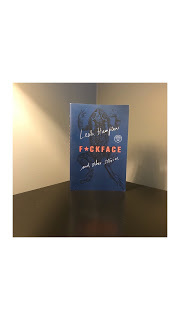
F*ckface is a brassy, bighearted debut collection of twelve short stories about rurality, corpses, honeybee collapse, and illicit sex in post-coal Appalachia.
The twelve stories in this knockout collection—some comedic, some tragic, many both at once—examine the interdependence between rural denizens and their environment.
A young girl, desperate for a way out of her small town, finds support in an unlikely place. A ranger working along the Blue Ridge Parkway realizes that the dark side of the job, the all too frequent discovery of dead bodies, has taken its toll on her. Haunted by his past, and his future, a tech sergeant reluctantly spends a night with his estranged parents before being deployed to Afghanistan. Nearing fifty and facing new medical problems, a woman wonders if her short stint at the local chemical plant is to blame. A woman takes her husband’s research partner on a day trip to her favorite place on earth, Dollywood, and briefly imagines a different life.
In the vein of Bonnie Jo Campbell and Lee Smith, Leah Hampton writes poignantly and honestly about a legendary place that’s rapidly changing. She takes us deep inside the lives of the women and men of Appalachia while navigating the realities of modern life with wit, bite, and heart.
I find it difficult to rate short story collections because it’s rare that I like every story. There were some stories here that left me at the end of them unsatisfied, wanting more, with the feeling they were just too short. I won’t remember much about those. On the other hand, there were several that were so moving, profoundly sad and beautifully written. I’ll remember those. The stories are not connected in any specific way, other than that they are set in a recent Appalachia in a number of states. A number of different themes are covered - people leaving, loneliness and isolation, environmental issues.
One of my favorites is the first story, “F*ckface”. It’s heartbreaking, but there is a slight glimmer of hope . Pretty is a grocery store clerk in a backward town where it’s difficult to find acceptance for who she is, but for the friend who leaves town, the only person who knows that she “likes girls”. I was as surprised as she was that she could find understanding from a person she least suspected. Even with the possibility of hope, I found this to be a profoundly sad story. “Saint” was the most beautifully written story in the collection, depicting a sister’s grief for her brother. His death haunts her as her thoughts did mine.
Those and a couple of others were for me 5 stars, so I have to round up even though I didn’t connect with all of the stories. I will, though look to see what Leah Hampton writes in the future.
I received a copy of this book from Henry Holt and Co. through NetGalley.
4.5 This is a collection of 12 short stories set in rural Appalachia. I enjoyed them all, some really left me wanting more, which is why I don’t normally gravitate towards the short story genre and that’s the only reason this didn’t get a full 5 stars from me. There are flawed characters and wonderful descriptions of the landscapes. Dark stories with a touch of comedy...very readable and I liked coming back to this for each new story as I took my time reading this. I’m drawn to Appalachia because my mom’s side is from West Virginia, and I’ve heard stories from my grandparents and their neighbor Suzie, who delivered all my grandmas children at home, and she never got a chance to leave and see beyond the mountains. I can’t even imagine that.
I only recently became aware of this impressive debut collection of short stories yesterday, when I saw a comment by David Joy, who stated: ”As fine a collection as you are ever likely to encounter. Leah Hampton may very well be Appalachia’s finest story writer at work.”
Considering that, for me, David Joy is one of Appalachia’s finest writers, I knew this was one I had to read, and so I quickly reached for it.
Twelve stories of life in various Appalachian settings, each with differing themes, although they are all strongly representative of some of Appalachia’s stronger draws – whether that is the finest things to offer, or the strangest or the less lovely aspects – depending on your point of view. Appalachia, like everywhere else, is changing, although there are some that would prefer it remain the same, or perhaps, return to how it was many years ago.
The initial story, which is also the title, begins with: ”Nothing’ll ever fix what’s broken in this town, but it would be nice if they’d at least get the dead bear out of the parking lot at Food Country.” This shares the story of a young woman named Pretty, and her need to hide who she is living surrounded by these intolerant small towns, where there are roads where you’d lose count of the churches within a few miles, and LGBTQ are just random letters in the alphabet.
This gives a small taste of what connects these stories, the fight for man to conquer and control nature, to force the landscape into something unnatural, and sometimes destroying it in the process. As well as the nature of man to put profit ahead of not only nature, the planet, but also of people as is shown in the story Eastman, which shows the danger posed to those living near, working in, chemical plants.
War is another topic, religion, ecology, and the nature of visions for the future to change from one generation to the next. There is even a nod to Dollywood in Sparkle which concerns shattered fantasies. In Boomer a state forest service man attempts to conquer the wildfires that are burning out of control in the early fall of 2016, as his marriage also seems to be going up in flames.
“Milestones and bodies. These ridgelines can’t hold them anymore. Coralis was right about people using parks for selfish reasons. We empty sorrow and trash out of ourselves into them, and now everything is harrowing up and spilling out from the boundary. I have to look away.” - from Parkway
For me, the one that I found to be the most moving, but which also stands out a bit from the rest was Saint which deals with loss of a sibling, and has a meditative, omniscient quality, shared in a second-person point of view, which adds to the emotional pull as this one unfolds.
This was a stunning collection, a wonderful debut from a new Southern author, for me. I look forward to reading more from Leah Hampton.
Published: 14 Jul 2020
Many thanks for the ARC provided by Henry Holt and Co. via NetGalley
I'm a fan of short stories, but they have to be done right. I love being able to pick up a book, read a story, set it down for a bit and come back to it to read the next. But with this one, I just plowed through it. A sign of some really good short stories. And come on, the title....you have to be drawn to that. Ha!
Leah Hampton includes 12 short stories in her new book, ranging from gritty, sad, to a few laughs. All taking place in Appalachia and either talking about the lands, environment, and mainly people. Each story focuses on a character and 'their' story. Some stories are stronger than others, some I'm still thinking about. Some were just too short and I wanted to hear more. One, Parkway, probably the most chilling but one I can't stop thinking about and want to hear more. Wireless and Mingo being other favs.
Overall, a very good selection of short stories. But why only 4.5....well, I wanted more and a few stories I though were just eh, too short and let's face it, I'm stingy with 5 stars. I will say I won this one via a Goodreads giveaway and it in no way influenced this review. I'm just super excited to win a really good book. I'm just sorry it's over. If you are a fan of short stories, I highly suggest this one.
F*ckface: and Other Stories is an incredible collection exploring Appalachia, meandering along the Blue Ridge Parkway with pit stops in places like Asheville, NC and Harlan County, KY.
In Wireless, readers are introduced to Margaret Price, a woman struggling with the fact that her rapist is always too close for comfort.
Parkway follows Priscilla through the dark side of her job as a park ranger working the Blue Ridge Parkway.
Twitchell examines a woman’s medical problems and the shadow of fear that her brief employment at a local chemical plant has caused them.
Queen explores Maisy’s hope to keep her late mother’s honeybee colony from collapse.
Meat is a heartbreaking look at Alison’s time in a slaughterhouse and the horrors following an overnight electrical fire.
Short story collections are notoriously hit or miss for me but the Appalachian setting —along with that title and cover— had me curious enough to snap up a copy!
Author Leah Hampton does a phenomenal job of bringing these characters to life and staying true to the rapidly changing and decidedly complex setting of Appalachia. The atmosphere and subject matter in all twelves stories… it’s all pitch-perfect and I can’t wait to see what Hampton delivers to readers next!
Not gonna lie… This might’ve been one of the best short story collections I’ve read in a long time.
May not be for everyone, it’s not horror or thriller, it’s not schlock or transgressive despite the book title, it felt so authentic and honest with stories that range from sad to humorous. It’s all about the lives of different people living in Appalachia from park rangers to working class people to young adults.
It deals with some very heavy and relatable stuff such as family issues, death, abuse, aging and work and there’s a good amount of social commentary that’s very subtle.
There was one story titled ‘Parkway’ about a park ranger that has discovered dead bodies in the forest over the years in her job and the effect it has on her mentally. That story was so haunting and will totally stick with me for awhile.
A masterful short story collection. I am completely in awe of Leah Hampton's writing style. There was so much depth and emotion in these stories. My personal favorites being: "F*ckface", "Eastman", "Devil", and "Parkway". I can't stop thinking about "Wireless" and "Sparkle". These ones actually hurt when I was reading them. I felt connected to the characters which is hard to do with such short narratives. "Saint" is a tearjerker and "Frogs" is delightfully weird. I didn't want this collection to end. Absolute perfection. I will definitely read more Leah Hampton in the future. Wow. I'm impressed.
Thank you, Netgalley and Henry Holt for the digital ARC.
"Entre Robbinsville y Asheville hay mucha más distancia que los ciento treinta kilómetros que muestran los mapas. Y muchas iglesias por el camino."
De alguna forma en estos doce relatos, Leah Hampton derriba tabúes y tópicos preconcebidos en torno a esta llamada América profunda de las que todos nos hemos hemos hecho una idea, y sin embargo, aquí ella se encargará de situar a sus personajes en la realidad de sus vidas a través de un entorno que los condiciona. Nos hará ver que los clichés no son tales, sino que sus personajes son de carne y hueso y podríamos ser nosotros mismos, tanta es la intimidad que es posible establecerse entre el lector y algunos momentos de estas historias. Los doce relatos están situados en una Apalache rural, una zona en la que sus personajes, tanto mujeres como hombres, se mueven en trabajos que muestran como está cambiando esta zona porque pone al mismo nivel la vulnerabilidad que pueden sufrir sus personajes con la fragilidad del ecosistema bajo la mano del hombre. Tengo que admitir que aunque ya he leído varias obras situadas en esta zona aislada de los Estados Unidos, la perspectiva de Leah Hampton es una brisa de aire fresco. Tiene un talento natural para pasar del interior de sus personajes a situarlos en la perspectiva de su paisaje de tal forma que estos hombres y mujeres quedan directamente camuflados con su entorno.
“La gente del pueblo no consideraba que la cordillera Azul fuera parte del Sur ni que Alison fuera una de las suyas. La muchacha procedía de un laberinto de valles húmedos e insondables, y se había confundido con el orden de los himnos durante la misa. Al mirarla, los dolientes parecían pensar en nieve o en pumas acechando a ras de tierra.”
Lo que me ha llamado especialmente la atención de esta colección de relatos es el enfoque de Leah Hampton y su escritura, que en momentos parece muy directa, pero profundizando es incluso muy elíptica. Confronta pero no enfrenta sino que el lector tiene que rellenar espacios que el mismo personaje deja en el aire. La verdad es que me he sentido muy identificada en varios relatos especialmente porque dentro de este entorno que aparentemente y físicamente está tan alejado del mundo en el que vivo, Leah Hampton se las arregla para capturar ese instante, ese momento tan universal e íntimo a la vez, por el que casi todos los seres humanos llegarán a pasar o sentir en en algún momento de sus vidas. Por ejemplo:
“Alguien tendría que ayudarlo a vestirse. La catástrofe estaba a la vuelta de la esquina. A su edad, las fuerzas en la que aun confiaba podían fallarle en cualquier momento: bastaba con una caída para romperse un hueso. Apenas podía manejarse en un pasillo llano, y no hacía caso a las instrucciones. Creía que la debilidad era solo un estado mental. Walter había visto antes esa actitud rebelde y nunca acababa bien.”
En el relato titulado Mingo la narradora en primera persona enfrenta su crisis personal ante el hecho de que no puede llevar a término ningún embarazo, lo que la lleva al mismo tiempo a cuestionar su vida matrimonial, con la crisis familiar que surge cuando el padre de su marido ya no puede valerse por sí mismo (“y las ruedas de goma del andador chirriaban y arañaban las baldosas”). Mingo es uno de esos de relatos en los que cualquiera de nosotros podrá reconocerse y a mí desde luego me ha llegado al alma por la forma en la que Leah Hampton afina en esta crisis familiar en la que la mayoría de los miembros harán la vista gorda sin atreverse a tomar conciencia del problema, la vejez, para que finalmente solo uno de ellos sea capaz de tomar las riendas. Es un relato realmente impactante porque al mismo tiempo la autora nos está hablando de una mujer que está en crisis consigo misma, vulnerable y frágil, invisible para todos menos para sí misma.
“Las jaulas, los camiones ganaderos que traqueteaban a diario por la agrietada carretera comarcal, todos ellos repletos de cuerpos rosados y aterrorizados."
“Carne” es el otro relato que me ha llegado al alma y no transcurre precisamente en las montañas, sino entre una granja industrial y un funeral. Una estudiante universitaria asiste a un funeral y ahí Leah Hampton va desplegando con una sutilidad envolvente, el trauma del que procede esta chica siendo becaria en una granja industrial de cerdos, o matadero. Es realmente impactante como se va revelando el relato entre el trauma, por una parte, y el claro antagonismo que se crea entre lo rural y lo urbano. Leah Hampton no se anda con chiquitas y nos enfenta a la crudeza y la violencia ambiental cuando el hombre pisotea su entorno: “Alison parecía frágil en comparación a los demás: una chica de las montañas, intimidada y aturdida por el calor de octubre en las tierras bajas. Era la única que no sonreía.” Tanto en este relato concretamente como en otros muy reveladores surge un detalle que me llama la atención y es el significado que adquieren los animales en estas historias porque al ensamblar el cerdo, en esta historia (Carne), o el oso (Cabronazo) o la ardilla, está dotándolos de entidad, tal como un personaje a la misma altura del ser humano. Los paralelismos entre los animales y la condición humana son un dato recurrente de estos relatos y aunque las historias sean independientes unas de otras, es en estos paralelismos donde Leah Hampton está estableciendo la conexión. La sabiduría de la naturaleza frente, en muchos momentos, a la estupidez humana, está continuamente reflejada a través de la inmovilidad de los Apalaches que observa impertérrita el estropicio que el ser humano está vertiendo en una tierra que a partir de aquí está cambiando.
“Volvió al interior, terminó su turno, regresó a casa y no habló con nadie durante dos días enteros. Julie llamó. Robbie también. Pero ella no contestó. Temía que, de abrir la boca, empezaría a aullar, bramar o hablar en lenguas como un predicador rural en trance, sin poder parar hasta desgarrarse la garganta y sangrar. Así que pidió una baja por enfermedad y se encerró en casa muda e inmóvil.”
En general es una colección de relatos magnífica, en la que las mujeres son fuertes pero el paisaje cada día más frágil y vulnerable. El estilo de Leah Hampton es claro y muy directo, tal como mencioné antes, pero su ironía soterrada cuestiona de alguna forma nuestros prejuicios y los clichés en torno a los Apalaches se van difuminando para presentarnos la realidad de unos personajes que no solo deben combatir la dureza de los tiempos, sino el momento cuando se ven obligados a enfrentarse a traumas del pasado, o incluso crisis personales muy presentes, Leah Hampton escarba y saca de la tierra una fragilidad que siempre estuvo presente, como en el relato, “Cables”: Otro relato magistral que define la escritura de Leah Hampton, una mujer a la que no voy a perder de vista ya.
“Abrió la puerta del conductor y miró la casa. Una quemazón metálica le subió desde el vientre. Era la parte que la asustaba; cuando esa cosa oculta que llevaba dentro pugnaba por salir, pero no podía tomar forma. Le ardían los pulmones y no encontraba las palabras.”
I don’t often call short story collections perfect, but F*ckface is joining my ranks as a perfect short story collection. Despite growing up in East Tennessee, I ashamedly have not delved into a lot of southern or Appalachian literature. It’s very easy to stereotype a region - even when you’re of it.
F*ckface is a collection of twelve stories that each take place in various Appalachian settings. The stories cover a lot of ground. There’s the 2016 wildfire in the Smokies, being gay in a small town, religion, war, the working class, putting profit over people, ecology, Dollywood, immigrants, sexual assault, healthcare, climate change and not being able to see past your circumstances. At the core, though, we see a group of people that are misrepresented and misunderstood. All of this goes on, but what can you do when you live in Appalachia? What do you do when you don’t have the access to resources to pull yourself out? Reality can be devastating, but it’s yours.
My favorite story, Saint. The shortest story in the collection. The story that absolutely wrecked me. The one that I want to force into everyone’s hands. Is an ode to sibling love. It begins with “Your brother is going to die in twelve years” and it ends me convulsing with tears on the floor.
You realize this is a terrible thing. You realize this is a terrible, terrible thing. To have a saint for a brother. You realize that ten, fifteen, all the years after he dies it will be just as bad, just as hard. You realize, somewhere, at some time, that none of this could ever have happened. There is no proof. There is no one who remembers these events but you. They become, then or now, like lost things. Like icicles, or faith.
I was left wanting more of each story out of my own selfish desire, but any more and they would not be as impactful as they are. Leah Hampton’s constraint is to be admired. Every sentence had a purpose. I laughed so hard I cried, I cried so hard I hyperventilated. It really felt like home. F*ckface is an instant favorite. I will revisit these stories often and I look forward to whatever Leah Hampton writes next.
"The television stayed on, pundits on low boil.”
“Everyone moved strangely, spoke in echoes, as if their bodies were hollow.”
“The missing forest tingled in me like phantom limbs.”
“Dolly’s just about the only cheesy thing I can stand.”
“I wondered whether he even noticed the mountains glowing lavender at their edges in the late afternoon gloom.”
“Milestones and bodies. These ridgelines can’t hold them anymore. Coralis was right about people using the parks for selfish reasons. We empty sorrow and trash out of ourselves into them, and now everything is harrowing up and spilling out from the boundary. I have to look away.”
2020 has been a year of short story collections for me and I am not mad about it! This stellar collection didn't have one dud in it! Set in Appalachia, the stories touch on a myriad of subjects; roadkill, Dollyworld, high school reunions, corpses, forest fires, extra-marital affairs, and honey-bees to name a few. Each story is unique and packs a punch. This is a collection I will definitely return to. It's rough, uncouth, witty, and will stick in reader's minds like gum on a shoe.
I was first attracted to the crass title of this short story collection, and my interest was immediately peaked when I discovered this collection focuses on Appalachian communities. Not only do I love a good Appalachian-based story, as a North Carolinian who adores the mountains here, it was a lot of fun to read stories set in recognizable places.
This is an excellent short story collection. There is not a weak story in the volume, each of them tightly arranged so not a one feels like it's missing a thing. In her stories, Hampton explores themes from family relationships and healthcare to climate change in a land of few opportunities if you choose to stay. As a whole, this collection is not nearly as vulgar as you might expect from the title, but Hampton also does not turn away from the blistering and sometimes mortifying realities of life.
I definitely recommend this collection, especially for folks who love Southern slice-of-life storytelling.
A terrific debut collection. Hampton delivers twelve slices of life in Appalachia, none of them sinking to the level of parody and nearly all of them bringing some measure of fresh understanding to the region and its people. More than that, though, these stories are just refreshingly bracingly ~human~ in nature: a woman unable to fully grasp her mother's death as she tries to save her mother's bee colonies; a park ranger on the sad legacy of death in the park system; the misunderstood legacy of sexual assault; teenage rebellion. It's all here and delivered in bright and vibrant prose. I'm looking forward to many more tales from Hampton to come.
It took a while to finish this one, reading one or two stories at a time and then giving it some space. There are big vibes with this collection, not necessarily good or bad, but kinda like being alone and contemplative on an overcast day. It was interesting how the stories captured different kinds of relationships as reflections in the face of an outside presence - a fire, a funeral, a dead bear, Dolly Parton. Despite being fiction, the stories really rung true and the feeling of the place that is Appalachia seemed vividly real, reluctantly dragged into modern day America.
SO GOOD. Can not say enough good things about this fantastic book. The best short story collection I've read this past year - tied now with Laura van den Berg. The characters in these tender, funny stories are doing the best they can to be human, but-- just like all of us-- they're not doing it super well. From small unravelings to breakdowns, these Tennessee-centric stories about everyday people with extraordinary moving problems are what you need right now.
an absolutely standout debut collection that i adored so much that i checked it out at the library, read it, finished it, and immediately ordered it at the bookstore. leah hampton has an incredible voice and a really unique style to her writing that gives it so much life and energy - there's so much movement to these stories, even though one of the most common themes you find here is stagnation.
she perfectly captures how it feels to be stuck in life, whether it's about being physically stuck in a small town or emotionally stuck in an unfulfilling life (or often both.) it's a tension between being stuck in the grand scheme of things and going nowhere while also feeling like life is passing you by so quickly, and it is PERFECTLY encapsulated in these stories.
i've been on a kick lately of reading stories that explore the lives of people in rural appalachia/midwest/northeast/etc., basically anywhere that you get into deep rural country, the income level drops, and people start getting dismissed as conservative hicks. i love stories that dig into these areas and bring to light the inner lives of these people, especially ones like this collection that highlight the oft-overlooked queer communities there.
everything about this collection is so visceral as it explores the deep pain and loss embedded into the characters' lives, often through scenes that take place over only a few days. they range from the deeply personal (dealing with long-repressed memories of sexual assault, watching the girl you're in love with move to another town with her boyfriend, death of family members) to expansive snapshots of underlooked places and occupations (the fallout of working at a chemical plant with poor safety regulations, working a slaughterhouse, fighting fires in the mountains, dealing with the aftermath of suicides and murders as a park ranger) and is equally poetic and brutal no matter what the subject is. the stories are fascinating, beautifully written, and masterfully crafted - i can't recommend it enough.
Not being a fan of short stories, I NEVER read them, and usually, when I see the book is of short stories, it remains off my TBR list. All that mentioned, I think it was the title that drew me in and held my attention. After all, who can resist a book titled F*UCKFACE?
There are 12 stories in this book and all deal with a different topic and all are very good. I enjoyed that each story was long enough to draw me in and gain my complete attention... but like all short stories, they were too short and left me way too soon. I do recommend this if you are a fan... and I don't ever recommend a book... or at least rarely!
Wow! I loved this story collection, set mostly in post-coal Appalachia. I adore the Blue Ridge Mountains and she captures it beautifully here. Tough but big-hearted stories about human struggles and environmental concerns. Highly recommended. 4.5 stars
These stories were raw and authentic, ripe with a sense of place and characters so real and rich I never once turned away from them. I laughed, I cried and I loved every single story. Five big stars.
This is incredible book. It was like the first time I read Bobbie Ann Mason's short stories or heard a John Prine song. Each story in this collection is well-crafted, engaging, and emotionally rich. And it's the best collection of first lines in stories I've seen.
Some of the best writing right now is coming out of Appalachia. It's really wonderful to see.
There is something magical about reading a collection of short stories about places you have been to and drive through. Reading about Eastern Tennessee and Western North Carolina felt special and gave faces and stories to the people that live in these communities. Loved the whole collection.
I received a copy of this book from the publisher in exchange for an honest review.
This book caught my eye because I loved the title, and then when I read the summary (twelve short stories about rurality, corpses, honeybee collapse, and illicit sex in post-coal Appalachia)I knew I had to request it because I love edgy stories and rural/Appalachian noir. Leah Hampton can capture a setting and connect readers to a character very well, but the essays have open-ended "conclusions". This style of writing is unsettling to me, but I am sure that is what the author intended. I recommend this to readers seeking a glimpse into the lives of men and women living in modern day Appalachia or readers wanting realistic stories about daily human emotions and experiences. As a debut collection, F*ckface is impressive. I will be reading whatever Leah Hampton writes next.
There are story collections about characters full of promising futures, born to wealth or at the very least sparkling opportunities- this isn’t about those kind of people. In F*ckface, the people often feel as ravaged as their environment. The book begins with title story F*ckface, in a town full of broken things that the narrator knows will never be fixed, a place where something can rot for an untold amount of time. Here something “pretty” is full of desires that are certainly not welcome in rural America. She wants out, a place less dark and mean, somewhere quiet and not filled with the smell of dead things. If only she knew how to reach for it.
Boomer tells the story of fires that need to be contained, put out, and prevented while a marriage is reduced to ash. Margaret explores the deep places in herself, and an old school friend after her fifteen-year high school reunion in Wireless. Parkway disturbs us with the tale about a park ranger on the Blue Ridge working in a place that people come to die or be killed. A Russian teenage girl draws one woman’s attention at a pottery lecture and her pity, until she realizes what she is trying to convey in her broken English. Towns, families full of cancer, these places people inhabit too poor or small to accommodate medical needs- the pressure and fear of waiting for results. Working conditions that are rumored to be the cause of so much ill health, gutted mountainsides and raped land. Once the coal towns were booming, then in fast decline, the people left to discover how to thrive.
Loss of autonomy and the intricate dance between aging parents and their children creates an unlikely bond for daughter-in-law Tina with the tale Mingo. Lewd humor is often catharsis, even if it is lost on Tina’s husband. Frogs serve as a study during a nature hike as twins attempt to learn about them alongside a naturalist- who probably isn’t even ‘from here’. It ends up in humiliation for the woman as her twin brother gamely tries to understand her refusal to finish the trek, which was her idea. A soldier returns to his childhood home in the Kentucky mountains before shipping out to Bagram, a plan at the ready to slip in unannounced but his domineering father beats him to the punch. Can you always go home? Should you? Is the devil you know always better than ones you don’t? Devil reminds us how easy some father’s knock their children down to size. Queen offers up a hive of bees for Maisy’s mother to present a playful bond with her grandchildren until her health fails her. Maisy keeps herself from feeling too deeply the sting of loss by keeping her body occupied with muscle memory. Meat is on the menu when a student interns at a hog facility and can’t escape the screams. A brother is receding, but not every moment foretells the tragedy to come and nothing can prevent it- such a good brother, a Saint really. Dollywood could be a character when Sparkle introduces the reader to Beth, who is definitely not “a country-fried fool”, but thinks this is the place to explore desires and possibly get to see Dolly perform! Nothing happens and everything happens. Ordinary days weighed down by the disappointing realities of life in places the rest of world ignores. How much more brutal are the grievances of life when choices are limited? Who pulls you down when you try to escape? Yet the world keeps turning in Appalachia, even if the characters feel like they are off the map and the world has forgotten them. There are no happy endings, but what exactly is a happy ending anyway? Sometimes it’s about just keeping your head above water, trudging on. It takes grit!