Compelling, well-researched book about a specific shipwreck, that is deeply insightful about art,
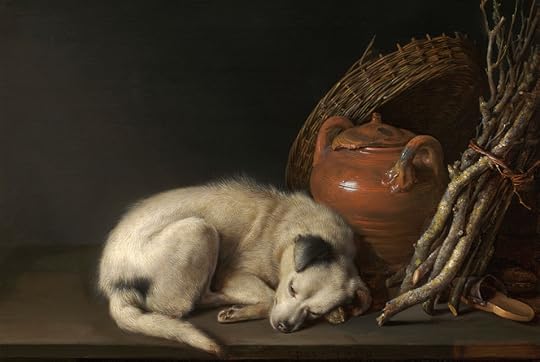
collecting and the genesis of the modern public art museum. In 1771, Catherine the Great’s art buyers secured a significant haul of great artworks at an auction. Enroute to Russia from Amsterdam however, the ship ran into a storm in the always treacherous Baltic Sea ( a very busy route ), and the precious cargo was lost. The authors use this incident to give you a look at the Dutch Golden Age of Art, Catherine the Great’s rise and reign, and the race across empires to raise their prestige by acquiring and patronising artists. As the authors show, a rising middle class in the Netherlands wanted to collect art, and who better to patronize than those young Dutch artists one seemed to hear of everywhere-Rembrandt von Rijn and Gerrit Dou? This was a very different art market to cater to than the one till then, where mostly aristocrats and royal families commissioned artworks to show their devotion. This new type of art collector wanted artworks to display in their homes as a sign of their economic and social rise, so the themes changed from Biblical/mythological themes to commonplace events-a lady with an earring, a farmer ploughing his field. It seems obvious now, but I thought this was a fascinating insight-practically a revolution in art and who is deemed worthy of being immortalized on canvas. The book focusses on the most important painter of the time, Gerrit Dou, who’s practically unheard of now, and traces his career, and subsequent opinions by art critics that led to the spotlight being trained exclusively on Rembrandt. I loved the meticulous descriptions of the process of creating an artwork,with artists mixing their paints elaborately, creating some colours themselves from household items, preparing the canvas and making the frames as well. There’s some fascinating writing comparing Rembrandt’s colour palettes and the effects he achieves with those browns and grays. The book alternates these chapters to chronicle the life of Sophie Auguste from its beginnings with her ambitious,
domineering and narcissistic mother to her consolidation of power in the complicated court of
St.Petersburg. Empress Catherine managed to get the Russian Orthodox Church on her side, since her husband, the Tsar Peter, was curtailing their powers, and their collections of taxes and using it for the royalty instead. The description of the events leading up to her coup make for riveting reading. Empress Catherine felt that Russia was lagging behind in terms of culture, and she wanted her country to rival the famed cultural capitals of her contemporaries Frederick the Great of Prussia ( her one time sponsor to the Russian court)and Louis XV, and held sparkling soirees where the rule was to cross-dress, and corresponded with all the great minds of the time ( French, of course, in her opinion), such as Diderot ( wary of her despotic tendencies, very willing to be her art dealer), Montesquieu. All of this was , of course, at the expense of her subjects, who were taxed at higher and higher levels. Empress Catherine embarked on an art collecting spree, that spurred nationalist sentiments in England, France and The Netherlands-how could this Russian upstart, from a no-name family, have the temerity to take away their masterpieces? Irrespective of the fact that they hadn’t been particularly bothered about those masterpieces till she showed an interest in them! The authors show how aristocratic families could no longer profitably live off the land, with a new middle class emerging and fewer people willing to work their bones off at agriculture for distant landlords. TO fund their lifestyles and maintain their estates, several of them resorted to selling off their art collections and through her well connected ambassadors, the Golitsyns, Empress Catherine was a willing buyer. This led to the British and the French also stepping in to prevent these works leaving the country, as a part of national policy, and as the authors mention, these collections formed the basis for the National Gallery at the British Museum ( as it was then), and the core of the Louvre. Absolutely fascinating to read how this outburst of nationalistic sentiment served
to create public museums, something they weren’t thinking of at all when they were merely trying to outbid Catherine! This forms around 60% of the book, and for me, undoubtedly the highlight. I didn’t much enjoy the remaining 40% of the book, which dealt entirely with the search for the shipwreck, the technicalities and legalities involved. There were still some fascinating details-such as the large scale sale of Empress Catherine’s carefully collected artworks in the 50s by Russia, to fund a desperately poor country, while simultaneously Stalin’s propaganda machine firmly maintained that those were fakes!
The authors continue to follow the lives of some of Gerrit Dou’s masterpieces-showing how, in a similar fashion to the Dutch burghers, newly minted American millionaires also sought to project status and culture through the collecting of artworks-focusing on the Dutch masters and their immortalization of the commonplace, and ultimately bequeathing these to the public, much like had been done in earlier centuries!
Artists themselves don’t always belong to the privileged elite, and sought to capture moments, daily life,and Gods behaving like humans. Their works shouldn’t be for a rarefied elite, and this book shows the process of that changing. Highly recommended.