From the secret fossils of London to the 3-billion-year-old rocks of the Scottish Highlands, and from state-of-the-art Californian laboratories to one of the world's most dangerous volcanic complexes hidden beneath the green hills of western Naples, set out on an adventure to those parts of the world where the Earth's life-story is written into the landscape.
Helen Gordon turns a novelist's eye on the extraordinary scientists who are piecing together this planetary drama. She gets to grips with the theory that explains how it all works - plate tectonics, a breakthrough as significant in its way as evolution or quantum mechanics, but much younger than either, and still with many secrets to reveal. And she looks to the future of our world, with or without us.
On the cusp of what may be Earth's next cataclysmic transformation, it's time to understand how we fit into the big picture.
Helen Gordon is the co-author of Being A Writer and author of Landfall, a novel published by Penguin. Her journalism has appeared in Intelligent Life and the Guardian. She is former associate editor of Granta magazine, lives in London and teaches creative writing at the University of Hertfordshire.
(3.5) To assess the place of humanity, we can look back to prehistory, but also forward to envision the “deep future.” (It was only in a late chapter on nuclear waste disposal sites and warning messages to the future that I found too much direct overlap with Footprints by David Farrier.) This engagingly blends both tactics, surveying the fields of geology and palaeontology and pondering the future traces of the Anthropocene. I most enjoyed the middle chapters, in which science meets wildlife and cultural studies. For instance, a chapter on ammonites leads into a profile of Mary Anning and the history of both fossil hunting and women in STEM careers. The prose is well pitched to the layman’s level. Interviews, travels, and snapshots from her own life generally keep the material from becoming too dry. An invigorating interdisciplinary tour.
If you were to compress the entire life span of the earth on a clock face, then humanity would only appear in the final two minutes. The two hundred thousand years that we have been around as a species is almost no time at all compared to the 4.5 billion years that the earth has existed as a planet.
For most people getting a grip of how vast geological or deep time, takes a lot of doing. Ten thousand years ago, a mere moment in this timescale, we were still connected to mainland Europe. To see this deep time laid out before us we need to look at the rocks.
Helen Gordon has an obsession with one type of rock, chalk. She had headed out of London to the North Downs just to get some space and thinking time. Near Caterham, she came across a board explaining that the ground she was standing on was once the bed of an ocean around the time of the dinosaurs. Amazed, she decided to find out more so when back in London headed to the Natural History Museum. She looked at the dusty exhibits and wanted to know more. Books on geology led to field trips learning more about the rocks below our feet that tell the story of the deep time of our country and planet.
Finding out more will take her from the glamour of Cambridge Heath Road, to see ice cores in Copenhagen, the Siccar Point to see the place where a man called James Hutton had looked at the granites and sandstones and realised that the earth was much, much older than 75,000 years. She heads to the deserts of America to see where dinosaurs once trod and spends time in Naples learning about volcanos.
I really enjoyed this. If you want a well written and nicely balanced introduction to the field of geology and deep time you cannot go wrong starting with this book. Gordon mages to make this vast subject approachable and also reminds us that we are a mere footnote in history, the planet will continue with or without us.
Het boek 'Geheimen uit de diepe tijd' van Helen Gordon is de literaire versie van de leerstof die ik in het vijfde en zesde middelbaar aanbied in de cursus aardrijkskunde. Maar dan aangevuld met persoonlijke (reis)verhalen, boeiende anekdotes en filosofische bedenkingen.
Helen Gordon heeft haar boek georganiseerd rond drie thema's: geologie, het vroegere en dus al lang uitgestorven leven en het snijpunt van diepe tijd met menselijke bezigheden. Na de introductie van het begrip 'diepe tijd' en hoe die ongelooflijk hoge leeftijd van de aarde langzaamaan het licht is gekomen, gaat Gordon dieper in op paleoklimatologie, stratigrafie, platentektoniek, aardbevingen, vulkaanuitbarstingen, dinosaurussen, het Antropoceen, paleokunst, stadsgeologie, kernafval...
Helen Gordon brengt heel wat nieuwe perspectieven aan. Bij het bespreken van ijskernen, legt ze het werk uit van pionier Willi Dansgaard en zijn ontdekking van snelle klimaatveranderingen die later Dansgaard-Oeschger gebeurtenissen werden genoemd. Aanvankelijk werd dit idee door wetenschappers met heel veel scepsis ontvangen, maar het werd snel genoeg bevestigd door bewijsmateriaal uit pollenbestanden en oceaansedimenten. Haar bespreking van dinosaurussen is al even nieuw, en heeft de toepasselijke titel "Waar we het over hebben als we het over dinosaurussen hebben". Ze vraagt zich af waarom kinderen zo door hen gefascineerd zijn, hoe fossiele opgravingen in de loop der tijd veranderd zijn, hoe de paleontologische gemeenschap verdeeld is over de handel in fossielen, en hoe het verhaal van hun uitsterven "een onweerstaanbare achtergrond vormt waarop we onze eigen angsten voor klimaatverandering en de hedendaagse apocalyps kunnen projecteren".
Verder besteedt Gordon ook aandacht aan de subtiliteiten en technische details van haar onderwerpen. In twee hoofdstukken neemt ze een verrassend diepe en toch toegankelijke duik in de stratigrafie. In 2018 brak er een polemiek uit toen sommige stratigrafen voorstelden om ons huidige tijdperk, het Holoceen, onder te verdelen in drie nieuwe tijdperken, waarvan het meest recente het Meghalayen werd genoemd. Deels komt dit doordat anderen nog steeds bezig zijn met de stratigrafische onderbouwing van het Antropoceen. Zij luistert naar de argumenten die zowel door voor- als tegenstanders van deze concepten naar voren worden gebracht. Ze gaat tot een soortgelijk niveau van genuanceerd detail wanneer ze de kleur bespreekt zoals afgeleid uit uitzonderlijk goed bewaarde fossielen. Tot nu toe lag de nadruk op melanosomen en het pigment melanine, maar Gordon interviewt ook Maria McNamara die zich bezighoudt met carotenoïde pigmentatie en structurele kleuren. Deze ontdekkingen stellen paleo-artiesten in staat om meer natuurgetrouwe reconstructies te maken.
Een openhartig gesprek met paleokunstenaar Robert Nicholls gaat over zijn Psittacosaurus model, het belang van grondig achtergrondonderzoek, en zijn openhartige mening dat de meeste dinosauruskunst die wordt gepubliceerd "uitgekauwde onzin" is. En hoewel ik in Robert Macfarlane's Benedenwereld had gelezen over de plannen voor langdurige ondergrondse opslag van kernafval in Finland, voegt Gordon een interessante discussie toe over de uitdagingen van het ontwerpen van waarschuwingsborden voor toekomstige generaties in de verre toekomst om weg te blijven van dergelijke opslagplaatsen.
Sommige hoofdstukken snijden, voor mij, totaal nieuwe onderwerpen aan. Zo is er een hoofdstuk over krijt, een van de minst gewaardeerde gesteentesoorten onder geologen. Hier begeleidt ze een team dat een nieuwe kaart maakt van de krijtformaties die onder delen van Groot-Brittannië liggen. Ze bespreekt de primitieve fossiele bomen die in Gilboa in de VS zijn gevonden, en hun ongewone manier van groeien. Een ander hoofdstuk gaat over de moeilijkheid om aardbevingen en vulkaanuitbarstingen te voorspellen, en benadrukt dat een deel van het probleem het verlies is van moeizaam verworven kennis en ervaring wanneer wetenschappers met pensioen gaan. En ze opende mijn ogen voor het fenomeen van de stadsgeologie, het idee dat de materialen die in gebouwen worden gebruikt, vooral in oudere gebouwen, meer kunnen onthullen over de plaatselijke geologie.
Wat deze uitgebreide verzameling anekdotes en bedenkingen zo boeiend maakt, is Gordons taalgebruik en scherpe observaties. Ze praat met de bibliothecaris van de Geological Society die de overeenkomsten tussen poëzie en geologie benadrukt: in beide gevallen gaat het erom "werelden in je geest te bouwen en ze aan anderen te presenteren met behulp van beschrijvende taal". Als we het over geschiedenis hebben, slaan we vrolijk duizenden en miljoenen jaren over. Zoals Gordon het mooi zegt: "Als het menselijk brein het verleden van nature comprimeert, dan houden de wetenschappers die met diepe tijd werken zich bezig met decompressie". En waarom heeft, van alle voorgestelde nieuwe stratigrafische eenheden, het Antropoceen zo'n grote greep op de populaire verbeelding gekregen? Gordon's antwoord is dat de wetenschap al een paar eeuwen bezig is de mens van zijn voetstuk te stoten: "Op één manier beschouwd, plaatst het Antropoceen-concept de mens dus terug in het centrum van de wereld [...] en op een bepaald niveau kunnen we niet anders dan dat aantrekkelijk vinden - zelfs als de prijs voor die terugkeer een milieuramp is".
Mooie opfrissing en uitbreiding van mijn kennis over de geologische geschiedenis.
An engaging and thought-provoking account of geological time. As a non-scientist, I often find such accounts dry or inaccessible, but this is a highly readable book attempting with some success to engage our brains in comprehending the vastness of time, and the difference between the various eons that constitute the time that the earth has been in being. Who knew for instance that triceratops and tyrannosaurus rex not only didn't appear on earth at the same time, but in fact were separated from each other by an infinitely longer time span than humankind from tyrannosaurus?
From discussions about the physical appearance of the earth in previous periods, to ongoing research about dinosaurs (what colour were they?) to urban geology, and laying up problems for the future, this is a wide ranging book to which I shall return.
What do we talk about when we talk about deep time? Notes from Deep Time is a diverse and beautiful collection of writings that tackles this hard-to-grasp concept in myriad ways. Read my full review at https://inquisitivebiologist.com/2022...
Immensely readable with a full cast of interesting characters in intriguing professions! Gordon explores the idea of geological time and how we can begin to unpack the scope of this time and understand our very slight appearance as humans in this very long history. Each chapter takes a very different look at this theme - from Victorians designing the first geological maps, to what it's like living in the red zone of an active volcanos. From how artists use silicone moulds and attendance at ostrich dissections to construct realistic dinosaur drawings to to question of how to let our future ancestors know about the radioactive waste we're burying across the earth.
Not a scientific geology book, more a meditation on, and history of geology. It includes cameos of the better-known figures in geology - Hutton, Anning, Cuvier - as well as discussions with modern-day scientists about their specialities and visits to specific geological features. It's a light and entertaining read.
Pros: A nice change in temporal perspective. I especially enjoyed the discussion on the Anthropocene and what to do with our nuclear waste. I learned some fun stuff about rocks and will now be even more annoyingly slow on hikes looking at everything!
Cons: You tempt me with rocks but no discussion whatsoever about the climbing of them? Sure it’s nice to know this formation is Devonian but how are the holds? I guess I’ll just have to get out there and find out, for science!
Excellent read, I’m really glad I picked this up. Fascinating deep dive back in time millions of years with some great stories. I’ll be recommending this to everyone.
The first half was beautiful, full of rich history and it gave an incredible perspective on our past worlds. Second half became a little too factual and was like reading a tonne of information.
This entire review has been hidden because of spoilers.
I really enjoyed this and that it was structured into three parts, rocks, plants/ animals and humans. My only criticism is that I felt like the second to last chapter on the problem of nuclear waste went on a bit too long. However I liked that aside from a few comments here and there, this chapter was the main part of the book that really questioned the future geology that we’re laying down and made me think about our place is deep time.
This is a great introductory book, easy reading and it touched on everything I wanted it to.
Such an amazing book! Well-researched and well-written, with a combination of personal stories, stories from the field and explanations of processes. Unlike other books in the genre that I've read, the content of this book wasn't all familiar to me and I learned a lot of new things. It's also the kind of book I'd want to give to other people to show them the magic of geology and to make them understand why working on 'deep time' is something I love doing so much.
[Stopped at 35%] This is probably a very enjoyable read if you're more interested in the human side-stories and historical intrigues than geology and natural history. However the ratio of science to scientists was a bit too low to keep me interested.
This book soothed my soul. It was a perfect read for current times.
As an existentialist, I recognize how insignificant we are, and I find comfort in knowing that we are such a small blip in Earth's history. Notes from Deep Time still shifted my perspective though. It's a fantastic journey through natural history and has all the things I love (plate tectonics! dinosaurs! humans fucking up!), but managed to fit in new subjects that I hadn't considered previously.
Like, what can we learn from the materials we use to build (i.e. urban geology)? How do we warn future humans about nuclear waste if we have lose our collective memory and language? Will Naples (my favorite city in Italy!) survive the test of time and geology? I appreciate this book for steering me into contemplating science a bit deeper.
A lot of people have misconceptions about existentialists and existentialism, which I won't go in to here, but it has to be said that my personal brand of existentialism has allowed me to fall in love with our natural world and appreciate it so much more. I firmly believe (and so does the science) that the Earth will survive our civilization, and so will life. How can I not be enamoured with that? By focusing on the concept of 'deep time', Helen Gordon really emphasizes this.
A bit of a messy review, yes, but I loved this book. It really made me think and filled me with wonder. I can't recommend it enough! Knocked off .5 stars, because some chapters were stronger than others.
ENGLISH: I'm bummed that there is no Italian translation of this one: the book would be perfect for my dad and brother, both geologists. However, you don't need to be experts to find this novel/essay interesting, as it's about the history of the subject and a journey starting from the United Kingdom to Los Angeles through Italian Phlegraean fields.
Geology is paleonthology, seismology and much more, often it's considered something completely separate from the everyday world but it's indeed profoundly tied to current themes like climate change and nuclear energy.
If you manage to get your hands on this book and are interested on the topic, I highly recommend to check it out.
ITALIANO: Purtroppo non esiste una traduzione italiana - questo libro sarebbe perfetto per mio padre e mio fratello, entrambi geologi. Però non serve essere esperti della materia per trovare interessante questo romanzo/saggio sulla storia della disciplina che si estende dalla Gran Bretagna a Los Angeles passando per i nostri Campi Flegrei.
La geologia è paleontologia, sismologia e tanto altro, spesso viene considerata qualcosa di completamente distaccata dal mondo di tutti i giorni eppure è profondamente legata a temi attuali come il cambiamento climatico e il nucleare, per fare due degli esempi delineati nel volume.
Se parlate inglese e riuscite a mettere le mani sul libro, ve lo straconsiglio.
Fascinating. I preferred the first two parts of this book, but it was all good. Really approachable and a good introduction to geology for those (like me) with zero knowledge. There is though lots of complex scientific vocab but the author does try to explain these terms.
Took me a while to read because I would think about the section I had just read and talk about it. Made me want to find out more about different topics and read other books. One of the books mentioned in its pages I had read not realising it was based on real history! Made me think differently of that one too.
Excellent and extremely readable book about the history/development of the science of geology, broken down into short chapters, including plenty of conversations with geologists to help explain the science. Gordon also includes anecdotes, potted histories and personal travelogue to vary the pace and engage the reader. Some of these stories I have read before, but they are well told here. The three penultimate chapters consider aspects of the Anthropocene, with that discussing the issue of nuclear waste being fascinating, enlightening, and it starts with a poem which encapsulates the issue: This place is not a place of honor. No highly esteemed deed is commemorated here. Nothing valued is here. What is here was dangerous and repulsive to us. This message is a warning about danger.
The final chapter is a beautiful conclusion blending Gordon’s personal reminiscence with geological travelogue: There’s a pleasure in knowing the names of things. It’s not about a need to categorise the world, sectioning it into little boxes. And clearly you don’t have to know the names of rocks – or trees or plants or birds – in order to enjoy a landscape. But if you do have this information, something changes about the way you exist in that space. A named landscape thickens. It’s to do with history and context but also, I think, with the quality of attention. To assign something its name, you need to take the time to pick out identifying features. You look for longer. And the more you know, the more things stop being a backdrop – blurred, indistinguishable, hurried over – and become somehow more present in the view, more insistently themselves, the way a familiar face stands out in a crowd.
Eminently readable and relatable whizz through the historyof deep time bolstered by meeting world-renowned experts in their places of work. This is the best sort of popular science writing in which the author is able to make you feel enlightened and educated without ever having to learn exactly what is meant by geological terms that might otherwise become an insurmountable wall of gneiss for the general reader. We are not going to be tested on this so relax and go with the flow. There are fascinating nuggets of information on every page, I just wish I could remember enough to casually drop them into conversation. My attempt would be along the lines of… “Do you realise that the stegosaurus became extinct longer before the appearance of Tyrannosaurus rex than the T. rex did before humans appeared?” So, like, does that mean we are more likely to be eaten by a T.Rex than a stegosaurus was to fight a T. rex?” “No, because time is deeper than we can imagine. It may help to think in terms of Britney Spears and Graham Greene.” “What?” Another plus point is the author’s habit of including brief pen portraits of the people she meets and, being impressed by the size of a geological hammer or the height of stiletto heels helps, in Malcolm Gladwell style, turn potentially dry, serious scientists into human beings.
Is this a book about geology, or geologists? Or is it really about how impossible it is for humans to get to grips with time. Our species is so young and our lifespans so short, we really can't imagine time on the scale that fashions a planet. The things we think are stable and long-lasting (even eternal as I heard in a poem on the radio this morning) are, in fact, constantly moving and changing. Scotland wasn't always just North of the border, Everest was once the floor of an ocean, the mighty Pacific ocean is shrinking, California is sliding. The planetary surface is a maelstrom of change and turbulence, but we only perceive it occasionally when something happens like an earthquake or volcanic eruption.
But the evidence for this maelstrom is all around us, the author takes us to visit key places in the geological story of our planet. Some, as you might expect, are out in the desert or high on rocky ranges, but others are right under our feet in towns and cities. It's a book to make you feel humble. The earth doesn't need humans, if we disappeared tomorrow, it would just "recalibrate '. The chances of humans being around in 100,000 years are small, but that's just a hiccup in the lifespan of our planet.
Great book that gives an overview of a kind of environmental humanities view of geology. Experience slightly ruined by the last chapter which was just really dull, introduced too much new info (in the form of big numbers that are hard to wrap the head around, when all the preceding chapters worked soooo hard to bring slow time into chewable chunks of real time- gah!) and didn't feel like a conclusion. Also the dinosaur chapters weren't that exciting. Too much focus on the monetary value of dinosaur bones and giant crystals- who cares? I guess it's worth a brief mention, but seems a bit irrelevant, but I guess everything's relevant, but it just broke the flow of the main story being told, which to me was slow time. Like, pare it down please. The chapters on the birth of geology, on volcanoes, earthquakes and nuclear waste disposal were great though. All-in-all this is easy to read as far as science journalism goes (the author's voice is very readable and seems like they did a lot of research and laid it out well) and basically this is a topical issue that is also really fascinating, so I do recommend it.
This was one of the most interesting and fascinating books I have ever read. I was apprehensive at it being about geology, given the dense nature of the subject, but it was written with such a light touch that all of the information presented to me was accessible and fun to read. I loved the structure of the book, how it took me across rocks and ice to plants and creatures before ending on manufactured landscapes. I really felt that it had been constructed as the title promised; to take me on a journey through past and future worlds on this planet. The concept of deep time has been around in my conciousness but never as detailed as now having read this book. I think I may need to read it again, it was just packed with so many concepts, studies and geologists, old and new from Mary Anning’s significant contributions to fossils to all the modern day paleobiologists and geologists working to understand each period of deep time. The sheer scale of deep time completely took me into a different mindset, moving out of human time to all of the things so much larger than us. A super read that I will be thinking about for, probably, the rest of my life.
This beautifully written book is the perfect geological companion to Otherlands, exploring the rocks beneath our feet and trying to understand the unimaginable reality of deep time. I particularly enjoyed the chapters on stratigraphy and plate tectonics, where the author travels to places where we can start to get a sense of the immensity of time and the changes our planet has undergone. I loved the idea of urban geology - exploring the rocks used in the architecture all around us, and I find myself looking at surrounding buildings with a new geological eye! Less involving were the last few chapters looking at man's impact on geology and the environment, and the nuclear world. Climate change leaves us all feeling so helpless, so it was good to put humanity into some kind of deep time perspective. Earth doesn't need our help. It will survive with or without humanities presence, a sobering thought indeed.
I was gifted this geological non-fiction, once again, by the fantastic Kari who knows my non-fiction tastes better than I do. And once again she hit it out of the park, I loved this!
Gordon manages to cover all the major bases of geology in a way that's accessible and enjoyable to read. She starts herself from a base of minimal knowledge, and so is able to clearly describe geological phenomenon to the average reader. Each chapters builds upon the knowledge of the previous, meaning that more complex and interesting topics can be discussed as the book progresses.
I personally really enjoyed the sections that were based in the Naples INGV offices, I was lucky enough to visit that location as part of my Masters degree and it was really cool to recognise them and go back down memory lane.
This book introduces the reader to the concept of deep time, something that is necessary to comprehend geological time frames. But it also delves into the just as mysterious long-distance future and how current human actions, such as pollution and use of nuclear energy, may impact generations to come. Over 100,000 years in the future.
This book is a a fantastic look across deep time and into our long distant future, adding it to my beloved section of fantastic Earth Science non-fictions!
I enjoyed this a lot, learned a fair bit, and stuck with it when the key theme seemed to drift a little. That is not the author’s fault at all, I just assumed the subject was geology and only geology.
By demonstrating links with palaeontology and other disciplines the author shows how geology is not a stand alone science and enriched my understanding.
By looking forward into deep time to come we see some of the steps being taken to safeguard hundreds of generations yet to be born. Thinking in new ways and developing a series of metaphors to warn our successors away from buried radioactive waste, a kind of reverse geology (I’m not explaining this very well!)
And very well written indeed. Popular science as it really ought to be. Heartily recommended. Oh and I appreciated the further reading list too.
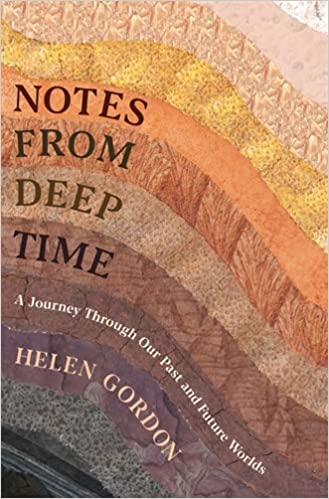
the colourful cover picture of this book attracted me almost as much as the subject 🌈😉
not long into starting reading, I'm finding it very accessible... tho also abit too rambling and meandering, and anecdotal, for my liking - the more personal tangents distract me from what's being talked about, and sometimes seem so irrelevant I lose interest then miss something interesting!
heads up - it's fasure Anglo-European in its position, and assumptions around things like what constitutes 'civilisation', and shared experiences of society, which feels limiting and alienating in places.
I've accessed the book from a local library as an audiobook, and I'm not sure I'm going to make it thru the whole 10 hours... 🤔
UPDATE: abandoned 15% in, towards the end of chapter 3...
This was a really different read to my usual ones, but it was fantastic! It really made me appreciate how much rocks can tell us and also how little time we’ve spent on the planet. It was a great mixture of scientific and historical. I found it super useful to look up the pictures the author talks about throughout (like for example in the colouration chapter), so an illustrated version would be fantastic. The writing style was great and easy to understand, and Gordon’s mentions of where she was and what she was doing kept the book grounded (haha). Definitely a good read for someone who knows nothing about Geology or deep time but wants to!
The content here is wonderful,and has stirred my interest in geology again. A series of essays -a la Robert McFarlane's nature books- with much to delight here in , for example the description of geological periods and how these were hotly disputed, her visit to the San Andreas fault,a close up examination of ancient ice-cores.
Only for me the plain style of her prose didn't seem to echo the wow factor of what she described. I found myself thinking, maybe I will come back to it,and re-read, when I've read more in the subject. But it has done its job,and has drawn me back into this great subject, so I can't complain.
This is so eloquently written. In some ways it reminds me of "Otherlands" and I guess this does for rocks what "Otherlands" did for paleo ecosystems. Where as many books just present (interesting) facts, Helen Gordon brings real humanity to the science of deep time. Which is somewhat surprising as this is a book about very ancient rocks. I think it is a gateway book for lovers of novels to get into non fiction books. Bryson does a similar thing, with enthusiasm, but Gordon does it in a more literary nearly poetic way. I am going to get some of my students to read this. I will pick the fiction lovers to see what they think. Oh yes, I loved this.