Jump to ratings and reviews
Rate this book

Gaza dans la peau

Rate this book
Gaza est bombardée. Rashid est en train de regarder les obus tomber en fumant un joint quand il reçoit ­l’e-mail lui annonçant qu’il peut partir à Londres. Iman, sa sœur jumelle, ne supporte plus les atrocités et l’inaction qui les entourent, elle envisage de rejoindre un groupe de résistance islamique. Sabri, leur frère aîné, a perdu sa famille et ses deux jambes dans un attentat à la voiture piégée. Leur mère semble avoir un passé trouble. Leur père a fui pour s’établir dans un pays du Golfe. Le récit suit la vie de cette famille, la façon dont chacun essaie de se trouver une place au monde, le fossé croissant entre les factions palestiniennes, la montée du fondamentalisme… Roman noir car la pression est constante, la réalité dépeinte tragique, mais écrit avec une humanité et un humour extraordinaires, il donne à voir une autre Palestine.

360 pages, Paperback

First published December 1, 2011

33 people are currently reading
990 people want to read

About the author

Selma Dabbagh

7 books48 followers
Selma Dabbagh is a British Palestinian writer of fiction based in London. Her short stories have been included in a number of anthologies including those published by Granta and the British Council. She was English PEN’s nominee for International PEN’s David TK Wong Award 2005 and has won and been nominated for various international short story awards.
Her first novel Out of It (Bloomsbury, December 2011) that follows the lives of the children of the former exiled leadership who returned to Gaza with the peace deals of the 1990s was recently published to widespread acclaim and reviewed positively by The Independent, the Guardian, The Independent on Sunday, the Daily Mirror, the Times Literary Supplement as well as other British and Middle Eastern newspapers with The Times describing it as “A punchy first novel… beautifully observed… the plot races and the voices are strong.” Dabbagh has lived in various Arab countries including Saudi Arabia, Kuwait, Egypt, Bahrain and the West Bank. She has recently been working on the script and dialogue for a fiction feature film by the Director Azza el Hassan.

سلمى الدباغ: كاتبة فلسطينية- بريطانية تعيش في لندن. نشرت قصصها القصيرة في عدد من الكتب ورشحت لجائزة "International PEN David TK Wong"وجائزة "Pushcart" .

نشرت قصصها القصيرة ضمن مختارات قصصية صدرت عن مجموعة Granta «جرانتا» و International PEN «منظمة القلم الدولية». تعد «خارج غزة» روايتها الأولى.

Ratings & Reviews

What do you think?
Rate this book

Friends & Following

Create a free account to discover what your friends think of this book!

Community Reviews

5 stars
50 (14%)
4 stars
109 (32%)
3 stars
127 (37%)
2 stars
34 (10%)
1 star
15 (4%)
Displaying 1 - 30 of 58 reviews
Profile Image for Paul.
1,481 reviews2,175 followers
October 26, 2014
A novel about the conflict in Gaza, set at about the time Hamas was winning the struggle to take over from the PLO. It is written from the perspective of brother and sister Rashid and Iman. It starts in Gaza, moving to London, another unspecified country in the Gulf and back to Gaza.
Rashid and his friend Khalid run an information centre which sends details of casualties/atrocities to London. Rashid copes by smoking grass from his marijuana plant (Gloria) and dreaming of his girlfriend in London. Iman is disillusioned and tempted by more radical possibilities. Their elder brother Sabri is confined to a wheelchair when he lost his legs in an explosion which killed his wife and son. He is now an intellectual and writing a history of the Palestinian struggle. Their mother looks after them all and is a longstanding PLO member. Their father lives somewhere else in the gulf with his new wife. We discover the history behind this during the narrative. Rashid and Iman and completely immersed in the struggle; each reacting in a different way.
There is a great deal going on in this novel and keeping up with the plot takes some doing; but the writing is good and literary in style and it has great passion. There is a strong sense of place and the sections set in Gaza are particularly good. The characterisation is strong and subtle and I became attached to both of the main protagonists, despite their faults and differing approaches. The different approaches to the struggle didn’t detract from the brutality of life in Gaza and the uncertainty relating Israeli attacks. The periodic satirical and biting input of Sabri keeps the novel moving and gives it extra punch. It is inevitably political because of the content, but there are lighter, more comic moments; often relating to Rashid’s attempts at being a boyfriend.
There is almost no mention of Israel and the focus is entirely on the ongoing struggle within the Palestinian people about how to shape the opposition and resistance. It is a very good first novel. I found the parts set in Gaza most convincing, but enjoyed the whole greatly. The abrupt and inconclusive ending wasn’t a problem for me as I think it reflects the ongoing nature of the situation.
Profile Image for عبدُ الرَّحمن.
157 reviews21 followers
November 26, 2013
A view of the Palestinian society. The poor, the rich, the homeless, the fighter, the bored guys, and the annoyed girls. The secular, the extremist, and the unideologist. And Above all GAZA.

It draws a portrait of the miserable life in Palestine; the siege, the Zionist attacks, the demolitions, and the detentions in prison. All are committed by the Apartheid "Israel".

Rashid, Sabri, Iman, their mother, their father are representatives of Palestine factions and colors.

I love it, thought dislike some actions. I'm impressed by the intelligent and artistic way of Selma in describing characters, events, and actions.


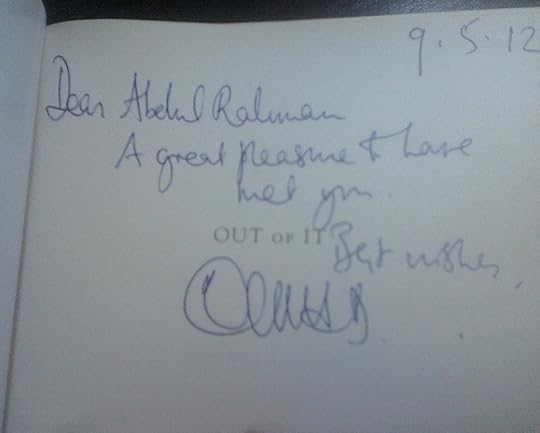
Thanks to its writer Selma Dabbagh , who gifted me this autographed copy.

IMG431-01
Profile Image for DubaiReader.
782 reviews26 followers
January 16, 2013
3 1/2 stars.

I'm finding this book very hard to rate - the content was 5 star, but unfortunately the editing let it down. When I frequently find that I am rereading paragraphs to extract their meaning, the flow of the narrative is lost and the book loses its punch. However, this is the author's first full length novel and I'd be interested to read another if she writes a second.

Rashid and Iman are twins, living in Gaza. Rashid copes with the pressures by smoking marijuana and getting stoned, his sister, Iman, finds herself drawn into working with a rebel movement. Their mother is a strong woman with a secret past, while their father has left to live and work in an unnamed Gulf country. They also have an older brother who has lost his wife and child in a bomb blast and now lives in a wheelchair since he also lost legs.

The tensions are palpable, with some excellent quotes that give a feel for the stresses of life under bombardment: "There were days when everything needed to be checked. The trees with the sea beyond them were all 'aadi', normal. The cars were 'aadi' too. The tents with his neighbours in were the same as ever.".
And: "Apache. Are we to be killed off in reservations by helicopters named after others killed off in reservations?"

All around them are suspicions, is your neighbour a traitor, who can you trust?
Rashid and Iman both leave for London and the Gulf respectively. Both trips offer further insights into life back home - Iman sits in a cafe in a huge mall, concerned at the amount of glass overhead and the injuries that would result in the event of a bomb. Rashid works on his thesis with a professor who had been in Palestine with the British around 1948.

When both siblings meet up in London along with Rashid's friend Kahaled and a rebel leader, Ziyyad Ayyoubi, who is there to speak at a pro Palestinian demonstration, events start to escalate with dire consequences.

I read this book for a reading group that included one lady of Palestinian origin and an invited guest who visited the area regularly and raised money for a charity providing respite and medical assistance for victims of the atrocities. It was an eye-opening evening.
Although I have read a number of books set in Palestine, each one is slanted in a slightly different direction and informs me more of the situation.

Also read:
Mornings in Jenin by Susan Abulhawa (5 stars)
The Kites are Flying by Michael Morpugo (5 stars)
Day After Night by Anita Diamant (4.5 stars)
Miral by Rula Jebreal (4 stars)
The Attack by Yasmina Khadra (4 stars)
When the Bulbul Stopped Singing: A Diary of Ramallah Under Siege by Raja Shehadeh (4 stars)
When I Lived in Modern Times by Linda Grant (3 stars)
Profile Image for Shannon .
1,219 reviews2,593 followers
August 28, 2013
Twenty-six-year-old twins Rashid and Iman live with their mother and older brother Sabri in Gaza; the night the bombing starts, Rashid is blissfully stoned after receiving the welcome news that he's won a scholarship to study in England, and his sister Iman is at a meeting of the Women's Committee in a basement room at one of the newly-built universities. Trapped inside until the following day, she is frustrated by the other committee members refusing to hear her thoughts and opinions because she is new, but she rises to the challenge of being stuck inside and sorts out cups of tea and rugs for the women to lie down on. She daydreams about kissing a young man, Raed Abu Warde, cousin to one of her students, whom she's only met once. As the bombing finally ends and it's safe enough to leave for home, one of the other women, a pious Muslim woman called Manar, makes cryptic comments to Iman inviting her to join a movement and telling her that they will make contact.

It isn't until Iman is brought to the home of her student, Taghreed, and sees the bodies of Taghreed and Raed that she starts to take Manar's offer seriously. But someone else is keeping an eye on Manar's group and one of its leaders, Mustafa Seif El Din: a soldier high up in the Patriotic Guard, Ziyyad Ayyoubi, the son of scholars who had been assassinated years earlier. He looks quite a lot like Iman's brother, Rashid, though a bit older, and is knowledgeable about Iman's family. Her father, Jibril Mujahed, was once in the Palestine Liberation Organisation, or PLO, but left eight years ago and took up new residence in the Gulf with a slightly younger woman called Suze. To get Jibril's daughter to join a fundamentalist group and even become a suicide bomber for them - the political ramifications would be extreme. Ziyyad warns Iman to leave Palestine, to get out, go to England or to her father in the Gulf, somewhere where she can't be used.

But Iman, and Rashid, and Rashid's friend Khalil, they are Palestinian, and getting out isn't the end of being Palestinian. It is their home, and it follows them regardless. They can never escape the politics, and in Palestine, politics are a matter of life and imminent death.

I have been putting off writing this review because I'm not sure what to say or how to say it. This is one of those books where I'm torn between admiring its achievement and the story it tells, and yet not liking it very much. Some people are quick to declaim that if you don't like a book such as this one, it's only because you didn't understand it - the implication being that you're too ignorant or stupid to get it. While the politics are complicated and there isn't enough exposition or explanations offered to fill in the gaps for non-Palestinian readers (and to be honest, how many people outside of Palestine can really claim to understand everything about it?), I was certainly able to follow what was happening and pick up on the undercurrents well before the characters themselves knew what was happening. No, it's something much more subtle than that, and relates more to Dabbagh's writing than the content of the story itself.

Having just finished Susan Abulhawa's Mornings in Jenin last night, I wish I had read that book before this one, as it provides a great deal of historical background and context and would have helped me navigate the political chaos of modern-day Palestine. Though to be fair, Rashid's advisor in England, Professor Myres, an expert on Palestine who was there in the 40s as a junior police officer, provides an intriguing, knowledgeable and gruesome glimpse into the establishment of Israel. Regardless, it wasn't hard to follow, it was just a bit frustrating because I'm someone who always wants to understand and know more. Out of It certainly captivates your interest and curiosity!

The story of Israeli-occupied Palestine is told through the movements and daydreams of the Mujahed family. Sabri, considerably older than the twins, was once married and had a son, a toddler, when his car exploded, killing his family and taking his legs. He now lives in a wheelchair in his bedroom, writing an epic chronicle of Palestine's history and the numerous battles with the occupier-invader, Israel. He is envious of Rashid, a young man who lavishes more attention onto Grace, his marijuana plant, than he does his studies, and yet who has received this amazing scholarship to do his Master's degree in England. Rashid, for his part, has always felt overlooked and rather useless by the rest of his family. He knows he's no Sabri, and he feels distinctly unwanted because of his failing. (Ironically, the paragraph in Rashid's essay that he lifted straight from one of Sabri's emails on the topic gets big question marks and a large cross, while below, "clearly marked, next to the paragraph that he, Rashid, had typed out without looking at any other source, as an articulation of ideas that rippled away at the back of his mind, was a large tick" and the word "Excellent!" [p.131])

Rashid and Iman are modern-day Palestinians, not all that different from you and I except that their home is surrounded by the rubble of their neighbours' houses, demolished by bombs and bulldozers - why their own house alone was spared is never explained, directly or through implication, and is one of the minor details that bugged me throughout the story. Iman goes out with "big hair" (she doesn't cover her head; her family isn't religious) and modern ideas, but struggles to make sense of her world, to align her contemporary understanding with the reality of living in Palestine. She grew up in countries like Switzerland, moved around often because of her father's job with the PLO, but when she arrives in London finds it discombobulating:

London was quiet to Iman. The traffic, planes and people worked along allocated channels. They moved along the grooves cut out for them. It was not a world shaken down and cut through night after night. The noise was conformist and the talk and expressions appeared to operate on one level only. People behaved in ways that seemed unconnected to others. Their actions had repercussions only for themselves. There was an enviable ability to relinquish involvement in the bigger picture, to believe that it was all under control, that somebody with your interests in mind was looking out for you. [p.185]


Very true - I've never lived in a war-torn country or anything like it, but I've long noticed this about our western countries, our "free and democratic" societies, this assumption that someone is looking out for us, this blind, naïve belief that everything for sale is safe for us, that the problems of tomorrow are already being dealt with today, so that we can continue our lives in peace.

The contrast to Gaza is a strong one: bombed and blasted, riddled with bullet holes, unpredictable, never knowing what's coming next or how long it will last for - a life of uncertainty, of insecurity and instability, of rubble and chunks of concrete and stone, twisted steel and broken glass. Without going into the history of Palestine, Dabbagh is able to portray the mindset of extremists, what leads them to that place and that belief that retaliation at the cost of their own lives is the only avenue left. Always the sensation is one of despair and rage, impotence and overwhelming grief. This atmosphere creates a tangible backdrop to the story of Iman and Rashid, the choices they make.

Out of It takes the situation in Palestine and brings it to the world stage: in London, Rashid is a pretty regular young man, a student who isn't that much different from any other student except for his background. But his girlfriend, Lisa, likes causes, and is miffed that at a dinner with her sister and a few others, including a diplomat she wanted to impress, Rashid didn't portray himself as the helpless sufferer like she expected him to.

"You just don't get. it, do you? You can't just go around showing your dirty laundry in public - dope, corruption, hypocrisy, all that crap that you're so good at. Keep it to yourself. You can't afford the luxury of showing that off."

"We can't just present ourselves as graciously suffering all the time either. The stress of that place: people feel suicidal. When they get just a whiff of what freedom feels like they do strange things. That's understandable, isn't it? It's not like anywhere else." He tried to hold her arm but she moved away from him. "Come on, Lisa, I was out for the evening having a meal, I thought, with you and your friends. I didn't know I was expected to sound like some zealot standing outside a mosque shouting propaganda." [pp.143-4]


At the heart of the novel is the Palestinian heart, crumbling after onslaught after onslaught. Between the informers - Palestinians who betray their own to Israel in exchange for money and other benefits - and the lack of unity within Palestine, with political parties turning on each other, and the people inside the parties turning on their own - the distinct picture is one of hopeless chaos, a lack of trust, a scrabbling for petty morsels. Anyone who ousts his or her fellows for corruption or fraud is turned on. In occupied Palestine, people take what they can get, and as long as there are no strong leaders and the people are helping Israel do its dirty work by killing each other, there seems to be no hope left either. This is at the core of the ending, which was slightly predictable (the foreshadowing is too obvious), a little bit corny, and ultimately, surprisingly, ambiguous.

I found it to be a hard novel to get into, especially the first two chapters which were hard to follow, but later the pace picked up, the story became more interesting and flowed better. The characters were realistic and believable, however overall the story - written by a Palestinian-British author who had previously published only short stories - suffered from its debut status: the prose staggered a bit throughout, was encumbered with heavy baggage in some places and seemed to skim too lightly across the surface in others. The uneven narration made it harder for me to fully connect with the story, which was a huge disappointment as the story itself is very interesting, and I wanted to follow the characters through to the end. Out of It provides an astute, intelligent and moving look into the turmoil of modern-day Gaza and its young adults, who are stuck in a war zone not of their making and want nothing more than to get out - only to find that Palestine isn't a place you escape from, but a home that defines you.
Profile Image for Amanda B.
660 reviews43 followers
May 22, 2021
3.5 ⭐️ A story about a family living in Gaza during times of conflict, showing different family and society perceptions. Seemed the right time for me to read this and I’m glad I did.
Profile Image for Maryssa.
76 reviews11 followers
August 4, 2012
I received this book in a Goodreads Giveaway and I'm glad that I did.

This novel shows the Israel/Palestine conflict through the eyes of the twenty-something Palestinian protagonists, each with their own perspective of the world and the place where they live.

I will admit that I previously knew very little about what all was going on with those conflicts and this novel introduced me to aspects that get overlooked by the Western media and pieces of the history that I was unfamiliar with. As a result this book was a slow read because I frequently had to stop and think about what actual part of history was being referenced to. And the author did a great job of keeping me engaged despite my lack of knowledge.
Profile Image for Sharifah Alshahab.
3 reviews
August 17, 2012
While I am unable to comment on how realistic the portrayal of Gaza, Palestine, Gazans or the Palestinian struggle, having not been there myself, I have to say the way the book was written was fabulous. It kept me anticipating and speculating how the characters got where they were in the page I was reading and what will happen to them in the pages to come. The manner the author censored boycotted brands, official names of political parties or the conflict itself was truly sophisticated - enough for me to know what she was talking about.

The ending was a little abrupt, without closure. But I suppose it does go with the ongoing struggle that unfortunately remains without conclusion. Can't wait for a sequel!
Profile Image for Anna.
638 reviews10 followers
March 5, 2015
It's hard to convey quite how much I loved and appreciated this novel! So many of the characters were mined so well, it was written on that level of honest appraisal of people's thoughts and actions that is still so refreshing to read. It attacked the ugly and the beauty within the story and the characters, exposing both with equal ruthlessness. I felt like I was gaining a lot of understanding and also was awed by the articulation of so many fears and insecurities of my own.

I would have loved more of Khalil and of Rashid's mother and perhaps a little more of Ziyyad's perspective too just because we didn't get to see so much of them and Dabbagh has a talent of switching to someone's view point and telling so much about them by the way they are processing everything around them. I loved that style and wanted it for everyone. The only time I felt it didn't quite work was with the big fighter in the car at the end (tries to sound vague and unspoilery), it was just a little too convenient at that point for him, but that was literally the only tiniest complaint I had and I still appreciated why his pov needed to be there at that moment.

In addition some of the quotes on international law were awesome, I think my favourite being: "These are the justifying laws of conflict and empire. They are the Occupier's laws; they create them and they benefit from them, as and when it suits them." I loved Iman so much at this point.

Also this struck me as particularly confronting because of the truth in it about the y generation: "They might at best be capable of revolt, but that in itself did not make them capable of revolution; they lacked the sophistication of ideology that was required for that."
Profile Image for Val.
2,425 reviews87 followers
November 16, 2016
Twins Rashid and Iman and their elder brother Sabri are Palestinian siblings living in Gaza. Their family is a westernised, privileged one; their father was a prominent politician in the former administration and they have lived abroad. Their house is symbolically still standing, while all around them their neighbours live in tents. Their relative wealth and privilege cannot protect them from the situation they live under, but it gives them a few more options.
Each family member has to decide whether or not to stay or leave, to become involved in the Palestinian struggle or not and if so how. The father has left politics and now lives in the Gulf. The mother was once involved in more direct action, but now lives quietly at home. Sabri was also involved, until a car bomb killed his wife and child and blew off his legs; he is now writing a history. Rashid helped at a community centre, then wins a scholarship to study in London and leaves. Iman is looking for a role, but is persuaded to leave, travelling first to her father in the Gulf and then also to study in London. Wherever they are and whatever they are doing, the family members cannot entirely leave their homeland behind. Events unfold in an interesting and not always predictable way.
I wish I could give this book a higher rating. It shows fairly ordinary people in a far from ordinary situation and gives an insight into Palestinian lives behind the headlines. Unfortunately I could not warm to the author's writing and some sloppy editing lets the book down.
Profile Image for علا عنان.
Author 1 book219 followers
June 1, 2012
I'll come back for a longer review about this novel
Profile Image for Alessandro Argenti.
265 reviews4 followers
September 25, 2019
E' un libro che ho faticato molto a leggere. Non è per niente scorrevole sebbene narri storie personali e vicende che mi interessano parecchio.
Profile Image for Full Stop.
275 reviews129 followers
Read
June 11, 2014
http://www.full-stop.net/2012/10/24/r...

Review by Kehan DeSousa

It would defy me to talk about Palestine without being overtly political, and maybe that’s why Selma Dabbagh doesn’t even try to avoid politics in Out of It. Out of It is political in the sense that all novels can be conceived of as arising from and being shaped by their historical context, but it’s also, very literally, about politics. The primary characters spend their lives worrying about Palestine’s fragile material existence; they approach internal and external threats as tangible and political, not existential. Because of this focus, the plot of Out of It is predictable and topical, but it’s also a relevant dialogue between two opposing approaches to living in an inescapably political environment.

Westernized siblings Rashid and Iman spend the novel in their homeland Palestine and in England, and react in opposite ways to their same reality, which is that the Palestinian conflict guides and confines their lives, both physically and psychologically, wherever they are. Rashid has lost faith in the possibility of an end to the conflict, so he smokes pot and has a chip on his shoulder, mostly. Iman witnesses a horrific bombing and then militarizes, idolizing a glamorously tragic leader in a prominent political party. Both siblings are in their twenties, which means that they spend a significant portion of the book bickering and swooning and generally hassling each other and the people around them.

Read more here: http://www.full-stop.net/2012/10/24/r...
Profile Image for Moushumi Ghosh.
433 reviews10 followers
August 18, 2015
This is my first novel from the oldest conflict-ridden region in the world. To be honest, I did not have much of an expectation from this novel. And also, my knowledge of the Israel-Palestine conflict is rather sketchy. I know what's going on there but how it all started that I didn't know. West Asia was far from my radar. I am so glad this book makes the conflict both human and accessible.

Rashid and Iman are twins who are trying to find their own response to the conflict much like I was trying to. They are of course more involved since they live in Gaza. In addition, they discover their family history which is very connected to the conflict and the novel is about how this secret knowledge changes them.

Parts of the novel concentrate on how Rashid and Iman navigate Post Colonial 'otherness'. I am clubbing the characters here but they are very different from each other. Dabbagh has created well-etched characters.

It's a very light novel on a heavy topic. Moments of humour as well as sections where the action follows the twins to London gives the reader a breather. The novel gives the reader a sense of how families live in Gaza even though the Mujahed family is far from the regular Gazan family. They have several amenities which others don't including a roof over their head and the choice to study abroad.

The mark of a good book for me is when the book pulls me into its own world from which I don't want to leave. That's exactly what happened here. When I reached the last page of the book, I didn't want to get out of it. A very satisfactory read.
Profile Image for Claire Binkley.
2,284 reviews17 followers
November 8, 2015
This novel has a mentality similar to my own, concerning the MC twins Iman and Rashid, and all the people around them. Regarding the mentality comment, I refer to this post-TBI wreckage. This made it "hard to follow" - much like how I've had the comment my thought processes can similarly be "hard to follow".

I honestly don't remember if I put this book on hold as a request or if I just noticed it on the shelf. I'm leaning towards the latter recollection since I do recall I was wandering in the D fiction section looking for Dickens, Dostoevsky, Doctorow or similar authors, but I was also looking in book reviews for good recommendations as well, so it could have been either.

It's very helpful for understanding the context of this novel to have a familiarity with recent international affairs such as the 7 July 2006 London bus bombing which involved Islam and this Gaza family trying to move back today, or so I've found.

Looking at other reviews, it seems I should be talking about the Israel/Palestine conflicts more, but I think my cogitations on the subject are effectively worthless, and I'm afraid to dive into the subject any more.
That is what in particular made this book difficult for me to get through: the fear. However, I found it worthwhile to make it through in the end - that Dabbagh's novel is something to consider.

N.B.: This is a bit mind-boggling.
Profile Image for Lindsey.
775 reviews10 followers
February 8, 2013
A first-reads giveaway win for me, Out of It was a perfectly fine book, but it was just missing something for me. I will readily admit I should know more about Palestine and Israel, but I really only have the most basic of understandings of it. I felt this book was expecting the reader to already know more, such as an understanding of the politics and resistance movements within Palestine in it's struggle for the land it was promised to keep. I also, just did not particularly relate to the characters, it was lacking something to really draw me to them and make me really care about them. I felt that if there is such a thing as spoiled brats in Palestine, then Rashid and Iman fit the bill, especially Rashid. When he was complaining about his mom killing his pot plant, I just wanted to sock him. I thought he was going to have a redemptive moment when he planned to make the ultimate sacrifice, but that didn't happen. It just felt to me that these characters were supposed to represent the youth of Palestine, but all they wanted was to escape it and they really did a whole lot of nothing.
Profile Image for Ian.
528 reviews78 followers
September 29, 2012
What a disappointment. The first third of this novel was excellent. Against the backdrop of the struggle to survive in Gaza under bombing and oppression from Israel, we meet various members of a Palestinian family. Rashid, disillusioned and desperate to leave, his sister Iman, struggling to find a role in the struggle and flirting with religious fundamentalism, his disabled older brother Sabri, a bitter former fighter who lost his family and also his legs in a car bomb and then his mother who has a somewhat mysterious past. We also meet Khalid who with Rashid's help, runs a small information centre that relays details of the casualties and other results of the violence to London. Following this gritty, informative and compulsive opening, the story then veers off to at times just melodrama in London and Dubai with very little movement in character or plot development, all of which could easily have been brought out more naturally by remaining in Palestine. By the time we return, the narrative flow has been fatally interrupted. Shame.
Profile Image for Susan.
612 reviews11 followers
August 13, 2012
I was lucky enough to win a copy of Out of It through Goodreads. Dabbagh delivers a compelling story of a brother and sister who are trying to carve a life for themselves despite the chaos around them. Both characters are well developed. Rashid sees a bright future for himself when he is awarded a scholarship to London, but things don't go exactly as he had planned. Always feeling like a outsider in his own family, Rashid struggles with his family's past, present, and future. His sister, Iman, is also struggling to figure out what she wants. Seeing the destruction and uncertainty surrounding her family, she finds herself wanting to take action. Iman's own path leads her away from home giving her a chance to get a new perspective of her life and family. Dabbagh does a good job at showing the reader the violence, destruction, struggle, and uncertainty of Gaza. Overall this was a powerful story.
Profile Image for David Grieve.
385 reviews4 followers
March 10, 2013
Twins Rashid and Iman along with bomb blast survivor older brother Sabri live in Gaza. Rashid gets a ticket out in the form of a university scholarship to London. Iman finds herself getting more involved in the resistance movement. Sabri is a housebound figure sourcing and distributing information.

You get a real feeling of sense of place. I cannot say whether it is an accurate portrayal of life in Gaza but it has a feeling of authenticity about it. The tension, confusion and complexity of the struggle all come through.

The story itself is interesting without being startlingly original but it is well told and the contrasts between the various locations add to the appeal. Having said that, the parts set in Gaza itself are much more powerful and evocative than London or the Gulf.
Profile Image for Wendy.
7 reviews
August 6, 2012
I stayed awake late to finish this excellent first novel - extremely political but avoiding sloganising and sermonising (after all, actions do speak louder than words). It has superb pace and a wonderful eye for description, both of place of of character; particularly striking are the complex and subtle portrayals of familial relations, against a backdrop of Israeli atrocities and Palestinian resistance in Gaza. I bought this on the strength of a very positive newspaper review and will certainly seek out other work by this talented and passionate author.
63 reviews2 followers
January 9, 2022
This book was received as a GoodReads First Reads Win

I was unable to finish the book. It lay on my bedside for months with me never in the mood to pick it up. It was an interesting subject matter but the story was lost in the childish love relationship of Rashid and Lisa. I also found it a far fetched notion that all these young people were so easily able to leave Gaza and head over to London. Sex and alcohol was no big deal, as a Muslim I find that offensive. Too many things bothered me about the novel to be bothered to read it.
Profile Image for For Books' Sake.
210 reviews283 followers
July 3, 2015
"Set in contemporary Palestine, London and the Gulf, Dabbagh’s novel provides a fresh and impressive insight into what it means to be Palestinian in the 21st century.

Focusing on twins Iman and Rashid, the novel escapes the traditional rhetoric of Palestine.

Iman in particular is strong-willed and feisty, willing to subvert expectations in Gaza by removing her headscarf in public and becoming increasingly political." (Excerpt from full review at For Books' Sake).
Profile Image for Susan.
1,658 reviews
June 22, 2013
This was a very hard book to read, but then, the life of those described/written about is very hard! There is no room for lightness and very little air in this story. The family and individuals described come to life as do their struggles. There are no easy answers, barely any answers as members of this priviliged family try to come to terms with their lives in Gaza and in their attemps to leave Gaza. I really struggled to read this, not because of the writing which is excellent but because of the struggle of the protaganists.
Profile Image for Guneet.
56 reviews8 followers
August 27, 2013
The initial pages of the book were a bit puzzling as the narrative style is pretty complex. Slowly, as you read the book you will get used to 'b' being talked about before 'a'. It is an interesting read. I shall give it three stars as the end was pretty vague. Also if the author has included a character similar to Leila Khaled, the great Leila Khaled of the Palestinian revolution, then she hasn't developed it well making her weak at some points. This was a disappointment. The novel is about the influential in Palestine, what about people on the margins.
Profile Image for Jessica.
256 reviews25 followers
November 18, 2014
I wanted to like this, but it couldn't even hold my attention. I was constantly having to backtrack to the previous page after realising I had no idea what had just happened. I had nothing invested in the story and now that I've finished the book, I can barely remember how and why everything happened.

The book also does this annoying thing where it flits from the mind of one character to another within the same scene, instead of settling on one at a time.

Aside from that I didn't dislike the book, but it just couldn't make me care about it.
Profile Image for Belinda.
3 reviews
August 13, 2015
truky enjoyed this book. the characters were engaging with delicately nuanced personanlities and observations. the multi dimensional narrative on culture, of people just trying to carve out identities in a situation where pre defined identities ae expected to be taken up or imposed upon them. it was a very readable book, depicting the very real human stories of life in palestine as a palestinian. highly recommend it. quite haunting ...
Profile Image for Keval.
166 reviews4 followers
August 21, 2015
There are so many layers to the Israeli-Palestinian conflict that we don't necessarily understand, and what Selma Dabbagh does with her novel is to try to give us some access to them.

I like the characters, what they symbolise. On some level I was expecting something major to happen sooner. Then I thought maybe there'd be a punch right at the end. I suppose there was, though it left me a little underwhelmed.
Profile Image for Khulud Khamis.
Author 2 books104 followers
March 6, 2016
What strikes me both as a reader and writer in this novel is the closeness and intimate familiarity I felt with the text itself - the style, language, choice of words and phrases, metaphors, the way Selma describes emotions and gestures. On some deep level, the text felt to me like home.

I read a lot, and this sense of home with a text rarely happens. It happened to me with only two other writers. It's a feeling quite difficult to convey in words.


Profile Image for Louise.
188 reviews13 followers
September 7, 2012
I loved this book. A real insight into modern Palestinians. The characters all felt very real, and the plot is compelling throughout building to a great climax at the end. Very atmospheric but it doesn't lay on the 'misery' too thick- after all, it centres around a middle class family who are aware of their advantage.
Profile Image for Cindy.
247 reviews
December 6, 2012
Compelling story that races forward. At times tricky to keep track of characters and their mind sets but after a while this works out. Powerful and timely glimpse into the struggles and challenges of Gaza. If I could I would give it 3.5 stars...nearly a 4.. Highly recommend. I am looking forward to author's next book.
Displaying 1 - 30 of 58 reviews

Can't find what you're looking for?

Get help and learn more about the design.