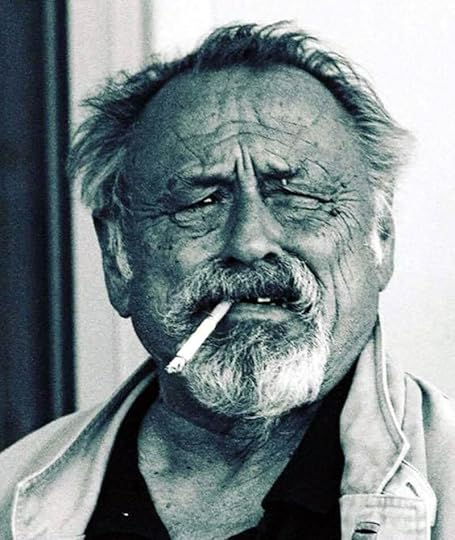
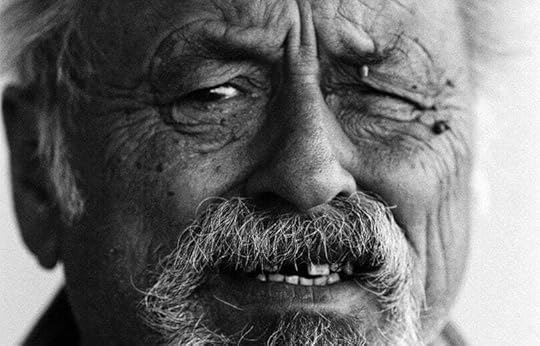
This was my first Jim Harrison book but it won't be my last. Like many of his books, this one consists of several, unrelated novellas. Each are great in their own right, but two in particular stand out. First, there's "Brown Dog," which is one of the funniest pieces of fiction I've read in a while; Harrison had me laughing out loud nearly once a page. Irreverent, boisterous, bawdy, and utterly unpredictable, "Brown Dog," follows its eponymous narrator (also known as B.D.), a part-Native American, skirt-chasing, scavenger diver, as he beds an anthropology student whose interest in B.D. is at least partly derived from his knowledge of a hidden Indian burial ground. "Brown Dog" reads like something Mark Twain would write if he were alive today. The plot is interesting, but plot isn't really Harrison's thing; read "Brown Dog" for the indelible voice, which puts one in the mind of an adult Huck Finn transplanted from the Mississippi River to the forests and lakes and dive bars of Upper Peninsula Michigan.
The next novella in the collection is “Sunset Limited,” which depicts a reunion of erstwhile radicals from the ’60s as they venture to Mexico to console, and then, perhaps, free, an old comrade who is now in jail on trumped up charges. The first half of the story expertly introduces us to each of the characters and fills in on their shared history; this is the part of the novella that works best, as Harrison deftly and succinctly juggles a half-dozen characters and decades worth of back-story. The last half of the novella, however, is a bit rushed and choppy. This was my least favorite story of the collection, but “least favorite” is a relative term, since all of the novellas here are worth your time.
The final novella is the “The Woman Lit By Fireflies,” which isn’t as rowdy as “Brown Dog” nor quite as ambitious as “Sunset Limited.” It may, however, be the most affecting of the novellas. The story follows Clare, a fifty-something woman who walks out on her husband at a rest stop in the middle of Iowa. As she spends a night in a cornfield, Clare reflects, with a rueful, humorous voice, on her life and the events that brought her to this moment. Of all the novellas, this one has the most complete arc, and its tender ending is a perfect note to go out on.
It’s sad Harrison is no longer with us, but I take consolation in the fact that he left us so many novels, novellas, poetry, and non-fiction—a back-catalog I can foresee myself enjoying for years to come.