From the 1840s through the end of the Civil War, leading Minnesotans invited slaveholders and their wealth into the free territory and free state of Minnesota, enriching the area's communities and residents. Dozens of southern slaveholders and people raised in slaveholding families purchased land and backed Minnesota businesses. Slaveholders' wealth was invested in some of the state's most significant institutions and provided a financial foundation for several towns and counties. And the money generated by Minnesota investments flowed both ways, supporting some of the South's largest plantations. Minnesotans eagerly catered to this source of investment. Politicians and officeholders like Henry Sibley, Henry Rice, and Sylvanus Lowry worked for a slaveholder; the latter two recruited wealthy southern slaveholders to invest in property. Six hundred residents of the new state of Minnesota petitioned the legislature to make slavery legal for vacationing southerners who brought with them enslaved men and women "as body servants, for their comfort and convenience" while they escaped the summer heat of the South. Through careful research in obscure records, censuses, newspapers, and archival collections, Christopher Lehman has brought to light this hidden history of northern complicity in building slaveholder wealth.
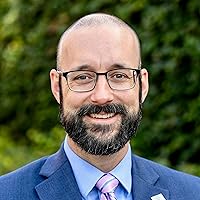
Christopher P. Lehman is a professor of Ethnic Studies at St. Cloud State University. In the summer of 2011, he was a Visiting Fellow at Harvard University's W. E. B. Du Bois Center for African and African American Research.
I often think that I'm too cynical, but then I read things like this and realize that I'm actually too naive. Even knowing what to expect going in, I was disgusted and disappointed by how much was left out of the white people history I was taught as a kid.
5 stars for content. 3 stars for kind of dry writing -- I'm not a history buff though and I tend to prefer stuff with a broader scope, so the amount of detail is appropriate for what it is but also not my preference.
CW: No explicit description of horrors that I remember, but the topic is slavery so don't expect kittens and rainbows.
Excellent source of information showing Minnesota ties to slavery through financial transactions of enslavers spending time in Minnesota. Minnesota benefited from their money and therefore benefited from the practice of slavery. Reading of the book is a little tedious. It is more of a collection of essays around a specific connection to slavery - fur trade, tourism, etc. - rather than an arc building from beginning to end. Because of the essay like nature some of the information is repetitive. Still worth reading.
The premise is a powerful explanation of the reach of systemic racism and the economic benefit that MN gained from slavery. That being said, the book is a very flat telling of who worked for whom, who married whom and where their disposable income came from. Not very compelling, and hides the real issue.
"Southern Slaveholders in the North Star State" is accurate. Unfortunately for its readability, Slavery's Reach chronicles those people who enslaved people in the South and invested money, bought property, or travelled to Minnesota between the days of the fur trade and the Civil War, and they are evil, boring people.
Josiah Snelling was not involved in slavery at the Fort, but he bought an enslaved person later, after he went back East. Goddamnit, Josiah. I had a vague idea that you were respectable. (This is not the resource for slavery at Fort Snelling. Dred Scott is mentioned briefly.) People were employed by slave owning fur processors (mainly Henry Rice. It's implied that there are others but this book only describes the leading citizens. This goes for all eras). Rice was employed by an enslaver in Missouri to trade furs up here and started moonlighting as an Indian agent, real estate investor, and politician. Enslavers and their associates were further empowered to come up here after we achieved territorial status and the Democratic presidents appointed Southern enslavers to serve in political office, where they inevitably bought property and built buildings. (Lehman doesn't explain the mechanism by which the US government swindles the Dakota out of their land, surveys the land, sells the land to white people, and the white people get rich by selling the land to their brothers-in-law, and more detail on that would have helped, because that is a weird system.) As St. Paul, St. Cloud, Stillwater and other proto-municipalities sprang up, more Southerners visited, invested, and moved to Minnesota, and the bulk of this book is chapters describing them. "Enslaving gentleman was born in East Coast and married Southern woman and his father gave them eight slaves and then he ran agricultural business and came to Minnesota and bought half of Sauk Rapids and went back to South." So many of these little stories about enslaving asshats. After Dred Scott, slavery was legal in Minnesota for fourteen months until we achieved statehood, and after statehood, a blind eye was turned to Southerns who travelled here with their "servants." For a few seasons, Minnesota was a summer tourism destination for Southerners who wanted to be slightly less hot, but after a woman made contact with abolitionists and was spirited away from a hotel, the enslavers rushed away, and the Civil War started the next summer, taking the enslavers and leaving us to deal with the genocide, war crimes (Alexander Ramsey opposed slavery in Minnesota), and social and economic racism that are a bigger part of our legacy than enslaver money. This is a good resource if you want to know about men like Rice (County), Aiken (County), Goodhue (County), or Mackubin (Street) and their ties to slavery, but it's not that interesting unless you want to read about affluent, white men who aren't from here and mostly didn't stay.
This is a dreadfully flawed book. His thesis is that slave-tainted money had a "tremendous impact" on early Minnesota, and that everyone who did business with slaveowners -- whether they knew about the slaves or not! -- was complicit in slavery. The biggest error is the "tremendous impact" assertion. He documents 94 southerners with some connection to slavery (sometimes rather distant) who visited or invested in Minnesota, 1849-1865. He fails to note that in just the period 1850-1860, Minnesota's non-Indian population grew by 166,000, and there must have been many visitors and investors from the east and midwest with no connection to slavery. Compared with this vast tide, the impact of his southerners must have been not tremendous, but negligible. The book is full of indefensible claims, like this one: Sylvanus Lowry was a St. Cloud town council member when he sold some real estate to his slave-owning brother-in-law.; a private, intra-family transaction. The author concludes that this implicated the city government of St. Cloud in slavery. Kind of nutty.
A solid book and strong piece of historiography looking at the role of slavery and the slave economy in the development of Minnesota. While MN didn't become a state until 1858, its economy and history was interwoven with the slave South thanks to easy travel up the Mississippi river. The famed Dred Scott case was partially the result of travel by Dred and his owner up to the Minnesota Territory. The University of Minnesota was saved from financial insolvency by slaveholders' capital. An important piece of work that shows us the "Free North, Slave South" story isn't as cut and dry as folks would like it to be.
This is one of those rare times where I feel like I need to justify my rating. This book is very well written, and as a bit of a history buff, not nearly as dry and slow as a lot of historical writing ends up being.
That being said, I do feel like there’s an erroneous conflation of facts here. There’s a lot of people who did a lot of good - from assisting in the operation of the Underground Railroad to writing and publishing an abolitionist newspaper - that get grouped in with slaveholders who broke up families and regularly whipped their slaves. What’s more important - taking money from a slaver, or what you do with that money?
Like the Lyncher in Me, this novel was interesting but a lot of these facts I already knew so it felt like I skimmed alot. Also, in parts is read like a text book, listing off names and dates and locations over and over which got laborious. So I'll say what I've said before, if you are unfamiliar with the ties that slavery had to MN or the growth of the midwest in general, then please pick up this book.
A clear and well-researched account of how slavery helped build the economy and institutions of Minnesota, although it was a free territory/state for most of it's history. A useful read for anyone wishing to better understand the extent to which slavery undergirdded the whole American economy.
One thing I'd have liked to know is to what extent MN serves as an example of how this played out in other northern states.
Dr. Christopher Lehman’s work offers extensive research on Minnesota and its relationship with slavery. A necessary piece to be added to the historiography on the impact slavery had on the North during the years leading up to the Civil War. However, his style may prevent his book to access a broader audience limiting the impact and reach of his contribution to the field of history.
I was honored to be in a book club for this book led by Dr. Lehman. I was unaware there were slaves in Minnesota. Unaware that slavery was legal in Minnesota for awhile. Unaware of all the money brought in to Minnesota from slaveholders. Eyeopening book for me.