What do you think?
Rate this book


176 pages, Paperback
First published January 1, 1983


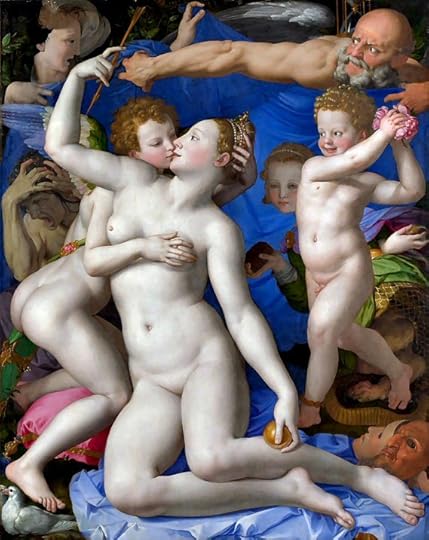
A prehistoric cave painting, a Byzantine mosaic, a Mannerist allegory by Bronzino, and one of Jackson Pollock's dripped-paint abstracts—what kind of book would choose these as the four illustrations to its opening chapter? One that is less concerned with the story of art through the centuries than with posing questions that you can ask of many different kinds of art over the whole span of its existence. Such a book is Susan Woolford's slim but provocative volume in the new "Art Essentials" series from Thames & Hudson. The question she asks here is "What purpose did each picture serve." Her answers are: probably as magic; for religious instruction; to please the fine taste of a classically educated patron; and to reveal the creative activity of the artist.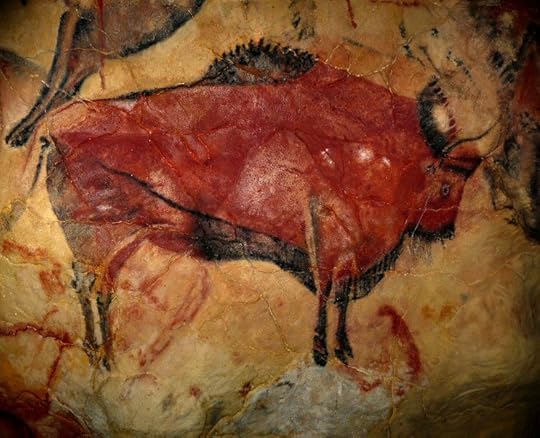



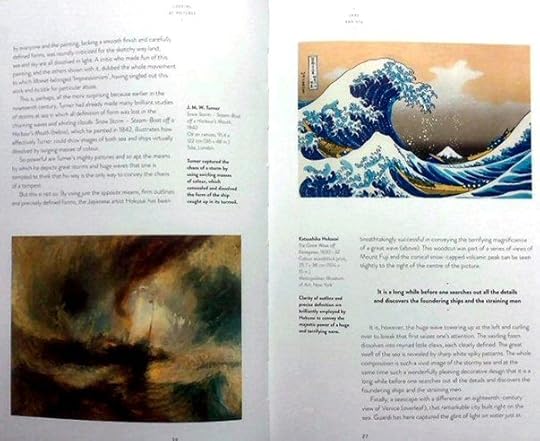
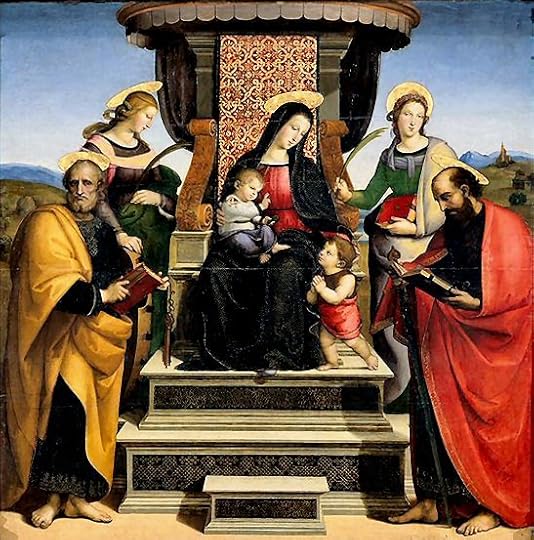
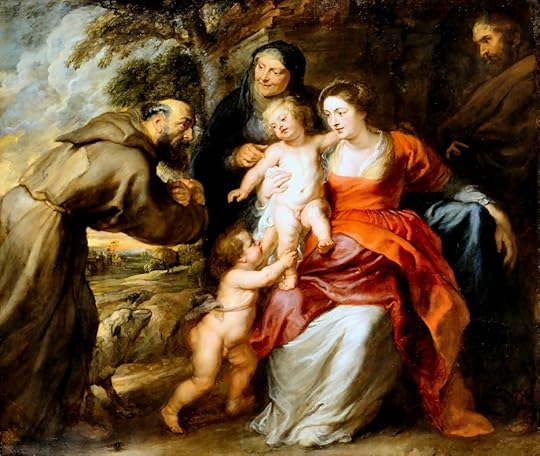
One of the books on that original list that made the greatest impression on me was Principles of Art History by Heinrich Wölfflin. It is a dense, Germanic book, but I found its concepts immensely useful. Woodford brilliantly applies them to paintings of the Holy Family by Raphael (Renaissance) and Rubens (Baroque). One is Linear, with clearly-delineated forms, the other Painterly, with edges blurred. One is Planar, built of obvious superimposed layers; the other is Recessive, expressed as a continuous movement through the space of the picture. One is a Closed Form, fully contained within the frame; the other is Open, spilling out of it. And so on. Woodford then goes on to apply Wölfflin's principles to other comparisons (Raphael/Rembrandt, Bellini/Vermeer, and David/Fragonard), further deepening the concepts with each pair of paintings.