

What do you think?

Voyage in the Dark
'It was as if a curtain had fallen, hiding everything I had ever known,' says Anna Morgan, eighteen years old and catapulted to England from the West Indies after the death of her beloved father. Working as a chorus girl, Anna drifts into the demi-monde of Edwardian London. But there, dismayed by the unfamiliar cold and greyness, she is absolutely alone and unconsciously floating from innocence to harsh experience. Her childish dreams have been replaced by the harsher reality of living in a man's world, where all charity has its price. Voyage in the Dark was first published in 1934, but it could have been written today. It is the story of an unhappy love affair, a portrait of a hypocritical society, and an exploration of exile and breakdown; all written in Rhys's hauntingly simple and beautiful style.
Jean Rhys (1894-1979) was born in Dominica. Coming to England aged 16, she drifted into various jobs before moving to Paris, where she began writing and was 'discovered' by Ford Madox Ford. Her novels, often portraying women as underdogs out to exploit their sexualities were ahead of their time and only modestly successful. From 1939 (when Good Morning, Midnight was written) onwards she lived reclusively, and was largely forgotten when she made a sensational comeback with her account of Jane Eyre's Bertha Rochester, Wide Sargasso Sea, in 1966.
If you enjoyed Voyage in the Dark, you might like James Joyce's A Portrait of the Artist as a Young Man, also available in Penguin Classics.
'A wonderful bitter-sweet book, written with disarming simplicity'
Esther Freud, Express
'Her eloquence in the language of human sexual transactions is chilling, cynical, and surprisingly moving'
A.L. Kennedy
Jean Rhys (1894-1979) was born in Dominica. Coming to England aged 16, she drifted into various jobs before moving to Paris, where she began writing and was 'discovered' by Ford Madox Ford. Her novels, often portraying women as underdogs out to exploit their sexualities were ahead of their time and only modestly successful. From 1939 (when Good Morning, Midnight was written) onwards she lived reclusively, and was largely forgotten when she made a sensational comeback with her account of Jane Eyre's Bertha Rochester, Wide Sargasso Sea, in 1966.
If you enjoyed Voyage in the Dark, you might like James Joyce's A Portrait of the Artist as a Young Man, also available in Penguin Classics.
'A wonderful bitter-sweet book, written with disarming simplicity'
Esther Freud, Express
'Her eloquence in the language of human sexual transactions is chilling, cynical, and surprisingly moving'
A.L. Kennedy
176 pages, Paperback
First published January 1, 1934
About the author
Jean Rhys
61 books1,622 followersJean Rhys, CBE (born Ella Gwendolyn Rees Williams; 24 August 1890–14 May 1979) was a British novelist who was born and grew up in the Caribbean island of Dominica. From the age of 16, she mainly resided in England, where she was sent for her education. She is best known for her novel Wide Sargasso Sea (1966), written as a prequel to Charlotte Brontë's Jane Eyre.
She moved to England at the age of 16 years in 1906 and worked unsuccessfully as a chorus girl. In the 1920s, she relocated to Europe, travelled as a Bohemian artist, and took up residence sporadically in Paris. During this period, Rhys, familiar with modern art and literature, lived near poverty and acquired the alcoholism that persisted throughout the rest of her life. Her experience of a patriarchal society and displacement during this period formed some of the most important themes in her work.
She moved to England at the age of 16 years in 1906 and worked unsuccessfully as a chorus girl. In the 1920s, she relocated to Europe, travelled as a Bohemian artist, and took up residence sporadically in Paris. During this period, Rhys, familiar with modern art and literature, lived near poverty and acquired the alcoholism that persisted throughout the rest of her life. Her experience of a patriarchal society and displacement during this period formed some of the most important themes in her work.
Ratings & Reviews
Friends & Following
Create a free account to discover what your friends think of this book!
Community Reviews
Displaying 1 - 30 of 708 reviews
![Profile Image for s.penkevich [hiatus-will return-miss you all].](https://i.gr-assets.com/images/S/compressed.photo.goodreads.com/users/1735525095i/6431467._UX200_CR0,11,200,200_.jpg)
September 26, 2013
‘They watch you, their faces like masks, set in the eternal grimace of disapproval.’
While a first love can be a period of intensely effervescent emotion and passion, the decline and death of the ill-fated romance is often a harrowing and hellish plunge into the darkness of pain and sorrow. Jean Rhys impeccable Voyage in the Dark chronicles such a descent, or tragic voyage, through the rise and fall of Anna Morgan’s love affair with a wealthy Englishman. Anna, coming from the West Indies and working as a chorus girl across England—much like Rhys herself, whose own experiences illuminate this emotionally charged novel—has her beautiful and youthful innocents trampled upon by the misogynistic society of men who willfully takes advantage of her to fulfill their carnal lusts. She must stay strong and keep her head above water by accepting the money her late-night lovers pass her way, as the often-married men mistake financial support as a morally acceptable compensation for the responsibility they have no intentions of shouldering. Through her elegantly executed juxtaposition of England and the West Indies, as well as gender relations, Rhys creates a cutting compounded metaphor of English imperialism and misogyny that exposes the hardships a poor, young woman must face in a society that views them as nothing but material goods to be plundered and discarded while they struggle to etch out their own identity.
The first draft of Voyage in the Dark predates Rhys first two published novels, yet it wasn’t until she found herself alone in Paris with her first husband behind bars that she began to rework the novel with editor Ford Madox Ford (whom she would have an affair with for several years). She disliked how the novel came out and set it aside, releasing it almost ten years later in 1934. Written early in her life, Voyage carries the weight of her own experience and features a protagonist not unlike Rhys herself. What is most striking about the book, however, is her subtle and perfect prose that rings out so crisp, clear and caustic without calling much attention to itself. There is a brilliant beauty in her concisely incisive observations of social class and others telling mannerisms that really bring the novel to life, as well as her finely-tuned ear for speech patterns. Each character seems to be heard through the ears and instead of read through the eyes, and the speech patterns, as well as the way a character carries themselves, are extremely telling to the sort of person they are.
The cold grey streets of England are where Anna must face the grim realities of gender roles in a prejudiced, misogynistic society where there are those who have and those who need and grieve. Women are denied means to support themselves without having much access to work or wealth and thereby are stuck needing to rely on a man to supply them with money and stability and, if they are lucky enough, love that lingers beyond the youthful moments of lust. It makes clear what Simone de Beauvoir means when she wrote that access to financial gain is imperative for women’s liberation. Anna is surrounded by women with ideas of how a woman should behave, most of them involving methods to convince a man into marriage (or at least becoming a kept mistress with financial stability being more valued than romance anyways), viewing men as their Caribbean sun to keep them warm into their twilight years. The harsh reality of her position is made no more clear than the frantic cries of her employer late in the novel as she begs Anna to see her predicament as a single and aging women who must wrangle up money while she can lest she face the cruelest of fates.
Voyage in the Dark is filled with rampant misogyny and delivers a powerfully depressing image of men viewing women as nothing but material goods. ‘It's funny,’ Anna’s lover has the audacity to tell her, ‘have you ever thought that a girl's clothes cost more than the girl inside them?’ Anna’s offers her entire existence to a man that is clearly no good for her, pinning her emotional and psychological well-being on his acceptance, to a man that only views her as transitory goods.
Anna’s plight as a woman objectified under a patriarchal society becomes an expression of English imperialism. Often there are passages reflecting on her childhood that align with the most impactful examples of misogynistic policing. She, as a woman in English society, is much like the black population kept as chattel back home; Anna’s former home being an English colony viewed more as a financial tally on account books than a place full of people living, breathing and dreaming. Voyage begins to reveal itself as a spiteful commentary on imperialism as well as social and gender roles, becoming a powerful fist of rebellion against all those who would belittle and tower over another human being for any reason, be it gender, race, religion, etc. Innocence becomes a period of social and cultural blindness, when she is unaware of the reasons why her family dislikes her kinship with the black house girl, and adulthood becomes a cold barren wasteland when the blindfold is released and the soul must take in and accept all the horrors of reality. How can Anna carry on and carve her place in the world, create her own identity, in a world set on viewing her as a commodity? The stream-of-conscious style adopted by Rhys becomes a perfect method of highlighting her conflicted mind, seeming almost like a descent into madness as she finds her experiences of the world and her youthful impression of the world to be totally and painfully incongruous.
Voyage in the Dark’ was a fantastic and emotionally stimulating introduction into the works of the fabulous Jean Rhys, and author I have every intention of pursuing until I’ve drunk every last word. She employed a wonderfully simplistic, yet exceptionally poetic style that cuts directly to the heart of matters, wasting not a single word to expose the deepest depths of human emotion. While brief, it is a novel that will stick with you for long after, and will dredge up those painful memories of loss in love, yet allow you to examine them along with Anna in a way that make you thankful for having experienced them simply because you can now understand how they made you the person you are today and simply for reminding you that you are a beautiful human being full of life, love, sorrow, rage and that we all must play our part in the human comedy. There is a strong urge for equality and respect for woman that call to mind beloved authors such as Virginia Woolf, whose book title The Voyage Out partially inspired this ones. Jean Rhys is an author not to be missed, and goes down great with a bottle of dark red wine.
4.5/5
‘There's fear, of course, with everybody. But now it had grown, it had grown gigantic; it filled me and it filled the whole world.’

While a first love can be a period of intensely effervescent emotion and passion, the decline and death of the ill-fated romance is often a harrowing and hellish plunge into the darkness of pain and sorrow. Jean Rhys impeccable Voyage in the Dark chronicles such a descent, or tragic voyage, through the rise and fall of Anna Morgan’s love affair with a wealthy Englishman. Anna, coming from the West Indies and working as a chorus girl across England—much like Rhys herself, whose own experiences illuminate this emotionally charged novel—has her beautiful and youthful innocents trampled upon by the misogynistic society of men who willfully takes advantage of her to fulfill their carnal lusts. She must stay strong and keep her head above water by accepting the money her late-night lovers pass her way, as the often-married men mistake financial support as a morally acceptable compensation for the responsibility they have no intentions of shouldering. Through her elegantly executed juxtaposition of England and the West Indies, as well as gender relations, Rhys creates a cutting compounded metaphor of English imperialism and misogyny that exposes the hardships a poor, young woman must face in a society that views them as nothing but material goods to be plundered and discarded while they struggle to etch out their own identity.
The first draft of Voyage in the Dark predates Rhys first two published novels, yet it wasn’t until she found herself alone in Paris with her first husband behind bars that she began to rework the novel with editor Ford Madox Ford (whom she would have an affair with for several years). She disliked how the novel came out and set it aside, releasing it almost ten years later in 1934. Written early in her life, Voyage carries the weight of her own experience and features a protagonist not unlike Rhys herself. What is most striking about the book, however, is her subtle and perfect prose that rings out so crisp, clear and caustic without calling much attention to itself. There is a brilliant beauty in her concisely incisive observations of social class and others telling mannerisms that really bring the novel to life, as well as her finely-tuned ear for speech patterns. Each character seems to be heard through the ears and instead of read through the eyes, and the speech patterns, as well as the way a character carries themselves, are extremely telling to the sort of person they are.
She had…an English lady’s voice with a sharp cutting edge to it. Now that I’ve spoken you can hear that I’m a lady. I have spoken and I suppose you now realize that I’m an English gentlewoman. I have my doubts about you. Speak up and I will place you at once. Speak up, for I fear the worst. That sort of voice.Rhys enacts a prose style that exquisitely breaks into a sort of stream-of-consciousness, imposing Anna’s subconscious into the narrative in a way that often recalls her warm past on the island and wonderfully represents the way her present cannot accommodate her past, leaving her torn, conflicted and imminently alienated.
his is England Hester said and I watched it through the train-window divided into squares like pocket-handkerchiefs; a small tidy look it had everywhere fenced off from everywhere else—what are those things—those are haystacks—oh are those haystacks—I had read about England ever since I could read—smaller meaner everything is never mind—this is London—hundreds thousands of white people white people rushing along and the dark houses all frowning down one after the other all alike all stuck together—the streets like smooth shut-in ravines and the dark houses frowning down—oh I’m not going to like this place I’m not going to like this place I’m not going to like this place…Anna’s past in the Caribbean is always remembered as a period of warmth and love, fresh with colour and life (‘Amd the sky close to the earth. Hard, blue and close to the earth. The mango tree was so big that all the garden was in its shadow…’), which is constantly contrasted with the Anna’s view of England as cold, grey and deathly. She is frequently falling ill and misses the warmth of her childhood, the warmth of innocence and naivety. Childhood is looked at as simplistic and preferable to the hardships and cruelty of adulthood, the years when family are loving caregivers that in adulthood turn their backs on account of money, where mistakes are easily corrected and forgiven, and when the world seems a ripe fruit to be picked, tasted and enjoyed. England is the bitterness of reality, where love is fleeting or false and the sweetness of life is either rotten or far beyond reach, where Anna must come to grips that she is of the lower class, ‘the ones without the money, the ones with beastly lives.’
The cold grey streets of England are where Anna must face the grim realities of gender roles in a prejudiced, misogynistic society where there are those who have and those who need and grieve. Women are denied means to support themselves without having much access to work or wealth and thereby are stuck needing to rely on a man to supply them with money and stability and, if they are lucky enough, love that lingers beyond the youthful moments of lust. It makes clear what Simone de Beauvoir means when she wrote that access to financial gain is imperative for women’s liberation. Anna is surrounded by women with ideas of how a woman should behave, most of them involving methods to convince a man into marriage (or at least becoming a kept mistress with financial stability being more valued than romance anyways), viewing men as their Caribbean sun to keep them warm into their twilight years. The harsh reality of her position is made no more clear than the frantic cries of her employer late in the novel as she begs Anna to see her predicament as a single and aging women who must wrangle up money while she can lest she face the cruelest of fates.
Voyage in the Dark is filled with rampant misogyny and delivers a powerfully depressing image of men viewing women as nothing but material goods. ‘It's funny,’ Anna’s lover has the audacity to tell her, ‘have you ever thought that a girl's clothes cost more than the girl inside them?’ Anna’s offers her entire existence to a man that is clearly no good for her, pinning her emotional and psychological well-being on his acceptance, to a man that only views her as transitory goods.
‘=The light and the sky and the shadows and the houses and the people—all parts of the dream all fitting in and all against me. But there were other times when a fine day, or music, or looking in the glass and thinking I was pretty, made me start again imagining that there was nothing I couldn’t do, nothing I couldn’t become. Imagining God knows what.When she is loved, she is eternal, empowered, and invincible, but when he leaves, as he inevitably will, she faces a descent into a darkness that she had never thought possible. These men that seek her and her peers hands are men of stature, often already married, that only wish for a fling and are willing to support them financially afterword to avoid a scene. Anna must face a world in England where love is false, where everything is cold, and where any hope of the opposite, anything that would fulfill her desires for her past, is merely a façade. ‘The bed was soft, the pillow was as cold as ice…. The fire was like a painted fire; no warmth came from it.’ While we as the reader can grasp at the beauty in Anna’s heart, her silence and innocence leads those around her to see her as stupid, somehow validating their deception of her. It becomes painful to witness her decline, mistaking lust for love and not recognizing that she is a mere commodity, being paid and adorned in fancy dress in exchange for her satisfying sexual thirsts.
Anna’s plight as a woman objectified under a patriarchal society becomes an expression of English imperialism. Often there are passages reflecting on her childhood that align with the most impactful examples of misogynistic policing. She, as a woman in English society, is much like the black population kept as chattel back home; Anna’s former home being an English colony viewed more as a financial tally on account books than a place full of people living, breathing and dreaming. Voyage begins to reveal itself as a spiteful commentary on imperialism as well as social and gender roles, becoming a powerful fist of rebellion against all those who would belittle and tower over another human being for any reason, be it gender, race, religion, etc. Innocence becomes a period of social and cultural blindness, when she is unaware of the reasons why her family dislikes her kinship with the black house girl, and adulthood becomes a cold barren wasteland when the blindfold is released and the soul must take in and accept all the horrors of reality. How can Anna carry on and carve her place in the world, create her own identity, in a world set on viewing her as a commodity? The stream-of-conscious style adopted by Rhys becomes a perfect method of highlighting her conflicted mind, seeming almost like a descent into madness as she finds her experiences of the world and her youthful impression of the world to be totally and painfully incongruous.
Voyage in the Dark’ was a fantastic and emotionally stimulating introduction into the works of the fabulous Jean Rhys, and author I have every intention of pursuing until I’ve drunk every last word. She employed a wonderfully simplistic, yet exceptionally poetic style that cuts directly to the heart of matters, wasting not a single word to expose the deepest depths of human emotion. While brief, it is a novel that will stick with you for long after, and will dredge up those painful memories of loss in love, yet allow you to examine them along with Anna in a way that make you thankful for having experienced them simply because you can now understand how they made you the person you are today and simply for reminding you that you are a beautiful human being full of life, love, sorrow, rage and that we all must play our part in the human comedy. There is a strong urge for equality and respect for woman that call to mind beloved authors such as Virginia Woolf, whose book title The Voyage Out partially inspired this ones. Jean Rhys is an author not to be missed, and goes down great with a bottle of dark red wine.
4.5/5
‘There's fear, of course, with everybody. But now it had grown, it had grown gigantic; it filled me and it filled the whole world.’

October 15, 2025
”London’s not so bad. It has a certain gloomy charm when you get used to it.”
I have a Philip Glass playlist, and, some days, I put it on and I am just so in that moment, listening to his lush, moody compositions. And then, there comes a moment, almost every time, when I realize that I’ve overdone it; I’ve listened to too much Philip Glass and I need to turn it off quickly, or melancholia is going to overtake me.
That is what Jean Rhys’s work feels like to me: lush, moody, manic, at times. If you ever doubt her prowess as a writer, let me share with you how despondent I became this week, just from reading this short novel.
When a writer is able to impact your mood, the way Jean Rhys does, you can only accuse her of being effective. This novel had a great effect on me, and I can’t even declare it desirable.
It’s not really desirable to read about a sad teenager named Anna, who was orphaned in the West Indies and then dragged to London by her self-centered, snob of a step-mother, and then abandoned in the city, and left to fend for herself.
She is the daughter of moneyed people, but the money is gone. The step-mother claims that she barely has enough to live on herself but young Anna has no education, no resources, and very little ambition to do anything but find her way back to the place she calls home.
Enter the men, the ones who want Anna because she looks like a “little girl.” They call her “kid” and buy her dinner and drinks and your stomach starts to hurt when you realize that it’s not going to end well for her.
This novel reminded me a bit of Jane Austen’s MANSFIELD PARK. The two novels couldn’t be more different in tone, but, thematically, both of the heroines, Fanny Price and Anna Morgan, must face the incredible hurdle of being penniless females at a time when neither could work, respectably, for pay. One big difference: Fanny Price is taken in by extended family and has the advantage of education, which aligns well with her natural ambition.
Anna Morgan feels anemic, by comparison. She's stuck in an identity crisis, thinks of herself as Black, culturally, having been raised, more or less, by her Caribbean housemaid, and she feels lost among the British and “the cold; and the houses all exactly alike, and the streets going north, south, east, and west, all exactly alike.”
As far as I’m concerned, if you can stomach the despair of this story, it would be an excellent one for book clubs and discussion groups. I think there’s more meat on this bone than you might initially suspect. For me, it would be worth a reread if only to compile what the reader learns about Anna from others, rather than any narration from the young woman herself.
But I have had too much now, too much of the darkness. I am literally writing this review on my back deck, in the full sun.
I am finding myself, more and more, in awe of Ms. Rhys’s craft, but I must crawl out from these shadows and warm up my body and mind.
I think Philip Glass is off-limits for a few days, too!
I have a Philip Glass playlist, and, some days, I put it on and I am just so in that moment, listening to his lush, moody compositions. And then, there comes a moment, almost every time, when I realize that I’ve overdone it; I’ve listened to too much Philip Glass and I need to turn it off quickly, or melancholia is going to overtake me.
That is what Jean Rhys’s work feels like to me: lush, moody, manic, at times. If you ever doubt her prowess as a writer, let me share with you how despondent I became this week, just from reading this short novel.
When a writer is able to impact your mood, the way Jean Rhys does, you can only accuse her of being effective. This novel had a great effect on me, and I can’t even declare it desirable.
It’s not really desirable to read about a sad teenager named Anna, who was orphaned in the West Indies and then dragged to London by her self-centered, snob of a step-mother, and then abandoned in the city, and left to fend for herself.
She is the daughter of moneyed people, but the money is gone. The step-mother claims that she barely has enough to live on herself but young Anna has no education, no resources, and very little ambition to do anything but find her way back to the place she calls home.
Enter the men, the ones who want Anna because she looks like a “little girl.” They call her “kid” and buy her dinner and drinks and your stomach starts to hurt when you realize that it’s not going to end well for her.
This novel reminded me a bit of Jane Austen’s MANSFIELD PARK. The two novels couldn’t be more different in tone, but, thematically, both of the heroines, Fanny Price and Anna Morgan, must face the incredible hurdle of being penniless females at a time when neither could work, respectably, for pay. One big difference: Fanny Price is taken in by extended family and has the advantage of education, which aligns well with her natural ambition.
Anna Morgan feels anemic, by comparison. She's stuck in an identity crisis, thinks of herself as Black, culturally, having been raised, more or less, by her Caribbean housemaid, and she feels lost among the British and “the cold; and the houses all exactly alike, and the streets going north, south, east, and west, all exactly alike.”
As far as I’m concerned, if you can stomach the despair of this story, it would be an excellent one for book clubs and discussion groups. I think there’s more meat on this bone than you might initially suspect. For me, it would be worth a reread if only to compile what the reader learns about Anna from others, rather than any narration from the young woman herself.
But I have had too much now, too much of the darkness. I am literally writing this review on my back deck, in the full sun.
I am finding myself, more and more, in awe of Ms. Rhys’s craft, but I must crawl out from these shadows and warm up my body and mind.
I think Philip Glass is off-limits for a few days, too!

February 11, 2015
Jean Rhys, rediscovered treasure, gives us depression in all its gruesome splendor in "Voyage in the Dark."
The hapless victim of said undiagnosed malady goes a 'lil bonkers living out her reclusive/bohemian lifestyle in dreary London of olde. This novel seems like a natural companion to Kate Chopin's "The Awakening," Perkins Gillman's "The Yellow Wallpaper," or to anything by Sylvia Plath. Rhys' literary voice is so authentic and compelling. She is a stylist through & through--post-modern when the very word was but a fetish. Her realistic depictions usually involve the constant repetition of feelings or notions of the lucid principal character, these in just the way they would perambulate the realms of the human mind. & then there are just a certain few key moments (masterful!) when the drama seems erased or repressed. Lost, evoking even that nasty sense of psychosis. Again, gone from the record, as it would in a human's selective consciousness. I am TRULY in love with the singular prose of this bona fide virtuoso. I will seek out her novels now with a voracity that's pretty genuine.
The hapless victim of said undiagnosed malady goes a 'lil bonkers living out her reclusive/bohemian lifestyle in dreary London of olde. This novel seems like a natural companion to Kate Chopin's "The Awakening," Perkins Gillman's "The Yellow Wallpaper," or to anything by Sylvia Plath. Rhys' literary voice is so authentic and compelling. She is a stylist through & through--post-modern when the very word was but a fetish. Her realistic depictions usually involve the constant repetition of feelings or notions of the lucid principal character, these in just the way they would perambulate the realms of the human mind. & then there are just a certain few key moments (masterful!) when the drama seems erased or repressed. Lost, evoking even that nasty sense of psychosis. Again, gone from the record, as it would in a human's selective consciousness. I am TRULY in love with the singular prose of this bona fide virtuoso. I will seek out her novels now with a voracity that's pretty genuine.

May 18, 2019
Surely not another unhappy in love female protagonist who's nights end in turmoil? Yep. I shouldn't be surprised really. Novel number three for Rhys and it's more of the same. Anna Morgan is a long way from home, transitioning from her childhood in the West Indies into her miserable life in London. She is a chorus girl to start with, on tour with a theatrical company, she also likes a drink or two, and spending time lounging about alone feeling sorry for herself. Men would enter her life though, and they have money, she loves the affection and indulgences they provide, and she actually feels something that has been missing for what seems like an eternity: happiness. But parts of her can't resist falling into depression and the solace of drinking to numb the pain that goes goes with it.
For Anna, who is young, vulnerable and inexperienced in love, Britain comes across as a foreign landscape that is as mundane and repetitive as it is cold and harsh and unforgiving. Although she appears to adjust herself to life in England for a while, her thoughts are easily led to the fragrant and exotic warm memories of the Caribbean. The conflict Rhys feels between her childhood growing up in the island of Dominica and European adulthood really comes to the forefront, so again there is a noticeable autobiographical element to it. There is also a theme that cropped up in her other novel After Leaving Mr. Mackenzie (which I read prior to this, and preferred if I'm honest) that being her female protagonist having difficult relationships with men, and becoming financially and emotionally dependent upon them while sinking further into a black hole of existence. Rhys certainly had the knack writing about young women whose desires and zest for life have been blunted by big disappointments: they simply struggle to execute any hopeful vision of the future. Although Rhys shows a brutal honesty with Anna's thoughts and conflicted feelings about love, parts of the narrative just didn't work as well for me as Mr. Mackenzie or Good Morning, Midnight. I liked this novel more, not for Anna's relationships with men, but for the time she spent with other women.
She strikes up a number of compelling female friendships, and they have seemingly been in similar situations to her. The dialogue of these women I found to to be particularly delightful, even humorous. This gave the novel some much needed warmth to pierce the dark clouds above. Although Anna generally I found was an unlikeable character, she was still one who is easy to empathize with. This was supposedly set during Edwardian times, but to me the story felt far more modern. Decent enough read, but for me it's the least favourite of three I have read.

May 24, 2014
This is a fascinating insight (heavily autobiographical) into the flighty and insecure world of a chorus girl in London, around the time of the first world war (though war is never mentioned).
Many other books set in this period feature chorus girls, but usually in a peripheral way that makes their lives seem exotic and exciting, until they settle down to conventional respectability, quietly disappear, or, less often, meet a tragic end. The storyline here is more nuanced and complex - and still relevant today.
PLOT
The story is told by Anna. She is 18, recently arrived in London from a small island in the West Indies, touring England in shows. There is no suggestion she has a particular talent or passion for the stage. She is more-or-less on her own in the world: she has a step-mother in Yorkshire, but her parents have died, and she has no inheritance to fall back on.
In some ways, it's a very moral tale (the superficial glamour is not presented as something to aspire to), but it feels honest, rather than preachy, and the ending is left open.
NOTE re "the n word"
It is used several times, in a way that reflects normal usage at the time and place it's set. Anna is white (with a creole mother), but "I always wanted to be black... Being black is warm and gay, being white is cold and sad". Her use of the n word is not particularly derogatory, despite the offence it may cause some readers nowadays.
MEN and WOMEN - EXPLOITATION or SYMBIOSIS?
There are profound questions here about responsibilities, equality and exploitation in relationships: how gifts and money affect the nature of a relationship, and at what point, if any, it becomes "professional".
Anna is very free-thinking for the time: non-religious ("I believe there's something horrible about any sort of praying"!), amoral and independent, albeit more through necessity than choice. Had the book been published in the nineteen-tens (rather than 1934), it might have been very controversial. As it is, its modernity means it's still pertinent today.
Anna performs on stage, lives on her own, has relationships with men - and yet she is also very naive: she needs the support (partly, but not not only, financial) of others, but some of those people take advantage of her (women as well as men).
In some ways, she is exploitative, but really, she's more of a victim - unlike some of her friends, such as the one who advises, "The thing with men is to get everything you can out of them and not care a damn", after all, "People don't give you what you're worth... They give you what they think you're used to". Mind you, the men know the rules, too, fully aware that "a girls's clothes cost more than the girl inside them".
Early on, Anna seems to have a very negative impression of (all) men: one eyed her up "in that way they have" and "he didn't look at my breasts or my legs as they usually do", but the story progresses, her thoughts on men are replaced by introspection and memories of home. When she is a kept woman, she muses "I am hopeless, resigned, utterly happy. Is that me? I am bad, not good any longer, bad".
The life can be racy, but there is underlying pain, such as when failing to nod off or waking in the night "that was when it was sad, a lonely feeling, a hopeless feeling" because she knows "the man's bound to get tired". "But in the daytime it was all right. And when you'd had a drink you know it was the best way to live in the world, because anything might happen." That sounds like hollow happiness to me.
FEMININITY, FASHION and MONEY
There is plenty of hypocritical hand-wringing in contemporary media about societal pressures for women and girls to look beautiful at all times, but that's not entirely new. Anna agonises over the fact that "everything makes you want pretty clothes like hell", and sees people looking at the latest fashions, "Their eyes were fixed on the future, 'If I could buy this, then of course I'd be quite different.'"
She realises that once you have a taste for such things, you have a taste for such things - and it changes your outlook, behaviour, and even your voice. In a curious mix of self-awareness and naivety, she says "Money ought to be everybody's. It ought to be like water. You can tell that because you get accustomed to it so quickly."
There is pain in basing one's self-worth in the opinion of someone else: "I was so nervous about how I looked that three quarters of me was in prison... If he had said that I looked all right or that I was pretty, it would have set me free." But would it?
SENSES and SENSUALITY
Many passages are a riot for the senses, invoking the colours, smells, sights, shapes and sounds of the West Indies ("The light is gold and when you shut your eyes you see fire-colour"), and comparing them with the dull uniformity of London, where "The colours here are black, brown, grey, dim-green, pale blue, the white of people's faces". Back home, "How sad the sun can be, especially in the afternoon, but in a different way from the sadness of a cold places... And the way the bats fly out at sunset, two by two, very stately... And that hibiscus once - it was so red, so proud, and its long gold tongue hung out. It was so red that even the sky was just a background for it... And the sound of rain on the galvanized-iron roof. How it would go on and on, thundering on the roof."
In contrast, scenes which could actually be sensual, are generally described in cold, detached terms - even when there is some warmth in the relationship concerned.
CONTRASTING LANGUAGE
There are two main styles of narration; there is nothing wrong with that, but I didn't really enjoy (or quite believe) this manifestation of it, which is why I've given 3*, rather than 4*.
Most of the time, Anna describes events in such short, sparse sentences that it's almost like an early reading primer. I know she's naive and not very educated, but her voice annoyed me: "I pulled my hand away. I thought, 'No, I don't like you.' We stopped at Germaine's flat." Tum-te tum-te tum-te-tum.
More interesting and enticing were the lyrical, stream-of-consciousness passages. For example, her first impression of London is barely punctuated: "hundreds of thousands of white people white people [sic] rushing along and all the dark houses all alike frowning down one after the other all alike all stuck together - the streets like smooth shut-in ravines and the dark houses frowning down - oh I'm not going to like this place."
The dreamier sections, especially towards the end, and coupled with a few mentions of ghosts, border on the hallucinogenic, and made me think of Antoinette in Wide Sargasso Sea aka Bertha in Jane Eyre
QUOTES
* "In my heart I was always sad, with the same sort of hurt that the cold gave me in the chest."
* "The sort of music that you always know what's going to come next, that you can listen to ahead."
* "When I remember living whit her it was like looking at an old photograph of myself and thinking 'What on earth's that got to do with me?'."
* A rich man's house was "dark and quiet and not friendly to me. Sneering faintly, sneering discreetly, as a servant would."
* "What I liked was watching her eat mangoes. Her teeth would bite into the mango and her lips fasten on either side of it, and while she sucked you saw that she was perfectly happy. When she finished she always smacked her lips twice, very loud... It was a ritual."
* "The shadows of the leaves on the wall were moving quickly, like the patterns the sun makes on water."
* At a funeral, "The candles crying way tears... The people there were like upholstered ghosts."
* "The cinema smelt of poor people, and on the screen ladies and gentlemen in evening dress walked about with strained smiles."
* "It was one of those days when you see the ghosts of all the other lovely days... From behind a glass."
* "His voice was kind, but the look in his eyes was like a high, smooth, unclimbable wall. No communication was possible."
Many other books set in this period feature chorus girls, but usually in a peripheral way that makes their lives seem exotic and exciting, until they settle down to conventional respectability, quietly disappear, or, less often, meet a tragic end. The storyline here is more nuanced and complex - and still relevant today.
PLOT
The story is told by Anna. She is 18, recently arrived in London from a small island in the West Indies, touring England in shows. There is no suggestion she has a particular talent or passion for the stage. She is more-or-less on her own in the world: she has a step-mother in Yorkshire, but her parents have died, and she has no inheritance to fall back on.
In some ways, it's a very moral tale (the superficial glamour is not presented as something to aspire to), but it feels honest, rather than preachy, and the ending is left open.
NOTE re "the n word"
It is used several times, in a way that reflects normal usage at the time and place it's set. Anna is white (with a creole mother), but "I always wanted to be black... Being black is warm and gay, being white is cold and sad". Her use of the n word is not particularly derogatory, despite the offence it may cause some readers nowadays.
MEN and WOMEN - EXPLOITATION or SYMBIOSIS?
There are profound questions here about responsibilities, equality and exploitation in relationships: how gifts and money affect the nature of a relationship, and at what point, if any, it becomes "professional".
Anna is very free-thinking for the time: non-religious ("I believe there's something horrible about any sort of praying"!), amoral and independent, albeit more through necessity than choice. Had the book been published in the nineteen-tens (rather than 1934), it might have been very controversial. As it is, its modernity means it's still pertinent today.
Anna performs on stage, lives on her own, has relationships with men - and yet she is also very naive: she needs the support (partly, but not not only, financial) of others, but some of those people take advantage of her (women as well as men).
In some ways, she is exploitative, but really, she's more of a victim - unlike some of her friends, such as the one who advises, "The thing with men is to get everything you can out of them and not care a damn", after all, "People don't give you what you're worth... They give you what they think you're used to". Mind you, the men know the rules, too, fully aware that "a girls's clothes cost more than the girl inside them".
Early on, Anna seems to have a very negative impression of (all) men: one eyed her up "in that way they have" and "he didn't look at my breasts or my legs as they usually do", but the story progresses, her thoughts on men are replaced by introspection and memories of home. When she is a kept woman, she muses "I am hopeless, resigned, utterly happy. Is that me? I am bad, not good any longer, bad".
The life can be racy, but there is underlying pain, such as when failing to nod off or waking in the night "that was when it was sad, a lonely feeling, a hopeless feeling" because she knows "the man's bound to get tired". "But in the daytime it was all right. And when you'd had a drink you know it was the best way to live in the world, because anything might happen." That sounds like hollow happiness to me.
FEMININITY, FASHION and MONEY
There is plenty of hypocritical hand-wringing in contemporary media about societal pressures for women and girls to look beautiful at all times, but that's not entirely new. Anna agonises over the fact that "everything makes you want pretty clothes like hell", and sees people looking at the latest fashions, "Their eyes were fixed on the future, 'If I could buy this, then of course I'd be quite different.'"
She realises that once you have a taste for such things, you have a taste for such things - and it changes your outlook, behaviour, and even your voice. In a curious mix of self-awareness and naivety, she says "Money ought to be everybody's. It ought to be like water. You can tell that because you get accustomed to it so quickly."
There is pain in basing one's self-worth in the opinion of someone else: "I was so nervous about how I looked that three quarters of me was in prison... If he had said that I looked all right or that I was pretty, it would have set me free." But would it?
SENSES and SENSUALITY
Many passages are a riot for the senses, invoking the colours, smells, sights, shapes and sounds of the West Indies ("The light is gold and when you shut your eyes you see fire-colour"), and comparing them with the dull uniformity of London, where "The colours here are black, brown, grey, dim-green, pale blue, the white of people's faces". Back home, "How sad the sun can be, especially in the afternoon, but in a different way from the sadness of a cold places... And the way the bats fly out at sunset, two by two, very stately... And that hibiscus once - it was so red, so proud, and its long gold tongue hung out. It was so red that even the sky was just a background for it... And the sound of rain on the galvanized-iron roof. How it would go on and on, thundering on the roof."
In contrast, scenes which could actually be sensual, are generally described in cold, detached terms - even when there is some warmth in the relationship concerned.
CONTRASTING LANGUAGE
There are two main styles of narration; there is nothing wrong with that, but I didn't really enjoy (or quite believe) this manifestation of it, which is why I've given 3*, rather than 4*.
Most of the time, Anna describes events in such short, sparse sentences that it's almost like an early reading primer. I know she's naive and not very educated, but her voice annoyed me: "I pulled my hand away. I thought, 'No, I don't like you.' We stopped at Germaine's flat." Tum-te tum-te tum-te-tum.
More interesting and enticing were the lyrical, stream-of-consciousness passages. For example, her first impression of London is barely punctuated: "hundreds of thousands of white people white people [sic] rushing along and all the dark houses all alike frowning down one after the other all alike all stuck together - the streets like smooth shut-in ravines and the dark houses frowning down - oh I'm not going to like this place."
The dreamier sections, especially towards the end, and coupled with a few mentions of ghosts, border on the hallucinogenic, and made me think of Antoinette in Wide Sargasso Sea aka Bertha in Jane Eyre
QUOTES
* "In my heart I was always sad, with the same sort of hurt that the cold gave me in the chest."
* "The sort of music that you always know what's going to come next, that you can listen to ahead."
* "When I remember living whit her it was like looking at an old photograph of myself and thinking 'What on earth's that got to do with me?'."
* A rich man's house was "dark and quiet and not friendly to me. Sneering faintly, sneering discreetly, as a servant would."
* "What I liked was watching her eat mangoes. Her teeth would bite into the mango and her lips fasten on either side of it, and while she sucked you saw that she was perfectly happy. When she finished she always smacked her lips twice, very loud... It was a ritual."
* "The shadows of the leaves on the wall were moving quickly, like the patterns the sun makes on water."
* At a funeral, "The candles crying way tears... The people there were like upholstered ghosts."
* "The cinema smelt of poor people, and on the screen ladies and gentlemen in evening dress walked about with strained smiles."
* "It was one of those days when you see the ghosts of all the other lovely days... From behind a glass."
* "His voice was kind, but the look in his eyes was like a high, smooth, unclimbable wall. No communication was possible."

Read
September 14, 2017After the death of her father, young Anna Morgan must relocate to England where she works as a chorus girl in rundown theaters and resides in a moldy boarding room. Fortune arrives in the form of an older man who elevates her living situation and engages with her in a sexual dalliance. Anna falls in love, but the older gent's affections soon wane, and his declining interest sends Anna spiraling down a dark path.
First published in 1934, Voyage in the Dark was no doubt scandalous for its time – more so because it’s “autobiographically inspired” and features a – however, by today’s standards it’s just another episode of reality television.
In addition to charting the moral descent of a young woman, this book is also a study in post-colonial identity politics and subsequently contains some racially insensitive language.
-
*Fun Fact:
First published in 1934, Voyage in the Dark was no doubt scandalous for its time – more so because it’s “autobiographically inspired” and features a – however, by today’s standards it’s just another episode of reality television.
In addition to charting the moral descent of a young woman, this book is also a study in post-colonial identity politics and subsequently contains some racially insensitive language.
-
*Fun Fact:

February 1, 2012
I grew to rely on the out of body life. If you could step outside yourself and put your hands to fit with your other hand on the glass like in one of those movies of a prison visit. The living your life in memories after and not ever during. The tingles and the shivers of the skin that's all ghost like. Hold your breath and wait until you can live it, later. It's so sad, that young Anna is in England in one of those stories that always made me relieved to be alive now and not when I'd have been an appendage to a family itching for an amputation. Or the dark vaginal hole pulling in more empty darkness of perfunctory rich guy sex. Is life always going to be poor, poorer and poorest? Thread bare knees and thread bare carpet burn patterns circling the abyss. Gratitude beatitudes out of you. It's the sad for later, and not bearing to fully exist the present, that pulled me in so hard, in an outside of myself way. Whiplash and I don't know I have it until its too late to sue the bastard who ran me over. That's probably this book. I know it has a reputation of being all too sad and here I am feeling that it was a sad like it is hidden at the bottom of a well. I don't know how long it'll take for it to sound. I didn't even want to dive into the book and save Anna like I usually do. I wanted to sit beside her sitting beside herself as her heart needs some kind of life support. Anna's mind is there taking in the sneering smiles and maybe they all don't mean any of it. Is this really how it all works? You could see the pictures of happiness and see the mouths moving and everything could stop and move so slowly. You want to be able to go there too, with the girls who could reach their fingers and touch the best, if they felt moved to move a little more. God, some unknown happiness. What is it even called? Not England. Not home. Not here.
Jean Rhys did something special here. It's an interesting closed eye look. La, la, la. I mean, it's devastating and falling apart and I could freeze frame and see it all. Thinking, I thought... That's what a broken heart looks like. That's what the dark feels like when you go there. It's not really alive. I wanted to be outside and not think about who could be in those happy pictures too. My heart is breaking for Jean Rhys. I read this was autobiographical... It's the kind of sad feeling that you can know how it sucked in in the first place. The out of body thing...
Rhys died the year I was born, in 1979. I feel less that photograph of the good English girl and clear blue skies when an author is dead. Like you could know what thoughts burned those brains and there's nothing lonely about it. They could be gas brain waves sent out from heaven to be picked up by all the other mind lamps still going. Dead, out of body. I don't know. It doesn't burn me.
"I got happier when it grew darker. A moth flew into my face and I hit at it and killed it."
I've got the big book of "The complete novels" of Jean Rhys. Of course, everything isn't in it. Anyway, there's a photo "Overleaf: The wall of La Sante Prison". It's a dark street and a high wall. It's hard to tell what's the tree and what's the shadow on the wall. It's looming, as it is. I like that you can't tell what's free and what isn't. Many years ago I borrowed Wide Sargasso Sea and I don't remember that I liked it. Maybe the bad movie unfairly colored my judgement? I do remember that I waited for hours for someone and it turned out that I had been stood up. Some how that feeling stuck with me more than the book and it worked well as a memory when reading 'Voyage'. I hate waiting rooms. (I'm going to read the others in my big Jean Rhys book.)
Jean Rhys did something special here. It's an interesting closed eye look. La, la, la. I mean, it's devastating and falling apart and I could freeze frame and see it all. Thinking, I thought... That's what a broken heart looks like. That's what the dark feels like when you go there. It's not really alive. I wanted to be outside and not think about who could be in those happy pictures too. My heart is breaking for Jean Rhys. I read this was autobiographical... It's the kind of sad feeling that you can know how it sucked in in the first place. The out of body thing...
Rhys died the year I was born, in 1979. I feel less that photograph of the good English girl and clear blue skies when an author is dead. Like you could know what thoughts burned those brains and there's nothing lonely about it. They could be gas brain waves sent out from heaven to be picked up by all the other mind lamps still going. Dead, out of body. I don't know. It doesn't burn me.
"I got happier when it grew darker. A moth flew into my face and I hit at it and killed it."
I've got the big book of "The complete novels" of Jean Rhys. Of course, everything isn't in it. Anyway, there's a photo "Overleaf: The wall of La Sante Prison". It's a dark street and a high wall. It's hard to tell what's the tree and what's the shadow on the wall. It's looming, as it is. I like that you can't tell what's free and what isn't. Many years ago I borrowed Wide Sargasso Sea and I don't remember that I liked it. Maybe the bad movie unfairly colored my judgement? I do remember that I waited for hours for someone and it turned out that I had been stood up. Some how that feeling stuck with me more than the book and it worked well as a memory when reading 'Voyage'. I hate waiting rooms. (I'm going to read the others in my big Jean Rhys book.)

February 1, 2015
SOME NOTES ON THE AUTOBIOGRAPHICAL NOVEL
Autobiographical novels – they should all of them be loaded onto one of those huge barges that take garbagey rubbish out into the ocean and set on fire and the charred remains dumped somewhere ecologically safe, anywhere, so long as I don’t have to look at them anymore. Ugh – how ultimately tiresomely obvious and 100% unimaginative and egomaniac is this author that all they can do is write this thing about themselves having rites of passage and being young and confused or whatever in Ohio or Minsk or Adelaide and having bad sex or wanting to have bad sex. Come on, you creative types, what are we paying you for? Make something up! It’s bound to be more interesting that your dreary upbringings which you may have thought so uniquely unique until you read all the other autobiographical novels and found that wasn’t so.
Of course there are a few autobiographical novels that in spite of these large handicaps must be rescued from the burning barge of shame. I mean, clearly Dandelion Wine, The Bell Jar, and Sons and Lovers, and Eighty-Sixed (that’s too funny to die), and Portrait of the Artist as a Young Man, and also Portrait of the Artist as a Young Dog. Oh, also Slaughterhouse-Five, A Death in the Family, Oranges are not the only Fruit, Trainspotting, Bastard out of Carolina and The Buddha of Suburbia. No one be throwing those on a barge. But all the others can go go go.
Well, no, not Jean Rhys! What do you take me for? We would never want to be without her four droopy gateaux of gloom. I’m sorry there aren’t any more. I would love to have read her novelised account of being thrown in jail for common assault and finding herself in Holloway prison. That would have rocked. But you can’t have everything.
SOME NOTES ON THIS AUTOBIOGRAPHICAL NOVEL
This slender morsel covers the 18-to-19 year old Jean. She vaguely tried to be a chorus girl in travelling productions, then vaguely thought a rich boyfriend would support her, then vaguely drifted from one boyfriend to another. The place where it isn’t exactly prostitution but it isn’t exactly not.
JR immerses you into her languidly morbid mental meanderings to the point where you think – this kid needs a good talking to. Then someone says to her
“Oh shut up about being tired,” she said. “You were born tired.”
We think she’s just a maudlin drifter, but then we get a flash of horror when she realises she’s now one of the poor, and the viciousness of the image:
The ones without any money. The ones with beastly lives. Perhaps I’m going to be one of the ones with beastly lives. They swarm like wood-lice when you push a stick into a wood-lice nest at home. And their faces are the colour of wood-lice.
She was that strange being, a white West Indian. This novel is continually stream-of-consciousing back into her childhood:
I wanted to be black. I always wanted to be black. Being black is warm and gay, being white is cold and sad.
This is a sad novel, as all JR’s are, except Wide Sargasso Sea, which is angry. It was written in 1933 “on two bottles of wine per day”. Do I recommend it? Well, everyone should pick one JR novel, and if you like that you’ll be back. She has the same sweet glass of poison waiting for you each time.

June 26, 2021
Keep hope alive and you can do anything, and that's the way the world goes round, that's the way they keep the world rolling. So much hope for each person. And damned cleverly done too. But what happens if you don't hope any more, if your back's broken? what happens then?
Like her more famous Wide Sargasso Sea, this is another merciless exposé of what happens to women who are marginalised, who have very few economic options other than marriage or its disreputable cousin, and who are at the mercy of men, unscrupulous landladies who may be just a rung or so above in the social and financial hierarchy, and their own barely held in despair.
Anna is like a dress rehearsal for Antoinette in Wide Sargasso Sea: adrift in cold London with her troubled memories of her upbringing in the Caribbean, just eighteen when the book opens, and a victim of her own naivety and innocence. Languorous, emotionally exhausted, unable to tell the difference between coercion and a fantasised (is it?) love affair, she has been abandoned by her stepmother who appropriates her inheritance, floats into and out of a job as a touring chorus girl and slips into a hazy position where she is not quite a prostitute but where her lovers slip money covertly into her handbag. She doesn't even have the dignity of controlling the transaction.
Written in the 1930s, this still feels eerily modern as Anna is 'coaxed' into bed after saying 'no'; and where the rules are drawn up by wealthy married men who enjoy London nightlife without their wives, presumably at home looking after their children. This structural lack of power leads Anna to sleep excessively, to take refuge in drink and to distort her relationships with other women, also struggling for both survival and some kind of agency and even happiness, however ephemeral and tainted.
But this is Jean Rhys and there's not a trace of self-pity in this book. There are even startling moments where Anna's repressed emotions explode in scenes of violence: the smashing of a painting's glass; a fantasy of hitting a man with a makeshift knuckleduster when he approaches her in the streets at night; the stubbing out of a cigarette on a man's hand.
Painful, inevitable, Anna's fate may be, so it's hard to identify why I don't find Rhys' books depressing. Maybe it's the artistry with which she constructs them, her prose pared back yet resonant with startling imagery, especially of animals, insects, trees and flowers. In one sense, all Rhys' 'heroines' are alike albeit at different stages of life: Anna is, I think, the youngest, still only nineteen when the book ends, but it's hard not to see her life as already having taken the shape in which it will continue: with drink, decreasing money, a series of seedy bed-sits and the increasingly risky liaisons with men closing down her destiny.

April 17, 2024
When darkness lurks in the heart of the African forest for Joseph Conrad, it materializes in the gray streets of London for Jean Rhys. As in "The Prisoners of Sargasso," we follow a young woman in distress throughout this "Journey into the Darkness."
Anna, a young woman thrust into adulthood after her father's demise, finds herself in a foreign land, far from the West Indies where she was born and raised. At the tender age of eighteen, she left to fend for herself. In a desperate bid to make ends meet, Anna joins a lackluster theater troupe as an extra, earning meager fees that barely sustain her in dingy boarding houses. To cope with the unpredictability of her income, she engages in relationships with men, their duration dictated by their whims.
Thus, she leads a dreary existence without prospects, weighed down by an environment in which she gradually withers away. Because it is above all about herself that Anna is in distress, she is alone, uprooted, and unable to find her place in a society designed by and for men. She slowly lets herself sink into morbid passivity.
The narrator's words reflect her psychological disintegration. She describes her London experience in the indifferent—and, paradoxically, chilling—tone of those who no longer find any appeal in existence. His words, sometimes disjointed, betray his confusion and poignant distress.
With this "Journey into the Darkness," Jean Rhys makes us forget that she holds the pen.
She powerfully imbues us with the state of mind of her heroine, taking us into her world of tragic torpor.
Anna, a young woman thrust into adulthood after her father's demise, finds herself in a foreign land, far from the West Indies where she was born and raised. At the tender age of eighteen, she left to fend for herself. In a desperate bid to make ends meet, Anna joins a lackluster theater troupe as an extra, earning meager fees that barely sustain her in dingy boarding houses. To cope with the unpredictability of her income, she engages in relationships with men, their duration dictated by their whims.
Thus, she leads a dreary existence without prospects, weighed down by an environment in which she gradually withers away. Because it is above all about herself that Anna is in distress, she is alone, uprooted, and unable to find her place in a society designed by and for men. She slowly lets herself sink into morbid passivity.
The narrator's words reflect her psychological disintegration. She describes her London experience in the indifferent—and, paradoxically, chilling—tone of those who no longer find any appeal in existence. His words, sometimes disjointed, betray his confusion and poignant distress.
With this "Journey into the Darkness," Jean Rhys makes us forget that she holds the pen.
She powerfully imbues us with the state of mind of her heroine, taking us into her world of tragic torpor.

June 15, 2020
"..είμαι όλες τούτες οι λέξεις, όλες τούτες οι άγνωστες, όλος τούτος ο μπουχός από λέξεις, χωρίς έδαφος να κατακάτσει, χωρίς ουρανό να διαλυθεί, που κολλάνε για να πουν, ξεκολλάνε για να πουν, πως εγώ είμαι αυτές, όλες αυτές, κι αυτές που ενώνονται, κι αυτές που χωρίζονται, κι αυτές που δε γνωρίζονται, αυτές και τίποτ’ άλλο, όχι, εντελώς άλλο, πως είμαι κάτι εντελώς άλλο, κάτι βουβό, σ’ ένα μέρος άγριο, άδειο, κλειστό, μαύρο, ξερό, παγωμένο, όπου τίποτα ποτέ δε σαλεύει, τίποτα ποτέ δε μιλάει, και πως ακούω, και πως ψάχνω, σα θηρίο σε κλουβί γεννημένο από θηρία σε κλουβί γεννημένα από θηρία..."
Αυτό, το παραπάνω απόσπασμα του Μπέκετ,
ακριβώς αυτό, θα μπορούσε να δώσει τον πιο εύστοχο και ακριβή σχολιασμό κριτικής αξιολόγησης για το βιβλίο της Τζην Ρυς
« Ταξίδι στο σκοτάδι».
Πόσο κρίμα να είναι υποτιμημένο αυτό το μικρό λογοτεχνικό διαμαντάκι.
Είναι ένα αυτοβιογραφικό έργο παρακμιακό, αδιάλυτα σκοτεινό, έρημο και μανιακά καταθλιπτικό.
Η γραφή της τόσο άμεση, λιτή, ελλειπτική
και μοντέρνα, με ύφος μελαγχολικό, αβάσταχτο, κουρασμένο και σχεδόν παραιτημένο απο θέληση για την ίδια τη ζωή.
ΜΑπογοητευμένο απο την ανθρώπινη κατάντια και την συναισθηματική εξαθλίωση, απο αγάπες που πουλάνε έρωτα για να αγοράσουν ηδονή και ένοχους οργασμούς μέσα σε φθηνά ή πολυτελή δωμάτια νοικιασμένων υπηρεσιών νεανικής σάρκας.
Σωματικά υγρά και χρήμα που κοστίζει φθηνά
αφού μπορούν ανενδοίαστα να επιστρέψουν ανακουφισμένοι στην οικογενειακή τους θεατρική παράσταση. Πρωταγωνιστες οι ίδιοι άνδρες και βοηθητικοί ηθοποιοί οι σύζυγοι και τα παιδιά τους.
Δύσκολες παραιτήσεις που αποπνέουν σέξι κατάθλιψη και μαζοχιστική ανάγκη. Ρεαλιστικός αντικατοπτρισμός για κάθε συμβαλλόμενο σε ανθρώπινες σχέσεις.
Η συγγραφέας μας αφηγείται την ιστορία της
Άννας Μόργκαν, ενός 19χρονου κοριτσιού, που έφτασε πρόσφατα στο Λονδίνο από την Ντομίνικα (Η Ρυς γεννήθηκε και μεγάλωσε στο μικρό νησί της Ντομίνικα στην Καραϊβική).
Προκαλεί έναν οίστρο απελπισίας, μια αποτρόπαια ύπαρξη κρύου και ομίχλης, πάνω σε γκρίζα και καφέ σκουριασμένα τοπία, μάτια βουλιαγμένα σε βούρκο, βλέμματα νεκρά και μια αγνή θλίψη που εκτονώνεται στα υγρά παγωμένα κρεβάτια των ερημικών ξενοδοχείων στο Λονδίνο, ενώ περιβάλλεται από ζοφερή και μουντή ατμόσφαιρα, κρύο τσάι, αλκοόλ και άνοστα φαγητά υποβαθμισμένης επιβιώσης.
(Δεν προκαλεί έκπληξη το γεγονός ότι η Ντομίνικα φημίζεται για τον πλούσιο βιότοπό της, «Το νησί της φύσης της Καραϊβικής»).
Η ηρωίδα μας κάνει ένα βήμα προς τη διαμόρφωση
της ζωής της μεταναστεύοντας στην Αγγλία.
Από αυτό το βήμα και μετά, όλα είναι απόκρυφα, από τη σεξουαλική εκμετάλλευση (αμφίδρομη) έως τον εκφυλισμό,
την παραίτηση και την απελπισία που γίνεται πιο απαίσια και πιο απαίσια σε κάθε κεφάλαιο.
Η Άννα ένα λυπημένο, ψυχικά άρρωστο κορίτσι ,με πλούσια κοιτάσματα αυτο-μίσους.
Η μοναξιά της και η εγκατάλειψη που βιώνει
προέρχεται απο
τους ανθρώπους που συναντά οι οποίοι είναι πάντα σεξουαλικά αρπακτικά αρσενικού γένους, ψυχροί εγωιστές με αριστοκρατική φινέτσα υποκρισίας, ζηλότυπες γυναίκες άπληστες και φθονερές και δώρα αποχαιρετισμού απο τοξικές καρδιές συγγενών.
Η Ρυς γράφει επίσης με ένα σπαραγμό, αποπνέει ένας οδυνηρός ρεαλισμός που ήταν πολύ μπροστά από την εποχή της (τη δεκαετία του 1920 στο Λονδίνο και το Παρίσι) όσον αφορά την εξομολογητική λογοτεχνία.
Ωστόσο, αυτό το μυθιστόρημα ήταν μπροστά από την εποχή του αφού μπορεί να περιγράψει την αποξένωση ενός νεοαφιχθέντος μετανάστη την μηδενική κοινωνική υποστήριξη και την κατάσταση των γυναικών όταν είναι άρρωστες ή άνεργες.
Ελλείψει συστήματος κοινωνικής πρόνοιας, η Ρυς απεικονίζει τις γυναίκες που βασίστηκαν στην αποκατάσταση τους βασισμένες εξ ολοκλήρου σε κάποιον άνδρα για να τις φροντίσει, καθώς και τους άντρες που τις χρησιμοποίησαν για τους σκοπούς τους.
Υπάρχει κάτι επιεικώς συνυφασμένο με την απόγνωση σε κάθε κεφάλαιο της ρεαλιστικά φανταστικής ερήμωσης και της γλυκιάς υποδόριας σοκαριστικά ψυχαναγκαστικής φρίκης.
Μέσω αυτής της αποτροπιαστικής υπαρξιακής τρέλας φθάνοντας στην τελευταία σελίδα, με έκανε να θέλω να τρέξω μερικά μίλια χωρίς να αντικρίσω ανθρώπινη οντότητα , να κάνω ένα κρύο ντους και να ακούσω ένα Bach cantata για να αναζωογονηθώ λίγο πριν αγκαλιάσω τα σκυλιά μου.
Υπάρχει επίσης κάτι τόσο ειλικρινές σε αυτή τη γραφή που σε οριακά σημεία ελλοχεύει η κρίση πανικού.
Τόσο θλιβερά τρυφερό με τις παιδικές αναμνήσεις που έχασαν προορισμό και ξεψύχησαν απο νοσταλγία για το παρελθόν και πόνο απανθρωπιάς με πληγές εκμετάλλευσης για το παρόν.
Καλή ανάγνωση.
Πολλούς ασπασμούς.
Αυτό, το παραπάνω απόσπασμα του Μπέκετ,
ακριβώς αυτό, θα μπορούσε να δώσει τον πιο εύστοχο και ακριβή σχολιασμό κριτικής αξιολόγησης για το βιβλίο της Τζην Ρυς
« Ταξίδι στο σκοτάδι».
Πόσο κρίμα να είναι υποτιμημένο αυτό το μικρό λογοτεχνικό διαμαντάκι.
Είναι ένα αυτοβιογραφικό έργο παρακμιακό, αδιάλυτα σκοτεινό, έρημο και μανιακά καταθλιπτικό.
Η γραφή της τόσο άμεση, λιτή, ελλειπτική
και μοντέρνα, με ύφος μελαγχολικό, αβάσταχτο, κουρασμένο και σχεδόν παραιτημένο απο θέληση για την ίδια τη ζωή.
ΜΑπογοητευμένο απο την ανθρώπινη κατάντια και την συναισθηματική εξαθλίωση, απο αγάπες που πουλάνε έρωτα για να αγοράσουν ηδονή και ένοχους οργασμούς μέσα σε φθηνά ή πολυτελή δωμάτια νοικιασμένων υπηρεσιών νεανικής σάρκας.
Σωματικά υγρά και χρήμα που κοστίζει φθηνά
αφού μπορούν ανενδοίαστα να επιστρέψουν ανακουφισμένοι στην οικογενειακή τους θεατρική παράσταση. Πρωταγωνιστες οι ίδιοι άνδρες και βοηθητικοί ηθοποιοί οι σύζυγοι και τα παιδιά τους.
Δύσκολες παραιτήσεις που αποπνέουν σέξι κατάθλιψη και μαζοχιστική ανάγκη. Ρεαλιστικός αντικατοπτρισμός για κάθε συμβαλλόμενο σε ανθρώπινες σχέσεις.
Η συγγραφέας μας αφηγείται την ιστορία της
Άννας Μόργκαν, ενός 19χρονου κοριτσιού, που έφτασε πρόσφατα στο Λονδίνο από την Ντομίνικα (Η Ρυς γεννήθηκε και μεγάλωσε στο μικρό νησί της Ντομίνικα στην Καραϊβική).
Προκαλεί έναν οίστρο απελπισίας, μια αποτρόπαια ύπαρξη κρύου και ομίχλης, πάνω σε γκρίζα και καφέ σκουριασμένα τοπία, μάτια βουλιαγμένα σε βούρκο, βλέμματα νεκρά και μια αγνή θλίψη που εκτονώνεται στα υγρά παγωμένα κρεβάτια των ερημικών ξενοδοχείων στο Λονδίνο, ενώ περιβάλλεται από ζοφερή και μουντή ατμόσφαιρα, κρύο τσάι, αλκοόλ και άνοστα φαγητά υποβαθμισμένης επιβιώσης.
(Δεν προκαλεί έκπληξη το γεγονός ότι η Ντομίνικα φημίζεται για τον πλούσιο βιότοπό της, «Το νησί της φύσης της Καραϊβικής»).
Η ηρωίδα μας κάνει ένα βήμα προς τη διαμόρφωση
της ζωής της μεταναστεύοντας στην Αγγλία.
Από αυτό το βήμα και μετά, όλα είναι απόκρυφα, από τη σεξουαλική εκμετάλλευση (αμφίδρομη) έως τον εκφυλισμό,
την παραίτηση και την απελπισία που γίνεται πιο απαίσια και πιο απαίσια σε κάθε κεφάλαιο.
Η Άννα ένα λυπημένο, ψυχικά άρρωστο κορίτσι ,με πλούσια κοιτάσματα αυτο-μίσους.
Η μοναξιά της και η εγκατάλειψη που βιώνει
προέρχεται απο
τους ανθρώπους που συναντά οι οποίοι είναι πάντα σεξουαλικά αρπακτικά αρσενικού γένους, ψυχροί εγωιστές με αριστοκρατική φινέτσα υποκρισίας, ζηλότυπες γυναίκες άπληστες και φθονερές και δώρα αποχαιρετισμού απο τοξικές καρδιές συγγενών.
Η Ρυς γράφει επίσης με ένα σπαραγμό, αποπνέει ένας οδυνηρός ρεαλισμός που ήταν πολύ μπροστά από την εποχή της (τη δεκαετία του 1920 στο Λονδίνο και το Παρίσι) όσον αφορά την εξομολογητική λογοτεχνία.
Ωστόσο, αυτό το μυθιστόρημα ήταν μπροστά από την εποχή του αφού μπορεί να περιγράψει την αποξένωση ενός νεοαφιχθέντος μετανάστη την μηδενική κοινωνική υποστήριξη και την κατάσταση των γυναικών όταν είναι άρρωστες ή άνεργες.
Ελλείψει συστήματος κοινωνικής πρόνοιας, η Ρυς απεικονίζει τις γυναίκες που βασίστηκαν στην αποκατάσταση τους βασισμένες εξ ολοκλήρου σε κάποιον άνδρα για να τις φροντίσει, καθώς και τους άντρες που τις χρησιμοποίησαν για τους σκοπούς τους.
Υπάρχει κάτι επιεικώς συνυφασμένο με την απόγνωση σε κάθε κεφάλαιο της ρεαλιστικά φανταστικής ερήμωσης και της γλυκιάς υποδόριας σοκαριστικά ψυχαναγκαστικής φρίκης.
Μέσω αυτής της αποτροπιαστικής υπαρξιακής τρέλας φθάνοντας στην τελευταία σελίδα, με έκανε να θέλω να τρέξω μερικά μίλια χωρίς να αντικρίσω ανθρώπινη οντότητα , να κάνω ένα κρύο ντους και να ακούσω ένα Bach cantata για να αναζωογονηθώ λίγο πριν αγκαλιάσω τα σκυλιά μου.
Υπάρχει επίσης κάτι τόσο ειλικρινές σε αυτή τη γραφή που σε οριακά σημεία ελλοχεύει η κρίση πανικού.
Τόσο θλιβερά τρυφερό με τις παιδικές αναμνήσεις που έχασαν προορισμό και ξεψύχησαν απο νοσταλγία για το παρελθόν και πόνο απανθρωπιάς με πληγές εκμετάλλευσης για το παρόν.
Καλή ανάγνωση.
Πολλούς ασπασμούς.

March 28, 2013
” At the door she turned round and said, ‘I don’t want no tarts in my house, so now you know.’
I didn’t answer. My heart was beating like hell. I lay down and started thinking about the time when I was ill in Newcastle, and the room I had there, and that story about the walls of a room getting smaller and smaller until they crush you to death. The Iron Shroud, it was called. It wasn’t Poe’s story; it was more frightening than that. “I believe this damned room’s getting smaller and smaller,’ I thought. And about the rows of houses outside, gimcrack, rotten-looking, and all exactly alike.”

Is that Jean Rhys or is it Anna Morgan?
Anna Morgan aka Ella Gwendolen Rees Williams aka Jean Rhys is working as a chorus girl, barely making ends meet. She is recently from the West Indies and adjusting to the cold of London has been difficult for her. She is often sick and when not sick, she is pale, cold and clammy to the touch. Despite these traits that might give suitors pause, she is rather attractive with doe-eyes, youth (eighteen), and an innocence (virginity) that men vy to possess. She meets Walter aka Lancelot Grey Hugh ("Lancey") Smith and even though their first meeting is rather unsuccessful he does send her some money, more money than she has ever seen, and the bartering for her charms begins.
The reason for the series of “as known as” is that it is impossible to separate Ella/Jean’s life from the life of Anna Morgan because the events of this book are more autobiography than they are fiction. It seems that Lancey did get to the burgeoning writer. Like Anna she falls in love, but to the guy she is never more than a mistress. She is a mere entertainment until some of the bloom has come off the rose then he is off to seduce and conquer yet another young heart. Why buy the tavern when you can just buy a beer when you’re thirsty?
”Sometimes the earth trembles; sometimes you can feel it breathe. The colours are red, purple, blue, gold, all shades of green. The colours here are black, brown, grey, dim-green, pale blue, the white of people’s faces--like woodlice.”Anna does miss the colors of her homeland. The warmth, the tanned faces, the vibrancy that does not readily show itself in London. ”Everything was always so exactly alike--that was what I could never get used to. And the cold; and the houses all exactly alike, and the streets going north, south, east, west, all exactly alike.”

As I previously mentioned she is a virgin and wears it on her cloak like a Scarlet V. The chorus-girls, could be thought of as friends, but really were mere acquaintances, used it as a point of ridicule not unlike the same joshing that people take today. She even at more than one point insists she is not, but the V burns brighter the more she protests. Now I recently read that women of various religious affiliations are having their hymens surgically replaced as a way of achieving "innocence" once again, offering a second virginity to be sacrificed on an altar bed with a future husband. Wives are having them replaced as surprise wedding anniversary presents. Innocence can not be re-achieved, certainly not with some tawdry plastic surgery. Innocence must reside in the “soul” not with some youthful physical manifestation. Although for me innocence is something I jettisoned as quickly as possible as knowledge has proved to be much more useful. I do wish that we didn’t feel the pressure to lose our “innocence” as rarely does it live up to expectations and can never be, despite the best efforts of plastic surgeons, found again.
I do take issue with men like Walter and Lancey who prey on young women and believe that they are purchasing their charms at a fair market value. Both men to assuage their guilt, believing that they are men of honor despite the circumstances in which they leave the young women, continue to lend monetary support long after the affair has been concluded. When Anna/Jean both become
”It was one of those days when you can see the ghosts of all the other lovely days. You drink a bit and watch the ghosts of all the lovely days that have ever been from behind a glass.”

This is my first foray with Jean Rhys, but will certainly not be my last. Writing this novel, I hope, was a cathartic experience for her. Next up will be Quartet where she exposes her torrid (here is hoping) affair with Ford Madox Ford. The writing is like a pretty girl weeping as she snaps celery (crisp) with her pearl white teeth while daydreaming of roast beef (best with a glass of full bodied red wine), and even though the plot is a well worn path for literature, her wordplay does provide moments of sparkling observation that shows promise for her future novels.
I didn’t answer. My heart was beating like hell. I lay down and started thinking about the time when I was ill in Newcastle, and the room I had there, and that story about the walls of a room getting smaller and smaller until they crush you to death. The Iron Shroud, it was called. It wasn’t Poe’s story; it was more frightening than that. “I believe this damned room’s getting smaller and smaller,’ I thought. And about the rows of houses outside, gimcrack, rotten-looking, and all exactly alike.”

Is that Jean Rhys or is it Anna Morgan?
Anna Morgan aka Ella Gwendolen Rees Williams aka Jean Rhys is working as a chorus girl, barely making ends meet. She is recently from the West Indies and adjusting to the cold of London has been difficult for her. She is often sick and when not sick, she is pale, cold and clammy to the touch. Despite these traits that might give suitors pause, she is rather attractive with doe-eyes, youth (eighteen), and an innocence (virginity) that men vy to possess. She meets Walter aka Lancelot Grey Hugh ("Lancey") Smith and even though their first meeting is rather unsuccessful he does send her some money, more money than she has ever seen, and the bartering for her charms begins.
The reason for the series of “as known as” is that it is impossible to separate Ella/Jean’s life from the life of Anna Morgan because the events of this book are more autobiography than they are fiction. It seems that Lancey did get to the burgeoning writer. Like Anna she falls in love, but to the guy she is never more than a mistress. She is a mere entertainment until some of the bloom has come off the rose then he is off to seduce and conquer yet another young heart. Why buy the tavern when you can just buy a beer when you’re thirsty?
”Sometimes the earth trembles; sometimes you can feel it breathe. The colours are red, purple, blue, gold, all shades of green. The colours here are black, brown, grey, dim-green, pale blue, the white of people’s faces--like woodlice.”Anna does miss the colors of her homeland. The warmth, the tanned faces, the vibrancy that does not readily show itself in London. ”Everything was always so exactly alike--that was what I could never get used to. And the cold; and the houses all exactly alike, and the streets going north, south, east, west, all exactly alike.”

As I previously mentioned she is a virgin and wears it on her cloak like a Scarlet V. The chorus-girls, could be thought of as friends, but really were mere acquaintances, used it as a point of ridicule not unlike the same joshing that people take today. She even at more than one point insists she is not, but the V burns brighter the more she protests. Now I recently read that women of various religious affiliations are having their hymens surgically replaced as a way of achieving "innocence" once again, offering a second virginity to be sacrificed on an altar bed with a future husband. Wives are having them replaced as surprise wedding anniversary presents. Innocence can not be re-achieved, certainly not with some tawdry plastic surgery. Innocence must reside in the “soul” not with some youthful physical manifestation. Although for me innocence is something I jettisoned as quickly as possible as knowledge has proved to be much more useful. I do wish that we didn’t feel the pressure to lose our “innocence” as rarely does it live up to expectations and can never be, despite the best efforts of plastic surgeons, found again.
I do take issue with men like Walter and Lancey who prey on young women and believe that they are purchasing their charms at a fair market value. Both men to assuage their guilt, believing that they are men of honor despite the circumstances in which they leave the young women, continue to lend monetary support long after the affair has been concluded. When Anna/Jean both become
”It was one of those days when you can see the ghosts of all the other lovely days. You drink a bit and watch the ghosts of all the lovely days that have ever been from behind a glass.”

This is my first foray with Jean Rhys, but will certainly not be my last. Writing this novel, I hope, was a cathartic experience for her. Next up will be Quartet where she exposes her torrid (here is hoping) affair with Ford Madox Ford. The writing is like a pretty girl weeping as she snaps celery (crisp) with her pearl white teeth while daydreaming of roast beef (best with a glass of full bodied red wine), and even though the plot is a well worn path for literature, her wordplay does provide moments of sparkling observation that shows promise for her future novels.

July 31, 2012
This book didn’t pack as much of a wallop for me as After Leaving Mr. Mackenzie and Good Morning, Midnight, but I think that is the result of my reading these books back to back to back. I liken it to seeing reports of murder on the news; after witnessing so much tragedy, you get used to it and it ceases to affect you. It’s like novocaine for the soul.*
*****
Oh Jean, I’m hooked on you and your gin soaked life. I know you’re telling me YOUR story. Not Julia’s, not Anna’s, not Sasha’s, yours. I’ve read that this one was written first despite being published later. And that makes more sense to me. Begin at the beginning I say. I’ve also read that this was your favorite. We all have our favorites, don’t we Jean? I can see why this would be your favorite and I can see why you would hide it away for 10 years in a suitcase. A little too much truth in this one, eh Jean?
Poor Anna. She was just a kid! Orphaned, left to the care of relatives who were more concerned with what she cost them than with giving her a chance at a decent life. So she became a chorus girl and she sought the company of wealthy men, daddy substitutes I suspect. (Oh yes Jean, I know all about your daddy issues.) Who can fault her for how things ended up? Drunk, penniless and alone, you’ll get no judgments from me Jean. What’s a girl to do? Girls gotta eat, right? Girl needs a roof over her head. So she takes a little money from men who have more than enough of it to go ‘round, who wouldn’t?
Here’s what I know about Anna (here’s what I know about you, Jean): she was just a child; she was lonely; she had needs: the need to be loved, the need to be heard, the need to be accepted... That’s a big one, isn’t it Jean? Acceptance. I supposed she needs to accept herself first. And we get glimpses of that, don’t we Jean? When she stubs out her cigarette on that pompous ass’s arm, we get a glimpse of the pluck she has. We get a glimpse of the girl who isn’t going to put up with being mistreated, the girl who somewhere deep inside knows her worth.
You’re not a “doormat in a world of boots” Jean. Your light still shines...
*****
*taken from an Eels song

May 28, 2014
It was one of those days when you can see the ghosts of all the other lovely days. You drink a bit and watch the ghosts of all the lovely days that have ever been from behind a glass.
I failed to understand Anna Morgan at first. It is easier to empathize with someone who would look back at the remains of their life and the fading flicker of its loveliness. I understand why they would care to make nothing out of it. But with Anna it is different. She is barely nineteen. And she is living a life that already looks like a sunken ship, just moments after it sailed. I failed to understand her passivity, her surliness, her powerless spiraling towards total wreckage. I could have joined the chorus of voices which said that she might have brought it upon herself. That she should have been strong. That she needed to act and evade her own destruction. Not till I gradually traversed the grey streets of London with Anna, as she moved from one rented apartment to another, with flashes of her memories that cut through that state of half-wakefulness. In none of the scenes she ever seems to be fully there and there is such alienation which engulfs her in the state of continual regression. To understand Anna I had to know where she came from. I had to know her innocence, her fragility, her heartbreak, and her past which keeps simmering through the dreamy film of the present like an explosion of melted hues, and warmth, and smell of the Caribbean.
I had read about England ever since I could read – smaller meaner everything is never mind-this is London-hundreds thousands of White people rushing along and the dark houses all alike frowning down one after the other all alike stuck together-the streets like smooth shut-in ravines and the dark houses frowning down-oh I’m not going to like this place I’m not going to like this place I’m not going to like this place…
Anna has moved to England from the West Indies. She is a chorus girl; orphaned, impoverished. Anna doesn’t like England, cannot get used to the cold, she misses home. There are flashbacks; of the home, the heat, the hard and blue sky, the wood smoke and honeysuckle, the mango trees, and of the time when she wanted to be black because being black is warm and gay, being white is cold and sad. She sounds more like Francine, the black maid, and is aware that Francine doesn’t like her. Anna is white, and Francine cannot like her. There is the cohabitation within her of her white guilt and the desire for Francine’s way of life, its blooming, breathing, healthy sensuousness as opposed to constricting, sterile perceptions of her stepmother. Now dislocated, and in England, she observes the sameness, the deadness, the grayness, the conformity. There is no place for someone with an identity as ambiguous as Anna’s. Those words which describe her surroundings lack detail, her gaze fails to settle on anything that surrounds her. Everything floats in a foggy mist, always. Everything soaked in it. Almost all her observations are contained in her room, her immediate space. Like a floating raft on dark waters. It is a shattered sense of place and belonging. The inability to accept and to be accepted. The lack of wholesomeness, and the feeling of being the washed up, unwanted, unidentifiable dot on an unvarying terrain.
This is a beginning. Out of this warm room that smells of fur I’ll go to all the lovely places I’ve ever dreamt of. This is the beginning.
It is important to be a beautifully dressed woman. Otherwise they sneer at you. As if it isn’t enough that you want to be beautiful. Clothes are important. Sometimes clothes become more important than the woman inside them. Coat, shoes, hat, voice; anything that makes them more ‘ladylike’. So much impetus on being ‘ladylike’. And on being young and looking young. Men like Walter, Carl like young looking women. Nineteen is a great age. Youth and beauty and can be bartered and bought by these older men who infantilize these women. Their own marital statuses, ages do not seem to matter. The boundaries are drawn. Women like Anna can never be assimilated in the prescribed dictates of domestic respectability. Even in the conversations between Walter and Anna there is no genuine interest in her memories, her inner life that she desires to share. He reveals very little of himself. He hardly talks. Any curiosity that might pervade the personal recess of the space that is firmly guarded, is met with a sturdy silence. There is too much anxiety that’s based on superficial, socially prescribed notions of beauty and femininity. And the desire to hold on to these men with superficial appearances, I was so nervous about how I looked that three quarters of me was in prison... If he had said that I looked all right or that I was pretty, it would have set me free.
The women themselves have learned the rules. Maudie advises Anna to get most out of these men and not care a damn. Either marriage or a relationship that is sufficiently remunerative. It’s a transactional association. Anna is, now, a part of the low social class, with no alternative source of income. And no one to take responsibility of her, of her financial dependence. Men might support her when she needs to clear up the mess, after their own traces of involvement are erased. Such patronizing benevolence puts a balm to any wounds on the conscience whatsoever. And the bonds formed among the women are much more interesting and symptomatic of their dependence on men, the hypocritical morals of the society. I wonder how much of such conditioning makes the protagonist rely on men for her well-being, her sense of self-worth, happiness, and misery. How much of these are derived out of the success and failure of her relationship. Among the women, there is loneliness and the fear of abandonment arising out of the last overlooked detail. There is also the desire to trust and find dependence among each other which is at times overpowered by the fear of societal rejection.
Coming back to Ana's self-destructive behaviour, it seems that Rhys’ women are aware of their disintegration—like a soul detached from the body watching its own calamitous drowning. Anna knows her vulnerable position and guards herself in her subtly assertive ways. But when she drops her guard, those become moments of total risk, irretrievable damage—of those states of innocence when lust is mistaken for love, when one fails to adjust in a world where love can be a traded item that loses its sheen with time. The present cannot blend in with the past when she glides from her dreamy trance to grim reality. The realization takes time. There is a faint glimmer of hope. At times, a truthful vigor. But Anna keeps falling back into her moments of faraway reverie. And at last, it takes shape, reveals its form; something that was always apprehended in its shadow.
And I saw that all my life I had known that this was going to happen, and that I'd been afraid for a long time, I'd been afraid for a long time. There's fear, of course, with everybody. But now it had grown, it had grown gigantic; it filled me and it filled the whole world.

August 2, 2014
I am not sure why reading Jean Rhys’ “Voyage in the Dark” reminded me of one of my favourite novels, Somerset Maugham’s Of Human Bondage. Maybe because both main characters – Philip in “Of Human Bondage” and Anna in “Voyage in the Dark” – are somehow outsiders who struggle to find meaning in their lives. But whereas Philip understands that life is meaningless and eventually finds consolation in it, mainly through his love of art and literature, Anna remains clueless and can only find comfort in memories of her childhood.
The novel begins with Anna’s recent move to London from the West Indies, and it is in England where she feels extremely estranged:
“It was if a curtain had fallen, hiding everything I had ever known. It was almost like being born again. The colours were different, the smells different, the feeling things gave you right down inside yourself was different.” (p.7)
This strongly autobiographical novel was written in the early 1930s . Anna works as a chorus girl (as Jean Rhys herself did) and the author paints a convincing picture of the circumstances facing an unmarried woman with no family. It is a bleak, hopeless portrait. “We are wholly inside Anna: inside her feelings, her sensations, her memories; inside the vivid and sinister images that fill her mind” writes Carole Angier in her introduction to this Penguin Modern Classics Edition. Even though this is mostly the case, I could not truly connect to the main character. She remains oddly distant to the reader, as perhaps was Jean Rhys’ intention. I often felt abandoned by the narrator, and not really able to get a grasp of Anna’s true thoughts and feelings.
Jean Rhys’ writing style is intriguing. One the one hand, it is taut and monosyllabic, especially when it comes to dialogue. Carol Angier, who is also Jean Rhys’ biographer, confirms that Jean Rhys distrusted words: “She used the fewest and shortest ones she could, as though she were trying not to use words at all.” On the other hand, descriptions are exploding when Anna looks back at her childhood and her adolescence in the West Indies. With this distinction between monosyllabic dialogue in the present and exuberant, colourful descriptions for past experiences the author successfully suggests Anna’s detachment from the present.
All in all, this novel did not inspire me as much as I had hoped. Nevertheless, I could feel Jean Rhys’ artistic talent emerging, and I therefore look forward to reading some of her later works, especially the critically acclaimed Wide Sargasso Sea. Whether it goes on to become one of my favourite novels, as was the case with Somerset Maugham’s “Of Human Bondage”, remains to be seen.
The novel begins with Anna’s recent move to London from the West Indies, and it is in England where she feels extremely estranged:
“It was if a curtain had fallen, hiding everything I had ever known. It was almost like being born again. The colours were different, the smells different, the feeling things gave you right down inside yourself was different.” (p.7)
This strongly autobiographical novel was written in the early 1930s . Anna works as a chorus girl (as Jean Rhys herself did) and the author paints a convincing picture of the circumstances facing an unmarried woman with no family. It is a bleak, hopeless portrait. “We are wholly inside Anna: inside her feelings, her sensations, her memories; inside the vivid and sinister images that fill her mind” writes Carole Angier in her introduction to this Penguin Modern Classics Edition. Even though this is mostly the case, I could not truly connect to the main character. She remains oddly distant to the reader, as perhaps was Jean Rhys’ intention. I often felt abandoned by the narrator, and not really able to get a grasp of Anna’s true thoughts and feelings.
Jean Rhys’ writing style is intriguing. One the one hand, it is taut and monosyllabic, especially when it comes to dialogue. Carol Angier, who is also Jean Rhys’ biographer, confirms that Jean Rhys distrusted words: “She used the fewest and shortest ones she could, as though she were trying not to use words at all.” On the other hand, descriptions are exploding when Anna looks back at her childhood and her adolescence in the West Indies. With this distinction between monosyllabic dialogue in the present and exuberant, colourful descriptions for past experiences the author successfully suggests Anna’s detachment from the present.
All in all, this novel did not inspire me as much as I had hoped. Nevertheless, I could feel Jean Rhys’ artistic talent emerging, and I therefore look forward to reading some of her later works, especially the critically acclaimed Wide Sargasso Sea. Whether it goes on to become one of my favourite novels, as was the case with Somerset Maugham’s “Of Human Bondage”, remains to be seen.

January 11, 2018
have you read a book that leaves you hollowed out? ... as if a knife has been used to carve something out of you? ... not pain really ... perhaps that hollow feeling surrounds the heart ... you should try it ...
I dressed very carefully, I didn't think of anything while I dressed … rather more rouge than usual and when I looked in the glass I thought, 'He won't be able to, he won't be able to.' There was a lump in my throat. – 'My dear girl, nonsense, nonsense.' – In the dining room there were the Cries of London on the walls … – 'And I've met a lot of
them who were monkeys too,' he said. - Like seasickness, only worse, and everything heaving up and down. And vomiting. And thinking … - I undressed and got into bed, but I couldn't get warm. The room had a cold, close smell. It was like being in a small, dark box. – He said to me the other day, "If there's anything I notice about a girl it's her legs and her shoes." ... – I was nearly twelve before I rode it by myself. There were bits in the road that I was afraid of. The turning where you came very suddenly out of the sun into the shadow; and the shadow was always the same shape. – … and a plate of fruit on the sideboard. - I was so nervous about how I looked that three-quarters of me was in a prison, wandering round and round in a circle. – It was as if a curtain had fallen, hiding everything I had ever known. It was almost like being born again. – … 'It can't be that, it can't be that' - She had a long face and a long body and short legs, like they say the female should have – It was a quarter to six. The tune of Camptown Racecourse was going in my head. I suppose I had been dreaming about it. – He said, 'Why do you ask me the one thing you know perfectly well I won't do? … It was like letting go and falling back into water and seeing yourself grinning up through the water, your face like a mask, and seeing the bubbles coming up as if you were trying to speak under water ... - ... Well, my legs are all right, but look at my shoes. He's always saying things like that, and it makes me feel awful. - This is a beginning. Out of this warm room that smells of fur I'll go to all the lovely places I've ever dreamt of. This is the beginning. - He went out. The room looked different, as if it had grown bigger. – 'There was a man I was mad about. He got tired of me and chucked me …' - And a high dark wall behind the little girl. Underneath the picture was written: The past is dear / The future clear / And, best of all, the present. ... - 'And allow me to introduce Miss Anna Morgan and Miss Maudie Beardon, now appearing in The Blue Waltz - I imagined myself saying, very calmly, 'The thing is that you don't understand. You think I want more than I do. I only want to see you sometimes, but if I never see you again I'll die ... – I drank the gin and listened to them whispering for a long while. Then I shut my eyes and the bed mounted into the air with me ... - When I told him he sat forward in his chair and stared at me, looking very fresh and clean and kind, his eyes clear and bright, like blue glass, and his long eyelashes never still for a second. - Perhaps I'm going to be one of the ones with beastly lives. They swarm like woodlice when you push a stick into a woodlice-nest at home. And their faces are the colour of woodlice. - '… I wish I were dead.' - He kissed me and his face felt cool and smooth against mine. But the heat and cold of the fever were running up and down my back ... – ... And how do you know what it's like to try to speak from under water when you're drowned? - I lay and watched it and thought about starting all over again. And about being new and fresh … – ... But it was the wall that mattered. And that used to be my idea of what England was like ... - "Morgan's Rest! Call it Morgan's Folly I told him and you won't be far wrong" – Then he started talking about my being a virgin and it all went … the feeling of being on fire … and I was cold. – ... It mounted very high and stayed there suspended, a little slanted to one side, so that I had to clutch the sheets to prevent myself from falling out. – ... I'm dying now, really, and I'm too young to die.' - I lay down. As long as I kept my eyes open it wasn't so bad. – She went on talking about him. I didn’t listen. Thinking how cold the street would be outside and the dressing room cold too, and that my place was by the door in the draught. It always was. – I walked straight ahead. I thought, 'Anywhere will do, so long as its somewhere that nobody knows.' - The streets looked like black oilcloth through the taxi windows. - ... 'And it is like that, too,' I thought. - ... When you have fever you are heavy and light, you are small and swollen, you climb endlessly a ladder which turns like a wheel - ...And about mornings, and misty days, when anything might happen. And about starting all over again, all over again …
. . . . . . . . . . . . . . . . . . . .
Previous review: The Vanity Fair Diaries
Random review: Famous Science-Fiction Stories: Adventures in Time and Space
Next review: From the Closed World to the Infinite Universe
Previous library review: Invitation to the Dance comprehensive index to Dance to the Music of Time
Next library review: Good Morning Midnight
I dressed very carefully, I didn't think of anything while I dressed … rather more rouge than usual and when I looked in the glass I thought, 'He won't be able to, he won't be able to.' There was a lump in my throat. – 'My dear girl, nonsense, nonsense.' – In the dining room there were the Cries of London on the walls … – 'And I've met a lot of
them who were monkeys too,' he said. - Like seasickness, only worse, and everything heaving up and down. And vomiting. And thinking … - I undressed and got into bed, but I couldn't get warm. The room had a cold, close smell. It was like being in a small, dark box. – He said to me the other day, "If there's anything I notice about a girl it's her legs and her shoes." ... – I was nearly twelve before I rode it by myself. There were bits in the road that I was afraid of. The turning where you came very suddenly out of the sun into the shadow; and the shadow was always the same shape. – … and a plate of fruit on the sideboard. - I was so nervous about how I looked that three-quarters of me was in a prison, wandering round and round in a circle. – It was as if a curtain had fallen, hiding everything I had ever known. It was almost like being born again. – … 'It can't be that, it can't be that' - She had a long face and a long body and short legs, like they say the female should have – It was a quarter to six. The tune of Camptown Racecourse was going in my head. I suppose I had been dreaming about it. – He said, 'Why do you ask me the one thing you know perfectly well I won't do? … It was like letting go and falling back into water and seeing yourself grinning up through the water, your face like a mask, and seeing the bubbles coming up as if you were trying to speak under water ... - ... Well, my legs are all right, but look at my shoes. He's always saying things like that, and it makes me feel awful. - This is a beginning. Out of this warm room that smells of fur I'll go to all the lovely places I've ever dreamt of. This is the beginning. - He went out. The room looked different, as if it had grown bigger. – 'There was a man I was mad about. He got tired of me and chucked me …' - And a high dark wall behind the little girl. Underneath the picture was written: The past is dear / The future clear / And, best of all, the present. ... - 'And allow me to introduce Miss Anna Morgan and Miss Maudie Beardon, now appearing in The Blue Waltz - I imagined myself saying, very calmly, 'The thing is that you don't understand. You think I want more than I do. I only want to see you sometimes, but if I never see you again I'll die ... – I drank the gin and listened to them whispering for a long while. Then I shut my eyes and the bed mounted into the air with me ... - When I told him he sat forward in his chair and stared at me, looking very fresh and clean and kind, his eyes clear and bright, like blue glass, and his long eyelashes never still for a second. - Perhaps I'm going to be one of the ones with beastly lives. They swarm like woodlice when you push a stick into a woodlice-nest at home. And their faces are the colour of woodlice. - '… I wish I were dead.' - He kissed me and his face felt cool and smooth against mine. But the heat and cold of the fever were running up and down my back ... – ... And how do you know what it's like to try to speak from under water when you're drowned? - I lay and watched it and thought about starting all over again. And about being new and fresh … – ... But it was the wall that mattered. And that used to be my idea of what England was like ... - "Morgan's Rest! Call it Morgan's Folly I told him and you won't be far wrong" – Then he started talking about my being a virgin and it all went … the feeling of being on fire … and I was cold. – ... It mounted very high and stayed there suspended, a little slanted to one side, so that I had to clutch the sheets to prevent myself from falling out. – ... I'm dying now, really, and I'm too young to die.' - I lay down. As long as I kept my eyes open it wasn't so bad. – She went on talking about him. I didn’t listen. Thinking how cold the street would be outside and the dressing room cold too, and that my place was by the door in the draught. It always was. – I walked straight ahead. I thought, 'Anywhere will do, so long as its somewhere that nobody knows.' - The streets looked like black oilcloth through the taxi windows. - ... 'And it is like that, too,' I thought. - ... When you have fever you are heavy and light, you are small and swollen, you climb endlessly a ladder which turns like a wheel - ...And about mornings, and misty days, when anything might happen. And about starting all over again, all over again …
. . . . . . . . . . . . . . . . . . . .
Previous review: The Vanity Fair Diaries
Random review: Famous Science-Fiction Stories: Adventures in Time and Space
Next review: From the Closed World to the Infinite Universe
Previous library review: Invitation to the Dance comprehensive index to Dance to the Music of Time
Next library review: Good Morning Midnight

August 18, 2019
"Sometimes not being able to get over the feeling that it was a dream.The light and the sky and the shadows and the houses and the people - all parts of the dream, all fitting in and all against me. But there were other times when a fine day, or music, or looking in the glass and thinking I was pretty, made me start again imagining that there was nothing I couldn't do, nothing I couldn't become."
There's a sense of longing and desperation, an encapsulation of loss and abandonment, the desire for love. It all really propels the reader forward through a stream of lucidity and dialogue. There's a reason Anna suddenly finds herself relocated to England and as a reader, it's easy to root for her independence and to be saddened by her heartbreak and pain. She is small, fragile, homesick and much too young to be on the streets. The novel showcases defeat, anger turned inward, hopelessness turned into action.
I've come to the realization that no other Jean Rhys book will make me feel the way I felt when reading the poetic and poignant prose in Wide Sargasso Sea. Although I admire the fragmented thoughts that create their own lyricism in this read, I miss the substantive layers that should embody this fine plot.
On another note, I didn't know how to deal with the references to race: even though Anna grows up wanting to be black, her references to the black people who worked for her in her hometown in the West Indies seems belittling and patronizing. I would guess this was a misstep in characterization, in an author either not knowing enough about the depth of her characters, or not filling in the blanks. Despite that, Anna is an empathetic character, even when she is non-communicative, maybe especially when she is non-communicative because a lot exists between what she says and her actions, between those white spaces on the page. (Note: This book is very similar to Good Morning, Midnight).
There's a sense of longing and desperation, an encapsulation of loss and abandonment, the desire for love. It all really propels the reader forward through a stream of lucidity and dialogue. There's a reason Anna suddenly finds herself relocated to England and as a reader, it's easy to root for her independence and to be saddened by her heartbreak and pain. She is small, fragile, homesick and much too young to be on the streets. The novel showcases defeat, anger turned inward, hopelessness turned into action.
I've come to the realization that no other Jean Rhys book will make me feel the way I felt when reading the poetic and poignant prose in Wide Sargasso Sea. Although I admire the fragmented thoughts that create their own lyricism in this read, I miss the substantive layers that should embody this fine plot.
On another note, I didn't know how to deal with the references to race: even though Anna grows up wanting to be black, her references to the black people who worked for her in her hometown in the West Indies seems belittling and patronizing. I would guess this was a misstep in characterization, in an author either not knowing enough about the depth of her characters, or not filling in the blanks. Despite that, Anna is an empathetic character, even when she is non-communicative, maybe especially when she is non-communicative because a lot exists between what she says and her actions, between those white spaces on the page. (Note: This book is very similar to Good Morning, Midnight).

April 8, 2013
One of the most hallucinatory novels I’ve read, it is an unforgettable and unnerving reading experience.
Anna Morgan is caught between two worlds: that of being the uninvited foreigner trying to fit within English society, and that of a young girl from Dominica with mixed blood during the 1930s. Anna is a chorus girl living on the fringes of British society and is almost a prostitute.
Falling for Walter, an older gentleman whom she hopes will be her salvation from homelessness and of a loveless life; the neediness and urgency she manifests towards him being there for her emotionally and physically makes her a genuine wreck- and not a good thing for her.
A creepy story verging into blurred images of where reality and fantasy begin to intertwine, not to forget mentioning some passages of crazy landladies with pseudo lesbian tendencies and of a London that is consistently cold, grey, and unforgiving to those who can’t survive without money; and passages of a nightmarish attempt to abort a baby—the novel’s ambiguous ending and unforgettable heroine will have you slavishly under its spell.
It is a horrifying postcolonial tale of lost identity indeed.
Anna Morgan is caught between two worlds: that of being the uninvited foreigner trying to fit within English society, and that of a young girl from Dominica with mixed blood during the 1930s. Anna is a chorus girl living on the fringes of British society and is almost a prostitute.
Falling for Walter, an older gentleman whom she hopes will be her salvation from homelessness and of a loveless life; the neediness and urgency she manifests towards him being there for her emotionally and physically makes her a genuine wreck- and not a good thing for her.
A creepy story verging into blurred images of where reality and fantasy begin to intertwine, not to forget mentioning some passages of crazy landladies with pseudo lesbian tendencies and of a London that is consistently cold, grey, and unforgiving to those who can’t survive without money; and passages of a nightmarish attempt to abort a baby—the novel’s ambiguous ending and unforgettable heroine will have you slavishly under its spell.
It is a horrifying postcolonial tale of lost identity indeed.
July 27, 2014
Read this concurrently with Anais Nin’s ‘A spy in the house’, and Rhys comes in a resounding Third. Don’t know who is Second place, but can’t give it to Rhys. The woman doesn’t know what she’s doing. Not stylistically, not narratively, not ‘nothing.
When Voyage came out in the 1930s it shocked the ‘Establishment’ (or what was left of it anyway), by giving the first female voice ever to a member of the demi-monde. Previously, the incumbents had only ever spoken to us with the falsetto timbre of male authorship. Heck, not much has changed: just watched Triers’ Nymphomaniac, a prime example of this sort of thing still hale and hearty. A man who is going to explain the psyche of female sexuality to the world. I mean, the gall. Doubly so, as he simply presents a ‘reboot’ of ‘Looking for Mr Goodbar’, and no one will call him on it.
So, brownie points for Rhys, she’s going to show us what really, really, happens behind the scenes, from a female perspective. To underline this point in pretty thick marker, she has heroine Anna Morgan reading ‘Nana’ early on, (note the alliteration. Nana. Ana). and saying ‘I don’t understand this’. I’m sure everyone already knows this, but Nana is Zola’s 19c French courtesan, risen from poverty to extol the virtues of stupidity and frivolity of the demi-monde. As per the typical male ‘Gaze’.
Alas. A splendid opportunity to set the record straight seems to slip through Rhys’s fingers like so much gossamer colour, and we end up with Anna: Rhys’s 20 c courtesan risen from...(later on this)....to extol the virtues of stupidity and frivolity of the demi-monde.
That this is so is an inalienable truth. So, why does the ‘Establishment’ suck in its collective breath (and corpulent gut) over the travails of Anna? Because, see, Anna is ‘one of us’. She is part of the Establishment, fallen on hard times. And, further, unlike Nana, who actually dares (the hussy) to find enjoyment in her life, Anna, properly, feels all torn up and depressed about it. She is a willow in the wind, bending this way and that as the fortitudes of life lambast her with one cruelty after another, leaving her listless and decanted in a hopeless stupor. Oh woe....
Oh baloney. The case for the prosecution presents as follows:
1. Anna has every opportunity to actually hold down a job, if she can be bothered to rise from her bed, in which she spends all of her day. Show girl, manicurist, etc: there are jobs she can throw herself into, but chooses not to. Willfully. Now, I’m not saying being a manicurist is the epitomy of career success, but if banging for a bob is so darn distasteful, then it might just be an option.
2. Having decided life is one big melancholy blanc mange, and theres no other option but to do ‘trade’, then there is no point ignoring the local ‘bigwigs’ who have the means to bestow a years salary on her in favour of random street ‘picks’. Of course going ‘big’ would make her less endearable to the ‘readership’, not when a few well chosen liaisons would catapult her beyond the middle class earnings range. Rhys inadvertently makes this point before she backtracks in a devils hurry. Anna’s stepmother Hester is able to live comfortably on £300 a year. Anna is wearing a fur coat from her first lover worth £25. Just the one coat. A lover, who, after the affair is finished, is willing to bestow all kinds of money on her as a ‘parting gift’ (which she rejects.). Who pays £50 for an abortion she has from another man’s child.
The real heroine of this book is Ethel Mathews. This middle aged spinster, heavy of limb, and all alone in an England-before-benefits, unable to solicit for the fur coat due to age and social class and homeliness, with no recourse to anyone or anything, tries desperately to set up a small business, a beauty salon, and it is this secondary character which carries on her mishappen shoulders the iniquity of an entire society: the depravations of the working class, born of poverty and condemned to it, branded for failure before she ever made her first cry, but not going down without fighting. Not Anna Morgan, a myopic, mentally depressed, devoid of any ambition or inquisitiveness prima donna, whose only claim to fame is being born of the ‘right people’, but being as unrepresentative of a society crying for social and cultural change as is humanly possible. Dead before she was born, surplus user of air, treacherous heroine who invokes passions for all the wrong reasons...but really, Jean Rhys....you make me root for ‘Nana’, after all.
When Voyage came out in the 1930s it shocked the ‘Establishment’ (or what was left of it anyway), by giving the first female voice ever to a member of the demi-monde. Previously, the incumbents had only ever spoken to us with the falsetto timbre of male authorship. Heck, not much has changed: just watched Triers’ Nymphomaniac, a prime example of this sort of thing still hale and hearty. A man who is going to explain the psyche of female sexuality to the world. I mean, the gall. Doubly so, as he simply presents a ‘reboot’ of ‘Looking for Mr Goodbar’, and no one will call him on it.
So, brownie points for Rhys, she’s going to show us what really, really, happens behind the scenes, from a female perspective. To underline this point in pretty thick marker, she has heroine Anna Morgan reading ‘Nana’ early on, (note the alliteration. Nana. Ana). and saying ‘I don’t understand this’. I’m sure everyone already knows this, but Nana is Zola’s 19c French courtesan, risen from poverty to extol the virtues of stupidity and frivolity of the demi-monde. As per the typical male ‘Gaze’.
Alas. A splendid opportunity to set the record straight seems to slip through Rhys’s fingers like so much gossamer colour, and we end up with Anna: Rhys’s 20 c courtesan risen from...(later on this)....to extol the virtues of stupidity and frivolity of the demi-monde.
That this is so is an inalienable truth. So, why does the ‘Establishment’ suck in its collective breath (and corpulent gut) over the travails of Anna? Because, see, Anna is ‘one of us’. She is part of the Establishment, fallen on hard times. And, further, unlike Nana, who actually dares (the hussy) to find enjoyment in her life, Anna, properly, feels all torn up and depressed about it. She is a willow in the wind, bending this way and that as the fortitudes of life lambast her with one cruelty after another, leaving her listless and decanted in a hopeless stupor. Oh woe....
Oh baloney. The case for the prosecution presents as follows:
1. Anna has every opportunity to actually hold down a job, if she can be bothered to rise from her bed, in which she spends all of her day. Show girl, manicurist, etc: there are jobs she can throw herself into, but chooses not to. Willfully. Now, I’m not saying being a manicurist is the epitomy of career success, but if banging for a bob is so darn distasteful, then it might just be an option.
2. Having decided life is one big melancholy blanc mange, and theres no other option but to do ‘trade’, then there is no point ignoring the local ‘bigwigs’ who have the means to bestow a years salary on her in favour of random street ‘picks’. Of course going ‘big’ would make her less endearable to the ‘readership’, not when a few well chosen liaisons would catapult her beyond the middle class earnings range. Rhys inadvertently makes this point before she backtracks in a devils hurry. Anna’s stepmother Hester is able to live comfortably on £300 a year. Anna is wearing a fur coat from her first lover worth £25. Just the one coat. A lover, who, after the affair is finished, is willing to bestow all kinds of money on her as a ‘parting gift’ (which she rejects.). Who pays £50 for an abortion she has from another man’s child.
The real heroine of this book is Ethel Mathews. This middle aged spinster, heavy of limb, and all alone in an England-before-benefits, unable to solicit for the fur coat due to age and social class and homeliness, with no recourse to anyone or anything, tries desperately to set up a small business, a beauty salon, and it is this secondary character which carries on her mishappen shoulders the iniquity of an entire society: the depravations of the working class, born of poverty and condemned to it, branded for failure before she ever made her first cry, but not going down without fighting. Not Anna Morgan, a myopic, mentally depressed, devoid of any ambition or inquisitiveness prima donna, whose only claim to fame is being born of the ‘right people’, but being as unrepresentative of a society crying for social and cultural change as is humanly possible. Dead before she was born, surplus user of air, treacherous heroine who invokes passions for all the wrong reasons...but really, Jean Rhys....you make me root for ‘Nana’, after all.

February 26, 2012
This is England, and I'm in a nice, clean English room with all the dirt swept under the bed. (p.31)
Perfect, civil society is never that. Maybe never that at all. Here, the civilized world that 19-year-old Anna has been dragged into and abandoned to by an itinerant step-mom (ever so proper and disapproving and ultimately careless with the fates of others) is contrasted sharply with the disorderly, supposedly improper lives of faded colonials in the West Indies of Anna's girlhood. "Not a proper gentleman" says step-mom of a favorite uncle and Anna could care less. In early-20th-century England, colder in every sense than the longed-for-home, she scrapes by as a chorus girl, enters into disappointing relationships with patronizing men, struggles to maintain an independence of sorts in spite of them, rebels against the straight-jackets being born towards her in smugly superior hands. Its a sort of social horror novel of a terrifying inavailablity of options, all of society seemingly bent on shuffling its young ladies into one of two fates: shoe-horned into respectable life under the glass bell of domesticity, or frowned into oblivion under the sign of supposedly loose morals. Like Anna Kavan's interwar-era realist novels (concurrent with the 1935 publication of this book), it's a suffocating experience. As a modern reader, I always want to yell out to these progatonists that it does not have to be this way. But in this world of inopportunity, better options seem to all have been obfuscated, unknown, unavailable -- if the characters seem too ready to surrender to their fates, it's because every part of their world had been subtly priming them for immolation since birth. Worse, as far as we've come since this time, the problem lives on and on, now just behind new layers of civilized self-congratulation.
To note briefly the style: it is excellent. High-modern perfection of form and thought. Anna is conveyed in deteriorating haze through memory, observation, jumping thoughts, violent impulses. But behind the subjective skree, Rhys' voice is exacting and precisely purposed.
The long shadows of trees, like skeletons, and others like spiders, and others like octupuses. 'I'm quite all right; I'm quite all right. Of course everything will be all right. I've only got to pull myself together and make a plan.' ('Have you heard the one about...')
It was one of those days when you can see the ghosts of all the other lovely days. You drink a bit and watch the ghosts of all the lovely days that have ever been from behind a glass. ('Yes, that's not a bad one, but have you heard the one...') (p.142)

November 13, 2007
One of my favorite novels of all time. This book is like a great rock and roll band that's never been discovered by the masses. A gritty, poignant, modernist take on colonialism, loss and sexual deviance. Hail Jean Rhys. The coolest female voice in literature. Sultry, damaged and delicate... just like her last words on her death bed - "More rouge darling. Please apply more rouge." Indeed!

August 6, 2025
i own a copy of jean rhys' collected novels and when i finally picked that copy up this month, i discovered i'd already read voyage in the dark as a teenager (the pages were covered in cringey annotations—although there's a certain joy in meeting an old version of yourself that way). i imagine i would have had much stronger reactions to the people in this novel as a fifteen or sixteen-year-old.
i'm older now, so i can appreciate the craft of a text without having to pass judgment onto its characters or the relationships they're in. this is a really bleak novel, but a really beautiful one nonetheless. there's a certain mournful quality to the slice-of-life set-up; it's a book where nothing all that much happens. slower, reflective, and prone to the kind of monotony you would expect of a real person's diary (for good reason).
i read vivian cornick's essay on it for context, and now i'm even more invested in unpacking the life and literature of jean rhys. cornick claims the few rhys novels preceding wide sargasso sea are all the same story being clumsily repackaged every time (the ebbs and flows of rhys' own struggles with sex and money), so i imagine i'll also get tired of the same concept being reconfigured, BUT....
i think rhys has an incredible command of language + character, and i'm willing to be bored by the same narrative set-up three or four times over. there's also something doubly melancholy about rhys publishing these early novels in an attempt to overcome the scarcity of her own life, a kind of doomed, meta feedback loop that yawns out at you across time. i think that layer also adds to my interest in her work.
voyage in the dark is a phenomenal (historical) reference point for the (sub)genre of literary fiction i call domestic dread (books about women meeting the ennui they're feeling with destructive tendencies). the novel follows a nineteen-year-old girl criticized by those around her for outbursts and misbehavior while she battles the persistent loneliness and isolation of her move to london, her lack of a support system, her subsequent sexual relationships, and the transactional nature of being a woman in the early twentieth century. it's almost a blueprint, albeit more masterful and more authentic than its contemporary counterparts (these early rhys novels were built out using writings about her own life/relationship turmoil).
i particularly loved the way the narrative would dissolve into run-on, stream-of-consciousness-style memory interludes from childhood—particularly following moments of heightened emotion from anna. also, rhys is so excellent at capturing the timelessness of vapid assholes—without the assholes ever blurring together. they are all uniquely terrible people with exactly the regional/temporal inflections i most look forward to finding in the dialogue of old novels. excited to discover more!
(and i will probably leave wide sargasso sea for last, since it's universally agreed to be rhys' best novel.)
i'm older now, so i can appreciate the craft of a text without having to pass judgment onto its characters or the relationships they're in. this is a really bleak novel, but a really beautiful one nonetheless. there's a certain mournful quality to the slice-of-life set-up; it's a book where nothing all that much happens. slower, reflective, and prone to the kind of monotony you would expect of a real person's diary (for good reason).
i read vivian cornick's essay on it for context, and now i'm even more invested in unpacking the life and literature of jean rhys. cornick claims the few rhys novels preceding wide sargasso sea are all the same story being clumsily repackaged every time (the ebbs and flows of rhys' own struggles with sex and money), so i imagine i'll also get tired of the same concept being reconfigured, BUT....
i think rhys has an incredible command of language + character, and i'm willing to be bored by the same narrative set-up three or four times over. there's also something doubly melancholy about rhys publishing these early novels in an attempt to overcome the scarcity of her own life, a kind of doomed, meta feedback loop that yawns out at you across time. i think that layer also adds to my interest in her work.
voyage in the dark is a phenomenal (historical) reference point for the (sub)genre of literary fiction i call domestic dread (books about women meeting the ennui they're feeling with destructive tendencies). the novel follows a nineteen-year-old girl criticized by those around her for outbursts and misbehavior while she battles the persistent loneliness and isolation of her move to london, her lack of a support system, her subsequent sexual relationships, and the transactional nature of being a woman in the early twentieth century. it's almost a blueprint, albeit more masterful and more authentic than its contemporary counterparts (these early rhys novels were built out using writings about her own life/relationship turmoil).
i particularly loved the way the narrative would dissolve into run-on, stream-of-consciousness-style memory interludes from childhood—particularly following moments of heightened emotion from anna. also, rhys is so excellent at capturing the timelessness of vapid assholes—without the assholes ever blurring together. they are all uniquely terrible people with exactly the regional/temporal inflections i most look forward to finding in the dialogue of old novels. excited to discover more!
(and i will probably leave wide sargasso sea for last, since it's universally agreed to be rhys' best novel.)

December 18, 2014
Introduction & Notes
--Voyage in the Dark
--Voyage in the Dark

March 24, 2020
At the time of its writing this book was considered to have a feminist slant, and of course it does, but in 1934 it would have caused a measure of shock.
The protagonist Anna is forced to navigate her sad life in a world dominated by men. Anna is completely dependent on the kindness of strangers, mostly men.
In this, my second reading, I am finding Jean Rhys herself in the character of Anna.
Anna comes to England from a small tropical island in the West Indies.
In a great deal of the book Anna reflects nostalgically about her island home. “I’m a real West Indian……” (Pg.47)
She often remembers thinking she wished she were black.
“When I was a kid I wanted to be black.” (Pg.45)
It is hard not to attribute these feelings to Rhys herself.
Rhys style of writing and story content may not be for everyone, but it is certainly excellent and beautiful writing. There is an underlying pathos that I believe to be synonymous with Rhys own life.
I was glad I dug this little book out to re-read after so many years.
The protagonist Anna is forced to navigate her sad life in a world dominated by men. Anna is completely dependent on the kindness of strangers, mostly men.
In this, my second reading, I am finding Jean Rhys herself in the character of Anna.
Anna comes to England from a small tropical island in the West Indies.
In a great deal of the book Anna reflects nostalgically about her island home. “I’m a real West Indian……” (Pg.47)
She often remembers thinking she wished she were black.
“When I was a kid I wanted to be black.” (Pg.45)
It is hard not to attribute these feelings to Rhys herself.
Rhys style of writing and story content may not be for everyone, but it is certainly excellent and beautiful writing. There is an underlying pathos that I believe to be synonymous with Rhys own life.
I was glad I dug this little book out to re-read after so many years.

November 3, 2016
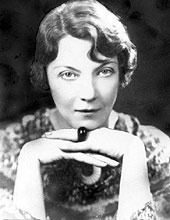
Jean Rhys (1890 - 1979)
"Eu achava curioso o facto de me conseguir rir como ria, porque o meu coração estava sempre triste, sentia a mesma espécie de dor que o frio me causava no peito." (Pág. 16)
”Viagem no Escuro publicado em 1934 é supostamente um romance autobiográfico de Jean Rhys (1890 – 1979), uma história simples de relacionamentos complexos e consequências imprevisíveis.
Anna Morgan é uma jovem de dezoito anos de idade, órfã de pai, que trabalha como corista num grupo teatral em Londres, deslocando-se em digressão pelo interior de Inglaterra, nascida na Dominica, um pequeno Estado soberano insular constituído pela ilha homónima e que obteve a independência do Reino Unido em 1978, situado no mar das Caraíbas.
Essa mudança para Inglaterra cria em Anna uma conflitualidade existencial e de identidade que se vai manifestando nas suas vivências quotidianas, eventualmente, explicáveis pelas relações com os homens, de quem vai dependendo emocional e financeiramente. O seu difícil relacionamento com a sua madrasta Hester e com a sua família poderiam apelar a um desejo intrínseco de mudança, mas tal não acontece, numa atitude que compromete a sua vida futura, isolando-se social e emocionalmente.
A narrativa decorre da percepção psicológica e do fluxo de consciência da narradora Anna Morgan, numa escrita intensa, intimista e enigmática que provoca no leitor um sentimento dúbio em relação aos actos e ao comportamento da personagem principal, mas que nos induz nas suas tristezas e nas suas amarguras; isto é, o leitor sente mais as emoções e as experiências por que passa Anna Morgan do que ela própria.
Nesse contexto de mudança Jean Rhys descreve magistralmente as diferenças entre um espaço territorial e outro, entre as suas cores, os seus odores e as suas texturas.
”Viagem no Escuro” é um envolvente e evocativo romance que retrata a vida de Anna Morgan associando fragmentos do passado na Dominica com a acção que decorre em Inglaterra no presente; sobre a tristeza, a incompreensão e a dependência.

September 10, 2013
Written in the most exquisitely controlled prose imaginable, Voyage in the Dark is a modernist classic by the talented, often ill-fated, and frequently self-destructive Jean Rhys; this one, like so many of her novels, is all too autobiographically situated within that tripartite nexus that seemed to leave her no other choice but to lead a dogged aesthetic resistance to her own life in her brutally honest self-revelatory fictions. The novel invokes the horrors of the sexual double standard and its particularly sordid impact on women of slender means whose sex lives so quickly become a part of upper class English commerce, destroying all possible dreams of romance for the women, then their reputation, social status, and respectability, and finally their self-worth and sanity as well. Devastatingly bleak, familiar, and so seductively written. Stark image after soft honest observation paint the drab conformity at the surface of England in the 1920s; then non-sequiturs and the encroachment of childhood memories tracing the narrator's ever-more-frequent willful, and then seemingly involuntary, retreats from the otherwise harsh and ugly reality that she so bluntly and carefully portrays--each phrase artfully paints the details of a civilization mired in framed prints, repeating wallpaper patterns, and row houses and then slips, off, away, just away, taking Rhys' protagonist anywhere but here, a mirror to the author's own dogged production of brilliant novel after brilliant novel for so many years despite falling in love with the wrong men, a string of bad luck, poverty, and alcoholism. The resilience of the prose here to bring something back to beauty and strength out of the morass of exploitation and abuse by predators and bottom-feeders is astounding.

March 21, 2013
Early on I was prepared to give this one 5 stars. Rhys can really write, and can hold her own w/ folks like Hemingway (whom she most resembles, but from a female perspective). The sentences. Oh, the sentences. Rhys can totally balance out precision and nuance in a single line. Don't ask me to explain, I just know it when I read it, and I don't run across it too often. The problem I had w/ this short novel (barely over a hundred pages), is its bleakness, its oppressiveness. It's like the mood established in Eliot's "Game of Chess," extended for a hundred pages, or a Clean, Well-Lighted Place for Georgy Girl.
The story, briefly, is about a young woman, Anna Morgan (substitute Rhys if you like), who has a whiff of the exotic about her (she's from the Caribbean islands), trying to establish herself as a performer in England. Tellingly, early on, she's shown reading Zola's Nana. (But later, somewhat sloppily when it comes to Rhys, Anna tells another character she doesn't read books. Zola is pretty heavy, especially for an 18 year old who doesn't read books.) Anna quickly catches the eye of an older man w/ money, and the relationship follows the normal death arc of such things. Meanwhile, you get the sense that something's not quite right about Anna. She sleeps a lot, drinks a lot, and can't seem to get along with anyone for very long. I'll leave it at that. The ending is not a surprise, but worse, I didn't even care.
The story, briefly, is about a young woman, Anna Morgan (substitute Rhys if you like), who has a whiff of the exotic about her (she's from the Caribbean islands), trying to establish herself as a performer in England. Tellingly, early on, she's shown reading Zola's Nana. (But later, somewhat sloppily when it comes to Rhys, Anna tells another character she doesn't read books. Zola is pretty heavy, especially for an 18 year old who doesn't read books.) Anna quickly catches the eye of an older man w/ money, and the relationship follows the normal death arc of such things. Meanwhile, you get the sense that something's not quite right about Anna. She sleeps a lot, drinks a lot, and can't seem to get along with anyone for very long. I'll leave it at that. The ending is not a surprise, but worse, I didn't even care.

November 27, 2014
Second read of this (first time was more than 15 years ago so really does not count...)
Please see the many wonderful 5 star reviews already on here for reasons why you should read this (and her in general)
Please see the many wonderful 5 star reviews already on here for reasons why you should read this (and her in general)
October 3, 2025
OUCH OUCH OUCHIE

October 4, 2020
Ο μόνος τρόπος για να περιγράψω αυτό το ανάγνωσμα είναι να το παρομοιάσω με ενα μισοσκότεινο φθινοπωρινό πρωινό Δευτέρας στο ομιχλώδες Λονδίνο, όπου τα πορτοκαλί και καφέ φύλλα έχουν ήδη αρχίσει να αποσυντίθενται πάνω στο υγρό χώμα. Το συναίσθημα που κυριαρχεί είναι μια γλυκόπικρη μελαγχολία και σίγουρα επέλεξα την καλύτερη εποχή για να το διαβάσω! Δεν θα το εντάξω στην κατηγορία των βιβλίων που με καθήλωσαν με μια πολύ δυνατή ιστορία αλλά σε εκείνα που άγγιξαν ενα κομμάτι της ψυχής μου μέσω της τόσο ατμοσφαιρικής τους αφήγησης.
Φυσικά ας μην παραλείψω το γεγονός ότι η συγγραφέας Τζην Ρυς ήταν τόσο μπροστά για την εποχή της ( το "Ταξίδι στο σκοτάδι" τυπώθηκε το 1934) γι'αυτό άλλωστε και κανένα από τα έργα της δεν γνώρισε ιδιαίτερη επιτυχία όταν πρωτοεκδόθηκε. Θέματα ταμπού εκείνης της περιόδου, η γυναίκα που καταπιέζεται, η γυναίκα που χρησιμοποιεί τη σεξουαλικότητά της....η αναγνώριση για την Ρυς ήρθε πολύ αργότερα (μετά το ξέσπασμα του Β' Παγκόσμιου πολέμου) και ,έστω και αργά, έμεινε στην ιστορία ως μια από τις καλύτερες εκπροσώπους της γυναικείας λογοτεχνίας.
Φυσικά ας μην παραλείψω το γεγονός ότι η συγγραφέας Τζην Ρυς ήταν τόσο μπροστά για την εποχή της ( το "Ταξίδι στο σκοτάδι" τυπώθηκε το 1934) γι'αυτό άλλωστε και κανένα από τα έργα της δεν γνώρισε ιδιαίτερη επιτυχία όταν πρωτοεκδόθηκε. Θέματα ταμπού εκείνης της περιόδου, η γυναίκα που καταπιέζεται, η γυναίκα που χρησιμοποιεί τη σεξουαλικότητά της....η αναγνώριση για την Ρυς ήρθε πολύ αργότερα (μετά το ξέσπασμα του Β' Παγκόσμιου πολέμου) και ,έστω και αργά, έμεινε στην ιστορία ως μια από τις καλύτερες εκπροσώπους της γυναικείας λογοτεχνίας.
Displaying 1 - 30 of 708 reviews