Buddha was a revolutionary. His practice was subversive; his message, seditious. His enlightened point of view went against the norms of his day—in his words, "against the stream." His teachings changed the world, and now they can change you too.
Presenting the basics of Buddhism with personal anecdotes, exercises, and guided meditations, bestselling author Noah Levine guides the reader along a spiritual path that has led to freedom from suffering and has saved lives for 2,500 years. Levine should know. Buddhist meditation saved him from a life of addiction and crime. He went on to counsel and teach countless others the Buddhist way to freedom, and here he shares those life-changing lessons with you. Read and awaken to a new and better life.
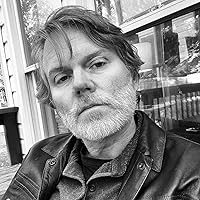
American Buddhist teacher, author and counselor known for his philosophical alignment with Buddhism and punk ideology. Identifies his Buddhist beliefs and practices with both Theravadan and Mahayanan traditions. Holds a masters degree in counseling psychology from CIIS. He has helped found several groups and projects including the Mind Body Awareness Project], a non-profit organization that serves incarcerated youths.
Son of American Buddhist author Stephen Levine. Trained by Jack Kornfield of Spirit Rock Meditation Center in Woodacre, CA. He also lists as teachers His Holiness the Dalai Lama, Thich Nhat Hanh, Ram Dass, Joseph Goldstein, Sharon Salzberg, Norman Fischer, and Sylvia Boorstein.
He is the founder of the Against the Stream Buddhist Meditation Society, with two centers in Los Angeles and over twenty affiliated groups in North America and Europe. (www.againstthestream.org) Noah leads Dharma and vipassana meditation retreats and workshops across the United States and Europe. An important aspect of his work is with inmates in juvenile and adult prisons where he combines meditation techniques with psychotherapy—“exploring how they can have a deeper understanding of what has happened and what they need to do in order to be free, on many levels—free from prison, free from the trauma of the past.” Noah Levine is a member of the Prison Dharma Network.
Levine’s work with inmates is fueled by his own past; as a youth he had several periods of incarceration. His first book, Dharma Punx, in large part details Levine’s teenage years filled with drugs, violence, and multiple suicide attempts - choices fueled by a rebellious nature and identification with punk rock and culture. His substance abuse started early in life - at age 6 he began smoking marijuana - and finally ended in a padded detoxification cell in juvenile prison 11 years later. It was in this cell where he hit “an emotional rock bottom” and began his vipassana practice “out of a place of extreme drug addiction and violence” While incarcerated, he saw for the first time how the practice his father taught him gave him the tools to relieve the fear and uncertainty that pervaded his life.
One notable aspect of Buddhist Dharma is the path of our choices, the actions past and present and the intention for future action – (ref. Buddhist Law of Karma). Levine’s past – addiction, incarceration, violence, initial rejection of Buddhism and meditation – are all defining characteristics of his writings and teachings. “We all sort of have a different doorway to dharma or spiritual practice. Suffering is a doorway. For me it was the suffering of addiction, violence and crime which opened me at a young age, 17 years old. I was incarcerated, looking at the rest of my life in prison and thought, ‘Maybe I will try dad’s hippie meditation bullshit.’ Suffering opened me to the possibility of trying meditation.”
In Levine’s second book, Against the Stream, released in April 2007, "he presents what he has learned about and through Buddhism". Readers will find it written in a style consistent with the "disarming, frank tone" from his first book and, also, free from the typical "Buddhist-speak" found in comparable works; Levine "clearly returns to such central ideas as impermanence and suffering, giving his thinking simplicity and consistency". The author claims that this work is for '"true spiritual revolutionaries" who are looking for both "inner and outer spiritual rebellion"'.
"Against the Stream" is the continuation of Levine's memoir "Dharma Punx" (https://www.goodreads.com/review/show... the first was the story of how he came to Buddhism, and this is the how-to book for people who were inspired by his experience.
I can see why this book annoys some readers: Levine's approach can be pretty uncompromising, which comes across as rather arrogant at times. And while I sometimes feel like he takes himself waaaay too seriously, I also found myself appreciating the points he is trying to get across. Commitment to a serious meditation practice can be really tough, and it's absolutely not a quick fix for life's problems. It takes determination and discipline, and Levine wants to warn people who turn to meditation simply to manage stress or whatever, that its not what this is about. So he comes across as condescending; I didn't let it bother me - especially has I had just finished a book on meditation that completely lacked structure and had an unproductive "anything goes" tone. Good timing for Levine's hardline attitude! But yeah, his weeding out method might just alienate a few people.
The book is divided into four sections that have a very guerrilla-inspired flair: basic training, boot camp, field guide and manifesto. Levine's take is that the Buddha's teachings are revolutionary and counter-cultural, both then and now, as they go against societal norms that glorify the products of systemic greed, oppression and ignorance. I definitely agree with him there. I think he sometimes try to shoehorn a few ideas in that "revolutionary" frame a bit too hard, but that's just his style.
I also like that he is honest enough to give his readers a stern warning against teachers, including himself, and emphasizes the famous “Be lamps unto yourselves” quote, advising students of Buddhism to seek the answers within themselves and not to trust truths they have not lived themselves. I also really liked everything he wrote about forgiveness: its definitely a very tough thing for me and obviously, many books about Buddhism discuss it a lot. Levine's take on it is not only inspiring, but also realistic about how much a struggle it can be, how we can make it easier by learning to make a difference between the "actor" and their actions, and how forgiving does not mean putting ourselves in harm's way again simply because we let go of pain and resentment.
Levine’s thing with sobriety and sex made me scratch my head a bit: he puts a lot of emphasis on keeping a clean body and mind by abstaining from all intoxicating substances and by making celibacy a part of the practice. While I can see how that can be useful for people who need to learn to focus, I also don’t think it’s necessary to be that drastic for lay practitioners (which is his target audience, as far as I can tell). In my experience, the further I got into my practice, the less I was interested in drinking, so that essentially took care of itself.
As for sex, I think that it screws (no pun intended) with focus the same way alcohol does: too much sex might not be a good thing, but if abstinence drives you crazy, that's not good either... Levine says that we need to learn to let go of our urges (by which I think he means learning to not let them control us and our actions), but his phrasing hints that all sexual desire brings confusion and suffering to our lives; I agree with the first part, but definitely not with the second! His point is that intimate and romantic relationships can't work if one is practicing non-attachment, because you will inevitably get attached to a sexual partner. I can see why he comes to that conclusion, but again, for lay practitioners - especially married ones, his ideal is simply unrealistic. He has the honesty to admit this is based on his own experience and incapacity to practice non-attachment in the context of romantic relationships, but what applies to him does not necessarily apply to everyone... His flat-out rejection of relationships sounds an awful lot like avoidance to me. And ironically, this: https://www.lionsroar.com/against-the...
Despite my misgivings about the aforementioned issues, this is an excellent book for Buddhist beginners who are not easily intimidated; Levine's brand of tough love is not for everyone, but I think that in the long run, his stricter "bootcamp" might be more beneficial. Overall, his point of view is fresh, accessible and straightforward, which is definitely worth checking out. 3 and a half stars, rounded up because while there is some stuff in here that's a bit problematic and silly, the good stuff in there is really good.
A fairly simple and straightforward explanation of the tenents of Theravadian and Mahayana Buddhism from a "punk rock" perspective. Although perhaps too simple for most non newbies, I really appreciated the moral clarity and seeming earnestness of author Noah Levine's vision and got a lot out of it.
A former punk rock junkie/ thug turned spiritual/ meditation teacher, Levine found Buddhism conducive to his anti authoritarian mentality (as we can see from such section headings as "Defy the Lies," "Serve the Truth," "Beware all Teachers," and "Question Everything."
Levine takes his title from a quote of the Buddha where he claimed that spiritual path was a revolutionary one, which went "against the stream" of society which is founded on and valorizes hate, bigotry, greed, violence, oppression, and lies.
Levine appreciates the counter cultural bend of Buddhism, especially where the Buddha said as he lay dying to, "Be a light unto yourself." Similarly Levine implores us to not "Believe anything based on tradition or charasmatic presentation. Don't even believe the Buddha, and certainly don't believe me," and "Nothing must be accepted on blind faith. If any aspect of these teachings doesn't make sense when thoroughly investigated, reject it."
In the end, this text implores us to be revolutionaries in this world by practicing generosity, self compassion, have a willingness to protect others and alleviate oppression, to break our addictions, to attempt to see the world with open eyes and clarity, to face our personal demons and fears, and to explore our minds and emotions so they don't tyrannize us.
I found his explanations of the Four Noble Truths and the Eight Fold Path useful. I also found his interpretation of Buddhism intriguing colored as it was by his being a younger American with a punk rock background. His text is no nonsense and concise, as well as intelligently thought out.
And best of all, I feel like Levine made a sincere effort to be honest. He tells us he is not "englightened" but has been helped by meditation and the teachings; he talks about his struggles battling addiction; he talks about his suffering in regards to his relationships; his struggle with his ego and his problem of blaiming others for his own mistakes; he talks about his fear and anger; and how the road was long and hard but worth it.
As a spiritual text providing suggestions for making the world a better place and encouraging the endeavor of relinquishing unhappiness, this book is a breath of sanity in an insane world.
Recommended. Not a scholarly affair, but a sincere moral statement of a spiritual journey from hell to recovery.
The natural extension of Noah Levine's memoir, Dharma Punx. It focuses on the teachings of Buddhism, from the perspective of one who considers himself a rebel and spiritual revolutionary. It was a decent overview of Buddhism, covering the four noble truths and eightfold path, as well as providing a meditation tutorial, but the unique thing about his presentation is why he considers it so rebellious. He gives some Buddhist stories and teachings that illustrate this, notably the Buddha's initial reluctance to teach what he has discovered since it is so "against the stream," and the emphasis in the Buddhist teachings on personal experience and questioning authority, rather than taking it on blind faith.
Some of the book was a little silly, like his tendency to spell "ks" as "x", the font that looks like revolutionary propaganda, and the "manifesto" at the end, although said manifesto was well written. Something that surprised me about this book is how nonchalantly he discusses reincarnation and Buddhist mythology, like the gods and heaven and hell realms, which are not central to the Vipassana tradition, of which he is a teacher. If his goal is to attract rebellious thinkers, I would think these esoteric and unnecessary teachings would be a turn-off to his target audience.
I urge you to read this 160-page book. It may not do anything for you and in that case you'll lose only $13.99, and an hour and a half (less than you'd need to watch a football game). But it just might boggle your mind. Unlike most books about buddhism, this one requires no prior knowledge, interest, or commitment. It is written by, and for, a Western mind. And for the most part it says things that are (should) be obvious: that every thing is transient, and that not "letting each moment die its own natural death" causes pain and suffering; that meditation can help us let go; that the proper skills can alleviate our pain and the pain we cause others; and finally (a little harder to believe) that receiving the four truths and practicing the eightfold path can lead to that elusive happiness we all pursue. The hardest thing for me is accepting in my heart what my brain tells me is true, that all things have a beginning and an end, my sensations, my thoughts, my feelings, my pain, my pleasure, my joy and my sorrow, my body, my mind and my soul, my desires and my fears, and even my understanding of this. The second law (entropy) governs my life as much as it governs the physical world. That takes more humility than I think I possess. Worth trying tho. Thanx, Punx.
This is a wonderful book that covers just about all the basics of the Dharma and more importantly -- PRACTICE! Noah is a really good teacher, and is certainly bringing the Dharma to many folks who may not have ever been open to hearing it, let alone practicing it.
There are a few caveats that have kept me from giving this book a full five stars:
1. I am not convinced that the sometimes militantly aggrssive tone is the most skillful way to go. Case in point: "Meditate and Destroy" while 'punky,' is NOT a message I'd want to pass along to my students! We shouldn't underestimate the hindrances, but rather than emphasizing 'destroying' them, we can see that they are like sparring partners, and that facing them, engaging with them, makes us stronger and more skillful. After all, the Buddha did not destroy Mara; he saw Mara's true nature, and in so doing, usurped any power Mara had over him.
2. I am less than thrilled with Noah's handling of sex. I'm sure it's his orientation to the more conservative, monastic tradition of Theravada Buddhism, but to me it's a bit aversive. I think it's a mistake to valorize celibacy as what amounts to (in his estimation) a more serious, committed approach to practice. The Theravada tends to want to avoid potentially troubling situations, and in this it is open to the charge that it is 'life-denying' or 'world weary.' I think a more sex positive message more appropriate for the lay practitioner -- who is, after all, his targeted 'audience.'
3. A much less serious criticism, but one that certainly plays into my rating, is that Noah passes along some less than accurate information about the historical "Sid." Again, he is not a scholar of Buddhism, so perhaps this is less a 'problem,' but he will be read by many more people than who will read a Peter Harvey, for instance, and thus it would have been good to see him passing along more accurate picture.
Levine is far from a bad writer, and is in fact an amazing human being. The author of Dharma Punx flatlined on me with this book, but its not his fault, its mine. This would be a great book for anyone wanting to get into Buddhism but doesn't know where to start. If you know even the slightest thing about it though, this book comes off as condescending, which again, I think is my own personal problem and not Levine's, but I think other people will feel the way I felt. He is a major inspiration as a person, but hearing him refer to Siddhartha as "Sid" as if to establish the Buddha's punk cred was cringe inducing. His meditation exercises at the end were great, and his information is sound, but if you've read anything on Buddhism already, this book is unnecessary for you. Noah Levine does great work despite the fact, but stick to Dharma Punx and his online works if you want to get literary with him.
"Defy the lies, serve the truth, beware of teachers, and question everything." This is the fourfold manifesto that Noah Levine presents near the end of the book. For anyone that has ever had doubts on trying meditation and mindfulness because of its connection to Buddhism, this book shows that what Buddhism is today, is not necessarily what it was meant to be. Buddhism is not a religion, although many treat it in that way. Buddhism is a path, guided by meditation, mindfulness, and reflection. This book presents the practice of meditation as a way to bringing peace, gratitude, loving kindness, and acceptance to ourselves and ultimately the rest of the world. We must begin with ourselves. Forgiving, loving, caring, and being gracious to our inner being. Only then can we revolutionize how humanity exists in this day and age. Noah Levine warns of the dangers of teachers, and even asks the reader not to trust him, only when we have experienced the results of what meditation and mindfulness can do for ourselves should we trust in what is said. This book is a refreshing look at the basics of meditation, mindfulness, compassionate living, and the original teachings of the Buddha without all the Sanskrit that most of these types of books are riddled with. Read it and decide for yourself. Begin the journey gently, and don't rush to conclusions.
Noah Levine’s memoir dharma punx was a great read, however I was somewhat disappointed with against the stream. It was almost like reading a textbook. The content was informative but the wording and layout was quite bland.
I know people who identify as Dharma Punxs and wondered where that started. So I was interested in getting Noah Levine's spin. I am glad he turned to Buddhist since it helped him climb out of a deep pit he put himself in (see his brief review outlined in this book or his memoir). And I think he has created another space for disenfranchised people to hear the Dharma. That said, I was disappointed with this book on several levels. I give it two stars since the first chunk does cover the basics.
First off, this book needed some editing. Switching back and forth between first person singular and plural (just who is the "we" referred to?) was jolting. Also, when I see quotations used without attribution/citation I infer the statement being made to a fictional character in a novel. Levine doesn't cite or use footnotes. Additionally, he misquotes and falsely attributes comments and sayings.
Secondly I was disturbed several times with comments he made and disappointed with content. Why is he using examples such as a Christian mystic in a Buddhist commentary? Why does he name drop? And how could he state that drug addicts are not really addicted to the substance (drugs, sex, food, alcohol) but to their own minds. As a recovering addict and a with a degree in counseling, he knows that there is a substantial physiological component of addiction; drugs do change the way the body ingests those chemicals. That's not only disingenuous, it's also deceitful.
I think he tries to hard to make Buddhism "cool" and hip. There are plenty of good Buddhist books, read one of them instead of this one.
It was okay. I don't like it when people try to break things down using slang. There were many references to Buddhas "homies," and that felt a little weird to me. (In fact, it was repeatedly misspelled in the text as "homeys," which further irritated me. Come on, editors.) Was the usage disrespectful? I don't know. Trying too hard? Maybe. It just felt contrived. I also don't like his prescriptions for what you have to do to be a rebel, revolutionary, or radical. (You'll find this in the back of the book; Levine claims that you must attend X number of retreats, meditate for at least Y minutes, and attend weekly sittings.) Not everyone has the luxury of doing what he suggests, so I really disliked that part.) I'm still a big fan of Noah Levine's teachings, and think his latest work, Heart of the Revolution, is a fantastic book. If you're curious about Noah's writing and teachings, start with that one.
Notable as a book from an experienced practitioner from my own generation, which I think allows for a certain accessibility that is nice. He offers some interesting takes on everyday issues like sexuality and money, and advice for living in an overly materialistic,consumer-crazy society from a Buddhist perspective. An appendix in the back of the book includes several different simple meditation techniques to try.
A good while ago a former student recommended this book to me. I logged it in the back of my mind, but have been into Brad Warner’s writing of late. (He is another Buddhist author). I thought I had finished all of Warner’s books, and purchased it. It sat on my shelf with other books I purchased and intend to read for a couple of months. Then a few clients and colleagues, in an act of interesting synchronicity, started talking about Refuge Recovery. (Refuge Recovery is a program of Buddhist based addiction recovery meetings). I went to their website, and low and behold, the founder is Noah Levine, the author of Against the Stream.
I began the book and thought some of his writing on mindfulness (in the section on the Eightfold Path) was written in a manner some clients might find helpful. In bringing the book to the office I somehow lost it (and a treasured bookmark some friends in Japan had given me). Because I was about halfway through, I bought another copy and finished it.
It’s a pretty easy read. I made myself read it faster than usual because I really wanted to share aspects of it with one of my clients. As I’ve read a good amount on Buddhism, I found it pretty rudimentary overall. The vast majority of what I read I already knew well. Despite this, there were aspects I found well written, especially for those less initiated in Buddhist thought.
My rating of the book suffers partly because I found it rudimentary. I realize this is unfair, but it is my rating. Additionally, I wasn’t fond of the repeated use of the term “revolutionary” throughout the text. (A search of the book on Amazon finds 51 uses of that word). Although I get that this approach to life is rather unorthodox, and I get his use of the word to convey that and more, I just found it a bit overemphasized. This is what kept me from bumping the rating up a notch. I am also willing to admit I’m biased because I’m much fonder of Brad Warner’s writing. Regardless of my biases, I would still recommend Against the Stream to anyone looking to find out more about Buddhism, especially if they want to make a change (and even more so if that change is the cessation of substances due to an addiction).
Mindfulness, Meditation, The Four Noble Truths, The Eightfold, .... If we (somehow) have the self-discipline to follow this path -- these principles, values, and activities -- then a positive, rewarding life moving forward can ensue ....
“Finally we are being told the truth: life isn’t always easy and pleasant. We already know this to be true, but somehow we tend to go through life thinking that there is something wrong with us when we experience sadness, grief, and physical and emotional pain. The first truth points out that this is just the way it is. There is nothing wrong with you: you have just been born into a realm where pain is a given.” ― Noah Levine, Against the Stream: A Buddhist Manual for Spiritual Revolutionaries
“The path of the spiritual revolutionary is a long-term and gradual journey toward awakening. If you are looking for a quick fix or easy salvation, turn back now, plug back into the matrix, and enjoy your delusional existence. This is a path for rebels, malcontents, and truth seekers. The wisdom and compassion of the Buddha is available to us all, but the journey to freedom is arduous. It will take a steadfast commitment to truth and, at times, counterinstinctual action. You have at your disposal” ― Noah Levine, Against the Stream: A Buddhist Manual for Spiritual Revolutionaries
“Everything is impermanent. Every physical and mental experience arises and passes. Everything in existence is endlessly arising out of causes and conditions. We all create suffering for ourselves through our resistance, through our desire to have things different than the way they are - that is, our clinging or aversion.” ― Noah Levine, Against the Stream: A Buddhist Manual for Spiritual Revolutionaries
The book I read “Against the Stream” by Noah Levine, Explains the way of buddhism in american terms. In the novel he breaks down pretty much every category of the mind and explains thoroughly how you can really use everything thought and feeling to your advantage. To an American reader like myself it was very easy to follow and understand. I thought it was honestly very helpful, because it made myself realize there's not just one way to react to a thought or feeling. All the things Noah explains in the novel are really the ways of thinking that will lead your mind to freedom. I give this book 5 out of 5 stars. I found out while reading this book that before knowing anything about buddhism, I actually thought and still do think in many similar ways as the buddhas. I just thought that was cool and it made everything in the book a lot more interesting to me because I resonated with it more. I also love learning about religion even though I don’t really believe in any, because I like to see the different ways people think about life and how we interpret it. That's why I give it 5 stars. This kept me wanting to read more, and it also helped me think about my life a little differently. The way it was written is pretty easy to understand, but I can see how it can get complicated to some people just because religion is hard to understand already and summarizing it could make it harder to understand it fully–The structure and style of this book was excellent however.
Picked this up because the author was giving a lecture in town and I figured I'd get more out of it if I read the book first. The talk was better, but that's not to say the book was bad. The marriage of punk-rock aesthetic with Buddhist philosophy was unique enough to pique my interest, though it borders on cheesy at times (calling "Sid's" early followers his "homeless homeys", for instance). There are probably better books out there that delve more seriously into the history and philosophy (but perhaps aren't as accessible), but as someone interested in meditation but not becoming a Buddhist, I didn't miss that stuff. He gave some good ideas about not only how to develop a meditation habit but more importantly how to actually apply that to external areas of life, which is all I was after, and he wrote from an open, honest, personal perspective.
"The Path to Freedom takes great effort and fine-tuning"
"Buddhism doesn't ask for much blind faith. Instead, it encourages us to discover for ourselves whether the Buddha's teachinds lead to freedom." -Noah Levine, Against the Stream
Against the Stream is both an excellent introductory text on American Buddhist thought but I think it could also serve as an good refresher for someone familiar with the Buddha's teachings.
Noah's approach to teaching and to writing could be an issue for some who are looking for a more classical feel but for me and my tendency to fall for a more punk rock aesthetic this book really resonated.
I thought this book provided a clear, accessible introduction to Buddhism. Levine's story provides an invitation to Buddhism for people who may think it's "just for hippies." I thought he did a rather good job telling the story of "Sid." Certainly there parts of the book that didn't resonate with me. He focused on different aspects of the eight fold path than I might, based on his own experiences. I don't see the connections between Buddhism and 12 step programs, but I'm glad he's sharing Buddhism with that audience.
I liked everything about this book. It’s very refreshing to read a book about Buddhism without some of the pretense that often accompanies Buddhist writings. Noah Levine is a real human being teaching other real human beings the tools they need to get on their own path towards enlightenment. His views are a modern take on an ancient practice that make navigating the Buddha’s teachings feel less like antiquated mysticism and more like being coached from experience on practical applications to living a better life. I recommend this and Dharma Punx.
A good, straightforward aesthetically punk-tinged guide to Buddhism for newbies (which I am). Lots of great insight to ponder. I've been participating in Noah's medication sessions online and have gotten more curious to dig deeper. This book seemed like a good start, and it oriented me to a lot of good basics. Now to keep on digging.
This is an excellent book for beginners who are interested in the Buddhist philosophy. It is extremely informative and easy to read. Levine takes concepts that are difficult and makes them very easy to understand and apply.
I had read this book before as well as Noah's first book Dharma Punx. It's a good basics book for those interested in Buddhism or need an alternate take on the teachings. He talks and writes in a voice that the "troubled youth" can relate too.
I have this book in paper otherwise I'd post all my highlights. Practical experience, a truly honest recollection, and a bunch of practices I now use every day! Love Noah, even with all his character defaults.
I am beginning to like books like this one! The book, alone, could take someone from knowing nothing about Buddhism, through to enlightenment. It saves us having to read the wealth of books by world Buddhists, explaining the details of the philosophy.
This is a great way to start learning about Buddhism and Buddhist philosophy. The author's personal story helps tie the history and theory together nicely.