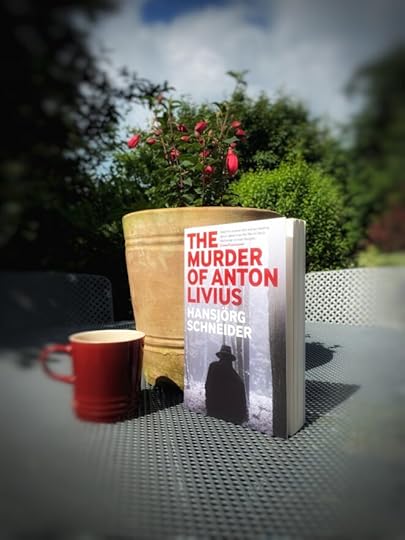
Das neue Jahr beginnt für Kommissär Peter Hunkeler mit einem schauerlichen In einem Schrebergarten am Stadtrand von Basel wird eine übel zugerichtete männliche Leiche gefunden. Auf der Suche nach dem Mörder muss sich der launische Kommissär nicht nur mit streitsüchtigen Hobbygärtnern, sondern auch mit den Widrigkeiten der grenzüberschreitenden Polizeiarbeit auseinandersetzen. Der Fall wird immer rätselhafter, als Hunkeler auf Verdrängtes aus dem Zweiten Weltkrieg stöß Was genau geschah im Februar 1943 im elsässischen Ballersdorf, und was hat es mit diesem Fall zu tun?
Bought this at Daunt on spec and delighted I did. Outstanding whodunnit. Brilliantly written (superbly translated by Astrid Freuler) Profound storyline, excellent central character Inspector Peter Hunkeler -- definitely someone one would like to lunch with -- an emotional type but warm and sympathetic. Interesting thread throughout about the delicate interplay and politics of the Swiss and French justice authorities. The murder itself and the circumstances surrounding it is perhaps best summed up by a mayor of a village in Alsace who tells Hunkeler when he makes enquiries "You know, we Alsatians (humans not the four legged canines) believe the dead should be left to rest." so that went well then.....the interchanges between suspects and investigators are not the norm in this genre -- Maigret perhaps comes closest -- as when Hunkeler chances upon one in a cafe -- he spends a lot of time in those ...though eating calf's head might warn some off -- and the suspect indulges in some philosophical thoughts: "It's terrible how time rules over everything. Over life, over love. We bumble along, as if we had eternity on our side. Then, from one second to the next, time dictates that it's all over. Finish, the end. The dreadful thing is there is a beginning and an end. The end is final." -- Recommend this to all, it is a wonderful book and I will certainly be purchasing others in the series hoping they are of as high a quality as this. Chapeau Herr Schneider.
I got excited when I got that far that the murdered man, Anton Livius, turned out to have been born in Tilsit. What was previously East Prussia, has since become part of Russia called now Kaliningrad Region (the town of Tilsit is now Sovetsk). The area is not far from what used to be called Livland and I foolishly saw some similarity between Livius and Livland - wrong expectations again! And reading further, the man's real name was Russius (and he may or may not have been Russian) - how disappointing! It is highly unlikely that a Russian might have the surname Russius. Why name somebody so interestingly if not develop it further? That said, I liked the location. It is set in both Basel and Alsace and that I found interesting - it is an area that I have no personal knowledge of and was eager to learn. Not that I found out much but even the string of names entertained me: I was trying to visualise two policemen - one called Lüdi and the other one Madörin (vaguely Russian?) and placenames were similarly interesting. However, I did not warm to the detective (I noticed that he had two homes: in Basel and in Alsace, which is a bit unusual for a police investigator); it is hard to warm to him because there is nothing there. Altogether mildly disappointing.
"Peter Hunkeler, inspector with the Basel City criminal investigation department, formerly married with a daughter, now divorced, was asleep in his house in Alsace." So begins Hansjörg Schneider's The Murder of Anton Livius, an absorbing work of crime fiction written in fifty-five short, unnumbered chapters.
I found the Swiss author’s 220-page novel gripping from the very first chapter, as if I were living Hunkeler’s experience scene by scene—feeling the winter cold, watching as snow continually covers the frozen ground, listening intently to each spoken word in the inspector’s many encounters. Moreover, I had the sense that Hansjörg Schneider was responding to a call issued by generations of denizens along the Swiss French border, both in the countryside and in and around Basel. To be more specific, I will now shift to a list of highlights.
MURDER — Early on New Year’s morning, Hunkeler receives a call from the station: Anton Flückiger, also known as Anton Livius, born in 1922, a man in his eighties who came to Switzerland after World War II and was later granted citizenship, has been found shot in the forehead and hung from a meat hook rammed under his chin, his body discovered in the cabin on his allotment on the French side of the border.
SWISS AND FRENCH POLICE — A Swiss citizen murdered on French soil means Basel detectives must assist the Police nationale based in Alsace, with both countries required to work together to solve the crime. Herein lies much of the novel’s drama: during the police briefings, the uptight Swiss and arrogant French repeatedly point fingers at one another, pound the table, and boil over with rage. Meanwhile, Hunkeler—a lone wolf by nature, with a house in Alsace and a flat in Basel—knows he must slip back and forth across the border, piecing together clues from the scant information made available to him.
THE ALLOTMENTS — One of the police officers observes, “There’s some sort of culture war going on in the allotments. In that respect, they reflect our society as a whole.” Another officer chimes in: “It all started when some of the people from the Balkans and Turkey got into the habit of listening to music very loudly. And I mean their own kind of music. Belly dancing stuff or the devil knows what.” Ah yes—Switzerland today is very much a multiethnic society, a dynamic that Hansjörg Schneider does not hesitate to spotlight as both French and Swiss officials plod through the social muck surrounding the murder.
LONE WOLF COMES TO TOWN — Hunkeler knows he is not permitted to investigate on French soil, yet he drives to the village of Ballersdorf, posing as a novelist doing research. Standing in the village cemetery, he is fortunate enough to gather fragments of history reaching back to World War II, when the Germans forced young Frenchmen to fight on their behalf in Siberia, and a group of those men attempted to escape to Switzerland. One elderly local tells him, “Three of them had been shot dead at the railway embankment that night, by a German patrol. One got away. The others ran home. On Sunday morning they came to early Mass with their parents as if nothing had happened. The Gestapo fetched them out and took them to Struthof. I can remember that very clearly, how them were hauled out of mass. The whole village prayed. It didn't help.” Many threads lead back to Anton Livius, and the more Hunkeler sniffs around, the tighter those connections become.
LONE WOLF AND HIS HONEY — Peter Hunkeler may be an older man nearing retirement, but he enjoys a warm, affectionate relationship with his attractive, much younger girlfriend, Hedwig. Even so, Hansjörg Schneider keeps his focus firmly on the murder investigation. Unlike many contemporary crime novelists, Schneider does not spin out pages of domestic drama, nor does he burden the reader with a detailed backstory involving Hunkeler’s daughter or former wife. Instead, Hunkeler simply checks in with Hedwig from time to time—a narrative choice entirely in keeping with Schneider’s prose: sharp, economical, and unornamented, recalling the classic restraint of Georges Simenon and Frédéric Dard.
THE MEDIA — At one of the police briefings, all assembled realize that a Zurich tabloid is already a step ahead in gathering critical information about the Livius murder, making the authorities themselves look foolish. Chastened, both the French and Swiss agree to intensify their cooperation. In this episode, Hansjörg Schneider quietly underscores the profound influence contemporary media exerts on public perception—and on the conduct of official investigations.
THE WRITER — At a local bar, Hunkeler exchanges reflections with a novelist who is using the Anton Livius case as the basis for his next book. When the writer outlines what he imagines to be the truth behind the murder, the Basel detective tells him, in so many words, that he is completely off base. With a touch of irony, however, we eventually learn that the writer’s logic comes remarkably close to hitting the bullseye—an episode that can be read as Hansjörg Schneider quietly reminding us that storytelling can be dangerous, and occasionally accurate.
Once again, The Murder of Anton Livius makes for a gripping, deeply absorbing read. For me, the novel brings to mind Jean-Louis Chrétien’s philosophy of art as a matter of call and response. First comes the call: in this case, Hansjörg Schneider responding attentively to the world he knows—the cultural ground along the Swiss–French border north of Basel, the lingering memory of World War II in that region, the multiethnic social climate, and the moral weight borne by ordinary lives. Then comes the response: my own, as a reader, answering the author’s acute and patient listening.
Many thanks are due to Astrid Freuler for her clear, accessible translation, and to Bitter Lemon Press for publishing this novel along with three others by Schneider. I very much look forward to reading—and reviewing—more of Hansjörg Schneider’s work.
I called a previous chapter in this series full of dreary atmosphere and a moody mystery, I am happy to say that this novel follows in those footsteps as well.
Peter Hunkeler is a Detective Inspector in the criminal investigation department of the city police in Basel, Switzerland, a town very close to both the French and German borders. On New Year's Day, after a bit too much celebrating with his girlfriend, Hunkeler is called out to the scene of a gruesome murder: Anton Livius (hence the title) has been shot and then strung up on a meathook. This murder takes place in a series of "allotments", cottages that are mostly owned by Swiss but lie across the border in France, leading to cross-country cooperation and jurisdiction issues. Since the victim and most of the suspects live in Switzerland, Hunkeler and his colleagues lead the way in questioning suspects and searching homes, even though the evidence and forensics belong to the French, where the lead inspector is even crankier than Hunkeler! As they dig into the victim's life and the lives of the suspects around him, we are drawn back into World War II history, partisans and collaborators. We also see the mistrust and suspicion of today's immigrants, trying to live their lives in a new country while preserving their culture.
As in the previous book, Hunkeler is definitely in the "anti-hero" mold of police officer, world-weary, not following procedures, drinking too much, missing his girlfriend. It's hard to call this a police procedural when Hunkeler doesn't really follow any procedures, but he knows the people which allows him to pursue leads which others don't see. A good story.
A mess. A host of ill-defined characters, most of the novel is taken up with the dead man's history - which turns out to have absolutely NO relevance to his murder, and the murderer himself is obvious, but NEVER seriously investigated by the police - because, presumably, the AUTHOR didn't want him to be! And the murderer, who is under NO police suspicion whatsoever, phones Hunkeler up and admits all, then commits suicide. Even during the confession, a character - Adrian - pops up out of virtually nowhere, and the reader is expected to know who this man is and what his previous connections to Hunkeler are.
Synopsis: For Inspector Hunkeler the New Year begins with a most unwelcome phone call. He is summoned back to Basel from his holiday to unravel a gruesome killing in a gardening allotment on the city's outskirts. An old man known as Anton Flockiger has been shot in the head and found hanging from a butcher's hook from the roof of his garden shed - like butchers hang the carcasses of dead animals. Hunkeler must deal not only with the quarrelsome tenants of the allotment but with the challenges of investigating a murder that has taken place outside his jurisdiction, across the French border in Alsace. The case becomes increasingly mystifying when Hunkeler stumbles upon a sinister Second World War connection. What exactly happened in the Alsatian village of Ballersdorf in February 1943? And how are those events connected to the case?
Thoughts: I have been in a reading slump lately and this has totally brought me out! The murder had links tying to WW2 and as usual I couldn’t guess the murderer 😂 The main character seemed like such a decent man and he was witty too. There was a few things that didn’t get explained at the end that I would of liked to have found out but it didn’t put me off, if anything I want to read more stories by the author now.
I really like this series about Basel detective Hunkeler by Hansjörg Schneider, although I find it strange that they don't translate them in order. The Murder of Anton Livius takes place during the New Year and it's a great story of how complicated a murder investigation over nation borders can be. It's not like the tv shows Bron or the Tunnel but it is fun and interesting and the characters are great.
Could not get into it. Found the writing basic, and had no emotional connection to the characters or the plot. Did not find the plot very interesting, and there was no sense of suspense, which is quite crucial in a crime novel. Stylistically, I also strongly dislike when books don't have chapters.
Hunkeler und der Fall Livius ist ein Hörspiel, welches im Dreiländereck Deutschland, Frankreich, Schweiz spielt. Ein Hörspiel mit sehr viel Lokalkolorit und vor alle mit den passenden Dialekten dieser Region, was dieses Höerspiel für Norddeutsche wohl unverständlich machen dürfte. Obwohl ich in dieser Gegend geboren bin und hier lebe und den schweizer und französischen Dialekt recht gut verstehe ist das Hörspiel streckenweise selbst für mich recht anstrengend. Der Fall an sich ist kein wirklicher Reißer. Bei mir kam keine wirkliche Spannung auf, ich habe einfach den Burzug zu der Regio genossen in welcher ich lebe.
------------------- Nun sind ein paar Jahre vergangen, seit ich das Hörspiel das erte Mal gehört habe. Ich habe in Sachen Rezensionen schreiben dazugelernt. Ich habe viel mehr Hörspiele gehört und meine literarischen Vorlieben erweitert. Ich habe gegonnen, andere Dinge schätzen zu lernen, Komplexität zu würdigen und bin wohl auch einfach älter geworden. 5 Jahre liegen zwischen dem ersten Mal hören und dem aktuellen Durchgang. Ich konnte mich nicht mehr daran erinnern, es überhaupt schon mal gehört zu haben. Mittlerweile habe ich auch etwas mehr Bezug zum ermittelnden Kommissär und weiß, wer Hunkeler ist...
Es ist 1. Januar, als Hunkeler in seiner Baseler Wohnung rüde aus dem Schlaf geklingelt wird. Ein Mord wurde in einer Schrebergartenkolonie verübt. Das Opfer wurde erst erschossen und dann noch aufgehängt. Als wäre das nicht schon ungewöhnlich genug, wird die Lage noch dadurch verkompliziert, dass das Opfer ein Deutsch in einer schweizer Schrebergartenkolonie auf französischen Gebiet ist, folglich, die basler Polizisten den Tatort nicht betreten dürfen und die Informationen von den französischen Kollegen einfordern müssen, die nicht begeistert sind, dass ein basler Polizist vor ihnen den Tatort untersucht hat. Ständiges Kompetenzgerangel, misstrauische Zeugen, die nicht mit basler Polizisten reden wollen, führen zu weiteren Spannungen, zu denen noch Rivalitäten zwischen verschiedenen Nationalitäten in der Laubenkolonie, illegale Kleintierhaltung und Zucht und Fleischschmuggel vom Elsass in die Schweiz über geheime Pfade der Laubenkolonie. Es wird für die Ermittler schwer, zu unterscheiden, welche Aktionen von Vandalismus im der Schrebergartenkolonie zum Mord gehören und welche einfach Lokalkolorit sind. Wer war Anton Flückiger wirklich? Wurde er wegen seiner Vergangenheit ermorde oder war es nur ein Streit in der Laubenkolonie?
Ich gebe zu, ich kenne die Hunkeler Bücher nicht, ich kenne bisher nur die Verfilmung. Dieses Hörspiel des Schweizer Senders SRF1 aus dem Jahr 2007 hat wenig mit dem Verfilmung zu tun, ist deutlich ausführlicher und vielschichtiger und erzählt irgendwie auch einen komplett anderen Fall, ich gehe daher davon aus, dass das Hörspiel näher am Buch sein dürfte. Wie auch immer, hier werden interessante Fälle ermittelt, die Motive sind nachvollziehbar und die Ermittler sind wirklich nicht darum zu beneiden, herausfinden zu müssen, was jeweils die Ursache für die Morden an Mensch und Tier ist. Leider weiß ich zu wenig über die Geschichte des zweiten Weltkriegs und was damals im Elsass geschah. Wieviel hiervon Tatsache ist wäre interessant zu wissen, leider ging keiner der Moderatoren des schweizer Radios darauf ein. Die Sprecher sind alle sehr gut, alles top Profis, keiner fällt unangenehm auf. Ein weiterer Pluspunkt ist das realistische Sprachgewirr, wie es tatsächlich im Dreiländereck herrscht. Hier wird Schweizerdeutsch, Französisch, Hochdeutsch und Allemanisch gesprochen, teils wechselt die Sprache mitten im Satz, eine babylonisches Sprachgewirr, das das Publikum, für welches das Hörspiel konzipiert ist, also die Menschen des Dreiländerecks um Basel, problemlos verstehen. Ich kann Norddeutschen nur dringend davon abraten sich dieses Hörspiel reinzuziehen, so gut es auch sein mag, viele Passagen werden sie wohl nur mit Schwierigkeiten verstehen können und hier gibt es keine Untertitel wie bei den Verfilmungen. 200 Minuten Spannung bis zum Schluss. Nichts wird absichtlich verschwiegen. Saubere Ermittlung zum miträtseln, so sollen Hörspielkrimis sein.
The novel is set in and around the city of Basel, situated right on the border between Switzerland and France but also bordering Germany. This is central to the novel as Inspector Hunkeler crosses the border frequently. The victim is found on allotments, but these encroach into France and so become the responsibility of the police in Alsace to investigate.
The prose style is probably more in keeping with novels of the past and readers who concentrate on more modern novels may find it a little bit staid. It reminded me of the Martin Beck novels (written by Maj Sjöwall and Per Wahlöö) of the late sixties, a little unusual perhaps but no bad thing in our hurried modern world.
The investigation is set in the current (first published in Germany in 2007) but has clear links back to the war years as Hunkeler’s investigation progresses. In determining who would murder Anton Livius it becomes necessary for Hunkeler to discover who the man really was. Not entirely clear from the start it gets more complex as it becomes apparent that this is an assumed identity and answers may be found during the wartime years. He finds difficulty in establishing the facts of this period, essentially down to the reluctance of people who were around at the time to talk. There is the pervading sense that people have moved on and just want to bury their past. Otherwise, how can harmony be achieved in an area where three countries abut, and people need to get on with their everyday lives. Hunkeler is determined to get to the truth though and the only others interested are some young hackers who, with no demons to fight now, go searching for them in a past that is not theirs.
The setting adds another level of complexity as we experience the co-operation, or rather lack of it, between jurisdictions set in different countries along with the police and prosecutor dynamic that seems so alien to Anglo Saxon countries. Hunkeler seems the only man able to navigate between them using a mixture of flattery and persuasion, which is no mean feat. There is the added complication of the timing too, New Years Day onwards, as there are holidays as well as heavy snowfall to hamper progress.
This is a novel based upon dialogue and the investigative process rather than action. The translation is great, managing to maintain the narrative flow. There is some urgency towards the end, but many scenes are set in cafes and restaurants with characters who enjoy their food and drink too much to rush.
Hunkeler is the careworn but dogged detective who is continually asking questions, following up leads and getting answers, at times by this persistence wearing people down. Doughty but not dour, he is quite affable and able to mingle well as we find him eating and drinking with allotment holders as well as prosecutors. A man almost too straightforward and likable to be the main protagonist in a modern crime novel, but it is this that makes the story work.
This is no. 3 in the Inspector Hunkeler Investigates series.
I read the previous novel in the series, Silver Pebbles, but there is no need to read in order, The Murder of Anton Livius can be read as a stand alone.
The novel has an interesting premise. An appalling murder (a man has been shot and hung up on meat hook puncturing his chin) has taken place in a tiny dwelling in allotments outside the city of Basel. He is deemed to be Swiss (although whether he really has claimed to be comes into question) but the allotments are on French soil.
Peter Hunkeler, a little careworn around the edges, is spending New Year in his holiday home in the Alsace, which is just across the border from Switzerland. The German Border is not far and the location and geography of this mystery is central to the narrative, as two nations have to combine their investigating processes as they aim to solve the murder.
The allotments are governed by an inordinate number of rules and it becomes clear that certain locals were unhappy with incomers from other cultures who disregarded the do’s and don’ts.
Hunkeler travels around the locality to interview known associates of the dead man and invariably takes time to imbibe some alcohol, eat the dish of the day in a guesthouse and chat to friends and colleagues. The area around Basel is beautifully crafted, as the snow falls and the icy winds howl, which lends incredible atmosphere to this gently unfolding story.
The translation by Asrid Freuler is very good. In the previous novel, Silver Pebbles, a different translator clearly struggled to create a honed and credible translation and so it is refreshing not to hear the German rattling along in the background and enjoy a smoothly crafted piece of writing.
This is actually book 3 in the Inspector Hunkeler series and the first I've read by this author. This absolutely works as a standalone read - although I'm now intrigued to read back in books 1 & 2.
I think, originally written in German, this has been well translated because I really got a great sense of the Scandi/European noir TV series' that have become super popular over in the UK.
Being my favourite genre I couldn't wait to get started on this and I was not disappointed.
When a gruesome murder is discovered in a garden allotment on the edge of Basel, Inspector Hunkeler is dragged back from his New Year holiday across the border in Alsace, to investigate.
I loved Hunkeler's character. He's your typical world-weary detective, who has seen too much already. But he is completely invested in getting to the bottom of the case, even when up against unforgiving locals and twists in the details.
This was a really interesting storyline as the location of the murder was on the Swiss, French, German border and there were issues with which jurisdiction the case should come under which then caused problems when digging up any information needed.
I absolutely loved the setting and the way this was written into the story. The snowy weather and stormy setting really set up a great atmosphere for the book and I really got a great sense of the mood being set for us.
I really enjoyed this and will be adding the first Hunkeler books to my 'to be read' pile soon.
This was an intriguing detective story set on the border between Switzerland and France with Inspector Peter Hunkeler having to wend his way carefully between the two police authorities whilst trying to find out who murdered Anton Livius and the background that led to his death.
I am a huge fan of Maigret and this story could just as easily have had Maigret as the detective within the storyline. However, it is refreshing to find another Detective who works in a similar and methodical manner. The way Hunkeler weaves his way between the different aspects of the story, both past and present, as he finds all the missing pieces of the jigsaw is intriguing.
The descriptive aspect of the story is not lost in the translation and it allows the reader to build up a clear image of all the characters within the novel and the settings they are to be found in.
Schneider is one author I am going to read more of and I hope Astrid Freuler will translate further stories in the series whilst I now hungrily await the first tow books to discover more investigations with this thoughtful and meditative Inspector; The Basel Killings and Silver Pebbles which are on their way to me right now.
Book 3 of the series featuring Basel Police Inspector Peter Hunkeler. I haven’t read the previous books in the series but the detective did remind me of a rather older version of Wallender, one of my favourite detective characters. There is a lot of historical detail about Alsace and it’s troubled history which includes it becoming part of the Reich during WWII and it’s young men being conscripted. However, the case itself revolves largely around conversations between Hunkeler and various other officers in both countries investigating the mysterious Anton Livius.
Briefly, it is New Years Day and Hunkeler receives a call telling him a man has been found dead in a garden allotment shed. Not only has he been shot but the body has been strung up with a meat hook. The nearly retired and very grumpy Inspector quickly finds himself in the middle of a baffling mystery as the dead persons identity cannot be confirmed. He is also trapped in the issues of cross border police work between the French and Swiss police forces. Matters take a turn when the dead man’s identity is connected with a WWII execution.
There were some wonderful humorous moments amongst the deadly serious investigations in what is a clever murder mystery thriller. The rivalry between the police forces of the two countries over whose jurisdiction the case falls under was well done. I enjoyed all the historical detail, which I was previously unaware of and have since read more about it. A good slow burning police procedural with an historical reference and a shocking reveal. I enjoyed it.
The Murder of Anton Livius by Hansjörg Schneider. Book 3 in the Inspector Hunkeler series. For Inspector Hunkeler the New Year begins with a most unwelcome phone call. He is summoned back to Basel from his holiday to unravel a gruesome killing in a gardening allotment on the city's outskirts. An old man known as Anton Flockiger has been shot in the head and found hanging from a butcher's hook from the roof of his garden shed. I did enjoy this book. I love a good mystery. Even though I haven't read the first 2 I was still able to enjoy it. Twisty and gripping. I did like Hunkeler. I do hope there is more to come. 4*.
Kommissär Hunkeler ermittelt in einem Mordfall, der dummerweise an einem eingebürgerten Schweizer in einer Basler Schrebergartenkolonie die auf elsässischen Gebiet liegt verübt wurde. Diese Konstellation bedingt ein Kompetenzgerangel zwischen französischer Kriminalpolizei, Basler Staatsanwaltschaft und Basler Kriminalkommissariat, das zudem von den Veröffentlichungen eines eifrigen Journalisten zusätzlich angefacht wird. Hunkeler muss seine unorthodoxen Ermittlungsmethoden ausreizen, um diesen Fall abschließen zu können. Das Buch lässt sich relativ schnell weglesen und lebt von den Darstellungen der regionalen Gegebenheiten inklusive der verschiedenen gesprochenen Dialekte sowie der gut ausgearbeiteten, unterschiedlichen Charaktere. Der Fall selbst ist ziemlich unspektakulär. Da ich selber Kontakte ins Baselland habe hat mir der regionale Aspekt der Geschichte viel Spaß bereitet; Leser, die einen spannenden und außergewöhnlichen Krimi erwarten und mit alemannischer Sprachfärbung nichts anfangen können sollten das Buch meiden. Da der kriminalistische Teil nur durchschnittlich ist, gebe ich insgesamt vier Sterne.
The Murder of Anton Livius by Hansojorg Schneider Some stories translate well and others, not so well. I found this book to drag. I suspect it is more of a sub-genre issue than a translation issue. A world-weary detective dragged into an international boundary murder investigation is the basis for the novel. The only thing that I found interesting was the plight of Alsace in being torn between two nations and bordering a third. Inspector Peter Hunkeler is tired, of an undetermined age, and a self-perceived loner. He does not appear to play well with others. He does an almost uncanny ability to get suspicious provincials to divulge their hard-kept secrets. Another factor of the story that I had to research was the definition of an allotment. I was completely unaware of the existence of such a thing. Living in a country that was never overrun by enemy troops it is difficult to appreciate how scarred the inhabitants might be, particularly those in an area like Alsace that has a long and difficult history. Historically I’ve got family from that area and I can see why they left. The story didn’t cut it for me but if you may want to try it.