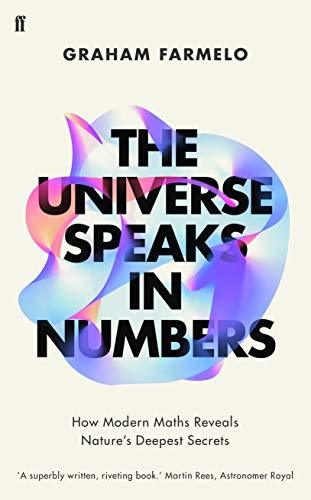
Ants cannot count.
After a quick book review, we will come back to ants (!) to see where the book arguments may fall short.
In many ways, the title is a misnomer. The author takes on a highly challenging topic in trying to defend theoretical physics against the experimental one. In academic circles and popular books, theoreticians have taken a severe beating in recent years for their inability to come up with anything proven or provable of late.
Of course, the book primarily relies on the massive successes of the theoreticians until the mid-twentieth century. However, the book's best parts are when the author discusses lesser-discussed progress and achievements since. It is clear that theoreticians still have a role to play, but is it forever or as substantial as it has historically been? The author takes a strong position on this question. However, one can make different types of arguments to discuss otherwise.
Using financial theory analogies, this reviewer can see three different theories on mathematics and the universe: a weak form, a strong form, and an even stronger one.
In the most superfluous version, one would assume the universe to keep evolving based on a set of rules along a continuum - notwithstanding the quantized nature. This mechanism can be captured through symbols, methods, and equations of mathematics, which is also a rule-based field.
One does not dwell too much on why math works but accepts that it does. And the believers could use this to argue why it is possible for someone (or a group of someone) sitting in a room to come up with ideas on how the universe works simply through deductive reasoning in her mind. History is replete with examples - well discussed in the book - of the greatest human brains achieving this over the last five hundred years. Their sitting-behind-desk-analysis led to transformative insights that not only were proven by the best experimenters later but led them on what and where to look.
The strong form is based on propositions (led by luminaries like Dirac) that any mathematical discoveries we make will have some real-world applications in our efforts to understand the universe. Starting from geometry to trigonometry, calculus, probability theories, and all the way to non-Euclidean geometry, complex numbers, topology, and set theory have all found utility in physics. It is almost as if Mathematicians cannot find a pure work that has no application for the physicians. Some may even go on to say that our mathematical universe has to manifest anything possible in mathematics. However, until we find a perfect, Platonic circle, the arguments are better limited to applications rather than manifestations!
The strongest form would nullify everything above in a way. As Godel proved, mathematics is axiomatic and perennially incomplete. Depending on how one sets the unprovable axioms, there are uncountable, if not infinite, number of mathematics possible. The world we observe cannot validate whatever any mathematician says, or theoretician hypothesises. One must ignore Godel to believe that every mathematical idea will have some utility.
The problem gets worse. Our brains have capacity limits. There may be no reduction in the pace of mathematical discoveries so far, but there has to come a time when a set of human brains can no longer disentangle a more complex set of equations. The world does not have to be based on rules that are human-understandable. Theoretically, the world could be running on a mathematical equation that is based on a billion axioms rather than one we have deployed in theories like string theory. Like ants, there is a limit to our mathematical abilities, and one day our experimental physicians - with their ever-improving toolkit - will be far ahead of what theoreticians could come up with.
Theoretical physics - as done by our scientists - is severely constrained by human brain capacity. This is in contrast to the experimental sciences, whose ability to collect and process data seems to be growing rapidly, if not exponentially. Yes, one may use artificial intelligence to leapfrog mathematical theories too. Still, if they are not decipherable by human brains, they would appear more like the evidence-based, empirical work of experimentalists.
To elucidate this point further, let's assume the universe runs on a mathematical equation that is about a thousand times bigger when expressed through symbols than the standard model with a few thousand arbitrary constants. Such an equation - we are supposing - would not only explain all the motions but also exactly describe the water flowing through a capillary to the formation of genes and the DNA or even the capriciousness of politicians! An ever-evolving intelligent system, like our machines, may be able to unearth a larger and larger slice of such an equation over time. The unearthing would be extraordinarily slow, if not impossible, for a stagnant or slowly-changing construct like the human brain.
There is always a chance that the equation of the universe is shorter and a theoretician arrives at it through deductive analysis, or a slice of it, before experimenters but the chances are definitionally vanishing given the complexities achieved. More importantly, until any such constructs - whether constructed by humans or machines - are verified, they will appear more like dogmas than the statements of the world.
All this does not mean theoreticians have no place in the world of sciences. They absolutely do. But, if they become too exotic with ideas that cannot be verified for long, they will continue to come under pressure regardless of their glorious history.