Talent is arguably the most precious natural resource a society can have. The purpose of this book is to present alternative conceptions of just what giftedness is how it can be measured, and how it can be developed in both children and adults. Conceptions of Giftedness consists of eighteen chapters by distinguished contributors to theory and research. It is divided into six parts. The first, an editorial introduction, offers a 'map of the terrain', and puts the chapters that follow in unified perspective. The second part addresses educationally -based conceptions of giftedness; the third, cognitive-psychological approaches; the fourth, developmental theories; the fifth, domain-specific aspects - mathematics and music. The final part, an integrative concluding chapter, discusses points of overlap and differences among the various positions. Conceptions of Giftedness brings together in one place, for the first time, comprehensive and readable statements of the main contemporary points of view by their leading exponents.
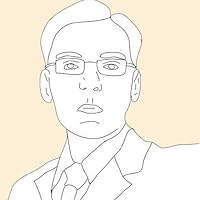
Robert J. Sternberg's spectacular research career in psychology had a rather inauspicious beginning. In elementary school he performed poorly on IQ tests, and his teachers' actions conveyed their low expectations for his future progress. Everything changed when his fourth grade teacher, Mrs. Alexa, saw that he had potential and challenged him to do better. With her encouragement, he became a high-achieving student, eventually graduating summa cum laude and Phi Beta Kappa from Yale University. In a gesture of gratitude, Dr. Sternberg dedicated his book, Successful Intelligence to Mrs. Alexa.
Dr. Sternberg's personal experiences with intelligence testing in elementary school lead him to create his own intelligence test for a 7 th grade science project. He happened to find the Stanford-Binet scales in the local library, and with unintentional impertinence, began administering the test to his classmates; his own test, the Sternberg Test of Mental Abilities (STOMA) appeared shortly thereafter. In subsequent years he distinguished himself in many domains of psychology, having published influential theories relating to intelligence, creativity, wisdom, thinking styles, love and hate.
Dr. Sternberg's Triarchic Theory of (Successful) Intelligence contends that intelligent behavior arises from a balance between analytical, creative and practical abilities, and that these abilities function collectively to allow individuals to achieve success within particular sociocultural contexts. Analytical abilities enable the individual to evaluate, analyze, compare and contrast information. Creative abilities generate invention, discovery, and other creative endeavors. Practical abilities tie everything together by allowing individuals to apply what they have learned in the appropriate setting. To be successful in life the individual must make the best use of his or her analytical, creative and practical strengths, while at the same time compensating for weaknesses in any of these areas. This might involve working on improving weak areas to become better adapted to the needs of a particular environment, or choosing to work in an environment that values the individual's particular strengths. For example, a person with highly developed analytical and practical abilities, but with less well-developed creative abilities, might choose to work in a field that values technical expertise but does not require a great deal of imaginative thinking. Conversely, if the chosen career does value creative abilities, the individual can use his or her analytical strengths to come up with strategies for improving this weakness. Thus, a central feature of the triarchic theory of successful intelligence is adaptability-both within the individual and within the individual's sociocultural context.