Jump to ratings and reviews
Rate this book

In the Shadow of Vesuvius: A Life of Pliny. A Literary Biography of the Two Great Romans

Rate this book
‘Never less than compelling … She consistently succeeds in bringing what might otherwise seem dusty and remote to vivid life’ Tom Holland, Literary Review

‘Starts with an erupting volcano – and then gets more exciting … Wonderfully rich, witty, insightful and wide-ranging’ Sarah Bakewell

In a dazzling, lively new literary biography, Daisy Dunn weaves together the lives of two Roman Pliny the Elder, author of Natural History, and his nephew Pliny the Younger, who inherited his uncle’s notebooks and intellectual legacy.

Breathing vivid life back into the Plinys, Daisy Dunn charts the extraordinary lives of two outstanding minds and their lasting legacy on the world.

‘A fascinating, compelling and excellent biography’ Simon Sebag Montefiore

‘Immensely entertaining and readable … Thoroughly recommended’Sunday Times

307 pages, Kindle Edition

First published January 1, 2005

236 people are currently reading
2627 people want to read

About the author

Daisy Dunn

7 books119 followers
Daisy Dunn is an author, classicist, and cultural critic. Her first two books, Catullus’ Bedspread: The Life of Rome’s Most Erotic Poet, and The Poems of Catullus: A New Translation, were published by HarperCollins on both sides of the Atlantic in 2016. The same year, Daisy was named in the Guardian as one of the leading female historians. Daisy has three books due out in 2019, the first of which, In The Shadow of Vesuvius: A Life of Pliny, was published by HarperCollins on 30 May (it will be released by Norton in the US in December). She is represented for books and media by Georgina Capel at Georgina Capel Associates Ltd.

Daisy contributes features, reviews, and comment articles to the Daily Telegraph, Evening Standard, History Today, Literary Review, The London Magazine, New Statesman, Newsweek, The Oldie, The Times, Sunday Times, Spectator, Standpoint, TLS, Apollo Magazine, Catholic Herald, and in the US she contributes to The LA Review of Books, New Criterion, and Lit Hub. Representing her former Oxford college St Hilda’s, Daisy played 3 matches of the 2016 University Challenge Christmas Special on BBC 2. Her team, captained by crime writer Val McDermid, won the series. Daisy has contributed to the BBC World Service, recorded two short films for BBC Ideas, and in 2015 her essay ‘An Unlikely Friendship: Oscar Wilde and Henri de Toulouse-Lautrec’ was longlisted for the international £20,000 Notting Hill Editions Essay Prize.

Daisy is particularly interested in the ancient world and its afterlife from the Renaissance forwards. Her doctorate, which she was awarded at UCL in 2013, spanned eighth-century BC Greece to sixteenth-century Italy. Her expertise lies in the history of the late Roman Republic and early Empire, literature of Greece and Rome, and art of Renaissance Italy.

Daisy read Classics at the University of Oxford, before completing a Master’s in the History of Art at the Courtauld in London, where she was awarded a scholarship for her work on Titian, Venice and Renaissance Europe. In the course of completing her doctorate, Daisy was recipient of the AHRC doctoral award, the Gay Clifford Award for Outstanding Women Scholars, and an Italian Cultural Society scholarship. She has taught Latin at UCL and continues to give talks and lectures in museums, galleries, and at festivals. She was formerly trustee and Executive Officer of the Joint Association of Classical Teachers. She is now Editor of ARGO http://www.hellenicsociety.org.uk/pub..., a journal published through the Hellenic Society, founded in 1879.

Ratings & Reviews

What do you think?
Rate this book

Friends & Following

Create a free account to discover what your friends think of this book!

Community Reviews

5 stars
166 (20%)
4 stars
348 (42%)
3 stars
254 (30%)
2 stars
50 (6%)
1 star
8 (<1%)
Displaying 1 - 30 of 147 reviews
Profile Image for Clif Hostetler.
1,283 reviews1,042 followers
April 8, 2021
This book is a biography of Pliny the Younger with frequent reference to his uncle, Pliny the Elder. By combining information from multiple historical sources, including examples of their historical literary influence, this book provides a surprisingly intimate look at A.D. first century life.

Of course the reason it is possible to write in considerable detail about the Younger's life is because he was a prolific letter writer, of which 247 survive. Less is known of a personal nature regarding the Elder's life, but snippets of his personal opinions and self reflection can be gleaned from the his 37 books of encyclopedic Naturalis Historia (Natural History) organized into ten volumes.

The following quotation from the book provides a succinct description of the scholarly disposition of the two men:
Pliny shared in common with his uncle an inquiring mind, an eye for minutiae, obsessive intelligence, and an eagerness to extend the bounds of mortal existence. He also shared his love of stories, not only of the natural world but of extremes of human behavior. It is when Pliny digresses on some tale or other that he sounds most like the elder Pliny. He was probably conscious of this, the more he sounded like his uncle the more he would prove himself worthy of being his adopted son. While Pliny was not inclined to record observations in the manner of a naturalist, he did like to share stories ... .
There is reference in this book to a letter written by Pliny's wife in which she said she had slept with some of his books in an effort to partially simulate his companionable presence. This impressed me as a touching sentiment expressing both fondness for his presence and recognition of the importance of books in his life. It's good to be reminded that Roman patricians living 2,000 years ago were capable of marital love.

One of the reasons so many of Pliny the Younger's letters survived is because he was writing to famous people, (e.g. historian Tacitus, biographer Suetonius, and Emperor Trajan). Pliny the Younger's first hand account of the 79 AD eruption of Mount Vesuvius was written in response to a request from Tacitus. Much of what we know of that eruption comes from those letters. Pliny the Elder died as a result of the incident.

One of Pliny's most famous letters is one in which he asks Emperor Trajan for counsel on how to deal with the new religious sect known as Christians. The letter was written while Pliny was Roman governor of Bithynia and Pontus (now in modern Turkey). This 112 AD letter is the earliest surviving Roman document to refer to early Christians. It's interesting to note that between Pliny and Trajan, Trajan expressed the more tolerant of views. Pliny was ready to punish members of this new religion, and Trajan express a view that could perhaps be described as "don't ask, don't tell."
Profile Image for Blaine DeSantis.
1,085 reviews186 followers
May 6, 2020
What a wonderful book!!!! Daisy Dunn has done a spectacular job in bringing Pliny the Elder and Pliny the Younger to life. This year I have read books on Claudius, Cicero and now the Pliny’s. The other two were novels, and while this is a non-fiction book, it reads like a novel. The author has done a great job of researching her book and has brought out details and stories that I never heard of. She has a great mastery of her subject and you can tell it by her style. We learn of both Pliny’s. The Elder who wrote his encyclopedia on Natural History and who died while trying to save people from the volcano eruption of Mt. Vesuvius. Pliny the Younger was a man of letters, a Senator and an attorney and we learn a lot about Roman life from his accounts. We read the story of Cleopatra drinking her 10 Million Sesterce pearl to win a bet with Marc Antony (and which was the subject of a fun antique/mystery episode of the series Lovejoy), we learn of the families dislike of Oysters and Ice. Never mix foods from the mountain and the depth of the ocean! We discover the brutal and evil Emperor Domitian, as well as Pliny’s happiness when Trajan became Emperor. So many stories as we follow the two men and get an intimate portrait of Rome, Tuscany, Naples and Como. Just a wonderful book by a young up and coming historian. I listened to a podcast with Daisy Dunn and immediately ordered this book. I had to wait for its release in the US and it was well worth the wait. As Pliny wrote, “To be Alive is to be Awake” and this book certainly make me feel alive and awake, and living back in the 1st and 2nd centuries AD in Rome. Thank you Daisy Dunn for bringing the Pliny’s to life for us here in the 21st century!
Profile Image for Matthew Ted.
1,015 reviews1,043 followers
May 18, 2024
51st book of 2024.

Two days ago, I was looking into the crater of Vesuvius. Photographs don’t capture the immensity of standing before it. My girlfriend and I stared for a long time, in silence, at the sheer drops of the sides. I was surprised to see little trees growing in the bottom. The sides were like landslides. Behind us, spanning out, were the cities of Pompei, Herculaneum, Naples. I said to my girlfriend, How strange it is to be standing here now, peering into its eerily quiet crater, when Pliny the Elder was killed trying to get here, when everyone else was fleeing.

Daisy Dunn begins her biography of Pliny (the Younger, but also the Elder):
The crisis began one early afternoon when Pliny the Younger was seventeen and staying with his mother and uncle in a villa overlooking the bay of Naples. His mother noticed it first, ‘a cloud, both strange and enormous in appearance’, forming in the sky in the distance. Pliny said that it looked like an umbrella pine tree, ‘for it raised high on a kind of very tall trunk and spread out into branches’. But it was also like a mushroom [1]: as light as sea foam — white, but gradually turning dirty, elevated on a stem, potentially deadly. They were too far away to be certain which mountain the mushroom cloud was coming from, but Pliny later discovered it was Vesuvius, some thirty kilometres from Misenum, where he and his mother Plinia were watching.
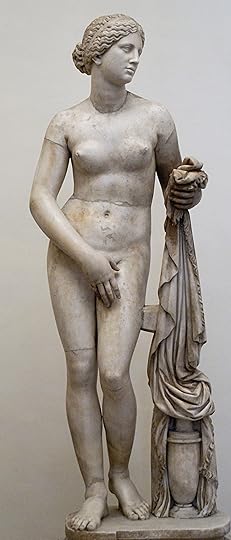
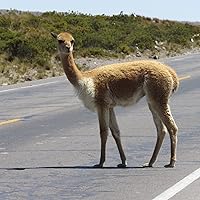
Vesuvius isn’t the focus of the book at all, though Dunn frequently calls back to it. It becomes, instead, a readable, well-researched biography about Pliny the Younger, from that moment he sees Vesuvius erupt. It has the hallmarks of any Roman life-story, with politics and murder. Pliny ended up leading a fulfilling life, both as a politician and lawyer. As I’ve said in my other classical reviews, I studied Classical Civilisation for three years, and though I never studied Pliny directly, he was friends with other famous writers of the period, such as Tacitus and Suetonius, both of whom I studied for a year. Dunn, like many writers of the Roman era, includes all sorts of interesting (and funny) throwaway remarks, such as one Roman man who tried to have sex with the statue of Aphrodite of Knidos [2], then later killed himself with shame. For these reasons, I’ve always believed, it’s one of the most interesting periods of history to study. In my years of study I went through Cicero, the men I mentioned above, Augustus, Tiberius, Claudius, Hannibal, etc., and found it all as interesting as the rest. The emperors that feature in Dunn’s book I never studied, but I knew the regular anecdotes Dunn uses about Nero, Domitian, and Trajan. The famous anecdote from Tacitus about the former, for example: he kicked his pregnant wife to death.

So I learnt a lot about Pliny the Younger’s career, marriages and so on. He had a lovely villa and Dunn includes some of the imagined reconstructions of his property that have been created over the years. The most interesting thing she explores, towards the end, is the idea of immortality. Pliny the Elder’s immortality was secured as soon as he ordered his fleet towards the erupting Vesuvius, not away from it. Dunn notes how desperate Pliny the Younger was to reach the same immortality, and in fact, by his desperate trying (mostly through writers such as Tacitus and Suetonius), he was in danger of not securing it. She suggests that trying too hard to be made immortal isn’t as effective. Of course, the Younger got his desire, and is as immortal as his uncle; he wrote, after all, the only surviving eye-witness account of the eruption. I wonder if he ever imagined us writing about him still today; he hoped so, anyway.

The saddest thing is despite both their fates being so tangled up with Vesuvius, I didn’t see a single thing about them in the pathetic gift shop at the top of the volcano.
________________________________
[1] I found a few of the descriptions made by Pliny quite unnerving in their similarities to the mushroom clouds of the atomic bomb.

[2]

description
Profile Image for Jane.
1,682 reviews238 followers
December 30, 2019
Unusual and spellbinding biography of Pliny the Younger, with much mention of Pliny the Elder and the latter's influence on him. Divided thematically into several parts, called by the names of seasons, from "Aut-" cycling through to another "umn" each begins with something of that season, branching off into other facets of Pliny's life, times, and personality. The impressive Como Cathedral is graced with statues of Como's two native sons, "pagans" though they be. Pliny the Younger was especially generous to his hometown.

Highly recommended.
Profile Image for Tom.
446 reviews35 followers
June 13, 2022
The only problem with listening to nonfiction works filled with fascinating detail while driving is that it's easy to get distracted by annoying things such as, you know, traffic and pesky pedestrians and cyclists. I got the big picture fine, but missed too many telling details, especially ones summing up one of many insightful stories or explanations of assorted philosophies. So I'm seriously considering getting a hard copy to fill in anything I missed. The book is worth it, especially if you have any interest in antiquity.
Profile Image for Brian.
Author 50 books145 followers
June 15, 2019
Entertaining, informative and immensely readable, Daisy Dunn's account of the life of Pliny the Younger is arranged thematically rather than chronologically, allowing her scope to explore the concentric circles that made up his world. We see Pliny the lawyer, Pliny the landlord, Pliny the emperor's fixer, Pliny the husband, Pliny the nephew, and Pliny the philanthropist.

The picture that emerges is of a complicated man who sometimes lacked confidence but was always determined to achieve. Bullied by the sadistic emperor Domitian, infuriated by his ruthless legal colleague, Regulus, overshadowed by his friend Tacitus, devoted to his wife Calpurnia, Pliny does not always appear in as admirable a light as he would wish but he is always sympathetic.

I particularly enjoyed the sense that we get of Pliny the Elder always there in the background. The author of the first real encyclopaedia and a man who believed in never wasting a moment that could be spent working, Pliny the Elder was a hard act to follow; and perhaps his nephew never quite lived up to the status of the great man. What Daisy Dunn has managed to achieve, however, is to convey his humanity and, in doing so, she effortlessly bridges the gap between our modern age and antiquity.
Profile Image for Stephanie (Bookfever).
1,104 reviews199 followers
November 12, 2020
When I picked up this book to read I had of course hoped to at least like it but I couldn't have predicted that I would be so crazy about it. In fact, I loved it so much that it's without a doubt in my top three books that I've read in 2020. I'm sure it's going to make a huge appearance in my end of year post in December.

This book is a biography about the lives of Pliny the Elder and his nephew Pliny the Younger. Pliny the Elder perished in the catastrophe of the eruption of Mount Vesuvius in 79 A.D. that absolutely ravaged the ancient Roman settlements of Herculaneum, Pompeii, Oplontis and Stabiae. Pliny the Younger, who was at the time 17 years old, survived but had to be devastated to have lost his uncle who was more like a father to him. Luckily enough there are authors like Daisy Dunn bringing Pliny the Elder and the Younger back to life.

I knew a decent amount about Pliny the Elder but not so much about his nephew even though he did achieve great things as well. I can't imagine how much research the author had to have done to write this book but it must've been immense because there was so much detail about both Pliny's. It was truly impressive to read. And more than that it was a super readable book. I flew through it so fast.

In the Shadow of Vesuvius: A Life of Pliny by Daisy Dunn is officially the most surprising book, in the best way possible, that I have read this year. Not only is it one of my favorite books of 2020 but also definitely one of my favorite nonfiction books ever. Just amazing!
Profile Image for Antusa de Ory.
135 reviews27 followers
May 27, 2022
Una muy interesante biografía doble sobre la vida de dos personajes de hace casi dos mil años: Plinio el Viejo, considerado como el mejor naturalista de la antigüedad, y su sobrino e hijo adoptivo por herencia, Plinio el Joven, que se hizo llamar así después de la muerte de su tío. La del Joven está mucho más documentada ya que fue reconstruida a través de sus cartas, y la del Viejo es por la única obra que se conserva, varios volúmenes de la Historia Natural, dónde ofrece observaciones acerca de todo. Algunos de los destinatarios más habituales de sus cartas fueron su gran amigo el historiador Tácito, el historiador y biógrafo Suetonio e incluso se carteó con Trajano. Muchos estudiosos afirman que con sus cartas Plinio inventó un nuevo género literario, porque Plinio recopiló copias de cada carta a lo largo de su vida y publicó en varios tomos.

Ambos Plinios pertenecieron a los équites, una clase social de la Antigua Roma que básicamente se alcanzaba cuando se tenía una buena situación económica. Plinio el Joven invirtió toda su vida en ampliar todo tipo de conocimientos, preservar los volúmenes de su tío, escribir poesía, fue abogado, senador, supervisor de cuentas, cónsul y embajador personal del emperador Trajano. Trabajaba día y noche con tanto ahínco como lo hizo su tío, aunque este último lo hacía por devoción y su sobrino por ambición. P. el Viejo decía que los seres humanos están en lo cierto al decir que la vida es breve, pero se equivocan al desperdiciarla durmiendo. Sin embargo, sin cuestionar la capacidad y preparación del Joven, trabajaba para dejar un legado y poder ser recordado en la historia. La perspectiva de pasar toda la vida trabajando para acabar muriendo sin haber finalizado nada, era su peor pesadilla.

A través de las cartas de Plinio y los volúmenes de Historia Natural se va contando, sin orden cronológico, la vida de ambos. Comienza con la erupción del Vesubio en el año 79 d.C., Plinio cuenta con 17 años y es a Tácito a quién le cuenta como transcurrió todo. Aunque el sobrino siempre admiró a su tío, las actitudes de cada uno de ellos discernían bastante. Muchos de los actos y gustos del Joven hubiesen sido criticados por el Viejo. Plinio alardeaba ante los demás de sí mismo y de sus posesiones, actitud muy contraria al estoicismo, que enseñaba que "la virtud es el único bien" prescindiendo de los bienes materiales, una filosofía con la que simpatizaba y apoyaba. También hizo diversas donaciones millonarias a la ciudad de Como destinadas a la educación de los jóvenes, pero no de forma anónima. Tenía tal afán por imitar a Cicerón, que se esmeraba en sus discursos para que pudiera ser tachado como uno de los mejores oradores de la historia. Admiraba a poeta Marcial y también escribió poesía. Lo mismo le ocurría con Tácito, que se sentía halagado cuando este le contaba que tanto su nombre como el de él, eran mencionados conjuntamente en las mismas conversaciones literarias, y se sentía como si estuviese a su altura.

Desde luego, no estoy capacitada para valorar si Plinio era mejor o peor que aquellos a los que admiraba, sin lugar a dudas, ha dejado un buen legado, el valor histórico de sus cartas es impresionante, de hecho él debatía todo tipo de cuestiones, fueran filosóficas y morales, como asuntos cotidianos y temas administrativos. Lo que me pasa es que después de leerlo, se me ha quedado un regustillo amargo porque su única ambición era resaltar y ser el mejor en todo. A pesar de todo, el libro es muy recomendable y se lee muy bien.
Profile Image for Regina Andreassen.
339 reviews52 followers
November 10, 2020
3.5 stars and perhaps I am still a bit generous. In the Shadow of Vesuvius is not really the book I expected it to be; for instance, there is very little talk of the Vesuvius and Pompeii and some sections are under-developed; and you will not find any of Pliny's letters here; but it is still a good book.

Daisy Dunn had a clever idea when she opted not to narrate the events chronologically; however, at times the book feels disjointed, and whilst some of the chapters were very engaging, some were less than interesting. Moreover, occasionally Daisy diverted from her original narration to add information that was not really relevant to the topic, and it left me wonder: why?. Further, even though I liked most of the language she employs in this book, I found rather peculiar to see Daisy abusing the infamous 'you', which is definitely a No-No in formal writing. The 'you' is something I expect to see when I read essays written by undergraduate students who are learning to write good essays or other academic manuscripts; the 'you' is definitely not what I expect to see in a book written by a respected author/historian. Fortunately, the writing was not verbose and the book was not overly long, so it was still an enjoyable read.

Overall, In The Shadow of Vesuvius is an adequate work, probably just average in its genre, but it has the potential to be a very good book. I give it 3.5 stars but since Goodreads does not have the half stars choice, I opted to give 3 stars to In The Shadow of Vesuvius because I feel that 4 stars would be too high for this book, and also because I want to balance its final rating. In my opinion, with a work like this, it is better for the reader to keep his/her expectations moderate.
Profile Image for Andrew.
Author 2 books45 followers
December 5, 2023
A highly detailed, widely researched, very well-written biography of Pliny the Younger with reference to his eponymous uncle, 'the Elder', in the context of the volcanic eruption that buried an ancient city. A pleasure to read if you're into ancient history and classical literature.
Profile Image for Matthew.
427 reviews9 followers
January 13, 2020
I picked up this book after seeing its review in the Wall Street Journal.

I really wanted to like it, but I have to admit that while I enjoyed sections, the book wanders so much that the lack of overall structure and coherence detracted too much for my taste that I give it two stars.

The book is supposed to be about the two (famous) Pliny's of ancient Rome: Pliny the Elder and Pliny the Younger. There is much more known about Pliny the Younger (given the preservation of a large number of letters) than there is about Pliny the Elder (who is famous for his monumental prototypical encyclopedia on nature and for his death from Vesuvius), so it is not surprising that the book contains more about Pliny the Younger.

The author warns the reader that they have chosen not to employ a chronological telling...and the result is in part a work that leaps about in timelines, events, and characters.

Personally, I found the wandering nature of the book a serious detraction. Several reviewers described the work as gripping. I did not find it so.

It is full of scholarship, and the author has to paint contextual history and chooses to described Pliny influences over the centuries after their death, but for me these often resulted in an absence of flow and organization.

Overall, I found the book interesting, but not engaging. Those with a definite interest in Roman history or exposure to Italy might find it worthwhile (Additional note: I have spent time on Vesuvious, in the surrounding area, and at Lake Como - and those experiences helped me actually enjoy more some of the sections of the work, but this book would probably have rated 2 stars for me absent those connections.) For the casual reader I would find this book hard to recommend.

Profile Image for Leonor Borges.
110 reviews11 followers
April 2, 2024
Uma biografia muito bem contada dos dois Plínios, em que quase nos sentimos a acompanhá los ao longo das suas vidas.
Uma boa surpresa, um manancial de informações sobre a vida quotidiana dos biografados.
A não perder!
Profile Image for Patricia G..
364 reviews19 followers
December 15, 2023
Me ha apasionado este ensayo sobre Plinio el Joven y Plinio el Viejo. Este libro está muy bien documentado e impecablemente escrito. Lo recomiendo.

“Plinio el Viejo fue un claro admirador de la caligrafía diminuta. Recoge en su enciclopedia que Cicerón había sabido de un manuscrito completo de la Ilíada de Homero tan pequeño que cabía en una cáscara de nuez. Se cree que aquella anécdota, incluida en el libro séptimo de su Historia natural, constituye el origen de la expresión inglesa “in a nutshell” [que, literalmente, significa «en una cáscara de nuez», y, en sentido figurado, «en resumen»”.
Profile Image for Richard Thompson.
2,955 reviews168 followers
June 26, 2022
I have read a number of books about the late republic and early empire of Rome, including both Tacitus and Suetonius, so I already had a good background for this book. I have even visited Pompeii where Pliny the Elder died in the eruption of Vesuvius and which Pliny the Younger described in his letters. But there was a lot here that I didn't know. It was interesting for me to learn more about the lives and times of the two Plinys and to finally learn to distinguish between them.

Most of the book is about Pliny the Younger, for whom we have many surviving letters that describe the details of his life. He was a rich lawyer, gentleman farmer and civil servant who also aspired to be an artistic writer and historian, but whose practical skills exceeded his artistic ones, a characteristic that seems typical for Romans. Still, he was an interesting man who led a life that many would still aspire to today and that very few achieve.
Profile Image for Gilda Felt.
741 reviews10 followers
December 14, 2022
What I knew of Pliny the Elder was that he died near Pompeii. And what I knew of Pliny the Younger was that his career seemed to have started there, being an eye-witness to the eruption, though from a safer distance. When I came across this book, I knew it was one I needed to read.

It doesn’t disappoint. As much as a reader can come to know anyone from almost two thousand years ago, Dunn does an excellent job of bringing these two to life, especially Pliny the Younger. It’s an entertaining read; almost like a novel, except that the reader can tell that much research went into the stories of these two men.

If you’re looking for a book about Vesuvius, I’d give this one a pass. If you’re looking for a book that covers the lives of two intelligent, compelling, and intriguing men of ancient Rome, this just might be for you.
Profile Image for Gaby.
1,344 reviews150 followers
March 2, 2025
Both Plinys are really interesting, even if they’re somewhat underrated figures from Ancient Rome. I’ve read many historical fiction books set during the Roman Empire where they appear as secondary characters, so I really enjoyed learning more about them and their impact on civilization for a change
Profile Image for Charles Haywood.
550 reviews1,139 followers
January 22, 2021
The Roman Empire gets a bad rap. This is particularly true of the members of its ruling class, who get the worse of the obvious comparison with Republican virtue, and are often viewed as placeholders and strivers orbiting around one emperor or another, offering nothing to the rest of mankind. No doubt many such existed. But we should not forget that the Empire was a very successful endeavor, especially in its early years, and success would not have been possible without at least some competent and virtuous men in the ruling class. Daisy Dunn’s The Shadow of Vesuvius profiles two such men: Pliny the Elder (Gaius Plinius Secundus; A.D. 23–79) and his nephew and adopted son, Pliny the Younger (Gaius Plinius Caecilius Secundus (A.D. 61–c. 113). The two men were very different, yet each strove to benefit and serve Rome, as well as to achieve great things himself, in a way our own ruling class has long since abandoned.

Dunn’s book is a joint biography, though it focuses more on the Younger (whom she calls simply “Pliny,” and the Elder she calls “Pliny the Elder,” a usage I will adopt). As it happens, I recently bought, in physical form, the entire Loeb Classical Library (544 volumes), as I amass a library that seeks to contain all the core of Western civilization. (I estimate it will end at somewhere north of 20,000 volumes; that’s what my daughter calls a “flex.”) So I was able to read chunks of each man’s own writing as I went through Dunn’s book, which helped bring the narrative to brighter life. Creating a biography about the two Plinys was, I am sure, a challenge, since few primary sources exist for their lives, other their own (few) surviving writings. No doubt trying to make the story more compelling than the Wikipedia entries for the men, which are very dull, Dunn organizes her book around the Roman seasons, and parallels them to Pliny’s life and times, weaving in backwards-looking references to Pliny the Elder.

Each man, while he accomplished much, is remembered today most vividly for one deed. For Pliny the Elder, it was dying in the ash of Vesuvius, rushing across the Bay of Naples towards danger with the dual goal of organizing a rescue operation (his duty as admiral of one of the Roman fleets) and trying to examine the eruption up close (for scientific purposes). Hence the title of this book—his nephew was near the eruption, too, but stayed safely on the other side of the Bay. For Pliny, it was his correspondence with the Emperor Trajan about how he should treat the ever-growing numbers of Christians in the Black Sea province he was governing at the time, which provides a crucial piece of historical data. Yet, as Dunn shows, there was much more to each man.

Until quite recently, in fact, Pliny the Elder was primarily known not for how he died, but for his magnum opus, the enormous Natural History. It is a confection of Pliny’s own observations and facts taken from a vast number of then-extant sources. The Natural History was the first encyclopedia—thirty-seven volumes of description of practically everything under the sun, much of it very inaccurate, we now know, yet astounding to his contemporaries, and used as a reference work for well more than a thousand years. He had just finished it when Vesuvius erupted, in A.D. 79. Of the two Plinys, the Elder was better known in the West until the late Middle Ages (and in fact the two Plinys were for a long time confused as one), because his Natural History survived, and little survived of the Pliny the Younger’s writings. But a treasure trove of his letters was discovered in an abbey in Paris around 1500, and when printed, ensured his reputation. For Pliny’s Letters give an unparalleled glimpse into the mind and practice of a senior administrator of the Empire, who did everything from work as a lawyer to administer drains.

The primary career of both was serving the Roman state; writing was a sideline. They managed to do both, in large part because to an obsessive degree, they tried to not waste time. Once Pliny the Elder lectured a dinner companion who corrected the pronunciation of a slave reading a poem that, because of this pedantic correction, they had lost time they could never get back. The Natural History showed what could be accomplished by continual study and work. I have a lot of sympathy for this desire not to waste time, although one of the downsides of modern life is that sustained focus is far harder, given the inevitable and innumerable distractions, and, for almost all people, the need to make a living. Not to mention that having slaves tend to your every need certainly helps focus, and that’s not on offer today either.

Although Pliny the Elder was educated as a lawyer, his twenties were spent in the military, a typical path for a member of the equestrian class. Even then, he was writing—though as with so many ancient works most of his books are lost. Early on he wrote technical works such as On Throwing the Javelin from Horseback, and later a twenty-volume history of the Roman experience in Germany. When he returned to Rome, practicing as a lawyer and working as a public servant, his career spanned several of most colorful, and dubious, Emperors, including Nero. He avoided the fate of Seneca, but retreated during times of trouble from writing history, which could be dangerous if perceived as a challenge to the present regime, to writing technical manuals on grammar.

Once Nero was gone, life became more settled, and Pliny the Elder was able to focus on, and complete, the Natural History. In A.D. 79, he was fulfilling his duties to the Emperor Vespasian, living at Misenum, on the Bay of Naples, across from Vesuvius. Never married, he was staying with his sister and her son, Pliny. Seeing the eruption, and receiving a message from a terrified friend, the Elder launched the fleet across the bay, into a rain of ash and pumice that was so intense it formed islands in the sea. His nephew remained at Misenum, obsessively studying, training to also become a lawyer. The next morning, Pliny the Elder was dead, suffocated in Stabiae (south of Pompeii); his nephew had temporarily fled Misenum, driven out by ash and earthquakes.

Soon after his uncle’s death, Pliny began his career, at eighteen, as a lawyer for civil cases, mostly inheritance, in Rome. This was a career choice that could make a man’s name, through his oration and logical skill, which is why Pliny chose it. Amusingly, many of the cases were not that different than today’s, such as a woman suing to void her octogenarian father’s resettling of his estate on his new young wife, whom he had married ten days after meeting her. (Strangely, elsewhere Dunn suggests that the Romans considered forty-three to be “elderly,” when the Romans were very clear that the forties were the prime of a man’s life.) It used to be common knowledge, and is now forgotten, the huge emphasis the Classical world put on rhetoric, now completely a lost art. (Pliny was taught by Quintilian, one of the most famous Roman teachers of rhetoric.) It makes one wonder what a skilled orator could accomplish in politics today—would his talents be wasted on the masses, with their short attention span and low intelligence? Or would his oration, if pitched correctly, sway the masses? I suspect the latter. But nobody trains for this, and the ancients recognized that training was crucial—talent alone was not enough, though it would certainly help.

We remember Pliny not as a lawyer, but for his Letters, which are our only detailed record of a man of his station’s daily activity. He began life in the equestrian class, but rose through position and wealth to the senatorial class, and served in several key functions of the Roman state. The Letters were edited for publication by Pliny himself; unfortunately, he removed dates and much technical matter that we would find interesting, in order to make smoother reading. As shown by his publishing his own correspondence, he was very desirous of eternal fame, and this made him receptive to flattery from friends such as Tacitus that he was on the road to achieving that fame. Flattery didn’t ruin him, though; it just made him work even more obsessively. Yet, as Dunn discusses at length, he was equally interested in domestic contentment. He was devoted to his second wife, Calpurnia (the first had died), and very sad they had no children. He was equally devoted to the natural world, spending much time on the land around his villas. Pliny enjoyed both the city and the countryside; the former appealed to his sense of ambition (and he generously funded public works in the towns he lived near), the latter to his interest in nature and the ability to focus on his work. No doubt he was an interesting man to talk to, though maybe a bit pedantic.

Pliny’s home town, and where he often lived when he was not in Rome or fulfilling some other duty, was Comum, modern Como, on the shores of Lake Como. He lived not far from where George Clooney spends his summers now, although nobody has ever accurately accused Clooney of benefiting mankind in any material way (and somehow his invitations to his parties keep getting lost on their way to me). Both Pliny and his uncle recorded a spring that ebbed and flowed near their villa. That spring ebbs and flows to this day, now within the confines of a luxury villa rented as a hotel, the Villa Pliniana. It sleeps twenty and can be yours for roughly $20,000 a night. Pliny also inherited a villa in Umbria, where he spent his summers—and which was closer to Rome, which depending on his responsibilities and the risks of being in the city at the time, might be desirable or not.

Pliny’s goal was to achieve some sort of magnum opus, as his uncle had, but this was doomed not to be. A competent poet, an excellent lawyer, a diligent administrator, he worked hard, but never focused enough on a single thing. He might have written memorable histories, had he tried—but the times, especially under the Emperor Domitian, made that a risky business, as friends and acquaintances of his found out to their sorrow. Domitian was erratic and dangerous, and ultimately assassinated in A.D. 96; Pliny claimed that Domitian was about to attack him when he died first. Yet Pliny’s career flourished under him, something he tried to downplay in his later letters. Regardless, again like his uncle, after an inconstant emperor Pliny was able to enjoy stability under a more even-keeled emperor, in his case Trajan. Other than his Letters, the only writing Pliny is remembered for is his Panegyric in praise of Trajan, an effusive but informative speech praising the new emperor. In the end, Pliny the Elder wrote about things outside himself and objectively achieved more, while Pliny, in the modern vein, wrote about himself, even if that was not his goal in life, and accomplished less.

I found it interesting that the morals of Rome often come through in the writings of both Plinys (and if you read all their writings, no doubt they come through even more often). For example, Dunn notes that abortion was an extremely serious crime in Rome, and when Domitian impregnated his niece, his crime of aborting the baby was regarded as equally unacceptable as the incest. No doubt part of this was the increasing Roman concern at the failure of the elite to have enough children, a major focus of Augustus—but it was more than that. The HBO series Rome, which went to some lengths to ensure accuracy in detail, showed one of the main characters throwing his dead wife’s body in the sewer after she confessed while dying to having earlier had an abortion. Other excellent laws and customs we should also imitate also tried to address the need for children—for example, that a man who had three children was granted significant privileges, including being able to stand for office early, and his wife was granted extra legal privileges as well. Nonetheless, given that some of the earliest Christian writings condemn abortion, the practice must have been widespread, and certainly, as Sarah Ruden has pointed out in her excellent Paul Among the People, much of Roman morality seems monstrous to us, with the Christian framework being the base of all our morality, even among those who today disclaim Christianity. Still, the Romans were reality-based, and that means that in many things, they came to sensible moral and legal conclusions, something that can no longer be said of our own government and ruling class, God rot them all.

Pliny ended his career, and as far as we can tell his days (we do not know exactly when, or how, he died), in Bithynia-Pontus, a Roman province on the north shore of the Black Sea, in what is now Turkey. He corresponded regularly with Trajan (although it is hard to tell whether some of the letters from Trajan were really written by secretaries), and this produced what Pliny is most remembered for—the first detailed description of the Roman administrative response to the exploding Christian population. At first, he summoned local people before him on the basis of anonymous accusations, executing Christians who would not recant (except Roman citizens, who were sent to Rome for trial). Nonetheless, Pliny was confused, because there was no clear rule regarding Christians, and he could not figure out, from a Roman state perspective, what the Christians were guilty of. He executed them for defying a magistrate, himself, not for the content of their religion. (All this is covered in detail in Robert Louis Wilken’s The Christians as the Romans Saw Them.) To ease his confusion, Pliny sought guidance from the Emperor.

Pliny’s goal, his assignment, was to maintain order. Concern about groups that might threaten order . . . [Review completes as first comment.]
Profile Image for Illiterate.
2,789 reviews56 followers
November 27, 2023
Dunn blends Pliny’s letters, his uncle’s natural history, and contextual tidbits.
Profile Image for Kelsey.
65 reviews
July 29, 2020
I won this book in a Goodreads giveaway. I really did not know much about Pliny the Elder or Younger before reading this book; I only knew that Pliny the Elder's Natural History was a book that existed, and that's about it. Daisy Dunn's The Shadow of Vesuvius: A Life of Pliny gives a great overview of both of the Pliny's lives, with most of the emphasis on Pliny the Younger. Maybe it's because I just graduated and spent the whole last semester working on an art history senior paper by reading numerous academic books, journals, and articles, but I found every chapter to be interesting and compelling. It is a more academic text in my opinion that a standard novel, but there is something here for any lover of history, science, literature, politics, philosophy, and/or art; this is a well-researched and clearly-organized account of two innovative and important men.
46 reviews
January 7, 2020
This was an odd book. I wanted to read it because Pliny the Elder (who was killed in the eruption of Vesuvius that buried Pompeii) features widely in my new book (forthcoming), an anthology of writing about nature from antiquity to 1700. Here's the beginning of my own introduction to Pliny (the Elder): "A soldier and lawyer, Pliny the Elder (23-79 CE) also composed a massive Naturalis Historia (Natural History) in thirty-seven books covering the topics of astronomy, geology, zoology, botany, and minerology and embracing all areas of human life. The work was mostly based on his consulting almost five hundred extant authorities on natural history, while he drew on his own experience when he could. The Natural History emphasizes comprehensiveness rather than criticism of any of its sources, including bounteous practical information and observations as well as popular beliefs and magical practices based on sympathies and antipathies." This was one amazing crazy project, which ended up deeply influencing Western thinking about the natural world for centuries. This book, however, is mostly about the life of his nephew, Pliny the Younger, a wealthy Roman senator, whom we know from his extensive letters (while the author does try to weave in what she can about the Elder's natural history). The book has its charms, in its anecdotes and digressions which vividly evoke the details of Roman life as well as history over nine decades, but those effects also make it hard to follow any particular narrative thread (topics change in the middle of a paragraph).
Profile Image for Drew.
651 reviews25 followers
April 20, 2020
This is a wonderful reference for Pliny the Elder's Natural History and Pliny the Younger's letters. I enjoyed many of the tidbits the author brought up throughout the book. The bibliography at the end, as well as the end notes, are very valuable. My only problem with the book is that it read more like an afternoon on Wikipedia than a coherently laid out book. I didn't find the organization of the material useful and felt like I was bopping around too much. A straight out chronological approach also would have been bad, to be honest, but I wonder if there were some other way to organize the material? I will easily refer to this book in the future, and treat it like a reference that I pull down to find one thing and then put back on the shelf. I'm very happy to have read it.

As for two specific items of note (out of many), Pliny the Elder nails it when he wrote "If fire, war and general collapse did not lead to the destruction of the world, then he believed that man’s greed would" (Natural History 2.207). And, as I love the Iliad and Odyssey, I liked Pliny the Younger's view of Odysseus: "He liked to remember how Odysseus stood as stiff as a skittle in the Iliad, but when he ‘spoke from his big chest his words were like the snowflakes of winter, and no other mortal could then rival Odysseus'" (Pliny the Younger's Letters, 1.20-2).
Profile Image for John Isles.
268 reviews7 followers
April 5, 2021
For several years now I have been studying and translating the writings of both Pliny the Elder and his nephew Pliny the Younger. Naturally I was interested in reading the book under review, which describes itself as a biography of Pliny the Younger, but mostly is a random walk through his own letters and the Natural Histories of his uncle, with tangential offshoots into historical and literary paths suggested by what the Plinys had written. The author is said to be a classicist, but one wonders sometimes how accurate that title is, when she calls Livy's famous history of Rome from its foundation 'recondite' (p. 10), misreports Nero's death (p. 53), and wrongly makes Titus emperor before the Natural Histories were dedicated to him (p. 57). She speaks of 'a highly successful governor of Britain named Agricola' and 'a Roman province called Moesia' as if these were unfamiliar names (p. 88). She seems not to know that Campania is on the west coast of Italy (p. 185), and an unexpected '(sic)' on p. 40 suggests that it was not Pliny the Younger who wrote to Tacitus about the eruption of Vesuvius, but Pliny the Elder, who could not have done so since he died when it was taking place. In such a wealth of information a few such slips are inevitable. Erudition is certainly suggested by the lengthy compilations of endnotes and bibliography, though I wish the endnotes had been footnotes to make things easier on the reader. I liked best the passages in which the author relates Pliny the Younger's descriptions to the present Italian landscape (or cityscape). I was transported back to Lake Como where Pliny had some of his estates, and was delighted to learn that we may even have dined there in what once was the grounds of his villa.
Profile Image for Matt McCormick.
244 reviews25 followers
August 7, 2025
Dunn is a fine writer and tells a good story. Unfortunately her primary subject just isn't that compelling. In fact, Pliny (The Younger) is almost dispiriting. He is presented, unintentionally I'm sure, as precursor for today's public figures. He was one of "the few who have more" as post Republican Rome saw a massively growing disparity in wealth. Those at the top, toadying to the most recent mad emperor, amassed fortunes laid on top inherited largess. Dunn emphasizes a Pliny senatorial speech (Panegyricus Traiani) and how it's unique having lasted through time. But what was that speech? Not a call for renewed Senatorial independence but a pandering peon to the emperor. As long as Pliny towed the party line he was safe to write, farm, grow wealthier and pontificate. How he would have thrived in today's America.

Yes Pliny wrote - Letters - mostly about himself. Unlike his uncle, Pliny the Elder, he didn't write a natural history. Unlike other contemporaries he didn't write a history of the emperors, nor poetry, nor epic, nor a treatise on philosophy. Certainly we benefit from the window Pliny's letters provide us on this period. He talks about Vesuvius and early Christians. Predominantly he tells us about his estates and court cases.

If a reader approaches this book as life styles of the rich and famous episode if Imperial Rome, the book can be enjoyed.

Profile Image for Hannah.
115 reviews15 followers
February 5, 2021
this was a lovely, scenic sort of book; it functions as a dual biography of pliny the younger and elder, but really it’s more than that. it serves as a biography of their time, of the landscapes they inhabited, of the mechanisms of thought and scientific inquiry in which they both engaged and helped to shape and form. it also looks forward, into the future, at the legacies that the plinys left behind, the people who admired or refuted them in the centuries after their deaths. there are some beautiful descriptions of nature here (as well as a few gorgeous woodcut-style illustrations) and it begins with a wonderful and startling recreation of the eruption of mount vesuvius, in which the elder pliny perished, and which influenced the younger profoundly for the rest of his life. it’s definitely more of a loose, literary biography, as opposed to what i suppose i would call a “hard” biography - the structure is non-linear, and it winds and flows back and forth like a stream. but i really enjoy the easy, soft pace this style gave it.

overall, i would absolutely recommend this to anyone interested in the two plinys, in some detail of the roman empire and its culture at this time, or anyone at all who just wants a pleasant, lovely, slow, and interesting read. don’t pick it up expecting to learn very much about pompeii and its destruction; this book has something else to offer than that.
Profile Image for Jon.
1,459 reviews
November 13, 2020
Daisy Dunn uses the works of the two Plinys--uncle and nephew--to expatiate on all kinds of aspects of ancient Roman culture. Neither of the two Plinys is especially appealing. The elder was a workaholic who produced an enormous Natural History purporting to contain all of human knowledge about everything. I learned from Dunn that Charles Darwin admired it. The nephew tried to imitate his uncle in working hard and sleeping little, and besides being a senator and Roman administrator, wrote hundreds of revealing letters. Using these two and their writings, Dunn talks about everything from court intrigue to philosophy to German wars to slavery to art to biology to farming to cuisine to women's rights. Oh, and she begins with a vivid description of the eruption of Vesuvius in 79, an event witnessed by both Plinys. A very readable introduction aimed I guess at undergraduates.
Profile Image for Vicki Cline.
779 reviews45 followers
March 4, 2020
This is a biography of Pliny the Elder and Pliny the Younger, his nephew. We know a good bit about them because many of the Younger's letters and speeches have survived, as has the Elder's The natural history of Pliny. We know details of the eruption of Vesuvius because 18-year-old Pliny viewed it from his uncle's estate, while his uncle sailed across the Bay of Naples to rescue some friends. Unfortunately, the Elder Pliny was overcome by the gasses from the eruption and died. There's a lot in the book about the Younger's various properties, but no pictures. Too bad.
Profile Image for Gaia.
Author 1 book9 followers
July 4, 2024
Pretty dry but luckily, I'm obsessed w ancient Rome. If you're looking for a well-researched non-fic, give it a try.
Profile Image for Jared.
331 reviews22 followers
November 13, 2021
The most important contribution the elder Pliny had made to history was his multi-volume encyclopaedia. The Natural History was astonishing for its breadth.

WHAT IS THIS BOOK ABOUT?
- This book explores the ways in which the Plinys – Younger and Elder – thought about life, death and the natural world. At its heart is a biography of the younger, better-documented Pliny, whom I have pursued through his Letters together with his uncle Pliny the Elder’s extraordinary encyclopaedia, the Natural History. It is also a celebration of the enduring appeal of both men, their work and the treatment of their ideas through the passage of time.

THE TWO PLINYS
- Though commonly confused with his namesake through Late Antiquity and the Middle Ages, Pliny the Younger was an important figure in his own time. He survived the Vesuvius disaster to become a lawyer, senator, poet, collector of villas, curator of drains, and personal representative of the emperor overseas.

- Pliny the Elder was born Gaius Plinius Secundus in Comum in AD 23 or 24.

- Pliny the Elder had no children by the time he died and Pliny had lost his father as a boy. Pliny the Elder therefore adopted him posthumously by bequest of his will.

VESUVIUS
- Vesuvius first erupted about 23,000 years before and had now been dormant for approximately 700 years – dormant, but as alive as the crops which enveloped it.

- In its second stage, a nuée ardente produces pyroclastic flow, a current of magma and gas of around 400 degrees Celsius.

- The body of a victim of thermal shock does not look peaceful. It is rigid, the hands typically clenched like a boxer’s, the result of tendons contracting in the heat.

- The people of southern Italy were not alone in their fear. The effects of the eruption were felt thousands of kilometres away, ‘the amount of dust so great, all in all, that some reached Africa and Syria and Egypt, and some reached Rome, and filled the air above and cast the sun in shade’.

CURIOSITY
- Pliny the Elder decided that this ‘phenomenon’ warranted further investigation. After taking in what he could from his lookout point he made up his mind to leave Misenum to draw nearer to its source.

- Despite heading in the very direction whence others were now fleeing, Pliny’s uncle was said to have been so fearless that ‘he described and noted down every movement, every shape of that evil thing, as it appeared before his eyes’.

- When the helmsman advised turning back, Pliny the Elder adamantly refused. ‘Fortune favours the brave,’ he said.

GREED
- If fire, war and general collapse did not lead to the destruction of the world, then he believed that man’s greed would.

- In his uncle’s writings, therefore, Pliny inherited not only his pearls of wisdom, but also his warnings against the destructive forces of wealth and greed.

UNEXPECTED
- Odysseus was a perfect model for Pliny. He showed him that, if the most innocent skies can deliver the greatest snowstorms, then the most unprepossessing men can deliver the greatest speeches.

LOOK FOR NEW, EVEN AMONG THE FAMILIAR
- Pliny could never have been accused of overlooking the places nearest him. Even in his home town of Comum he was forever going in search of new sights.

STUDIOUS
- Believing that a moment away from his books was a moment wasted, Pliny the Elder had developed an extraordinary ability to study in any situation:

SLEEP
- A furious night-writer, Pliny the Elder was fortunate to possess what his nephew called ‘a sharp intellect, incomparable concentration, and formidable ability to stay awake’.

- Humans are not wronged by the fact that their lives are brief, he wrote, but do wrong by spending the life they do have asleep.

- Vita vigilia est, he wrote: ‘To be alive is to be awake.’

A STRUCTURED LIFE CAN ACHIEVE MUCH
- Pliny the Elder had pushed the boundaries of mortal achievement. His publication of over 20,000 pieces of information exceeded anything his predecessors had produced. His encyclopaedia was an attempt to overcome the frailty of human life and human memory: a record of everything man had learned and risked losing through neglect and the passage of time. It was his most precious legacy, evidence of how much one could do when one’s life was structured in a certain way.

VARIETY IN LIFE
- William Cowper declared, in his poem of 1785, that ‘Variety’s the very spice of life,/ That gives it all its flavour’,

CERTAINTY IN LIFE
- solum certum nihil esse certi et homine nihil miserius aut superbius The only certainty is that nothing is certain And nothing more miserable or arrogant than man.

- Man’s desire and quest for certainty is presumptuous and arrogant; his eternal failure to achieve it, a recipe for misery.

REASON IN THE FACE OF FEAR
- Unlike so many of the people around him, Pliny did not cry, because even in these dire moments he could reason, and in reasoning, he found something close to belief.

SEEING POINTS FROM BOTH SIDES
- Pliny considered the ability to understand the arguments on both sides the mark of a great mind.

LIMITATIONS AND SHORTNESS OF LIFE
- The elder Pliny had observed in his Natural History that flowers wither as quickly as they bloom for the sake of warning men of the evanescence of life.

- Nature may not ‘exist for the pleasure of man’, but it does well to remind him of his limitations.

ENCYCLOPEDIA
- Offering observations on everything, from the moon, to elephants, to the efficacy of ground millipedes in healing ulcers, Pliny the Elder had left behind an indispensable compendium of knowledge.

- Although the word ‘encyclopaedia’ only gained currency in the fifteenth century, Pliny the Elder presented his Natural History as the Latin equivalent to what the Greeks had called enkyklios paideia, ‘all-round education’ – education that surrounds the pupil in a circle.

GOOD TIMES AND BAD TIMES
- As Pliny the Elder explained, we experience life best through vicissitudes, ‘for what real joys does Fortune bestow except those which follow disaster, or what true disasters except those which follow great joy?’

STOICISM
- Zeno, the man credited with founding the Stoic school of thought, was said to have learned the art of keeping his cool after scalding himself with soup. Arriving in Athens from his native Cyprus in around 312 BC, he encountered the Cynic philosopher Crates, who playfully challenged him to carry a steaming bowl of lentil soup through the potters’ quarters of the Kerameikos. Zeno accepted and, to maintain a semblance of propriety, did his best to conceal it as he started. Crates smashed the bowl with his walking stick. When the soup began to dribble down his legs, Zeno turned red and scurried off to hide his shame. As he hastened away, Crates calmly told him, ‘You have suffered nothing terrible.’

- Stoicism was the most prominent philosophy in Rome, far outshining Epicureanism and Pythagoreanism as a school of thought. Cicero, Virgil, Seneca the Younger, Pliny the Elder and, later, the emperor Marcus Aurelius, did much to elevate and perpetuate its teachings through their work.

- The Stoic had a deep sense of security and inner confidence; he knew that it was in his power to make the right choice.

GOOD QUOTES
- ‘You are fettered,’ said Scrooge, trembling. ‘Tell me why?’ ‘I wear the chain I forged in life,’ replied the Ghost. ‘I made it link by link, and yard by yard; I girded it on of my own free will, and of my own free will I wore it. Is its pattern strange to you?’ Charles Dickens, A Christmas Carol, 1843, Stave I

- As Seneca the Younger used to say, ‘one can be wise without ceremony, and without inviting ill-will’.

- There is an old saying, still cherished in Italy, that ‘out of bad, comes good’ – ‘Dal male nasce il bene’, or, ex malo bonum.

- ‘When we are well, we should strive to be the sort of men we vowed to be in future when we were unwell.’

*** *** *** *** ***

FACTOIDS
- Pliny the Elder was evidently admiring of small handwriting. He recorded in his encyclopaedia that Cicero had known of a complete manuscript of Homer’s Iliad that was so tiny it could be enclosed in a single nutshell. This fact, included in the seventh book of his Natural History, is thought to be the origin of the phrase ‘in a nutshell’.

- Triton, son of the sea god Neptune,

- the wine god Bacchus,

- Saturn, the Roman god of time and the seasons.

- Vertumnus, the Roman god of the seasons.

- Ceres, the goddess of the harvest.

- It was rightly presumed that the sheep that died in AD 63 did so as a result of bowing their heads so close to the earth from which gases such as carbon dioxide and sulphur were now emanating. The death of livestock is a common occurrence in volcanic regions. In the spring of 2015, over five thousand sheep died in Iceland as a result of intoxication by volcanic sulphur. Humans hold their heads sufficiently high to inhale the poison in smaller doses.

- The picture he paints of a rising ash column followed by prolonged pumice fall is in fact so well observed that volcanologists now classify such eruptions as ‘Plinian’.

- Quite the best thing about pearls is that no two are the same: in Latin, a pearl is sometimes called simply unio, ‘uniqueness’, whence ‘onion’, a vegetable of iridescent layers.

- In Latin this idea was far clearer, for lumen meant both ‘eye’ and ‘light’, and when it meant ‘light’ it could also mean ‘life’. Both a blind man and a dead man could be said to have had ‘the light stolen from him’. Lamps were often placed in the tombs of the dead as if to light their journey to the Underworld.

- Though, according to modern research, elephants are in fact most terrified of bees, whose stings cannot penetrate their skin but can hurt their eyes and the insides of their trunks.

- This was not the longest speech Pliny had ever given. He once spoke in court for seven hours straight.

- a Roman gladius (dagger)

- The herpes virus had been known to the Greeks since at least the fifth century BC, when Hippocrates, the father of medicine, likened it to a serpent. It crawled beneath the skin, undetected, then lay dormant, waiting to break out.

- shrews, whose bites he knew to be venomous.

- vomitoria (passages designed to ‘spew forth’ spectators on their way in and out of the auditorium)

- damnatio memoriae, the process of scrubbing out one face so as to erase it from history and re-carving it into another, which was what Romans did to portraits of detested emperors, not deified ones such as Augustus.

- Pecunia, the Latin for money, came from pecus, the word for ‘flock’ or ‘herd’.

- (Alexander the Great famously died after a bout of heavy drinking),

- As Tacitus said, ‘remedies work more slowly than diseases’.

- The day known as the Ides fell at the middle of each month and was normally celebrated with a festival.

- In 2017, an international team of scientists put the theory to the test and discovered that, when volcanic ash is combined with water, a series of ‘water–rock interactions’ takes place which indeed lead to the strengthening of the concrete over time. Volcanic matter, so quick to destroy buildings, was also the ingredient needed to protect them against Nature’s battering.

- sordida – the lowly things in life.

- Throughout history various ‘sumptuary’ laws had been passed imposing limits on the size of dinner parties in a bid to prevent them from being used for political ends.

HAHA
- Regulus cut not only a dull figure but a ridiculous one; he insisted on wearing an eye patch – over his right eye if he was speaking for the prosecution and over his left if for the defence.

BONUS
- Who is Pliny the Elder?: https://youtu.be/iUMVf8bkUQE

- Animation of what life would have been like in Pompeii during the eruption of Mt Vesuvius: https://youtu.be/dY_3ggKg0Bc

- Pyroclastic flows of a volcano are deadly: https://youtu.be/N4-5kLbHY2Y

- How victims of Mt Vesuvius died: https://youtu.be/V9U6ZqvnrJU

Profile Image for Hilary.
333 reviews
September 19, 2023
Interesting and extremely readable account of the lives of Pliny the uncle and Pliny the nephew. I also liked the way Dunn made connections and comparisons with people, events and culture outside the classical era.
Profile Image for Lena_makridina.
38 reviews11 followers
January 17, 2020
Easy to read, interesting, entertaining.

First Non-Fiction I've started and finished in a couple of years, so you can see how far I'm from being an expert reader.

I rather liked it but keep in mind that I haven't read either the Letters of Pliny the Younger or Natural History on which the author relies heavily. She also writes about archeological excavation of Pompeii and about famous historical figures influenced by both Pliny the Elder and Pliny the Younger, about attempts to find the location of Pliny's villas and rivalry between cities over it, about medical remedies used at the time (terrifying and hilarious), so it was a bit confusing at times (hence four star rating, punishing the author for the reader's ignorance). However, I think I have a pretty good image of Pliny the Younger now, which makes this book successful.

I happen to like Albert A. Bell JR's Cases from the Notebooks of Pliny the Younger, mysteries in which Pliny and Tacitus investigate murders, but Pliny the Younger is rather idealised smoothed out version of himself in those books which strangely enough made him a less interesting and less compelling character. I think however that those mysteries do a better job introducing Pliny's contemporaries, his friends and enemies and ruling emperors whereas this book stays true to the image of Pliny himself and gives us a better idea of what he was doing with his life and what he espired to be.

I enjoyed this book and I would recommend it to those who is curious about Pliny but haven't read anything about him yet.
This entire review has been hidden because of spoilers.
Displaying 1 - 30 of 147 reviews

Can't find what you're looking for?

Get help and learn more about the design.