

What do you think?
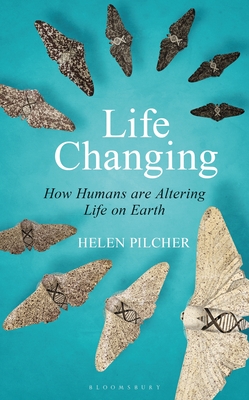
Life Changing: How Humans are Shaping the Course of Evolution
In this post-natural history guide, Helen Pilcher invites us to meet key species that have been sculpted by humanity.
We are now living through the post-natural phase, where the fate of all living things is irrevocably intertwined with our own. We domesticated animals to suit our needs, and altered their DNA--wolves became dogs to help us hunt, junglefowl became chickens to provide us with eggs, wildebeest were transformed through breeding into golden gnus so rifle-clad tourists had something to shoot. And this was only the beginning. As our knowledge grew we found new ways to tailor the DNA of animals more precisely; we've now cloned police dogs and created a little glow-in-the-dark fish--the world's first genetically modified pet. The breakthroughs continue.
Through climate change, humans have now affected even the most remote environments and their inhabitants, and studies suggest that through our actions we are forcing some animals to evolve at breakneck speed to survive. Whilst some are thriving, others are on the brink of extinction, and for others the only option is life in captivity. Today, it's not just the fittest that survive; sometimes it's the ones we decide to let live.
According to the Bible, Noah built the original ark to save the world's creatures from imminent floods. Now the world is warming, the ice caps are melting and sea levels are rising. With nowhere "wild" left to go, Helen Pilcher proposes a New Ark. In this entertaining and thought-provoking book, she considers the many ways that we've shaped the DNA of the animal kingdom and in so doing, altered the fate of life on earth. In her post-natural history guide, she invites us to meet key species that have been sculpted by humanity, as well as the researchers and conservationists who create, manage and tend to these post-natural creations.
We are now living through the post-natural phase, where the fate of all living things is irrevocably intertwined with our own. We domesticated animals to suit our needs, and altered their DNA--wolves became dogs to help us hunt, junglefowl became chickens to provide us with eggs, wildebeest were transformed through breeding into golden gnus so rifle-clad tourists had something to shoot. And this was only the beginning. As our knowledge grew we found new ways to tailor the DNA of animals more precisely; we've now cloned police dogs and created a little glow-in-the-dark fish--the world's first genetically modified pet. The breakthroughs continue.
Through climate change, humans have now affected even the most remote environments and their inhabitants, and studies suggest that through our actions we are forcing some animals to evolve at breakneck speed to survive. Whilst some are thriving, others are on the brink of extinction, and for others the only option is life in captivity. Today, it's not just the fittest that survive; sometimes it's the ones we decide to let live.
According to the Bible, Noah built the original ark to save the world's creatures from imminent floods. Now the world is warming, the ice caps are melting and sea levels are rising. With nowhere "wild" left to go, Helen Pilcher proposes a New Ark. In this entertaining and thought-provoking book, she considers the many ways that we've shaped the DNA of the animal kingdom and in so doing, altered the fate of life on earth. In her post-natural history guide, she invites us to meet key species that have been sculpted by humanity, as well as the researchers and conservationists who create, manage and tend to these post-natural creations.
383 pages, Hardcover
Published April 7, 2020
Ratings & Reviews
Friends & Following
Create a free account to discover what your friends think of this book!
Community Reviews
Displaying 1 - 22 of 22 reviews

August 16, 2021
A very enjoyable book that gets the science right, Life Changing charts how we are wittingly and unwittingly altering the genetics and evolution of life around us. See my full review at https://inquisitivebiologist.com/2021...
December 9, 2021
A rare thing, a scientist who writes with humour and a lightness of touch. Amazing list of the things that we have tried to do to put things right, having comprehensively messed up our planet

May 9, 2022
In "Life Changing", Helen Pilcher is providing the reader with a broad survey and numerous examples of how humans are altering life on earth - specifically focusing on the deliberate and accidental human impact on the genetics and evolution of the flora and fauna around us. Pilcher takes a look at the species that we have deliberately engineered for a specific purpose, such as dogs, domestic animals, spider-goats, GM mosquitos, day-glow tropical fish, and AquaAdvantage salmon. She discusses the wide variety of methods used for fiddling with a species genetic makeup, including selective breeding the old-fashioned way, cross-breeding, as well as various biotechnological methods to produce specific results. This is a fairly balanced book that covers a variety of diverse (and often contentious) topics such as domestication, cloning, urban evolution, transgenic species, invasive species, de-extinction, rewilding, and conservation. The examples cited are fascinating, with a decent number that I haven't come across before (e.g the Kakapo conservation/breeding efforts and the coral breeding efforts). Pilcher has an easy-going writing style that doesn't bog the reader down with too much irrelevant material or information that is too technical. The book is a bit light on the more technical aspects of the science involved, but in terms of a popular science book, this is one of the more interesting and well written ones that provides food for thought.
August 7, 2024
Her şey iyi güzel de adı verilen hayvanların resminin olmasını isterdim. Her seferinde video ya da fotoğraf bakmak durumunda kaldım.
May 29, 2022
Interesting book on our role in post-natural selection. Very well researched and an engaging and witty narrative.
5 stars
5 stars

January 7, 2021
Pilcher's sense of humor and yet serious perspective about evolution made this book hard to put down. I realized in reading this book that I often think of evolution as a concept relating to the past, but she helped me understand more about the ways it is a very present phenomenon. Most startling to me throughout this book was her focus on the farming industry and farm animals. Her statistics about how great the percentage of animals on earth are primarily farming animals raised for food was alarming, as was the very funny assertion that fossil records of this time may mark this not as the Anthropocene but the age of the chicken.

September 26, 2021
If I could give this 3.5 stars I would. I actually enjoyed the last few chapters more than the initial chapters but not at the fault of the book. I don't read a lot of non-fiction and found it difficult to focus when reading about cloning etc, I also found these chapters quite disturbing. Cloning polo horses doesn't seem like a good use of time and money when so much is happening in the world. The last few chapters look at how human science can be used for good so does address this. Science written in a very accessible way and a lot of interesting facts.
February 13, 2021
Interesting reading for thinking about conservation, environmental stewardship, intervention, and preservation.
September 22, 2022
Snappy and witty writing, starting from the first chapter I was hooked.
From the humanity's first attempts to domesticate wildlife, to selective and cross breeding, gene therapy and cloning. Each topic brings a different facet and reveals fascinating facts about our relationship with animals and wildlife. The chapters build on and off each other, and ties up neatly and coherently, with the final few chapters rounding up and giving us some hope on how we can still make something out of this beautiful world and the wildlife in it.
For anyone who is interested in climate change or wildlife in general, this will prove to be an interesting and fascinating read. Thumbs up!
From the humanity's first attempts to domesticate wildlife, to selective and cross breeding, gene therapy and cloning. Each topic brings a different facet and reveals fascinating facts about our relationship with animals and wildlife. The chapters build on and off each other, and ties up neatly and coherently, with the final few chapters rounding up and giving us some hope on how we can still make something out of this beautiful world and the wildlife in it.
For anyone who is interested in climate change or wildlife in general, this will prove to be an interesting and fascinating read. Thumbs up!

November 28, 2022
I found this book very interesting. The author is funny, and the book, as a whole, is captivating. I feel like it could have been much longer than it's 384 pages. Because it is mainly oriented towards the human-animal relationship, I was a bit deceived that it doesn't talk much about CO2 releases, chemical and pollution. A complete, second book could be dedicated to this topic, I am sure. There are two chapters that disappointed me, towards the end; the entire book has a more generalist approach, while those two, I think, are way too much specialized, and I lost interest a bit.

May 1, 2024
This book covers a wide range of subjects relating to the influence of humans on animals: while the chapters on domestication, GM and cloning are interesting, the book really gets engaging when talking about unintended effects on wild animals and conservation efforts. There’s a particularly devastating summary of the impact of humans on the natural world, but there is some optimism mixed in as well.

July 26, 2020
Life Changing... fantastic wealth of knowledge regarding domestication and selective breeding of animals to obtain certain desirable traits. Great information and research, well explained processes and scientific facts. I thought this would dive more into climate change and land changing aspects of life on Earth instead of only focusing on animals.

August 31, 2020
Well researched book about the human impact on life on earth. Easy to read and understand. The author presents both sides of controversial issues such as genetic modification. But the section I enjoyed the most was about the 're-wilding' of the environment.

Did Not Finish
March 8, 2020DNF

April 17, 2020
Very good - a light but thought-provoking and wide-ranging discussion of the impacts humans are having on the natural world, with a balanced consideration of the ethical implications.
Did Not Finish
January 9, 2021DNF
Read
November 8, 2021Fascinating!
April 3, 2022
A fascinating examination of mankind’s continuing impact on the natural world
May 23, 2024
Brilliant book - interesting, enjoyable and thought provoking.

August 14, 2026
3.5 stars - interesting and depressing, mostly about how humans have ruined everything for the animals and environment. Good stories to go with the overall information provided.
August 22, 2026
Fascinating, and fun. Not a quick read, and can be slightly disjointed, but a good book to pick up and read a chapter or two when you're in the mood.

April 19, 2020
I thoroughly enjoyed this book and the journey through the human impact on evolution of other organisms. It was accessible enough for people with no background in science, but not so elementary as to be boring for someone with more specific knowledge.
Displaying 1 - 22 of 22 reviews