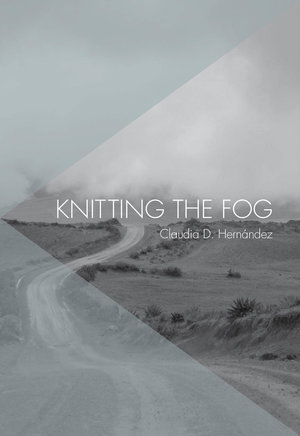
Weaving together narrative essay and bilingual poetry, Claudia D. Hernández’s lyrical debut follows her tumultuous adolescence and fraught homecomings as she crisscrosses the American continent.
Seven-year-old Claudia wakes up one day to find her mother gone, having left for the United States to flee domestic abuse and pursue economic prosperity. Claudia and her two older sisters are taken in by their great aunt and their grandmother, their father no longer in the picture. Three years later, her mother returns for her daughters, and the family begins the month-long journey to El Norte. But in Los Angeles, Claudia has trouble assimilating: she doesn’t speak English, and her Spanish sticks out as “weird” in their primarily Mexican neighborhood. When her family returns to Guatemala years later, she is startled to find she no longer belongs there either.
A harrowing story told with the candid innocence of childhood, Hernández’s memoir depicts a complex self-portrait of the struggle and resilience inherent to immigration today.
Claudia D. Hernández tells the story of her childhood in Guatemala (Mayuelas and Tactic), of moving with her mother to the United States, of returning both places. The story is sometimes poetry, sometimes in multiple languages.
Unlike many immigration stories, her homeland is not a place of violence or conflict (at least not anything understood by the author as a child) so the descriptions of the vibrant culture and close-knit family is felt deeply when it is left, and the confusion of jumping into an unknown culture and language even more difficult. It was interesting to read about how different it is to be from Central America rather than Mexico, to have the "wrong" accent, and to understand more about the wide variety of experiences people come from.
I'm always on the lookout for new books from Feminist Press and found this in Hoopla.
First person narrative essays and bilingual Spanish/English poetry. Hernández details her childhood and family in Guatemala, and her family's migration and settlement in "El Norte".
“I have never painted my face on the day of the / Dead. But every year, I devour el pan de muerto;
I drown it in my café. I don’t like to dance with / Calaveras either, I prefer to visit and photograph
A stranger’s tombstone in South America, where / I find myself mourning my mother’s duende,
Even though she continues to cut me like purple / Papel picado with her backbone-machete.” . I read Knitting The Fog by Claudia D. Hernández in two sittings last month. A beautiful memoir told in essays/chapters interspersed with pages of bilingual poetry about being a Central American immigrant to America. She writes about her childhood in Guatemala, growing up poor but rich in love, with a mother who was in a relationship with a dead-beat abusive guy, and being loved by the women in her life who stood in for her mother, especially when she left on her own for the United States. Reading Claudia’s story, the journey across the border is surely not for the faint-hearted and not for the ones who really feel they have no better choice, but on reaching El Norte/the USA, there is a whole other border to navigate in learning how to live in this environment with decidedly less warmth and innocence. It is a struggle, to say the least, but there is power in embracing heritage, love and family.
I admired and could identify with how she wrote from a position of embracing more than one language, culture and home. For her, this extended to the maternal figures in her life, often standing in for her own mother. I really loved reading about the strong women in her life, each with their own stories, spanning three generations of their family. For example, the strength it would have taken for Claudia’s mother to leave her beloved children behind and walk away from an abusive relationship, to try and make a better life for herself before returning for her children and going on that long journey all over again - I get the backbone-machete ❤️ This is Claudia’s story but it as much the story of her mother, her sisters, her aunts, her grandmother; generations of women who keep carrying on.
A memoir weaving bilingual poetry with an economy of words that are full of such linguistical riches that truly prove that sometimes less is more. I’m not sure how Claudia D. Hernandez was able to do it but she truly transported us back to her childhood and we got to see her life through that innocence. The importance of this story is that it gives voice to three generations of women that are simply trying to survive while dealing with the immigrant experience of having a mother leave her daughters behind; making the ultimate sacrifice to leave behind a toxic marriage and to provide a better future for her daughters. The trauma that linked each generation is so wonderfully explored, that in the end I felt I understood each women, I was in their circle crying with them at their pain and admiring the strength it took to survive everything that came their way. To top it all off, Claudia takes us with her through her 21 day journey of crossing the border to El Norte, when her mother comes back to Guatemala to take her daughters with her. We bear witness to this harrowing journey and then to the assimilation process that seems to only work by stripping away the unique parts of you and those deemed different. The importance of this story is that it’s an own voices account to the Central American immigration story that is prevalent today but that many of us might not know on a personal level. Claudia D. Hernandez makes the story personal and the vulnerabilities we are allowed to witness make this a story that you are not likely to forget. I also want to commend this story for allowing us to read between the spaces of the line, for allowing us the freedom to guide our own emotions solely based on the vast landscape that Claudia D. Hernandez paints. She never manipulates our emotions by throwing vacuous lines or tawdry sentiments. Even in the sparsity of the words she uses she is able to paint such a beautiful tapestry that in the end we can’t help but empathize with her journey and to admire the work she has crafted in this 178 page story. I would strongly suggest you read this book. It was one of the best things I’ve read this year.
A moving memoir told through essays and poems about the author’s childhood in Guatemala and migrating to the US at the age of 10. It’s a very slice-of-life book, full of the details that a child remembers about playing with neighbors, the oddities of the neighborhood, and being raised by strong women.
“The soil knows no border.” In the midst of the controversy surrounding the novel American Dirt, I was immersed in this powerful memoir by Claudia D. Hernández. My favorite line “The soil knows no border,” says it all. If you want to read about border crossings and the triumphs and hardships of the immigrant experience, check out this beautifully written memoir — part prose, part poetry —about three generations of fiercely strong women from Guatemala.
When I added this to my to-read list as my Guatemalan book I thought it was a poetry collection. Surprise, turns out there are poems but overall this is mostly a memoir with a mix of some pieces of poetry in between short chapters, it can read a bit like personal essays, written from a child's perspective. This never happens to me, I mean yes, sometimes the plot of a novel reveals unexpected genres but I never picked up a book not being aware of whether it was non-fiction or not. So that was weird.
We follow Hernández between the ages of 5-13, her young years in a small Guatemalan town, then the illegal border crossing and after settling into life in the US in California. At first I quite liked the style and the structure of this. Her early childhood memories had an almost dreamlike quality, then being interspersed with poetry now and then, it created a lovely vibe. But over time I was less enchanted. Frankly, the poems didn't do much for me. I liked that we got the poems in the original Spanish and an English translation, I am always happy to get languages in my books, especially something like this gains some extra authenticity. And I took the time to practice my rudimentary Spanish and translated on my own before reading the English. But the poems underneath that aspect? My Spanish is clearly not good enough to catch nuances but what I got out of them and the translation was very basic and not my thing.
Now child narrators, I am often not a fan. At first I thought this could work here, I liked the voice in the early chapters but once we move into her describing the border crossing I started to lose patience with it. I think Hernández is better at taking time with a smaller moment and letting you in that way than sharing the bigger events, because in theses chapters the vibe was lost and it read too much like a plain descriptions of the happenings. Plus, personally, I think I am done with reading of children being in these situations not fully understanding what is happening and the memoir failing to infuse the adult, reflective perspective that the author now has. I so wanted this memoir to be able to reflect on and not simply describe the happening with some childish confusion. For me it leaves something out without reflection, without more perspective. Same with the household situation, especially in her early teen years Hernández seems to struggle immensely with the strict rules set up by her mother: she presents us a scene of physical abuse close to the end of the book but she does not show us how this affected the relationship between her and her mother at all. She gives us interesting insights into the complex personality of her mother, and especially into the loaded connection between mother and grandmother but she fails when going deep into her own feelings towards her mom, especially since she cuts the story of at age 13. This frustrating feeling of being cut short, missing a deeper approach happened repeatedly to me: for example we only get glimpses of the severe depression issues of her older sister and by the end I was very worried what happened there when the last thing we here is that she had to give birth to her first child alone, I mean was there a fallout from that? Or the relationship to her stepfather: to young Claudia he is a strange figure that she has yet to meet for big chunks of the book, and once they meet we get nothing until almost the end where it seems he really cares about her since he objects to the mother's physical abuse. But I needed more of all of that to truly get a 3-dimensional picture. In that sense I really enjoyed the upbuild of this book but found the resolutions unsatisfying.
With me sharing so much negativity I make this sounds worse than it was but those things bothered me and I wasn't always excited to read the book. But there were also good moments. I think that's why the chapters often felt more like essays than a coherent exploration of her past, they could read uneven. One thing I actually thought was done well were descriptions of her difficulty in making friends, be it to being poor or not speaking English or also being a bit of character herself at times. Those chapters managed to zone in on the meaty parts and also worked well as single moments, they were insightful and didn't leave me with unanswered questions.
All this leaves me with mixed feelings, sadly I really don't expect this to stay with me the way other similar books have but I am willing to round my 2.5* rating up because I very much appreciated the bilingual element and what it added to the narration.
I loved reading this book. It reminded me of stories from my dad about his time living in Guate. It was a short and beautiful portrayal of young life living in the rural mountainside and her journey to reunite with her mom. The story bright tears to my eyes and an immense amount of heartache for the real stories this is based on. Can’t recommend this enough.
This book crosses borders and genres, following the protagonist from Guatemala to Los Angeles and describing the journey through prose and poetry. Honestly, the only reason that I gave this 4 stars instead of 5 was because it is so short. The tale is told episodically, and it flies by. I was left wanting more details about Claudia's life in LA--she alludes to difficulties that I think would have been interesting to explain. The episodic format helped create a broad picture quickly, but also left gaps that could have been filled. The descriptions of life in Guatemala that comprise the book's first part were really standout, and I was often on Wikipedia looking up locations and names. The migration section is also harrowing, and details a type of immigration story that is not often discussed in the US: the experience of Central American immigrants as they pass through Mexico.
Knitting the Fog highlights a variety of strong women who confront many difficulties--it's notable that men are almost completely absent from the narrative. They exist, but are defined by their relationship to the central female characters. It's like the polar opposite of a Vargas Llosa novel: the ideal man (Amado) is tender, does not step out of line, and does not interfere with what his wife wants to do.
At times, I was moved by this book, and I will recommend it. I was just left wanting more.
I couldn’t put this book down once I started to binge read it. My heart aches for the matriarchs in this novel. It was an eye opening perspective from someone who has immigrated from Guatemala to the US and the sacrifices that come with that difficult move.
Water was a constant image in this book and I feel it represented growth. The memory of the rio by the dump to falling into her friend’s pool. Of course including images of the water of the Rio Grande. they were telling moments of where the narrator was mentally and emotionally in her state of mind. One of my favorite lines about water is, “I swore to never forget the sweetness of the water in my motherland.”
The poems provided a pause in the story line to set the tone of significant situations. Overall, it was a beautiful book.
A mix of poetry and prose, this book tells us the story of strong women who try to forge their own path. The mother leaves Guatemala for the North, hoping to set up a better life for her daughters. The youngest child, learns how to live without her mother and later learns how to adjust to a new life in the States. Interesting book, mainly for its mix of genres and the inclusion of Spanish and Poqom´chi (an indigenous language spoken in Guatemala).
It was a beautiful read... the lyricism of the words seemed to float above the density of the topics.
The ending was too abrupt, I wanted it to keep going. There was no closure or point of pause that seemed to make sense. There was no settling into something recognising status quo or an end to the story. That might just be life though?
What a beautifully written book! It’s a lyrical memoir depicting the coming-of-age story of Claudia as she migrates from Guatemala to LA, and back to Guatemala. I felt myself wanting longer chapters in many of the sections because they felt like there was more to them, but, alas, Hernandez is a poet, and the short chapters are so rich that I am left satisfied.
Frankly, I'm jealous. Claudia Hernandez deftly & seamlessly (masterfully!) blends memoir & poetry. Some of the poems in English were translated from the original Spanish. The result is compelling, gritty, and enlivening.
Powerful story of family and immigration, though the main focus is on Claudia Hernandez's life before her journey to the US. I didn't dislike this book, but I'm not very familiar with Hernandez or her work, which is probably why it took me a long time to finish reading her memoir.
I loved this book. An amazing narrative detailing the Guatemalan migrant experience, interspersed with bilingual poetry. This should be required reading for our current political climate.
A beautiful and important story about migration and family, what it means to lose a place and parts of you. Throughout the book Hernández weaves in poetry that will stop you dead in your tracks.