More than just a biography of the Russian Czars (which really only began in 1547 with Ivan IV--aka Ivan Grozny aka Ivan the Terrible), this book gives a pretty comprehensive introduction of Russian history from the ascendancy of Kiev to the murders of Nicholas and Alexandra and their children in 1918.
The book is organized around four key periods, starting with the Viking origins of Rurik and the founding of Kiev, before moving on to the many years spent as a vassal to the Mongols, the emergence of a strong, centralized Russian empire under Ivan the Great, and ending with the House of Romanov starting in 1613.
We get some great personalities:
Olga who converts to Christianity, but only after getting some serious revenge first. First she buried a whole boat in the ground, burying alive all the passengers. Second, she used captured birds to start a holocaust. Olga distributed captured doves and sparrows among her soldiers with instructions to tie small amounts of smoldering kindling to each bird. During the night, the birds were released and quickly returned to their nests in the buildings of Iskorosten. Before the first morning light, virtually the entire town was in flames. Then she became St. Helena.
Vladimir the Great, who leaves paganism after a “Testing of the Faiths.” He is tempted by Islam, but when he discovers his people would have to give up pork and alcohol, chooses Orthodoxy.
Alexander Nevsky who wins battles on ice.
Ivan Moneybags who bulbs a fortress called the Kremlin in Moscow.
In a scene reminiscent of Ramsay Bolton from Game of Thrones, Ivan the Terrible would lock his enemies in a cage with starved dogs and watch them get shredded. Ivan was no animal lover, though; “he was a mean-spirited youth who threw dogs and cats from the Kremlin walls to watch them suffer, and who roamed the Moscow streets with a gang of young ruffians, beating people indiscriminately.”
Boris Godunov, The Time of Troubles, and the multiple pretenders claiming to be a murdered prince Dmitri.
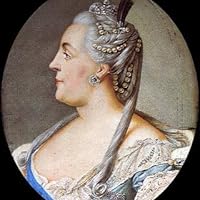
In addition to all the Greats (Ivan, Peter, Catherine) we get Basil the Adequate, my favorite Yaroslav the Wise, Yuri the Long Armed, and Alexis the Quiet.
The one objection I had was the book’s rather unfair treatment of Elizabeth, oldest daughter of Peter the Great. The book describes her as “A handsome, charming, and probably nymphomaniacal woman of thirty-one, Elizabeth was spending most of her time in pursuit of pleasure and had no interest in ruling the country.” This is pretty dismissive of a cultured woman who brought an Age of Enlightenment to Russia. A great patron of the arts, architecture, and education, she founded the University of Moscow, continued the reforms of Peter the Great, and built the Winter Palace.
The other is when we get to Rasputin, where we get this bizarre question: “Was Rasputin a true miracle worker, or simply a charlatan who was extremely lucky? The truth probably will never be known.” No, I think we know the truth. He was not a sorcerer with real magic powers. He was a master manipulator and a conman.
Still a worthwhile introduction.