As the savage clan of the Wraeththu and the Gelaming of the South prepare for an inevitable war, Calanthe, certain that his beloved Pellaz has been slain by Theide, prepares to seek revenge
Storm Constantine was a British science fiction and fantasy author, primarily known for her Wraeththu series.
Since the late 1980s she wrote more than 20 novels, plus several non-fiction books. She is featured in the Goth Bible and is often included in discussions of alternative sexuality and gender in science fiction and fantasy; many of her novels include same-sex relationships or hermaphrodites or other twists of gender. Magic, mysticism and ancient legends (like the Grigori) also figure strongly in her works.
In 2003 she launched Immanion Press, based out of Stafford, England. The publishing company publishes not only her own works but those of new writers, as well as well-known genre writers, mainly from the UK.
I finish this book 24h ago, but just now gather my forces and can write a few words about it. Don't be worried, it don't have any spoiler about this book or the previous (The Enchantments of Flesh and Spirit)
The first book is about a human, Pellaz, learning what are Wraeththu. It's a future, an apocalyptic future and humans are not the dominant specie on Earth, Wraeththu are... ruling the Earth.
Reading this book is almost like be again seeing by an innocent eye what an Wraeththu is. It's all Swift point of view... a pure Wraeththu... a rare child, born from two Wraeththu.
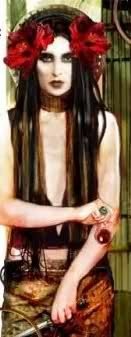
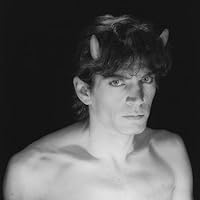
What can I say about him? First of all, that's his image
He is the son of Cobweb, a Wraeththu full of magic and wrapped in mystery. And of course, the son also of Terzian, Cobweb consort, and he is not just a Wraeththu, but much more... a Varr.
Read it, to see though an infant eyes, innocent eyes, the beauty of his home, forever, and the love of his hostling (Cobweb, the "mother" figure of his life), and the... cruelty of his tribe. But Swift path is long, full or joy, despair and sadness. You must read to see it, to feel it...
I learn a lot more reading this second book, but still have much more to know. I miss Pellaz (the narrator of the first book) but it's the way it must be... each thing will happen in a precise time, and patience dear reader of this review, is a virtue.
I need to read the 3 book, and know what will happen now. I'm very excited knowing who will be the narrator, but also terrified. If up to now I felt a little sadness and despair reading this dark fantasy tale, probably the last book The Fulfilments of Fate and Desire will give the final blow that will break my heart.
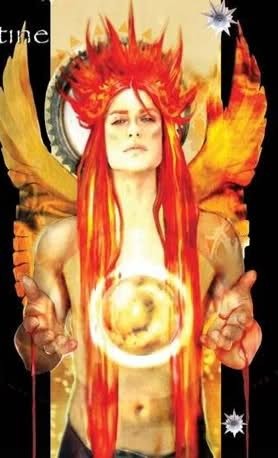
Last remark, the third book have a very mysterious character in the cover art. He is Thiede.
it's blood, liking from his hands? Or just a lock of his bright red hair? Why all the manipulation? Why all the pain he is causing? Why why why... the only why to know it is read more, suffer more... and I will.
I must read the third of this series, and I will...
5 stars just because I can't give more. Certainly I would if I could, because it's one of those rare cases of a book (better say series) so overwhelming I don't know how could I express my sentiments with words... so sorry, I try and I hope this review modestly show you, dear reader of this review, my immense satisfaction of the reading, and my immense fear of what can happen from this book on. I hope, and I wish it will end well, but even with a HEA, after so many tragedy, it will be enough to bring a smile in my face? Bring tears of joy?
Wraeththu burst onto the barren LGBT science fiction scene in the late 1980s with a blaze of attention. It was unique! Hermaphroditic men who fucked each other and made babies (somehow, I never really got with that part of the program)! They look like human men because they were human men until It Happened.
And now that we're past the initial shock of how the Wraeththu change human men into themselves, the story moves ahead to some very political territory that I liked.
Although this bills itself as the second in a series, I had little trouble sliding into this particularly distinctive fantasy world. And by about page 10, I was saying, "I told you so." For Storm, I am fairly sure, is a woman, and she has created a kingdom which is nominally monosexually androgynous (I know that sounds contradictory, but it's actually fairly accurate) and in fact nothing more or less than a version of the earth where gays have taken over from straights (including reproductive powers). The hermaphroditic biology of the "Wraethtu" is thought out and explained in fairly complex terms. The remaining fantasy elements are fairly conventional, though very competently handled: this is a young boy's coming-of-age story; he learns to face the spectre of his violent father, and to realize that the preconceptions he has been brought up with in his northern, warlike tribe are not adequate. Swift (that's his name) has one destructive but fascinating relationship, then finds monogamous bliss with his true love, the moment of realization coinciding with a sex-with-higher-significance ritual (i.e. sex magic). This is very close in spirit to the various cosmos-saving sexual-telepathic unions of Kirk and Spock in the Star Trek under-fiction (just to give another example of a widespread and, in the right hands, rather powerful theme). I like this writer - she doesn't overplay her cards, and she can write a decent sentence. Other "Wraethtu" books are definitely on my list. [These notes made in 1990:].
I think I like this book even more than the previous one; it's darker and packed with steamy passion. Constantine's knack for character development really shines through with her story of Swift; which follows his progression from innocent harling to mature har as he experiences the world outside of his haven - We Dwell in Forever.
I struggled my way through this, although that is not a reflection of the author. Storm Constantine is brilliant and talented! Her language is beautiful, and she created such a unique universe that was nice to escape to. While I loved the first book to this series, this one fell flat on its face for me. I rounded up to 3 stars as I do dearly love this author, even if the series is no longer my cup of tea. It is very rare for me to dive into a series, although this came very close to being a good series to indulge in.Unfortunately I have commitment problems , and despite my eagerness to change that, I don't see this change happening anytime soon. Now, I really loved all of the main characters and delighted in their antics! My bone to pick? I have to be honest. Halfway through this novel, I was snoozing, HARD. Way too much agonizing focus on sex/aruna. Seriously, it was borderline obsessive and THE VISUALS were extremely strange. I think it tried to hard to avoid being your typical raunchy sex scene and just ended up way too strange and elaborate. I do not read erotica or romance often, as its just not my thing! I am no pearl clutcher, I sure don't mind my fair share of a raunchy steamy scene if the story calls for it. But in this case, sex was the savior - the solve all - the cure - the main focus. It was overboard and awkward and just so vastly different from the first book of the series in which we focus on the universe building, turmoil, and the characters. Unfortunately, I think my reading of this series comes to an end here. I have a ton on my plate to read, and would like to find new universes to explore. I feel relieved to finally get off this ride, although I have a feeling I will still look back fondly and nostalgically. Onwards and upwards!
In book two we break with Pell and Cal, and instead return to the alluringly named Forever – the home of the Varr Terzian. This time we grow alongside his son, Swift, whom we encountered briefly as a harling in book one.
As a pure born (both his parents were Wraeththu) Swift has many advantages over humans and indeed the Wraeththu who started out as humans. He experiences accelerated growth (coming of age within seven years as opposed to sixteen) and a precocious intelligence and aptitude for learning.
To Swift there is nothing wrong with the Varr tribe, at least not at first. They are all that he knows, and it is the Gelaming, that his father is away fighting, that fill him with a sense of concern. The Gelaming threat hovers constantly on his horizon, but doesn’t at first intrude.
Mysterious Cobweb is more fully revealed as a well-rounded character – prone to outbursts but in possession of great insight into the hearts and minds of others.
Swift partakes of both his parents’ qualities, though in him, Terzian’s aggression is somewhat tempered to assertiveness. He is curious and capable of great compassion. What is also apparent of Swift is that he seeks a middle ground, and as such as an almost uncanny ability to patch up disputes – all admirable qualities of a potentially great leader.
There is, throughout this novel, the troublesome Cal, who continues to haunt the lives of those with whom he’s tangled. Sometimes he’s torn gaping wounds – as in the case of Seel. For others he’s been an obsession, for instances Terzian. Wherever Cal goes, he captures hearts, but he has his own demons to face, and his time with Swift offers him that opportunity to come to terms with his past. The process hardly pleasant, and has plenty of fallout.
Some comment of the ending is, I feel, necessary. I expected Constantine to make the conflict between Varr and Gelaming the centre point of the climax, but it isn’t. Resolution of the external conflict is almost bloodless, effortless, in my opinion, and if you’re looking for an action-packed final battle, you’re not going to find it here. Rather, the conflict is subtler, the battleground the hearts of hara and the shifting allegiances between characters. This is where the meat and bones of this saga lie.
Of course I immediately went out and bought the next in the series. I love this epic that much. Constantine hits the mark, as always, with gloriously textured, carefully nuanced tales that slowly unfold like a sumptuous feast.
Another 4.5 bumped to a 5 because it made me forget the little things I had less-than-amazing thoughts on.
It's another re-read, too. Now's time for the third, which I haven't read. Which I couldn't read last time and now...
It's all Swift's fault. Okay, it's not all Swift's fault, but that last page of him talking directly to Cal in the narrative? Ooomph. Tears my heart out, it does. For Cal, that is.
Dude. I'm not sure I can read the third one yet. I don't think my heart's ready. (Which of course means there's a good chance I'll go grab it as soon as this review's done. Because that's just how I roll.)
But! You know I forgot something I meant to put in my review of the first book. And that's how the Wraeththu kinda remind of the Rats of NIMH now and then, especially Saltrock in the first book. When they're talking about stealing their technology from humans, that is. Makes me giggle.
I haven't reread my A Writer's Gotta Read review from the first time I read this, but I seem to remember it being as harsh as the review for the first book. These books---for me, at least---are made to be read twice (at least).
Which is another reason I worry about going on to the third. If I was doing the second read, I'd know I could love it. I'm really, really scared of spending the entire book angry with Cal, which isn't a new state for me or anything. It's just that this time I'll have to be angry with him from inside his head.
Phew. This isn't really a review for this book at all, is it?
Okay, there's this. I love Aihah's name, because every time I read it, a voice in my head goes, "Ah-HAH!"
One of the greatest things about these books for me is how my impression of people change as the narrator changes. I hate it, sometimes, but in that, "Whoa, great writing" kind of way. In that real-life-frustration kind of way.
3.5 STARS Good story but I'm reserving my judgement for now unfortunately.
Being book two in a trilogy either kills it or makes it and I'm quite disappointed at the risk or risky choice of direction this particular book took, but I'm hoping it just wasn't re-edited like book one was and I know that's a strange thing to say.
Unless the final novel of the series ties all together I'll be really disappointed.
Major headache over this, which might explain the jolting and constant jarring of POV between characters which seem to happen but shouldn't as this book is supposedly Cal's story to tell? So was that just me?. I kept having to go back to see whom was saying what BUT I am tired today so I'm being very picky and bitchy as I really felt let down.
This is one of my favorites of the Wraeththu books. I vastly prefer it to "Enchantments" or really any of the more Pellaz-focused installments in the main two series. The epic tale of the boy who became the har who became the tigron is much less interesting to me than that of Swift, an innocent child born into fascism.
This is a story about growing up in an idyllic home with seemingly godlike parents, military leader Terzian and witchy fem Cobweb. Only of course none of that is real. The layers are pulled back slowly but surely. Terzian's stern, remote temperament is the first sign.
Then another child comes, Gahrazel, the son of totalitarian dictator Ponclast, and asks over dinner why his father revels in the sounds of screams. The usually wise and insightful Cobweb shuts down in a panic and acts as if nothing has been said.
Terzian's fascistic worship of masculinity and basic misogyny (even though it's now directed against other hara) manifests when he takes on a side piece, taking on Cal openly as a second consort and callously humiliating Cobweb.
Swift hears about some humans doomed to die, and manages to rescue two of them by... persuading his parents to keep them as slaves. He's too young and innocent when this happens to even remotely realize how fucked up any of this is. A population that is actively being subjected to genocide can only be perceived by young Swift as, essentially, amusing pets. This isn't because Swift is a bad person. It's because he's a child of Varrish ideology.
But of course, the real soul killing compromise between goodness and survival under fascism comes years later, when Gahrazel defects. Everything that happens around this is perfectly written and perfectly agonizing: Swift's agonizing, Cal's heartlessly pragmatic advice, the cowardly method of the anonymous note, Terzian's horrifying interrogation of his own son...
And then from there the revelations of atrocity begin to pour out. The revelations of Gahrazel's ghost in the cursed woods. The liberation of Fulminir and the delirious, nightmarish scenes of cruelty revealed there. (Those who think this is an over-the-top portrayal of fascist cruelty should read more history. In some ways the Varrs are more similar to the Japanese fascists than they are to the Nazis. Varrish brutality is only unrealistic in terms of how stylized and aesthetic it is, not in terms of its extremity.)
The final confrontation with Ponclast on top of the tower is the heart of the book. Ponclast insists that Terzian was "always mine." He is right. This is the awful truth. Terzian was always going to choose fascism over family. Not even Cal was as important to him as Varr was. The Great Leader is the reason for all of these atrocities, but on a subtler and more personal level, he is also the reason that Swift's entire childhood... was a lie.
Terzian's stubborn refusal to submit to de-Varrification, his pathetic, peevish bitterness and doubling down on his bullshit, is the cherry on top of the story. In service to Varr he made himself a shell of a person, filled with false ideology instead of a soul. After Varr falls there is very little left of him. He reminds me of Nazi uncle Harold in the 2011 film of "The Girl with the Dragon Tattoo."
So that's why I love this book.
And now the elephant in the room, the reason there is an entire star missing:
Seel sucks and the entire Seel storyline is stupid. It's a hot mess of more coercion by control-freak Thiede. Seel basically takes pelki on Swift (rapes him) during the final sex magick showdown, which I think ruins the entire "love prevails against Varrish abusiveness" message that I assume this scene is supposed to have.
Or is it?
Constantine was actually a very smart writer. Her viewpoint jumping annoys some people, but I think it reveals an uncanny ability to inhabit multiple perspectives. When you read a lot of her first person books, you realize that she inhabits her characters so thoroughly that it's almost impossible to figure out what the author bias is. Seel and Thiede are portrayed elsewhere in a much more blatantly negative light. The Gelaming, allegedly so enlightened, make several decisions in this book that bite them in the ass later-- such as throwing Ponclast in the cursed forest, and imprisoning Cal.
Has Varr really been defeated by the enlightened power of love... or just by another less brutal but almost equally controlling empire?
This entire review has been hidden because of spoilers.
The Bewitchments of Love and Hate (Wraeththu #2) This is an old series, first published in the late 1980s. The trilogy is available on e-book, as is the extended series. I would class this as LGBTQ+, and Dystopian Fantasy too, possibly YA 😊 Unlike book 1 in the trilogy, which centres on the growth of Pellaz, this volume follows a youngster called Swift. Whereas Pellaz was transformed into a Har – a third gender and a blend of male and female – Swift is born a Har to Har parents. This volume focuses on the growing war between hars and humans, with hars winning, and what har society is like compared to traditional human binary-gender society. The hars are instilled with an inherent belief that monogamy is bad, and they should be free, only transformation does not remove human traits like jealousy and anger. While the hars are becoming dominant, they do not really evolve into a superior race, and often the story focuses on how close hars are to human rather than exploring the new facets. They are also surprisingly cruel at times, and I felt at times that the story parallels Genghis Khan and his rampage of Europe; the proliferation of his own genes was prolific, but he never really made the changes in society he had the opportunity to action. Like the first in the trilogy, The Bewitchments of Love and Hate makes you think, but including human traits in the title somewhat limited Constantine to dealing with how close to humans the har race is. Even so, for its period (late 80s) it fails somewhat in the promise of the premise. Readers will no doubt take something different from the book, however for me it’s a 3.5 at best which is a shame. Harper www.HarperMaze.com
This second book of the trilogy is well-crafted and focuses on another Wraeththu community: the warlike Varrs, whom Pellaz and Cal(enthine) interacted with briefly in the first book. A pure-born child (born naturally via a “pearl” and not incepted as a human adolescent) named Swift matures within a Varrish household, but allies himself with the enlightened Gelaming tribe and works with Thiede (the god-like Aghama or first Wraeththu, created through a human mutation) to free the northern lands of the evil rule of the Varrish king Poncast, who practices rape and cannibalism. The book is dreamy and does a fine job of helping the reader to imagine magical things, such as a forest that causes those who enter to confront their regrets and fears, horses that can move great distances through “other lanes” in little time, and powerful force/being that can be created through sex-magic (grissecon).
This entire review has been hidden because of spoilers.
Book two of three, one of the best trilogies I have ever had the absolute pleasure of reading. I first read these when they were newish...so about 30 years ago, and I revisit them on nearly a yearly basis. These characters will stay with me for my entire life! Sadly, the author, Storm Constantine has passed away so there won't be any new adventures and that makes me sadder than I can express.
This might be my favorite out of the 3 first Wraeththu books.
The story is written from Swift's innocent point of view and it is too adorable! You get to know the old characters better and knowing the new ones is fascinating.
This one took me k longer to read than the previous one. It follows a character that has a short appearance in book one - a hermaphrodite born of other hermaphrodites, son of a leader of a tribe.
There's emphasis on development of relationship and characters - who are often complex, ambiguous.
I loved the slower pace at the beginning of this novel in comparison to the first. The slower pace allowed for greater and more intimate characterization of the characters. This novel felt much more alive than the first.
This book follows the life of a harling -- a natural-born har, never having been human -- who was briefly introduced in the previous book.
Swift, the harling in question, has the sheltered life of the child of an important leader of the Varr tribe, a warlike, vicious tribe that is more interested in military might than har magick. Cal, the character who found Pellaz in the previous book, comes back into play, and sort of throws the situation in Swift's home for a loop. In the meantime, the Varr dash themselves against the har sent from the other continent to conquer Varr lands, the magick-heavy har who were planning this at the end of the last book, and in the process Swift switches sides and magick turns out to be more powerful than military might, which isn't much of a surprise, really. It turns out the leaders of the Varr do engage in magick, but it's black magick involving cannibalism and rape, a fact which is instrumental in Swift's conversion.
Of course, like the first book, it's not really about the plot. It's about the intricate and delicate interaction between the different characters. We get an even better idea that not all is sunshine and SEXX0R with the Wraeththu, not even in the most "enlightened" tribes. The interaction between characters is more detailed, interesting, and dangerous than the previous book, which I liked a lot. My biggest problems were that the pace was slower than the first book, and it's looking like Cal is turning out to be the fulcrum of the series. I don't like Cal very much. Not because he's a homicidal bastard -- though he is -- but because he's not very interesting. He just sort of floats along, with the occasional atrocity or fit of loving passion, and people become entranced with him for no discernable reason while he sort of drifts.
So, while I liked the book -- and was interested to learn more about Wraeththu reproduction, which seems to involve the har being egg-laying mammals like a platypus -- it's looking like the third book is narrated by Cal or someone very similar (the narrator hasn't given his name in the first few chapters), so I'm not sure if I'm going to be able to slog through it. We shall see if my desire to know what ultimately happens overcomes my distaste for Cal as a character and plot device.
Though the odd comma placement that plagued the first novel persists throughout, other editing errors happen only in the first quarter of this book, and the rest is masterful. I expected more story from Pell's point of view, but instead we get a look into the life of Swift, a Varrish harling (young Wraeththu) we met in the first book. He is torn between the worlds of his father, a worldly head of the brutal Varrish clan, and his spiritual and superstitious hostling ("mother" to us). We follow Swift from childhood into adulthood as he follows his destiny.
The Varrs, though hermaphrodites, reject the idea that there is power in femininity. Any hara who express their feminine side (like Swift's hostling) are relegated to subservient roles, while those in power adopt a masculine persona and typically "male" roles in civics, home life, sex, etc. As I see it, it is this denial of half of their nature that has corrupted the Varrs and weakened them to attack by their enemies, the Gelaming, who embrace their dual nature.
I was never convinced that , but it didn't bother me-- the interpersonal relationships were the important aspect of this book. The Gelaming use of grissecon (sex magic) was as fascinating as the Varrs' corrupted practices were disturbing. I'm not sure if I liked but since he's cynical about it, I can't dislike him. I still want to know what Thiede has planned-- is he really looking after his "flock," or does he have more sinister plans for the world he's taking over?
Whereas the first book felt dated, this one could have been written yesterday. It was fresh and lyrical, and I can only hope the final installment in this compilation is as good as the first two.
Storm Constantine's prose style is, to unabashedly reference the title, bewitching.
In my review of the first Wraeththu novel, The Enchantments of Flesh and Spirit, I mentioned that some slightly politically-tinged things made me fidgety in the book (women, for example, and the fact that I couldn't shake the idea that this book was a commentary on the state of the world nowadays). In Bewitchments, I felt no such uneasiness. The book was simply perfectly engaging, poems in the form of prose, with beautifully complex characters and the Wraeththu as a more fully constructed race. I was surprised when Swift, born in the first novel, was the narrator of this novel, but it worked delightfully. Of course, all the returning characters are fantastic, too. I learned from adoring Vaysh in the first novel that I love Constantine's most brittle and mysterious characters, and that was proven again with Cobweb in the second novel.
One thing I did dislike was the poems at the beginning of each chapter, beneath the chapter titles. Definitely not enough to bring down the rating, because honestly, I just stopped reading them. But they came across as very pretentious, not at all in step with the exploration of self that was Bewitchments.
Now, my only problem is finding the third book. Why is it so difficult to find?!
Even though this book took me a while to get through it, the story entertains more than its predecessor, "The Enchantments of Flesh and Spirit." Enchantments seemed more of an intro to the world that the author, Storm Constantine, has created. Bewitchments seems to contain more solid story telling. Definitely dark and gothic, Bewitchments tells about two cultures, both Wraethrhu, that colide and intend to wipe each other out. Bizarre but thought-provoking, terrifying but beautiful, repulsive but endearing, Bewitchments proves to be a comment on how to defeat your enemies with love. If you are in the mood for something different, Constantine's gothic, moody novels are recommended.
I've enjoyed this second book as much as the first, that is, I couldn't put it down for a second. I lack words to accurately describe the author's beautiful prose and the vivid portrayal of the characters, who just seem to come alive in the reader's head. This is in many ways a coming of age novel, with an initially very young protagonist who grows up, matures, and discovers many things about the Wraeththu world and how he fits in it, with his loved ones and hated ones. Excellent reading!
Storm Constantine has managed to bewitch me totally into her Wraeththu Chronicles. I put it down and pick it up again every chance I get. I wasn't sure that I would like this one as much as the original book in the series, but in many ways I liked it even more. But it is the world and the new race of hers that is so compelling. Read on my NookColor.
I couldn't push through. I picked up a better book, and then, another better book, and every time I thought about going back to this I remembered the moon sacrifice threesome. I just didn't give enough of a shit about the plot, despite the promising start and I HATE THE GENDER DISCOURSE!!!!!!!!! !!!!!!!!!!!!!!!!! SO MUCH
In the midnight hour she cried 'More! More!! More!!!'
I am truly blown away by this series so far. I am merely stopping for a brief moment to let some of my pent-up admiration spill over before moving onto the 3rd book. What a story. What a wordsmith. What a world.
Reread. Better the second time through. I didn't recall much of the middle of this book, so I'm glad I reread it. I love Constantine's voice with each character, and Swift is perhaps one of my favorites.