

What do you think?
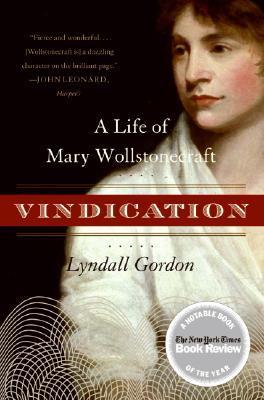
Vindication: A Life of Mary Wollstonecraft – The Unconventional Genius Who Founded Modern Feminism and Influenced Political Philosophy
“Wonderful, and deeply sobering. . . . Lyndall Gordon relates Wollstonecraft’s story with the same potent mixture of passion and reason her subject personified.”—New York Times Book Review
The founder of modern feminism, Mary Wollstonecraft (1759-1797) was the most famous woman in Europe and America in her time. Yet her reputation over the years has suffered—until now. Acclaimed biographer Lyndall Gordon mounts a spirited defense of this brilliant, unconventional woman who held strikingly modern notions of education, single motherhood, family responsibilities, working life, domestic affections, friendships, and sexual relationships.
Offering a new interpretation for the 21st century, Gordon paints a vibrant, full portrait of Wollstonecraft, revealing how this remarkable woman’s genius reverberated through the generations, influencing not only her daughter, Mary Shelley, and other heirs, but early political philosophy in England and America as well—including the ideas of John and Abigail Adams.
The founder of modern feminism, Mary Wollstonecraft (1759-1797) was the most famous woman in Europe and America in her time. Yet her reputation over the years has suffered—until now. Acclaimed biographer Lyndall Gordon mounts a spirited defense of this brilliant, unconventional woman who held strikingly modern notions of education, single motherhood, family responsibilities, working life, domestic affections, friendships, and sexual relationships.
Offering a new interpretation for the 21st century, Gordon paints a vibrant, full portrait of Wollstonecraft, revealing how this remarkable woman’s genius reverberated through the generations, influencing not only her daughter, Mary Shelley, and other heirs, but early political philosophy in England and America as well—including the ideas of John and Abigail Adams.
562 pages, Paperback
First published May 3, 2005
About the author
Lyndall Gordon
20 books123 followersLyndall Gordon (born 4 November 1941) is a British-based writer and academic, known for her literary biographies. She is a Senior Research Fellow at St Hilda's College, Oxford.
Born in Cape Town, she was an undergraduate at the University of Cape Town, then a doctoral student at Columbia University in New York City. She married the pathologist Siamon Gordon; they have two daughters.
Gordon is the author of Eliot's Early Years (1977), which won the British Academy's Rose Mary Crawshay Prize; Virginia Woolf: A Writer's Life (1984), which won the James Tait Black Memorial Prize; Charlotte Brontë: A Passionate Life (1994), winner of the Cheltenham Prize for Literature; and Vindication: A Life of Mary Wollstonecraft, shortlisted for the BBC Four Samuel Johnson Prize. Her most recent publication is Lives Like Loaded Guns: Emily Dickinson and her Family's Feuds (2010), which has overturned the established assumptions about the poet's life.
(from Wikipedia)
Born in Cape Town, she was an undergraduate at the University of Cape Town, then a doctoral student at Columbia University in New York City. She married the pathologist Siamon Gordon; they have two daughters.
Gordon is the author of Eliot's Early Years (1977), which won the British Academy's Rose Mary Crawshay Prize; Virginia Woolf: A Writer's Life (1984), which won the James Tait Black Memorial Prize; Charlotte Brontë: A Passionate Life (1994), winner of the Cheltenham Prize for Literature; and Vindication: A Life of Mary Wollstonecraft, shortlisted for the BBC Four Samuel Johnson Prize. Her most recent publication is Lives Like Loaded Guns: Emily Dickinson and her Family's Feuds (2010), which has overturned the established assumptions about the poet's life.
(from Wikipedia)
Ratings & Reviews
Friends & Following
Create a free account to discover what your friends think of this book!
Community Reviews
Displaying 1 - 30 of 38 reviews

July 23, 2022
As the title suggests, this is very much a biography that takes its subject's side in things. While other Wollstonecraft experts, like Claire Tomalin or Janet Todd, seem to find her sometimes a frustrating or difficult character, Lyndall Gordon is unwaveringly sympathetic, almost to the point of hagiography. Still, so much of Wollstonecraft's life is obscure or confusing that it's useful to have this side of the debate, even where it isn't entirely convincing.
It's fascinating to see Gordon's treatment of those moments in Mary's life where she is often considered to have behaved rather badly – when, for instance, she adopted a seven-year-old orphan, only to decide she didn't like her and give her away a few months later. (Gordon goes as far as to describe this behaviour as ‘questionable’ – the most critical this biography gets.) I was interested to see Gordon's assessment of Wollstonecraft's views on sex: famously, in the Rights of Woman, she said that there was no place for sexual desire in a marriage, and that women should aim to cultivate friendship instead. This didn't sit right with 70s feminists like Claire Tomalin, for whom sexual freedom was an important battle-ground. But Gordon mounts a decent historical defence:
The book is also extremely good on certain under-researched aspects of Wollstonecraft's life, like the importance of the Barlows and their connection to the shadowy world of Revolution-era spy networks. Gordon's primary research into Gilbert Imlay's business ventures – which led Wollstonecraft on her travels through Sweden, Norway, and Denmark – is also very revealing. Gordon is (perhaps surprisingly) rather sympathetic towards Imlay, who she says was ‘no different from other men’ despite his image as a rogue.
Of Fuseli, by contrast, she takes a very dim view; even in his portraits, he has here ‘the look of a neat reptile’. Her main concern here is to deny that there was any impropriety in Wollstonecraft's offer to live in a ménage à trois with Fuseli and his wife. The idea that she was sexually obsessed with him is, Gordon says, a ‘poison’ which Fuseli fed to William Godwin when he was writing his Memoirs of Mary, and which Godwin (somehow imagined as ‘a plaything of Fuseli’) mindlessly repeated; later, Fuseli's biographer ‘propagated the myth’. Unfortunately, all Gordon has to support this narrative is a general willingness to see her subject in the most favourable light.
In the absence of their correspondence (which was burnt after their deaths for being too ‘amatory’, though, again, Gordon does not believe this), the best counterargument for Fuseli's character is the very fact that Wollstonecraft so admired him, since she was hardly someone who suffered fools or misogynists gladly. Either way, this was the section where I was arguing most with the text in my head.
There are also a few historical slips. For instance, she says that in 1792 Mary, Joseph Johnson and the Fuselis had to abandon their plans to visit Paris ‘in fear of bloodshed when Louis XVI, Queen Marie Antoinette and their two children were caught trying to flee France.’ But the flight to Varennes had happened the previous summer, in June 1791, and was not really attended by any violence; what stopped the Fuseli party at Dover in 1792 was the storming of the Tuileries Palace, a quite different and much more bloody event in which up to a thousand people were killed.
Well, enough nitpicking. One of the best things about the book is its final chapters, which move beyond Wollstonecraft's life to examine the immediate inheritors of her ideas in the following generation. Normally, much as I love biographies, I do find them a bit of a bummer, since they all end the same way. But ‘Biography,’ Gordon informs me, ‘is ceasing to make death more final than it is’. This is a wonderful and productive approach.
Gordon traces some astonishing details of Wollstonecraft's successors, including Margaret Mount Cashell, one of the girls Mary had tutored as a governess in Ireland, and who, Gordon reveals, later disguised herself as a man to attend medical lectures in Italy and eventually set herself up as a local doctor; her house was visited, later, by Mary Shelley, her husband and her stepsister Claire Clairmont, still travelling together after their famous sojourn at Byron's mansion on Lake Geneva where Frankenstein was conceived. These girls, too, along with the third sister Fanny Imlay, are seen as Wollstonecraft's disciples in some sense, though often misunderstanding her points – Wollstonecraft's high-minded attempt to live with the Fuselis reinterpreted as the incestuous free-love of Byron and the Shelleys. So many of this circle died young and/or tragically that it's profoundly moving to be reminded that ‘Independent, existing by her own skills and wits, Claire Clairmont lived on and on into the age of Henry James’ (who immortalised her as Juliana Bordereau in The Aspern Papers).
It makes for an unusually uplifting end to what is otherwise a thoroughly upsetting final chapter in Mary's life. I think perhaps I still find Claire Tomalin's psychological assessments more convincing – and Tomalin is also the better writer – but this is still a very readable, engaging and deeply researched book about one of the most important figures of her time, whose importance to modern thought has only kept growing since her death.
It's fascinating to see Gordon's treatment of those moments in Mary's life where she is often considered to have behaved rather badly – when, for instance, she adopted a seven-year-old orphan, only to decide she didn't like her and give her away a few months later. (Gordon goes as far as to describe this behaviour as ‘questionable’ – the most critical this biography gets.) I was interested to see Gordon's assessment of Wollstonecraft's views on sex: famously, in the Rights of Woman, she said that there was no place for sexual desire in a marriage, and that women should aim to cultivate friendship instead. This didn't sit right with 70s feminists like Claire Tomalin, for whom sexual freedom was an important battle-ground. But Gordon mounts a decent historical defence:
Much that is sober in this model was designed to counter the coquette trained to live through her sexuality, and we need no longer debate what seemed to modern women prudish advice that they should surrender expectations of sexual pleasure in favour of friendship in the course of marriage. Friendship was – and remains in certain cultures – an obvious way a wife can rescue her self-respect from sex-based subordination reinforced by legal, religious and educational disabilities.
The book is also extremely good on certain under-researched aspects of Wollstonecraft's life, like the importance of the Barlows and their connection to the shadowy world of Revolution-era spy networks. Gordon's primary research into Gilbert Imlay's business ventures – which led Wollstonecraft on her travels through Sweden, Norway, and Denmark – is also very revealing. Gordon is (perhaps surprisingly) rather sympathetic towards Imlay, who she says was ‘no different from other men’ despite his image as a rogue.
Of Fuseli, by contrast, she takes a very dim view; even in his portraits, he has here ‘the look of a neat reptile’. Her main concern here is to deny that there was any impropriety in Wollstonecraft's offer to live in a ménage à trois with Fuseli and his wife. The idea that she was sexually obsessed with him is, Gordon says, a ‘poison’ which Fuseli fed to William Godwin when he was writing his Memoirs of Mary, and which Godwin (somehow imagined as ‘a plaything of Fuseli’) mindlessly repeated; later, Fuseli's biographer ‘propagated the myth’. Unfortunately, all Gordon has to support this narrative is a general willingness to see her subject in the most favourable light.
In the absence of their correspondence (which was burnt after their deaths for being too ‘amatory’, though, again, Gordon does not believe this), the best counterargument for Fuseli's character is the very fact that Wollstonecraft so admired him, since she was hardly someone who suffered fools or misogynists gladly. Either way, this was the section where I was arguing most with the text in my head.
There are also a few historical slips. For instance, she says that in 1792 Mary, Joseph Johnson and the Fuselis had to abandon their plans to visit Paris ‘in fear of bloodshed when Louis XVI, Queen Marie Antoinette and their two children were caught trying to flee France.’ But the flight to Varennes had happened the previous summer, in June 1791, and was not really attended by any violence; what stopped the Fuseli party at Dover in 1792 was the storming of the Tuileries Palace, a quite different and much more bloody event in which up to a thousand people were killed.
Well, enough nitpicking. One of the best things about the book is its final chapters, which move beyond Wollstonecraft's life to examine the immediate inheritors of her ideas in the following generation. Normally, much as I love biographies, I do find them a bit of a bummer, since they all end the same way. But ‘Biography,’ Gordon informs me, ‘is ceasing to make death more final than it is’. This is a wonderful and productive approach.
Gordon traces some astonishing details of Wollstonecraft's successors, including Margaret Mount Cashell, one of the girls Mary had tutored as a governess in Ireland, and who, Gordon reveals, later disguised herself as a man to attend medical lectures in Italy and eventually set herself up as a local doctor; her house was visited, later, by Mary Shelley, her husband and her stepsister Claire Clairmont, still travelling together after their famous sojourn at Byron's mansion on Lake Geneva where Frankenstein was conceived. These girls, too, along with the third sister Fanny Imlay, are seen as Wollstonecraft's disciples in some sense, though often misunderstanding her points – Wollstonecraft's high-minded attempt to live with the Fuselis reinterpreted as the incestuous free-love of Byron and the Shelleys. So many of this circle died young and/or tragically that it's profoundly moving to be reminded that ‘Independent, existing by her own skills and wits, Claire Clairmont lived on and on into the age of Henry James’ (who immortalised her as Juliana Bordereau in The Aspern Papers).
It makes for an unusually uplifting end to what is otherwise a thoroughly upsetting final chapter in Mary's life. I think perhaps I still find Claire Tomalin's psychological assessments more convincing – and Tomalin is also the better writer – but this is still a very readable, engaging and deeply researched book about one of the most important figures of her time, whose importance to modern thought has only kept growing since her death.

September 19, 2010
This is a beautifully written, intensively researched biography of an often misunderstood and greatly underappreciated woman. Lyndall Gordon has the enviable position of being a Senior Research Fellow at Oxford, so she has both the time and the access to apparently every extant scrap of her subject's life. Considering the considerable false press that enveloped Mary Wollstonecraft's short but super-eventful life, both the access and the time are crucial to understanding her and how unfortunate it was that her own writings were ignored and misrepresented.
The plight of women and children in England in the 18th century was dreadful. A woman literally belonged to her husband. As soon as she said "I do," her husband had total control of her money. If she left him, or he threw her out, he had the right to take her children and never allow her to communicate with them. Wollstonecraft's writings clearly and forcefully showed the deeply flawed and unjust situation and, most important, how it could be remedied with proper education of both men and women. She also was a great advocate of mothering. She rightly figured that if women nursed their own babies and gave them love and nurturing, infant mortality wouldn't be so rampant. She was even an early advocate of keeping children clean. This sounds absurd in the days of Tide and washing machines, but in 18th century England, high-born women often gave their newborns to a country woman to wet nurse them. Infants farmed out this way were often kept in cradles suspended from ceilings of a dank, cramped cottage with dirty rags stuffed in their mouths to keep them quiet. Infant mortality rates were exceedingly high, even among the nobility and wealthy merchant classes.
Wollstonecraft correctly suspected that neglect and filth was a major cause of infant mortality. She also believed that lack of nurturing left those babies who survived emotionally stunted. What the early neglect hadn't stamped out of their souls, formal education did, especially for males. The brutality of the hallowed halls of Eton and other schools were designed to quench all human sympathy. Boys were raised to have but one emotion: patriotism. This made them perfect tools of empire building, eager to trample on what they deemed as inferior cultures and scoop up riches from them. She also noted that if boys weren't raised to be so callous, they wouldn't grow up so willing to go to war.
Wollstonecraft not only witnessed the ravages of war in France, but she actually lived in Paris during the Terror, so she well knew how vicious people can be. She laid this viciousness at the door of childraising and education. She advocated that children not be taught to parrot facts or excerpts of literature, but that they should be encouraged kindly to learn and understand by freely asking questions and investigating issues.
As a side note, I have to mention that Mary actually traveled alone to Scandinavia to carry out Imlay's business dealing with a sunken treasure ship. That story alone makes incredible reading. What an extraordinary, brave woman this was!
During her lifetime, she had ample followers. She herself did run a school on kindly principles for a time. Her vivid writings could have had a positive impact on the status of women and also on education. However, she died tragically young, a victim of male arrogance, and, her grief-stricken husband, who supposedly loved her for her independence and mind, wrote a memoir of her that portrayed her as a wild, woman who advocated free love. He never bothered to look at her voluminous correspondence with her sisters and her friends. He just presumed. They had been married for only 5 months when she died. What he wrote in his grief destroyed her reputation, so that, whenever the question of women's legal status arose, Wollstonecraft was used as an example of a wanton woman, the result of educating the female of the species.
Yes, Mary did have an alliance with the American entrepeneur, Gilbert Imlay, with whom she bore her first child, Fanny. Imlay was her first lover. She was 34 when she met him. She met Godwin, to whom she did become legally married, when she was 39, and died in giving birth to Mary Godwin Shelley, the author of Frankenstein. Interestingly, Mary Shelley's point in this novel was that merely to create another being and not to nurture him or her was to create monsters. She did read her mother's words.
Why did I say that Wollstonecraft died as a result of male arrogance? In 18th century England, male surgeons decided that midwives were not suitable for birthing babies, although midwives usually knew a great deal more about the entire process than males did. Unfortunately, Godwin called in a surgeon when Mary's delivery became complicated. The surgeon then spent the night ripping the placenta from Mary's womb with his bare hands, rather than allowing it to expel naturally as she nursed the infant. Not only did Mary suffer horribly as there was no anesthesia at all, but she developed sepsis from his dirty hands.
She didn't go to a hospital and she did have a midwife until Godwin interfered.
The mortality rate of wealthy women was between 70% and 80% if they chose to do the "modern" thing and have their babies in hospitals with male doctors attending. Most of them died from rampant infection caused by the doctor's failure to wash their hands as they moved from patient to patient. It is true they didn't yet know about the mechanisms of bacterial contamination, but even Mary Wollstonecraft knew that keeping babies clean, for instance, lowered their chances of dying from infection. She actually wrote about that. In other words, people did know there was contagion spread by contact with dirty hands. Male surgeons would stick their hands in a woman's vagina, and then go to another woman without bothering to clean his hands first. I personally feel that such a practice, even in the 18th century, was a product of arrogance, of just not caring. That is not Lyndall Gordon's judgment, but mine.
One excellent feature of this biography is that Gordon doesn't stop with Mary's tragic death. She goes on to show what happens to her daughters, and her students. She also discusses what impact Wollstonecraft didn't have on society throughout the 19th century, but she does relate her influence on Virginia Woolf, about whom she has also written a biography. I hope to have that on my shelf soon.
The plight of women and children in England in the 18th century was dreadful. A woman literally belonged to her husband. As soon as she said "I do," her husband had total control of her money. If she left him, or he threw her out, he had the right to take her children and never allow her to communicate with them. Wollstonecraft's writings clearly and forcefully showed the deeply flawed and unjust situation and, most important, how it could be remedied with proper education of both men and women. She also was a great advocate of mothering. She rightly figured that if women nursed their own babies and gave them love and nurturing, infant mortality wouldn't be so rampant. She was even an early advocate of keeping children clean. This sounds absurd in the days of Tide and washing machines, but in 18th century England, high-born women often gave their newborns to a country woman to wet nurse them. Infants farmed out this way were often kept in cradles suspended from ceilings of a dank, cramped cottage with dirty rags stuffed in their mouths to keep them quiet. Infant mortality rates were exceedingly high, even among the nobility and wealthy merchant classes.
Wollstonecraft correctly suspected that neglect and filth was a major cause of infant mortality. She also believed that lack of nurturing left those babies who survived emotionally stunted. What the early neglect hadn't stamped out of their souls, formal education did, especially for males. The brutality of the hallowed halls of Eton and other schools were designed to quench all human sympathy. Boys were raised to have but one emotion: patriotism. This made them perfect tools of empire building, eager to trample on what they deemed as inferior cultures and scoop up riches from them. She also noted that if boys weren't raised to be so callous, they wouldn't grow up so willing to go to war.
Wollstonecraft not only witnessed the ravages of war in France, but she actually lived in Paris during the Terror, so she well knew how vicious people can be. She laid this viciousness at the door of childraising and education. She advocated that children not be taught to parrot facts or excerpts of literature, but that they should be encouraged kindly to learn and understand by freely asking questions and investigating issues.
As a side note, I have to mention that Mary actually traveled alone to Scandinavia to carry out Imlay's business dealing with a sunken treasure ship. That story alone makes incredible reading. What an extraordinary, brave woman this was!
During her lifetime, she had ample followers. She herself did run a school on kindly principles for a time. Her vivid writings could have had a positive impact on the status of women and also on education. However, she died tragically young, a victim of male arrogance, and, her grief-stricken husband, who supposedly loved her for her independence and mind, wrote a memoir of her that portrayed her as a wild, woman who advocated free love. He never bothered to look at her voluminous correspondence with her sisters and her friends. He just presumed. They had been married for only 5 months when she died. What he wrote in his grief destroyed her reputation, so that, whenever the question of women's legal status arose, Wollstonecraft was used as an example of a wanton woman, the result of educating the female of the species.
Yes, Mary did have an alliance with the American entrepeneur, Gilbert Imlay, with whom she bore her first child, Fanny. Imlay was her first lover. She was 34 when she met him. She met Godwin, to whom she did become legally married, when she was 39, and died in giving birth to Mary Godwin Shelley, the author of Frankenstein. Interestingly, Mary Shelley's point in this novel was that merely to create another being and not to nurture him or her was to create monsters. She did read her mother's words.
Why did I say that Wollstonecraft died as a result of male arrogance? In 18th century England, male surgeons decided that midwives were not suitable for birthing babies, although midwives usually knew a great deal more about the entire process than males did. Unfortunately, Godwin called in a surgeon when Mary's delivery became complicated. The surgeon then spent the night ripping the placenta from Mary's womb with his bare hands, rather than allowing it to expel naturally as she nursed the infant. Not only did Mary suffer horribly as there was no anesthesia at all, but she developed sepsis from his dirty hands.
She didn't go to a hospital and she did have a midwife until Godwin interfered.
The mortality rate of wealthy women was between 70% and 80% if they chose to do the "modern" thing and have their babies in hospitals with male doctors attending. Most of them died from rampant infection caused by the doctor's failure to wash their hands as they moved from patient to patient. It is true they didn't yet know about the mechanisms of bacterial contamination, but even Mary Wollstonecraft knew that keeping babies clean, for instance, lowered their chances of dying from infection. She actually wrote about that. In other words, people did know there was contagion spread by contact with dirty hands. Male surgeons would stick their hands in a woman's vagina, and then go to another woman without bothering to clean his hands first. I personally feel that such a practice, even in the 18th century, was a product of arrogance, of just not caring. That is not Lyndall Gordon's judgment, but mine.
One excellent feature of this biography is that Gordon doesn't stop with Mary's tragic death. She goes on to show what happens to her daughters, and her students. She also discusses what impact Wollstonecraft didn't have on society throughout the 19th century, but she does relate her influence on Virginia Woolf, about whom she has also written a biography. I hope to have that on my shelf soon.

November 14, 2013
By now I have read several biographies on Mary Wollstonecraft, and none of them have predisposed me to like her. My raging dislike turned to muted pity but not interest. I did not enjoy A Vindication of the Rights of Women my first read through. Proceeding works left me convinced she was a seriously confused woman who fell prey to the emotions she dismissed. Her life was a tragedy, certainly, ironic even. But a vindication for womankind? Not really. I thus approached this particular work with a decidedly negative bias.
Which makes it all the more impressive that I have left it with a growing regard for Wollstonecraft. What Lyndall Gordon does is truly remarkable. At first I assumed she was simply an author enamored with her subject. Every situation that cast Mary into a decidedly negative light in other biographies gets dismissed. Rather than being a controlling, manipulative battle-ax for helping (or kidnapping) her sister out of a bad marriage, Mary is depicted as a caring, concerned sister worried for Eliza's mental health. This, I figured, was a little too much. No other biography I had read placed Mary's "destruction" of her sister's marriage in a positive light. Similarly, when the author talked about Mary's obsession with Fuseli, the grand obsession gets almost glided over. I harangued Gordon's "obvious" bias, but it really made me wonder. Was the author ignoring evidence, or has history made a mountain out of a molehill?
Gordon does not obsess over the intimate details of Mary's relationship with Imlay. Or even really with Godwin. The men in Mary's life are not vilified - except maybe her Father - but granted weaknesses. It is, frankly, a breath of fresh air. Despite the biography's promise to portray Mary as a "teacher, writer, traveler", the woman presented is not easily categorized, nor are the people in her life. There is no sharp and unbridgeable contrast between Wollstonecraft the "moralist" and Wollstonecraft the "feminist." The last paragraph in the book beautifully illustrates the emerging picture of Mary, not as a list of occupations or contradictory morals and weaknesses, but as a woman much more relatable and closer to home:
"Women who imitate men lack ambition, goes the old phrase. Though Mary Wollstonecraft came into contact with an array of able men, not least her husband, she held to a course of her own. Tugged off-course by an Adam of the American frontier, she came back from the brink of extinction, once, twice, with inventive renewals. 'I am not born to tread in the beaten track,' she said, 'the peculiar bent of my nature pushes me on.'"
This is not a woman, so often pictured, defined by her failed relationship with Imlay, satisfied only with a husband because she wanted a protector for her daughter and a bedmate. This is not the "modern feminist" who burns her bra and embraces free-love. This is a respectable woman who recognized a problem in her society and strove to change it. The Mary Wollestonecraft that emerges from this biography is an intellectual, not encumbered by emotion, but rather struggling with the gleam of understanding that kept her in and out of the world opened to her.
The continuation of the biography after her death, especially the glimpse into the lives of her daughters, was also fascinating. How much did their lives, mistakes, and triumphs color posterity's interpretation of Mary? It is not that Gordon ignores "evidence" or dismisses negative scenes from her heroine's life. It might be better to say she simply switches the focus. And frankly, I like the new shade. This Mary I could admire, respect, decidedly get along with. She is not tortured with Freudian anxiety or Gothic drama. It is a good biography indeed that can cut through the clouds surrounding an individual and present a new picture. A truer one, too, I hope.
However, I never want to read the word voluptuous again, thank you very much.
Which makes it all the more impressive that I have left it with a growing regard for Wollstonecraft. What Lyndall Gordon does is truly remarkable. At first I assumed she was simply an author enamored with her subject. Every situation that cast Mary into a decidedly negative light in other biographies gets dismissed. Rather than being a controlling, manipulative battle-ax for helping (or kidnapping) her sister out of a bad marriage, Mary is depicted as a caring, concerned sister worried for Eliza's mental health. This, I figured, was a little too much. No other biography I had read placed Mary's "destruction" of her sister's marriage in a positive light. Similarly, when the author talked about Mary's obsession with Fuseli, the grand obsession gets almost glided over. I harangued Gordon's "obvious" bias, but it really made me wonder. Was the author ignoring evidence, or has history made a mountain out of a molehill?
Gordon does not obsess over the intimate details of Mary's relationship with Imlay. Or even really with Godwin. The men in Mary's life are not vilified - except maybe her Father - but granted weaknesses. It is, frankly, a breath of fresh air. Despite the biography's promise to portray Mary as a "teacher, writer, traveler", the woman presented is not easily categorized, nor are the people in her life. There is no sharp and unbridgeable contrast between Wollstonecraft the "moralist" and Wollstonecraft the "feminist." The last paragraph in the book beautifully illustrates the emerging picture of Mary, not as a list of occupations or contradictory morals and weaknesses, but as a woman much more relatable and closer to home:
"Women who imitate men lack ambition, goes the old phrase. Though Mary Wollstonecraft came into contact with an array of able men, not least her husband, she held to a course of her own. Tugged off-course by an Adam of the American frontier, she came back from the brink of extinction, once, twice, with inventive renewals. 'I am not born to tread in the beaten track,' she said, 'the peculiar bent of my nature pushes me on.'"
This is not a woman, so often pictured, defined by her failed relationship with Imlay, satisfied only with a husband because she wanted a protector for her daughter and a bedmate. This is not the "modern feminist" who burns her bra and embraces free-love. This is a respectable woman who recognized a problem in her society and strove to change it. The Mary Wollestonecraft that emerges from this biography is an intellectual, not encumbered by emotion, but rather struggling with the gleam of understanding that kept her in and out of the world opened to her.
The continuation of the biography after her death, especially the glimpse into the lives of her daughters, was also fascinating. How much did their lives, mistakes, and triumphs color posterity's interpretation of Mary? It is not that Gordon ignores "evidence" or dismisses negative scenes from her heroine's life. It might be better to say she simply switches the focus. And frankly, I like the new shade. This Mary I could admire, respect, decidedly get along with. She is not tortured with Freudian anxiety or Gothic drama. It is a good biography indeed that can cut through the clouds surrounding an individual and present a new picture. A truer one, too, I hope.
However, I never want to read the word voluptuous again, thank you very much.

March 30, 2013
There's no greater tragedy in the history of mankind than the suppression of womankind. Though there have been exceptions; some queens have ruled, some societies have been matrilineal, but for the most part women have been the captives of men.
This is still the case in large parts of the world. The proof of the complete subjugation of a woman is the idea in her head that there really is no role for her except that assigned by men. As this book attests, even in England, a country at the cutting edge of Western civilization, women were the possessions of men in the late 1700's, as were children. Divorce required an act of Parliament and only two had been granted in the 200 years up to Mary's late 18th century!
So much progress has been made in the following 250 years, that we now are about to make same-sex marriage legal in the United States as a whole (we are, aren't we?). There has never been a better time to be alive, particularly for women.
Mary Wollstonecraft wrote a book, A Vindication of the Rights of Women, that I read several years ago with pleasure. That book is filled with what we would now call common sense. The primary point in it is that women were forced, by the very limited number of paths open to them, to become the foolish, timid, flighty coquettes that most of them were. Intelligence was not appreciated, cultivated or rewarded in women. Even today many women carefully adhere to fashions in order to take on whatever look may be in vogue, under a pressure that still exists for them from which men are largely free.
Wollstonecraft's story is interesting because it is the plight of a free mind trapped in a society that does not approve of it, similar to the situation of someone trapped on a desert island - how does one stay sane? How does one find food (or food for thought) to survive?
She succeeds in her writing on various subjects, first under a male pseudonym and then under her own name. She is fortunate to find friends who are supportive, most important being Joseph Johnson, her publisher. Improbably, she succeeds entirely on her own, mingling with men of intelligence as their equal while avoiding romantic attachments and the entrapment of marriage through her 20's.
Her life unfolds at the time of the American and French Revolutions. Far from avoiding the upheaval of the French Revolution, she heads straight to Paris to see it firsthand. She becomes romantically involved with Gilbert Imlay, an American wheeler-dealer of great influence in Europe. He induces the American ambassador to France to declare Mary to be his wife, though she is not, so that she has a safe-conduct in France at the time of the Terror. As a result, she, an Englishwoman in a France suspicious of all foreigners, goes where she pleases, passing barricades even into prisons to visit those condemned to the guillotine.
Imlay plays a huge part in Mary's life though he is, after their first sexual encounters, entirely absent. Though a child is born of their union, he lives the fast life in distant places while fully supporting Mary financially and, after a fashion, emotionally through correspondence filled with genuine tenderness and solicitude. All the while, they are still unmarried even as she goes by "Mrs. Imlay".
The forgoing would be plenty for a terrific novel, but there's much more. Mary meets a man who shares her disdain for the marriages of the time, but they marry...only to live contentedly but separately a few doors apart sending correspondence to each other several times a day and trysting in the wee hours!
This book is rich in detail and characterization. I haven't mentioned Mary's family, all of whom feel she owes them support, or Margaret, the daughter in a family for which Mary was a governess. Margaret is powerfully affected by Mary's thinking and succeeds in later life in attending medical school while cross dressing as a man.
How much more could be packed into a life that ends before 40? Her manner of death? That's for you to discover.
A mother of two, she practiced and wrote about childcare of a kind we moderns would approve. Independent as she was, Mary longed for domestic happiness. She knew that the two could be compatible, but in her time, living in a life-enhancing natural way and living in accord with what society demanded were very far apart.
Lyndall Gordon provides emotional depth and historical perspective in this book. Other female authors such as Charlotte Bronté, Emily Dickenson and Jane Austin, and the characters from their novels are frequently mentioned. The lives of those who knew and were influenced by Mary Wollstonecraft are followed after her death. The book wraps up with a chapter describing Mary's Wollstonecraft's impact up to the 20th century.
Are you a hardware (things) or a software (emotions) person? Hardware people may find this book boring beyond description as it is all about human psychology and emotional interaction, not the stuff of a Tom Clancy book. Software people will love it. If you are a fan of the great Russian authors - Tolstoy, Doestoyevsky - this is a must read because it explores the same territory.
This is still the case in large parts of the world. The proof of the complete subjugation of a woman is the idea in her head that there really is no role for her except that assigned by men. As this book attests, even in England, a country at the cutting edge of Western civilization, women were the possessions of men in the late 1700's, as were children. Divorce required an act of Parliament and only two had been granted in the 200 years up to Mary's late 18th century!
So much progress has been made in the following 250 years, that we now are about to make same-sex marriage legal in the United States as a whole (we are, aren't we?). There has never been a better time to be alive, particularly for women.
Mary Wollstonecraft wrote a book, A Vindication of the Rights of Women, that I read several years ago with pleasure. That book is filled with what we would now call common sense. The primary point in it is that women were forced, by the very limited number of paths open to them, to become the foolish, timid, flighty coquettes that most of them were. Intelligence was not appreciated, cultivated or rewarded in women. Even today many women carefully adhere to fashions in order to take on whatever look may be in vogue, under a pressure that still exists for them from which men are largely free.
Wollstonecraft's story is interesting because it is the plight of a free mind trapped in a society that does not approve of it, similar to the situation of someone trapped on a desert island - how does one stay sane? How does one find food (or food for thought) to survive?
She succeeds in her writing on various subjects, first under a male pseudonym and then under her own name. She is fortunate to find friends who are supportive, most important being Joseph Johnson, her publisher. Improbably, she succeeds entirely on her own, mingling with men of intelligence as their equal while avoiding romantic attachments and the entrapment of marriage through her 20's.
Her life unfolds at the time of the American and French Revolutions. Far from avoiding the upheaval of the French Revolution, she heads straight to Paris to see it firsthand. She becomes romantically involved with Gilbert Imlay, an American wheeler-dealer of great influence in Europe. He induces the American ambassador to France to declare Mary to be his wife, though she is not, so that she has a safe-conduct in France at the time of the Terror. As a result, she, an Englishwoman in a France suspicious of all foreigners, goes where she pleases, passing barricades even into prisons to visit those condemned to the guillotine.
Imlay plays a huge part in Mary's life though he is, after their first sexual encounters, entirely absent. Though a child is born of their union, he lives the fast life in distant places while fully supporting Mary financially and, after a fashion, emotionally through correspondence filled with genuine tenderness and solicitude. All the while, they are still unmarried even as she goes by "Mrs. Imlay".
The forgoing would be plenty for a terrific novel, but there's much more. Mary meets a man who shares her disdain for the marriages of the time, but they marry...only to live contentedly but separately a few doors apart sending correspondence to each other several times a day and trysting in the wee hours!
This book is rich in detail and characterization. I haven't mentioned Mary's family, all of whom feel she owes them support, or Margaret, the daughter in a family for which Mary was a governess. Margaret is powerfully affected by Mary's thinking and succeeds in later life in attending medical school while cross dressing as a man.
How much more could be packed into a life that ends before 40? Her manner of death? That's for you to discover.
A mother of two, she practiced and wrote about childcare of a kind we moderns would approve. Independent as she was, Mary longed for domestic happiness. She knew that the two could be compatible, but in her time, living in a life-enhancing natural way and living in accord with what society demanded were very far apart.
Lyndall Gordon provides emotional depth and historical perspective in this book. Other female authors such as Charlotte Bronté, Emily Dickenson and Jane Austin, and the characters from their novels are frequently mentioned. The lives of those who knew and were influenced by Mary Wollstonecraft are followed after her death. The book wraps up with a chapter describing Mary's Wollstonecraft's impact up to the 20th century.
Are you a hardware (things) or a software (emotions) person? Hardware people may find this book boring beyond description as it is all about human psychology and emotional interaction, not the stuff of a Tom Clancy book. Software people will love it. If you are a fan of the great Russian authors - Tolstoy, Doestoyevsky - this is a must read because it explores the same territory.

March 16, 2019
Mary Wollstonecraft has always been this vague image in my mind of a strong feminist that is occasionally referenced in the historical fiction that I read. This book showed me that she was so much more. Yes, she was a feminist in the 1700s when that wasn't really a thing yet. But she was also an advocate for breast-feeding your own child in an age where sending your baby out to live with a wet nurse was the standard. She had strong opinions on childhood education. She was a translator and journalist of a sort living in France during the French Revolution and the Reign of Terror. She was also frequently depressed and possessed of such strong self-doubt that she attempted suicide. This book did an excellent job of humanizing such a legendary figure as Mary Wollstonecraft, who sparked the quest for women's rights.
February 8, 2024
Author recognition: I read 'Charlotte Bronte - A Passionate Life' and I was intrigued by Mary Wollstonecraft based on 'Romantic Outlaws' - a duel bio of Mary Wollstonecraft & Mary Shelley, so there I was reading an in-depth bio of M.W.
1. I could have lived without Gilbert Imlay minutiae, especially given the role in her life.
2. I do feel respect & compassion for her. I found the chapter "Generations" poignant, as it describes how her philosophy reverberated through the years.
3. In all narratives, I wish I could rewrite the fate of her daughter Fanny.
1. I could have lived without Gilbert Imlay minutiae, especially given the role in her life.
2. I do feel respect & compassion for her. I found the chapter "Generations" poignant, as it describes how her philosophy reverberated through the years.
3. In all narratives, I wish I could rewrite the fate of her daughter Fanny.
This entire review has been hidden because of spoilers.

May 9, 2015
It is a shame that Mary Shelly, Wollstonecraft's daughter, is the more remembered of the two. Though Mary Shelley did (arguably, according to the deconstruction in
Shelly Unbound
) contribute significantly to English-language literature, it was her mother whose social progressiveness and teachings made waves still being felt. Mary Wollstonecraft was ahead of her time--even, in some ways, ahead of our time, given that the world still struggles with issues of female equality, the treatment of children, and slavery.
Gordon's biography is not for the casual reader, though anyone interested in Wollstonecraft can spend as much or as little time as they want on this very thorough treatment of Wollstonecraft's life, personality, and legacy. The book does not end at Wollstonecraft's death, instead examining how her heirs in thought carried on her philosophy and how those close to her perpetuated her memory--for good or for ill.
The title of the book is not an accident. Gordon "vindicates" Wollstonecraft in a way that her biographers, heirs, and lovers failed to do. It rewrites misogynistic portrayals of her and reveals the whys of her ideas and how the obstacles in her life, including, poverty, society, and the law impeded her in ways that might not have had such an impact had she been a man. It shows a woman who, while she would be considered independent today, was seen as someone flouting entire institutions in a dangerous and irresponsible manner.
Through this vindication is a criticism of those who failed her, including Imlay, Godwin, and relatives. Additionally, instead of heroicizing the poets who took advantage of her offspring, it exposes them as the narcissistic manipulators that they were. Though some redeemable characters do present themselves, such as Margaret, Wollstonecraft's charge during her position as governess, and her publisher, Wollstonecraft lived a life in which people--men and women alike--misused, misunderstood, and dismissed her. We are fortunate that so much of her correspondence and writings have survived, and this well-researched and well-written biography places her life in context with the times and trends in thought, including attitudes towards women, children's education, parental or spousal abuse, and medicine.
Gordon's biography is not for the casual reader, though anyone interested in Wollstonecraft can spend as much or as little time as they want on this very thorough treatment of Wollstonecraft's life, personality, and legacy. The book does not end at Wollstonecraft's death, instead examining how her heirs in thought carried on her philosophy and how those close to her perpetuated her memory--for good or for ill.
The title of the book is not an accident. Gordon "vindicates" Wollstonecraft in a way that her biographers, heirs, and lovers failed to do. It rewrites misogynistic portrayals of her and reveals the whys of her ideas and how the obstacles in her life, including, poverty, society, and the law impeded her in ways that might not have had such an impact had she been a man. It shows a woman who, while she would be considered independent today, was seen as someone flouting entire institutions in a dangerous and irresponsible manner.
Through this vindication is a criticism of those who failed her, including Imlay, Godwin, and relatives. Additionally, instead of heroicizing the poets who took advantage of her offspring, it exposes them as the narcissistic manipulators that they were. Though some redeemable characters do present themselves, such as Margaret, Wollstonecraft's charge during her position as governess, and her publisher, Wollstonecraft lived a life in which people--men and women alike--misused, misunderstood, and dismissed her. We are fortunate that so much of her correspondence and writings have survived, and this well-researched and well-written biography places her life in context with the times and trends in thought, including attitudes towards women, children's education, parental or spousal abuse, and medicine.

January 7, 2018
For something that I picked up on a whim, this book was surprisingly moving. Gordon is a fierce admirer of Mary Wollstonecraft in a way that I found off-putting in the beginning, when she seems to defensively fixate on proving Wollingscraft's status as a "great". "Rarer creature", she calls her. A "germ of a new genus". "The great are ordinary as well as great" she reminds us at one point. But when she moves on to the meat of the biography, this fierceness turns into a worthy advocacy that seeks to uncover the truth of Mary's life and character amidst all the scandal and misinterpretation of the past 200+ years. After all, Mary's greatness lays especially in her confused, complicated moments, when she is grappling with the challenges of her life with intelligence and purpose.
In the acknowledgements, Gordon thanks an editor who proposed the idea of the biography reaching across multiple generations to reveal Wollstonecraft's influence on not just her daughters but also those who her life touched in direct or indirect ways. It's a wonderful choice, and beautifully echoes the author's overall purpose: to clarify and celebrate Wollstonecraft's consequence.
This is a beautiful and passionate biography. Anyone who seeks to understand more about this under-appreciated woman or the kernels of the modern feminist movement would find this book inspiring and illuminating.
Annotations
How did she shed, one by one, the stale plots that leach the ‘real life’ out of us? A ‘new genus’ needs a new plot of existence. Mary Wollstonecraft is, in this sense, rewriting her life for lives to come. Though she speaks of ‘improvement’ in the acceptable terms of her day, it’s a grand design and, as such, vulnerable to those with the power to plunge her back into familiar scenes of wasted lives - wasted like her mother, prime victim of violence at home, the person for whom Mary the child felt her earliest, most instinctive and desperate pity. Virginia Woolf pictures a dauntless biographic creator: Every day she made theories by which life should be lived; and every day she came smack against the rock of other people’s prejudices. Every day too - for she was no pedant, no cold blooded theorist - something was born in her that thrist aside her theories and modeled them afresh.’ ... We are tempted to criticize her inconsistency - and then remember that ‘a foolish consistency is the hobgoblin of little minds’. To see Mary as shifting and rash would be to scale her down. Dimly, through the glare of celebrity and slander, it’s possible to make out the shape of the new genus reading, testing, growing, but still uncategorized.
Pg. 3
‘A young mind looks around for love and friendship,’ she thought, ‘but love and friendship fly from poverty... The mind must then accommodate itself to its new state, or dare to be unhappy.’
Pg. 21
… [G]irls were taught to memorise, not to think. She mocks one of Mrs Barbauld’s poems, a cascade of cliches which likens women to ‘DELICATE’ flowers, free from toil, ‘born for pleasure and delight ALONG’. Mrs Barbauld’s concluding lesson is that ‘Your BEST, your SWEETEST empire is — TO PLEASE.’ Even Hannah More, a purveyor of popular pieties and leading member of the ‘Blues’, believed that the ‘bold, independent, enterprising spirit’ encouraged in boys should be suppressed in girls. Wollstonecraft recognized that it was through such misteaching that ‘daughters’ internalised their subjection. Education was therefore central to her message.
Pg. 76
‘I think and think, and these reveries do not tend to fit me for enjoying the common pleasures of this world,’ she had scribbled in March. Failing biographic plots crumple around ‘Mary’s’ soliloquies, as she ruminates on life’s purpose, on eternity, immateriality and happiness, in the long shadow of her friend’s death: ‘Still does my panting soul push forward and, and live in futurity, in the deep shades o’er which darkness hangs. — I try to pierce the gloom, and find a resting-place, where my thirst knowledge will by gratified, and my ardent effections find an object to fix them.’ Fiction was a strategic choice: ‘‘Without arguing physically about possibilities — in a fiction, such a being may be allowed to exist.’
Pg. 120
Mary Wollstonecraft may best be seen as she saw herself, a 'solitary walker'...
Pg. 132
Blake's illustration for Real Life have the purity of his poem 'Visions of the Daughters of Albion', a protest against the existing order that 'inclos'd [a woman's] infinite brain into a narrow circle'.
Pg. 133
Women's bodies were not only turned into sites for public morality, they were also pathologised. Wollstonecraft opposed a system which defined women as weak, and women themselves for foolish complicity. They tended to pore over such nonsense as The Ladies Dispensatory; or, Every Woman her own Physician (1740, republished many times): 'The delicate Texture of a Woman's constitution... subjects her to an infinite Number of Maladies, to which Man is an utter Stranger,' women were told. 'That lax and pliant Habit, capable of being dilated and contracted on every Occasion, must necessarily want that Degree of Heat and Firmness which is the Characteristick of Man.'
Pg. 147
Women who asked for rights were now 'Amazons', in contrast to virtuous homebodies; to be 'daring' and 'restless' was to be 'unprincipled'. The result was to polarise women in the old way as saints or sinners, wives or wantons, negating Wollstonecraft's fusion of rights and domesticity.
Pg. 245
[A]ddiction to commerce could debase the new national character. 'England and America owe their liberty to commerce,' she said, 'which created a new species of power to undermine the feudal system. But... the tyranny of wealth is still more galling and debasing than that of rank.'
Pg. 274
The next day he [Godwin] read the first seventy-eight pages of the Travels... his dislike of the 'harsh' feminist dissolved 'in tenderness' for her sorrows; at the same time, he recognized 'a genius which commands all our imagination'. Perhaps there had never been a book of travels 'that so irresistibly seizes on the heart'. It was 'calculated to make a man fall in love with the author'.
Pg. 290
Her marriage was, in Virginia Woolf's words, 'an experiment, as Mary's life had been an experiment from the start, an attempt to make human conventions conform more closely to human needs.' At times it seemed to Mary, as she mused in the shade of her green blind, that her experiment in marriage was not the new narrative she had meant to forge. 'I am... thrown out of my track,' she thought, 'and have not traced another.'
Pg. 351
'History is in reality a tissue of fables,' Godwin concludes, a year before he devised one of his own.
Pg. 385
The image of reckless intemperance persists to this day, varied by accusations of prudery. Both judgments perpetuate the prude/whore caricature of womanhood, oddly unwilling to engage with a woman who accepts our nuanced sexual nature – its romance, its modesty, its warmth its capacity for pleasure – as nature's endowment... 'Self-centeredness' over the course of her life can't be denied – all art, all endeavour, is selfish to some extent... So it happens that an untrue 'self-centeredness' slips in to confirm the failure narratives imposed on Mary Wollstonecraft's life: the doom of the fallen woman; the comedy of the dizzy enthusiast who presumes to pick up a pen – ephemeral fame, bound to come with grief; and the Victorian melodrama...
Pg. 387
Mary Shelley defends her attempt to act out women's desires despite the prospect of disappointment: 'the most contemptible of all lives is where you life in the world & none of your passions or affections are called into action'.
Pg. 437
In the acknowledgements, Gordon thanks an editor who proposed the idea of the biography reaching across multiple generations to reveal Wollstonecraft's influence on not just her daughters but also those who her life touched in direct or indirect ways. It's a wonderful choice, and beautifully echoes the author's overall purpose: to clarify and celebrate Wollstonecraft's consequence.
This is a beautiful and passionate biography. Anyone who seeks to understand more about this under-appreciated woman or the kernels of the modern feminist movement would find this book inspiring and illuminating.
Annotations
How did she shed, one by one, the stale plots that leach the ‘real life’ out of us? A ‘new genus’ needs a new plot of existence. Mary Wollstonecraft is, in this sense, rewriting her life for lives to come. Though she speaks of ‘improvement’ in the acceptable terms of her day, it’s a grand design and, as such, vulnerable to those with the power to plunge her back into familiar scenes of wasted lives - wasted like her mother, prime victim of violence at home, the person for whom Mary the child felt her earliest, most instinctive and desperate pity. Virginia Woolf pictures a dauntless biographic creator: Every day she made theories by which life should be lived; and every day she came smack against the rock of other people’s prejudices. Every day too - for she was no pedant, no cold blooded theorist - something was born in her that thrist aside her theories and modeled them afresh.’ ... We are tempted to criticize her inconsistency - and then remember that ‘a foolish consistency is the hobgoblin of little minds’. To see Mary as shifting and rash would be to scale her down. Dimly, through the glare of celebrity and slander, it’s possible to make out the shape of the new genus reading, testing, growing, but still uncategorized.
Pg. 3
‘A young mind looks around for love and friendship,’ she thought, ‘but love and friendship fly from poverty... The mind must then accommodate itself to its new state, or dare to be unhappy.’
Pg. 21
… [G]irls were taught to memorise, not to think. She mocks one of Mrs Barbauld’s poems, a cascade of cliches which likens women to ‘DELICATE’ flowers, free from toil, ‘born for pleasure and delight ALONG’. Mrs Barbauld’s concluding lesson is that ‘Your BEST, your SWEETEST empire is — TO PLEASE.’ Even Hannah More, a purveyor of popular pieties and leading member of the ‘Blues’, believed that the ‘bold, independent, enterprising spirit’ encouraged in boys should be suppressed in girls. Wollstonecraft recognized that it was through such misteaching that ‘daughters’ internalised their subjection. Education was therefore central to her message.
Pg. 76
‘I think and think, and these reveries do not tend to fit me for enjoying the common pleasures of this world,’ she had scribbled in March. Failing biographic plots crumple around ‘Mary’s’ soliloquies, as she ruminates on life’s purpose, on eternity, immateriality and happiness, in the long shadow of her friend’s death: ‘Still does my panting soul push forward and, and live in futurity, in the deep shades o’er which darkness hangs. — I try to pierce the gloom, and find a resting-place, where my thirst knowledge will by gratified, and my ardent effections find an object to fix them.’ Fiction was a strategic choice: ‘‘Without arguing physically about possibilities — in a fiction, such a being may be allowed to exist.’
Pg. 120
Mary Wollstonecraft may best be seen as she saw herself, a 'solitary walker'...
Pg. 132
Blake's illustration for Real Life have the purity of his poem 'Visions of the Daughters of Albion', a protest against the existing order that 'inclos'd [a woman's] infinite brain into a narrow circle'.
Pg. 133
Women's bodies were not only turned into sites for public morality, they were also pathologised. Wollstonecraft opposed a system which defined women as weak, and women themselves for foolish complicity. They tended to pore over such nonsense as The Ladies Dispensatory; or, Every Woman her own Physician (1740, republished many times): 'The delicate Texture of a Woman's constitution... subjects her to an infinite Number of Maladies, to which Man is an utter Stranger,' women were told. 'That lax and pliant Habit, capable of being dilated and contracted on every Occasion, must necessarily want that Degree of Heat and Firmness which is the Characteristick of Man.'
Pg. 147
Women who asked for rights were now 'Amazons', in contrast to virtuous homebodies; to be 'daring' and 'restless' was to be 'unprincipled'. The result was to polarise women in the old way as saints or sinners, wives or wantons, negating Wollstonecraft's fusion of rights and domesticity.
Pg. 245
[A]ddiction to commerce could debase the new national character. 'England and America owe their liberty to commerce,' she said, 'which created a new species of power to undermine the feudal system. But... the tyranny of wealth is still more galling and debasing than that of rank.'
Pg. 274
The next day he [Godwin] read the first seventy-eight pages of the Travels... his dislike of the 'harsh' feminist dissolved 'in tenderness' for her sorrows; at the same time, he recognized 'a genius which commands all our imagination'. Perhaps there had never been a book of travels 'that so irresistibly seizes on the heart'. It was 'calculated to make a man fall in love with the author'.
Pg. 290
Her marriage was, in Virginia Woolf's words, 'an experiment, as Mary's life had been an experiment from the start, an attempt to make human conventions conform more closely to human needs.' At times it seemed to Mary, as she mused in the shade of her green blind, that her experiment in marriage was not the new narrative she had meant to forge. 'I am... thrown out of my track,' she thought, 'and have not traced another.'
Pg. 351
'History is in reality a tissue of fables,' Godwin concludes, a year before he devised one of his own.
Pg. 385
The image of reckless intemperance persists to this day, varied by accusations of prudery. Both judgments perpetuate the prude/whore caricature of womanhood, oddly unwilling to engage with a woman who accepts our nuanced sexual nature – its romance, its modesty, its warmth its capacity for pleasure – as nature's endowment... 'Self-centeredness' over the course of her life can't be denied – all art, all endeavour, is selfish to some extent... So it happens that an untrue 'self-centeredness' slips in to confirm the failure narratives imposed on Mary Wollstonecraft's life: the doom of the fallen woman; the comedy of the dizzy enthusiast who presumes to pick up a pen – ephemeral fame, bound to come with grief; and the Victorian melodrama...
Pg. 387
Mary Shelley defends her attempt to act out women's desires despite the prospect of disappointment: 'the most contemptible of all lives is where you life in the world & none of your passions or affections are called into action'.
Pg. 437

December 18, 2020
It's helpful to remember that ideas we hold as commonplace (but so inadequately put in practice ) are often very new from the perspective of human history. Few, more so than the basic equality of the genders. Three thousand years of patriarchal dominance has been slow to erode. Mary Wollstonecraft's life story exemplifies for the reader not only not only a demonstration of personal courage, determination and self-acquired intellect but also the effort and difficulty necessary to changing society's view of the female in personal and civic life. We would all do well to remind our sons and daughters that only a few hundred years ago ( so short a time ) a mother had no legal right to keep and raise her children, to freely bring suit when abused and, based on a husbands decision, to be kept from being confined against her will into a mental hospital.
Lyndall Gordon's biography is very engaging. At times her story telling is labyrinthine - I can't explain the "treasure ship" experience. At other times the style, for my taste, was a bit over-wrought. But on the whole and in fact the vast majority, is clear, compelling, informative and thought provoking.
The reader comes away understanding that Mary Wollstonecraft struggled to create a different way of life - new way to act and think in relationships of spouses and parents. Yet, she foremost, gave voice to the cruelty, immorality and destructiveness of society's treatment of women. In doing so she was brave and trail-blazing. She also extended her thoughts and writings to education, healthcare, commerce and what really constituted a joyous relationship between two people. In all these she was, to varying degrees, avant garde.
I well recommend Mary Wollstonecraft's biography and believe a reader will find much to admire in her as a person and in her life's story. Lyndall Gordon allows us to get to know the person of Mary Wollstonecraft and not simply her philosophy.
Lyndall Gordon's biography is very engaging. At times her story telling is labyrinthine - I can't explain the "treasure ship" experience. At other times the style, for my taste, was a bit over-wrought. But on the whole and in fact the vast majority, is clear, compelling, informative and thought provoking.
The reader comes away understanding that Mary Wollstonecraft struggled to create a different way of life - new way to act and think in relationships of spouses and parents. Yet, she foremost, gave voice to the cruelty, immorality and destructiveness of society's treatment of women. In doing so she was brave and trail-blazing. She also extended her thoughts and writings to education, healthcare, commerce and what really constituted a joyous relationship between two people. In all these she was, to varying degrees, avant garde.
I well recommend Mary Wollstonecraft's biography and believe a reader will find much to admire in her as a person and in her life's story. Lyndall Gordon allows us to get to know the person of Mary Wollstonecraft and not simply her philosophy.

July 27, 2015
A truly outstanding biography of Mary Woolstonecraft. I had read a bio years ago. OK, it's been a long time, but I don't remember much from that that is in this one. Her relationship with Gilbert Imlay was fascinating to me. Even brilliant, literate women can sometimes be fooled, but Implay was such a complex person, he probably fooled himself, too. I had no idea (or at least memory) that she had written so much and I'm getting ready to start her "letters" from Norway. That Woolstonecraft sought an alternative to war-and-commerce culture which informs today is is still revolutionary and still importan today.It was wonderful reading a bio written by a literary historian, who added so much depth to the context.

January 9, 2013
This more than a biography of Mary Wollstonecraft. At least a third covers the legacy of her influences. I read this as an ebook from the library, which did not have the illustrations that would have increased my interest. Instead, I relied on Wikipedia for pictures as well as context for certain deficiencies in my knowledge of that period of history (such as Enclosure laws, and much more). An impressive amount of research is displayed, but I found the writing to be a bit tedious. And there was much more about Gilbert Imlay that I wanted to know. Read it if you are interested in feminist history. I'd love for a skilled writer to turn this into an historical novel.

April 15, 2010
As I expected (having really liked Gordon's bio of Charlotte Brontë), this was excellent. Gordon examines the truths and myths of Wollstonecraft's life in an illuminating way, with generally just the right level of detail. She does spend a little too much time on Gilbert Imlay (Wollstonecraft's lover and father of her daughter Fanny) and his business partners and intrigues, but other than that, I found this a very compelling biography (and now I want to reread Claire Tomalin's, when I have a chance).

September 16, 2021
This biography, along with Mary Wollstonecraft's own writings, should be required reading for all young women. I think the author did a good job of exploring all the resources left to her in constructing an accurate and thought provoking biography.

March 17, 2025
Feels very much like a deliberate reaction to Janet Todd's sometimes tart, critical biography. JT is often impatient with MW and one can feel her exasperation particularly in the Imlay portions of the life. Gordon, by contrast, is a bit more of an apologist—indeed, it's right there in the title. LG is a much more favorably disposed partisan. Her other work seems also given to a certain level of apologetic revisionist history, so I'd recommend pairing Todd and Gordon. LG does some interesting (and frankly) speculative work on Imlay and his pal Barlow which offers some slight exoneration for him. If indeed he was a spy at either a commercial or political level, some of the fishiness in his dealings with MW make a little more sense. It may not ever be possible to figure out what the hell went on with that damn French ship of loot Imlay chartered, 'lost' and then sent MW to recover, but as far as I can make out, LG's account seems to come closer than anything I've read in making sense of that whole strange and sorry episode. Altogether more edifying is LG's detailed examination of what survives of the Godwin-MW correspondence and journaling to give a robust picture of something like the companionate marriage championed in their daughter's novels. Maybe the most compelling part of the book appears in the final chapters which trace the nuanced filiation of MW's ideas in her daughters and surrogate charges down through the decades. Those chapters alone make one of the strongest cases for MW's increasing importance within the culture. Not necessarily brisk, but certainly a readable and valuable corrective to some of the more impatient and critical examinations of MW.
February 7, 2025
Certainly one of the most profoundly affecting books I have read in a while. The biographer has a deep current of respect for Mary Wollstonecraft that warmly brings her to life, but doesn’t shy away from moments of darkness, or flaws. What a life, lived by a genius, a new genus, yet also ultimately relatable, due to entirely her warmth. I am shocked by the warmth of this woman. I am thinking about Mary and her first daughter, Fanny—so maligned later in her life—traveling through Eastern Europe together. The shadow and memory of Mary Wollstonecraft in the lives of her daughters, Fanny and Mary Godwin (Shelly). The letters she wrote to Godwin as they fell in love. This is a woman who loved deeply.
And a profoundly rational woman, who believed in rationalism deeply even as she felt deeply. Promotion of cleanliness, before it was popular, and a belief in nurturing children, treating them as beings who might be able to learn. Treating girls as worthy of education, and the kind of education that expands the mind, rather than teaches parlor tricks. Her indirect influence on the nascent America—Aaron Burr reading Vindication of the Rights of Women straight through the night—John Adams reading her report of the Terror in France twice through, heavily underlined. To think of her survival in France when most Brits were killed or jailed. To bear witness to the revolution.
Managing to keep warmth, close, love, close, and intellect so profound and revolutionary, completely beyond her time. This balance is so remarkable to me, so aspirational. I am thankful.
And a profoundly rational woman, who believed in rationalism deeply even as she felt deeply. Promotion of cleanliness, before it was popular, and a belief in nurturing children, treating them as beings who might be able to learn. Treating girls as worthy of education, and the kind of education that expands the mind, rather than teaches parlor tricks. Her indirect influence on the nascent America—Aaron Burr reading Vindication of the Rights of Women straight through the night—John Adams reading her report of the Terror in France twice through, heavily underlined. To think of her survival in France when most Brits were killed or jailed. To bear witness to the revolution.
Managing to keep warmth, close, love, close, and intellect so profound and revolutionary, completely beyond her time. This balance is so remarkable to me, so aspirational. I am thankful.

February 18, 2021
Mary Wollstonecraft is in many ways the mother of the women's movement. At the end of the 18th century, she wrote A Vindication of the Rights of Women, which set forth the idea that women are equal to men and should be treated in that way. This treatise served as the basis for much that followed. This fascinating biography details the life of this complicated woman, who indeed suffered from much of the prejudices of her time. She is known to many as the mother of Mary Shelley (Frankenstein), but she is very important in her own right.
I was interested in her life during the French Revolution as she was in France at the time. It is revealing to see the role of non-participants as the heads rolled.
After her death, her husband wrote a biography which was in some ways misinformed. It has taken centuries to discover some of the truth thanks to letters.
Women's studies majors...history buffs.
I was interested in her life during the French Revolution as she was in France at the time. It is revealing to see the role of non-participants as the heads rolled.
After her death, her husband wrote a biography which was in some ways misinformed. It has taken centuries to discover some of the truth thanks to letters.
Women's studies majors...history buffs.

March 27, 2018
It got off to a slow start, depressing, even. Almost quit; glad I stuck with it.
Now finished, I will keep it in my collection.
A New York Times Notable Book, nominated for the NationalBook Critics Circle Award
Publishers Weekly named it one of the twenty best novels of 1993
"A sexy, irreverant romp of a novel ... [Vindication] is an exuberant ride through a heady and experimental time." Harper's Bazaar
"Amazing .. [an] intellectually zealous, narratively packed novel."
"A brushfire of nerves, longings, weaknesses, passions and intelligence ... ... makes the feministas real as the woman."
"A fictional work of astounding power. ... Sherwood shows us a living person.. in a novel replete with a dizzying, sexually charged, mouth-watering, painful, funny, dirty trip through the Age of Reason"
Yup.
Now finished, I will keep it in my collection.
A New York Times Notable Book, nominated for the NationalBook Critics Circle Award
Publishers Weekly named it one of the twenty best novels of 1993
"A sexy, irreverant romp of a novel ... [Vindication] is an exuberant ride through a heady and experimental time." Harper's Bazaar
"Amazing .. [an] intellectually zealous, narratively packed novel."
"A brushfire of nerves, longings, weaknesses, passions and intelligence ... ... makes the feministas real as the woman."
"A fictional work of astounding power. ... Sherwood shows us a living person.. in a novel replete with a dizzying, sexually charged, mouth-watering, painful, funny, dirty trip through the Age of Reason"
Yup.

June 26, 2019
To say that this version of Mary Wollstonecraft's life is comprehensive would be a grave understatement. This is not so much a biography of the 18th-century feminist as it is a biography of everyone that ever came in contact with her. The historical accounts of lovers, colleagues, benefactors,etc.. are absolutely exhaustive. None-the-less, I enjoyed this palaverous opus because I learned so much about 18th-century politics and renegade literary/political figures. I wasn't disappointed in the least bit that Wollstonecraft's actual story could have filled a mere 120 pages. Margaret King "Mason" (Lady Cashell) was a worthy enough figure to carry the whole biography herself. And by god, was I fascinated by those greedy rapscallions Barlow and Imlay! Read this for the supporting characters, not the lead performer.

July 12, 2020
This was an excellent, extremely in-depth biography of one of the earlier writers regarding the rights of women. The book obviously details Wollstonecraft's life, but also extends beyond that to show her lasting influence over those immediately following her and later writers. At some points, it seems almost too in-depth when detailing the lives of seemingly minor people in Wollstonecraft's life, but it is definitely an important and thorough biography.

June 26, 2019
I wanted to learn more about this remarkable woman. This book supplied me with all I could ask for. But the author was extremely difficult to decipher at times. Her writing style was confused. Also, she went off on tangents so frequently that the book could have been 35% shorter. Still, I am glad I know more about Mary Wollstonecraft.

February 16, 2023
This was interesting but a bit long, though I did enjoy the way Mary and other women change their names and not necessarily because they were married. Though despite chapters about silver plates and ships I wasn’t really much clearer about what went on there.
June 25, 2017
Overall an interesting read, however there was a TON of information provided about other people and some of it felt like unnecessary filer text.

November 23, 2021
It’s a sad and beautiful story.
February 14, 2023
Read the Blinkist summary version, Mary Wollstonecraft's life is really inspiring, glad I know of her story and impact now.

July 21, 2011
A fairly solid biography of a fascinating figure surrounded by other fascinating people in an amazing era. The strength of the book is it's ability to tie MW's biography to global affairs. I also enjoyed how it's speculations were on what has been overlooked by previous biographies rather than the overdone focus on MW's sex life. This made the chapters dealing with Imlay gripping. My main gripe may actual be considered an asset by other readers: comparisons to Jane Austen's life and works are a constant. I love Austen, but I want to live in a world where we can discuss pre-20th-century British female authors without her. Wollstonecraft isn't historical vital because she shares themes wig Austen or may have maybe possibly had some social Venn-diagram-ish overlap. Wollstonecraft is important because she's Mary Wollstonecraft!
It's enjoyable enough for four stars, but the after the upteenth comparison of something Wollstonecraft wrote or did to Elizabeth Bennett (!@&$!) knocked a star off for me. As much as i love and respect them, no Austen protagonist would write philosophical treatises that influenced the great thinkers nor would she travel to Scandinavia or Paris during the Terror. . . . Except maybe for Lady Susan, who Gordon never mentions.
*update: just finished Massie's biography of Catherine the Great, and decided to bump this review up a star. The Austen bits annoyed me, but Gordon treats her subject as a multi-dimensional, flawed and noteworthy. What I love about Gordon's writing is how she will delve into some dense archival work (shipping records, for instance) add create a fascinating turning point within the biography. She goes into small details only to tie them back to a larger point. I'd like her to write on Catherine the Great.
It's enjoyable enough for four stars, but the after the upteenth comparison of something Wollstonecraft wrote or did to Elizabeth Bennett (!@&$!) knocked a star off for me. As much as i love and respect them, no Austen protagonist would write philosophical treatises that influenced the great thinkers nor would she travel to Scandinavia or Paris during the Terror. . . . Except maybe for Lady Susan, who Gordon never mentions.
*update: just finished Massie's biography of Catherine the Great, and decided to bump this review up a star. The Austen bits annoyed me, but Gordon treats her subject as a multi-dimensional, flawed and noteworthy. What I love about Gordon's writing is how she will delve into some dense archival work (shipping records, for instance) add create a fascinating turning point within the biography. She goes into small details only to tie them back to a larger point. I'd like her to write on Catherine the Great.

January 4, 2015
So this was awesome! Not just because most of my context for Wollstonecraft before this book was as Mary Shelley's mother and the author of "A Vindication of the Rights of Women," but because Wollstonecraft was kind of amazing! Despite knowing what I know about the 18th and 19th centuries, I do sometimes forget how much a determined woman can do and the difference between things that are impossible and things that just aren't easy.
Gordon is a very sympathetic biographer and sees herself as engaged in the project of rehabilitating Wollstonecraft (even though my experience is that we've gotten over most of the pernicious slander around her) and does an admirable job. Her life reads like a kind of fictional adventure and Gordon uses her letters to give us the kind of accessibility to her heart and mind that feels almost fictional without breaking the (illusion of) history.
It was a great read and, holy cow, Wollstonecraft was AWESOME!
Gordon is a very sympathetic biographer and sees herself as engaged in the project of rehabilitating Wollstonecraft (even though my experience is that we've gotten over most of the pernicious slander around her) and does an admirable job. Her life reads like a kind of fictional adventure and Gordon uses her letters to give us the kind of accessibility to her heart and mind that feels almost fictional without breaking the (illusion of) history.
It was a great read and, holy cow, Wollstonecraft was AWESOME!

January 25, 2013
A biography of Mary Wollstonecraft, best known for being the mother of Mary Shelley. But she was an early feminist and lived an unconventional life that was misunderstood in her time. Gordon delves into letters and documents to correct the contemporary biography written by Wollstonecraft's husband. Starts kind of slow but gets very interesting. A little slow in the beginning but became very interesting as Wollstonecraft realized her genius and began to live her life in unorthodox ways. A good view of early feminism that resonates in a time when many women feel that our rights are once again under attack.

October 5, 2016
Heartbreaking biography. Mary is an incredibly strong, determined and stubborn woman who is breaking social boundaries even after so many hardships in life. Mary advocates for women to be rational, intelligent and equal to men, a revolutionary thought of her time. Her father was awful, her mother mean, her sisters always asking for money, a trip to a mental asylum, unfaithful partners, attempted suicide...her life was ROUGH. Mary is an emotional roller coaster, and all I could do was sympathize.
Overall, very well written overall and enjoyable.
Overall, very well written overall and enjoyable.

September 29, 2007
Really disappointing, especially because Wollstonecraft was such an amazing and fascinating figure, and then because I'd heard good things about Lyndall Gordon. But this book has a weak voice, dips too often into academic quarrels, and most importantly lacks a center -- too often I found myself asking why LG was going into such depth on this or that after glossing over items of greater interest. Ah well. Wollstonecraft deserves a better biography.
October 3, 2012
This is as well-researched and detailed biography as one could wish. Naturally Gordon has used the copious correspondence which survives. But that's where it comes slightly unstuck. We hear Mary only through her writings and letters, and it never sounds like a speaking voice. Somehow I still didn't know this woman. Why did she find such favour with the cultural elites of the time so quickly? This is rather churlish, but the book left me disappointed.
Displaying 1 - 30 of 38 reviews