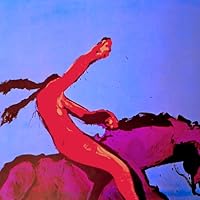
American expansion, says Richard Drinnon, is characterized by repression and racism. In his reinterpretation of "winning" the West, Drinnon links racism with colonialism and traces this interrelationship from the Pequot War in New England, through American expansion westward to the Pacific, and beyond to the Phillippines and Vietnam. He cites parrallels between the slaughter of bison on the Great Plains and the defoliation of Vietnam and notes similarities in the language of aggression used in the American West, the Philippines, and Southeast Asia.
One of the finest examinations of U.S. mass psychology involving the invasion of indigenous peoples' territories. Although Drinnon begins in the U.S., his analysis extends into U.S. imperialism into the Pacific, concluding in Vietnam. A kind of sequel to Drinnon's points about Vietnam as a continuation of the Indian Wars (now in Iraq and Afghanistan) can be found in Robert Kaplan's, Imperial Grunts, the Prologue in the book is entitled, "Injun Country." Another good update of Drinnon, discussing the current metaphysics of Indian-hating, is found in Stephenson's "Swaggering Savagery and the New Frontier," in the Journal of Religion and Popular Culture, vol. 16, Summer, 2007.
“The West, at bottom, is a form of society rather than an area”. Fredrick Jackson Turner, 1893
This was not an easy to follow read, which it why only the 4 stars. It was a very dense, academic text and I sometimes had trouble tracking all of historical details that were thrown at me.
But it was also illuminating and the author’s theme was crystal clear: citing primary sources, they drew a straight line tracing the history of American colonialism all the way from Puritans killing Pequots to massacres in Vietnam. And not just the My Lai slaughter but the My Khe 4 attack too.
I learned about “ the water cure” in the Philippines, Lincoln’s military service, Indian stalking Uncle Mordecai, and the Bad Ax massacre, Geronimo’s presence at the St. Louis World’s Fair along with Philippine people who were on display, and countless other historical details that turned my stomach.
The book is a bit dated, published in the 90s, but the description of US troop withdrawal in Vietnam could also be describing their pulling out in Afghanistan: non white skinned allies left behind to fend for themselves as helicopters took off.
This was not an emotionally easy read, but what made this volume stand out for me was not just the scholarship but that the author brought spirituality into his historical analysis, pointing out how the bodily self repression of the Puritans contributed to their dehumanization of and violence against Native Americans. It wasn’t just an “us vs them” bc we wanted their land, it was a clash between worldviews; maypoles vs whipping posts, and part of nature vs separate from it-as the Thomas Merton section discusses.
The author ends his analysis hopefully. “by word and example, Native Americans have been reminding Anglo-Americans of their lack of respect for all living things, of their lost communal sanity and lost wholeness- of how not to see with the eyes and mind only, but, as Lame Deer puts it, also with ‘ the eyes of the heart’. With their help, Americans of all colors might just conceivably dance into being a really new period in their history”
While I think his analysis is spot on, you have to approach transformative change so carefully in order to not cause further harm or exploitation and I feel the need to insert a reminder that
It’s not the job of the people who have been systemically oppressed to teach us how to liberate ourselves from colonial insanity; its our job to tend to our own wholeness.
This book did a deep dive inquiry into airing out the history: if we really want transformative vs performative change, the next step is figuring out what we do with what the truth once we are aware of it.
This entire review has been hidden because of spoilers.
This book is deadly.The author is very explicit and illustrative of how the country was settled. From the Puritans and Pilgrims to the present. One becomes uncomfortable with what is being read simply by the writer showing the underpinning of what was directing the act of the characters. Racism...Religions..Politics.....Read it and have your nightmares....No one gets out of this smelling like a rose.The argument/question of whether we are creatures of our environment or genetical inclination s.....Read it
Richard Drinnon's Facing West is a unique book written by a unique historian. A veteran educated under the G.I. Bill, Drinnon was actively involved with left-wing causes and had a critical view of American history, one that had him as an assassination target by an anti-communist killer and denied him tenure while teaching at UC Berkeley. During his long academic career, largely spent at Bucknell University after leaving Berkeley, he wrote four books, with Facing West, first published in 1980, the third to be published.
The thesis of this book is straightforward: racism was the driving force behind American westward expansion, from the earliest days of the Puritans in the Massachusetts Bay Colony to the Vietnam War (which ended not long before this was published). The more interesting discussion, for me, was the inverse of this thesis, and one that Drinnon explores for most of the book: how expansion fueled and changed American racism, rather than the fairly self-explanatory other way around.
This is a challenging book. The themes are explored more in terms of how and why rather than "what". The prose is awkward and Drinnon's references to literature and history are often invoked without prior context for the reader (for myself, I needed to do a lot of background reading on Defoe and Shakespeare, for instance). But for dedicated students of Native American history, it is an extremely worthwhile read.
Drinnon starts with the massacre of the Pequots (particularly interesting to me as a Connecticut native), then narrates our way through Indian removal in the Jackson era, to the tragedy in the Philippines at the turn of the 20th century to the "covert war" in Vietnam. Along the way, we see how the "metaphysics" of Indian-hating evolved through the lens of many different Americans, from some of the founding fathers to more obscure novelists and ethnologists like James Kirke Paulding and Dean C. Worcester. Drinnon's choice to explore how many of those not involved on the battlefield saw the indigenous peoples of both America and Asia provides a unique angle. Names like Custer and Sheridan are only mentioned in passing.
In fine (as Drinnon would use), Americans largely denied the humanity of the indigenous peoples (Drinnon explains how the term "natives" was commonly used to deny the humanity of the tribes, a point I found fascinating) by portraying them as other things, whether those were "savages" or any host of other slurs. This book explores this journey in a way very few books before or after have. For a different, more psychological perspective on how America viewed its indigenous population, and how those feelings influenced the attempts to expand further westward once the frontier was "conquered", Facing West is as fine of a survey as you will find.
Every U.S. History course should have this book as required reading. We are still living with this American nightmare, and for us to go forward as a nation we have to know how we got where we are today. It is not a pretty picture, and this fine work shows our most esteemed leaders as racist mass-murderers. Most of what is presented as U.S. History is revisionist and romanticized. This book shows the dark side. The side we need to know and understand to be able to understand ourselves.
Robert Kirkconnell Author of: American Heart of Darkness: The Transformation of the American Republic into a Pathocracy
A long time ago, it was my sommeone among my good-old, Leftist comrades in the Jam Rag community that recommended this American history with perceptive over of the unrecognized "American Empire" as crest of a wave of civilizing, wealth-gathering force that moved from London to New York then rough shod over the Plains and out across the Pacific into Philipines etc. and apparently will crest again in Shanghai...
The American people looked at the Native Americans as an obstacle standing in the way of progress sand expansion. since there was no great pre-existing Native nation in place. This work addresses the hate and discrimination against Native Americans by white America.