

What do you think?

Library of Small Catastrophes
Library of Small Catastrophes, Alison Rollins’ ambitious debut collection, interrogates the body and nation as storehouses of countless tragedies. Drawing from Jorge Luis Borges’ fascination with the library, Rollins uses the concept of the archive to offer a lyric history of the ways in which we process loss. “Memory is about the future, not the past,” she writes, and rather than shying away from the anger, anxiety, and mourning of her narrators, Rollins’ poetry seeks to challenge the status quo, engaging in a diverse, boundary-defying dialogue with an ever-present reminder of the ways race, sexuality, spirituality, violence, and American culture collide.
96 pages, Paperback
First published March 29, 2019
Ratings & Reviews
Friends & Following
Create a free account to discover what your friends think of this book!
Community Reviews
Displaying 1 - 30 of 80 reviews

March 29, 2019
A librarian and a poet! I was drawn in to these poems and the way they address the body, with some library and archival references, I mean can you blame me? I probably read each poem three times because they are nuanced and I couldn't always get it the first time (but they are not inaccessible, just well crafted.)
Favorites:
Self-Portrait of Librarian with T.S. Eliot's Papers
"...Write a poem after me
before I’m gone, and please do not include rest in peace,
only those that are forgotten go undisturbed."
Library of Small Catastrophes
"...I've learned the science of classifying...
Dear Dewey Decimal System, How will I organize all the bodies?...."
For You
"...You manipulated my love handles in the dark...."
original [sin] (audio also available)
Thanks to the publisher for providing early access to this title via Edelweiss. I feel like I've barely scratched the surface. This comes out 23 April 2019, so it can be your late-in-poetry-month purchase.
Favorites:
Self-Portrait of Librarian with T.S. Eliot's Papers
"...Write a poem after me
before I’m gone, and please do not include rest in peace,
only those that are forgotten go undisturbed."
Library of Small Catastrophes
"...I've learned the science of classifying...
Dear Dewey Decimal System, How will I organize all the bodies?...."
For You
"...You manipulated my love handles in the dark...."
original [sin] (audio also available)
Thanks to the publisher for providing early access to this title via Edelweiss. I feel like I've barely scratched the surface. This comes out 23 April 2019, so it can be your late-in-poetry-month purchase.

August 14, 2019
Bit of a misnomer on the back matter; Borges is hardly the anchor or inspiration for this collection. Rollins works as a librarian and that is certainly evident. I fear the Borges highlight was small press marketing ploy. Most of the verse is deeply personal, brazen and yet insecure. Everything appears to stem from the corporeal and pause at the need for classification. Awaiting a Sontag of the Geist to intervene. There’s a sifting through the ashes of past relationships, reaching back to observe her own parents and their failed marriage. References abound, both literary and popular. I was blown away by the first half of this book, the cadence and the explosive images. The second half didn’t strike as me hard--which might reflect upon my day. I fear a curious future for this young poet.

March 22, 2022
Brilliant poetry.
Loved the library and cataloging themes, and the way Rollins crafts and "turns a phrase". Also enjoyed the folklore allusions throughout.
Loved the library and cataloging themes, and the way Rollins crafts and "turns a phrase". Also enjoyed the folklore allusions throughout.

January 28, 2021
Inject Librarian Poetry DIRECTLY into my veins.
(But seriously, these poems are beautiful and so exquisitely crafted on both a singular poem and collection level.)
(But seriously, these poems are beautiful and so exquisitely crafted on both a singular poem and collection level.)

November 11, 2019
A beautiful collection on "the architecture of loss," "the archaeology of grief."
July 13, 2020
I'm glad I listened to the audiobook as I was reading the book because it heightened my appreciation for this collection.

July 28, 2024
A book of poems on race, gender, motherhood, and categorization. Both a librarian and poet, Rollins brings in facts about the US, history, past and memory into her poems to create a intelligent and damning gravity. These poems are true Americana. They hold nothing back. The poem, A Rock Trying to Stand, centers on the massacre at Wounded Knee and the photograph of Big Foot, the chief of the Miniconjou Sioux, laying dead in the snow shortly after his people were murdered by US soldiers. Rollins keen and sharp eye pull apart history and memory to divine the future, and what a hope for something better, and yet, shrewd as these poems are, the future, too, is bleak. "Memory is the gravity of the mind". "Memory is about the future, not the past". These poems hold both the weight of hope and warning, past and memory, future and death. this is a collection that should not be overlooked.

December 5, 2020
“I watched my stepmother empty the prayer beads of a pomegranate into a Tupperware container for my father. I was offered a few just to try to practice swallowing requests for God, undressed of his leathery red skin. I had heard they were good for liver health, rich in antioxidants. They sometimes call them jewels of winter. Funny, how that summer my father developed cancer.”

January 6, 2021
I read most of this aloud to myself alone in my house, I forgot how nice it is to really sink into poems like that

January 15, 2026
Came for Borges, stayed for Plath.

March 21, 2024
A solid collection that didn't feature libraries and books as much as the title and marketing led me to believe but it's there, sure. And when this element pops up, it makes for some of my favorite poems here. I think that's why I wish there was even more of it. But we also get some historical events, often but not exclusively with a look at black history, and more personal pieces from Rollings. There is some dark and creepy imagery reappearing throughout, like ghosts, snakes shedding skin, rising muses from the dead, demons and centaurs etc, which I naturally (I'm the lover of anything dark, creepy and macabre) very much enjoyed. In certain moments I quite liked Rollins' style, in others I found like she was pushing a bit too hard to describe something with unusual vocabulary.
I think I kind of wish this had hit a more personal nerve. I feel like it's been a long time since I truly connected with poetry. Of course this is good but did it move me personally? Not enough I guess. I am more impressed on an objective level but I am seeking the personal hit at the moment. Which is why I lean towards a 3*, as in this is good, over a 4*. Also, the first half seemed so much stronger than the second. Just me?
As usual with my poetry reviews, here are some lines I liked:
"something has shed and not died, something brown as me,
has left skeletons behind, more intact than broken,
as if to say we are living
and dying just the same"
"Be wary of how the translator
twists my words, these ruins he interprets as
alive. Why do you dread being forgotten?
Know that in some sense
you are already dead."
"Storage units preserve our culture's haunted houses.
The canon is merely a ghost story. Write a poem after me
before I'm gone, and please do not include rest in peace ;
only those who are forgotten are undisturbed, only things
kept in the dark know the true weight of light."
My favorites: Skinning Ghosts Alive/ original [sin]/ mis-ery/ The Fultz Quadruplets/ Self-Portrait of Librarian with T.S. Elliot's Paper/ To Whoever is Reading Me/ The Cod Talkers/ Report from Inside a White Whale/ Elephants Born Without Tusks/ born [again]/ Why is we Americans
3.5*
I think I kind of wish this had hit a more personal nerve. I feel like it's been a long time since I truly connected with poetry. Of course this is good but did it move me personally? Not enough I guess. I am more impressed on an objective level but I am seeking the personal hit at the moment. Which is why I lean towards a 3*, as in this is good, over a 4*. Also, the first half seemed so much stronger than the second. Just me?
As usual with my poetry reviews, here are some lines I liked:
"something has shed and not died, something brown as me,
has left skeletons behind, more intact than broken,
as if to say we are living
and dying just the same"
"Be wary of how the translator
twists my words, these ruins he interprets as
alive. Why do you dread being forgotten?
Know that in some sense
you are already dead."
"Storage units preserve our culture's haunted houses.
The canon is merely a ghost story. Write a poem after me
before I'm gone, and please do not include rest in peace ;
only those who are forgotten are undisturbed, only things
kept in the dark know the true weight of light."
My favorites: Skinning Ghosts Alive/ original [sin]/ mis-ery/ The Fultz Quadruplets/ Self-Portrait of Librarian with T.S. Elliot's Paper/ To Whoever is Reading Me/ The Cod Talkers/ Report from Inside a White Whale/ Elephants Born Without Tusks/ born [again]/ Why is we Americans
3.5*

January 22, 2019
Alison Rollins is a librarian and her poet reflects her profession, her love of language, and deep understanding of history and culture. But it is not simply smart and full of wordplay. It is impassioned, particularly on the subjects of race, history, the uses of language, and the need for reading. I don't think it's too early to say this will be one of my favorite books of 2019. Highly recommended.
[I received an advanced e-copy of this book through Edelweiss. It is due to be released April 23, 2019.]
[I received an advanced e-copy of this book through Edelweiss. It is due to be released April 23, 2019.]

December 17, 2020
I really got tricked into this one with all the Borges talk. I was interested in reading a book that was inspired by Borges' Library written by a librarian.
What I read was a politically charged collection of poems wherein all of the men featured by the author are drunken villains and scoundrels including her own father. That is, of course except for Mr. Jorge Luis Borges himself who is name-dropped a couple of times as dedications before poems.
Any relationship the work here has to Borges' Library of Babel is thin at best.
So my rating is probably more reflective of the hoodwinked feeling I got during the reading, which is not really the author's fault.
The author does have a grasp of the English language and is at times enjoyable. It's cool that she is a librarian. That would be a dream job. I'm not above trying her out again when in the proper mood.
What I read was a politically charged collection of poems wherein all of the men featured by the author are drunken villains and scoundrels including her own father. That is, of course except for Mr. Jorge Luis Borges himself who is name-dropped a couple of times as dedications before poems.
Any relationship the work here has to Borges' Library of Babel is thin at best.
So my rating is probably more reflective of the hoodwinked feeling I got during the reading, which is not really the author's fault.
The author does have a grasp of the English language and is at times enjoyable. It's cool that she is a librarian. That would be a dream job. I'm not above trying her out again when in the proper mood.

February 29, 2020
Good lord y’all this book. It’s one I’ll be returning to, certainly. The topics discussed (motherhood/childbearing, cataloging/librarianship, racism/belonging) are all discussed in unexpected and moving ways.

March 23, 2023
i love how these poems roll around in your mouth - and that feeling that a poem is clever and when you spot how things connect you feel clever too. really enjoy the author's perspective, and would like to reread this/read more.
September 5, 2020
uhhhhh this might be my new favorite book of poetry??? ok
May 16, 2021
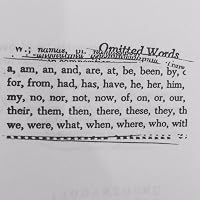
Be wary of how the translator twists
my words, these ruins he interprets as
alive. Why do you dread being forgotten?
Know that in some sense
you are already dead.
–To Whoever Is Reading Me, p23
my words, these ruins he interprets as
alive. Why do you dread being forgotten?
Know that in some sense
you are already dead.
–To Whoever Is Reading Me, p23

May 18, 2019
When I first read "Object Permanence" in the Sept. 2018 issue of Poetry, I knew I wanted to read this book as soon as I could. This collection has a comfortable range, peppered with an impressive amount of references. Rollins borrows from literary predecessors like Robert Hayden and Amiri Baraka, contemporaries like Carl Phillips and Ilya Kaminsky, news stories, the innerworkings of libraries, technology, and music, specifically the work of Nina Simone, Kendrick Lamar, Fela Kuti and others. Rollins presents bodies that punctuate, are punctuated, and mimic punctuation marks themselves. She demonstrates the body's function as an archive of memory. She pays impeccable attention to language, and she handles personal and national history with care, thoughtfulness and precision. A solid, exciting debut.

July 14, 2019
She thinks in theory, we will make it out alive
Your very pulse a secret algorithm, a software designed to track your browsing history.
Try to keep your wits about you, my love. Memory is about the future, not the past.
*
Word of Mouth about George Washington’s teeth, “suffering is most eloquently preserved in the mouth,” really got me. And I loved the idea of Cento for Not Quite Love being comprised of entirely borrowed lines.
Your very pulse a secret algorithm, a software designed to track your browsing history.
Try to keep your wits about you, my love. Memory is about the future, not the past.
*
Word of Mouth about George Washington’s teeth, “suffering is most eloquently preserved in the mouth,” really got me. And I loved the idea of Cento for Not Quite Love being comprised of entirely borrowed lines.

February 10, 2020
A fellow poet-librarian, these are beautiful pieces full of lush language and philosophical musings on librarianship and history, the emotional and the social, a sweeping, yet thematic book, focusing on the archive, the black experience, St. Louis, catholic school, women writers, the public library and the academic one. Rollins is obviously brilliant and gifted, these poems were striking and resonant and I was just taken with them! Read this in one sitting it was so captivating.
March 11, 2024
This is a really strong and enjoyable début collection, steeped in Rollins's life as a librarian. I enjoyed the many clever ways in which she worked her other profession into this poetry. Wordplay is a strength here, certainly, and I was regularly delighted by the ways in which allusions to other poets, to sayings and aphorisms, and to political issues were woven into the texture of the poems ("She is from the Show Me State and people from / Missouri like to compromise"; or in a poem about meter and poetics, "As a woman, I am either stressed / or unstressed in theory"). Lines like this were delightful, unexpected, and strong, and there are many more like them in the collection.
Not all the language lands so well; there were some oddly handled images ("This is how you end up leading the shell of a man / to your bed. How you crack your peanut-colored self / until the sidewalks of your cheeks are caked with salt") and a few of the poems felt like non-political work with a political point smuggled in, perhaps for the sake of continuity with the rest of the collection. Still, if anything, it improved as it continued, and I would imagine that this is just the start of a very promising career.
Not all the language lands so well; there were some oddly handled images ("This is how you end up leading the shell of a man / to your bed. How you crack your peanut-colored self / until the sidewalks of your cheeks are caked with salt") and a few of the poems felt like non-political work with a political point smuggled in, perhaps for the sake of continuity with the rest of the collection. Still, if anything, it improved as it continued, and I would imagine that this is just the start of a very promising career.

April 24, 2019
Library of Small Catastrophes from Alison C Rollins is the type of debut collection that both satisfies and makes me look to future volumes.
The satisfaction derives from how the poems work to paint pictures I can gaze at for hours and keep finding new colors. Each reading of each poem gave me some new nuance with which to understand the narrator, or the situation, or both. I also discovered new ways to better understand the world around me and the various people with whom I share it. And I hope I learned some new things about myself, my capacity for empathy and for making different connections than I have before.
That is a lot to get from a short collection of poetry. Yet there you have it. Until the next volume from Rollins, I will continue to read and think about this one.
Reviewed from a copy made available by the publisher via Edelweiss.
The satisfaction derives from how the poems work to paint pictures I can gaze at for hours and keep finding new colors. Each reading of each poem gave me some new nuance with which to understand the narrator, or the situation, or both. I also discovered new ways to better understand the world around me and the various people with whom I share it. And I hope I learned some new things about myself, my capacity for empathy and for making different connections than I have before.
That is a lot to get from a short collection of poetry. Yet there you have it. Until the next volume from Rollins, I will continue to read and think about this one.
Reviewed from a copy made available by the publisher via Edelweiss.

August 19, 2019
Much as librarians can be trusted to assist with problems in any category, the reader can turn to these poems for wisdom in any of life’s difficulties. In these pages, the definition of “American” is broken down. The word mercy is given no mercy in dissection. A “dead mother’s house” is catalogued according to each item it contains. Rape and violation are placed in plain text and lamented.
One of my favorite moments in this collection is this small section from “Object Permanence”:
Only a god can take and give
time, but the one in front of
the gun lasts forever.
Alison’s work penetrates mysteries, unveiling understanding, experience, and advice for readers of all backgrounds and cultural identities. This collection demonstrates her mastery of content, creativity, and purpose; I highly and wholeheartedly recommend it.
One of my favorite moments in this collection is this small section from “Object Permanence”:
Only a god can take and give
time, but the one in front of
the gun lasts forever.
Alison’s work penetrates mysteries, unveiling understanding, experience, and advice for readers of all backgrounds and cultural identities. This collection demonstrates her mastery of content, creativity, and purpose; I highly and wholeheartedly recommend it.
June 22, 2023
It is easy to slip into Rollins' poems. Some of them captivate with their subject matter, others with their use of language or form. I liked that the library was present in many forms in this collection, from Rollins' experience as a librarian and references to cataloguing systems to historical figures who were writers or collectors of books and to literature more broadly. There is a group of poems that discusses subjects of a more personal nature, namely failed relationships with partners and with parents, and several poems about motherhood and abortion. Library of Small Catastrophes is a multilayered debut with much to offer and the way the poems are organized means that the experience of reading is a lot like an encounter with these poems, constntly drawing connections to things read earlier in the collection.
Read
June 8, 2020Libraries and library science form the architecture of Alison C. Rollins' debut book of poems. Library of Small Catastrophes had me engage with how libraries both form and erase knowledge and memory. How can a lifetime be reduced to a Dewey Decimal? How does trauma live in the shelves? Rollins' book interrogates the self and yet is deeply intertextual. The Black female body and the lives and losses we carry is also a central theme of the book. The poems moved me to look inside my self and ask deeper questions of how I relate to the world around me. This book lives up to the hype (as much as poetry books ever get hyped!). Especially if you are a librarian or aspiring librarian, I'd recommend this book. I'm looking forward to her next collection.

January 22, 2025
Throughout these pages, there's an accounting for history—of humankind, of America, of the narrator and those in her life. Written with rocksteady prose of sharp observations, these poems vibrate with truth—even when it's metaphorical or mystical. At times, it reads as if it were dictated by a timeless being, one of many, strolling the great halls of a library and giving details of humanity, both our errors and glories, both our difficulties and moments of cunning. From the tranquil shore of the earth beneath our ancestors' feet to someone wrapped in the madness of live-streaming a funeral, there is infinite material of how humans have taken in the world, themselves, and each other. I would like to believe we've gotten better. I would like to believe a lot of things.

April 22, 2025
3.5
Library of Small Catastrophes is a beautifully crafted collection that transforms quiet, everyday moments into profound reflections on life's fragility. The use of library studies and categorization as a metaphor for identity is a unique and thought-provoking touch, adding depth to the themes of labeling and self-perception.
While many poems are deeply evocative, some feel repetitive, covering similar emotional ground without much variation. Despite this, the collection remains an enjoyable and moving read, lingering in the mind with subtle, unexpected resonance.
Comps: All the Flowers Kneeling by paul Tran, The Document Shredding Museum by Afrizal Malna, The Dyzgraphxst by Canisia Lubrin
Library of Small Catastrophes is a beautifully crafted collection that transforms quiet, everyday moments into profound reflections on life's fragility. The use of library studies and categorization as a metaphor for identity is a unique and thought-provoking touch, adding depth to the themes of labeling and self-perception.
While many poems are deeply evocative, some feel repetitive, covering similar emotional ground without much variation. Despite this, the collection remains an enjoyable and moving read, lingering in the mind with subtle, unexpected resonance.
Comps: All the Flowers Kneeling by paul Tran, The Document Shredding Museum by Afrizal Malna, The Dyzgraphxst by Canisia Lubrin

December 13, 2019
Library metaphors proliferate in deeply personal poems by a librarian, many about her abortion and her profession.
I now have my MLS. I've learned/ the science to the system of classifying
The amniotic sac is a dust jacket, a woman is arrested for stealing romance novels, references to poets are given in call numbers and a MARC record becomes a poem, a possibility for the library to become an element in the catalog.
When I read the dedication, I burst into tears:
I send special light, love and the audacity of hope to all librarian/artists, misfits, outcasts, and persons on the margins-- keep writing, pushing, and believing. I see you. [p. 91]
I now have my MLS. I've learned/ the science to the system of classifying
The amniotic sac is a dust jacket, a woman is arrested for stealing romance novels, references to poets are given in call numbers and a MARC record becomes a poem, a possibility for the library to become an element in the catalog.
When I read the dedication, I burst into tears:
I send special light, love and the audacity of hope to all librarian/artists, misfits, outcasts, and persons on the margins-- keep writing, pushing, and believing. I see you. [p. 91]

May 27, 2021
As a former librarian and a poet I am biased. I sit comfortable in that bias. Rollins has crafted from catalogue & finding aid, memory, MARC record, experience - a visceral collection. With attention to detail and language one might expect of a cataloger, Rollins poems sear color and life into the often cold walls of institutions. Rollins uses words to excavate feeling and meaning from pain and trauma.
I remain haunted by the poems "The Path of Totality," "A Valid Archive," "The Library of Small Catastrophes," "Oral Fixation," "The Beastangel," and "Object Permanence" to name but a few.
Amazing work
I remain haunted by the poems "The Path of Totality," "A Valid Archive," "The Library of Small Catastrophes," "Oral Fixation," "The Beastangel," and "Object Permanence" to name but a few.
Amazing work

May 26, 2019
I’m NOT a poetry person and I was in a reading funk. So I branched out and tried this title confusing and interesting the way she speaks on the female body and correlating it to just the human body was great. The selections that spoke on family hit me in my feels and just all over a good read (pun not intended) but I had to reread selections as they left me confused used the dictionary and the internet too in order to get the the whole meaning of some pieces.
Displaying 1 - 30 of 80 reviews