For those who want a compelling read, a page turning intimate historical novel ...
with elegant style and thoughtful insight....this is THAT NOVEL!
I absolutely loved it!!!!!
Amy Waldman’s unblinking look at medical patient care in Afghanistan-post-9/11 era, one of the poorest healthcare systems in the world - unfamiliar with western practices - is astounding and ambitious. We look at misunderstandings, mistreatment, and misdiagnosis.
Amy Waldman considers the issues particular to women in Afghanistan....examines the complexities of global development - the changing role of women in non-Western cultures - ethical controversies- in A REMOTE AFGHAN MOUNTAIN VILLAGE!
There was so much that I related to in this novel. The storytelling filled in holes from my own experiences of living in Berkeley- being a student at Cal - then leaving the country to travel the world for the next two years. In the early 70’s, I, too, traveled to Afghanistan. Many memories were brought back to me - both in Waldman’s detailed descriptions in Berkeley and Afghanistan.
I’ve never forgotten those breathtaking mountains and Afghanistan.... colors changing from browns and greens to lavender and purple and smoky blues. It’s an
incredible sight.
Amy Waldman mentions ‘The Hippie Trail” during the 1970’s. Most of us Westerners who took it - definitely - didn’t have a name for it at the time. But history gave it the right label. I was fascinated that this story was written post 9/11.
She filled in historical understanding for me.
The main character- Parveen Shamsa - a College Senior -studied medical anthropology…which looked at how people in other cultures treated medical problems.
She says:
“I had assumed Kabul would be a hardship. I wasn’t prepared for its comfort, it’s mix of decadence and familiarity.
In the 1970s, it had been a stop on the “Hippie Trail”,
the overland route that young Westerners took from Europe to South Asia.
The mere name evoked a loose-limbed morality. Now, in the long wake of 9/11, it was inhabited by a new round of expats, do-gooders, and profiteers, three groups which proved not to mutually exclusive categories”.
Parveen’s inspiration to go to Afghanistan in the first place, was from a memoir she read, ( fictional for this novel’s purpose), called “Mother Afghanistan”, by Gideon Crane. The deeper w get into the storytelling...Parveen Discovers fabrications, lies, coverups, Major discrepancies from her experiences in village than what Crane wrote in his book.
Not everything was cozy comfortable when Parveen arrived in Kabul....unless you consider it - ha - comfortable being driven by a stranger -Issa - on an unmarked and unpaved road - single dirt lane - in a Land Cruiser bouncing over peddles - traveling this way for two days - and hungry.
Parveen slept in one room - on a bedroll of straw with only one hanging lightbulb- in a room with other women and children and goats.
No cell service, internet, computers, television...
(And coffee??)....
One room...for sleeping and eating, that everyone, (adults, 9 kids, and animals), shared together.
During the day they stacked the bedrolls in a corner.
In the compound yard - were three goats, a handful of chickens, four cows, and a donkey. Piles of hay, a vegetable garden, a pomegranate tree, an outhouse, manure.
Eventually- Parveen ‘paid’ for her own room - valuing solitary. Over time, she questioned Western solitary confinement.
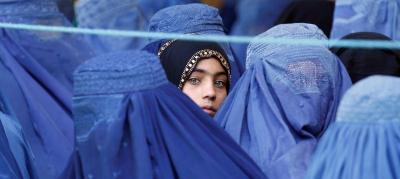
The village that Parveen arrived at wasn’t the most conservative part of the country, yet married women still had to cover themselves - wear the chadri- over their heads.
“The Village had no visual clutter. No billboards, no advertisements, no graffiti. No names on street signs, no numbers on the homes. The village was washed clean of words. Most of them didn’t know how to read, and anyway they didn’t seem to need such guidance and the village where they’d live their whole lives”
One of the characters we meet is Shokoh. She was a city girl - a teenage - educated with desires to study more. She lost her loving mother - and gained a ruthless stepmother.
“Her father had sold her, in her words, into a life where there were no books to read, no paper to write on, no pencils to hold, only cow teats to grip. She was married to a man who was not only too old, but was so illiterate and dirty, who smelled of the fields and could poke his corncob in her whenever he wanted, which was often”.
The characters and dialogue are what gives this book so much intimacy.
You’ll meet, ‘Dr. Yasmeen’, ( the lady doctor)...who worked at medical clinic....and learn why it’s called “Fereshta’s House”.
When we first meet tough-cookie ‘Bina’, she is breast-feeding and kneading bread at the same time.
You’ll be introduced to Mullah’s. Mosque leaders, vicar, or master guardian - used in the Quran.
You’ll meet the kids, and I can’t imagine anyone not falling in love with nine-year-old,
Jamshid: He lost a hand in an accident .....also lost his first mother ( Fereshta). Bina becomes his new mother.
We meet Waheed who was first married to Fereshta who had been gracious and warm.. Bina ....( she’s a character to grow ‘with’....a character I grew to appreciate and understand deeper in time).
We really get to know the characters - many more I haven’t mentioned....their stories - and the ( some painfully disturbing) - trials and tribulations — with the Afghani civilians, and American soldiers ...bringing new light on the war.
The reader is left to contemplate two decades of war and how it’s rendered the healthcare in Afghanistan, Poor roads and transportation, a weak economy, lack of education, lack of physicians and nurses....
But also look at the Afghani culture around religion ( Islam), and family.
What happens when Americans bring their Western wisdom? We look at morality.. and more than one philosophical perspective on what’s right and what’s wrong.
Engrossing reading...and essential to our times!
Thank you, Netgalley, Little Brown and Company, and Amy Waldman