In her new novel, Christina Hesselholdt delves into the world of the enigmatic American photographer, Vivian Maier (1926-2009), whose unique photographic body of work only reached the public by chance. On the surface, Vivian Maier lived a quiet life as a loving, firm and feisty nanny for wealthy families in Chicago and New York. But throughout four decades, she took more than 150,000 photos, mainly with Rollieflex cameras. The pictures were only discovered in an auction shortly before she died, impoverished and feasibly very lonely. In a time when self-obsession and representation are at an all-time high, Vivian Maier holds a particular fascination. Who was this eccentric person? And why did she not try to make a living from her art? In VIVIAN, a chorus of voices, including Vivian's own, address these questions. We watch Vivian grow up in a severely dysfunctional family in New York and Champsaur in France, and we follow her as a nanny in Chicago and as a photographer on the streets of these American cities and in rural France. The novel comprises multiple voices: Vivian's, her mother's, one of the children she looked after and her parents. And crucially, the voice of the inquisitive narrator, who pulls the threads together and asks Vivian prying questions.
Another book to cram into Women In Translation month - Vivian is translated from the Danish. I remember hearing about this American photographer whose work was largely discovered posthumously. Hesselholdt imagines her story from various points of view, allowing Vivian to be hoarder, artist, caregiver, sister, daughter, and friend.
I had a copy of this from Fitzcarraldo Editions through Edelweiss, and it came out in English August 20, 2019.
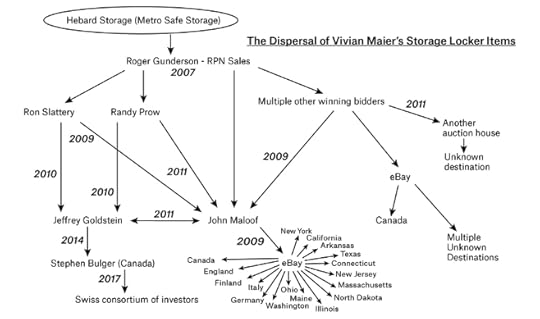
It is great to see the story told so well in a different artistic medium in a way which reflects much of Maier’s life and work. Just as her own life seemed to consist of taking impressions of others, we try to understand Maier through other’s different impressions of hers, impressions which are taken in an oblique way with a focus on the others – their faces, their body language, which I think deliberately reflects her distinctive portrait style. Also a story which explores the Chicago streets in which Maier did her most famous work, and the Alpine family village where she spent some of her childhood and developed her technique – in many cases explicitly revisiting the exact locations of some of her photographs. A story which does not try to give answers but simply explore what may have motivated this complex character. And one which also explores her photographic legacy – its complex dispersal and how she herself might react to her posthumous fame.
So I can thoroughly recommend this BBC documentary about her life
A novel about Vivian Maier. Real life made into fiction. Fictionalized truth. I do understand writers fascination for building their novels on mysterious life stories, but this way of constructing fiction is ethically problematic (even if, or especially since) it is a big trend in fiction right now.
When an author label her book a "novel", I, as a reader, will read it as a true story about the characters she is writing about (within the fictional world), the genre novel, as I see it, is abased on a fundament of trust, so that the reader believe in what she is being told. Viewed analytical, in hindsight, one can understand that what one has read was all made up, but while reading one has to believe. And so the lines between truth and fiction gets blurred.
Hesselholdt tries to moderate the feeling of truth in the fictional univers by adding a narrator, which seems to be a version of the author, into the narration.
Hesselholdt's book about Vivian Maier is a very well composed text. The language is exquisite, and the story intriguing - but is it a novel?
People love riddles, the incomplete and the inexplicable are tremendously compelling. I am The Mysterious Lady. The Sawn-in-half Lady, where the past is what is sawn off.
Christina Hesselholdt’s Vivian, translated from the Danish by Paul Russell Garrett, follows the enigmatic street photographer Vivian Maier (1926–2009), who took some 150,000 photos over the course of her life and whose works were discovered only when she was already dying.
This is the second novel I’ve read from Hesselholdt and in many ways it is similar to Companions, which also leaned on a style of writing very reminiscent of The Waves by Virginia Woolf: we hear snippets of monologue from each main character often narrated in the present tense. In Vivian, however, an additional voice is given to the intrusive narrator, a character of its own in the novel, who interacts with Vivian and the family members for whom she works as a nanny.
To a surprising extent, the novel adheres to details about Maier revealed in documentaries such as Finding Vivian Maier and Vivian Maier: Who Took Nanny’s Pictures (both from 2013). Hesselholdt doesn’t go very far in terms of speculation or alternate possibilities, which raises a question: what new does a literary treatment of her bring to the table? It bugs me because I’ve lately read some quite exquisite fictive accounts of female artists like Now, Now, Louison, Lucia, or The Faculty of Dreams, the last of which is especially similar to Vivian yet goes a notch further in terms of invention.
Thus I was often hoping for the narrator (the implied author, i.e. Hesselholdt) to play an even bigger part in the novel, to speculate, to invent, to even come up with some ridiculous theory and play with it all Lucia-style, as, in fact, I found the sometimes witty narrator to be the most interesting character in the novel, and could have read more about the novelistic process:
Well, now we’re back in Chicago, this impoverished piece of scenery erected in my mind by means of maps and Google and Wikipedia and some scraps of poetry – a proper novelist should have been summoned for this project, one of those who, when writing about the Tatars, puts raw meat under the saddle and rides it tender all the way across Siberia.
My last point of criticism is the same I had about Companions: the way that characters casually recite poems and mention great writers by name in unlikely situations. I find it hard to explain, but there seems to be ways to do it wonderfully (Lost Children Archive) and ways that feel ostentatious.
This might seem like a harsh critique of the novel but actually I enjoyed it quite a bit and think it’s a fine read altogether. It surpasses Companions by being way less heavy going and, instead, it’s a rather coherent and well-paced story. I think I read it at an unfavorable moment when a slew of other, perhaps a little more audacious novels about real-life artists are still fresh in my mind.
Viv: How much of the person behind the camera can be seen in the works? Is one hidden behind them or on the contrary do they unveil you? I think they do. The narrator is the real main character
Narrator I can only agree with you.
Viv: Hvor meget af mennesket bag man kan se i værkerne. Er man skjult bag dem eller afslører de tværtimod én? Det tror jeg de gør. Fortælleren er den egentlige hovedperson.
Fortælleren: Det kan jeg kun give dig ret i.
Vivian, by Christina Hesselholdt and translated by Paul Russell Garrett is a fictionalised recreation of the French-American street photographer Vivian Maier (1926-2009), who worked as a nanny for a number of Chicago families. Her works were unknown and unseen (even, in their printed form, by herself) in her lifetime, with over 100,000 undeveloped negatives, placed in a storage facility. These were sold as a job lot in 2007 in an auction when she failed to keep up the rental payments (although the boxes of her possessions also included various uncashed cheques which would have more than covered the storage rental costs), and subsequently sold on in auctions to some collectors. By the time the significance of her work was first appreciated - in 2009-10 - Maier had died. Relatively little is known of her life - indeed, the only internet result when the collectors who had bought her work first tried to research her, was her brief obituary.
After completing her quarter of 'Camilla' novellas, published in one volume in English as Companions (my review), Hesselholdt was considering writing a 5th when, as she explained in this interview, she watched the Oscar nominated documentary Finding Vivian Maier, co-produced by John Maloof, one of the collectors who first bought her work and has since made it his life's work to champion it.
I would recommend watching the documentary, generally but also to appreciate this book and what is fictionalised and what based on her real history, as well as the 'rival' documentary produced by the BBC, Vivian Maier: Who Took Nanny's Pictures (available here http://editorium.co.uk/imagine-vivian...).
Hesselholdt decided that Maier, for whom a conventional biography would be difficult given the limited information particularly as to her motivations, was an ideal subject instead for a fictional treatment. She uses a similar narrative style to Companions, of a chorus of voices, speaking in brief paragraphs, the main characters being:
- the eponymous photographer - who goes (as she did in real-life) by a number of names, mainly here Viv, but also V Smith, Vivian, Vivienne, Miss Maier etc;
- one of her employers (fictional), the couple Peter and Sarah Rice and their daughter, Ellen, Vivian's charge;
- Vivian's mother Maria;
- the Narrator (male) who is a character in his own right: (It is my task to find plausible explanations, motives, reasons, it is my excuse to exist.), intruding into the text, discussing matters with Vivian, and also commenting on the difficulty of writing his book while the historic record about Vivian (both archival investigations into her family and the development of her photographs) are still in progress: This is a curious task I'm in the middle of - the material that inspires my story is in constant development.
We also here from Vivian's maternal aunt, Alma, Sarah's psychologist (fictional), Jeanne Bertrand, a portrait photographer who is known to have lived with Maria and Vivian (and who we assume is most likely to have taught Vivian Maier photography, although there is no direct evidence to substantiate this), another fictionalised employer Mr & Mrs Marsh, and Marcel Jaussaud, a relative from Maria's French home village.
The Rices are a fictionalised version of various families and children that the real-life Maier worked with in the past as the Narrator explains towards the end of the novel:
Witness accounts from the many families she worked for are very similar, so I decided to only tell of (and that is to invent) her stay with one of them, namely the Rices (a name made up by me) in Wilmette, Chicago.
although I noted that many of the anecdotes are taken from the testimony of one particular ward of Maier's, Inger Raymond (whose family she lived with from 1967-1974), the only person who agreed to appear in both of the documentaries. The assertion that the witness accounts 'are very similar' is also at odds with the evidence of the two documentaries - some of the children/families regarding Maier as having a rather darker-side than the Mary Poppins like accounts of others: see this article in The Guardian).
Hesselholdt's treatment of Maier seems well done. She sticks to the relatively few known facts, at times, as the Narrator himself admits, perhaps a little too closely:
I'm not really fond of documentaries with dramatised scenes, ie a fact is related and some actors subsequently perform a scene that illuminates what the narrator has just related. In dark moments I think that I may have strayed into this horrible genre.
(this perhaps also a justified dig at the Maloof documentary which, in its early scenes, does fall into exactly this trap - we have to see Maloof pretending to bid at an auction for example)
but then adds her own fictionalised gloss on Maier's troubled family history (as the narrator concludes, is it any wonder she wanted to keep it a secret) and her motivations.
There are a number of controversies, explored in the BBC documentary but not here, around the treatment of Maier's work after death: whether someone so private would have wanted this level of posthumous fame, and the fact that the photographs have been developed, selected and edited by others, not the artist. Another surrounds the legal rights to her work (see e.g. this article): indeed the author of the definitive biography of Maier that has been written - Vivian Maier: A Photographer’s Life and Afterlife - has used her research to support claims by Maier's distant family and potential heirs against the collectors who first publicised her work but now sell prints for relatively high prices (see this by said author in The Paris Review).
That, I suspect, explains the lack of reproductions of the photographs in this work, which is a shame: Hesselholdt obviously has particular photos in mind, as her Narrator imagines how they may have came to be taken, but without the photo itself, the impact is rather diminished (the one or two I recognised - such as a stunning picture of some rabbits - certainly resonated more strongly).
A less understandable decision for me was Hesselholdt including some, I think, entirely fictional detail of the lives of Mr & Mrs Rice, including giving Sarah a half-Danish background: this seemed rather irrelevant to the Vivian story and somewhat unnecessary.
Overall - a difficult book to rate. I certainly enjoyed finding out about the fascinating Vivian Maier, and her exceptional photography, but while the novel prompted me to do so, much of that discovery wasn't really through the pages of the novel. 3 stars.
Viv People love riddles, the incomplete and the inexplicable are tremendously compelling. I am The Mysterious Lady. The Sawn-in-half Lady, where the past is what has been sawn off.
Narrator That is no longer the case. The past has been glued back on.
Almost two years ago, I left my job. After 35 years in the IT industry, I wanted to see if I could make a business out of a combination of two long term hobbies: nature and photography. So, it will come as no surprise when I say that I was keen to read this book given that it is a fictionalised account of the life of Vivian Maier.
Maier is, today, a well-known photographer, but in her lifetime no one but those immediately involved in her life knew about her image making. She was prolific, leaving a vast body of work (over 100,000 images). But the significance of her work was not realised until after she had died and, by this time, the huge collection of pictures had been broken up and sold in auction to pay the missed rental payments she owed for the storage facility where she kept the images. Sadly, the storage facility also held uncashed cheques the value of which would comfortably have paid off the rental debts.
This is not a conventional biography, though. The account of Maier’s life is related in a fragmentary fashion told by multiple narrators, including one called “Narrator”. Others we hear from include Vivian Maier herself, her mother (Maria) and one of her employers (she worked as a nanny and we hear from Sarah and Peter Rice and from their daughter Ellen whom Maier looked after). The Rice family are a fictional composite of various families for whom Maier worked. We also hear from Jeanne Bertrand, a portrait photographer with whom Maria and Vivian (and presumably influenced Vivan’s desire to take photographs). There are one or two other contributors.
It is the narrator known as Narrator who promises the most interesting side to the book. My frustration when reading was that this interaction between Narrator and Vivian doesn’t seem to develop much until the very final pages of the novel and this feels a bit like an opportunity missed. As we have it, Narrator intervenes in the text a few times but primarily to explain and only towards the end does Narrator begin to interact with Vivian (as in the quote at the start of this).
As a photographer it was also slightly frustrating to see so little in the book about photography, although I appreciate that more of this may well have made the book rather dull for non-photographers. Some of the comments about photography were sufficiently insightful to leave me, a photographer, wishing there was more:
“To photograph is to focus, and to focus is to exclude”.
(Since I stopped working for a living and started taking photographs for several hours a day, I have learned that the secret of a good photograph is often knowing what to leave out rather than what to put in).
“I wonder if it has a certain soothing effect through the viewfinder to see framed squares of the world?”
Maier comes across as a person who often struggles in her human relationships. Perhaps the camera is a means of hiding away, building a barrier against the world. It is certainly true that I have had to train myself to wait, often for a long time, before switching on the camera when I am out taking pictures. Holding the camera up to your eye certainly changes your engagement with the environment and I find it better to engage for a while before taking pictures.
I enjoyed the fragmented structure of this book. Several books I have read recently have included photographs and this seems a book that cries out for that kind of treatment. The narrative often refers to specific images taken by Maier and I made many trips out into the World Wide Web looking those up. I guess the absence of the pictures here is due to cost issues, unless it is simply that the author did not see the value of including them. I think some of the passages of the book would be more powerful if they included the image that the author clearly has in mind whilst writing. There is the possibility that this omission is a deliberate choice by the author given that Maier herself never saw many of the images she photographed because she didn’t have the films developed.
Overall, this was an interesting book to read with an enjoyable structure. 3.5 stars, rounded down for now.
There were no Acknowledgments in the eBook to show me that the author had done more research than just watch Maloof’s documentary, which spent a lot – and I mean a lot – of time interviewing people Vivian Maier chose not to selfdisclose to. Some of them had no idea she took photographs but were willing to talk about her for their 15 minutes of fame. Yikes!
I’ve had to sit through that documentary enough times to recognize in Hesselholdt’s characters bits taken directly from those testimonies. You can’t change my mind. I couldn’t care less about Mr and Mrs Rice… But I think the worst affront, to me, is calling her Viv... So, yeah, it’s a NO from me!
This is a very uniquely told story of the photographer Vivian Maier, a woman who was prolific, and yet mostly unknown. My review of this novel is on my blog here https://tcl-bookreviews.com/2019/08/0...
She does not intend to fill the gaps. She does not bring her closer. She does not try to explain. For Hesselholdt it is not about finding Vivian. Nor does she expose, or even search for a little something. And still, you might catch a glimpse of who Vivian might have been, where she came from and why she did the things she did (or did not). This is fiction made real. A bit how I tend to look at Vivian's photographs. The image is real, but the story within them lies in the photographer.
Bardzo chaotyczna książka, narracja zmienia się co chwilę. Niesamowicie denerwowało mnie, że narrator trzecioosobowy był taki bezpośredni. Przez większość czasu miałam wrażenie, że jest to tak naprawdę książka o niczym.
Che meraviglia! In Vivian, Christina Hesselholdt romanza la vita e l’opera di Vivian Maier, in un volume che ha tutto per essere un testo apprezzato dagli amanti della fotografia più esigenti e anche da chi abbia soltanto voglia di sapere qualcosa di più della bambinaia che scattò immagini sensazioni senza che nessuno ne sapesse nulla (ne ha scritto qui Michele Smargiassi con solita, impareggiabile perfezione).
I grandi recensori direbbero che il romanzo della Hesselholdt “supera la narrativa lineare”: si tratti di pensieri, immagini, esperienze che raccontano Vivian Maier con voci diverse e polifoniche (interventi diretti del Narratore inclusi): ne risulta un testo certamente non semplice ma ricchissimo di suggestioni, dalla scrittura mai banale e certamente profondo.
E’ in qualche modo inevitabile il “gioco del riconoscimento”: nella narrazione compaiono moltissimi riferimenti a immagini scattate da Vivian Maier (ve ne lascio un paio qui sotto, se mi leggete sul blog), ma non si tratta ovviamente del punto centrale del romanzo. Sono costretto ad appoggiarmi nuovamente a Smargiassi, che lo ha scritto perfettamente: “Vivian Maier (…) come fotografa dell’atto, e non dell’immagine. Siamo abituati a considerare la fotografia come un procedimento per realizzare un’immagine. Mentre è forse soprattutto un comportamento (mai come oggi, con l’uso conversazionale che se ne fa nell’ambiente della condivisione online), insomma un gesto, un approccio al mondo che può anche disinteressarsi di quel prodotto finale che è la fotografia stampata o proiettata.
Vivian di Christina Hesselholdt è un gran romanzo: non risolve un mistero, ma apre pensieri.
Jeg er ret glad for Vivian Maier, som fotograf og som selvstændig historiefortæller i denne sammenhæng, men Hesselholdt roman fandt jeg vanskelig at komme igennem.
Vivian Maier bliver ikke yderligere belyst og hun portrætteres af et sammensurium af stemmer, personer og sammenhænge. Samlet set står jeg (man?) tilbage med et kludetæppe af indtryk, som i bedste fald giver et sporadisk billede af en tid og en kvinde.
Koblingen af fiktion og virkelighed irriterer mig. På den ene side oplever man som læser historiske begivenheder og man læser om Vivian, så det fremstår tydeligt at forfatteren har researchet hende, men samtidig så er der tale om fiktion blandet ned i gryden, så man ikke altid kan gennemskue hvad der er hvad.
Derudover forekommer bogen mig som værende "uens" - den sidste 1/3-del blæses igennem med en hastighed, så man mister fornemmelse for Vivian og hendes tid etc. og man ender med en uforløst fortælling, som bare løber ud og stopper.
Sprogligt er bogen melankolsk og "stiv" på en og samme gang, samtidig med at den visse steder forekommer med lun humor.
Historia może i ciekawa jednak sposób opowiedzenia jej zostawia dużo do życzenia, dlatego tak niska ocena. Miałam przez całą książkę wrażenie chaosu. Narracja sprawiła, że ciężko było mi się w nią wgryźć. Często ten podział na osoby mnie drażnił.
Vivian by Christina Hesselholdt is a polyphonic novel, relating the life and travails of one Vivian Maier, a street and documentary photographer who never viewed herself as such and who only found worldwide fame following her death, after her vast collection of photographic work was sold at an auction and subsequently exposed to the wider public.
Vivian Maier's tale is intriguing and offers rich opportunity for works just such as this. It's a fairytale, with a fairytale ending that Vivian herself never had the good fortune to experience. Added to this is the fact that she was very much an enigma. To say she kept herself to herself is an understatement. For whilst she made many thousands of photographic images in the streets of New York, she was always a spectator, never a participant. Her fascination was with the 'other'; how others behaved and interacted, without a thought given to herself as the photographer. This shows in her work and is a credit to her abilities to remain anonymous, whilst creating some truly magnificent images. While 'working' as a street/documentary photographer, she performed her real job - that of a nanny, frequently rushing along her charges as she moved at pace through the urban environment of New York, frequently exposing them to dangers of which she remained blissfully ignorant.
I'm a photographer myself and was keenly aware of Maier's work before picking this up. Indeed, this was one of my main motivations for doing so. If I lacked this awareness, I'm not sure that this book would have provided anything compelling at all. The fact that I did possess such awareness allowed me to fill in many of the blanks that the book left. The polyphonic structure of the book is poorly executed, a disjointed mish-mash of perspectives that provide only the briefest glimmers of hope that they will meld into something worthwhile; a hope that unfortunately is never fully satisfied. The real interest (unsurprisingly) here, lies in the main subject and indeed the one who lends her name to the title of the book and yet Hesselholdt (surprisingly) neglects this, to the detriment of her own work. 'Too many cooks spoil the broth' is a saying that is only too true in this case.
But as well as including input from too many individuals other than Vivian, Hesselholdt also manages to somehow focus on the least interesting aspects of Maier's life. Again, there are glimmers, brief vignettes that touch momentarily on the interesting aspects of her life but they are just that; flashes that pass all too quickly, before the book turns once again to the musings of one of the children in her care, or her employers. Moreover, Vivian's childhood receives too much attention. Yes, it played a part in who she became but it was not the most compelling part of her story by any means and yet Hesselholdt features it as a core theme throughout the story.
This is a very short book - practically a novella - and yet Hesselholdt squanders precious page space on aspects which are well...dull. This should be a 'back of the net' effort. The story is practically already there, with the author having the freedom to fill in the blanks to create what could be a really, really compelling psychological portrait of a little understood character in the world of photography. But she doesn't. By the end of the book, you can almost feel the author struggling to write the words. Can almost hear her muttering under her breath ' For fucks sake...what should I write next?' The book is almost entirely dull but the 'fairytale ending'; the sale of her possessions and subsequent fame, receives a few clumsily executed paragraphs at either end of the book. A real opportunity to lift her work out of the doldrums of dullness escapes Hesselholdt and indeed, anyone unfamiliar with Maier could be forgiven entirely for missing this element completely. In fact the worldwide fame part just wasn't there at all.
A very poor read. Potentially compelling and interesting story with all the compelling and interesting parts surgically removed by the author. Not to be recommended.
The topic of Christina Hesselholdt's novel (read in Danish) is the enigmatic American street photographer Vivian Maier, whose enormous body of work was mostly discovered after her death about ten years ago. Hesselholdt has tried to recreate Maier's story from the little that is known about her life, which is a fascinating undertaking. Unfortunately she is not totally successful - the constantly changing points of view and time periods are confusing, and the device of using an anonymous narrator does not help. But Hesselholdt's prose is often poetic, and as a writer she obviously has a special understanding of what it must have been like for Vivian Maier to view the world through her lens, rather than living like others who are not artists.
Please note that I don't use the star rating system, so this review should not be viewed as a zero.
Ett försök till en dokumentärt fiktionell fantasi. Vanligtvis är jag tveksam till genren. Läser t.ex. parallellt en biografi över Hermann Rorschach, där ett kapitel inleds "han drog upp persiennen, tittade ut över sjön och tänkte...[....], vände sig mot sin fru och sade...[...], känns för spekulativt, onödigt, eftersom läsaren själv kan fylla i sådana luckor.
Däremot minns jag fortfarande hur berörd jag blev av dokumentären om Vivian Maier som kom för ca 10 år sedan. Om det var SVT Play eller Netflix minns jag inte.
Gillar förlaget Fitzcarraldos genomående Kleinblå omslag. Trots det misstänker jag att det var ett misstag att läsa den här på engelska.
Som en flaksende sommerfugl uden wildfire. I denne roman forsøger man desperat, men uden succes, at fastholde hovedpersonen, de mange stemmer og den egentlige historie. Jeg søger en dybere persontegning, men finder den aldrig. Det er godt nok Vivian mig her, og Vivian mig der, men jeg finder aldrig ud af, hvem hun egentlig var. For Vivian var; hun var en amerikansk gadefotograf, og jeg er nysgerrig på hemmelighederne bag hendes mange filmnegativer. En roman med en så fragmentarisk tilgang kræver en anden form for vildskab; noget ukontrollerbart, noget destruktivt og noget "unplanned" for at kunne fungere, men den er perlende let; lidt ligesom at drikke et glas champagne. Som formeksperiment er det vel godt nok. Og ligheden mellem en "rodløs" personlighed og en flaksende fremstilling; den er vel også godkendt. Som en sammenligning mellem øjebliksbilleder og en "flyven væk" fra essensen, så holder det måske også vand. Men som roman falder projektet fra hinanden. Vi vil noget mere, noget andet, et tillæg til de fotografier, som vi selv kan danne os en mening ud fra.
Jeg har med andre ord, fortsat ikke lært at læse Christina Hesselholdt. Måske er jeg bare ikke fan. Måske er det for meget form og stil og for lidt fortælling efter min smag.
2 1/2. Eine spannende Frau, jedoch ein recht langweiliger Roman. Ich mochte die Art des Erzählens und die Dialoge zwischen Vivian, Sarah und dem Erzähler und verabscheute, dass es so langatmig war. Zwischendrin wünschte ich mir, es wäre endlich vorbei.
As a huge fan of the brilliant yet elusive photographer Vivian Maier, I was very excited to pick up the fictionalised account of her life Vivian by Christina Hesselholdt. The author examines the life of this mysterious outsider artist, whose vast body of photographs were unknown until shortly before her death, when the negatives were discovered in a storage unit and sold at auction. Vivian gives glimpses of her childhood in rural France and the US, her dysfunctional family, her employment as a nanny in Chicago and her work as a street photographer. Hesselholdt weaves vivid scenes from her photographs into the narrative, fictionalising the circumstances in which they were taken.
Like Maier’s self-portraits, which often show the artist half out of frame or half in shadow, this portrait of her life is at times frustratingly incomplete. We’re only privy to snapshots, which when put together resist being formed into a coherent narrative. Instead Hesselholdt has created a polyphonic chorus of voices, mostly female, who work together and in opposition to form a compelling life study of a woman no one could ever truly understand.
As many details of Maier’s life still remain unknown, Hesselholdt lets these absences become part of the narrative, at times filling them with the voice of the intrusive Narrator, a woman living in the present day. Her anachronisms, including references to Google searches and YouTube videos, add to the fragmented structure. Although these things existed in Maier’s lifetime (she died in 2009), they feel a world away from the haunting street scenes of 1950s Chicago we most associate with her.
There are biographies and documentary films that give a much clearer picture of the events of Vivian Maier’s life than this novel, but none of them capture her true appeal: her unknowability. With her idiosyncratic and powerful narrative, Hesselholdt creates a fascinating portrait of an artist who resisted fame, and whose inner life is fated to remain opaque.
Si tratta di un romanzo corale, dove più voci sono alternate grazie all’aiuto di un Narratore, che come un direttore d’orchestra o un burattinaio muove i fili della storia, alterna i suoni fatti di pensieri e ricordi, dando parola ai membri della sua famiglia, ai bambini e alle famiglie presso le quali Vivian svolge il suo lavoro da bambinaia, e che ne donano un ritratto ben preciso. Ma è anche la stessa Vivian a parlare, a dar voce ai suoi pensieri, a narrare la sua vita, arrivando a un vero e proprio dialogo con il narratore che, collocato nel presente, racconta dalla nostra prospettiva odierna la storia di questo personaggio misterioso quanto affascinante.
Più persone coinvolte che narrano la vita di Vivian – e la loro – come se fossero una serie di scatti, di flash di pensieri, donandoci così una visione di questa donna, del suo modo di essere, delle sue fotografie e manie ossessive, della sua vita, con particolare attenzione anche a un’infanzia difficile.
Viene così alla luce l‘immagine di una donna indipendente, eccentrica e forte, ma anche permalosa, molto riservata e chiusa. Emerge la sua solitudine, spesso voluta, altrettanto subita, e la sua voglia costante di restare un po’ nascosta, in disparte. Da questo si può forse un po’ comprendere il motivo per cui non ha quasi mai sviluppato le sue foto, e se non fossero arrivate a noi grazie a un ritrovamento inatteso, forse non avremmo mai conosciuto la sua Arte.
Tror jeg, bogen er bedre end jeg oplevede den. Tror ikke jeg var in the mood. Den handler om Vivian Meyer, som var en street photographer. Hun døde ukendt, men blev berømt derefter for sine 150.000 fotos. Bogen fortælles af nogle centrale stemmer, herunder fortælleren. Fortælleren er et skoop, idet man med hende slipper for mange af de omveje, jeg ikke kan snuppe, og som der ellers nok skulle tages for at fortælle diverse fakta, få historien på plads, få læseren til at overveje forskellige problemstillinger. Skønt. Hesselholdt tager ofte udgangspunkt i et fotografi, som hun digter kontekst, handling for. Jeg kan forstå, at bogen siges at kredse om hvorfor Vivian ikke blev professionel. Det forekom mig ikke oplagt, at den handlede om det. Det er måske heller ikke ret interessant, eller det gøres måske ikke så interessant.
While Hesselholdt succeeds in re-telling Vivian Maier's life story in a way far more engaging than Bannos's biography of Maier, she (Hesselholdt) hasn't succeeded in creating an intimate inner life for Maier. The problem may be that, apart from her self-portraits, Maier the thinking artist remains as mysteriously aloof as ever. Hesselholdt's Maier assiduously avoids discussing her inner life, as well might have Maier herself, and in that case Maier remains a fascinating mystery. . . Also: As with Emily Dickinson, I think every fan of Maier has his or her own image of person. Maier is prime material for the Hollywood bio treatment, and I can see Hesselholdt's novel being a "property" bought by a producer for a film starring Scarlett Johansson as Maier—which makes me puke, but that's where the money is.
Jeg kan ret godt lide denne (temmelig fiktive) bog om den virkelige gadefotograf Vivian Maier. Jeg synes, at Hesselholdt har lavet en kunstnerisk vellykket roman, der selvfølgelig bygger på research, men hvor der tydeligvis er tildigtet virkelig meget ud fra denne research (da man konkret ikke ved ret meget om denne mystiske kvinde). Det kunstneriske valg af form er vellykket med de skiftende synsvinkler og den metakommenterende fortæller, der undervejs indimellem er i dialog med sine personer. Vellykket kunstnerisk eksperiment om en næsten ukendt (men nu kendt) fotograf født i 1920'erne og først død for nylig i 00'erne.
Bardzo chaotyczna książka. Narracja często przypomina strumień świadomości, ale wypowiada się tu tyle osób, łącznie z narratorem, tak że ich wtręty są oderwane od ogółu treści, nie budują jednej historii, tylko urywki kilkunastu, i to w sposób trudny do przyswojenia. Do połowy książki jakoś to się trzymało kupy, ale im dalej, tym gorzej. Wydawcy wspominają o nietuzinkowej treści i formie. W tym przypadku nie jest to komplementem.
Har set filmen om Vivian for et par år siden. Bogen rammer stemningen og prøver at besvare spørgsmålet, man uvægerligt sidder tilbage med: Hvem dulen var Vivian?