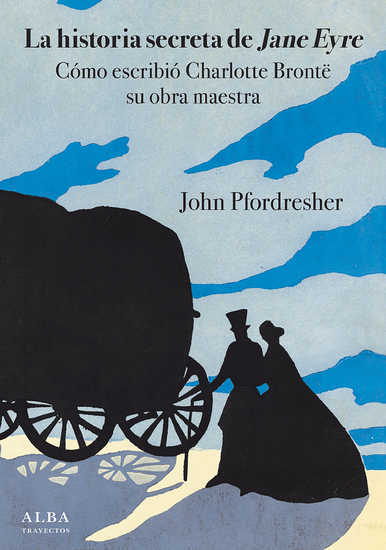
Aunque presente desde niña, la dedicación de Charlotte Brontë a la creación literaria siempre quiso ser, fuera de la familia, un secreto. Cuando en 1847 los editores Smith, Elder & Co. publicaron en Londres Jane Eyre, la novela iba firmada −y no escrita sino «editada»− por Currer Bell: más auténtico y misterioso sonaba entonces su subtítulo, «Una autobiografía». Obligada en 1848 a desvelar su identidad, lo hizo solo ante sus editores y les hizo prometer que guardarían silencio. La historia secreta de Jane Eyre busca las claves de esta actitud en un análisis tan ameno e inquietante como detallado de los elementos comunes –y también divergentes− entre la vida y la obra de una de las autoras míticas de la literatura universal.
John Pfordresher is a Professor of English interested in Nineteenth-Century literature; the relationship of painting to literature in the Nineteenth century; Anglophone writers in Italy; and Catholic Studies. Pfordresher earned his Ph.D. from the University of Minnesota and B.A. from Georgetown College.
Publications include: "Variorum Edition: Tennyson's Idylls of the King" (1973); "Matthew Arnold. The Prose," in "The Critical Heritage" Series (1979); miscellaneous essays on Browning, Tennyson, Dickens, D. G. Rossetti and Pre-Raphaelite art; position papers on the teaching of literature; essays on Anglophone writing on Italy; and "Jesus and the Emergence of a Catholic Imagination" (2008); His latest book, "The Secret History of Jane Eyre. How Charlotte Brontë Wrote Her Masterpiece" was published in 2017.
Me ha parecido muy interesante este análisis de la obra Jane Eyre asociándola con la vida de Charlotte Brontë. Se habla de ciertas vivencias de la autora, de su personalidad y de personas importantes en su vida que influyeron sobremanera en sus creaciones.
No solo se centra en Jane Eyre, también se mencionan otras de sus creaciones y lo que en ellas plasma, analizándolas también, pero en menor medida. Aparecen en escena sus hermanas, Emily y Anne, y su hermano Branwell: las relaciones entre ellos, su infancia, sus obras, etc. Su padre así como otras personas que marcaron su vida...
Algunas cuestiones que el autor da por sentado no me han convencido del todo, quiero decir, hay veces que afirma que algunos aspectos de sus creaciones se deben a vivencias concretas, a su personalidad o a ciertas personas, y creo que en algunos casos es imposible de asegurar, como mucho se puede suponer... Pero bueno, aun así he disfrutado de este análisis, de los datos que aporta sobre la vida de esta autora y sobre su carácter para entender mejor sus obras, y especialmente Jane Eyre.
Un libro que interesará sobre todo a los que han leído Jane Eyre desconocedores de la biografía de la escritora y que quieran descubrir cuanto de la personalidad y vivencias de Charlotte influyeron para crear los personajes y argumento de su obra más reconocida. Lo que más me ha chirriado es la conjetura del autor respecto al apetito sexual de Patrick Brontë por el hecho de que tras el fallecimiento de su esposa hubiera realizado hasta tres propuestas de matrimonio fallidas en busca de una nueva madre para educar a sus hijos. Esa “virilidad”, atribuida tanto a él como Constantine Héger, por tener ambos seis hijos, quizás se debiera más a que por aquel entonces, no existía como hoy día, la planificación familiar, por lo que era común tener una progenie numerosa. No ha estado mal aunque a mi no me ha aportado nada nuevo.
An odd book, like a close reading of Jane Eyre. I found it overly detailed for the average reader, and referencing outdated sources (Freud, Joseph Campbell, taking Gaskell's bio as truth) so not rigorous enough for a scholar. Why does he refer to Rochester as Fairfax Rochester, as if Fairfax is his first name, or the last name is compound? And when referring to Mary Rivers, she is more than once incorrectly named Maria. The author stretched to make connections--Patrick Bronte fathered 6 kids in about as many years, so he had a strong sex drive and was thus an influence on Rochester as a sexual man?
Supongo que me esperaba otra cosa del libro. Este mes quería releer Jane Eyre con más información sobre su proceso creativo, pero me he acabado encontrando con un montón de referencias de la vida de la autora que tienen eco en su obra... Que no niego que sea así, pero siempre me hace pensar en que se quita mérito a las mujeres escritoras cuando se les busca continuamente esa fuente de hechos reales que se acaban convirtiendo en ficción. En cualquier caso, como ya conocía la vida de Charlotte Brontë por otras biografías, este ensayo no me ha descubierto tantos datos como creía.
De lo leído, me quedo principalmente con los argumentos de sus obras anteriores, desconocidas para mí, que son poemas, relatos y el universo creado junto con su hermano Branwell, y algunos paralelismos o referencias bien halladas. También ha habido pasajes que me han resultado emotivos, algo inevitable tratándose de la vida de Charlotte Brontë.
Lo que no me ha gustado tanto ha sido ese psicoanálisis que parecía que le estaba haciendo Pfordresher a la autora, hablando de instintos reprimidos y pulsiones sexuales, que me hacían pensar en Freud mucho antes de que lo llegara a citar (porque lo cita). Hay cosas en las que me resulta rotundamente imposible estar de acuerdo y en general no me ha parecido una obra escrita en este siglo (cuando se supone que es de 2017).
Me he quedado con las ganas de un análisis más profundo de la novela, de su narrativa y de algunos de los temas tan importantes que trata. Aun así, siempre es interesante leer sobre esta escritora. ❤
Le pongo un 3/5 porque mal no está para ver las relaciones entre la novela Jane Eyre y su autora, pero no dice nada que no haya leído en mil sitios mil veces antes.
I've been reading this on and off since summer. This book should be catnip for me, but I was mentally rolling my eyes too much of the time to enjoy it. I feel like Pfordresher makes bold statements with nothing to back them up except a wish that they be true. It reads like fan-nonfiction (is that at thing?! Like fanfic, but nonfiction?).
This is a comprehensive biography of Charlotte Bronte, her family and writings. Intertwined throughout the life story, the author interjects the lives and works of Anne, Emily, and Branwell Bronte. The Professor, Wuthering Heights and Agnes Grey all play pivotal parts both in the biography of Charlotte and the writing of Jane Eyre. Charlotte’s experiences influence her writings. Learn of how the death her mother and widowhood of her father affected all of the children and their education. Charlotte’s experiences at school as both a student and teacher, as well as her unsuccessful love affair, all find a place in Jane Eyre. I found myself more impressed with this book the more I read. I encourage all fans and students of Jane Eyre, and everyone remotely interested in the Bronte family and their works to read this book. For those who own a copy of Jane Eyre, this volume should become a companion addition to their library. I highly recommend this book for all high school, college students and adults.
La historia secreta de Jane Eyre: Cómo escribió Charlotte Brontë su obra maestra Autor: John Pfordresher
Cualquier cosa que diga "Jane Eyre" yo la voy a leer, no importa lo que sea. En este caso leí un pendiente. Ya había escuchado algo de este libro pero ya me había tardado en leerlo. En mi opinión es un libro que podrían disfrutar sí es su primer acercamiento a Jane Eyre y a la vida de Charlotte. Pero en lo personal como conocedora de las hermanas Brontë y con ya varios años leyendo de sus vidas y releyendo Jane Eyre, no me gustó
Esperaba más la verdad, prometía contar todos los secretos habidos y por haber de Charlotte y como logró hacer una obra maestra con su experiencia. Y aunque cuenta efectivamente como era la vida de Charlotte y sus hermanas sé siente como una compilación sintetizada de lo que dijeron muchos autores anteriormente. E incluso me atrevo a decir que el análisis literario es muy similar a algo que ya había leído. Yo no encontré nada nuevo y sinceramente me aburrí mucho.
Jane Eyre es una obra maestra porque está muy bien pensada, cada detalle perfectamente bien colocado y este libro sé queda corto para explicarlo. Definitivamente no es lo que esperaba. Habla de los hombres en la vida de Charlotte Brontë como sí ellos hubieran sido la gran fuente de inspiración en todo dejando de lado la experiencia femenina. Jane Eyre no parece interesante en sus palabras además que repite lo que ya sé sabe. Mi primer lectura del año que no me gusta definitivamente no la recomiendo.
My first question about this book was "Why?" Juliet Barker wrote the definitive book about the Brontes, and I wonder if we need many (or any?) others. However, I'm sure some Bronte fans would rather tackle a couple hundred pages than a thousand pages. Okay, fair enough. My bigger beef with this book is that I just plain disagree with some of Pfordresher's theories. I don't believe that Patrick Bronte sired six children in seven years because he was unusually virile. Rather, I would chalk it up to a little thing called no birth control. (This is a particularly perplexing position to take given than Patrick himself was one of ten children. At the risk of stating the obvious: large families were simply not the exception in the nineteenth century.) I also don't believe that Patrick tried so desperately to remarry after his wife's untimely death because of his virility. I think he needed someone to take care of his brood, who ranged in age from about a year to eight years old when she died.
Even though I enjoyed reading this book it really doesn't bring anything new, in terms of information, for Brontë aficionados. But it was nice to see the story of Jane Eyre interspersed with pieces of Charlotte's experiences and life. This type of criticism is called genetic criticism and it is the analysis of the author's notes, sketches, manuscripts, correspondence, and so on, to try to retrace the steps of how the text got to the final version. It is the reconstruction of the writing process. Sometimes, this leads critics to rely heavily on biographical material, which can end up in pure speculation. At other times, it can shed some light on the text. This book gravitates toward speculation. I recommend this for people who have read Jane Eyre and want to know more about Charlotte's life.
found this supremely insipid, and in some cases not even factually correct?? persevered because I do just love reading about my girl Charlotte but when I got to the final 10 pages and pfordresher just fully gets a major fact from Villette wrong I knew I should have quit early.
like, yeah, Charlotte Brontë's life is reflected in her fiction in some very clear ways but pfordresher's insistence on producing a one-to-one equivalency for literally e v e r y aspect of Brontë's life to Jane Eyre led to a condescending tone, a boring reading experience, and some extremely dubious conclusions.
"La historia secreta de Jane Eyre: Cómo escribió Charlotte Brontë su obra maestra" de John Pfordresher es una obra de no ficción, escrita a manera de documental; que ofrece una mirada fascinante y profunda a la génesis de una de las novelas más queridas de la literatura inglesa, "Jane Eyre". Pfordresher, profesor de inglés en la Universidad de Georgetown, combina su conocimiento académico con una narración accesible para desentrañar los misterios detrás de la creación de esta obra clásica.
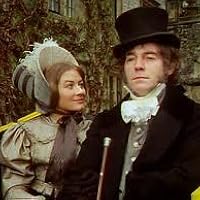
Además acompañé esta obra con la película "To Walk Invisible: The Brontë Sisters" es un drama televisivo dirigido por Sally Wainwright, que narra la vida de las famosas hermanas Brontë: Charlotte, Emily y Anne. Emitida por la BBC en 2016, la película ofrece una mirada íntima y detallada a los desafíos personales y profesionales que enfrentaron estas escritoras extraordinarias en su camino hacia la creación de algunas de las obras más importantes de la literatura inglesa.
Ahora creo estar lista para mi relectura de Jane Eyre.
I think maybe I went into this with the wrong expectations - that it would be more broadly about Charlotte Brontë and not so much about Jane Eyre (yes I realize the latter was in the title, so that’s on me). I agree with another review I read that this felt a lot like a close reading - and I was expecting more of a biography.
I also take issue with how much the author tried to make every aspect of Jane Eyre be indicative of some aspect of Brontë’s life…while I think much of the novel is autobiographical, it is at the end of the day a classic work of fiction. This analysis took away so much of the individuality and agency of the characters, whom I love, by assigning all their traits and story arcs to Brontë and her life, which seems overly simplified.
Si eres tan fan de Jane Eyre como yo, tienes que leerte este libro obligatoriamente. He sentido que revivía la historia pero desde lo profundo y desde lo que no se cuenta. Todos los momentos, decisiones, escenas, sentimientos que relata la autora de Jane Eyre tienen un por qué, y todo se descubre en este libro. Te da la oportunidad de conocer mucho más a Charlotte Brontë, a su familia, lo que vivió y sintió. Es Jane Eyre contado desde lo profundo y desde dos caras diferentes, dos historias que van entrelazándose: la de la difícil e intensa vida de Charlotte y la de la heroína de todos, Jane. Me ha encantado.
Jane Eyre is one of my all-time favorites, so naturally, I grabbed this off my library shelf the minute I saw it. The book shows how the different scenes of the original novel trace back to events in Charlotte’s own life. The author contends that as a young woman, Charlotte fell in love with her French teacher, an older, married man. Her love was unrequited, so she poured all that unfulfilled passion into the fantasy characters of Jane and Rochester. The Bronte siblings had been creating their own fantasy worlds since childhood, so it makes perfect sense that Charlotte would work out her feelings in this way. Anyone who knows the plot of Villette will see the parallels to it, too, but the author only points them out in the end. It’s the less famous book, though it’s just as much of a masterpiece.
If you love Jane Eyre, this book will interest you. Perhaps someone with greater knowledge of Charlotte Bronte’s biography might find it too cursory – you’ll have to keep an eye out for those reviews – but to me it was an enjoyable way to see the creative process behind a novel I cherish in under three hundred pages. It may not be an exhaustive biography, but it was a good balance between entertainment and information.
John Pfordresher, in his book, The Secret History of Jane Eyre, narrates the story of Charlotte Bronte's most famous novel. Most people will agree that Bronte's life influenced the story of Jane Eyre, and indeed much has been written about this subject, but even as a Bronte lover and reader, I found new facts and ideas about all of the Brontes that I did not know. Besides his insight, the author also shares research from other scholars and words from primary research sources including material from Charlotte Bronte herself. A fascinating read! (I received an advanced copy of this book through NetGalley in exchange for a fair and honest review)
I am so disappointed in this book. I had been looking forward to its release for months. What the book had promised was not delivered. I felt the book was loaded down with more speculation and theory versus proven fact. Next, the majority of information presented in the Bronte biography was common knowledge on any fan of the sisters'.
I must say that it was an easy and quick read. It flowed well in style. I just felt really let down for what was hyped in the content.
How Charlotte Bronte's life influenced the writing of Jane Eyre.
Book Review: The Secret History of Jane Eyre is not quite as secret or dramatic as the cover blurb would have the reader believe. And don't be fooled, this is not a biography. Here Georgetown University English professor John Pfordresher attempts to find an intersection between events in Charlotte Bronte's life and in the text of her great novel, Jane Eyre. Having just completed a re-read of the novel less than two weeks ago, this title had to catch my eye. But the Secret History is not all that mysterious. No piece of Bronte's short life is too insubstantial to try to fit into the jigsaw puzzle that is Jane Eyre. There is a wealth of speculation in this book, there is "must have felt," so much "may" and "perhaps." At times these correlations seem simply coincidence, sometimes they seem to be a bit of a stretch, and at points life and novel fit neatly together. But trying to establish a novel as autobiography is always on uncertain ground. Similarities do not mean truth about the author, as surface correspondence may be all there is. Authors have to get their material somewhere: a writer may base a conversation in the Mars Bravo 4 space colony on one she overheard at Starbucks. As the author acknowledges, parts of Bronte's life were worse than the life she gave Jane Eyre. There are too many assertions with too little evidence. At the same time, Pfordresher deserves credit for his creativity, for thinking outside the box, for a careful reading, and sifting together the facts of Bronte's life and the text of her novel. For example, he's largely successful in his analysis of Bertha Rochester's place in the novel, even if far too eager to lay racial accusations. One point the author seemed to have missed is that Charlotte's brother Branwell is an obvious model for John Reed's (Jane's cousin) dissipation, just as is Hindley Earnshaw in Wuthering Heights. Pfordresher is also is a little too obsessed with the sex drives of people in the 19th Century, and seems too sure of his appraisal based on scant evidence. The novel's original title page read "Jane Eyre. An Autobiography. Edited by Currer Bell." The Secret History of Jane Eyre does its best to make the novel an autobiography of Charlotte Bronte, but there is not quite enough substance here. This book is for readers who are not only passionate about Jane Eyre (having read JE at least twice), but also need to know as much as possible about Charlotte Bronte (having read at least one of the actual biographies), wherever that Venn diagram overlaps. Being one of those in the overlap, I had to read this, but I'm not sure that you have to read it. [3★]
I really enjoyed this brief "bio" of Jane Eyre, a closer look at the real life inspirations for Bronte's book.
If you don't want to read spoilers for Jane Eyre, stop reading here. However, this book should only be read after reading the novel. Pfordresher's thesis is that the writing of Jane Eyre was highly autobiographical, with the ending of the book actually coming more as wish fulfillment rather than fact. Rochester is an amalgamation of her father Patrick, her brother Branwell, and most importantly, the married head of the household she found her self serving as governess. Charlotte feel deeply in love this man, but obviously, could never have him. With Jane, Bronte explores her own life and feelings in print, and it is enjoyable to read Pfordresher's connections. Brisk and lively, this book is definitely for lovers of Bronte and her most renowned novel.
I could not finish this one because it became too muddled with details that were confusing and boring for me. A week ago, I watched a documentary on the Brontë sisters and this is what intrigued me to read this book even though I struggled to get through Jane Eyre in high school. At the beginning of the book, I did enjoy the parallels between Jane and Charlotte, but the parallels soon become too muddled with detail, and I became uninterested. Despite this, I would still like to try and read Jane Eyre again.
I love Jane Eyre. It's one of the books that I reread every few years. However, I knew little to nothing of Charlotte Bronte. I found this book to be a fascinating. Learning about her difficult life and how she wove that into her stories and changed the outcomes for her characters that she couldn't change for herself. She was quite the strong willed woman, held back in a society that didn't like strong willed women.
I picked this up on a whim, partly because I am always mixing up Jane Eyre and Jane Austen, which is ridiculous, since one is a fictional character and the other is an author. Anyway, what I realized yet again is/are (a) I do *not* get the appeal of Jane Eyre. Or actually, the whole Rochester thing. I mean, why? What's the attraction? I suppose he's the best option she's got but that's still not a stunning recommendation and (b) the Brontes are just weird, and their writing is weird, and I do not understand the appeal of that, either. I mean, Wuthering Heights? It's just a brutal, depressing, dark book, with really unlikeable characters. About as unlikeable as those in _Casual Vacancy_. I mean, why voluntarily spend any of my life with such people?
And then, the writing of this is very plodding. Some people can make anything interesting. Some authors I'd want to accompany on a trip to the recycling center. Unfortunately, not this one.
I enjoyed this. As I’ve been on a mini-obsession with Jane Eyre lately, this proved a lot of context to Bronte’s writing if I didn’t know. Someone who’s actually a Bronte scholar might already know all of this, but as a casual Bronte fan, I found it really interesting.
El autor hace una investigación completa acerca de la vida de la autora Charlotte Brönte, su vida familiar , costumbres , todo lo que le ayudo a escribir una de las más bellas joyas literarias como fue Jane eyre, un libro que necesitaria leer todo aquel que guste la literatura de Charlotte Brönte
I really really wanted to love this book. I had such high hopes for a hard look at how Charlotte’s life shone light on Jane’s. Instead, I read a fair amount of information I already knew, interspersed with retellings of scenes from a novel I can basically quote at will anyway. Ah well. At least I know my biographical data is up to date.
The author shows how Charlotte Bronte's life inspired her famous novel. A must read for Bronte fans and of great interest to those wanting to learn about the creative writing process.
I won this in a Goodreads giveaway while reading Jane Eyre for the first time, it's why sparked me to enter. I thoroughly enjoyed the novel and lucky to have this waiting right as I finished. I enjoyed this specific book as it was a pretty in-depth look into the mind/spirit of Charlotte Bronte. Although this book is mainly about Jane a Eyre, it was brought up numerous times that quite a few, if not all of her books are autobiographical in some way. This book has definitely sparked my interest in the other works of Charlotte Bronte and those of her sisters.