

What do you think?
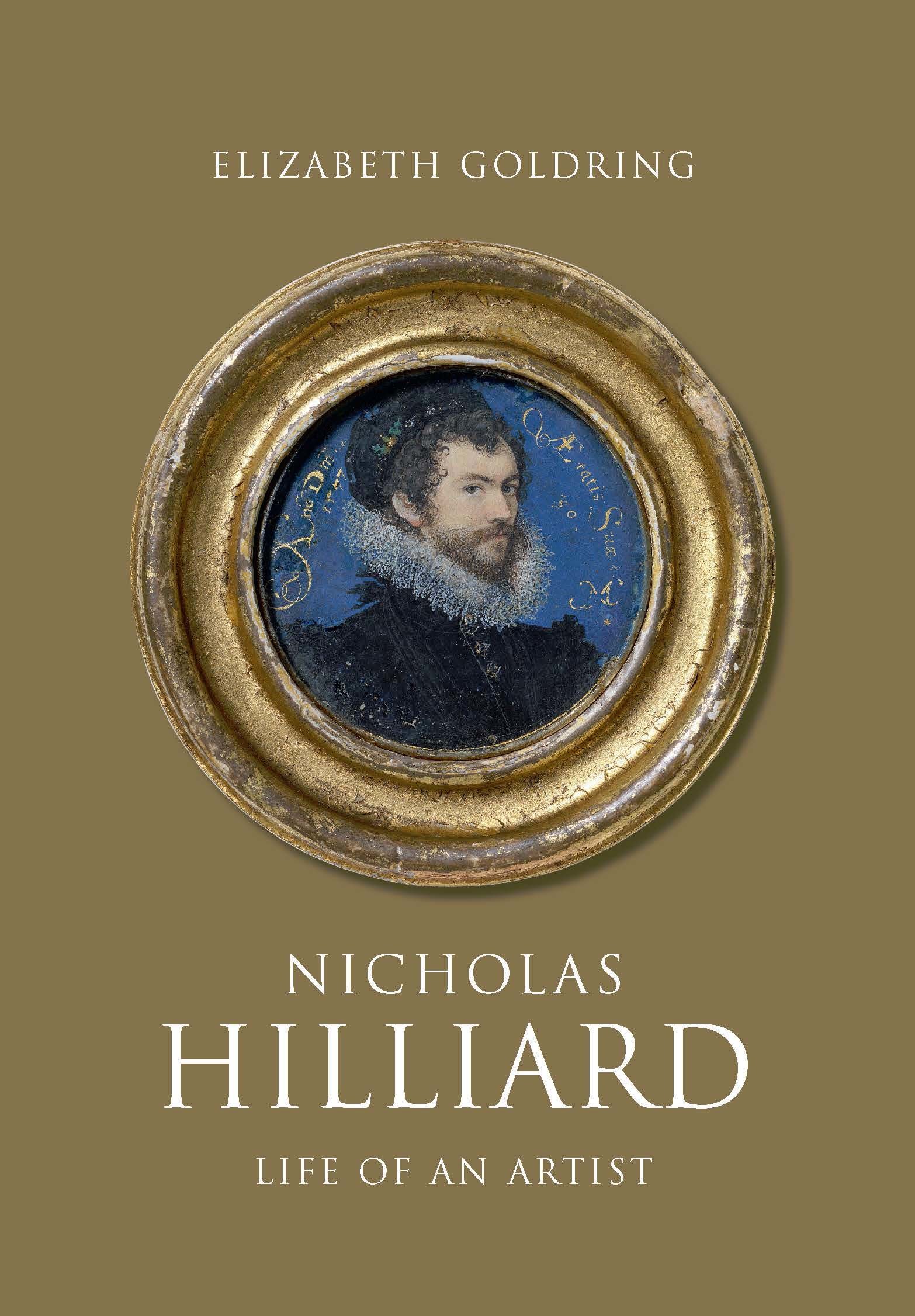
Nicholas Hilliard: Life of an Artist
This illustrated biography follows Nicholas Hilliard’s long and remarkable life (c. 1547–1619) from the West Country to the heart of the Elizabethan and Jacobean courts. It showcases new archival research and stunning images, many reproduced in color for the first time. Hilliard’s portraits—some no larger than a watch-face—have decisively shaped perceptions of the appearances and personalities of many key figures in one of the most exciting, if volatile, periods in British history. His sitters included Elizabeth I, James I, and Mary, Queen of Scots; explorers Sir Francis Drake and Sir Walter Raleigh; and members of the emerging middle class from which he himself hailed. Hilliard counted the Medici, the Valois, the Habsburgs, and the Bourbons among his Continental European patrons and admirers. Published to mark the 400th anniversary of Hilliard’s death, this is the definitive biography of one of Britain’s most notable artists.
352 pages, Hardcover
First published January 1, 2019
About the author
Elizabeth Goldring
15 books5 followersDr. Elizabeth Goldring was a Research Fellow in the University of Warwick's Centre for the Study of the Renaissance and is now an Associate Fellow of both the Centre and Warwick's History of Art Department. She is co-editor of two essay collections - The Progresses, Pageants, and Entertainments of Queen Elizabeth I (Oxford University Press, 2007) and Court Festivals of the European Renaissance: Art, Politics and Performance (Ashgate, 2002) - and associate general editor of Europa Triumphans: Court and Civic Festivals in Early Modern Europe (Ashgate, 2004). Other recent publications include articles in The British Art Journal, The Burlington Magazine, and ELR: English Literary Renaissance. She was Consultant to English Heritage for the exhibition 'Queen and Castle: Robert Dudley's Kenilworth', which opened in 2006.
Ratings & Reviews
Friends & Following
Create a free account to discover what your friends think of this book!
Community Reviews
Displaying 1 - 5 of 5 reviews

April 19, 2021
For the followers of the Elizabethan and Jacobean courts; the name Nicholas Hilliard is a familiar one. Hilliard was a highly esteemed artist specializing in miniatures (although Hilliard was also known for producing some works in ‘great’ and for goldsmithing) and can be compared to his earlier predecessors Lucas Horenbout, Levina Teerlinc and even Hans Holbein the Younger. Hilliard’s sitters included Queen Elizabeth I, Mary Queen of Scots, Sir Francis Drake, Sir Walter Raleigh and King James I; and a plethora of others including the Medici, Valois and Habsburgs. Despite this high regard, bookshelves aren’t filled to the brim with collective works featuring Hilliard and/or his art. Historian (and art historian) Elizabeth Goldring ambitiously attempts to present a definitive biography of Nicholas Hilliard in, “Nicholas Hilliard: Life of an Artist”.
“Nicholas Hilliard” is a large-volume, glossy-paged coffee table book with Goldring combining stylistic elements of a biography, art history/study and historical period portrait in an effort to present a “big-picture” perspective of Nicholas Hilliard, his environment and his artistic output. Although this chronological study sounds like Goldring’s target of a “definitive biography” is met; “Nicholas Hilliard sadly fails.
“Nicholas Hilliard” is easy-to-read for general audiences in that Goldring avoids technical jargon that only an artist would understand and rather approaches the text with a pop-history brush (pun intended). The issue is that readers hardly learn about Hilliard, at all. Yes, Goldring does touch on Hilliard’s childhood, upbringing and artistic influences revealing some of his resume, so to speak. However, the true essence of the man is often missing. This is mostly likely due to the fact that there is an absence of primary documentation surrounding Hilliard and thus Goldring fills this void with tangents concerning Hilliard’s contemporaries and historical period. When Hilliard is discussed, the piece is captivating and insightful but “Nicholas Hilliard” is hardly a ‘definitive’ piece and it is insulting to deem it as such.
One of the major downfalls of “Nicholas Hilliard” is Goldring’s countless speculative statements and admittance of facts being ‘unknown’. These give a false view of Hilliard and/or result in a dead stop in the reading. Goldring makes more conjecture than not and it becomes quite tedious. “Nicholas Hilliard” is bluntly: slow, mediocre and lacking the pizzazz that makes a text riveting. Readers seek to learn about Hilliard but not much is discerned and Goldring’s writing is certainly not very memorable. There is little to gain from “Nicholas Hilliard”.
Goldring’s discussions of Hilliard’s art is a stronger precedent with a look at the sitters, art theory, execution and the detective work required with attributing each piece to Hilliard. “Nicholas Hilliard” is supplemented in these sections with bountiful, full-color images of Hilliard’s works (or that of his influences) with captions describing the artist, subject or title, year produced, materials used and current ownership. The art aspect of “Nicholas Hilliard” is its advantage and Goldring would have been better off focusing wholly on the subject rather than being in over her head with a macro-view.
“Nicholas Hilliard” drastically improves when highlighting his work at the Elizabethan court. The text is more consistent, provocative and brightens Hilliard in a way he wasn’t formally. Unfortunately, this diminishes after the death of Queen Elizabeth I with Hilliard’s Jacobean period which is rushed, abrupt and has a feeling of Goldring on a strict editor timeline crunch.
The conclusion of “Nicholas Hilliard” observing his legacy and his son’s involvement helps to finalize “Nicholas Hilliard” on a more solid note. Goldring fortifies “Nicholas Hilliard” with annotated notes and an extensive bibliography list of sources.
It would be easy to flatter “Nicholas Hilliard” merely because there is little to compare it with and it is noteworthy to produce a biography spotlighting Hilliard. However, “Nicholas Hilliard” is slow, disjointed, filled with conjecture and does not reveal much about Nicholas Hilliard. The most readers gather is that Hilliard was poor with his finances and constantly in debt. “Nicholas Hilliard” is, despite these complaints, recommended for readers interested in Tudor and Jacobean history and art – but do not expect a monumental, mind-blowing, full-disclosure piece.
“Nicholas Hilliard” is a large-volume, glossy-paged coffee table book with Goldring combining stylistic elements of a biography, art history/study and historical period portrait in an effort to present a “big-picture” perspective of Nicholas Hilliard, his environment and his artistic output. Although this chronological study sounds like Goldring’s target of a “definitive biography” is met; “Nicholas Hilliard sadly fails.
“Nicholas Hilliard” is easy-to-read for general audiences in that Goldring avoids technical jargon that only an artist would understand and rather approaches the text with a pop-history brush (pun intended). The issue is that readers hardly learn about Hilliard, at all. Yes, Goldring does touch on Hilliard’s childhood, upbringing and artistic influences revealing some of his resume, so to speak. However, the true essence of the man is often missing. This is mostly likely due to the fact that there is an absence of primary documentation surrounding Hilliard and thus Goldring fills this void with tangents concerning Hilliard’s contemporaries and historical period. When Hilliard is discussed, the piece is captivating and insightful but “Nicholas Hilliard” is hardly a ‘definitive’ piece and it is insulting to deem it as such.
One of the major downfalls of “Nicholas Hilliard” is Goldring’s countless speculative statements and admittance of facts being ‘unknown’. These give a false view of Hilliard and/or result in a dead stop in the reading. Goldring makes more conjecture than not and it becomes quite tedious. “Nicholas Hilliard” is bluntly: slow, mediocre and lacking the pizzazz that makes a text riveting. Readers seek to learn about Hilliard but not much is discerned and Goldring’s writing is certainly not very memorable. There is little to gain from “Nicholas Hilliard”.
Goldring’s discussions of Hilliard’s art is a stronger precedent with a look at the sitters, art theory, execution and the detective work required with attributing each piece to Hilliard. “Nicholas Hilliard” is supplemented in these sections with bountiful, full-color images of Hilliard’s works (or that of his influences) with captions describing the artist, subject or title, year produced, materials used and current ownership. The art aspect of “Nicholas Hilliard” is its advantage and Goldring would have been better off focusing wholly on the subject rather than being in over her head with a macro-view.
“Nicholas Hilliard” drastically improves when highlighting his work at the Elizabethan court. The text is more consistent, provocative and brightens Hilliard in a way he wasn’t formally. Unfortunately, this diminishes after the death of Queen Elizabeth I with Hilliard’s Jacobean period which is rushed, abrupt and has a feeling of Goldring on a strict editor timeline crunch.
The conclusion of “Nicholas Hilliard” observing his legacy and his son’s involvement helps to finalize “Nicholas Hilliard” on a more solid note. Goldring fortifies “Nicholas Hilliard” with annotated notes and an extensive bibliography list of sources.
It would be easy to flatter “Nicholas Hilliard” merely because there is little to compare it with and it is noteworthy to produce a biography spotlighting Hilliard. However, “Nicholas Hilliard” is slow, disjointed, filled with conjecture and does not reveal much about Nicholas Hilliard. The most readers gather is that Hilliard was poor with his finances and constantly in debt. “Nicholas Hilliard” is, despite these complaints, recommended for readers interested in Tudor and Jacobean history and art – but do not expect a monumental, mind-blowing, full-disclosure piece.
May 16, 2019
I chose this because I couldn't get to the London exhibition and part of the pleasure is the lavish illustrations. But the text makes clear how full and connected Hilliard's life was with English and European political and religious movements - a long life too- so it becomes an alternative portrait of the age.

February 2, 2023
One of my most cherished books I have ever read.
What a dream to delve into the 16th century through the eyes and life's work of Elizabeth the 1st's miniature painter.
Elizabeth Goldring does not mess about as she brings us insights from deep in the archives of Renaissance England into practical language that is accessible by all.
Absolutely brilliant.
What a dream to delve into the 16th century through the eyes and life's work of Elizabeth the 1st's miniature painter.
Elizabeth Goldring does not mess about as she brings us insights from deep in the archives of Renaissance England into practical language that is accessible by all.
Absolutely brilliant.
Read
November 1, 2019759.2 H649g 2019

January 22, 2023
I was lucky enough to see quite a few of Hilliard’s miniatures at the V&A museum last year. Absolutely stunning!
Displaying 1 - 5 of 5 reviews