

What do you think?

Тигри в калта
Една от забележителностите в малкото немско градче Хершвайлер-Петерсхайм е аптеката със странното име „Тигър“. Там до 2015 г. работи най-възрастният аптекар в Германия Ото Кариус.
Но едва когато за пръв път излиза книгата му „Тигри“ в калта, става ясно, че най-възрастният немски аптекар всъщност е третият по успехи танков ас на Райха (150 унищожени танка и самоходни оръдия). 22-годишният оберлейтенант Ото Кариус е и най-младият тогава във Вермахта Кавалер на Дъбовите листа към Рицарския кръст.
„Тигри“ в калта има десетки издания на много езици. Книгата е уникална по простата причина, че от седемте най-успешни немски танкови асове единствено Ото Кариус оцелява и успява да напише спомени. Тежките танкови сражения на Източния фронт през 1941 – 1944 г. и на Западния фронт през 1945 г. са разказани живо и интригуващо, без обичайните преувеличения на мемоаристите, тъй като са подкрепени с оцелелите по чудо бойни доклади на батальона и на самия Кариус. В книгата са включени и 40 уникални снимки от бойния път на автора и 502-ри батальон „тигри“.
Но едва когато за пръв път излиза книгата му „Тигри“ в калта, става ясно, че най-възрастният немски аптекар всъщност е третият по успехи танков ас на Райха (150 унищожени танка и самоходни оръдия). 22-годишният оберлейтенант Ото Кариус е и най-младият тогава във Вермахта Кавалер на Дъбовите листа към Рицарския кръст.
„Тигри“ в калта има десетки издания на много езици. Книгата е уникална по простата причина, че от седемте най-успешни немски танкови асове единствено Ото Кариус оцелява и успява да напише спомени. Тежките танкови сражения на Източния фронт през 1941 – 1944 г. и на Западния фронт през 1945 г. са разказани живо и интригуващо, без обичайните преувеличения на мемоаристите, тъй като са подкрепени с оцелелите по чудо бойни доклади на батальона и на самия Кариус. В книгата са включени и 40 уникални снимки от бойния път на автора и 502-ри батальон „тигри“.
336 pages, Paperback
First published January 1, 1950
Ratings & Reviews
Friends & Following
Create a free account to discover what your friends think of this book!
Community Reviews
Displaying 1 - 30 of 104 reviews

January 15, 2012
This book was interesting to me as a former armor officer myself. I have read Colonel Hans von Luck's Panzer Commander: The Memoirs of Colonel Hans von Luck which tells the story of WW2 combat in the European theater from the command point of view and also Paul Carell's Scorched Earth: The Russian-German War, 1943-1944 which gives a detailed overall history of the Russian-German war. This book filled a gap by giving an account of small unit actions (from squad up to company level). Carius was in the heat of battle all the way, and he was a very competent small unit commander.
Unfortunately, I cannot honestly give this book a 4 or 5 star rating. There are several reasons. It just seems too dispassionate to me. Just another day at the office, was it? Also, at the time of writing, he was still super pissed-off about the treatment of German soldiers after the war. He overdid that aspect while conveniently overlooking the many horrible things done by the Germans during the war. Finally, his disparagement of the American soldier for lack of aggressiveness in the closing pages seemed small-minded and unnecessary. (That was in the closing weeks of the war when the Americans knew they had won. It was just a matter of time. Why would you press your luck?)
In final analysis, this is a good book to read if you are interested in armored action during WW2, especially on the Eastern front. Otherwise, you can give it a skip.
(Recommended first person accounts of combat: Company Commander: The Classic Infantry Memoir of World War II by Charles B. MacDonald, Brazen Chariots by Robert Crisp, and The Heights of Courage: A Tank Leader's War on the Golan by Avigdor Kahalani. All great.)
Unfortunately, I cannot honestly give this book a 4 or 5 star rating. There are several reasons. It just seems too dispassionate to me. Just another day at the office, was it? Also, at the time of writing, he was still super pissed-off about the treatment of German soldiers after the war. He overdid that aspect while conveniently overlooking the many horrible things done by the Germans during the war. Finally, his disparagement of the American soldier for lack of aggressiveness in the closing pages seemed small-minded and unnecessary. (That was in the closing weeks of the war when the Americans knew they had won. It was just a matter of time. Why would you press your luck?)
In final analysis, this is a good book to read if you are interested in armored action during WW2, especially on the Eastern front. Otherwise, you can give it a skip.
(Recommended first person accounts of combat: Company Commander: The Classic Infantry Memoir of World War II by Charles B. MacDonald, Brazen Chariots by Robert Crisp, and The Heights of Courage: A Tank Leader's War on the Golan by Avigdor Kahalani. All great.)

August 22, 2018
Хер Ото Кариус се оказа приличен писател, но вероятно е бил много по-добър аптекар. :)
Като танкист и командващ офицер обаче е бил изключителен!
Заради ниското си тегло е отхвърлян два пъти от армията, за да бъде приет най накрая в пехотата. От там става доброволец за постъпване в танковите войски и заминава на обучение.
През 1943 година започва да воюва на Източния фронт срещу настъпващите руснаци. По голямата част от унищожените от неговия Тигър цели (над 150 танка и самоходни оръдия) са постигнати там.
През 1944 година е ранен тежко и така и не успява да се включи пълноценно след възстановяването си в отбраната на Германия.
Интересно е мнението му за американците - намира ги страхливи, нерешителни и дори слаби бойци (може би не си е давал сметка, че те вече са спечелили войната и не са искали да дават излишни жертви, все пак за разлика от при болшевиките и другарите им националсоциалисти , човешкият живот е ценен в демокрациите и се търси отговорност за похабяването му).
За руснаците се изказва далеч по-ласкаво, но е на мнение, че настъпват предимно с цената на огромни загуби и успяват единствено заради огромния си превес в жива сила и техника (доставена им с Лендлийза основно).
Надява се американците да се съюзят с немците и заедно да изтласкат назад в СССР руските войски - желание, което за съжаление не се сбъдва. Бързо е пуснат от американски плен - не са имали никаква идея, кой е той. Свидетелства от първа ръка за издевателствата над пленените немци - военни и цивилни.
В книгата са описани няколко блестящо проведени танкови операции, както и доста провали, дължащи се основно на некомпетентни офицери и войници с малък боен опит.
Предадена е и подробно срещата му с Химлер, по случай награждаването на Кариус с висок орден за храброст - Дъбови листа, към получения по-рано Рицарски кръст.
Малко повече информация тук:
https://bg.wikipedia.org/wiki/%D0%9E%...
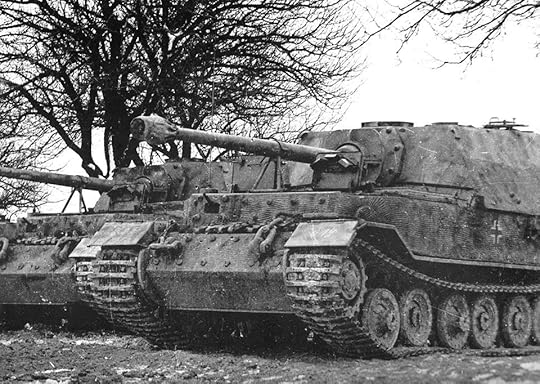
Като танкист и командващ офицер обаче е бил изключителен!
Заради ниското си тегло е отхвърлян два пъти от армията, за да бъде приет най накрая в пехотата. От там става доброволец за постъпване в танковите войски и заминава на обучение.
През 1943 година започва да воюва на Източния фронт срещу настъпващите руснаци. По голямата част от унищожените от неговия Тигър цели (над 150 танка и самоходни оръдия) са постигнати там.
През 1944 година е ранен тежко и така и не успява да се включи пълноценно след възстановяването си в отбраната на Германия.
Интересно е мнението му за американците - намира ги страхливи, нерешителни и дори слаби бойци (може би не си е давал сметка, че те вече са спечелили войната и не са искали да дават излишни жертви, все пак за разлика от при болшевиките и другарите им националсоциалисти , човешкият живот е ценен в демокрациите и се търси отговорност за похабяването му).
За руснаците се изказва далеч по-ласкаво, но е на мнение, че настъпват предимно с цената на огромни загуби и успяват единствено заради огромния си превес в жива сила и техника (доставена им с Лендлийза основно).
Надява се американците да се съюзят с немците и заедно да изтласкат назад в СССР руските войски - желание, което за съжаление не се сбъдва. Бързо е пуснат от американски плен - не са имали никаква идея, кой е той. Свидетелства от първа ръка за издевателствата над пленените немци - военни и цивилни.
В книгата са описани няколко блестящо проведени танкови операции, както и доста провали, дължащи се основно на некомпетентни офицери и войници с малък боен опит.
Предадена е и подробно срещата му с Химлер, по случай награждаването на Кариус с висок орден за храброст - Дъбови листа, към получения по-рано Рицарски кръст.
Малко повече информация тук:
https://bg.wikipedia.org/wiki/%D0%9E%...
November 27, 2014
There are certain faults with the Carius memoir (I read the 2003 1st Edition Stackpole Series). It tends to be dry at times, says nothing about any possible war crimes committed by the German Front, and generally gives a rather selective view of the battlefield.
But as a historical source? This memoir is highly valuable. Not many German panzer commanders wrote their memoirs. There is Hans von Luck and Friedrich von Mellenthin... but that's pretty much it, and both of them were rather higher ranking officers. Carius's memoir gives people insight into the fighting on the Eastern Front from the point of view of a lower ranking officer who wasn't socialized in the German officer core. Moreover, the omission and bias that Carius's memoir has, actually turns out to be pretty valuable in discerning the German reaction to defeat in 1945.
The memoir is also a good read in and by of itself. Carius... or at least from what I can glean from the English translation, is rather charismatic and one can see why he rose through the ranks to command his company. He is strongly opinionated about the service of the German front soldier, but at the same time he's rather self-effacing, modest, and matter-of-fact about his role in the company. These aspects of his personality make the memoir vary from matter-of-fact deliveries on battles and specifications of the Tiger and Jagtiger, to sarcastic and witty comments about his superiors and the situation at hand, to respectful references to the service of his comrades, and then to strong ideologues about his opinions.
All in all, the memoir is not only a good look into ground-level tank combat operations on the Eastern Front, it is an excellent and rather entertaining look into the military service of a charismatic officer in the German Army. While it has biases and a certain perspective, these can prove to be highly valuable to any historian studying military history.
But as a historical source? This memoir is highly valuable. Not many German panzer commanders wrote their memoirs. There is Hans von Luck and Friedrich von Mellenthin... but that's pretty much it, and both of them were rather higher ranking officers. Carius's memoir gives people insight into the fighting on the Eastern Front from the point of view of a lower ranking officer who wasn't socialized in the German officer core. Moreover, the omission and bias that Carius's memoir has, actually turns out to be pretty valuable in discerning the German reaction to defeat in 1945.
The memoir is also a good read in and by of itself. Carius... or at least from what I can glean from the English translation, is rather charismatic and one can see why he rose through the ranks to command his company. He is strongly opinionated about the service of the German front soldier, but at the same time he's rather self-effacing, modest, and matter-of-fact about his role in the company. These aspects of his personality make the memoir vary from matter-of-fact deliveries on battles and specifications of the Tiger and Jagtiger, to sarcastic and witty comments about his superiors and the situation at hand, to respectful references to the service of his comrades, and then to strong ideologues about his opinions.
All in all, the memoir is not only a good look into ground-level tank combat operations on the Eastern Front, it is an excellent and rather entertaining look into the military service of a charismatic officer in the German Army. While it has biases and a certain perspective, these can prove to be highly valuable to any historian studying military history.

March 9, 2015
Not my usual fare, but I picked this up after getting hooked on the World of Tanks Blitz game.
There are a lot of interesting tidbits about what life was like for tankers on the Eastern Front, but it's not what I hoping for. It stands in complete contrast to A Bloody War: 1939-1945, which I read years ago and still remember fondly.
Some details are very vivid and memorable. Picture them falling asleep in the tank, and waking up with their hair frozen into the frost on the inside of the tank. Or his friend that slipped on the ice in front of a moving tank. The meeting with Himmler and the generals discussing arming the Croats to fight the Serbs. The authour's opinion of Russian and American fighting abilities.
Some are much more mundane. They spent more time towing broken tanks than you'd ever imagine.
But there are several factors here that end up making it less than I hoped for.
First up, I suspect the translation was done by someone less than ideal. It's very stilted and awkward in many places, and I can't help but think it reads better in the original.
Secondly, the authour obviously had a couple of axes to grind here.
He spends a lot of time defending the regular German soldier against what he feels is persecution by everyone outside the armed forces. I can only imagine the lot of a German soldier post war, and thus I understand a bit why he's doing it, but it doesn't read well.
The authour also, quite honestly, comes across as a cold, arrogant know-it-all.
Let me be clear here. If anybody has the claim to talk about WWII tank warfare with authority, this guy is it, period, end of discussion. His track record (pun intended) is almost without equal.
On the other hand, he spends half the book talking about which commanders he liked, and which ones he ignored. I can't help but think his level of independence would never be tolerated in almost any other situation.
He mentions often how he always spent time with the men rather than off apart from them, but he mentions only a handful by name. Apparently they all loved him, but it's hard to tell if it was reciprocated. Any officer mentioned gets much more press than the people I'm assuming he spent time with day in and out. The last tank loss he describes where he's commanding on foot and the tank is destroyed is so cold as to be inhuman.
Many things, including pretty much every battle, are described very dryly, with no personal details. We moved here, took this position, destroyed that many tanks. It's impossible to tell in many places whether the authour was even present at any given place in the recital. He's commanding, so the royal 'we' makes sense I suppose, but it ends up so distant it's not lifelike. The spots where it becomes personal are the best parts of the book, and they are few and far between.
There is a bunch of 'end matter' in this edition, over a third of the book is reproduced records of the time, often not written by the authour at all. It's also pretty dry, with a few exceptions.
The section written by the mechanics is fascinating when you read between the lines - you can picture those poor guys attempting to fix these behemoths under fire in the middle of nowhere and running into problems they can't control.
The whole book is a fascinating glimpse into what happened, but I'm left wishing I could see more.
There are a lot of interesting tidbits about what life was like for tankers on the Eastern Front, but it's not what I hoping for. It stands in complete contrast to A Bloody War: 1939-1945, which I read years ago and still remember fondly.
Some details are very vivid and memorable. Picture them falling asleep in the tank, and waking up with their hair frozen into the frost on the inside of the tank. Or his friend that slipped on the ice in front of a moving tank. The meeting with Himmler and the generals discussing arming the Croats to fight the Serbs. The authour's opinion of Russian and American fighting abilities.
Some are much more mundane. They spent more time towing broken tanks than you'd ever imagine.
But there are several factors here that end up making it less than I hoped for.
First up, I suspect the translation was done by someone less than ideal. It's very stilted and awkward in many places, and I can't help but think it reads better in the original.
Secondly, the authour obviously had a couple of axes to grind here.
He spends a lot of time defending the regular German soldier against what he feels is persecution by everyone outside the armed forces. I can only imagine the lot of a German soldier post war, and thus I understand a bit why he's doing it, but it doesn't read well.
The authour also, quite honestly, comes across as a cold, arrogant know-it-all.
Let me be clear here. If anybody has the claim to talk about WWII tank warfare with authority, this guy is it, period, end of discussion. His track record (pun intended) is almost without equal.
On the other hand, he spends half the book talking about which commanders he liked, and which ones he ignored. I can't help but think his level of independence would never be tolerated in almost any other situation.
He mentions often how he always spent time with the men rather than off apart from them, but he mentions only a handful by name. Apparently they all loved him, but it's hard to tell if it was reciprocated. Any officer mentioned gets much more press than the people I'm assuming he spent time with day in and out. The last tank loss he describes where he's commanding on foot and the tank is destroyed is so cold as to be inhuman.
Many things, including pretty much every battle, are described very dryly, with no personal details. We moved here, took this position, destroyed that many tanks. It's impossible to tell in many places whether the authour was even present at any given place in the recital. He's commanding, so the royal 'we' makes sense I suppose, but it ends up so distant it's not lifelike. The spots where it becomes personal are the best parts of the book, and they are few and far between.
There is a bunch of 'end matter' in this edition, over a third of the book is reproduced records of the time, often not written by the authour at all. It's also pretty dry, with a few exceptions.
The section written by the mechanics is fascinating when you read between the lines - you can picture those poor guys attempting to fix these behemoths under fire in the middle of nowhere and running into problems they can't control.
The whole book is a fascinating glimpse into what happened, but I'm left wishing I could see more.

February 22, 2013
Zanimljiva tematika ali knjiga je nespretno napisana pa radnja često skače s jednog mjesta na drugo, ponekad je to naporno pratiti. Takva je priroda rata, konfuzna, posebno kada se povlačiš.
I nije mi se svidjelo sprdanje autora s ratnim zločinima. U jednom trenutku uspoređuje ratne zločine s ubijanjem pjetla. Ubiti pjetla i 30 milijuna ljudi nije isto. Jedna zvjezdica manje zbog toga.
I nije mi se svidjelo sprdanje autora s ratnim zločinima. U jednom trenutku uspoređuje ratne zločine s ubijanjem pjetla. Ubiti pjetla i 30 milijuna ljudi nije isto. Jedna zvjezdica manje zbog toga.

May 18, 2013
Otto Carius is one of the few Germans who served in Tiger tanks during WWII to write his memoirs, and, taken simply as a description of what it was like to serve on the Eastern Front in a Tiger unit, this is quite a good book and those interested in the Tiger and the war in the east will find it useful reading. But Carius' blind spots about the war are grating. Apparently the only atrocities Carius knew about was mistreatment of German heroes by the Americans - you know, the guys who had just liberated assorted concentration camps - and Himmler, by the way, was a great guy. Very jarring.

January 14, 2021
Traducerea este sub orice critică, volumul fiind plin de exprimări de clasa I și greșeli flagrante (peste zece dezacorduri, plus multe, multe altele!), așa încât o stea e chiar prea mult. Păcat de memoriile acestui as al blindatelor germane...

April 7, 2019
One of the best tank aces ever, Otto Carius, describes his experience of WW2 from a "commander's hatch" viewpoint. Starting out as a loader in Pz 38 (t), he moved up to a commander rank of the famous Pz VI Tiger heavy tank. He destroyed a significant number of tanks, assault guns and even one plane (!) at the East Front. At the later stage of WW2 he participated in the defensive fights in Germany where he commanded a Jagdtiger company, but Germany's plans to win the war had already failed by then.
You can find great insights into the life of a common German tank crew - the struggles with incompetent commanders, lack of supplies, the occasional incredible (mis)fortune that shapes the outcome of the whole operation... You'll also find some opinions on the politics and state of warfare during that time which helps with humanising the average Wehrmacht soldier - some of them were simply doing their duty, which is something you can't escape if you want to live. Ideologies become void when bullets start flying.
Great read for anyone who (even slightly) likes anything related to tank warfare. The tempo of the book is actually quite nice, there's a lot of action interspersed with pauses of descriptions of short vacations, hospital visits, award ceremonies, commander talks etc. Most of the book deals with the East Front, only the latter parts deal with fighting the Americans on German soil. The writing can be a bit dry and cold at parts, but that's understandable if the author is a battle-hardened commander. You also get some documents about the operations and vehicles, some cool pictures and maps. Very nice overall.
You can find great insights into the life of a common German tank crew - the struggles with incompetent commanders, lack of supplies, the occasional incredible (mis)fortune that shapes the outcome of the whole operation... You'll also find some opinions on the politics and state of warfare during that time which helps with humanising the average Wehrmacht soldier - some of them were simply doing their duty, which is something you can't escape if you want to live. Ideologies become void when bullets start flying.
Great read for anyone who (even slightly) likes anything related to tank warfare. The tempo of the book is actually quite nice, there's a lot of action interspersed with pauses of descriptions of short vacations, hospital visits, award ceremonies, commander talks etc. Most of the book deals with the East Front, only the latter parts deal with fighting the Americans on German soil. The writing can be a bit dry and cold at parts, but that's understandable if the author is a battle-hardened commander. You also get some documents about the operations and vehicles, some cool pictures and maps. Very nice overall.

March 19, 2019
The author's shrill defence of the honour and innocence of german soldiers during WWII makes this work hard to endure.

November 4, 2021
Вопреки ожиданию бодрого танкового рубилова, книга, в большинстве своем, представляет нытье немецкого танкиста об упертых иванах, их холодной зиме и недалеких немецких командирах.

February 6, 2019
If one were to remove the identities of the nations at war and whether the troops were German, American, Russian, or other--in short, take out the political aspects--this account could be any warrior's story. It reads very much like the personal accounts of American and British soldiers. Politics and the rest are in the background. Instead, there is duty, defense of the nation and, at the very core, support for one's comrades in battle and fear of letting them down. In fact, the book itself was meant to support his comrades after the war.
For me there were a number of interesting small details. I did not know that the turret on a Tiger tank was controlled by a pedal that rotated the turret in one direction when pressed forward and the opposite when pressed back and, either way, at varying speeds so the turret and cannon could be rotated quickly at first and then slowed to almost clock-like precision to stop on the target, requiring very little if any adjustment before firing. I didn't know the interiors were painted white. I had not appreciated how dangerously cold the interior of the tank became in bad weather. A number of small but interesting details emerge almost by accident from this account.
The capabilities of the Tiger were interesting as well. The conventional, and probably correct, wisdom of the war is that the Soviet T-34 was the best tank on the field. Yet, time and again, this author and the tanks he directs fight and win in battles against superior numbers of T-34 tanks. I suspect that general tactics played a role. He notes that the Soviets drove fully buttoned up and with limited visibility whereas the German tank commander kept his head just enough out of the turret so he could quickly see in every direction. Seeing first means shooting first and he took out many Soviet tanks before they even realized they were in a battle. Carius is also a very smart and careful man and that helped him when staging for a battle.
He personally met Himmler when he was awarded a very high decoration and the description of the meeting is surprising. He was surprised as well. First, when he went to meet Himmler [after the attempted assassination of Hitler] his credentials were barely examined and he was allowed a private interview with Himmler while wearing his service pistol. Himmler, himself, was gracious, willing to listen, sophisticated and gentlemanly. This is not to say that Himmler was not a monster [Carius doesn't say] because he was. But apparently even monsters can present themselves as highly civilized and considerate. There must be a warning there.
Carius is harsh in his remarks about American soldiers whom he confronted near the end of the war. He did not think them very good soldiers. But, he met them when Germany was collapsing and they were practically strolling into occupation of the country at a time when nobody wanted to be the last person killed in the war. He somehow forgot that he was facing these poor soldiers in Germany rather than in America and that they got there somehow. Hitler and his very capable Wehmacht wanted to cross the Channel and invade Britain [Operation Sea Lion], but never could quite put it together or get their feet wet. The poor American soldiers and their British and Canadian allies did cross the Channel and pushed the Germans all the way into their own country and to absolute defeat. Perhaps they were not as poor as he wanted to believe.
Part of his opinion of the Americans was formed because he thought German prisoners were treated harshly. Yeah, so what? They were finally released alive. Few Americans were feeling charitable to Germans after they liberated the Dachau concentration camp. Carius' complaints on this score do not move me. I favor the attitude of 'Bomber' Harris who commanded the British bomber service. An old black and white clip shows him sitting behind his desk and saying in a rather high voice something like, "The Germans came into this war thinking they were going to bomb everyone else and nobody was going to bomb them . . . ." Bomber Harris, and the American Eighth Air Force showed them how mistaken they were. Good for them.
By comparison with the American treatment of prisoners, there were about 300,000 German soldiers in Stalingrad and the old movies of them being marched across vast plains of snow and ice after their surrender is disturbing since of all of them only about 6,000 returned. It scarcely needs mentioning that the Germans were often brutal to their prisoners, particularly those captured on the Eastern Front. Carius was very luck to be captured by Americans.
It is worth mentioning that while the Soviet T-34 tank was in some ways superior to the Tiger, the American Sherman tank was inferior in most respects to the tanks of every other combatant. It had a dangerously high profile that made it look as if it were made for a much earlier and more primitive war. It mounted a puny cannon that usually could not penetrate the armor of a Tiger while a Tiger could easily take out a Sherman. The one way in which the Sherman was superior was in repairs. It did not require nearly as frequent mechanical repairs as the Tiger which was notorious for breakdowns. Omar Bradley and Gen. Eisenhower were both aware of the Sherman's limitations, but you fight your war with what you have rather than what you want. Bradley said that it often took 3 Sherman tanks swarming a single Tiger to take it out and that was often with the loss of two of the Shermans and their crews. Despite the odds, the Americans still went up against the Tigers and ultimately prevailed.
For me there were a number of interesting small details. I did not know that the turret on a Tiger tank was controlled by a pedal that rotated the turret in one direction when pressed forward and the opposite when pressed back and, either way, at varying speeds so the turret and cannon could be rotated quickly at first and then slowed to almost clock-like precision to stop on the target, requiring very little if any adjustment before firing. I didn't know the interiors were painted white. I had not appreciated how dangerously cold the interior of the tank became in bad weather. A number of small but interesting details emerge almost by accident from this account.
The capabilities of the Tiger were interesting as well. The conventional, and probably correct, wisdom of the war is that the Soviet T-34 was the best tank on the field. Yet, time and again, this author and the tanks he directs fight and win in battles against superior numbers of T-34 tanks. I suspect that general tactics played a role. He notes that the Soviets drove fully buttoned up and with limited visibility whereas the German tank commander kept his head just enough out of the turret so he could quickly see in every direction. Seeing first means shooting first and he took out many Soviet tanks before they even realized they were in a battle. Carius is also a very smart and careful man and that helped him when staging for a battle.
He personally met Himmler when he was awarded a very high decoration and the description of the meeting is surprising. He was surprised as well. First, when he went to meet Himmler [after the attempted assassination of Hitler] his credentials were barely examined and he was allowed a private interview with Himmler while wearing his service pistol. Himmler, himself, was gracious, willing to listen, sophisticated and gentlemanly. This is not to say that Himmler was not a monster [Carius doesn't say] because he was. But apparently even monsters can present themselves as highly civilized and considerate. There must be a warning there.
Carius is harsh in his remarks about American soldiers whom he confronted near the end of the war. He did not think them very good soldiers. But, he met them when Germany was collapsing and they were practically strolling into occupation of the country at a time when nobody wanted to be the last person killed in the war. He somehow forgot that he was facing these poor soldiers in Germany rather than in America and that they got there somehow. Hitler and his very capable Wehmacht wanted to cross the Channel and invade Britain [Operation Sea Lion], but never could quite put it together or get their feet wet. The poor American soldiers and their British and Canadian allies did cross the Channel and pushed the Germans all the way into their own country and to absolute defeat. Perhaps they were not as poor as he wanted to believe.
Part of his opinion of the Americans was formed because he thought German prisoners were treated harshly. Yeah, so what? They were finally released alive. Few Americans were feeling charitable to Germans after they liberated the Dachau concentration camp. Carius' complaints on this score do not move me. I favor the attitude of 'Bomber' Harris who commanded the British bomber service. An old black and white clip shows him sitting behind his desk and saying in a rather high voice something like, "The Germans came into this war thinking they were going to bomb everyone else and nobody was going to bomb them . . . ." Bomber Harris, and the American Eighth Air Force showed them how mistaken they were. Good for them.
By comparison with the American treatment of prisoners, there were about 300,000 German soldiers in Stalingrad and the old movies of them being marched across vast plains of snow and ice after their surrender is disturbing since of all of them only about 6,000 returned. It scarcely needs mentioning that the Germans were often brutal to their prisoners, particularly those captured on the Eastern Front. Carius was very luck to be captured by Americans.
It is worth mentioning that while the Soviet T-34 tank was in some ways superior to the Tiger, the American Sherman tank was inferior in most respects to the tanks of every other combatant. It had a dangerously high profile that made it look as if it were made for a much earlier and more primitive war. It mounted a puny cannon that usually could not penetrate the armor of a Tiger while a Tiger could easily take out a Sherman. The one way in which the Sherman was superior was in repairs. It did not require nearly as frequent mechanical repairs as the Tiger which was notorious for breakdowns. Omar Bradley and Gen. Eisenhower were both aware of the Sherman's limitations, but you fight your war with what you have rather than what you want. Bradley said that it often took 3 Sherman tanks swarming a single Tiger to take it out and that was often with the loss of two of the Shermans and their crews. Despite the odds, the Americans still went up against the Tigers and ultimately prevailed.

July 24, 2018
Представете си малкото немско градче Хершвайлер-Петерсхайм (само си го представете, не е нужно да го произнасяте). Влизате в аптека с нетипичното име „Тигър“. Посреща ви добродушен възрастен аптекар, всъщност най-възрастният аптекар в Германия. Поне до 2015 година. Името му е Ото Кариус и освен ако не сте запалени по военната история, вероятно няма и да разберете, че пред вас стои един от най-резултатните немски танкови асове от Втората световна война, записал на сметката си близо 200 унищожени танка на противника!
Уви, такава среща вече не е възможна. Възрастният ветеран умира в началото на 2015 година, но освен аптеката, именувана на легендарния танк, Ото Кариус оставя в наследство и своите мемоари. „Тигри в калта“ е неподправено свидетелство от първо лице за бойния път на 502-и батальон тежки танкове на североизточния фронт – между Нарва и Дюнабург, както и последните сражения на автора в заключителния етап на войната срещу американците на Запад.
Цялото ревю тук: https://bibliotekata.wordpress.com/20...
Уви, такава среща вече не е възможна. Възрастният ветеран умира в началото на 2015 година, но освен аптеката, именувана на легендарния танк, Ото Кариус оставя в наследство и своите мемоари. „Тигри в калта“ е неподправено свидетелство от първо лице за бойния път на 502-и батальон тежки танкове на североизточния фронт – между Нарва и Дюнабург, както и последните сражения на автора в заключителния етап на войната срещу американците на Запад.
Цялото ревю тук: https://bibliotekata.wordpress.com/20...
April 1, 2016
This book is written by Otto Carius, one of the most decorated WWII German tank commanders. His keen observations, situational awareness, and tons of luck helped him to survive even the most dreaded Eastern Front. The book contains a lot of small unit actions in muddy conditions along the Baltic countries from a low ranking Wehrmacht Panzer officer's point of view. His stories are very detailed but remarkably dry, matter-of-fact, and most of the time emotionless. And he seemed to be quite unhappy about the way WWII veterans were treated by Americans and perceived by the German public after the war. Like many other Wehrmacht officers, he was under a delusion and even had very high "hopes for a joint struggle against the Russians" until the very last moment of the war. His private conversation with Himmler after Himmler personally presented him the Oak Leaves to the Knight's Cross was very interesting too. All in all, this personal accounts is worth reading and highly recommended.
P.S. The translation seemed to be done by the Google Translate or something. Every once in a while, I had to reread to figure out what the author was saying.
P.S. The translation seemed to be done by the Google Translate or something. Every once in a while, I had to reread to figure out what the author was saying.

February 22, 2019
"I found out that even with the best intentions there are limits to physical stamina...I was ordered to bed and was allowed neither tobacco nor alcohol. The fact that I also didn't have any desire for them told me how really bad off I was."
- Knight's Cross at the Hospital
- Knight's Cross at the Hospital
Read
May 23, 2015fine

August 21, 2025
Unfathomably based
January 25, 2015
A book about a panzer commander, a tankist who admitted that SS divisions had better equipment than the regular army.
In Vaihingen, in the 7th Reserve Tank Battalion, I became a recruit again. My tank commander was Sergeant August Dehler, a wonderful man and an excellent soldier. I became a loader and was literally bursting with pride when we received a thirty-eight-ton Czechoslovak tank. With a 37 mm gun and two machine guns, we felt invincible. We were amazed by the protective armor, but we didn't realize that it was primarily intended to protect our morale, as it was resistant only to small arms. But we learned that later.
In Putlos in Holstein, we learned the basics of armored warfare, and there we also practiced live fire for the first time.
In June 1941, we received basic iron rations. We knew immediately that something was going to happen. Until we reached East Prussia, many of us tried to guess where we would be sent. We believed we were there to secure the border, although the local farmers whispered this and that. During our training in Putlos, we used tanks that ran on the riverbed. Such a vehicle could travel underwater and suddenly emerge from the shore. We were convinced that our enemy would be England. But now we were in East Prussia, and uncertainty no longer plagued us.
On June 21st, we set off for the border. The report finally informed us of our role in the coming campaign. We tried to project an icy indifference, to remain calm, even though everything was boiling inside. At night, the tension became unbearable. Our hearts practically leaped from our chests as we heard squadrons of Stukas thundering over our division's positions. We took up positions at the edge of the forest, south of Kalwaria. Our commander had installed a civilian radio in the tank. From there, five minutes before the attack began, we learned of the start of the war with Russia.
Apart from a few non-commissioned officers, none of us had ever seen combat before. But we trusted our commanders. They wore Iron Crosses and Assault Badges, and displayed unwavering composure. Everyone else's stomachs and bladders were churning. We were convinced the Russians would open fire at any minute. But all was quiet. Finally, to our relief, we received the order to attack.
Operation "Sea Lion" (German: Unternehmen Seelöwe).
This was the codename for the aborted German plan for an amphibious invasion of Great Britain in 1940.
The Tauchpanzer (submersible tank) was designed specifically for the invasion of England. It was a modified version of the Panzer III and Panzer IV tanks. It was intended to enable German troops to cross the English Channel and land on the English coast as part of the planned Operation Sea Lion (Unternehmen Seelöwe).
When the invasion of England was canceled, the modified tanks were transferred to the Eastern Front. Before the attack on the Soviet Union (Operation Barbarossa), these tanks were adapted to river conditions – the long rubber hose was replaced with a rigid, 3.5-meter tube (snorkel) extending above the turret. This allowed for underwater travel to a depth of 5 meters.
The tanks were successfully used in combat only once in history – on June 22, 1941. In the first hours of the attack on the USSR:
Units of the 18th Panzer Division (in which the previously cited Otto Carius served) and the 3rd Panzer Division traversed the Bug River underwater.
This maneuver completely surprised the Soviet defense, which had expected the traditional construction of pontoon bridges. After crossing the river, the crews dropped their seals, and the Tauchpanzers continued fighting as standard tanks.
We were to help repel the anticipated attack. At dusk, Ivan indeed launched an assault with four tanks and infantry. The tank commander stood in the turret of his vehicle, directing the entire attack. Within moments, all the T-34s were on fire, and the Russian infantry were fleeing back into the forest.
Constant fighting continued until the end of the year. On November 25th, I believe, we were tasked with supporting the 503rd Infantry Regiment, which was attempting to take control of the forests around Sergeyshev. At dawn, our tanks reached their positions as planned. Pleasantly surprised, we watched our fellow infantrymen energetically advance towards the forest line. Even more surprising, we saw that the Russians didn't open fire! We drove a little closer and learned the whole secret.
The men running toward the forest were not our infantrymen, but Russians who had dug in at night on the outskirts of the village. They were preparing the ground for their attack. Our infantrymen were positioned on either side of their own positions, waiting for the tanks to come into action. The Russians were incredibly lucky that we didn't recognize them in the twilight.
Now we had to fight in the forest, instead of finishing them off easily in the open. The battalion commander, Captain Johannmeyer, was seriously wounded by a Russian sniper.
It was a grueling defensive and offensive battle in difficult, swampy and forested terrain, fought in the early Russian winter, where German Tiger heavy tanks served as a mobile reserve supporting the bleeding infantry units. In the context of the entire Newelsk operation, this day was a perfect example of a war of attrition – the Germans won the tank battle, but strategically, the Red Army dictated the pace of operations, gradually exterminating the Wehrmacht forces on this section of the front.
The four T-34s hit by the attack burned rapidly (often with fuel or ammunition exploding inside). Thick clouds of black, oily smoke immediately cut off the line of sight of the German Tiger crews, preventing them from firing accurately at the fleeing soldiers. The Soviet attack came unexpectedly, when four T-34 tanks, accompanied by a landing force of infantry, emerged from the forest and advanced towards the German-held village.
...
After a few minutes, he returned and said: "The Brigadeführer is waiting."
I headed for the second bus, completely surprised by what had happened to me. But even more surprising was the fact that I was now reporting to someone who seemed to be the epitome of freedom and warmth. It's rare to find commanders who can be compared to "Old Fritz." He completely identified with the soldiers in his units. He was always with his boys, warm, and available to everyone. His men adored him.
He treated me like a son the entire time. We were all deeply moved when, in Daugavpils, we learned that "Old Fritz" had died near Narva. In August 1944, he was to be awarded the Knight's Cross, but for the grieving men who had lost their "front-line father," that no longer mattered.
I checked in, and von Scholz patted me on the shoulder in a friendly manner.
"Okay, why don't we have a glass for our shared struggle?"
He poured two glasses and clinked them with me.
"Where are you from?" I replied, and the conversation that followed resembled a family chat. I also described my first impressions of his units. He laughed heartily.
"Ha, ha, that's how it is here," he added, adding, "I had to change a bit after transferring from the army. I had very mixed feelings, but now I would never leave these boys.
You won't see anyone like them anywhere; they're truly excellent. And for your personal information, I like being addressed as 'Mr. General.' I come from the old school, and this form seems more natural to me." Now, as for you...
And we started talking about the situation. I was very skeptical about the legendary "Panther" defense line.
"Old Fritz" explained:
"If you want to know, the "Panther" only exists on paper. For the entire last year, we haven't been able to build such defensive positions. We do still have a few bunkers from the attack, but not where we need them most. Besides, the Russians are attacking faster than we expected, and on top of that, our units have already withdrawn from defensible positions.
So I had to create a new line of bridgeheads. Your task will be to help the men on the front line take up the best possible positions in their sectors. The Russians are attacking with weak reconnaissance forces, so you shouldn't have any trouble repelling them. In the meantime, my men will expand the front line.
My task has been clearly defined. The artillery that had supported us and the Waffen SS soldiers was withdrawn from the Leningrad area.
For months, we managed to hold the front along the Narva River only thanks to artillery support. Our tanks remained close to our command post – east of the Narva – at all times. The southern front line ran along the eastern edge of the city, then – for a short distance – along the western bank of the river, forming a front line all the way to the mouth of the Narva on the Baltic Sea.
The period of relative calm quickly ended. The Russians committed considerable forces against our bridgehead.
The "Panther" defense line (German: Pantherstellung) was a real, though unfinished, system of fortifications created by the Third Reich on the Eastern Front in 1943. It constituted the northern section of a massive defensive belt known as the Eastern Wall (Ostwall).
Aside from a few heavily fortified points, the "powerful Eastern Wall" turned out to be a propaganda myth, which the Red Army forced through in key attack directions.
Hitler issued this order only on August 11, 1943, after the lost Battle of Kursk. The Germans had only a few months before the Soviet offensive, resulting in a dramatically slow progress:
Northern Sector ("Panther"): Most work was accomplished here, as the area had been relatively stable since 1941. A network of trenches was constructed, barbed wire fences, minefields, and several hundred wooden and earth bunkers were laid. Additionally, some of the planned Pantherturm-type bunkers (tank towers on concrete bases) were placed there.
Thus, in just a few days, near Vitebsk alone, the Germans lost approximately 40,000 soldiers, trapped in a mythical "fortress" from which there was no escape.
It was probably unmatched by any contemporary vehicle of its type. In any case, this assessment applies to the Western Front, as the Russians could always surprise us with something.
The Tiger's strength lay in its armor, mobility, and weaponry. These factors were seemingly at odds with each other, but when properly balanced, they produced excellent results. The 88 mm gun was powerful enough to destroy any tank of the time if hit in the right spot. Our Tiger had such strong frontal armor that it could withstand several direct hits. We simply couldn't afford to hit the sides and rear of the vehicle, especially the top armor, which was the weakest. This required considerable caution and experience from the crew.
Our guiding principle was: "Shoot first, and if you can't, hit first."
To make matters worse, an incoming shell travels faster than sound, so the impact is felt first, and only then the sound of the shot reaches the enemy. Therefore, a tank commander's eyes are more important than their ears. With the roar of shells exploding nearby, they can't determine the direction of the threat by hearing. A completely different situation arises when the commander occasionally peeks out of an open hatch to assess the overall situation. If they look to the left, they'll notice the flash of an enemy gunshot, slightly to the right of the tank, out of the corner of their eye. Their attention will immediately be drawn there, identifying a new target in time. Seconds are usually crucial here. From what I wrote above, it follows that periscopes should be installed in tanks.
The soldiers sat on the tank's body and near the exhaust pipes, the air mixing with the exhaust fumes, and several of them could not be saved; the infected died.
Another time, Otto's friend accidentally fell under the tank's tracks, a crew member, and lost both legs... like in a factory accident. Like my grandfather's brother, or someone else's family member, had his limbs severed in the factory, a scene straight out of the Promised Land.
Otto also mentioned that German tanks had non-mechanical triggers, and that an electric, light touch, like a keyboard key, would trigger a shot after the command "Attention!"
However, such mechanical triggers were too strong in the hands and not as useful.
He also wrote that when they reached the first platoon, the Russians finished them all off, practically destroying all the tanks, and the commander shot himself in the head right there, like in the movie "FURIA." - It concerns the tragic action in which Lieutenant von Schiller (commander of the 1st platoon) was killed.
These events unfolded on July 24, 1944, south of Daugavpils (present-day Latvia). Carius, then commanding the 2nd Company of the 502nd Heavy Tank Battalion, was seriously wounded while reconnaissance on foot, shortly after the successful and legendary skirmish near the village of Malinowo.
I lost my map case while jumping into a ditch. My irreplaceable field cap also disappeared. It was a bad omen. Marwitz later found it. It became his talisman throughout his long captivity in Russia.
Meanwhile, the Russians had crossed the road and were already in the ditch through which we were escaping. They were firing at us nonstop. Not a single bullet hit Lokey; I was covering his back. I, on the other hand, received one shot in the left shoulder and four in the back. These latter wounds bled particularly heavily. Soon I was completely exhausted and could no longer escape. When we froze, the gunfire stopped. Suddenly, hope returned. Quite close, I heard the roar of our tank engines—the sound of salvation! Eichhorn and Göring had heard the sounds of gunfire and rushed to see what was happening. I believed we might make it out alive.
Suddenly, death stared me in the face again! A few meters behind us, three Russians appeared. I will never forget that sight. I was bleeding, exhausted, and could hear the engines of my Tigers, which would probably arrive too late.
Like a cornered animal that sees a hunter and can no longer flee, I looked around groggily. A Russian officer stood in the middle of the three and shouted, "Hands up!"
Hands up! The soldiers on either side aimed their machine guns at us.
Fortunately, the Russians were convinced I might get the foolish idea of trying to shoot them. In their place, I probably would have thought the same. But they didn't know my condition. I didn't have the slightest desire to shoot. I couldn't even think at the time. I wouldn't have been able to draw my weapon either, because I was lying on my right arm, my body covering the pistol.
Meanwhile, our tanks were approaching quickly. During the drive, the blindly firing machine guns couldn't hit anyone, but their mere presence caused a great shock among the Russians. Two privates fled immediately, but the officer raised his pistol to finish me off.
I had no desire to face death. I turned toward the approaching tanks. And that saved me!
The Russian pulled the trigger three times. Two bullets flew past me, the third passed very close to my spinal cord, but miraculously, it didn't damage an artery or the tendons in my neck. The officer didn't even turn to finish me off with a shot to the head. I was surprised I was still alive. If I hadn't turned toward the tanks, I would have been punched in the throat, and these words would never have been written! Like something out of an adventure novel, my comrades had truly arrived at the last minute!
Eichhorn's tank rolled past me. Göring stopped. I can't describe the feeling of relief that washed over me. I still couldn't believe that anything had happened to me during this incident. Lance Corporal Marwitz, Göring's gunner, jumped out of the turret and was at my side in a single bound. He had no idea where to apply bandages or tourniquets; I was bleeding heavily. My coveralls were in tatters. Marwitz had ripped off his suspenders and tied them above the wound in my thigh. Fortunately, the suspenders were elastic and of good quality, or I would have lost my leg from ischemia.
I've been asked many times if I felt any pain. No one believes me when I say that, due to the tension and exhaustion caused by the massive blood loss, I felt absolutely nothing. I was tired and afraid of losing consciousness. When I was shot, I felt only the blast, but no pain.
These units had been stationed in the West long enough that their fear of being captured was significantly lower than that of soldiers on the Eastern Front. Everyone thought the most important thing was to "stay out of it." Later, as we were increasingly pressed in our "pocket," we encountered hordes of former German soldiers who, according to their papers, had been discharged from the Wehrmacht. A rather clever city commander came up with the idea that this was an American trick.
The soldiers appearing en masse with official documents discharging them from Wehrmacht service were in fact deserters or members of disbanded units who had forged the papers or obtained them from panicked administrations to avoid further combat. The aforementioned "clever city commander" (likely of Lüdenscheid or another city in the Ruhr) convinced his subordinates that this was a diversionary American hoax to stem the tide of defeatism and force the remnants of the garrison to defend themselves.
Over 300,000 German soldiers were encircled in a gigantic ring by American forces.
The "heart of German industry" or the "forge of the Reich," it housed armaments factories (e.g., the Krupp plant in Essen), steel mills, and mines. For American and British Jabo pilots, it was one of the most important and, at the same time, most dangerous operational areas.
In Vaihingen, in the 7th Reserve Tank Battalion, I became a recruit again. My tank commander was Sergeant August Dehler, a wonderful man and an excellent soldier. I became a loader and was literally bursting with pride when we received a thirty-eight-ton Czechoslovak tank. With a 37 mm gun and two machine guns, we felt invincible. We were amazed by the protective armor, but we didn't realize that it was primarily intended to protect our morale, as it was resistant only to small arms. But we learned that later.
In Putlos in Holstein, we learned the basics of armored warfare, and there we also practiced live fire for the first time.
In June 1941, we received basic iron rations. We knew immediately that something was going to happen. Until we reached East Prussia, many of us tried to guess where we would be sent. We believed we were there to secure the border, although the local farmers whispered this and that. During our training in Putlos, we used tanks that ran on the riverbed. Such a vehicle could travel underwater and suddenly emerge from the shore. We were convinced that our enemy would be England. But now we were in East Prussia, and uncertainty no longer plagued us.
On June 21st, we set off for the border. The report finally informed us of our role in the coming campaign. We tried to project an icy indifference, to remain calm, even though everything was boiling inside. At night, the tension became unbearable. Our hearts practically leaped from our chests as we heard squadrons of Stukas thundering over our division's positions. We took up positions at the edge of the forest, south of Kalwaria. Our commander had installed a civilian radio in the tank. From there, five minutes before the attack began, we learned of the start of the war with Russia.
Apart from a few non-commissioned officers, none of us had ever seen combat before. But we trusted our commanders. They wore Iron Crosses and Assault Badges, and displayed unwavering composure. Everyone else's stomachs and bladders were churning. We were convinced the Russians would open fire at any minute. But all was quiet. Finally, to our relief, we received the order to attack.
Operation "Sea Lion" (German: Unternehmen Seelöwe).
This was the codename for the aborted German plan for an amphibious invasion of Great Britain in 1940.
The Tauchpanzer (submersible tank) was designed specifically for the invasion of England. It was a modified version of the Panzer III and Panzer IV tanks. It was intended to enable German troops to cross the English Channel and land on the English coast as part of the planned Operation Sea Lion (Unternehmen Seelöwe).
When the invasion of England was canceled, the modified tanks were transferred to the Eastern Front. Before the attack on the Soviet Union (Operation Barbarossa), these tanks were adapted to river conditions – the long rubber hose was replaced with a rigid, 3.5-meter tube (snorkel) extending above the turret. This allowed for underwater travel to a depth of 5 meters.
The tanks were successfully used in combat only once in history – on June 22, 1941. In the first hours of the attack on the USSR:
Units of the 18th Panzer Division (in which the previously cited Otto Carius served) and the 3rd Panzer Division traversed the Bug River underwater.
This maneuver completely surprised the Soviet defense, which had expected the traditional construction of pontoon bridges. After crossing the river, the crews dropped their seals, and the Tauchpanzers continued fighting as standard tanks.
We were to help repel the anticipated attack. At dusk, Ivan indeed launched an assault with four tanks and infantry. The tank commander stood in the turret of his vehicle, directing the entire attack. Within moments, all the T-34s were on fire, and the Russian infantry were fleeing back into the forest.
Constant fighting continued until the end of the year. On November 25th, I believe, we were tasked with supporting the 503rd Infantry Regiment, which was attempting to take control of the forests around Sergeyshev. At dawn, our tanks reached their positions as planned. Pleasantly surprised, we watched our fellow infantrymen energetically advance towards the forest line. Even more surprising, we saw that the Russians didn't open fire! We drove a little closer and learned the whole secret.
The men running toward the forest were not our infantrymen, but Russians who had dug in at night on the outskirts of the village. They were preparing the ground for their attack. Our infantrymen were positioned on either side of their own positions, waiting for the tanks to come into action. The Russians were incredibly lucky that we didn't recognize them in the twilight.
Now we had to fight in the forest, instead of finishing them off easily in the open. The battalion commander, Captain Johannmeyer, was seriously wounded by a Russian sniper.
It was a grueling defensive and offensive battle in difficult, swampy and forested terrain, fought in the early Russian winter, where German Tiger heavy tanks served as a mobile reserve supporting the bleeding infantry units. In the context of the entire Newelsk operation, this day was a perfect example of a war of attrition – the Germans won the tank battle, but strategically, the Red Army dictated the pace of operations, gradually exterminating the Wehrmacht forces on this section of the front.
The four T-34s hit by the attack burned rapidly (often with fuel or ammunition exploding inside). Thick clouds of black, oily smoke immediately cut off the line of sight of the German Tiger crews, preventing them from firing accurately at the fleeing soldiers. The Soviet attack came unexpectedly, when four T-34 tanks, accompanied by a landing force of infantry, emerged from the forest and advanced towards the German-held village.
...
After a few minutes, he returned and said: "The Brigadeführer is waiting."
I headed for the second bus, completely surprised by what had happened to me. But even more surprising was the fact that I was now reporting to someone who seemed to be the epitome of freedom and warmth. It's rare to find commanders who can be compared to "Old Fritz." He completely identified with the soldiers in his units. He was always with his boys, warm, and available to everyone. His men adored him.
He treated me like a son the entire time. We were all deeply moved when, in Daugavpils, we learned that "Old Fritz" had died near Narva. In August 1944, he was to be awarded the Knight's Cross, but for the grieving men who had lost their "front-line father," that no longer mattered.
I checked in, and von Scholz patted me on the shoulder in a friendly manner.
"Okay, why don't we have a glass for our shared struggle?"
He poured two glasses and clinked them with me.
"Where are you from?" I replied, and the conversation that followed resembled a family chat. I also described my first impressions of his units. He laughed heartily.
"Ha, ha, that's how it is here," he added, adding, "I had to change a bit after transferring from the army. I had very mixed feelings, but now I would never leave these boys.
You won't see anyone like them anywhere; they're truly excellent. And for your personal information, I like being addressed as 'Mr. General.' I come from the old school, and this form seems more natural to me." Now, as for you...
And we started talking about the situation. I was very skeptical about the legendary "Panther" defense line.
"Old Fritz" explained:
"If you want to know, the "Panther" only exists on paper. For the entire last year, we haven't been able to build such defensive positions. We do still have a few bunkers from the attack, but not where we need them most. Besides, the Russians are attacking faster than we expected, and on top of that, our units have already withdrawn from defensible positions.
So I had to create a new line of bridgeheads. Your task will be to help the men on the front line take up the best possible positions in their sectors. The Russians are attacking with weak reconnaissance forces, so you shouldn't have any trouble repelling them. In the meantime, my men will expand the front line.
My task has been clearly defined. The artillery that had supported us and the Waffen SS soldiers was withdrawn from the Leningrad area.
For months, we managed to hold the front along the Narva River only thanks to artillery support. Our tanks remained close to our command post – east of the Narva – at all times. The southern front line ran along the eastern edge of the city, then – for a short distance – along the western bank of the river, forming a front line all the way to the mouth of the Narva on the Baltic Sea.
The period of relative calm quickly ended. The Russians committed considerable forces against our bridgehead.
The "Panther" defense line (German: Pantherstellung) was a real, though unfinished, system of fortifications created by the Third Reich on the Eastern Front in 1943. It constituted the northern section of a massive defensive belt known as the Eastern Wall (Ostwall).
Aside from a few heavily fortified points, the "powerful Eastern Wall" turned out to be a propaganda myth, which the Red Army forced through in key attack directions.
Hitler issued this order only on August 11, 1943, after the lost Battle of Kursk. The Germans had only a few months before the Soviet offensive, resulting in a dramatically slow progress:
Northern Sector ("Panther"): Most work was accomplished here, as the area had been relatively stable since 1941. A network of trenches was constructed, barbed wire fences, minefields, and several hundred wooden and earth bunkers were laid. Additionally, some of the planned Pantherturm-type bunkers (tank towers on concrete bases) were placed there.
Thus, in just a few days, near Vitebsk alone, the Germans lost approximately 40,000 soldiers, trapped in a mythical "fortress" from which there was no escape.
It was probably unmatched by any contemporary vehicle of its type. In any case, this assessment applies to the Western Front, as the Russians could always surprise us with something.
The Tiger's strength lay in its armor, mobility, and weaponry. These factors were seemingly at odds with each other, but when properly balanced, they produced excellent results. The 88 mm gun was powerful enough to destroy any tank of the time if hit in the right spot. Our Tiger had such strong frontal armor that it could withstand several direct hits. We simply couldn't afford to hit the sides and rear of the vehicle, especially the top armor, which was the weakest. This required considerable caution and experience from the crew.
Our guiding principle was: "Shoot first, and if you can't, hit first."
To make matters worse, an incoming shell travels faster than sound, so the impact is felt first, and only then the sound of the shot reaches the enemy. Therefore, a tank commander's eyes are more important than their ears. With the roar of shells exploding nearby, they can't determine the direction of the threat by hearing. A completely different situation arises when the commander occasionally peeks out of an open hatch to assess the overall situation. If they look to the left, they'll notice the flash of an enemy gunshot, slightly to the right of the tank, out of the corner of their eye. Their attention will immediately be drawn there, identifying a new target in time. Seconds are usually crucial here. From what I wrote above, it follows that periscopes should be installed in tanks.
The soldiers sat on the tank's body and near the exhaust pipes, the air mixing with the exhaust fumes, and several of them could not be saved; the infected died.
Another time, Otto's friend accidentally fell under the tank's tracks, a crew member, and lost both legs... like in a factory accident. Like my grandfather's brother, or someone else's family member, had his limbs severed in the factory, a scene straight out of the Promised Land.
Otto also mentioned that German tanks had non-mechanical triggers, and that an electric, light touch, like a keyboard key, would trigger a shot after the command "Attention!"
However, such mechanical triggers were too strong in the hands and not as useful.
He also wrote that when they reached the first platoon, the Russians finished them all off, practically destroying all the tanks, and the commander shot himself in the head right there, like in the movie "FURIA." - It concerns the tragic action in which Lieutenant von Schiller (commander of the 1st platoon) was killed.
These events unfolded on July 24, 1944, south of Daugavpils (present-day Latvia). Carius, then commanding the 2nd Company of the 502nd Heavy Tank Battalion, was seriously wounded while reconnaissance on foot, shortly after the successful and legendary skirmish near the village of Malinowo.
I lost my map case while jumping into a ditch. My irreplaceable field cap also disappeared. It was a bad omen. Marwitz later found it. It became his talisman throughout his long captivity in Russia.
Meanwhile, the Russians had crossed the road and were already in the ditch through which we were escaping. They were firing at us nonstop. Not a single bullet hit Lokey; I was covering his back. I, on the other hand, received one shot in the left shoulder and four in the back. These latter wounds bled particularly heavily. Soon I was completely exhausted and could no longer escape. When we froze, the gunfire stopped. Suddenly, hope returned. Quite close, I heard the roar of our tank engines—the sound of salvation! Eichhorn and Göring had heard the sounds of gunfire and rushed to see what was happening. I believed we might make it out alive.
Suddenly, death stared me in the face again! A few meters behind us, three Russians appeared. I will never forget that sight. I was bleeding, exhausted, and could hear the engines of my Tigers, which would probably arrive too late.
Like a cornered animal that sees a hunter and can no longer flee, I looked around groggily. A Russian officer stood in the middle of the three and shouted, "Hands up!"
Hands up! The soldiers on either side aimed their machine guns at us.
Fortunately, the Russians were convinced I might get the foolish idea of trying to shoot them. In their place, I probably would have thought the same. But they didn't know my condition. I didn't have the slightest desire to shoot. I couldn't even think at the time. I wouldn't have been able to draw my weapon either, because I was lying on my right arm, my body covering the pistol.
Meanwhile, our tanks were approaching quickly. During the drive, the blindly firing machine guns couldn't hit anyone, but their mere presence caused a great shock among the Russians. Two privates fled immediately, but the officer raised his pistol to finish me off.
I had no desire to face death. I turned toward the approaching tanks. And that saved me!
The Russian pulled the trigger three times. Two bullets flew past me, the third passed very close to my spinal cord, but miraculously, it didn't damage an artery or the tendons in my neck. The officer didn't even turn to finish me off with a shot to the head. I was surprised I was still alive. If I hadn't turned toward the tanks, I would have been punched in the throat, and these words would never have been written! Like something out of an adventure novel, my comrades had truly arrived at the last minute!
Eichhorn's tank rolled past me. Göring stopped. I can't describe the feeling of relief that washed over me. I still couldn't believe that anything had happened to me during this incident. Lance Corporal Marwitz, Göring's gunner, jumped out of the turret and was at my side in a single bound. He had no idea where to apply bandages or tourniquets; I was bleeding heavily. My coveralls were in tatters. Marwitz had ripped off his suspenders and tied them above the wound in my thigh. Fortunately, the suspenders were elastic and of good quality, or I would have lost my leg from ischemia.
I've been asked many times if I felt any pain. No one believes me when I say that, due to the tension and exhaustion caused by the massive blood loss, I felt absolutely nothing. I was tired and afraid of losing consciousness. When I was shot, I felt only the blast, but no pain.
These units had been stationed in the West long enough that their fear of being captured was significantly lower than that of soldiers on the Eastern Front. Everyone thought the most important thing was to "stay out of it." Later, as we were increasingly pressed in our "pocket," we encountered hordes of former German soldiers who, according to their papers, had been discharged from the Wehrmacht. A rather clever city commander came up with the idea that this was an American trick.
The soldiers appearing en masse with official documents discharging them from Wehrmacht service were in fact deserters or members of disbanded units who had forged the papers or obtained them from panicked administrations to avoid further combat. The aforementioned "clever city commander" (likely of Lüdenscheid or another city in the Ruhr) convinced his subordinates that this was a diversionary American hoax to stem the tide of defeatism and force the remnants of the garrison to defend themselves.
Over 300,000 German soldiers were encircled in a gigantic ring by American forces.
The "heart of German industry" or the "forge of the Reich," it housed armaments factories (e.g., the Krupp plant in Essen), steel mills, and mines. For American and British Jabo pilots, it was one of the most important and, at the same time, most dangerous operational areas.

July 19, 2024
Oi tu varge, varge - o juk žinojau, kas laukia, kai paėmiau į rankas šitą liūdnai pagarsėjusios leidyklos "Briedis" knygą...
Gražus viršelis, bet tik tiek. Originalas tikriausiai paskaitomas, o ir įdomių momentų knygoje pasitaiko, bet visa gadina atmestinas leidėjo darbas, kuris geriausiu atveju "traukia" iki patenkinamo.
Gal dabar jau pasitaisė, vis dėlto 2016-ųjų reikalai.
Bet kalbant paie šią knygą - bet kaip išversta, be išmanymo suredaguota, daugybė klaidų. Be originalių nuotraukų prikrauta "bele kokių", matyt tiesiog sužvejotų internete (ir vaikiškai apsidraudus "Jei iliustracijų autoriai pareikštų savo teises, esame pasirengę vykdyti visus pagrįstus reikalavimus"). Žmonių, nemėgstančių savo darbo, produktas.
Kaip minėjau pilna klaidų - gal ne tiek piktybinių, kiek demonstruojančių atmestiną darbą ir požiūrį į leidybos kokybę. O gal velnišką skubą kuo greičiau išleisti ir nepagarbą skaitytojui.
Iš pradžių bandžiau žymėtis bent faktines klaidas (ignoruodamas teksto surinkimo kaip "degalų" užrašymo "degliais"), bet greitai trūko kantrybė.
Štai, per 4 puslapius tik trys iš puslapių be stambių faktinių klaidų:
- p. 19 - sovietų 5-osios tankų divizijos vadas vadinamas " generolu Fedorenka", kai realybėje - viso labo pulkininkas, labai įsimenančiu vardu/pavarde - Fiodoras (Fiodorovičius) Fiodorovas.
- p. 21 - internetinė nuotrauka "Pz38 (t) (8-oji tankų divizija) Lietuvoje netoli Vilniaus. 1941 m. birželis."
Aha, taip - jei redaktorius ar kas ten būtų dirbęs savo darbą ir jį išmanęs - žinotų, kad 8-oji tankų divizija net nepriartėjo prie Vilniaus - veržėsi vidurio Lietuva, maršrutu Jurbarkas-Ariogala-Kėdainiai-Ukmergė-Daugpilis. Ir toji nuotrauka - tanko, pirmomis karo valandomis važiuojančio Karšuvos mišku, prie Jurbarko. "...netoli Vilniaus", blin.
Žinau, nes nuotraukos originalą kadaise pirkau (turiu kolekcijoje), leidykla matyt ją "pasiskolino" iš interneto.
- p. 22 "vokiečių kariai šalia palikto sunkiojo tanko KV2 (1940 m. gamybos) prie Panevėžio."
Tas tankas - prie Krekenavos.
Po to numojau ranka, kreipdamas dėmesį tik į akį rėžiančius absurdus.
Kaip - (nuotrauka p. 163) nosimi į žemę įsirėmusio kiek apgadinto lėktuvo "Ju-87 "Štuka" užvadinimą "sudužusiu" - parašo autorius aiškiai nesuvokia kaip atrodo sudužęs lėktuvas.
ar (p. 218) - pabūklų baterijos nuotrauka su parašu "Sovietų artilerijos užtveriamoji ugnis" - kai nuotraukoje akį rėžia kitas esminis momentas - jog sovietai čia (užtveriamoji ugnis ar ne - neaišku) šaudo iš trofėjinių vokiškų prieštankinių 5 cm Pak. 38.
ar p. 222 - "Geležinkelio tiltas per Dauguvą" - o nuotraukoje ne geležinkelio, bet Daugpilio plento tiltas (tiesiog irgi geležinių konstrukcijų). Knygos leidėjai-redaktoriai nepasivargino pasitikrinti kaip atrodo tikrasis to meto Daugpilio geležinkelio tiltas, jei jau geležinės konstrukcijos - viskas aišku...
p. 228-230 Otto Carius aprašo savo kautynes su T-34 ir kaip pašovė vien ypatingą sovietų sunkųjį tanką 'Stalin", o kitam puslapyje jau raportuoja, kad "pamušta 17 tankų "Stalin". Spėčiau tiesiog eilinė teksto surinkimo klaida.
Knygos pabaigoje skelbiami priedai: dokumentai, t.y. keli leitenanto Otto Cariuso koviniai pranešimai. Išversti į lietuvių kalbą, sudėti paeiliui.
Po jų matyt buvo sumanymnas įdėti originalius dokumentus vokiečių kalba - bet jau pristigo jėgų (ar vietos) - tad teįkeltas vieno originalaus pranešimo antras puslapis.
Atrodo savotiškai, bet gerai iliustruoja tą padrikumą, skubą, neišmanymą ir nepagarbą skaitytojui.
Gražus viršelis, bet tik tiek. Originalas tikriausiai paskaitomas, o ir įdomių momentų knygoje pasitaiko, bet visa gadina atmestinas leidėjo darbas, kuris geriausiu atveju "traukia" iki patenkinamo.
Gal dabar jau pasitaisė, vis dėlto 2016-ųjų reikalai.
Bet kalbant paie šią knygą - bet kaip išversta, be išmanymo suredaguota, daugybė klaidų. Be originalių nuotraukų prikrauta "bele kokių", matyt tiesiog sužvejotų internete (ir vaikiškai apsidraudus "Jei iliustracijų autoriai pareikštų savo teises, esame pasirengę vykdyti visus pagrįstus reikalavimus"). Žmonių, nemėgstančių savo darbo, produktas.
Kaip minėjau pilna klaidų - gal ne tiek piktybinių, kiek demonstruojančių atmestiną darbą ir požiūrį į leidybos kokybę. O gal velnišką skubą kuo greičiau išleisti ir nepagarbą skaitytojui.
Iš pradžių bandžiau žymėtis bent faktines klaidas (ignoruodamas teksto surinkimo kaip "degalų" užrašymo "degliais"), bet greitai trūko kantrybė.
Štai, per 4 puslapius tik trys iš puslapių be stambių faktinių klaidų:
- p. 19 - sovietų 5-osios tankų divizijos vadas vadinamas " generolu Fedorenka", kai realybėje - viso labo pulkininkas, labai įsimenančiu vardu/pavarde - Fiodoras (Fiodorovičius) Fiodorovas.
- p. 21 - internetinė nuotrauka "Pz38 (t) (8-oji tankų divizija) Lietuvoje netoli Vilniaus. 1941 m. birželis."
Aha, taip - jei redaktorius ar kas ten būtų dirbęs savo darbą ir jį išmanęs - žinotų, kad 8-oji tankų divizija net nepriartėjo prie Vilniaus - veržėsi vidurio Lietuva, maršrutu Jurbarkas-Ariogala-Kėdainiai-Ukmergė-Daugpilis. Ir toji nuotrauka - tanko, pirmomis karo valandomis važiuojančio Karšuvos mišku, prie Jurbarko. "...netoli Vilniaus", blin.
Žinau, nes nuotraukos originalą kadaise pirkau (turiu kolekcijoje), leidykla matyt ją "pasiskolino" iš interneto.
- p. 22 "vokiečių kariai šalia palikto sunkiojo tanko KV2 (1940 m. gamybos) prie Panevėžio."
Tas tankas - prie Krekenavos.
Po to numojau ranka, kreipdamas dėmesį tik į akį rėžiančius absurdus.
Kaip - (nuotrauka p. 163) nosimi į žemę įsirėmusio kiek apgadinto lėktuvo "Ju-87 "Štuka" užvadinimą "sudužusiu" - parašo autorius aiškiai nesuvokia kaip atrodo sudužęs lėktuvas.
ar (p. 218) - pabūklų baterijos nuotrauka su parašu "Sovietų artilerijos užtveriamoji ugnis" - kai nuotraukoje akį rėžia kitas esminis momentas - jog sovietai čia (užtveriamoji ugnis ar ne - neaišku) šaudo iš trofėjinių vokiškų prieštankinių 5 cm Pak. 38.
ar p. 222 - "Geležinkelio tiltas per Dauguvą" - o nuotraukoje ne geležinkelio, bet Daugpilio plento tiltas (tiesiog irgi geležinių konstrukcijų). Knygos leidėjai-redaktoriai nepasivargino pasitikrinti kaip atrodo tikrasis to meto Daugpilio geležinkelio tiltas, jei jau geležinės konstrukcijos - viskas aišku...
p. 228-230 Otto Carius aprašo savo kautynes su T-34 ir kaip pašovė vien ypatingą sovietų sunkųjį tanką 'Stalin", o kitam puslapyje jau raportuoja, kad "pamušta 17 tankų "Stalin". Spėčiau tiesiog eilinė teksto surinkimo klaida.
Knygos pabaigoje skelbiami priedai: dokumentai, t.y. keli leitenanto Otto Cariuso koviniai pranešimai. Išversti į lietuvių kalbą, sudėti paeiliui.
Po jų matyt buvo sumanymnas įdėti originalius dokumentus vokiečių kalba - bet jau pristigo jėgų (ar vietos) - tad teįkeltas vieno originalaus pranešimo antras puslapis.
Atrodo savotiškai, bet gerai iliustruoja tą padrikumą, skubą, neišmanymą ir nepagarbą skaitytojui.
June 16, 2021
"Tiger nel fango” di Otto Carius, traduzione di Vincenzo Valentini, Edizioni Italia Storica Isbn 9788894226546.
Spigolando nella libreria in tempi di Covid mi sono imbattuto in questo libro acquistato dai miei figli fan di video games “carristi” (war thunder, world of tanks ... ammetto che piacciono anche a me 😊!).
Si tratta della biografia di uno dei più famosi carristi tedeschi della Seconda guerra mondiale; veterano del fronte orientale, gli fu accreditata la distruzione di più di 150 mezzi corrazzati nemici. Venne decorato con una delle massime onorificenze previste dal regime nazista (la croce di cavaliere con fronde di quercia), combatté fino all’ultimo sul fronte occidentale e dopo la guerra aprì una farmacia. Aggiungo (per me questo è importante visto il soggetto trattato) che sul suo conto, facendo qualche rapida ricerca in rete, non si fa alcuna menzione riguardo a particolari simpatie e vicinanze con il regime nazista o, nel dopo guerra, con movimenti di estrema destra. Anzi, l’Autore, per sua stessa ammissione scrisse queste memorie per “riscattare l’onore” di tanti soldati tedeschi cercando di spiegare, in un dopoguerra che vide (fortunatamente) la piena condanna del nazifascismo, che la grande parte dei militi fecero semplicemente il loro dovere di soldati senza forse porsi troppe domande riguardo al regime che stavano servendo (penso che questo sia valso anche per tanti italiani) perché prevalse il sentimento di lealtà verso la Patria e quello verso i propri commilitoni; in fondo, la spiegazione più semplice e naturale del fenomeno!
Tornando al libro, non ci aspetti nessun particolare capolavoro; le descrizioni sono asciutte e tutto viene spiegato nei termini e nel linguaggio più semplice e con l’ausilio di qualche cartina un po’ rudimentale. L’Autore racconta gli episodi come se descrivesse ciò che vedeva sotto i suoi occhi durante lo svolgimento delle azioni e della vita al fronte, gettando solo qualche commento riguardo alle più o meno buone capacità di comando dei propri superiori. Curiosamente, emerge una certa stima delle qualità dei soldati sovietici ...
Tutto ciò non intacca l’interesse per questa biografia che per me ha il proprio il pregio di spiegare in modo semplice, razionale e molto umano il “perché” i soldati tedeschi combatterono fino all’ultimo con quella “professionalità”, dedizione (spesso intesa da altri come fanatismo) e magari con quel briciolo di ottusità che, in fin dei conti sono qualità che tendiamo a riconoscere a questo popolo.
Spigolando nella libreria in tempi di Covid mi sono imbattuto in questo libro acquistato dai miei figli fan di video games “carristi” (war thunder, world of tanks ... ammetto che piacciono anche a me 😊!).
Si tratta della biografia di uno dei più famosi carristi tedeschi della Seconda guerra mondiale; veterano del fronte orientale, gli fu accreditata la distruzione di più di 150 mezzi corrazzati nemici. Venne decorato con una delle massime onorificenze previste dal regime nazista (la croce di cavaliere con fronde di quercia), combatté fino all’ultimo sul fronte occidentale e dopo la guerra aprì una farmacia. Aggiungo (per me questo è importante visto il soggetto trattato) che sul suo conto, facendo qualche rapida ricerca in rete, non si fa alcuna menzione riguardo a particolari simpatie e vicinanze con il regime nazista o, nel dopo guerra, con movimenti di estrema destra. Anzi, l’Autore, per sua stessa ammissione scrisse queste memorie per “riscattare l’onore” di tanti soldati tedeschi cercando di spiegare, in un dopoguerra che vide (fortunatamente) la piena condanna del nazifascismo, che la grande parte dei militi fecero semplicemente il loro dovere di soldati senza forse porsi troppe domande riguardo al regime che stavano servendo (penso che questo sia valso anche per tanti italiani) perché prevalse il sentimento di lealtà verso la Patria e quello verso i propri commilitoni; in fondo, la spiegazione più semplice e naturale del fenomeno!
Tornando al libro, non ci aspetti nessun particolare capolavoro; le descrizioni sono asciutte e tutto viene spiegato nei termini e nel linguaggio più semplice e con l’ausilio di qualche cartina un po’ rudimentale. L’Autore racconta gli episodi come se descrivesse ciò che vedeva sotto i suoi occhi durante lo svolgimento delle azioni e della vita al fronte, gettando solo qualche commento riguardo alle più o meno buone capacità di comando dei propri superiori. Curiosamente, emerge una certa stima delle qualità dei soldati sovietici ...
Tutto ciò non intacca l’interesse per questa biografia che per me ha il proprio il pregio di spiegare in modo semplice, razionale e molto umano il “perché” i soldati tedeschi combatterono fino all’ultimo con quella “professionalità”, dedizione (spesso intesa da altri come fanatismo) e magari con quel briciolo di ottusità che, in fin dei conti sono qualità che tendiamo a riconoscere a questo popolo.

January 19, 2021
The battle descriptions are decent. Otto Carius was very precise as writer he was without a doubt a great leader and an inspiration to his men. He was also a true soldier that didn't take unnecessary risks, but his writing is super dry. I also found his perspective on American soldiers and his general attitude about how the public sees the Nazis as pompous and myopic. He acts like the mistreatment the Germans are receiving isn't justified. He writes that good German soldiers are mischaracterized as evil Nazis while people turn a blind eye towards post war crimes or that somehow it's worse than how the Russians and other people have been treated. Except that is completely untrue.
There is no such thing as a good Nazi. He conflates the words Nazis and Germans then doubles down an antisemitic name for a geographic feature. I understand that many Germans are not Nazis but the other doesn't make this distinction. You can't ignore the atrocities committed against the 6 million Jews, slave labor and the way the poor Slavs were treated by the SS, and expect me feel sympathy for people that benefitted from the destruction of Jewish life. Many of whom were themselves German!!! Germans are not Nazis. There were many people who fought for Germany that only did it out of survival, for the country and comradeship. This absolutely understandable; however, anyone that doubles down on Nazism deserves what happened post war.
It's also a bit myopic how he complains about American soldiers being a weaker foe. The Americans were fighting a war across the ocean that largely didn't affect them. They didn't know why they were fighting until they saw a concentration camp. Would the author prefer to fight the Soviets? Btw...the same people who hated them so much that they raped women and murdered children in Berlin. The soviets would have sent Otto to a gulag in Siberia so his belly aching was dumb.
If you are a historian that's looking for good insight and some perspective into the eastern front this is an invaluable resource. Otto actually met Heinrich Himmler. He became a high ranking officer and he writes like one. If you are looking for a leisure reading this is only ok. I would highly recommend Blood Red Snow. I enjoyed the regular ground troop's
perspective more. It felt relatable and understandable.
There is no such thing as a good Nazi. He conflates the words Nazis and Germans then doubles down an antisemitic name for a geographic feature. I understand that many Germans are not Nazis but the other doesn't make this distinction. You can't ignore the atrocities committed against the 6 million Jews, slave labor and the way the poor Slavs were treated by the SS, and expect me feel sympathy for people that benefitted from the destruction of Jewish life. Many of whom were themselves German!!! Germans are not Nazis. There were many people who fought for Germany that only did it out of survival, for the country and comradeship. This absolutely understandable; however, anyone that doubles down on Nazism deserves what happened post war.
It's also a bit myopic how he complains about American soldiers being a weaker foe. The Americans were fighting a war across the ocean that largely didn't affect them. They didn't know why they were fighting until they saw a concentration camp. Would the author prefer to fight the Soviets? Btw...the same people who hated them so much that they raped women and murdered children in Berlin. The soviets would have sent Otto to a gulag in Siberia so his belly aching was dumb.
If you are a historian that's looking for good insight and some perspective into the eastern front this is an invaluable resource. Otto actually met Heinrich Himmler. He became a high ranking officer and he writes like one. If you are looking for a leisure reading this is only ok. I would highly recommend Blood Red Snow. I enjoyed the regular ground troop's
perspective more. It felt relatable and understandable.
January 27, 2023
This book was written by a German Tiger Tank commander from the 502nd Schwere Panzer Bn. It starts off with the author recalling his enlistment, and then a chronological record of his time with the Tiger tank and concludes with his experience with the Jagdtigers. Unfortunately, the author's narrative is hampered with a lack of dates and overall situational information. One second the author is in a panzer 38 and the next he's off to the training school for Tigers. While I understand that the book is primarily on Tigers (hence the name of it) it would have been interesting to read the opening phases of the eastern front from the perspective of a tank crewman in an outclassed tank. Some more details of the jagdtigers would have been interesting as well but there's only a handful of pages for the heavy tank hunters. Lastly, some statements the author makes in the book seem to be internal commentary written into a combat memoir. The author will make unexpected segways into his thoughts in ways that sometimes don't seem to come to a conclusion.
On the plus side, the information about the Tigers themselves, their operations, and their tactics from a tank commander's perspective is fascinating. As is the opinion of a German soldier proud of his service. The author provides a rare glimpse into Nazi Germany during the last year of the confict from a unique perspective and the clear sadness he feels for his lost comrades and the frustration he feels towards his countrymen is understandable and palpable. Definitely a must read for anyone wanting to learn more about Tiger tanks, armored warfare, and those wanting to understand the mindset of the German soldier in the second world war.
On the plus side, the information about the Tigers themselves, their operations, and their tactics from a tank commander's perspective is fascinating. As is the opinion of a German soldier proud of his service. The author provides a rare glimpse into Nazi Germany during the last year of the confict from a unique perspective and the clear sadness he feels for his lost comrades and the frustration he feels towards his countrymen is understandable and palpable. Definitely a must read for anyone wanting to learn more about Tiger tanks, armored warfare, and those wanting to understand the mindset of the German soldier in the second world war.
This entire review has been hidden because of spoilers.
April 10, 2024
"Tigers in the Mud" offers a firsthand account of World War II from the perspective of Otto Carius, a panzer driver. However, while the book provides detailed insights into tank combat and military operations, it falls short in conveying the emotional depth and human experiences of war.
Carius's writing style is notably dry, resembling an outline for a high school history book rather than a captivating memoir. He primarily focuses on recounting technical details of tank operations and combat outcomes, leaving little room for personal reflections or emotional narratives. This lack of emotional depth becomes particularly evident when Carius discusses traumatic events such as being hit by shrapnel or witnessing the deaths of comrades. The reader is left wanting more insight into his emotional journey and the psychological toll of war.
Moreover, Carius's perspective on war defectors and his sense of entitlement to honor overshadow any acknowledgment of war atrocities or the suffering of civilians. His omission of these crucial aspects of World War II history detracts from the book's credibility and diminishes its overall impact.
Overall, "Tigers in the Mud" may appeal to readers interested in the technical aspects of tank warfare, but those seeking a deeper exploration of human experiences and emotions during wartime may find the book lacking. The dry writing style and absence of personal reflections make it difficult for readers to engage fully with Carius's narrative, ultimately leading to a sense of disconnection and dissatisfaction.
March 10, 2021
I honestly thought this book was very good, mostly because, where could you find anything like this anywhere else? Also I loved the book because I love hearing "tiger this, Tiger that, tiger the other thing" which, quite honestly, is what I see this as, not that that is a bad thing, I think it is great! I can fully recommend this to pretty much anybody who has a decent understanding of WWII but wants to know more about the German side, it gives pretty good descriptions of that. It is very informative, and for the most part, Apolitical. Actually, let me rephrase that. It IS Apolitical, the reason being that most of the "Flak" (pun definately intended) is when he stands up for the common german soldier. But if you look at it as how he says it is (common soldier fighting for country) then you see that he is defending something that is common, no, ENCOURAGED around the world. So, when you see that literally EVERY COUNTRY ON THE WORLD DOES THIS then you see the there is no difference, it truly is apolitical. Anyways, this means that almost anyone can read and mostly understand it, even if you don't get the "politics". Highly recommended for anyone who likes tanks, armored warfare, Tiger Tanks, or even WWII in general.

April 27, 2018
I liked this book, particularly reading of Otto’s experiences on the Eastern Front. It’s incredible to read about the day-to -day heroics of front line soldiers. I was however bothered by his criticism of the Allied Powers- particularly the Americans- near the end of the book. He spoke of the cruel treatment he and fellow German soldiers suffered at the hands of his captors while not once acknowledging or speaking to the atrocities millions suffered under the heel of the Nazi jack boot. He spoke of going several days without water while in a POW camp but mentioned nothing of gas chambers, execution squads or ovens. I greatly respect and admire Otto’s courage, loyalty, and devotion which he showed his men and country. Any casual reader of WWII history- especially of the Eastern Front would have read of the shear terror and brutality of the war. His experiences are nothing short of incredible but the final chapters of his book left a bad taste in my mouth.
Funny he’d criticize America’s use of DDT (which I’d agree with) in the Vietnam War but say nothing of Aktion T4, Operation Bamberg and many, many other massacres of men, women and children, and oh yeah, the Holocaust.
Funny he’d criticize America’s use of DDT (which I’d agree with) in the Vietnam War but say nothing of Aktion T4, Operation Bamberg and many, many other massacres of men, women and children, and oh yeah, the Holocaust.

September 30, 2025
Excellent book. This is perhaps the first WW2 memoir I’ve read that truly captures a Prussian perspective. He is dyed in the wool militarist who loathes stuffy white collar types. It’s very evident that he has a lot of disdain for non-military types in military settings (Nazi party officials & the SS).
You also have to keep in mind the context in which this book was written. Published earlier than other memoirs I’ve read - 1960. He is often attempting to restore honor to the friends/comrades that fought & died alongside him. His personality and his account shows in many ways that the Wehrmacht was not uniform in their beliefs or ideals. In the afterword he does address that the public and the west no long demonizes the Wehrmacht with the exception of western Germany. Which he laments greatly as in his heart - he’s one of their last Prussians.
It’s also worth noting here - since I’ll forget this in time - how little worth he thought the American was as a fighting force.
You also have to keep in mind the context in which this book was written. Published earlier than other memoirs I’ve read - 1960. He is often attempting to restore honor to the friends/comrades that fought & died alongside him. His personality and his account shows in many ways that the Wehrmacht was not uniform in their beliefs or ideals. In the afterword he does address that the public and the west no long demonizes the Wehrmacht with the exception of western Germany. Which he laments greatly as in his heart - he’s one of their last Prussians.
It’s also worth noting here - since I’ll forget this in time - how little worth he thought the American was as a fighting force.
October 24, 2018
dont usually read books like this but it was worth it.
This definitely a military mans book alright. Its all about reports, battle tactics, day by day fights, etc.
Otto is someone who clearly takes great comfort from being in the army. Even as its clear things are all going to hell, the way he tells it, its as if just another day. As long as the army structure is upheld he just gets on with it.
He is bitter with the portal of the soldiers after the war and that he has to hid his accomplishments and in denial of the crimes committed during the way.
If you are reading to hear about concentration camps or history lesson this is not the book. Like the title says, this is about his combat career.
This definitely a military mans book alright. Its all about reports, battle tactics, day by day fights, etc.
Otto is someone who clearly takes great comfort from being in the army. Even as its clear things are all going to hell, the way he tells it, its as if just another day. As long as the army structure is upheld he just gets on with it.
He is bitter with the portal of the soldiers after the war and that he has to hid his accomplishments and in denial of the crimes committed during the way.
If you are reading to hear about concentration camps or history lesson this is not the book. Like the title says, this is about his combat career.
March 18, 2026
The audio version of the book was excellently read by Paul Woodson. The author's story was fascinating, not only in the rather matter-of-fact retelling of his war experiences, but also as his expressed opinions. In particular, he complains rather bitterly about the treatment of the German soldiers after the war. I found it interesting that he admired the fighting spirit of "Ivan", the Russian soldiers, but definitely denigrated the American soldiers, criticizing their seemingly casual attitude toward the war. He expressed surprise that the Americans didn't join the remnants of the German Wehrmacht and attack their common enemy-- the Russians. It was also eye-opening how he was pleasantly surprised that Heimlich Himmler was actually a nice guy in person. Who woulda thought?
July 29, 2018
Knygą vertinti gerai yra sunku. Dažniausia pateikiami “sausi” faktai, mažai detalių, tad itin sunku skaityti raporto stilistikos knygą. Autorius neįtikina - visur jį supa herojai, baimės nėra, karas ne toks ir baisus. Paskaičius kitus atsiminimus iš karo, šitie atrodo perdėti. Yra įdomių detalių, bet itin mažai ir tik pabaigoje. Vokietija piešiama kaip neteisingai suprasta, nukentėjusioji pusė, tuo tarpu sąjungininkai įvardinami kaip tikrieji agresoriai. Toks subjektyvumas neatskleidžia karo realybės. Knyga yra tarsi “garbės raštas” kovos draugams - “bebaimiams herojams”. Prastas redaktoriaus darbas, palikta daug klaidų.

September 27, 2023
A decent book. It was a bit hard to get into at first but when I did my enjoyment improved. This isn't a sweeping account of campaigns like von Mellenthin's "Panzer Battles," this is one mans effort to fight bravely and survive at the same time. Here you will understand what it is to serve in a tank under horrid conditions. Winter in Russia? Don't lean your head against the inside of of the turret ring or your hair will be frozen to it! Taking a pee break under fire? Of course not, you just go because leaving the tank would be death. I can't give it a blanket recommendation but if you are interested in war from the front lines this is a good biography.

February 7, 2025
Read this with some reluctance. Some interesting stuff in here about small armor unit leadership, but wrapped in two consistent political threads. The first is at least vaguely interesting at some level - the bitterness of a soldier of a lost war trying to come to grips with the transformation of his own society and the unanswerable question of what the sacrifice was all for.
The second thread, unfortunately, is a lot of “clean Wehrmacht” crap that boils down to “well, I personally didn’t see any war crimes or commit them, so what’s the big deal? Oh, and the Allies hated Germany in the worst way, so who’s to say who had the real brutality?”
Tiresome and repetitive.
The second thread, unfortunately, is a lot of “clean Wehrmacht” crap that boils down to “well, I personally didn’t see any war crimes or commit them, so what’s the big deal? Oh, and the Allies hated Germany in the worst way, so who’s to say who had the real brutality?”
Tiresome and repetitive.
Displaying 1 - 30 of 104 reviews