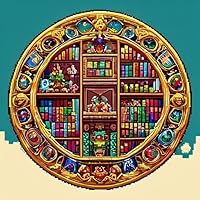
The entire population of that colonized planet was crowded into one all-enclosed self-functioning city construction. For the majority the situation was like living forever in the steerage of an immigrant freighter. For a few there were some priveleges, and for the Highs, power and puxury had been secured by a change of language and the destruction of the old books. Which was where the man Ryne came in. For he was the last who could read the original language - and if they could ever locate the machine that could build new cities, he'd be the only one to read the instructions. The story of the search for the City Machine, the linguistics and logistics problems presented, and the fight for Ryne's very life is a science fiction novel of edge-of-the-seat excitement.
Louis Preston Trimble (2 March 1917 - 1988) was an American writer and academic. His published work included science fiction, westerns, and mysteries, as well as academic non-fiction. He generally wrote as Louis Trimble, but used the pseudonym "Stuart Brock" for some of his work.
Trimble, Louis Preston - Birthdate: 2 March 1917 - 9 March 1988
Louis Trimble was prolific in several genres including mysteries and Westerns – he wrote sixty-six novels by 1977 – but relatively little sf.
Imagine a world without hunger. With clothing and shelter for everyone. A world that is never too warm or too cold. A world where there are no decisions to be made, because everything is decided upon for the inhabitants.
A utopia? Or a prison? Paradise has a price.
This is the story of one man: the last who can read the secret language of the machine that created the City - the last man who can change it.
Reading is fundamental. And revolutionary. The static hierarchy must be remade.
Locked within a towering city on an unnamed planet. Locked in servitude to those in power. A mutinous idea is brought to Ryne, a descendant of the Readers, about altering the state quo. And a conspiracy commences.
Imperfectly thought-provoking, The City Machine is worth a read.
The City Machine was Trimble's first (of three) novels from DAW, though he'd been writing mysteries and westerns for decades, and he'd had three previous sf books published by Ace. It has a lovely cover by Frank Kelly Freas that would be perfect for the front of a Christmas card. It's a short novel but is packed with political and philosophic messages, some kind of subtle and some with which he beats you over the head, but the importance of literacy theme is important and makes it all worthwhile. It's about a colony world where the people are all crowded into a rigidly controlled single city, and only one man, Ryne, still has the knowledge of how to read the instruction manual of the machine that can build new cities. His girlfriend, Linne, is in the power of the overseers, who obviously don't any change to the system. It's a quick read, but well-presented, fun, and thoughtful.
So. Society is very clearly and very strictly broken into three (literal) tiers in a city built by (you guessed it) a city-making machine. On the lowest level are the folks who run the factories, the middle one you've got technicians and managers and up top are folks who seem to just do fancy stuff and think a lot.
We have a Hero and he is not only a Riser, having worked and proven himself to move up (again, literally) in the world, but he's the last person who can read the old written language, being all descended from folks who did that. He's got a True Love and there is a Resistance and all sorts of double and triple crossing.
And yet, the book isn't that rote. The characters are enjoyable, the ideas are interesting and it's a good entry into it's era of sf.
"First, a snarky comment about Kelly Freas’ unfortunate cover art — I can’t help but giggle at the imposing sci-fi behemoth cityscape which accidentally wandered onto a Thomas Kinkade, “Painter of Light” (or, as I call him, “The Painter of Kitsch”) Christmas tableau. Kelly Freas’ fuzzy light, happy-budget-hotel-color-scheme art seldom impresses me. Perhaps I’m too harsh….
On the other less caustic hand, Louis Trimble’s The City Machine is a surprisingly intriguing blend of allegory [...]"
Interesting enough story cobbled together from more notable works. The cover looks like a christmas card, but I thought the title was cool, so I purchased this book from a used bookstore. There are some fun concepts such as the city machine itself, and there are some thinly veiled comments on communism to keep you moving through the scant 140 pages. The stakes seemed low and the ending was not exactly surprising.
I picked up this DAW paperback on a whim at a used book store. The cover art and title were interesting but I'd never heard of the author. It's a very short novel at around 140 pages. The writing is minimal with very little description or characterization. The plot is set out in the first chapter and the characters walk through the expected story points to the expected conclusion. You'll probably guess who the traitor is well before the characters in the story do. But it is readable and kept my interest long enough to finish.
The story concerns Ryne, who lives in a self-contained city segregated into three levels. The "Highs" rule the city from the top, the "Uppers" manage the city from the middle, and the Lowers are basically held imprisoned in the bottom levels of the city and forced to work as slave labor to support the opulent lifestyle of the Uppers and Highs. Ryne is a rare type of Upper, known as a "Riser" because he started out a Lower but was elevated to his current level.
In his previous life as Lower, Ryne was also the last of a line of Lowers who passed down the old language spoken by the founders of the City who arrived on the planet in a spaceship from Earth. It turns out that there's a secret Kabal among the Lowers who have discovered that the city was built by founders using a machine brought from Earth. This city-building machine still exists and they want to use it to build a new city where the Lowers can live in freedom. The trouble is that the instructions to operate the machine are written in the old language and Ryne may be the last living person who can learn to operate it.
Ryne is recruited by the Lowers to help in the plans. Meanwhile the Uppers think Ryne is working for them as a spy to reveal the Lower's plans. Meanwhile-meanwhile, the secret kabal of Lowers has a real spy among them. Ryne must sort all this out before the Uppers make a move to stop their plans.
This book was a small book I read in a couple of days. I wanted a fast book and for that I use DAW yellow books. This one was not an exception. This book is set in a distant world colonized by humans aeons ago. They live in high cities like the Necromunda from Warhammer world. Big buildings that harbour thousands upon thousands of people. They are called City Machine. This technology has been lost through the ages because nobody can read the original language. Our main character Ryne a former Lower (from the lower part of the city) descended from the last persons who could read the old language and now he lives in the Middle. Higher you get, higher in the society you are. So the poor in the Lower parts and Higher the rich. Meanwhile he is contacted from a group of lowers led by Laszlo who locate the original City Machine and texts and wants a person who can read so he can build a new City Machine for the Lowers. But there is someone who doesn't want them to leave called the Coordinator (a bureacratic guy from the Middle city) Here the Coordinator have a plan to destroy Laszlo's. Ryne is undercover and blackmailed because the Coordinator have Ryne's girlfriend. The end was predictable and I didn't enjoy the book that much. Around 140 pages is to small a book to function that well. In my opinion the premises of this Hive Cities are great and he tried to give us a lesson of political about the unreachable Uppers, the bureacractic Middles that do the Uppers work and the poor Lowers who do all the dirty work. The writer has an opinion of Comunism and he's got no problem saying it.
It was B-movie sci-fi. Entertaining enough concept. The entirety of the planet's population is housed inside one massive arcology, which of course creates a Metropolis sort of thing where the have and have-nots are at odds.
The City Machine by Louis Trimble is well-written science fiction, suspenseful, tight, with fairly well-drawn characters and understandable motives. It doesn't present any brilliant new ideas, but an original plot combining such ideas as multi-generation star ships to colonize planets, protagonists trying to escape a future city (sort of like Logan's run), a colony comprised of a three-level city, and classes of people corresponding to their level, with rebels in the lower level (slaves, like in Metropolis), plotting a mass escape. The hero may have the key to secrets the rebels need, but while he's recruited and discovers what it's like outdoors, his girlfriend is still in the mid level of the city. Suspense and intrigue ensue. The blurb on the cover makes it sound a little fantastic, but the author thought through the science; it took the colonists generations to arrive and they chose to live exclusively in a city because they had grown so unaccustomed to the dangers of nature. Not exactly an impossible to put down page-turner, it was nevertheless easy and enjoyable to read straight through.
A fun tale that during the Cold War was unexpectedly hailed as a great novel of class warfare by the literary censors of Eastern Europe, and earned its American author windfall royalties - which he could only spend by visiting the Soviet Bloc countries.