Jump to ratings and reviews
Rate this book

Cosmos

Cosmos: Possible Worlds

Rate this book
This sequel to Carl Sagan's blockbuster continues the electrifying journey through space and time, connecting with worlds billions of miles away and envisioning a future of science tempered with wisdom.

Based on National Geographic's internationally-renowned television series, this groundbreaking and visually stunning book explores how science and civilization grew up together. From the emergence of life at deep-sea vents to solar-powered starships sailing through the galaxy, from the Big Bang to the intricacies of intelligence in many life forms, acclaimed author Ann Druyan documents where humanity has been and where it is going, using her unique gift of bringing complex scientific concepts to life. With evocative photographs and vivid illustrations, she recounts momentous discoveries, from the Voyager missions in which she and her husband, Carl Sagan, participated to Cassini-Huygens's recent insights into Saturn's moons. This breathtaking sequel to Sagan's masterpiece explains how we humans can glean a new understanding of consciousness here on Earth and out in the cosmos--again reminding us that our planet is a pale blue dot in an immense universe of possibility.

384 pages, Hardcover

First published December 1, 2019

319 people are currently reading
5654 people want to read

About the author

Ann Druyan

29 books440 followers
Ann Druyan (born June 13, 1949) is an American author and media producer known for her involvement in many projects aiming to popularize and explain science. She is probably best-known as the last wife of Carl Sagan, and co-author of the Cosmos series and book, along with Sagan and Steven Soter.

In her writings, Druyan has stressed the idea that people can have a sense of awe and wonder about the unity of the cosmos without introducing the concept of a god.

Druyan wrote the books Comet and Shadows of Forgotten Ancestors, as well as sections of The Demon-Haunted World, with her late husband Carl Sagan. In addition, she wrote an introduction to The Cosmic Connection and the epilogue to Billions and Billions, both by Sagan. Alone, she wrote the novel A Famous Broken Heart.

In the areas of film and television, she was one of the writers for the television series Cosmos, and a producer of the film Contact. Most recently, she is the CEO and a co-founder of Cosmos Studios. In 2007 she was said to be working on an IMAX film on global warming as well as a sequel to Cosmos.

She has served on the Board of Directors of the National Organization for the Reform of Marijuana Laws (NORML) for over 10 years, and is also the current president of the NORML Foundation Board of Directors.

Other projects that she has been involved in include the selection of the music on the Voyager Golden Record mounted on the Voyager 1 and Voyager 2 space probes, and the Cosmos 1 spacecraft, which intended to demonstrate solar sail propulsion. The Cosmos 1 used a former Soviet submarine missile as a launch vehicle (in keeping with the "swords into plowshares" philosophy) but due to a malfunction in separation, the Cosmos 1 never reached stable orbit.

In January 2007, she was a juror at the 2007 Sundance Film Festival in the jury responsible for selecting the winner of the Alfred P. Sloan Prize, given to films that focus on science and technology.

She attended and was a speaker at the Beyond Belief symposium in November 2006.

Ratings & Reviews

What do you think?
Rate this book

Friends & Following

Create a free account to discover what your friends think of this book!

Community Reviews

5 stars
965 (56%)
4 stars
553 (32%)
3 stars
172 (9%)
2 stars
25 (1%)
1 star
6 (<1%)
Displaying 1 - 30 of 209 reviews
Profile Image for La Crosse County Library.
573 reviews202 followers
September 13, 2022
“And slowly, we learned to read the book of nature, to learn its laws, to nurture the tree. To find out where and when we are in the great ocean, to become a way for the cosmos to know itself and to return to the stars.” -Ann Druyan (p. 370)

This book was an unexpected gem for me, in a year of doom and gloom where COVID-19 and a new economic recession have dominated the headlines. It was a welcome escape and, like the best books, whether or not they are fiction or nonfiction, reignited my sense of curiosity and wonder about our world and its many possibilities.

Based on the National Geographic TV series of the same name, Cosmos: Possible Worlds (2020) is a beautiful blend of science and storytelling. From the beginning of the universe around 14 billion years ago to today, Ann Druyan chronicles the emergence of life and the stories of the scientists and explorers who helped advance society to where it is today. She mentions the more famous of these scientists, such as the household names of Albert Einstein, Charles Darwin, Isaac Newton and the like, but also sheds light on the stories of lesser known scientific figures whose discoveries were no less important but may not get the credit they deserve (to name a few): Karl Von Frisch, bee whisperer; Nikolay Vavilov, whose collection of plant species from around the world served as a precursor to today’s Svalbard Global Seed Vault in Norway; and Aleksandr Shargei (aka Yuri Kondratyuk), whose insights on gravitational assists would be crucial for landing on the moon.

The lessons of all these stories of scientific explorers? For Druyan, it’s that humanity’s adaptiveness, assisted by high technology, has gotten us out of tight spots as a species before, such as the near destruction of the ozone layer. Druyan thinks we can apply these lessons to get us out of one of the biggest of pickles of our time, climate change, and notes we have the technological solutions there, but that to make a difference, technology must be married to massive collective action once again (à la the moon landing or fixing the ozone layer). Nature has given us the tools to secure a second chance for our species, but the ball is in our proverbial court now.


In her concluding chapter, Druyan gives readers a glimpse into a future in which the climate change problem has been solved and humanity is reaching farther into the stars. At a hypothetical World Fair in 2039, visitors are treated to a futuristic vista mostly fashioned out of materials derived from the excess carbon dioxide humanity pulled out of the atmosphere. It reminded me of the utopian vision of humanity’s future as presented in the sci-fi show “Star Trek.”


Is this merely a fantastical vision of the future?

Perhaps, but perhaps not. But I choose to hope.

-Cora

Find this book and other titles within our catalog.
Profile Image for Emiliya Bozhilova.
1,911 reviews380 followers
March 22, 2021
”Тествайте идеите чрез експерименти и наблюдение. Надграждайте върху идеите, които преминат теста. Отхвърлете онези, които се провалят. Следвайте доказателствата, където и да ви отведат. И поставяйте под съмнения авторитета...и всичко...защото няма да намерим пътя си, докато истината не стане от значение”.

Някои книги са просто благородни. Показват колко интересен е светът в и около нас и разпалват жажда за още пътешествия. Изкарват доброто на показ, хвърлят спасителен пояс към травми, проблеми и ужаси, които човечеството често само си причинява, или които суеверно приема за неизбежни и предопределени от безмилостна съдба или богове.

Ан Друян продължава традицията на куп просветени умове и популяризатори, които изнасят и щедро раздават факела на науката във всяко оказало се по пътя светилниче, извън предвидения тъмен и строг храм, където се допускат малцина посветени, а всички останали могат да гледат фасадата...отдалеч.

Загадките на близкия и далечния Космос и зараждането на живота, несломимият човешки дух на един ботаник и биолог в мракобесието на сталинизма, закъснялото (или пък не?) просвещение на един древен жесток тиранин, танцът на атомите и молекулите, тайните сигнали на мозъка и куп други интересни теми са неусетно и леко поднесени и богато илюстрирани в тематичните есета от това естетически безупречно оформено издание. Точно толкова художествено неустоимо илюстрирана трябва да е една книга, дълбаеща в тайните на вселената.

Ан Друян показва пъстрия свят, видян от различни научни дисциплини. И за пореден път доказва, че - ако перифразираме Константин Кирил Философ - голи са без наука всички народи. А понятия като нация и народ плавно преливат в единствената истинска мерна единица, наречена “човечество”.

4,5 звезди
Profile Image for Kam Yung Soh.
956 reviews51 followers
April 19, 2020
A fascinating and at times, personal, journey through time, space, and history by the author as she explores not the just the universe as we know it, but also the various stories of people throughout history who have placed the importance of science and other people above their own. The book is not only about 'Possible Worlds' but also, like the first Cosmos series by Carl Sagan, a 'Personal Journey' by the author who not only wants the readers to see the wonders the universe has to offer, but also some of the trials she has to go through to keep the ideas and ideals of Carl Sagan alive.

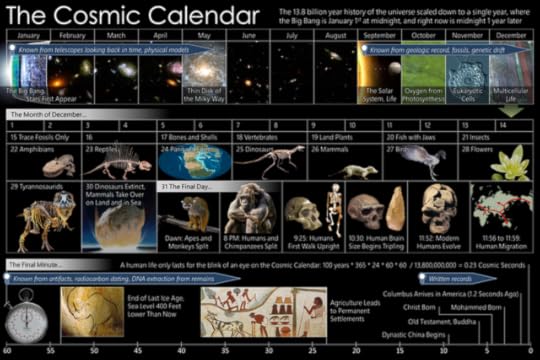
"Ladder to the stars" gives an overview of the journey with the Cosmic Calendar (that compresses all of time from the Big Bang to the present into one calendar year). Highlights from the calendar are presented, from the creation of Earth, the rise of life on Earth, the rise of humanity until human civilisation is established.

"Oh, Mighty King" shows humanity's struggle to understand the universe and the supernatural nature of good and evil in an unfeeling universe. The chapter begins with Zoroastrianism and ends with the story of the Indian Emperor Ashoka who started out being an embodiment of evil, yet was changed by Buddhism to become a paragon of good in India.

"Lost city of life" looks at how life might have developed on Earth, deep under the sea, in vast towers of minerals that sheltered and nurtured the first life forms. It then gives a brief look at the lives of some of the scientists who looked at chemistry and biochemistry and ends with a consideration of other worlds and moons in the Solar System that may well harbour life as we know it.

"Vavilov" tells the story of agriculture and the struggle to prevent hunger by growing better types of grains and other plants. It also tells the story of Nikolai Vavilov, a Russian scientist whose botanical skills would lead to the identification of the centre of origins for various agricultural plants. But his is not a happy story, for it takes place prior and during the Second World War and would involve Stalin and Trofim Lysenko.

"The cosmic connectome" looks at the brain and the mystery of its numerous connections that give us the ability to think and of awareness. Starting from how animals evolved the brain, the chapter also covers the history of brain research from recognising that the brain is the seat of thinking to the discovery of what different parts of the brain do, to detecting signals from the brain to current brain research that is revealing the large number of connections between neurons in the brain.

"The man of a trillion worlds" looks at the lives of two scientists during the period in the 20th century when the search for the beginnings of life on Earth and the possibility of life on other planets was being researched: Gerald Kuiper and Harold Urey. The chapter also looks at the graduate student who would be a bridge between them: Carl Sagan, who would also organise the first group to study how life might exist on other planets.

"The search for intelligent life on earth" considers the search for intelligent life in the universe by looking at what may be intelligent life on earth (besides us). From the web of fungi and plants to the 'dance' of bees, the examples chosen show what intelligent life might look like if we were consider the ways it expresses itself in the way communities of plants and animals live.

"The sacrifice of Cassini" gives an overview of what made the Cassini mission to Saturn possible. Starting with a history of the astronomical observations of Saturn, the chapter moves on to the story of the Russian who dreamed up the idea of gravitational assist, an idea that would make most interplanetary missions possible. The chapter ends with some of the discoveries made by the Cassini probe before it was commanded to end its mission by crashing into Saturn, to protect the moons of Saturn from possible contamination from Cassini.

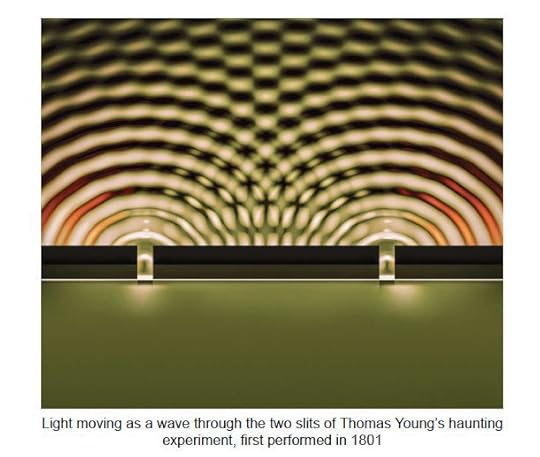
"Magic without lies" looks at the strange nature of light. From the early arguments between Newton and Huygens over whether light is a wave or made up of particles, to the mysterious interference experiments of Thomas Young and the mysterious inner quantum nature of light shown by Bell's Theorem, the chapter offers a glimpse that we still don't really understand light, much like Flatlanders don't really grasp the nature of the third dimension.

"A tale of two atoms" tells the tale of two kinds of atoms. One is carbon, which is the basis for life as we know it, the other is uranium, from which some of the most destructive weapons would be created. The two kinds of atoms would meet when humanity would harness uranium for its destructive power.

"The fleeting grace of the habitable zone" looks at what will happen as the sun ages. At first, it will give off more light (and heat), forcing humanity (if it still exists far in the future) to abandon Earth to live on worlds further from the sun. But as the sun becomes a white dwarf and cools, humanity will have no choice but to move to another star system. Is this possible? The author imagines the journey our ancestors did to navigate the great unknown oceans of Earth and believes such an incredible journey to other stars may one day be possible.

"Coming of age in the Anthropocene" this chapters looks at what humanity has done to change the earth enough that we are now living in a human-caused age. The rise of hunting, agriculture and, ultimately, technology, has enabled humanity to change and modify the Earth. More than that, humanity has the ability to predict what will happen in the future (via examples like the ozone hole caused by Chlorofluorocarbon, or climate change caused by increasing amounts of Carbon dioxide). But the question is whether humanity is willing to act on it.

"A possible world" end the book the way it started: with a look at the World's Fair. While the introduction showed the 1939 World's Fair seen by Carl Sagan, the one featured here shows a World's Fair in the near future on a world recovering from the damage done by humanity. It is possible? Perhaps.
Profile Image for Gendou.
633 reviews332 followers
October 10, 2020
I love the original Cosmos more than just about anything in the world.

Ann does a superb job trying to captain the ship all by herself. And in truth she isn't alone. She had feedback including from her son Sam.

Hits the mark:

* Poetry and cosmic perspective; I wept several times
* Inspiring, relevant stories from the history of science

Misses the mark:

* Critical thinking and skepticism
* Scientific and historical accuracy

For example, the section about quantum mechanics gets a few things wrong.

1. It's implied that "free will" is a challenge to quantum super-determinism, which it's not. First of all, we can't start out by assuming our intuition that we have free will is correct. It's not. Libertarian free will is incoherent, even in an nondeterministic universe.

2. It's claimed that entangled particle pairs "communicate" with one another which is incorrect. There's a coincidence between their measured spin on a given axis, but that's merely a perfect correlation. Bell's inequalities show this doesn't arise through any "communication" as typically understood. Instead, it's just how the universe works. We can't use this to communicate faster than light, because knowledge of the coincidence has to be transmitted along some classical channel. This isn't me being pedantic. Her point was that the universe is spooky and allows for faster than light communication. Which is wrong.

3. It's claimed there is "no objective reality" under quantum mechanics. It's not even very clear in the context of the chapter what justification she intends to support this claim. It's just not true. There's nothing subjective (as opposed to "objective") in QM. There's nothing surreal or unreal as opposed to plain old "reality". Certainly the theory doesn't have local realism, which might be what she was getting at. But she goes on to use it in the context of spookiness about there being no objective reality, which is clearly antithetical to QM, which is a well-established physical theory of an objective, external physical reality. I don't forgive this as poetic license. Unfortunately, she was just lying.

But in the whole book these are the only three mistakes I found. That's not so bad.
Profile Image for Wendelle.
2,046 reviews66 followers
June 12, 2020
The Cosmos brand has always been elevated over other exemplars of science writing for infusing scientific exploration with heartfelt wonder and reinforcement of joy over the never-ending quest of learning new things. Carl Sagan's amazing life partner, Ann Druyan, continues that unique tradition in this wonderful book. I learned a lot of things I hadn't thought of before, such as the possibility of consciousness among trees and of dreams among bees, and the desirable prospect of life in near-orbit of red dwarf stars. I liked the snippets into her life with Carl, and I liked that the scientific heroes she features throughout the book may be more obscure than the usual greats of science but are distinguished by their herculean effort through life hardship to pursue their dreams, even obsessions, of science, engineering or discovery.
Profile Image for Shandy Yeo.
134 reviews4 followers
March 15, 2021
Barangkali Kosmos adalah buku sains paling romantis yang pernah ada. Bila kamu jatuh cinta pada sains setelah membaca Kosmos, maka membaca sekuel ini ibarat bersua kembali dengan cinta pertamamu. Kedua buku Kosmos tidak sekadar menceritakan perkembangan sains atau kisah para saintis yang luar biasa. Mereka seperti diari atau surat cinta atau apa pun yang isinya begitu intim sampai-sampai kamu akan tersipu karenanya. Inilah tanda cinta antara Carl Sagan dan Ann Druyan yang melampaui batas ruang dan waktu.

Untuk sementara, buku ini telah melepas kerinduan saya pada Kosmos. Walau seri televisi Cosmos: Possible Worlds sama dengan bukunya, saya tetap akan menontonnya, mungkin bersama seri pendahulu juga. Gairah pada sains tidak bisa pupus karena itulah jalan menuju masa depan. Dengan adanya Kosmos, maka gairah itu pun semakin besar. Memang itulah impian Kosmos, seperti kata-kata Albert Einstein di New York World's Fair 1939 yang dikutip oleh Ann Druyan: "Jika sains, seperti seni, hendak melaksanakan misinya dengan sungguh-sungguh dan utuh, maka pencapaiannya bukan hanya harus dipandang saja, melainkan masuk membawa makna batin ke dalam kesadaran orang."
Profile Image for Meg - A Bookish Affair.
2,484 reviews215 followers
November 11, 2020
4.5 stars. "Cosmos: Possible Worlds" is the sequel to Carl Sagan's book, "Cosmos" and it is a worthy follow-on. This book explores so many corners of our universe and highlights many people who took scientific exploration further than it has ever gone before and tried to figure out this big, amazing world.

Sometimes you just want a book that totally sucks you in and makes you mull over so many different things that you've never thought of before. This is that book. The book opens with the story of a young Carl Sagan being captivated by the World's Fair and how that experience set off a lifelong journey to explore the furthest most corners of the universe. I love the intimate picture that you get of Sagan through various life stages: this book was written by his wife, a noted scientist and scientific writer in her own right.

This is one of those books that can be read straight through or story-by-story. There is so much to ponder here and while Druyan gives the reader tons and tons of detail, the stories still feel accessible. The book also has some really gorgeous pictures in it that bring the stories even more to life. In a time where I am constantly looking for books that are fully engaging and take me away, this book certainly fit the bill. This book would be perfect for readers who love science and know all the doors that just having the willingness to explore can open!
Profile Image for Hamid.
149 reviews12 followers
May 27, 2020
Our universe began some 14 billion years ago when matter, energy, time, and space burst forth.

And the darkness was cold, and the light was hot, and the union of these extremes gave shape to matter and there was structure.
And there were great stars hundreds of times the mass of our sun. And these stars exploded, sending oxygen and carbon to the worlds to come and adorning them with gold and silver. And in their deaths, the stars became darkness and the weight of their darkness anchored the light. And new stars were born from their death shrouds. And they began to dance with each other and now there were galaxies.

And the galaxies made stars. And the stars made worlds. And on at least one of those worlds there came a time when heat shot out from its molten heart, and it warmed the waters. And the matter that had rained down from the stars came alive and that starstuff became aware.

And that life was sculpted by the earth, and its struggles with the other living things.
And a great tree grew up, one with many branches, and six times it was almost felled. But still it grows and we are but one small branch, one that cannot live without its tree.

And slowly, we learned to read the book of nature, to learn its laws, to nurture the tree. To find out where and when we are in the great ocean, to become a way for the cosmos to know itself and to return to the stars.
Profile Image for Ace Boggess.
Author 39 books107 followers
February 29, 2020
I'm torn about this book. It was fascinating and captivating, but at same time not structurally coherent or what the subtitle implies. The book discusses science, history, and religions (much in the same way Bill Bryson does in A Short History of Nearly Everything, but without the humor). However, it does so tangentially, without really following a path. This is a book of tangents. They're all interesting tangents. I learned weird things, and I'm a lover a learning weird things. But if you're looking for more of that fantastic voyage to other worlds that the original Cosmos series offered, you will be disappointed.

That said, I enjoyed the book for what it is. I suspect that you, reader, will either love it or hate it.
Profile Image for Cengiz Aytun.
Author 7 books27 followers
July 22, 2021
Keyifle seyrettiğim "Kozmos: Yeni Dünyalar" belgeselinin kitap versiyonu. Okurken hatta belgeseli açıp karşılaştırdım, belgesel metinlerinin çoğu kitapta aynen yer alıyor. Ann Druyan'ın yazdığı bu kitabın, Carl Sagan'ın ünlü Cosmos kitabı kadar beni ekilediğini söyleyemem. Kitap bilimsel bir kitap olma niteliğinde değil. Kaynakçası yok. Aralarda Ann Druyan'ın Carl Sagan ile yaşadığı günleri bolca anlatan bir anı kitabı gibi. Kitabın üzerinde Carl Sagan'ın bir "hale etkisi" var. O kelimeyi kullanasım gelmiyor ama biraz da bu etki pazarlama için fazla kullanılmış gibi geldi. Tabii bu da bir tarz olabilir ama, benim beklediğim bu yönde olmadığı için biraz da hayal kırıklığı yaşadım doğrusu. Kitabı okuduktan sonra kendime sordum yeni bir şey öğrendim mi acaba diye. Açıkçası çok sınırlı diyebilirim. Bazı şeylerin yüzeyselliği belgesel için kabul edilebilir ancak konu belgeselin kitabını okumak olunca insan belgeselde geçen konuların daha derinlemesine ele alınmasını ve güzel bir kaynakça sunmasını bekliyor. Örneğin, pek çok BBC belgeselinin yayınlanmış kitabında merak ettiği ayrıntılara ulaşabiliyor insan.
Özetle, iyi bütçeli bir projenin ürünü olması, kuşe kağıda renkli basılmış olması, karton ciltli ve "yüksek fiyatlı" olması iyi bir kitap olmasını ne yazık ki sağlamamış.
Profile Image for Heireina.
80 reviews40 followers
March 21, 2022
"Kita mencari-cari tanda kehidupan cerdas di langit. Namun apa yang bakal kita lakukan jika menemukannya?"

Awalnya aku berpikir buku ini akan berisi deretan data/interpretasi angka dan tahun yang dari saking jauhnya terasa tak masuk akal, ekspedisi-ekspedisi keluar Bumi, jabaran astronomis yang meski aku membacanya berapa kali pun tidak dapat kupahami semata-mata karena minimnya pengetahuanku tentang topik itu, tapi syukurlah tidak.

Daripada disebut sebagai cerita tentang jagat raya, Kosmos lebih merujuk pada kebudayaan, cerita orang-orang di dalamnya, dan tafsiran yang hadir sepanjang peradaban manusia. Sains yang lentur dan luas. Itu yang aku dapatkan saat membaca Kosmos.
Profile Image for Mark Tyra.
30 reviews1 follower
May 26, 2020
I love the original Cosmos book and I love many parts of this book. So many vignettes are interesting that make it worth the price I paid for the book many times over. But it can be difficult to follow the thread of the book or of a chapter. You wonder how this is related to what you thought was being discussed, and then—just like that—the spell of the book is broken and you are free to resume reading or put it down for a while. Another reviewer called it a book of tangents; I can see why someone might say that.
Profile Image for Cav.
907 reviews205 followers
November 12, 2020
This was an interesting book. I have read a few books by Carl Sagan, and also enjoyed the 2014 reboot of the show Cosmos which featured author Ann Druyan and Neil deGrasse Tyson.

Author Ann Druyan is the widow of Carl Sagan. She is an Emmy and Peabody Award-winning American writer, producer, and director specializing in the communication of science. She co-wrote the 1980 PBS documentary series Cosmos, hosted by Carl Sagan, whom she married in 1981. She is the creator, producer, and writer of the 2014 sequel, Cosmos: A Spacetime Odyssey and its sequel series, Cosmos: Possible Worlds, as well as the book of the same name. She is credited with directing episodes of both series as well, according to her Wikipedia page.

Ann Druyan and Carl Sagan, circa 1988 :
lowgyxhfrjc41

Cosmos: Possible Worlds opens by taking the reader through the Cosmic Calendar:

vbnmnbv
825px-Cosmic-Calendar

The scope of this book is quite broad, and many subjects and scientific disciplines are covered in these pages, including:
*Mendelian and Lamarckian inheritance
*Russian botanist Nikolay Vavilov
*Neuroscience of the brain
*The Cassini spacecraft
*The dual nature of light; wave and particle, and the related double-slit experiment
*Quantum entanglement
...and many others.
gndxm


Cosmos: Possible Worlds is full of illustrations that help bring some context to the writing. There are also many historical photos here, which was a nice touch.
v-xg-ffx
dfghjklkjhgf

Although I did enjoy this one, I felt it did not quite meet the high water mark established by the original Cosmos that bears its namesake. I didn't find this one as captivating and interesting as the original, unfortunately...

There was also quite a long and somewhat ridiculous bit of writing about nuclear weapons that seemed to go beyond arguments for non-proliferation, and into the realm of their complete eradication. Much of her writing on this reads as though she is chastizing humanity for inventing Weapons of Mass Destruction. This indicates her naïveté to realpolitiks, as well as her ignorance of the important role atomic weapons have played in the establishment of both the "Long Peace", and the "New Peace".
A strong case has been made for the unprecedented stability and prosperity of a World established under Pax Americana that is not discussed in these pages.
Druyan cites Manhattan Project chief scientist Robert Oppenheimer's opposition to the usage of the bombs he helped bring to life. Many of the scientists of the Manhattan Project were opposed to the bombs being actually deployed in war. Thankfully these people do not dictate military policy. The world we know would look drastically different if that were the case.

She also insinuates that Oppenheimer was the victim of a witch-hunt of sorts, conveniently not mentioning that Oppenheimer had been close to members of the Communist Party, including his wife and brother. On June 7, 1949, Oppenheimer testified before the House Un-American Activities Committee, where he admitted that he had associations with the Communist Party in the 1930s. He also was a self-admitted "fellow traveller".
We fought a Cold War for the better part of ~50 years; against an ideology that had aims of global domination, and has brought unprecedented levels of wholesale human misery everywhere it has been implemented. To gloss over Oppenheimer's ties to Communism is dishonest.

Druyan also somewhat misses the mark on her discussion of quantum entanglement. She claims the entangled particles "communicate" with each other, which is not true, from what I have read. See Bell's inequalities for more.
She extrapolates this "communication" between entangled particles to make a tenuous case for the magical nature of the Universe, and a possible case for faster-than-light travel, which is still not thought to be possible...

Overall, this was still a decent book, worthy of the Cosmos brand.
I would recommend it to fans of Cosmos, or anyone else interested.
3.5 stars.
Profile Image for Teguh.
Author 10 books335 followers
February 8, 2021
Kita sebagai manusia berpikir kitalah ceritanya. Bahwa kita adalah segalanya di kosmos. Namun sepengetahuan kita, kita hanya produk sampingan kekuatan-kekuatan geokimia—yang bekerja di seantero alam semesta. Galaksi membuat bintang, bintang membuat dunia, dan barangkali planet serta bulan membuat kehidupan. Apa itu membuat kehidupan jadi kurang menakjubkan—atau lebih menakjubkan?(hal.93)


Buku ini ditulis dengan cakupan yang sangat luas sekaligus sangat dekat dengan kehidupan. Ann Druyan tidak memosisikan cosmos hanya urusan benda di luar angkasa atau gagasan mahabesar soal kemungkinan hidup di luar sana, ketika bumi mulai rusak--yang oleh tangan kita di masa antroposen. Tidak benar, juga tidak salah. Sebab memang bahasan soal kemungkinan hidup di luar, di planet lain, atau bahkan dengan teleskop kosmik kita bahkan bisa melihat kehidupan sebelum kita dari universe lain. Tapi juga salah, sebab Ann Druyan lebih mengajak kita mengamati dan memahami "kosmos" yang lebih dekat dan sejak kita lahir telah membantu kita. Misalnya jejaring miselium di bawah kaki kita atau bahasa lebah yang mengubah pola penyerbukan tanaman. Hal yang dekat dan urgent ini saja, manusia tidak paham 100%. Tentu bukan berarti kita tidak boleh memajukan ilmu pengetahuan sampai ke kemungkinan menjelajah samudra jagat yang maha ini. Tetapi--ini yang saya terkejut-- meniru Carl Sagan memandang kehidupan di luar bumi. Jangan merusak, bahkan ke planet lain.

Dan kalimat terakhir Ann Druyan dalam buku ini sungguhlah menampar.

Kesinambungan purba kehidupan ada di tangan Anda.(hal.370)


Ya, manusia bukan hanya makhluk titik di hamparan samudra jagat ini. Tetapi juga berpotensi merusak-semerusaknya. Contoh-contoh Ann Druyan dalam buku sudah menjadi bukti nyata. Bom atom, bagaimana pertanian mengeliminasi kekayaan hayati, bagaimana penemuan batubara menjadi satu sebab kepunahan keenam zaman antroposen, bahkan bagaimana CFC diam-diam merusak alam.

Buku ini kembali membawa kenikmatan membaca buku sains, diajari untuk sadar diri pada posisi manusia sebab manusia yang membuat jumlah tanaman yang dulu mendominasi sekarang hampir punah.
33 reviews9 followers
March 30, 2020
A great read from the only person that was so close to Carl Sagan that his voice can be heard in her writing. I was not disappointed in the scope and knowledge that is transferred to the reader. It's not Carl Sagan, but there is no one to match his brilliance and communication skills.

As with keeping with Sagan the book gives hope and warnings. Fortunately Carl didn't have to live in the nightmare that is our country now. I believe he would have been able to slow the erosion of morals, ethics, education, and joy of knowing things which lead to better questions. The Grand Canyon like divide between seeking truth and believing everything a talking head tells you is right, was one of Dr. Sagan's primary messages throughout his life.

I'm afraid that a great deal of people will pronounce this work as political, which it is not. But today's America has been programmed to see everything as political and as such never get the opportunity to learn about things that can change your point of view and your life.

Ann Druyan has written a fantastic sequel to the Cosmos story. I hope you have the thirst of knowing and the open mind to allow yourself the pleasure of this much needed work.
Profile Image for Happy Dwi Wardhana.
244 reviews38 followers
February 22, 2021
Saya tertipu gambar sampul! Judulnya "Kosmos" dengan gambar nebula. Ternyata isinya tidak melulu tentang antariksa, tapi lebih pada suka cita penemuan.

Kosmos dengan embel-embel "Aneka Ragam Dunia" memang bisa diartikan makrokosmos dan mikrokosmos - dari dunia atomik hingga jagad raya. Namun, dengan gambar nebula tanpa disertai gambar DNA atau atom, harapan saya akan membaca seperti Kosmosnya Carl Sagan. Ternyata, di dalamnya berisi tentang sejarah India, jamur, peradaban, miselium, dsb. Bukannya saya tidak suka pengetahuan lain, tetapi, you know, di PHP saat awal jumpa itu tidak enak! Boleh dikata, saya hanya menikmati 2/3 buku.
Profile Image for Raed.
328 reviews122 followers
February 20, 2022
Science, like love, is a means to that transcendence, to that soaring experience of the oneness of being fully alive. The scientific approach to nature and my understanding of love are the same: Love asks us to get beyond the infantile projections of our personal hopes and fears, to embrace the other’s reality. This kind of unflinching love never stops daring to go deeper, to reach higher.
This is precisely the way that science loves nature. This lack of a final destination, an absolute truth, is what makes science such a worthy methodology for sacred searching.


Anna tells a story of our universe , it begen by a wisp of cold, thin gas made of the simplest atoms, hydrogen and helium. And they were gravitationally attracted to one another, so they gathered together in clouds that over time whirled, flattened, and contracted.

Gravity pulled them ever closer together, until the whole thing collapsed in on itself. This collapse raised the temperature so high that the cloud became a natural fusion reactor. Atoms, operating according to the laws of physics, met and fused in the unbroken darkness. And then there was light. In other words, a star 🌞 (Then God said, “Let there be light”; and there was light. )

After billions of years, the star, now elderly, had converted all its available hydrogen fuel into helium. As it approached its death, it resumed the turning inward of its infancy. Our helium atom joined together with two others to become one of our greatest heroes: a carbon atom.

Meanwhile, in another part of the Milky Way galaxy, similar processes were unfolding as stars were born and died. The other atom of our tale was also formed in the heart of a dying star

Our carbon atom traveled far to become part of a small planet. After billions of years, it joined an extremely complex molecule that has the peculiar property of making virtually identical copies of itself—the essential life-giving molecule that we call deoxyribonucleic acid, or DNA.

In this way, that single carbon atom played its tiny role in the origin of life, becoming part of a one-celled organism at the bottom of the sea. Through all its incarnations, our carbon atom has had no self-awareness, no free will, it is merely an extremely minor cog in some vast cosmic machinery operating in accord with the laws of nature.

The long process of evolution will lead to multicellular organisms. The first amphibians will climb onto land (in The Devonian). Reptiles will spread over the whole planet, and then an asteroid will kill off the dinosaurs. Through time An undistinguished anthropoïde will climb down from the trees, created civilizations, states, art and science.
Ancient emperors reigned, and war and rebellions followed. The poets recited their famous lines, and the scientists struggled over puzzles.

Primitive technology was born and Archidamus III, king of Sparta cried out in anguish when he first saw a projectile hurled by a ballista : “Oh, Hercules, the valor of man is lost!”

And finally we end our long cosmic quarantine and venture into the deepest parts of the cosmic ocean

i gave this 4-4.5 ⭐ because it is not structurally coherent.

This is the first time i've been impressed by a woman's mind in the field of astronomy (Sorry feminist friends 😊).

OK let's end the review with a great quote:
“You might imagine an uncharitable extraterrestrial observer looking down on our species... - with us excitedly chattering, "The Universe is created for us! We're at the center! Everything pays homage to us!" - and concluding that our pretensions are amusing, our aspirations pathetic, that this must be the planet of the idiots.
this must be the planet of the idiots.
this must be the planet of the idiots.”
― Carl Sagan
Profile Image for Thắng Công.
164 reviews20 followers
August 12, 2021
Đây có thể coi là tập II cuốn Cosmos lừng danh của Carl Sagan, xuất bản thập niên 1980. Cuốn sách này do chính Ann Druyan, phu nhân và cộng sự của Carl Sagan, viết nên. Đọc vẫn hay như tập 1. Điều mình thích ở Cosmos, cả tập 1 và tập 2, là sách không chỉ viết về Vũ trụ theo nghĩa Thiên văn học, mà là tất cả mọi lĩnh vực, mọi góc cạnh của cuộc sống.
Cuốn Cosmos II này cũng vậy, bạn có thể biết được nhiều điều mới mẻ không chỉ về vũ trụ học, mà còn về sử học, địa chất học, sinh học, hóa học... từ cuốn này. Rất nhiều câu chuyện thú vị, rất nhiều những chuyện đời, chuyện nghề của các nhà khoa học quan trọng nhưng ít được biết đến. Mình đặc biệt thích chuyện về Asoka Đại đế, chuyện về sự hy sinh của nhà sinh học Vavilov, chuyện về bầy ong, chuyện về bộ não của Broca, chuyện về hành trình của người Polynesia (hình như được nhắc tới ở series Cosmos: A Space Odyssey thì phải)...
Hy vọng sớm được dịch ra tiếng Việt và xuất bản ở Việt Nam :3
Profile Image for Fahri Rasihan.
478 reviews123 followers
March 30, 2022
• Judul : Kosmos: Aneka Ragam Dunia
• Penulis : Ann Druyan
• Penerjemah : Zia Anshor
• Penyunting : Fajarianto
• Penerbit : Gramedia Pustaka Utama
• Terbit : 23 Desember 2020
• Harga : Rp 158.000
• Tebal : 420 halaman
• Ukuran : 15 × 23 cm
• Cover : Soft cover
• ISBN : 9786020639222

Apa yang ada di dalam benak kamu saat mendengar kata Kosmos? Mendengar kata kosmos, hal yang terbersit di dalam pikiran saya adalah alam semesta, jagat raya, hingga luar angkasa. Kosmos merupakan sebuah sistem harmonis yang ada dalam alam semesta. Jujur, pembahasan tentang ilmu sains adalah hal yang paling saya hindari, karena biasanya kurang bisa saya pahami. Namun, untuk pertama kalinya, saya begitu menikmati pembicaraan perihal ilmu sains yang ditulis oleh Ann Druyan di dalam buku Kosmos: Aneka Ragam Dunia.

Buku ini adalah sekuel dari buku Kosmos yang ditulis oleh suami Carl Sagan yang merupakan suami dari Ann Druyan. Kosmos: Aneka Ragam Dunia membahas berbagai hal mengenai alam semesta dan jagat raya, mulai dari awal terbentuknya bintang-bintang, kehancuran bumi yang perlahan-lahan, hingga prediksi masa depan akan sebuah planet baru yang dapat dihuni oleh manusia.

Druyan mampu menyusun buku ini secara lengkap dan sistematis melalui beberapa hasil penelitian para saintis yang berjasa akan kehidupan di bumi dan potongan-potongan sejarah yang menyertainya. Buku ini mampu memberikan 𝘪𝘯𝘴𝘪𝘨𝘩𝘵 baru bagi kita akan eksistensi spesies bernama manusia yang sebenarnya bukanlah apa-apa di hadapan jagat raya yang maha luas.

Buku ini terbagi ke dalam tiga belas bab, di mana masing-masing bab akan membahas tentang kosmos dari sudut pandang dan masa yang berbeda dengan penemuan-penemuan dari para ahli dan saintis yang telah berjasa banyak untuk kemajuan umat manusia. Ketiga belas bab tersebut adalah: Satu | 𝗧𝗮𝗻𝗴𝗴𝗮 𝗸𝗲 𝗕𝗶𝗻𝘁𝗮𝗻𝗴-𝗯𝗶𝗻𝘁𝗮𝗻𝗴; Dua | 𝗪𝗮𝗵𝗮𝗶, 𝗥𝗮𝗷𝗮 𝗣𝗲𝗿𝗸𝗮𝘀𝗮; Tiga | 𝗞𝗼𝘁𝗮 𝗞𝗲𝗵𝗶𝗱𝘂𝗽𝗮𝗻 𝘆𝗮𝗻𝗴 𝗛𝗶𝗹𝗮𝗻𝗴; Empat | 𝗩𝗮𝘃𝗶𝗹𝗼𝘃; Lima | 𝗞𝗼𝗻𝗲𝗸𝘁𝗼𝗺 𝗞𝗼𝘀𝗺𝗶𝗸; Enam | 𝗠𝗮𝗻𝘂𝘀𝗶𝗮 𝗦𝗲𝘁𝗿𝗶𝗹𝗶𝘂𝗻 𝗗𝘂𝗻𝗶𝗮; Tujuh | 𝗣𝗲𝗻𝗰𝗮𝗶𝗿𝗮𝗻 𝗞𝗲𝗵𝗶𝗱𝘂𝗽𝗮𝗻 𝗖𝗲𝗿𝗱𝗮𝘀; Delapan | 𝗣𝗲𝗻𝗴𝗼𝗿𝗯𝗮𝗻𝗮𝗻 𝗖𝗮𝘀𝘀𝗶𝗻𝗶; Sembilan | 𝗦𝗶𝗵𝗶𝗿 𝗧𝗮𝗻𝗽𝗮 𝗗𝘂𝘀𝘁𝗮; Sepuluh | 𝗞𝗶𝘀𝗮𝗵 𝗗𝘂𝗮 𝗔𝘁𝗼𝗺; Sebelas | 𝗞𝗮𝗿𝘂𝗻𝗶𝗮 𝗦𝗲𝗺𝗲𝗻𝘁𝗮𝗿𝗮 𝗭𝗼𝗻𝗮 𝗟𝗮𝘆𝗮𝗸 𝗛𝘂𝗻𝗶; Dua Belas | 𝗠𝗲𝗻𝗷𝗮𝗱𝗶 𝗗𝗲𝘄𝗮𝘀𝗮 𝗣𝗮𝗱𝗮 𝗔𝗻𝘁𝗿𝗼𝗽𝗼𝘀𝗽𝗲𝗻: dan Tiga Belas | 𝗗𝘂𝗻𝗶𝗮 𝘆𝗮𝗻𝗴 𝗠𝘂𝗻𝗴𝗸𝗶𝗻.

Bagi saya, Ann Druyan mampu memperlihatkan keajaiban kosmik yang begitu luas, misterius, dan menakjubkan melalui bentuk narasi yang jelas dan solid. Mungkin, bagi sebagian besar pembaca awam, khususnya seperti saya, tidak akan seratus persen memahami beberapa hal berbau sains di sini, tapi secara menyeluruh, buku ini masih dapat dinikmati oleh siapa pun yang ingin tahu tentang kosmik yang ternyata memiliki sejarah dan proses yang luar biasa menakjubkan dalam setiap tahap pembentukannya.

Salah satu pembahasan yang menarik di dalam buku ini adalah bab empat, Vavilov, yang membahas tentang kisah Nikolai Ivanovich Vavilov, tokoh botani dan genetika terkenal dari Rusia. Di mana, pada saat itu, Vavilov berusaha untuk menemukan cara untuk mengatasi krisis pangan yang terjadi di Rusia dengan menjelajahi dunia untuk menemukan cikal bakal dari setiap tumbuhan yang ada. Di saat penelitiannya untuk tanaman jagung dan gandum mulai menemukan titik terang agar mampu tersedia di saat musim dingin, muncul sebuah provokator yang menghancurkan hidup Vavilov.

Kehadiran Trofim Lysenko yang mengeluarkan pendapat yang bertentangan dengan Vavilov berhasil menarik perhatian Presiden Rusia pada saat itu, Josef Stalin. Stalin lebih memercayai teori Lysenko yang beranggapan dengan merendam benih biji tanaman pangan akan membuat tanaman tersebut dapat tumbuh dan kuat saat menghadapi musim dingin. Sedangkan, penelitian Vavilov yang tergolong kompleks dianggap terlalu mengada-ada oleh Stalin. Konflik perbedaan pendapat tersebut pada akhirnya membawa Vavilov pada nasib yang buruk dan faktanya teori Lysenko hanyalah bualan belaka.

Di sini, dapat kita simak, jika dalam menghadirkan semangkuk gandum di atas meja pada masa kini kapan pun itu, terdapat sejarah dan perjuangan untuk memperolehnya. Spesies manusia berusaha untuk mencari cara untuk bertahan hidup di tengah jagat raya yang penuh dengan ketidakpastian yang terkesan misterius. Evolusi yang telah membentuk spesies manusia pada akhirnya membuat kita terbiasa mencari cara untuk bisa tetap bertahan hidup, apa pun caranya.

Ann Druyan berhasil menyajikan sebuah materi tentang kosmos melalui kumpulan kisah penemuan dalam bidang sains dan sejarah yang ditampilkan dengan indah dan "menyadarkan". Saya berhasil dibuat kagum, takut, dan merasa tidak berdaya jika dihadapkan dengan fakta tentang kosmos yang megah dan amat luas tak terjamah. Proses evolusi yang terjadi pada kita sebagai spesies manusia pun tidak kalah menakjubkan, di mana kehidupan selalu bisa meloloskan diri dari kepunahan. Pada akhirnya, semakin kita merasa tahu akan segala hal, semakin kita bodoh dibuatnya, karena jagat raya tidak akan dengan mudah dapat dipahami begitu saja.

Tidak hanya berisikan penjelasan dan materi, buku ini juga dilengkapi dengan foto, gambar, serta ilustrasi yang menguatkan pembahasan dalam setiap babnya. Kosmos: Aneka Ragam Dunia adalah buku sains pertama yang mampu membuat saya betah dan nyaman untuk membalik setiap lembar halamannya. Walaupun, tidak semua penjelasan mampu saya mengerti, tapi Druyan tetap mampu menampilkan dengan cara yang sederhana, sehingga garis besar atau maknanya mampu saya tangkap. Secara keseluruhan, Kosmos: Aneka Ragam Dunia adalah sebuah pengingat, khususnya bagi kita manusia, untuk terus merasa rendah hati terhadap alam semesta dan jagat raya yang mampu memberikan misteri yang sulit untuk dikalahkan.
Profile Image for Борислава Чотрева.
122 reviews2 followers
September 3, 2021
Какво ще се случи, ако се слеят две черни дупки? Възможно ли е вграждането на вирусни нуклеинови киселини в клетките ни да е дало началото на еволюцията? Или пък един случаен удар на мълния? Дали недалеч от нас, още в рамките на нашата слънчева система, не съществуват извънземни форми на живот? Кой е Вавилов - човека, благодарение на когото днес имаме храна на масата? Знаете ли, че с всяко щракване с пръсти във Вселената се образува по една слънчева система? Защо някои планети имат пръстени, а други - не? Как самият акт на наблюдение променя реалността ни? Ще колонизираме ли Марс и защо е жизненоважно да го направим? Какво ще стане, ако развием скорост по-голяма от тази на светлината? В книгата са дадени отговорите на тези и на още много други въпроси. Карл Сейгън и съпругата му ни учат на любов към науката и смирение, защото сме само прашинки в безкрайния Космос.
Profile Image for Kaja Kulinicz-Szymankiewicz.
105 reviews1 follower
May 22, 2020
Wspaniała książka. Polecam każdemu. Znawcy tematu, laikowi, miłośnikowi poezji i romansu, opowiadań, fizyki i kosmosu. Cuda i problemy, które dotyczą nas wszystkich, są opisane i ułożone tak, że wszyscy czytelnicy rozsmakują się w tej książce.
Profile Image for Joasia.nowicka.
34 reviews
June 11, 2023
4,5☆
Ogromne zaskoczenie. Na początku zaznaczałam fragmenty z myślą, że "a, parę ciekawych rzeczy, będę miała o czym wspomnieć przy ocenie", ale w tym momencie jest to niemożliwe, bo cała książka jest w znacznikach🥴 gdzieś w połowie zdałam sobie sprawę, że nie czytam już szybciej żeby skończyć, w zamian rozkoszuje się każdym rozdziałem. Ahh mogłabym pisać w nieskończoność jak się z nią polubiłam i ile się z niej dowiedziałam, więc chyba będzie łatwiej jak zapytacie mnie o szczegółową opinię prywatnie😆
Profile Image for Stephanie.
1,468 reviews37 followers
October 28, 2020
"The universe makes galaxies. Galaxies make stars. Stars make worlds."

Using the Cosmic Calendar as a guide, Ann Druyan takes us on a trip through time and space in Cosmos: Possible Worlds.  Written in a way for anyone to understand, Ann uses stories to make the science of the universe come alive.  Beginning with the start of life on Earth might seem like an impossible amount of information to fit into book,; however, only selected important advancements in science are highlighted throughout time.  Throughout all of these scientific advancements, humans quest for knowledge along with our ability to adapt to new situations is overwhelming. I was continually amazed at human's capability to wonder and explore beyond what we can see.  Throughout Cosmos the stage is set for human's capability to find and explore new worlds beyond our own.  Hope is given that other worlds exist that are capable of supporting life as well as human life, just as Carl Sagan imagined.  
Profile Image for Paige McLoughlin.
231 reviews76 followers
November 25, 2020
Really interesting book talking about our current extreme peril and some real promise in the future (with dangers of course) there are always going to be complications. I listened to an audiobook version of this work and damn it was hard-hitting. Climate change is probably the most pressing issue we have to face among all the other twentieth and twenty-first-century perils. The promise on the other hand was a great exercise in some really good speculation which actually might pan out if we are lucky. Definitely has a lot of possible futures it is humanity's work to make them realized and choose the best one. The only question I have are about some of the visions and whether they would actually work or be safe enough to try.
Profile Image for Jose Torroja Ribera.
562 reviews
September 6, 2023
Ann Druyan continúa la obra de Carl Sagan, con un apasionante viaje a través de varias figuras científicas históricas y el futuro de la ciencia y la humanidad. Muy recomendable para quien tenga interés en la ciencia.
Regalo de Pablo.
Profile Image for Aliaksei Ivanou.
108 reviews4 followers
January 14, 2024
Книга является весьма достойным продолжением произведения Карла Сагана "Космос". Здесь исследуется множество уголков нашей Вселенной и рассказывается о многих людях, которые пошли в научных исследованиях дальше, чем когда-либо прежде, и попытались понять этот большой, удивительный мир. В тоже время "Космос. Возможные миры" не только образовательная, но и вдохновляющая книга, дающая надежду и предостережения. Она приглашает читателя задуматься о масштабах вселенной, о возможности жизни в других уголках космоса и о том, какие тайны остаются пред нами, ожидающие своего открытия. Добавлю также, что эта книга точно отличается от книг, посвященных космосу, т.к. здесь не только о космологии, но это еще и личная книга, по сути, посвященная Карлу Сагану и здесь есть ряд историй об отношениях Друян и Сагана.
Profile Image for Jonathan.
163 reviews1 follower
July 21, 2023
I recently finished watching the TV show of this with Neil De Grasse Tyson and wanted to see how the book compares. It’s pretty calming to listen to before bed.

The prologue being narrated by Ann Druyan was very nice and the info about the original book makes me interested in checking it out too.

I love how this book includes so much more than just space. It’s stories of science, history, explorers and love. It’s written really beautifully.

‘I’m not a scientist, I’m a gatherer of stories’

I can recognise a lot of the quotes and stories that are also used in the TV show. I quite like that the show they stayed so true to this. I figured it would follow the book closely but I wasn’t expecting it to be almost word for word at times. They even structured it so each episode was based on each chapter.

THE COSMIC CALENDAR! We meet again!

Lovely that the last chapter was also narrated by Ann, it tied everything up really nicely.
Profile Image for Medeea Em.
294 reviews22 followers
June 8, 2025
I think of us humans as a family of amnesia victims who kept making up stories about our past until we found a means to reconstruct it—the sciences.

What a time to be alive and be able to read and dream about the stars! If you’ve ever wanted to fall in love with reality while feeling like a stardust-fueled genius, this is your jam. Ann Druyan makes science feel like poetry whispered across galaxies. It’s dreamy, mind-expanding and reminds us the cosmos isn’t just out there, it’s in here too, pulsing behind our eyes.
Displaying 1 - 30 of 209 reviews

Join the discussion

Can't find what you're looking for?

Get help and learn more about the design.