Jump to ratings and reviews
Rate this book

آناباز

Rate this book
دستاوردهای «آناباز» چنان گرانسنگ بود که این شعر، هم قله‌نشین عصر خویش شد و هم راهگشای فرهنگ امروز. برخی ویژگی‌های آن، تبلور باارزش‌ترین هدف‌های نوگرایی در نیمهٔ نخست سدهٔ بیستم است و بعضی دیگر، شایسته‌ترین مثال برای فرهنگ شعری پایان قرن و پاره‌ای از داده‌های درخور پسانوگرایی است.
محمود نیکبخت

آناباز، در نظر من، یکی از بزرگترین و شگفت‌ترین آثار عصر جدید است و اگر من توفیق یابم از آن ترجمه‌ای فراهم آورم که شایستهٔ چنین شاهکاری باشد بسیار خوشنود خواهم شد.
تی.اس.الیوت

آناباز، یکی از نمونه‌های نادر زمان ما در شعر حماسی است... این شعر جهان دیگری را بر من گشود و با هر قدمی در آن بهت و حیرت مرا فرا می‌گیرد
جوزپّه اونگارتی

من در برابر این شاعر تبدیل به یک شنونده و تماشاچی می‌شوم.
راینر ماریا ریلکه

:فهرست
درآمدی بر آناباز؛ محمود نیکبخت
سرآغاز؛ محمد مهریار
خطابهٔ سن ژون پرس
شعر و زندگی سن ژون پرس؛ ماری آن کاز
دیباچهٔ نخستین؛ تی.اس.الیوت
دیباچهٔ دوم؛ تی.اس.الیوت
دربارهٔ آناباز؛ محمد مهریار (مترجم)
ملاحظات سن ژون پرس دربارهٔ ترجمهٔ انگلیسی آناباز
آناباز؛ سن ژون پرس
نیایش؛ سن ژون پرس
...چند نامه و یک مقاله؛ سن ژون پرس و

120 pages, Paperback

First published January 1, 1924

22 people are currently reading
1145 people want to read

About the author

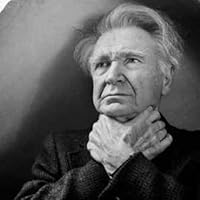
Saint-John Perse

87 books83 followers
Works of French poet and diplomat Alexis Saint-Léger Léger under pen name of Saint-John Perse include Anabase (1924) and Chronique (1960); he won the Nobel Prize of 1960 for literature.

He came from an old Bourguignon family, which settled in the Antilles in the 17th century and returned at the end of the 19th century.

Perse studied law at Bordeaux and, after private studies in political science, went into the service in 1914. A brilliant career ensued. He served first in the embassy at Peking. People published his work chiefly under the pseudonyms. After various reflections on the impressions of his childhood, he wrote in China. An epic puzzled many critics and gave rise to the suggestion that an Asian ably understands it better than by a westerner.

He later in the foreign office held top positions under Aristide Briand as its administrative head.

He left for the United States in 1940, and the regime at Vichy deprived him of his citizenship and possessions. From 1941 to 1945, he served as adviser to the Library of Congress. After the war, he resumed not his career and in 1950 retired officially with the title of ambassador. He made the United States his permanent residence.

After he settled in the United States, he wrote much of his work. Exil (Exile) (1942) fully masters man, merge, imagery, and diction.
* Poème l'Etrangère (Poem to a Foreign Lady), 1943;
* Pluies (Rains) (1943);
* Neiges (Snows) (1944);
* Vents (Winds) (1946) of war and peace blow well within and outside man;
* In Amers (Seamarks) (1957), the sea redounds as an image of the timelessness of man.
His abstract epic followed.

People awarded him "for the soaring flight and the evocative imagery of his poetry which in a visionary fashion reflects the conditions of our time."

Ratings & Reviews

What do you think?
Rate this book

Friends & Following

Create a free account to discover what your friends think of this book!

Community Reviews

5 stars
135 (35%)
4 stars
120 (31%)
3 stars
87 (22%)
2 stars
25 (6%)
1 star
15 (3%)
Displaying 1 - 30 of 54 reviews
Profile Image for Christopher.
1,442 reviews223 followers
January 11, 2015
Anabase (Anabasis, the Classical Greek word for a journey up country) was the first mature work by Saint-John Perse, the poetic pseudonym of French diplomat Alexis Leger. It was written in the early 1920s during a stint in China, where Leger represented the French foreign ministry. The poet wrote mainly for himself, but after the manuscript was brought back to France by friends, Anabase won instant esteem, with translations into several major European languages by the end of the decade, and the facing-page rendering into English here was made by no less a major figure than T.S. Eliot.

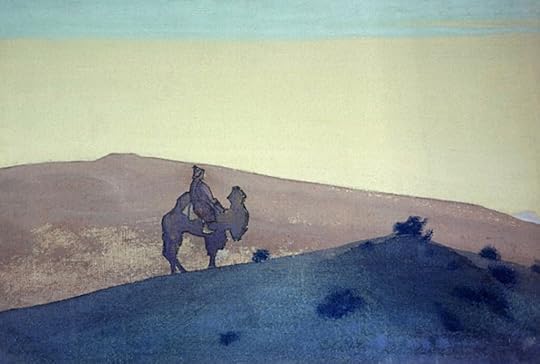
For some weeks, Leger traveled on horseback through China's rural provinces and the Gobi Desert, which inspired this great poem of migration, ten cantos narrated by a Conqueror glorying in his victories, but driven ever onward to new lands. But in drawing inspiration from the Asian cultures around him, Perse does not refer to their peculiarities, to what sets them apart from his own, but rather he distilled from his experiences a collection of human universals. Anabase is a saga could be set anywhere, whether Homeric Greece, the ancient Central Asian steppes, or even the Age of Discovery. The geographical setting is unspecified but similarly universal, ranging from the shores of the sea to high elevations, from fertile soil to barren sands.

Perse's poetry is centered around a humanist outlook. It is up to Man to create meaning for his existence through great deeds. Amers, a later poem by Perse, includes the line "We who one day, perhaps, will die proclaim man immortal in the flaming heart of the moment", a statement that concisely captures his philosophy, which was already fully fledged in Anabase. There is no Providence in this plot, no hidden metaphysical reality. References to religious rites abound, but they serve merely as ethnographic colour, for the universal traits of Mankind through the ages that Perse depicts include propitiation of deities and often bloody sacrifice, even if Perse himself is a sceptical modernist.

Giving representative quotations of this work for the sake of a review is difficult, as ANABASIS is a ceaseless flow of images in prose poem form, and though the details are fine and innumerable, it is the whole overwhelming effect that makes this such a special work. But here's a bit from the introductory canto:

So I haunted the pure city of your dreams and I established in the desolate markets the pure commerce of my soul, among you / invisible and insistent as a pure fire of thorns in the gale. / Power you sang on our roads of splendour... 'In the delight of salt the mind shakes its tumult of spears... With salt I shall revive the dead mouths of desire! / Him who has not praised thirst and drank the water of the sands from a sallet / I trust him little in the commerce of the soul...' (And the sun is unmentioned but his power is among us.

Men, creatures of dust and folks of divers devices, people of business and leisure, men from the marches and those from beyond, O men of little weight in the memory of these lands; people from the valleys and uplands and the highest slopes of this world to the ultimate reach of our shores; Seers of signs and seeds, and confessors of the western winds, followers of trails and of seasons, breakers of camp in the little dawn wind, seekers of watercourses over the wrinkled rind of the world, O seekers, O finders of reasons to be up and be gone, / you traffic not in a salt more strong than this, when at morning with omen of kingdoms and omen of deadwaters sung high over the smokes of the world, the drums of exile waken on the marches / Eternity yawning on the sands.


T.S. Eliot's translation sometimes strays from the strictest rendering of Perse's poem for the sake of dazzling English effect, but in the main it is faithful and serves well as a guide for readers who can't easily read Perse's original. This edition contains a brief but helpful preface by Eliot, as well as translations of the introductions which Larbaud. Hoffmanstahl and Ungaretti wrote for the Russian, German and Italian translations respectively. My only complaint is that this is now a print-on-demand title on lesser quality paper and the biographical details of the poet were never updated after the second edition in 1949. Still, this is a great poem, an ample work that one can curl up with and slowly get to know, and I highly recommend it.

(If your French is very good, I'd recommend getting the Perse OEUVRES COMPLETES volume in the Bibliotheque de la Pleiade series, which beyond gathering most of Perse's works in deluxe paper and binding, also contains the correspondence he wished to preserve, and among that we find discussions between Eliot and Perse on the creation of this English translation of Anabase).
Profile Image for Bloodorange.
852 reviews210 followers
March 11, 2019
I strongly disliked it. I am not exactly a Philistine - I majored in literary studies, really like modernism, read modernist poetry - but reading this is like reading through a car crash, on drugs, with an epic-sounding movie soundtrack playing in the background.

The collection I've just read comprises of three poems: "Anabasis" (1930), "Exile" (1941), and "Drought" (1974).

- In "Anabasis", two songs (second and third from the end) gave me some reading pleasure; the rest of it was a dreadful experience.
- "Exile", written in 1941, Exile is an ode to Zweig's romanticized 'world of yesterday', and is not as dreary a reading as "Anabasis".
- "Drought" was maybe less dramatic than "Anabasis", but it seemed a rehashing of the old themes.

All three poems can be summarised as modernism meets cultural appropriation meets Dada.

As I was reading the collection, "Anabasis" in particular, I couldn't help thinking the author must have been a very peculiar (read: unlikeable) person, suffering from a a very severe case of unique snowflakeism. Perse really liked feeling underappreciated: he rejected the offers - coming from President Roosevelt and General de Gaulle themselves - to undertake political or diplomatic activity. He declined a teaching position at Harvard University. He wrote "Exile" in a freaking LIGHTHOUSE, and based "Anabasis" on an ancient Greek autobiography, written in third person and anonymously published, in which the author writes a positive biased account of his military achievements to defend himself from his detractors and people who don't appreciate his deeds they way they should.

On the whole: it was a bad experience and I'm glad it's over.
Profile Image for Teresa.
1,492 reviews
April 13, 2019
Se Saint-John Perse venceu o Nobel, é óbvio que a triste estrelinha apenas significa que não percebi nada desta poesia. Até li duas vezes, mas era escusado...


_____________
Prémio Nobel da Literatura 1960
Saint-John Perse, pseudônimo de Alexis Leger nasceu em Guadalupe em 31 de maio de 1887 e morreu em França em 20 de setembro de 1975.

description
Profile Image for Mana Ravanbod.
384 reviews254 followers
July 31, 2021
آناباز ترجمه‌ی سپانلو خواندن ندارد و آناباز ترجمه‌ی مهریار و نیکبخت خواندن و آموختن دارد. کتاب مقدمه و یادداشت‌ها و نامه‌ها و خطابه‌هایی قبل و بعد از شعر دارد که خواندن‌شان هم به فهمیدن آناباز کمک می‌کند هم کمک می‌کند آدم به شعر و اساساً ترجمه‌ی شعر فکر کند. الیوت مترجم این شعر بلند به انگلیسی‌ست، و سن ژون‌پرس وقتی کارش را می‌بیند یادداشت‌هایی برایش می‌گذارد که اینجا را اینجوری ترجمه کردی و منظور بنده این نبوده بلکه خواستم فلان کار را بکنم و حداقل اینجوری خواسته‌ام کاش اینجوری ترجمه کنی. اندازه‌ی یک کارگاه شعر جهانی به آدم چیز یاد می‌دهد. بگذریم که شعر ساده‌ای نیست و قرارش هم بر عامه‌فهم بودن نیست.
181 reviews
August 31, 2012
و از خورشید هرگز نامی نمی آید اما اقتدارش در میان ماست.

یکی از پیچیده ترین و بزرگترین اشعار قرن بیستم از شاعر و سیاستمدار بزرگ فرانسوی الکسی لژه که اشعارش را با نام مستعار سن ژون پرس منتشر می کرد و زندگی سیاسی و هنری او همواره در هاله ای از ابهام بوده است
آناباز بی شک معروف ترین منظومه اوست که تی اس الیوت به انگلیسی، ریلکه به آلمانی و اونگارتی به ایتالیایی و محمد علی سپانلو به فارسی برگردانده اند که البته محمود نیکبخت هم این شعر ارزنده را ترجمه و منتشر کرده که من به شخصه بعد از تقابل ترجمه سپانلو ( که منوچهر بدیعی هم آن را با ترجمه الیوت تقابل داده و نکاتی را برای غنی تر شدن کار به سپانلو یادآور شده) ، بیشتر دوست دارم.
آناباز به معنی اسب سواری ، لشگرکشی بسوی دشت و همچنین ارجاعی تاریخی به شرح حمله و شکست یونانیان از ایرانیان است چنانکه گزنفون روایت کرده و البته گویا خود ژون پرس هیچگاه اشاره ای به این ارجاع تاریخی نداشته است.
سپانلو که خود از شاعران خوب زبان فارسی است در ترجمه این اثر به نوعی شعر را با زبان شاعرانه خودش بازسرایی کرده و مدعی است اگرچه در بیشتر موارد امانت در ترجمه را می پسنددد ولی در این کار پس از بررسی زیاد به نوعی ترجمه ابداعی دست زده تا برگردان کار روحی شاعرانه داشته باشد
برای نمونه بخش کوچکی از برگردان سپانلو را می آورم:

آناباز- منظومه ی فتح درونی

ترانه

زیر برگهای مفرغی کره اسبی زاده می شد.مردی حبه های تلخ به دستان ما نهاد. بیگانه. که می گذشت. و اینک همهمه ی استان های دیگر که به دلخواه من بر می خیزد... " به شما سلام می کنم، دخترم، زیر بزرگترین درخت سال

کشف معنی بندهای این شعر برای من تقریبا دست نیافتنی است که البته انگار بیش از درک تک تک صحنه ها بازسازی تصاویر و درک فضای کلی شعر اهمیت دارد و گویا شاعر بزرگی مثل ایوت بارها این شعر را خوانده و بعد توانسته با آن ارتباط برقرار کند و جمیز جویس که خود آثار معماگون دشواری چون اولیس دارد و همچنین بسیاری از بزرگان این شعر را ستوده اند و سن ژون پرس در سال 1960 به دریافت جایزه نوبل ادبی مفتخر گشت و در کنار آن در کارنامه سیاسی حود نیز به عنوان دیپلمات کارکشته فرانسوی حتی با هیتلر برای صلح پای میز مذاکره تشست و در خاور دور و چین و آمریکا ماموریت ها بزرگی را به انجام رساند
Profile Image for Frank Keizer.
Author 5 books46 followers
Read
July 30, 2024
Opnieuw gelezen na vijf jaar, in de Nederlandse vertaling van Maarten van Buuren, naar eigen zeggen de meest poëtische, of anders gezegd: de minst prozaïsche. Saint-John Perse, pseudoniem van de Franse topdiplomaat Léger, groeide op in de Franse Caraïben en schreef dit gedicht in een Taoklooster aan de rand van de Gobiwoestijn. Het werd door Valéry Larbaud gepubliceerd in het modernistische tijdschrift waar hij redacteur van was. Het blijft een belangrijk werk voor me: de decentrering van elk gezichtspunt, de vermenging van de epische en lyrische registers, de beschrijving van een tocht naar de randen van het rijk en het eigen innerlijk, het gebruik van de bastaardvorm van het prozagedicht en tot slot maar niet het minst de strijd tussen zwervende rusteloosheid en de gevestigdheid van het stadsleven. Het was allemaal van invloed op De introductie van het plot en de structuur - een fysieke tocht en innerlijke reis waarin grenzen overschreden worden - komt ook terug in de poëzie waar ik nu aan werk. De classicerende topoi en versvormen, hoewel ze beginnen te verbrokkelen, staan wat verder van me af, net als de nogal reactionaire politieke reuk waarin de gedichten staan, hoewel je ze beslist niet letterlijk moet lezen. Niet voor niets zondert de visionaire veroveraar die in dit gedicht aan het woord is zichzelf af in nocturnes af om zichzelf en de gemeenschap die hij sticht weer tot ontbinding te laten overgaan. Door Édouard Glissant - bij wie ik voor het eerst over Perse las - raakte ik geboeid door deze dichter, die voor hem de Franse taal, en dus de Franse universaliteit, naar de randen duwt en daardoor in feite een vorm van modern-barokke woekering aanricht in haar midden, waardoor het territorium dat ze bewaakt ontgrensd en op drift raakt. Voor Perse, zo suggereert Glissant, ligt het absolute niet langer in de natie, noch in het individu, noch in enige te omvatten totaliteit, maar in iets dat daaraan voorbij ligt en door Glissant 'Relatie' werd genoemd.
Profile Image for مهسا.
246 reviews27 followers
November 2, 2022
به خاطرهٔ مردی که این میوه‌های تلخ را در دستان ما نهاد
Profile Image for Billy O'Callaghan.
Author 17 books313 followers
October 10, 2015
St. John Perse won the Nobel Prize for Literature in 1960. I don't know how widely he is read today, but if he's not then it's a travesty because he must rank among the most important and visionary poets of the 20th century. And this book is surely his masterpiece, a work of such scope and ambition that it stands comfortable comparison with anything produced in the field of poetry during the past 100 years.
Anabasis is an obtuse epic, a long musical poem, rich in astonishing imagery, that glistens when read aloud. It's one of those pieces that needs multiple rereads before it begins to make cohesive sense, but there is still pleasure to be had on the first run-through from the sheer beauty of the language. Eliot's translation lends its own kind of magnificence, without impinging on the splendour and mystery of Perse's spell. Furthermore, he provides an invaluable introduction and makes the poem more accessible by breaking it down to a part by part summary that lends the whole thing a very basic narrative shape:

I. Arrival of the Conqueror at the site of the city which he is about to build.
II. Marking out the boundary walls.
III. Consultation of augurs.
IV. Foundation of the city.
V. Restlessness towards further explorations and conquests.
VI. Schemes for foundation and conquest.
VII. Decision to fare forth.
VIII. March through the desert.
IX. Arrival at the threshold of a great new country.
X. Acclamation, festivities, repose. Yet the urge towards another departure, this time with the mariner.

In these ten parts, Anabasis presents a meditation on a journey through central Asia. But it is a story for all time, one that contemplates the world, the migrant existence and the growth of civilization, as well as making sense of man's innate cravings, for adventure, for challenge, for conquest. But even attributing these themes is to simplify this work. For me, it's analogous to Coltrane's 'A Love Supreme'. Because Anabasis is poetry (if it has to be called something); it's the perpetual astonishment that comes from stringing certain words together in certain ways, it has meaning that lives outside of definition and that you feel in a way that doesn't always make easy sense.
Profile Image for Callie.
512 reviews
March 25, 2023
3.5
i feel like a fraud because i didn't actually read it in french, but oh well. very pretty writing, but unlike T.S. Eliot, I don't have time to read it 5-6 times, so I shall remain just a little confused.
62 reviews
December 9, 2025
De alguna manera, uno lee lo que quiere y lo que uno necesita, y si necesitas leer un libro, entonces ese libro te llegará. Ayer por la tarde caminaba junto a mi esposa, era domingo y todo estaba vacío, y un hombre que vende libros cerca de nuestra casa estaba regalando algunos. Encontramos algunos extraordinarios, y entre ellos, mi esposa señaló una antología de SJP en español, en extraordinario buen estado. Si bien después de leer Los cuadernos del destierro de Cadenas, que ya se sabe estaba influenciado por este poeta, tenía interés en acercarme, no era nada urgente ni especial. No obstante, consideré esto como una señal y esta mañana, me lancé a la tarea de sumergirme en Anábasis.
Quise leer primero la versión de Eliot, ya habiéndome informado previamente de que Perse era de los pocos poetas contemporáneos que leía y respetaba, y que tradujo dos veces este poema al inglés. Y la verdad es que su introducción fue bastante aclaratoria, primero con respecto al poema, porque explica su estructura. Luego sobre la complejidad, porque pide que uno renuncie a encontrar un sentido claro y conciso antes de la 5 o 6ta lectura. Y en tercer lugar, sobre su visión de la lectura de poesía y la diferenciación que hace de quienes leen y están acostumbrados a la poesía y los que no.
No obstante esta gran ayuda, en inglés me costó horrores, porque ya siendo un poema difícil, el hecho de estar en otra lengua lo hacía más difícil aún. Por eso, después de sentir que no agarraba nada, me enfrenté a la traducción en español de la edición encontrada por mi esposa, y sentí que una puerta se abrió.
He estado todo el día cavilando al respecto, pensando qué decir sobre este poema, su motivo de la Anábasis, es decir, la internación y conquista de un territorio, como el que narró Jenofonte de Ciro. Quizás la forma de conquista y población de la misma alma o consciencia, de la sensibilidad poética, del poema en si. En realidad, creo que, como los poemas de Eliot, es algo que permite pensar y repensar, leer y releer, que contiene la sabiduría del tiempo pasado, pero que se siente moderno y contemporáneo. Que puede contener un yo diluido, pero que también se siente que contiene enormes multitudes. Que contiene una serie de imágenes que te golpean, que se sienten como una pared, pero que aparecen constantemente en tu imaginación y en tus pensamientos. De alguna manera, después de haber leído a Eliot y a Cadenas estos días, creo que era lógico que empezara con Perse, que es quizás una pieza que me faltaba para poder unir mi investigación personal sobre la tradición y la poesía con el mayor representante de la poesía venezolana contemporánea. Es decir, que si llegó a mi, por algo fue. Creo que no lograré extraer todo el sentido que tengo que extraerle y que tendré que volver a él más de una vez, pero así es la buena poesía, y por eso leo poesía, porque siempre que vuelvo, hay un goce indecible en encontrar cosas que antes había pasado por alto.
Profile Image for Connor Prosser.
7 reviews
January 15, 2018
Ok, I've just become so jaded by these nobel laureates that I'm just going to go ahead and give this 1 star. I'm fed up trying to interpret or read explanations of the poems. A poem should explain itself, rather than require an entire essay to explain what it's trying to say. Just my opinion, I'm sure some will disagree.
Profile Image for Matthew.
332 reviews14 followers
March 4, 2010
Shortly after reading this my body succumbed to an immobilizing fever. Just so you know...
Profile Image for Bamdad.
128 reviews21 followers
August 28, 2020
نمره ترجمه سپانلو:(از ۵) ٣.۵
نمره ترجمه مهریار و نیکبخت: ۴.۵
برآیند ترجمه ها در مقایسه با اصل متن: ۴

سپانلو در ترجمه ی منظومه ی پیرس تلاش کرده تا زبان اشعار خود را به کلیت شعر پیچیده ی پیرس حاکم کند.
نیکبخت اما با زبانی ساده و دور از استعارات تنها به دنبال برگردان شعر است به ساده ترین شکل ممکن.
Profile Image for Antonio Rubio.
Author 4 books82 followers
June 14, 2023
Anábasis es el poema central en la obra de Saint-John Perse. Se trata de una épica del sueño. Nada parece real, aunque lo que se cuenta es, quizá, la derrota del poeta intentando conquistar el lenguaje de sus sueños.

El poema en prosa más importante del siglo XX

Del uno al diez: C l á s i c o.
Profile Image for Mana Ravanbod.
384 reviews254 followers
August 14, 2014
این کتاب را نخست سپانلو ترجمه کرد، با اشتباهات فراوان و ناقص، بعد کامل و با نقصان کمتر
اما هنوز بهترین ترجمه‌ی آن متعلق است به محمود نیکبخت و آقای مهریار (مرحوم) که در اصفهان منتشر شد و کمتر دیده شده است
Profile Image for Ehsan.
234 reviews80 followers
November 24, 2019
‏«آه! چگونه تیزاب تن زن می‌تواند زیر بغل پیراهن را لک بیندازد!»
Profile Image for Diego Arango.
59 reviews2 followers
November 29, 2020
Of such intensity... but of course, this is one of the best translated by the best.
Profile Image for W.
349 reviews2 followers
Read
July 21, 2025
This poem + TS Eliot’s commentary feels like what Nabokov’s Pale Fire was mocking.
Profile Image for Yaser Najafgholizadeh.
17 reviews2 followers
December 5, 2023
از اشاره نیچه در «غروب بت‌ها» و تمثیل حقیقت به آفتابی که در زمینه است یاد تکه‌ای از آناباز افتادم(هر چند منظور نیچه اصلا چیز دیگری بود):
«و از خورشید هرگز نامی نرفته اما اقتدارش در میان ماست»

لای سطرهای فارسی نیکبخت دنبال همین تکه بودم که هر جا چیزی چشمم را می‌گرفت. تازه فهمیدم از پارسال به اینور چقدر نگاهم به شعر و شعر ناب عوض شده. آمدم اینجا دیدم در حقش کم لطفی کرده‌ام. پنج ستاره هم برایش کم است.
Profile Image for Arif K..
25 reviews
October 21, 2025
4.0

i gave up trying to visualize these poems. it felt like each verse contained its own metaphors, similes, mood, landscape, or possibly some allusions to greek antiquity which i couldn't fully grasp on. by the end, i just relied on my intuition lol.
64 reviews1 follower
August 17, 2018
Very difficult. T.S. Eliot said to read it four times. I will give this a try and report back.
Profile Image for Ana Flores.
Author 5 books32 followers
February 6, 2018
ah! toutes sortes d’hommes dans leurs voies et façons : mangeurs d’insectes, de fruits d’eau ; porteurs d’emplâtres, de richesses ! l’agriculteur et l’adalingue, l’acuponcteur et le saunier ; le péager, le forgeron ; marchands de sucre, de cannelle, de coupes à boire en métal blanc et de lampes de corne ; celui qui taille un vêtement de cuir, des sandales dans le bois et des boutons en forme d’olives ; [...] ... ah ! toutes sortes d’hommes dans leurs voies et façons, et soudain ! apparu dans ses vêtements du soir et tranchant à la ronde toutes questions de préséance, le Conteur qui prend place au pied du térébinthe...

Anábasis, X, (fragmento)


Como profeta que fue rey y ahora poeta, un César que narrara no sólo sus empresas sino la historia de la humanidad entera como un canto y no en partes de guerra, Saint-John Perse nos cuenta en Anábasis (y en La gloria de los reyes, como un preámbulo a aquél) una épica moderna de vastos horizontes, un especie de viaje mayestático en honor al origen y las gestas y los andares de los hombres.

Un himno, un enigmático discurso que tiende hacia lo alto, que anhela, predice y anima a los oyentes a no cejar y enaltecerse por sus logros colectivos.

Llena de símbolos, de palabras extravagantes, cultismos, la Anábasis de Perse tiene siempre un tono alto, una faz grandilocuente, de elegancia con un poco de altivez, de maestro que desea y aún espera se comprenda su lección.

Pues también se oye distante, y su alta exposición de hechos tan grandes y horizonte inabarcable hacen difícil en verdad enternecerse o intimar con esta voz tan admirable, que en serio quiere miremos hacia el frente.

Muy lejos de Verlaine o Baudelaire, que miran y rebuscan hacia dentro, la poesía de Saint-John Perse más bien intenta hacer patente lo concreto, los hechos y la acción que mueve al mundo, y, mirado como cuento, consigue reavivar las energías o mostrar con quizás más optimismo el camino que nos queda.

Mon cheval arrêté sous l’arbre qui roucoule, je siffle un sifflement plus pur... Et paix à ceux, s’ils vont mourir, qui n’ont point vu ce jour. Mais de mon frère le poète on a eu de nouvelles. Il à écrit encore une chose très douce. Et quelques-uns en eurent connaissance...

Anábasis, X (fragmento)

Profile Image for Preetam Chatterjee.
7,057 reviews382 followers
December 27, 2025
This is a long prose-poem of migration, conquest, and visionary authority. Its title recalls Xenophon’s account of a military expedition, but Perse transforms history into mythic abstraction. The poem speaks in a plural, prophetic voice—at once leader, witness, and embodiment of civilisation in motion.

The language is expansive, ceremonial, and incantatory. Landscapes unfold in sweeping rhythms: deserts, cities, winds, seas. Power is aestheticised, not interrogated. Empire appears not as a moral problem but as a natural force.

This is where Anabasis becomes both magnificent and troubling. Perse’s grandeur resists the ethical urgency that defines Quasimodo’s later work and anticipates the historical scrutiny of Andrić.

Yet to dismiss Anabasis as imperial romanticism is to miss its deeper tension. The poem is haunted by impermanence. Cities rise and fall; leaders pass; speech itself is transient.

erse’s authority is never stable—it must continually reassert itself through language. In this sense, the poem stages power as performance, sustained only by voice.

Unlike Quasimodo’s fractured lyric or Andrić’s patient narrative, Anabasis offers no characters, no interior psychology. The human figure dissolves into collective movement. This abstraction produces both elevation and distance.

Readers are carried by the music of the lines even as ethical grounding slips away. The poem demands admiration rather than empathy.

Placed beside Quasimodo, Anabasis feels almost prelapsarian—a modernist confidence written before the full moral reckoning of fascism and genocide.

Read after Andrić, it appears even more removed from human cost. And yet Perse’s achievement lies precisely in this risky elevation. He expands the possibilities of poetic speech, proving that modernism could still aspire to epic scale, even as history would soon render such aspirations suspect.

Anabasis thus occupies a precarious position: a masterpiece of voice that refuses judgment, a vision of civilisation in motion that does not pause to count the dead. Its beauty is undeniable; its ethics, unresolved.

Most recommended.
Profile Image for Bohemian Book Lover.
176 reviews13 followers
Read
November 24, 2024
*After a century of its publication this enigmatic epic prose poem has
*Not lost its power to both confound interpretation &
*Arouse the reader's poetic experience.
*Based on St. John Perse's diplomatic stay in
*Asia, the poem takes inspiration from the
*Splendour & desolation of China & Mongolia; making use of heavy
*Imagery &
*Symbolism. In his Preface written for a 1926 edition of Anabasis, Valéry Larbaud wrote that 'It is as though he [Perse] said to the language: "You shall describe what you never described before I came... you shall patiently enumerate objects and actions and men [...] considered outside your province... you shall set your scale to the scale of this huge Continent, of this far-flung expanse..."' I will definitely be re-immersing myself in its expansive exoticism.
Profile Image for Curt Hopkins Hopkins.
258 reviews10 followers
November 12, 2018
I think this book was a lot like Catcher in the Rye for me -- I read it too late. I've already read Eliot and Ashbery and, as innovative as it was when it was written, I just didn't care as much as I might have earlier. It's rather like Wagner in its apparent desire to avoid anything catchy or memorable. I couldn't recall a single line from it. I just don't consider lack of memorableness on the line level a virtue in poetry. It is interesting. It comes off like a series of illustrations of fictional places or coming across a film set half buried in the sand. If you haven't read anything like it, read it. If you have, I wouldn't recommend it. .
10 reviews2 followers
February 11, 2019
Discours présenté par Jean Désy de Saint-John Perse, accessible à ce lien : http://fondationsaintjohnperse.fr/htm...

Bout que Jean Désy nous a présenté :
"De cette nuit originelle où tâtonnent deux aveugles-nés, l'un équipé de l'outillage scientifique, l'autre assisté des seules fulgurations de l'intuition, qui donc plus tôt remonte, et plus chargé de brève
phosphorescence. [...] Aussi loin que la science recule ses frontières, et sur tout l'arc étendu de ces frontières, on entendra courir encore la meute chasseresse du poète."
Profile Image for Dolf van der Haven.
Author 9 books26 followers
November 28, 2022
Nobel Prize in Literature 1960.
In his preface, T. S. Eliot states he had read this poem six times before he understood it. I have read it twice now, once in its original French and once in Eliot's English translation. I feel I'll have to try a couple of times more to grasp the meaning of the poem. It seems this is one of those poems that you can go back to many times and you'll discover something new every time. The French version flows very nicely, the translation less so. Still, great job by Mr. Eliot.
1 review
Currently reading
July 2, 2019
از دوره دانشجویی به کتابهای کوتاه علاقه داشتم که زمان کمی بگیرند و از طرفی همیشه کتابی در دستم باشه برای مطالعه
این کتاب بخاطر کم حجم بودنش از لیست کتابهای جایزه دار نوبل انتخاب کردم
اشعار فرانسوی رو هم دوست می دارم
This entire review has been hidden because of spoilers.
Profile Image for Sepideh bayatian.
18 reviews2 followers
August 31, 2022
جورج الیوت در مقدمه خود بر ترجمه انگلیسی آناباز این طور نوشته است: «من هیچ معتقد نیستم که شعری مانند آناباز اصلا مقدمه نیاز داشته باشد اما وقتی شعری به صورت ترجمه عرضه میشود، کسانی که آن را نشنیده‌اند طبعا می‌خواهند یک نفر درباره آن شهادتی بدهد. من در اینجا شهادت خودم را خواهم داد.»
فکر میکنم همین یک بند حق مطلب رو ادا کنه!

گزنفون آناباز رو به معنی مهاجرت گرفته و پرس هم گویا به دلیل تبعید شدنش، اسم منظومه رو آناباز گذاشته و جایی خوندم که تخلص پرس از کلمه پرسیکوس و ایران گرفته شده.
Displaying 1 - 30 of 54 reviews

Can't find what you're looking for?

Get help and learn more about the design.