Jump to ratings and reviews
Rate this book

The Grandmothers

Rate this book
In the title novel, two friends fall in love with each other's teenage sons, and these passions last for years, until the women end them, vowing a respectable old age. In Victoria and the Staveneys, a young woman gives birth to a child of mixed race and struggles with feelings of estrangement as her daughter gets drawn into a world of white privilege. The Reason for It traces the birth, faltering, and decline of an ancient culture, with enlightening modern resonances. A Love Child features a World War II soldier who believes he has fathered a love child during a fleeting wartime romance and cannot be convinced otherwise.

311 pages, Paperback

First published January 1, 2003

258 people are currently reading
3711 people want to read

About the author

Doris Lessing

474 books3,179 followers
Doris Lessing was born into a colonial family. both of her parents were British: her father, who had been crippled in World War I, was a clerk in the Imperial Bank of Persia; her mother had been a nurse. In 1925, lured by the promise of getting rich through maize farming, the family moved to the British colony in Southern Rhodesia (now Zimbabwe). Like other women writers from southern African who did not graduate from high school (such as Olive Schreiner and Nadine Gordimer), Lessing made herself into a self-educated intellectual.

In 1937 she moved to Salisbury, where she worked as a telephone operator for a year. At nineteen, she married Frank Wisdom, and later had two children. A few years later, feeling trapped in a persona that she feared would destroy her, she left her family, remaining in Salisbury. Soon she was drawn to the like-minded members of the Left Book Club, a group of Communists "who read everything, and who did not think it remarkable to read." Gottfried Lessing was a central member of the group; shortly after she joined, they married and had a son.

During the postwar years, Lessing became increasingly disillusioned with the Communist movement, which she left altogether in 1954. By 1949, Lessing had moved to London with her young son. That year, she also published her first novel, The Grass Is Singing, and began her career as a professional writer.

In June 1995 she received an Honorary Degree from Harvard University. Also in 1995, she visited South Africa to see her daughter and grandchildren, and to promote her autobiography. It was her first visit since being forcibly removed in 1956 for her political views. Ironically, she is welcomed now as a writer acclaimed for the very topics for which she was banished 40 years ago.

In 2001 she was awarded the Prince of Asturias Prize in Literature, one of Spain's most important distinctions, for her brilliant literary works in defense of freedom and Third World causes. She also received the David Cohen British Literature Prize.

She was on the shortlist for the first Man Booker International Prize in 2005. In 2007 she was awarded the Nobel Prize for Literature.

(Extracted from the pamphlet: A Reader's Guide to The Golden Notebook & Under My Skin, HarperPerennial, 1995. Full text available on www.dorislessing.org).

Ratings & Reviews

What do you think?
Rate this book

Friends & Following

Create a free account to discover what your friends think of this book!

Community Reviews

5 stars
661 (17%)
4 stars
1,277 (33%)
3 stars
1,343 (34%)
2 stars
403 (10%)
1 star
156 (4%)
Displaying 1 - 30 of 485 reviews
Profile Image for Julie G.
1,010 reviews3,924 followers
March 12, 2019
I was out with a small group of friends about a year ago, listening to them lament the “singles scene out there.” We were at a restaurant, and I was the only married person in the party, but I think the ladies realized quickly that I was sympathetic to their woes.

We had a couple of drinks and a lot of laughs and at some point the conversation shifted toward my son, who is now a young twenty-something adult. He's a classical musician, and most of them have met him or seen him perform and the women started talking in earnest about what an amazing young man he is. A musician, a scholar, a Renaissance man!

I was so flattered. “Oh! Hahahahaha,” I laughed. Or something like that. “Thank you. That's very sweet of you, ladies. He is definitely my pride and joy.”

More laughter. More drinks, then. . .

One of the ladies (the thirty-something cutie patootie), put her hand playfully on my arm and said, “In fact, some of us here are wondering whether he might be available for private performances?” She giggled (or the margaritas did), shared meaningful glances with the other ladies, and then that side of the table erupted in laughter.

At my end of the table, all laughter stopped, and, from my perspective, the restaurant fell silent. The only noise I heard was a tray crashing to the ground when a server spotted the look on my face.

I would like to tell you that my head then spun around in a full rotation (Linda Blair-style), but I'm afraid my head didn't move at all. I couldn't move my head. I couldn't speak, either.

But, though my mouth and my head failed me in that moment, I managed, with my eyes, to communicate the following message to my laughing friends: TOUCH MY SON, COUGAR BITCHES, AND I WILL DESTROY YOU.

(Wha?? How is this a review?)

Oh, it's a review, all right.
Profile Image for Dolors.
605 reviews2,811 followers
February 17, 2015
Only the mind of a genius has the capacity to write with the precision, lucidity and provocation displayed in this collection with 85 years of age. Yes, you read that right. Doris Lessing was 85 years old when she penned the four stories that compose this collection. Stories which are dissimilar in length and setting, characters and writing techniques, shifting viewpoint narrators and, believe it or not, genres. Even though the common thread that links these four pieces together appears elusive at first glance, Lessing’s mastery of nuance and intellectual clairvoyance provides a unifying quality that undermines the superficial divergences of the stories.

The paradisiacal scenario of the virginal Australian coast in the present day frames the setting for the uncategorizable friendship between two women, also Grandmothers, and their sons, who cross the limits of morality and develop unhealthy, almost incestuous sexual affairs with their respective offspring. Blatant defiance against social conventionality or sardonic criticism of a superficial lifestyle corrupted by hedonistic excesses?
A black girl is swirled about by the blowing winds of chance and discovers a world where The Staveneys, a white and liberal British family, sleep in separate alcoves, have a lavatory and a kitchen instead of living crammed into the space of a single room. Victoria is a word the black community won’t ever experience, despite the hope that filters through the cracks of three generations of black women trapped in a white class system.
Colonial Africa and the British rule in India during WWII allow a young soldier to survive the horrors of war clinging to the illusion of a Love Child, product of a mirage of four days smudged with humidity, salty waves, unhinged desire and the prospect of certain death.
Even the first-person narrator of the dystopia that portrays the downfall of an ancient civilization ponders about The Reasons Why a flourishing oligarchy might irreparably evolve into a directionless totalitarian dictatorship because of the intricacies of generational replacement.

Four stories where the perpetual clashes between social classes, races and genders, the insurmountable gap between parents and children, the understated denunciation of legal abuse endorsed by duplicitous democracies and the absurdity of war, are ever present and personified in the future generations that are designated with the double-edged role of victims and perpetrators. The characters in Lessing’s stories project an idolized image of their own expectations on the ones they covet, not fully realizing that the ghosts lurking in the shadows of their lives are only invoked by themselves.
In a world infected by dissatisfaction, Lessing’s expert use of cadence, timeline and narrative wisdom tempts the reader with the vision of a happy ending, luring him with sporadic hints of promise, only to snatch the fairy tale away unceremoniously and bring forth an existence in survival mode, which brims over with abnegated conformism that stinks of familiar reality.

“You see, I’m not living my own life. It’s not my real life. I shouldn’t be living the way I do.” (307)

How many times has that thought crossed your mind?
I dare say the notion of living according to one’s ideals obsessed Lessing, yet she kept on climbing up the mountain of ageing, ignored the weariness, the breathlessness and the vertigo of thwarted illusions, and aimed for the highest and least comfortable of peaks. Quite an arduous ascent, yes, but how imposing, life-altering and liberating the view!
Profile Image for Julie G.
1,010 reviews3,924 followers
March 24, 2019
Wow. I have just had the most unusual reading experience.

For the first three novellas of this collection, The Grandmothers, I was huddled over in pain like the woman on the cover of this book. Pain, people.

The first two short novels contained almost zero character development (seriously, I could have interchanged any character's name with another and it would have been impossible to sense the difference) and both flirted with a type of sick, consensual incest that I have found to exist only in fiction. (Unfortunately, I have known hundreds of women in real life who have been raped or molested, but I have not known a single woman who has ever told me, “I've just never met a man who I wanted more than my brother, father, uncle, cousin”). Somehow, incest in fiction is not only irresistible, it is preferred to intimate relations with unrelated partners. Based on these types of stories, it's a wonder that people aren't standing before the Supreme Court every day, petitioning the right to marry a beloved sibling or aunt.

The third story in this collection is so awful, I found it unreadable. I couldn't go on. And, truly, this is saying something, as stories #1 and 2 made me wonder if slipping into a coma wasn't a more preferable state of being. Ms. Lessing doesn't even bother to give her characters names in this third novella, which actually didn't surprise me at all. I thought of most of her characters as “boy x and woman y." Let me use it in a sentence, so you understand me: Boy x is Woman y's nephew, so naturally they have slept together. (It is the most satisfying sex of either of their lives). So, the shift to naming characters “Twelve” and “One” and so on made perfect sense. I abandoned it, quickly, just as she abandons all of her nameless, undeveloped characters to their cruel fates, always. No happy endings here, people!

And then. . . call me. . . confused. And surprised. Pleasantly surprised.

Novella #4, A Love Child, rose out of the flames like a phoenix.

And it is. . . well, one of the best novellas I have ever read in my life.

A Love Child is a love story, set during WWII, that offers a well-formed but complicated protagonist, James, and takes the reader from England to Africa to India and back on a realistic and unique exploration of the boring parts of the war.

Did you know that war could be boring? Oh, so boring.

Did you know that meeting a truly lonely person could one day help you to understand that it was your father's loneliness that was separating him from you, all along?

Did you ever suffer a true anguish at suspecting that you're not living your real life?

When I arrived at the end of this 120 page story, I gasped. I can't believe it, but I gasped at the ending. It was like turning a corner and being sucker punched by a stranger.

So. . . what the hell? What the hell, Doris Lessing?

The saddest part, for me, about this collection is that the only fabulous part is the last part and most readers will probably never make it that far.
Profile Image for Robin.
575 reviews3,652 followers
March 25, 2021
This is a bizarre collection if there ever was one.

Of the four short stories featured, the first two boast excellent ideas, but with paper-thin execution. The third story is simply abysmal. The fourth is nothing less than gorgeous. So, here we go:

The first of the four, The Grandmothers, is borne of a fascinating premise. Actually, it's the reason I picked up this collection in the first place. Two women in their 40s, inseparable best friends, have love affairs with each other's sons. What a remarkable idea, and one that turns the socially acceptable older man-younger woman relationship story upside down. There's SO MUCH POTENTIAL here. The taboo, the strangeness of these relationships. How did it happen? What drew them together? What kept them together? How was the sex? How did it look to people on the outside, how was it hidden? How utterly weird, how... juicy.

But no. Sorry. No juice here. We are given cardboard cutouts instead of flesh and blood people. We are given paper dolls, playing out an intellectual concept. We don't understand these dolls or their motivations. The dolls are enacting a brilliant idea of Doris Lessing's, but the enactment is dry as burnt toast. How she manages this outcome with such an inspiration is like achieving the impossible.

Same with the second story, Victoria and the Staveneys. The "idea" is about how a black woman from an underprivileged background who has a baby by a white man from a wealthy family, sees her daughter slowly affected by the white family she partly belongs to. This concept could birth such a rich story! The subtleties, the good intentions, the divided loyalties, the bridges that can't be crossed, the mother left behind....

But no. The story is somewhat clumsy, spending a great deal of time on certain details, and then rushing through others. For example, our main character acquires and then loses a husband over the space of two paragraphs, whereas a great deal of time is spent discussing emptying the urine bottles belonging to a friend's ailing grandfather. Characters seem more like archetypes rather than fully fledged human beings (Edward, the older brother, is called "tall and kind" about thirty times). The ending is abrupt, disappointingly so, with revelations that could be gleaned by simply reading the publisher's short description on the jacket cover.

The third story, The Reason for It was baffling, and SO not my thing. I don't know whose thing this could BE... but I didn't know what was going on or who was who (Eleven, DeRod, EnRod, god knows who else, oh yeah, The Whip??). It's about an ancient civilization, I know that, but the style is just so uninviting that I was unable - or, more honestly, unwilling to put in the effort necessary to truly understand this story (remember, I slogged through the entire Golden Notebook and finished pretty much none the wiser). After reading The Fifth Child I learned Lessing had a preoccupation with Neanderthals, and maybe this was part of it? Anyway, whoever decided it had a place in this collection had a cruel sense of humour.

That brings me to the fourth and final story, which is actually a novella at 123 pages, A Love Child. A thing of beauty. Did the same person who wrote the three previous stories actually write this?? Set in WWII, we follow James' journey as a soldier to India, where inactivity and seeming captivity were the trials of war for him, with just a four-day reprieve in Cape Town with Daphne to break up the monotony. This story broke my heart with how it compares real life with dreams. How they don't match up.

"I'm not living my own life. It's not my real life. I shouldn't be living the way I do."

Real life and real love are painfully elusive, and the biting, bitter ending captures that reality powerfully. I choked on her final sentence because of its truth, and because who knew Doris Lessing could write something so personal and moving? Something that makes the reading of this volume completely worthwhile?

So yeah, a bizarre collection. That Doris Lessing, she sure keeps you on your toes.
Profile Image for Sasha.
Author 15 books5,029 followers
March 21, 2019
The problem with female friends is that you always run the risk of your sons fucking them, Doris Lessing points out. Adore, originally published as The Grandmothers in a 2003 collection of novellas, is about one of those all-too-frequent occurrences: two lifelong friends have affairs with each other's sons. It's the exact plot of Motherlover by Lonely Island.

It's good: I liked reading it and it's got things to say about female friendship and sortof the dangers of mothers in general. I read it as sortof a corrective to the old, boring story about old men fucking younger women. Those stories are lame wish-fulfillment; this story is not. One expects Doris Lessing to be smarter than Philip Roth, and she is.
January 4, 2021
Οι γιαγιάδες !...
Πόσο τρυφερά, απαλά, γλυκά και με άφατη απαντοχή φιλούν τα δακρυσμένα μας μάγουλα ή τα χαμογελαστά μας μάτια αυτά τα αιώνια χείλη.
Αυτά τα χείλη που χάνουν και κερδίζουν τα περιθώρια του χρόνου για να πουν τα καταγεγραμμένα πλούτη των μύθων και των ιστοριών, της γαλήνης, της παρηγοριάς, της λησμονημένης μνήμης και της αποθεωτικής αγάπης ακόμα κι αν φαίνεται πως όλα πια έχουν χαθεί. Αυτά τα ζαρωμένα απο καημούς και χαρές χειλάκια βρίσκονται πάντα στη ζωή και παραδίδουν τα παραμύθια και τα τραγούδια της ανθρωπότητας σε ολωνών τα χάδια και τις αναπνοές. Αλίμονο αν ξεχαστούν, κατάρα αν κρατηθούν στις νοσταλγίες που θυμούνται μόνο η ηλικιωμένοι. Τότε χάνονται όλα. Τότε αλλάζουν οι τάξεις πραγμάτων και γκρεμίζονται τα τείχη της αγάπης και στερεύουν τα πελάγη της ευτυχίας και τα θαύματα του κόσμου, εκεί όπου οι ταξιδιώτες της ύπαρξης βρίσκουν πληροφορίες και αξιοθέατα για την ταξινόμηση και την συνέχιση του λαβυρίνθου της δημιουργίας της ίδιας μας της οντότητας.
Κρατιέμαι σφιχτά απο τους φράχτες.

«Γη σπαρμένη με ερείπια, εκείνος την περπάτησε όλη τη νύχτα, εγώ τα παράτησα, να κρατιέμαι σφιχτά απ' τους φράχτες, ανάμεσα στον δρόμο και το χαντάκι, στο λιγοστό χορτάρι, μικρά αργά βήματα, ήχος κανείς, σταματώντας ξανά και ξανά, ας πούμε κάθε δέκα βήματα, μικρά διστακτικά βήματα, για να μη λαχανιάσει, έπειτα ν' ακούσει, γη σπαρμένη με ερείπια, εγώ τα παράτησα πριν από τη γέννηση, δεν γίνεται αλλιώς, έπρεπε όμως να υπάρξει γέννηση, ήταν εκείνος, εγώ ήμουν εντός, τώρα εκείνος σταματά ξανά, ας πούμε για εκατοστή φορά αυτή τη νύχτα, τούτο δείχνει και την απόσταση που έχει διανύσει, είναι η τελευταία, σκυφτός πάνω στο μπαστούνι του, εγώ είμαι εντός, εκείνος ήταν που έκλαιγε γοερά, εκείνος που είδε το φως, εγώ δεν έκλαψα γοερά, εγώ δεν είδα το φως, το ένα πάνω στ' άλλο τα χέρια ζυγιάζονται στο μπαστούνι, το κεφάλι ζυγιάζεται στα χέρια, έχει βρει ξανά την αναπνοή του, μπορεί ν' ακούσει τώρα, ο κορμός οριζόντιος, τα πόδια ανοιχτά, πεσμένα στα γόνατα»
BECKETT SAMUEL (NOBEL 1969)

Στην εμπειρία ανάγνωσης που σε βυθίζει η Λέσινγκ τα νερά ειναι βαθιά, καθαρά, παγωμένα, ήρεμα ή φουρτουνιασμένα και στην προσπάθεια σου να κολυμπήσεις στον οίστρο της ανακαλύπτεις την μαγεία που σε προστατεύει όταν ξαφνικά ανατρέπονται όλα και μένουν ορθάνοιχτα να μπάζουν νερά πάθους και απαγορευμένης ηδονής η καρδιά και το μυαλό. Αυτή είναι η Ντόρις Λέσινγκ, μια λογοτεχνική ικανότητα προβολής και υποβολής μιας πειστικής φωνής που εκπέμπει συχνότητες σε άλλα φάσματα κοινωνικών προβολών, σχέσεων, καταστάσεων και χαρακτήρων που συλλαμβάνουν την αλήθεια που τρομάζει, που εκπλήσσει, που βασανίζει, που απαγορεύεται θεσμικά και νομικά, σε πραγματικό χρόνο την επιβεβαιώνει με απαράμιλλη ικανότητα άβολης, φορές φορές και άβουλης ειλικρίνειας όσο σοκαριστική κι αν είναι.


Στο συγκεκριμένο βιβλίο που αποτελείται απο τέσσερις
ιστορίες παραδίδει μαθήματα διαδραστικής κοινωνικής έντονης πραγματικότητας, με μπόλικη ειρωνεία και μηδενική απελπισία στην προσπάθεια να περάσει τα μηνύματα της φωνάζοντας βουβά χωρίς λογοτεχνικές ακμές -που ορίζονται πεζογραφικές σε μια μυθιστοριογραφία- πως ναι, αυτός είναι ο κόσμος μας άνθρωποι, αισθανθείτε το, κατανοήστε το, αποδεχτείτε το. Ορμέμφυτα ένστικτα κυριαρχούν στην ανθρώπινη υπόληψη και καταπατούν κάθε περιοριστικό νόμο ανθρώπινης βλακείας.
Είναι ανθρώπινο και σεβαστό αν όχι αποδεκτό απο κάποιους κανόνες, δυο μεσήλικες μητέρες και επιστήθιες φίλες να ερωτεύονται η μία τον γιο της άλλης με μια βαθιά παθολογικά απολαυστική ηδονή που κρατάει για πάντα.
Στην επόμενη ιστορία πόσο γλυκά και σεμνά μια έγχρωμη μητέρα φέρνει στον κόσμο καρπούς απο άλλες φυλές μικτές και παραδοσιακά ρατσιστικές, μα αγωνίζεται κατά της φυλετικής αποξένωσης που έχει βιώσει απο βαθιές στο χρόνο κληρονομικές καταβολές και παλεύει για έναν κόσμο με ισότιμα προνόμια.
Αργότερα βουτάμε στα άδυτα άστρα ενός αρχαίου πολιτισμού που προσπαθεί να εξελιχθεί πολιτιστικά και χρονολογικά πιστώνοντας την παρακμή του σε παρακαταθήκες νεκρών προγόνων και ασύδοτων επίγονων.
Το παιδί της αγάπης ήρθε μαζί με τον Β´ παγκόσμιο πόλεμο στην ζωή και την ψυχή ενός στρατιώτη μέσω ενός παράνομου έρωτα και ίσως μέσα απο την πλανεύτρα φαντασία που χρίζει με πλανεμένες ευτυχίες κάποιες απάτητες και αγνές ψυχές, που δημιουργεί λογοτεχνικούς μαγικούς ρεαλισμούς στα ενδότερα και τα κατάβαθα της ύπαρξης ανθρώπων που φευγαλέα τους μπούκωσε ο ρομαντισμός με ελπίδα και αφοσίωση για καταστάσεις και συναισθήματα προδοτικής πίστης στο
«για πάντα» στο
«όνειρο ήτανε», στο « όπου και να´σαι σ’αγαπώ». Φράσεις εμπεριστατωμένης αξίας που μάλλον ήταν πλανερή, κάλπικη, απ’τις ψεύτικες, εκείνες που κανείς δεν της τηρεί!...


Καλή ανάγνωση.
Γλυκούς και σεμνούς ασπασμούς.
Profile Image for Sheri.
1,337 reviews
February 24, 2016
I love Doris Lessing. I love Doris Lessing. I have only read two of her works (this and Fifth Child), but she is so amazingly and beautifully fucked up that I simply need more.

I have requested the movie version (because I also adore Naomi Watts) from the library and am looking forward to seeing this onscreen.

This book is revolting. 100% completely disgusting. As a mother of a 13 year old boy (and a 38 year old woman), I am completely and totally against the self serving nature of these spoiled 30-something women. The repulsive-incest-abusive-ness of the relationship between these four is absolutely disgusting.

And yet, I love them. I want to be them. I wish I had a best friend with whom I was so close that my husband was jealous. I want to sleep with her beautiful 17 year old son. I want him to see me as the ultimate woman. I want to ruin his life and his sexuality because of my own egoism.

And, of course I am disgusted by them and my own reaction to them. And that is why I absolutely love Doris Lessing.

And so I watched the movie this afternoon...it is an okay movie (probably about 3 stars). Rather slow and at times boring. Unfortunately it is loosely based on the story. Yes, it follows the general outline, but absolutely none of the details are right. And this story so relies on those details. I would advise skipping the movie and spending an extra 15 minutes or so and just enjoy the book.
Profile Image for Carmo.
726 reviews566 followers
May 27, 2018
As Avós
Duas mulheres; amigas de infância, sempre próximas, sempre cúmplices e solidárias. Já na casa dos cinquenta envolvem-se com os filhos uma da outra.
Tema para dar comichão à boa gente moralista. Merecia mais aprofundamento e desenvolvimento. Achei os diálogos fracos e as personagens pouco exploradas.
Final politicamente incorreto.

Vitoria e os Staveney
Uma história sobre pobreza raramente é uma história bonita. Menos ainda quando se comprometem os valores morais a troco de ( pouco) sucesso.

O Motivo
O mais fraquinho dos quatro. A surpresazinha no final não foi suficiente para o salvar.

Um filho do Amor
Uma história de amor inesperada e proibida. Um homem que não desiste. Sem suspeitar do final até à última página, apanhei um valente tabefe de realidade.

As histórias de Dóris Lessing focam-se, sobretudo, em questões femininas - temas sensíveis que a autora tratou com delicadeza e naturalidade, nunca menosprezando a realidade e o peso que esta tem na hora de tomar decisões.


Profile Image for Robert.
Author 15 books116 followers
June 19, 2013
The Grandmothers by Doris Lessing is not, as the dust jacket copy states, a collection of "four short novels." It's a bound volume containing three long short stories and a concluding novella, "A Love Child." And with one exception, it's very, very good.

The opening story, "The Grandmothers," is a mischievous but persuasive piece of wickedness in which two close friends end up being the lovers of each other's sons. There's a cosy quality to this pseudo-Oedipal tale that envelops the sons totally. What could be better than a woman unhappy in her marrige whom you've known all your life, is still fairly young, and makes you feel rich and secure because she's yours without having had to go through growing up with her? The mistakes you might make as a lover are forgiven, the little things you ought to know are taught to you gently, and all in all, you're in the butter, home away from home.

Of course other young women begin to intrude and the grandmothers (because that's what the original mothers become) have a sense of realism about this. They know, or persuade one another, that the fantasy can't go on forever. And this is interesting, too: the decoupling, the way one of the younger women traps one of the boys, and then, of course, the bitter denouement, which I won't spoil.

The fact that "The Grandmothers" is set in South Africa, along the sea, helps. It's good scenery. There is (racial issues aren't a focal point) a quality of distant completeness about that world at that time; there's an underlying, unstated argument here that ambition isn't a central human need...if you're born in the right place across the street from the right woman.

The next story, "Victoria and the Steveneys", is a story about a black Londoner who falls in with a white, culturally liberal family as a child--by accident, really--and then, as time passes, gives birth to a child by one of the younger family members...and then, as time passes, reveals the existence of this child and proceeds to lose her to the better-endowed, more energetic, irresistible white family. The contrast in life styles, attitudes, prospects, and moral grounding between all these folks is acutely presented. At the same time, the "long story" form, which I enjoy a great deal, provides most of a novel's impact in more concentrated style. Time passes, scenes unfold on artfully altered premises, the impetus and inevitabilty of the narrative catches you up, and the conclusion has that pungency one expects of Lessing. She's masterful. The comparisons would be Alice Munro of today and Henry James of yesterday's yesterday.

Now I'll say something about "The Reason for It," the third story. It doesn't belong in this collection. It's one of Lessing's fantasy or other-world fables, and it's sort of no good, a clunker: renaming disappointment and cultural decay and associating it with the spirit of legends takes us tritely nowhere. Lessing is strong-willed enough to have been the one who insisted this book is where "The Reason for It" would go. Frankly, I see no other reason for it to be here.

Now, the longest piece, "A Love Child." This one is set in World War II. A young Englishman doesn't have any idea what he's being drafted into, misses all the good battles in Europe, sails wretchedly to India, and in a stopover in South Africa (Capetown), has a four day fling with a married woman who really was only trying to be a decent hostess to "the boys." He's smitten, she's more willing than she would have expected, her best friend is scandalized, and then the story goes on, as I indicated, to service in India, which is marginally better than captivity on a troop ship, but nothing like those four luminous days of shore leave in Capetown.

This is where the genius of the "long story" or "novella" operates so wonderfully. Things happen to James that aren't really relevant to his passion for Daphne,but they become a kind of container for his passion, and we sense he'll return to it, and the novella permits this in stages: first, he makes his way back to England, then he arranges to marry someone he can't love as much as he loves Daphne (surprise, surprise), then he tells his fiance about Daphne and the child he's deduced emerged from their encounter (bigger surprise), then he goes to South Africa looking for Daphne, then, years later, he takes his wife (Helen) to South Africa looking more for his son than for his long-lost love. In summarizing the plot, I'm not doing justice to it. Again, you need the weight of events, distractions, irrelevancies, and time to explore its fullness.

I'd recommend The Grandmothers as strongly as I'd suggest skipping the third tale. What a book this could be if it were a modest three tales. Lessing's insight into human psychology, her mastery of pace and plot, and her knowledge of the world are all of the first order. You live to love, you survive to hold onto that love, but you can't live or love forever: there's always some undertow dragging you out to sea, into war, into old age, or into a life, as Lessing proposes at a key point in "A Love Child," that isn't really yours. Yours is something altogether private and apart with its distinctive quotient of pain.


For more of my comments on contemporary fiction, see Tuppence Reviews (Kindle).
Profile Image for Ilse.
551 reviews4,434 followers
February 13, 2024
But these lives were easy. Not many people in the world have lives so pleasant, unproblematical, unreflecting: no one on these blessed coasts lay awake and wept for their sins, or for money, let alone for food. What a good-looking lot, smooth and shiny with sun, with sport, with good food. Few people anywhere know of coasts like these, except perhaps for brief holidays, or in travellers’ tales like dreams. Sun and sea, sea and sun, and always the sound of waves on beaches.

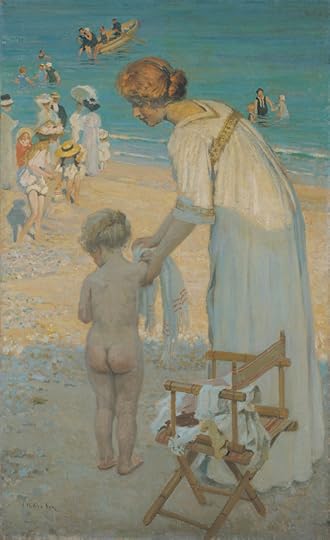
BLOG-E-Phillips-Fox-Bathing-Hour
E. Phillips Fox, Australia/France 1865-1915 / Bathing hour (L’heure du bain) c.1909 (Queensland Art Gallery | Gallery of Modern Art)
Profile Image for Vaso.
1,752 reviews224 followers
April 21, 2017
Δεν έτυχε να διαβάσω άλλη φορά κάποιο από τα βιβλία της Λέσινγκ και χαίρομαι που το έκανα τώρα. Αυτό το βιβλίο έχει 4 μικρες, αυτοτελής ιστορίες. Οι δύο πρώτες είναι απλές, καλογραμμενες. Η τρίτη μιλά για τη δημιουργία ενός κόσμου, μιας κοινωνίας, την άνοδο και τον ξεπεσμό της λόγω κακής διακυβέρνησης. Στην τελευταία βλέπουμε έναν νεαρό που γίνεται στρατιώτης στον πόλεμο, και κατά τη διάρκεια του ταξιδιού που τον στέλνει στην Ινδία, γνωρίζει τον έρωτα.

3,5 αστέρια
Profile Image for Ivon.
87 reviews7 followers
October 4, 2015
I recently watched the movie adaptation of The Grandmothers. The film is entitled Adore, starring Naomi Watts, Robin Wright, James Frecheville and Xavier Samuel. I thought that the story is really something! It's disturbing and provocative... and although I feel like it's too absurd to be true, the plot is somewhat convincing/awakening. It makes you realize that although love can be in various forms...most of the time, we can only express love in a way that is acceptable to the society. I also did think about women, who were once young and beautiful then got replaced by the younger and more beautiful. It reiterates the fact that time and gravity are two things that just couldn’t be defied. The story reminds me of some cougar couples.. and when the younger guy left the older lady for a girl his age. It's just really...sad.

My favorite Character here is Ian. It's evident that his love for Roz is really genuine. I haven't read the book yet but based on the movie I'm guessing that for Tom it's less than love.

Well, the story is good, it's a romance with heavy drama... if you're up to that (and if you like Xavier Samuel too because I think he's seriously handsome) then I recommend this. :)

Profile Image for Kelly (and the Book Boar).
2,819 reviews9,510 followers
October 9, 2013
Find all of my reviews at: http://52bookminimum.blogspot.com/

Roz and Lil have been best friends since their parents moved to the same neighborhood when they were children. They went to college together, dated together, got married in a double wedding ceremony, bought houses across the street from each other and had their sons at the same time. Now they are in their 30s, each with a teenage son and find themselves single (albeit for different reasons). The beauty of their respective sons first finds the women in a conundrum of forbidden attraction and eventually committing the ultimate taboo with affairs that last for years.

Full disclosure here – I was stuck at work during my lunch hour yesterday so I decided to run down the street to the library around 2:00. I sent an e-mailing detailing where I was going and when I would be back. One of my smart a$$ bosses replied (to all, of course) that I was going to the library to check out pornography. Har-dee-har-har. I came back with “Adore” to show him that, yes, I do check out my porn from the library, but I make sure it is porn written by a Nobel Prize winner ; )

So, there’s the story of how I ended up reading “Adore”. As it turns out, I really loved this short story. I have never read Doris Lessing before, but now realize I probably should. She writes beautifully and told a tale that should be so shocking/disturbing/stomach-turning in the most polite way possible. If you are looking for some raunchy sex scenes, this is not your book (note - it’s also a movie and I have a feeling that the film version might get the blood flowing a bit). If you are looking for a story about forbidden love and its consequences, this is a good choice. Only complaint – it’s a novella. I loved the characters and wanted moremoremoremoremore.
Profile Image for Elizabeth.
529 reviews5 followers
October 7, 2013
For a book that deals with such a taboo subject, it was surprisingly dull. I wasn't expecting, and didn't want, graphic scenes, but some emotional depth would have been nice. Allow me to sum up the book and save you the trouble.

Roz: Hey, Lil, your sad, creepy son crawled into my bed last night and I think we did it. Now my son is all upset. Lend a hand?

Lil: K.

Years later.

Roz: I think it's time for our respective sons/boy toys to conform to societal expectations and find some disappointing girls to marry.

Lil: Boo.

Roz: Yeah. Still...

Lil: K.

A few years later.

Disappointing Girl: I know all of your secrets! Amazingly, I am not okay with it!

Lil: Oh.

Roz: LOL?
This entire review has been hidden because of spoilers.
Profile Image for Laila.
1,477 reviews47 followers
June 18, 2008
I can't remember what made me pick this book up, but I'm glad I did. It consists of four novellas, not linked together in any way. The first one (The Grandmothers) was my favorite. Lessing has a real knack for exploring the complexity of the human heart and I was intensely interested in these flawed and sympathetic characters. The one story that didn't work for me was the third one. I appreciated it intellectually but I couldn't emotionally connect. It was set in an ancient community where the wise and knowing elders were dying off one by one, and the rest of the culture was becoming violent and unthinking. But the other three stories are worth the read for sure.
Profile Image for A. Raca.
768 reviews171 followers
June 20, 2019
"Yazma düşüncesi onu heyecanlandırdı: Birinin harfler, sonra sözcükler, sonra da bütün bütün öyküler yaratabileceğini daha önce hiç duymamıştı."

"Denizin mırıltısı dışında her yer sessizdi. Ürpererek, istekle sevişmeleri aşkı değil de trajediyi kutlar gibiydi."
Profile Image for Katya.
483 reviews
Read
October 30, 2021
A unir todas as quatro histórias que compõem o volume (seguramente, as três que li) fica o domínio, por parte da autora, da sensação do tempo que se esgota, que escoa para lá do alcance humano, e que se transforma na nostalgia de uma perda sentida muito fundo. As expectativas da sociedade, os seus códigos e permissões de conduta, e como estes são decisivos no desenrolar das vidas dos personagens, são coisa que Lessing domina com um rigor fantástico deixando sempre, no final, o convite à reflexão do leitor sobre temas tão difíceis, e não tantas vezes abordados, como o são os que nos apresenta.
Uma primeira leitura bem interessante de uma autora cuja ousadia lhe terá permitido, afirmar, à data de receber o Nobel: "Oh, Christ! I couldn’t care less.”

AS AVÓS

*De forma irreverente e despudorada, Lessing aborda aqui os temas da filiação, do amor, das relações de afeto e de poder entre duas famílias que vivem numa espécie de concubinato amoral, numa relação quase incestuosa, e da forma como todas estas dependem (ou não) das permissões/convenções sociais.

"Viram os dois rapazes subir o carreiro, de testa um pouco franzida transportando coisas de natação que poriam a secar na parede da marquise. Eram tão bonitos que as duas mulheres se endireitaram e olharam uma para a outra, partilhando a mútua incredulidade.
- Santo Deus!-exclamou Roz.
Sim-concordou Lil.
-Nós fizemos aquilo, nós fizemo-los -afirmou Roz.
26

VICTORIA E OS STAVENEY

*Em pouquíssimas páginas a autora reflete, camada sobre camada, a perpetuação da história, da linhagem, do sangue, da cor, das escolhas de uma pequena Victoria, eventualmente transformada em mãe, cujas aspirações, sonhos, e oportunidades falhadas conspiram para determinar o destino da própria filha.

"- Não me viste? - perguntou Victoria, em tom acusador. Edward ficou escarlate, estremeceu de fúria. Este era o centro escaldante da sua auto-recriminação. Vira, de facto, uma menina negra, mas tinham-lhe dito que fosse buscar uma menina e, não sabia porquê, não pensara que fosse aquela menina negra."
64


[O MOTIVO

• Para mim, uma salganhada com demasiada sci-fi, uma atmosfera meio a lembrar o Doctor Who num qualquer episódio em que ele se encontrasse com os westerns do Clint Eastwood, e acabei a desistir desta história. A Lessing perdoa a fraqueza, seguramente.]

UM FILHO DO AMOR

*Talvez que, de todas estas histórias, Um Filho Do Amor seja onde Lessing melhor explana o conceito temporal e de perda.
Nela, o tempo da guerra age como um plano atemporal em que os personagens se movem quase inconscientemente, adormecidos até que qualquer daquelas que são as necessidades básicas do ser humano - no caso de James, a de afeto - atuem finalmente como catalisadores dos mecanismos de sobrevivência, perdurando como a única coisa que jamais fez sentido.


"O tempo passa... é verdade, passa, temos de admiti-lo, mas não passa de modo uniforme, e isso independentemente do fenómeno quotidiano do ritmo diferente do tempo aos três anos, aos treze, aos trinta, aos sessenta ou aos noventa que todos nós experimentamos. O tempo passa de modos diferentes em lugares diferentes..."
253
Profile Image for Joey.
262 reviews53 followers
April 17, 2015
Since Goodreads, the world’s largest book club site , honed my appetite for reading books, particularly gave me the ideas of what books I should read, I have been updated with the famous and acclaimed literary writers , not only with the classic but also with the contemporary writers-I have the list of 1001 Best Novels of All Time as well as the magazine, TIME’s 100 Best Novels since 1925, and now I want to include the Most Banned Books- I tend to be getting more familiar with the authors ‘ names ;and at the same time, I search for them in the Wikipedia. I can know them more when I read and hear them in the news. One of the writers known to me now is Doris Lessing.

Doris Lessing is considered as one of the most celebrated and distinguished writers of the second half of the twentieth century. She is mostly known for her novel The Golden Notebook- the novel , not to mention her other books, that has been elusive at my stomping ground. If I lucked out to spot it there, I would definitely, without balking, make a grab for it and fork out at any cost. Nevertheless, I am fortunate to have found it.

This is the collection of Lessing’s four novellas:

The Grandmothers ( Rating: 3/ 5 stars )

“ Lunacy is one of the great invisible wheels that keep worlds turning .”
-Dorris Lessing, The Grandmothers-

This is the story of two mothers, Rozeanne and Liliane, bestfriends since high school, become neighbors upon their marriage. Their friendship will remain solid despite their family lives crumble: Rozeana will divorce her husband whereas Liliane’s husband dies of a car accident. But the real center of the story that readers will definitely find repulsive on account of conventional belief in our society is that Rozeana is infatuated with Liliane’s son, and so is Liliane with Rozeana’s son.

If I were such a deep-seated moralist, I would give it 1 star out of 5 stars to express how disgusted I could be. To demonstrate my dismay more, I would scream bloody murder by setting this book on fire or by singling it out on social media that Doris Lessing is such an immoral writer. How dare Doris Lessing write such a story educating people that irrational infatuation with someone whose age gap is beyond your sexual needs? Ridiculously reactionary I could be. But in the name of literary value, Lessing intends to write out such situation which could really exist beyond our customs. In fact, the lesson behind the story is that life could be complicated when your moral choice is out of the sanity.


Victoria and The Staveneys ( Rating: 4 / 5 stars )

“I If I say I am going to eat you all up, you must not take it as more than a legitimate expression of my sincere devotion.”
-Doris Lessing, Victoria and The Staveneys-

A big challenge for a writer is how to make a very simple concept of the story he/she has thought explode into a pyrotechnic novel- a novel that is so impressive that the author is almost put on a pedestal. So writers could have their own alternative styles; it could be chronological, in a way that the story goes from the beginning to the ending; manipulating, in a way that the plots are jumbled until you get lost the track; symbolic , in a way that the novel appears to be enigmatic, deciphering that you are at your wits ’end, and many, many more. The examples of the novels - as far as I observe from the books I have already - which styles are chronological are the classics such as Charles Dickens’ and Leo Tolstoy’s’, manipulating; Margaret Atwood’s The Blind Assassin ( 4 stars ), symbolic; Martin Amis’s The Information ( 5 stars ). In other case, there are some writers whom I find genius, for not that can they write with the styles above, but with the way that appears simple, but others are not very much used to , they put into their thoughts a story, as though writing is a piece of pie for them. So far , I have known one good example of those writers, Toni Morrison. And Doris Lessing has proven me that she could be as good as Toni Morrison upon reading this novel. I was dumbfounded.

The concept of the story is very common among us readers. A black and orphaned woman gives birth to two children with different men. Her first child is of a rich white man while the other one of a black man. In the end, she will find her first child slowly absorbed in the world of white privilege until she becomes estranged from her. As you know , a common situation on TV dramas, such situation exists in reality, but this novella impressed me , for the writing finesse of Doris Lessing made it fantastic. She divided the story into different time and place with beautiful plots and settings- a style I bet my boots only she has. Furthermore, she wrote it with beautiful sentences- sentences which are so light and meditating to read.

The Reason For It ( Rating 4/ 5 stars )

“ Tell it. Call The Cities together and tell it . Then it will be in all their minds and cannot disappear.”
Doris Lessing, The Reason For It

Among four, this is quite deeper and more enigmatic and philosophical which requires higher level of critical thinking and a little background in history to connect with what Doris Lessing is trying to drive at.

Simply put, the story is about a member of Twelve, tells of the history of his civilization and of how his said civilization is slowly disintegrated after choosing the son of Queen Destra, DeRod as her successor and who turns out to lead the barbarous life . After much reflection, the narrator comes to the conclusion that DeRod should not much be attached to the blame, for he is an idiot . Thus, he , DeRod, does not know what he is doing.

In the context of literary analysis, the theme is probably about Barbarism and Civility: People tend to be simpletons when they lead the life of barbarity, but when they embrace the life of Civilization, life becomes rational as the title puts it, “ The Reason For It”

Once again, I read in awe, not even able to put my jaws back , of the writing styles as Doris Lessing did in Victoria and The Staveneys. Dear me! I could have even almost tossed it in the air.


A Love Child ( Rating : 3/ 5 stars )

“ I’m not living my own life. It’s not my real life. I shouldn’t be living the way I do.”
Doris Lessing, A Love Child

James, a young British soldier, gets drafted and dispatched to South Africa and India during World War II. There in South Africa, he has a love affair with a British woman, Daphene, She gets pregnant , but James never knows it until he receives a letter in reply to his first letter to Daphene expressing how he misses her. After twenty years, he flies to South Africa to look for his son; however, he ends up merely with his picture he will keep, but remain incomplete and stagnant.

Comparatively, this is the heftiest among four. I could feel not only the abject misery of the soldiers but also the burden the protagonist keeps to himself. Perhaps, Lessing’s beautiful craft of writing conveyed her target feelings in the sentences. I have nothing to say more.


Indeed, Doris Lessing is one of the most celebrated writers in this century. There is something in her books, in her writing styles of which only she bears all the hallmarks, at which some readers might not get, so they would end up finding this boring. I may have compared her with Toni Morison, but Doris Lessing is Doris Lessing whereas Toni Morison is Toni Morison. I wonder if I can still find this so-called “only-the-writing-style-she-has “ in her The Golden Notebook.

Upon reading it, I have shattered all my illusions that , “ Writing at any cost is not impossible. “ Eureka! ^^


Profile Image for DeeLee.
49 reviews4 followers
September 27, 2013
It's funny how I so often end up unintentionally reading books with the same theme. I recently finished Zoë Heller's What Was She Thinking? [Notes on a Scandal], which also centres around inappropriate relationships between older women and young men. And then I picked this story up because it's been made into an Australian film, and I try to read the original before seeing the movie. Having read this and Notes, I think this is the better work.

The story (it's labelled a novella, but it's really a short story, about 60 pages) has an unsettling premise, no doubt about it. Icky, even - two mothers take the other's son for a lover.

I've seen some professional critics describe this story as being an exploration of the oedipal complex. But that's a lazy analysis, and it's not even accurate. We don't know what, if any, complexes might be motivating the sons, because we are only privy to their thoughts and feelings after the relationships are well established. In the beginning, the story focuses on the mothers, and it's all about their motivations. Adore doesn't explore anything as ho-hum and pedestrian as Freudian insights. It's quite a bit more interesting than that.

I came across a statistic once that reported on how most women apparently experience greater emotional intimacy with their female friends than with their husbands. I don't know if that statistic is true or not, but Adore is an example of the phenomenon.

Roz and Lil's friendship runs deep. So deep that it bothers Roz's husband, Harold, who feels excluded. He feels "like a sort of shadow", compared to Lil, and knows he will always come second. It's enough to ruin Harold and Roz's otherwise good relationship. Later, when both women are single, the husbands are gone but they aren't really missed.

The marital relationships were auxiliary to the main relationship, which was always between Roz and Lil. One gets the sense that they never needed or wanted anyone else, except for the fact that they are both heterosexual. As a way to close the loop between them, Roz and Lil take as a lover the man who is most similar to her friend - her son. It's almost logical in its own disturbing way. The crux of this story is formed by the intersection of profound friendship, and how a mother's child is seen as an extension of herself.

There are consequences, of course. Devastating consequences. In a way, the sons have been ruined for other women. It affects their own marriages, and we see a kind of repetition - the sons' wives sense that there is a part of their husbands' lives that will always remain out of reach and unknowable. There are echoes of the dissatisfaction that Harold felt regarding his marriage to Roz. Eventually everything is revealed to the wives, and they declare that they will excise Roz and Lil from their own children's lives (Roz and Lil's grandchildren). This isn't a spoiler since it occurs in the first scene.

And that's why I'm giving Adore three stars only, because that's all we get. The story ends at the most interesting part, leaving so many unanswered questions. Everything builds up so well that it's frustrating as a reader to be left hanging. This story almost reads like the first act of a longer work, and I wish it were so.

I don't know if it was intentional, but Adore also raises some class implications for me. As far as literature is concerned, the sexual transgressions of the poor are criminal, but the sexual transgressions of the rich are *yawn* the stuff of Art and Liberation (yes De Sade, I'm glaring at you). This story is set in a seaside idyll (apparently in South Africa, though that's not obvious from the text), among relaxed, blonde, smiling people. The characters are buffered from any material threat or concern, and that's largely why they can sit around on a beach thinking thoughts like this:

The women stared at these two young heroes, their sons, their lovers, these beautiful young men, their bodies glistening with sea water and sun oil, like wrestlers from an older time.

Ultimately, my reaction to this story is mixed. It's unsettling, but undeniably interesting. I read it a few days ago, and I'm still thinking about it. It's rare for such a short work to hang around in my thoughts, so Lessing must be doing something right. I feel as if I have to let this one simmer for a while, and then read it again, as it seems like the kind of work where the second reading produces a completely different reaction in the reader. If I do read it again, I will update this review accordingly.
Profile Image for Brian.
Author 1 book1,242 followers
August 4, 2016

I imagine that if a reader's first Vonnegut was Galapagos they might wonder what all the fuss was about - so Proustitute's warning about this being a lesser Lessing, as well as many trusted GR friends' accolades of her other works, I'm fully prepared to say I just got unlucky on choosing this novella (republished as a one-off, as I learned from Prou that this is one of the four novellas from The Grandmothers) as my DL starter.

The characters, the idea for the story, the dialogue and pacing - not much of it worked for me at all. And then there were a few of these clunkers:

And alone, she felt uneasiness, and, indeed, awe. It was mad his demand on her. It really did seem that he had refused to think she might grow old. Mad! But perhaps lunacy is one of the great invisible wheels that keep our world turning.


I'm not about to give up on Lessing - and I'll take Prou's advice and read her work from the 60s / 70s as my next sampling.
Profile Image for Jonfaith.
2,145 reviews1,745 followers
December 9, 2019
But perhaps lunacy is one of the great invisible wheels that keep our world turning.

I had seen this novella at Half Price a few weeks ago , picked it up and wound up returning it to the clearance section. it was there again and I bought it. I confessed to the cashier that I was worried about my impulsiveness, I was about to also confess a sudden love for Vivaldi but didn't want to frighten her. The holidays have brought about attendant stress and the need for helping out at work, I went three extra times over last week to assist our residential. That took a toll. I was dragging by mid-afternoon today and so I went for a walk. My wife had cooked something amazing during the interim and when sated, I thought I'd stretch out and I grabbed this slim novella. It took less than an hour to read and I found it to be lazy, a project devoted to a swinging farce or variation thereof that lacked much execution.
Profile Image for Wil Loves Books!.
1,543 reviews491 followers
December 5, 2018
I recently watched the movie Adore/Adoration and then found out that it was based on The Grandmothers so I thought I’ll check it out. The movie is definitely true to the book. Very intriguing story to say the least.
Profile Image for Leylak Dalı.
633 reviews155 followers
March 16, 2018
4 harika kısa roman okudum, gerçek edebiyat budur işte...
Profile Image for Bionic Jean.
1,383 reviews1,564 followers
November 17, 2024
This quartet of short novels by Doris Lessing includes, "The Grandmothers", "Victoria and the Staveneys", "The Reason For It" (a Science Fiction story) and "A Love Child" (set in World War II). All the stories are good, but sometimes the writing is a little congested.
Profile Image for Shane.
Author 12 books297 followers
November 2, 2018
Four distinct novellas, distinct in voice, setting and situation. If they were indeed written as claimed towards the end Lessing’s writing career, and were not fillers sketched out during fallow periods between her other books, then she still had a lot of oomph in her late 80’s.

I liked the first and third stories better than the other two. The first, “The Grandmothers,” told in an authoritative omniscient voice, covers the covert and happy relationship that existed between two women childhood friends and their sons. Each woman, unhappy in marriage or widowed, is sleeping with the other’s son in a consensual manner. The sex is not mentioned but is pervasive throughout. The women (and their respective sons) live in neighbouring houses by the beach; all four are happy in their older-younger sexual relationships and genuinely care for each other, and yet the pressures of conventional society that demand they abandon this incestuous life and cleave to partners closer to their age, and permit the sons to have families, starts to dominate. The mothers end the sexual relationships, much to the sons’ chagrin and sense of betrayal. The young wives can never be a part of the husbands’ lives and we see the glimmerings of what happened with the grandmother’s happening between the new mothers - an emotional bonding with each other created by abandonment. However, when the past is unleashed upon the present catastrophe results. It appears as if Lessing is questioning the traditional family model and positing that alternative forms are also viable. We are asked not to sit in judgment so that these alternative relationships can survive.

The third story, “The Reason For It,” is set 7000 years ago in a foreign land, and is intended to be a first-person account by the last surviving elder that provides clues to how this civilization vanished. There are eerie resemblances with today when mass entertainment, military hegemony, the loss of libraries and other forms of culture are leading us into becoming insular, polarized societies. This civilization follows a typical cycle of Conquest—Consolidation—Destruction—Renaissance—Fall. In its final days, the new ruler DeRod is more interested in building walls around his kingdom, capturing slaves from other kingdoms to do manual work, closing down the Schools of the Storytellers and the Songmakers and spending that money on his military. The youth have grown indolent and are content just to copulate anywhere they wish, even in public and in mass orgies, whenever the mood inspires them. The sad elder also realizes that he and his band of wise men and women were also responsible for this debacle because they picked DeRod as their leader and that they fell for his charm and not his intellect. In these days of Trump, this revelation is very sobering.

The other two stories read more like the life stories of their principal characters. Lessing uses the Limited Third Person viewpoint here but is unrestrained in intervening as the omniscient narrator when she wants to move things along or make a point. And this “moving things along” also devalues the craft of story because a lot of data is thrown in at times; it feels as if these stories should have been novels and that Lessing was in a hurry to finish them off quickly, so she would chuck in data to brings us up to speed in a paragraph instead of a chapter. In “Victoria and the Staveneys” we see the world through a working class black girl, Victoria, who is been sloughed off on people as her mother is dead, her unknown father is absent, and her adoptive aunt is dying. She spends an afternoon with a upper middle class white family, the Staveneys, and is shocked that every member has a room of their own. Circumstances keep bringing her constantly into the orbit of this family, where the theatrical parents are divorced yet well off due to the famous father, the older son is interested in socialistic and humanitarian causes, and the younger is interested in black girls. She has a child off the latter, and when reduced to dire straits, throws her lot in with this family. The result: her mixed-race child starts to drift into the white middle class orbit. Victoria herself can only get that far in this social hierarchy, and her other son, born off a very black and now deceased musician, does not even figure in the Staveneys’ plans. Her big reveal she learned as a nine-year old, that “white people do not see black people,” seems to be still playing out in Britain in the 21st century.

The final story, “A Love Child” covers the life of a studious, poetic young man, James, from just before he enlists for WWII and into his middle age. The seminal event that shapes his life is a four-day affair he has with a married woman, Daphne, in Cape Town while en-route to India during the war. There are rumors that a child resulted, and reuniting with Daphne and this child becomes James’ sole purpose in life. When the war ends and he is sent home, the ships sail through the Suez Canal and he is unable to travel back to Cape Town until years later when he has already married and has a family of his own. What was most interesting to me was the account of soldiers who never saw combat and had to deal with the boredom of war, the harrowing sea journey from England to India via the Cape for 5000 soldiers who had never sailed in the ocean, and the passionate, dreamlike, four-day affair between James and Daphne. Lessing brings Cape Town and it’s racist society to life: when a white woman can walk naked in front of her male black servants and not feel embarrassed one is again reminded that “white people do not see black people.”

These novellas, despite some of their limitations, are engaging and the variations in styles help pick up one’s interest between stories.
Profile Image for Irina.
23 reviews20 followers
December 22, 2015
The Grandmothers, editado em Portugal como As Avós dá o título a um conjunto de quatro estórias (short novels) de Doris Lessing.

Das quatro estórias, curiosamente as que mais gostei foram as menos louvadas pela critica: The Grandmothers e A Love Child.

Victoria and the Staveneys aborda as relacoes interraciais e diferenças de classe na Inglaterra. The Reason Why é um conto distópico futurista que me disse muito pouco ou não percebi muito.

A Love Child é sobre James, um soldado do império britanico que a caminho da India se apaixona pela mulher de um oficial do exército. De breves dias de paixão concebem um filho, que James, apesar de nunca o ter conhecido, o sente bem presente na sua vida. Adorei a sua realização final: „You see, I am not living my own life. It’s not my real life. I shouldn’t be living the way I do“.

Cheguei a este livro através de Adore, a adaptação cinematográfica de The Grandmothers, com Naomi Watts e Robin Wright. Achei o filme ousado e provocador, pelo que não demorei a procurar ler o livro. O livro não desapontou. Pelo contrário, até o achei mais bonito e pertubardor. Lessing, que escreveu esta estória com 85 anos (!), abre-nos uma janela para a vida de duas melhores amigas ao longo de trinta anos. Lil e Roz crescem vizinhas, e são o complemento uma da outra intelectualmente e até fisicamente. Estudam, casam, têm filhos. Uma enviuva, a outra divorcia-se. Os filhos crescem. Residem numa pequena localidade idílica costeira. Mães e filhos adolescentes passam os verões juntos. Até que se apaixonam pelo filho uma da outra. Que consequências terão estas relações proibidas e algo incestuosas? Na amizade uma da outra? Na vida dos seus filhos? Roz e Lil são mulheres maduras, inteligentes, bonitas. Ian e Tom homens belos e jovens. „Such an intense happiness must have its punishment“.

Adorei a escrita simples e elegante. Certamente não será o ultimo livro que leio de Doris Lessing.
Profile Image for Ana Castro.
337 reviews148 followers
July 20, 2020
The grandmothers.
Continuando a ler as entrevistas de Eleanor Wachtel conheci um pouco de Anne Carson a poetisa de quem nunca li nada e a seguir Doris Lessing .
Em tempos tinha experimentado a autora mas não me despertou grande interesse .
Quis dar-lhe mais uma oportunidade e li “The grandmothers” .
4 histórias qual delas a mais fora do vulgar.
Escrito quando a autora tinha já 85 anos espanta-me a frescura do texto e os temas tratados .
Um tema comum - amores impossíveis e obsessões românticas com finais abertos de modo a que cada leitor o acabe a seu belo prazer .
O primeiro - Grandmothers - é uma história que arrepia pela nojeira que desperta a possibilidade de amores entre mães e quase filhos . Apesar disso prende pela maneira simples e fluida que DL tem de contar .
A segunda - “Victória and the Staveneys “ ficaria melhor situada na América e torna-se um pouco deslocada em Londres .
São amores (pseudo amores) entre 2 classes sociais diferentes e entre duas raças .
Tem situações inverosímeis como o medo e nojo de Victoria pelo campo e pelos bicharocos que abundam nas casas campestres .
Ela que viveu sempre em bairros pobres e degradados .
Também no final DL nos deixa pensar o que quisermos para acabar esta história.
Segundo a própria autora estas duas e a última (A love Child) são histórias verdadeiras que lhe foram contadas.
O 3.º conto : “ The reasons why”
é a história ficcional dumas cidades desde a sua fundação, a um período de grande prosperidade baseado na cultura, nas artes e na democracia e por fim a sua queda e destruição nas mãos dum idiota ou de um louco .
Este conto pode ter várias interpretações e pode passar-se num país , numa família ou até num grupo de amigos .
“ A love Child “ - dá-nos um outro aspecto da II Grande Guerra sendo também acerca de obsessão romântica.
Sabendo-a Nobel esperava gostar mais .
Não me convenceu .
Profile Image for notgettingenough .
1,081 reviews1,364 followers
August 2, 2012
We used to run book auctions and one day a man left a bid on a volume of Doris Lessing's autobiography. Before the auction started, he called to retract it. He'd found out something about her in the meantime and decided she was so awful he would never read the book.

I must say, the title story of this book does nothing to soften that impression. The characters are ghastly, the writing style matches. Somehow it does not reflect well upon the author.

This is the first Lessing I have tried and I suspect it will remain unfinished.

-----------------------

Later: I stand corrected. Every evening for weeks I went to bed, already irritated because I knew I was about to read a few more pages of this book and that it would irritate me. More.

Yet the fact is, I kept reading it. And even as it irritated me, I was reluctant to put it down. I don't pretend to understand why.
Profile Image for kaire.
248 reviews974 followers
December 18, 2013
أحيانا ً يراودني شعور أن شراء بطيخه أفضل من شراء بعض الكتب
Displaying 1 - 30 of 485 reviews

Can't find what you're looking for?

Get help and learn more about the design.