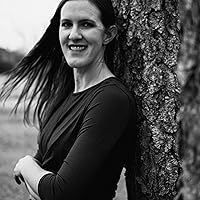
Jane Porter, sometimes credited as "Miss Jane Porter", was an English romantic novelist of Irish descent who co-wrote many works with her sister, Anna Maria Porter. She was born in the Bailey in Durham City.
Librarian Note: There is more than one author in the GoodReads database with this name.
One can certainly understand why, despite the fact that it explicitly claims the honor, few people consider this to be the first historical novel: although it begins by chronicling the end days before Poland's Partition, it rapidly shifts into a more typical romance mode. Certainly an interesting work, particularly for the way it subtly stages a tension between historical tragedy and romantic fiction, and overall a fairly pleasant read.
This is beautifully written with a complex plot that takes a lot of turns and twists to the final disclosures. One of the early examples of historical fiction, but will be appreciated by fans of the Brontes and Elizabeth Gaskell.
Glad I read this ridiculous cross between historical fiction and a "silver fork" romance that was one of the bestsellers of the 19th century. The prose is very stately, the travails of poor, noble Thaddeus suitably excessive (at least 5 beloved family members and friends die in his arms over the course of the novel, not to mention debtors' prison and being forced to teach languages to frivolous young ladies who are too thoughtless to pay him while he is too proud and cognizant of the dignity of his ancient name to request wages, and so on), and the family intrigues and secret marriages as "extra" as one could wish. Good stuff! Also the footnotes in the "extended" 1844 edition are frequently hilarious and not infrequently very informative as to the changes in the landscape of London between 1803 and the 1840s.
This is an amazing read! Yes, it's old-fashioned and a little blush-worthy in spots where the writing is much more gushing and dramatic than we are used to; but it's history, folks. My copy had a preface that Jane Porter wrote later in life, sharing how this book includes her own memories of Polish refugees she saw in London as a little girl. Here is a touching excerpt:
In the days of my almost childhood,—that is, eight years before I dipped my pen in their tears,—I remember seeing many of those hapless refugees wandering about St. James's Park. They had sad companions in the like miseries, though from different enemies, in the emigrants from France; and memory can never forget the variety of wretched yet noble-looking visages I then contemplated in the daily walks which my mother's own little family group were accustomed to take there. One person, a gaunt figure, with melancholy and bravery stamped on his emaciated features, is often present to the recollection of us all. He was clad in a threadbare blue uniform great coat, with a black stock, a rusty old hat, pulled rather over his eyes; his hands without gloves; but his aspect was that of a perfect gentleman, and his step that of a military man. We saw him constantly at one hour, in the middle walk of the Mall, and always alone; never looking to the right nor to the left, but straight on; with an unmoving countenance, and a pace which told that his thoughts were those of a homeless and hopeless man—hopeless, at least, of all that life might bring him. On, on he went to the end of the Mall; turned again, and on again; and so he continued to do always, as long as we remained spectators of his solitary walk: once, indeed, we saw him crossing into St. Martin's Lane. Nobody seemed to know him, for he spoke to none; and no person ever addressed him, though many, like ourselves, looked at him, and stopped in the path to gaze after him. We often longed to be rich, to follow him wherever his wretched abode might have been, and then silently to send comforts to him from hands he knew not of. We used to call him, when speaking of him to ourselves, Il Penseroso; and by that name we yet not unfrequently talk of him to each other, and never without recurrence to the very painful, because unavailing, sympathy we then felt for that apparently friendless man. Such sympathy is, indeed, right; for it is one of the secondary means by which Providence conducts the stream of his mercies to those who need the succor of their fellow-creatures; and we cannot doubt that, though the agency of such Providence was not to be in our hands, there were those who had both the will and the power given, and did not, like ourselves, turn and pity that interesting emigrant in vain.
I think she always hoped that someone helped that poor man, and this book was her apology for her childish helplessness to aid him.
The story itself is grand. I think what I love best about Thaddeus as a man, is that she made him strong and brave and a warrior, but he also reads his Bible and prays without shame, and it only adds to his other strengths.
If you love history and Poland, you've got to read this book! Just be warned: very old-fashioned, dramatic writing.
I am reminded by this read just how much we have fallen in this country in regards to the education of our people. This was written in a time when most men read but the story is appropriate for either sex. While it contains the history of wars to satisfy the males it also contains beautiful portrayals of daily life and the old grand curiosities of the sexes. Very throughly researched and beautiful written.
One of my favorites of all time. Surviving difficulty with flying colors. Inspiring! The end was not so hot and the book could have ended a chapter sooner.
"Men who cannot ardently feel, cannot taste supreme happiness."
A bestseller in its day, Thaddeus of Warsaw is considered by some to be the first English historical novel, taking its plot from the very real Kościuszko Uprising in Poland against an invading Russia. It utilizes real events and real people, though I do have difficulty in labeling it a historical novel myself, when it takes place only about a decade before the story itself was written and published. (Kind of like someone writing a "historical novel" taking place about an event in 2014- it still seems too contemporary).
The story follows Thaddeus Sobieski, a Polish nobleman who finds himself a penniless refugee after a tragic defeat. The book opens with military-heavy scenes that, according to Devoney Looser in her biography on Jane Porter and her sister Maria (Sister Novelists), "a general had said, "No one could have described so well the horrors in Poland who had not been an eye-witness." Many couldn't believe a woman had written it."
Once Thaddeus reaches England, however, the plot becomes a little more familiar to the tropes of the time. The plot itself is complicated to explain fully, but involves a few sudden, dramatic deaths, multiple women falling in love with this "noble foreigner," misunderstandings that lead him to think he has been abandoned by a dear friend, money woes, swooning, and several unlikely connections that continue to stretch belief by the end.
It is not without its moments of enjoyment or insight, but as a modern reader -even one used to reading drier classics- it was not always easy to get through. The most difficult aspects for me, personally, are the overwrought emotion in both the prose and dialogue, and the way the plot points start stretching credulity like taffy.
Jane Porter crafted Thaddeus to be what she saw as a sort of ideal man: deeply sensitive and emotional, honorable, religious, and heroic (in the "literally running into a burning building to save children" vein of heroism).
From a social perspective, I found it interesting how Thaddeus's financial position was not much better than what you might find a young lady of time in; in fact, he actually resorts to doing the very same thing that Laura in Self-Control does: sell his paintings. He later becomes a language tutor for two wealthy young ladies, a job sent his way thanks to an older woman who has taken a motherly interest in him, Lady Tinemouth.
Speaking of Lady Tinemouth, she has one of the most dramatic backstories of anyone in the novel, as she is revealed to be the abandoned wife of a cruel man who basically left her for his mistress and then legally took their children from her, where he (and his mistress! the GALL) have raised them to hate her.
I'm starting to learn that that is the sort of drama you get when reading Georgian novels!
Over all, this is a pretty hefty tome of a book (it was originally published in four volumes rather than the usual three), but if you are brave enough, you can find a free copy on Project Gutenberg.
Wild fact is that apparently (according to Wikipedia) the towns of Warsaw, North Carolina and Pembroke, Kentucky get their name from this novel!
These accounts by Jane Porter (including Scottish Chiefs) may have been a little romanticized, but they SHAPED my young adult years. Maybe more than a little.
This is a really good book. It is quite dramatic, with copious amounts of elaborate emotions and conversation, but the late 18th century descriptions are great, and so are the morals and sentiments. Jane Austen is now by far the most famous author of this time period, but the reality of those times are addressed by Jane Porter in a way expressed by no one else who lived during that era – from how England and English people reacted to the partition of Poland, to the philosophy and morals (or lack thereof), held by the people of the Regency era. Being English, the author of course has an overwhelming sympathy for anything monarchy, which is amusing. But she heaps a gratifying (and sometimes embarrassing) amount of compassion and admiration onto the Polish people, and especially onto her main character, Thaddeus Sobieski. Along with Mary, Thaddeus really makes the book worth reading. He is just that amazing and good, but still courageous and fearless and heroic. He also knows how to do his duty – even if it does mean getting into alarming, irreparable situations. Mary is now one of my favorite female characters of literature, and one of the most relatable; she has such faultless morality, like Thaddeus, with beauty and compassion to match an absolutely sweet temperament. It seems like everything is against Thaddeus for most of the book, (and yes, it’s very depressing), however you cannot stop yourself from charging ahead, even skipping some long, tedious sections in desperation to get to when it all works out. And it does work out in the end pretty beautifully and in a very dramatic way. I did get confused in the oddly boring last chapter, though. Storyline, romance, content, morals – exceptional; historical content unmatched. The world ignores most of the pain and destruction the partitions of Poland caused, but around this little-discussed topic, Jane Porter wound a story for the ages. Niech żyje Polska!
This is the sort of book that gave novel reading (especially for Young Ladies) a bad name. Utterly addictive and totally over the top both in plot and characterisation. Phemy is truly a girl for our times.