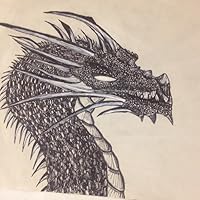
One of the most beautiful and fascinating medieval Arab-Islamic folk romances is presented in English for the first time. For contemporary readers, The Adventures of Sayf Ben Dhi Yazan offers unusual perspectives on issues of gender, religion, race, and ethnicity, as woven into the art of an oral narrative. Composed between the thirteenth and sixteenth centuries during the Mamluk age, this folk romance is still cherished by storytellers in the Middle East. Sayf Ben Dhi Yazan was a historical figure, a sixth-century Arab king who ruled in Yemen before the rise of Islam. In the tale he is presented as a Muslim warrior; his exploits range across Ethiopia, Egypt, and Sudan, where his Muslim followers do battle with pagan peoples. Colorful panoramas of heroic feats, magical escapades, bizarre landscapes and beings, brief or long-lasting love affairs, sincere friendships, demonic hatreds, supernatural forces, and dark spells propel this sira - an Arabic romance in the grand tradition of The Thousand and One Nights.
After this example, I’m keen to find more of these Mamluk-age folk epics or romances in English translation. Such as the one on the historical Mamluk sultan Baybars, or Antar, a poet-hero from before Islam with a father of the noble Arab tribes and a slave Ethiopian mother, or the woman Dhat al-Himma who fights Byzantines alongside her black son. They are called sira/singular sirat and date from the 13th-16th centuries. Sirat is often translated adventures, as in this title or The Adventures of Antar (translated but rare).
The creators of this book hope to entice English readers with the choice of King Sayf, or the Knight of the Yemen. If I may quote from the introduction:
Nowhere in sira literature is the magical and the demonic given such a high profile in the plot. And nowhere else is eroticism, bordering on the explicit, allowed such a prominent place in the narrative. A passage where Sayf is all but seduced by his mother, Qamariyya, when she challenges him to wrestle with her naked, alone in single combat, is almost startling in its explicitness. Its juxtaposition with other passages telling of ascetics, of spiritual discipline, of Prophetic example, and of feats of gallantry and skill in weaponry by male and female combatants apparently reflects the taste and accepted morality of the Mamluk age.
Queen Qamariyya is the villain, and the introduction speculates that she was inspired by the real-life queen of Mamluk Egypt Shajar al-Durr, who likewise didn’t want to hand over the reins once she had them in her hands. The setting is ancient Yemen, with allegiance to Persia and enemies in Ethiopia and the Sudan – but the milieu, so the introduction suggests, is Mamluk, and intriguing.
The women call for comment. This is the old story of a search for a wife or labours to earn her; but Sayf’s story is made complex by his agreements to marry five or six wives in the course of the story. He is assigned an impossible task to win his first – she, Shama, climbs out her window, girds on sword and goes to help him out. There is conflict because he has vowed to wed no woman before Shama, and others he meets resent that: the next, Tama, threatens to swipe heads off any wives ahead of her, while another, insulted, makes seven assassination attempts on Sayf himself. He deals with this with grace and integrity, and things work out in the end... It’s rather wonderful to have a hero-finds-a-wife story with several wives; stretches our English-language minds.
There is, as in the description quoted above, much magic, much religion (Islam ahead of its time, against star-worshippers or more strangely, giants who worship a sheep) and a Great Battle with that old Arab battle poetry which, from the snatches I know, is rarely beat.
I was excited about this Arab classic being released since there is not much out there in English. It supposedly inspired later writers like Ariosto, who gave us the great Orlando Furioso. For me at least, this romance fell a bit short of that masterpiece, but it had its moments. Sayd Ben Dhi Yazan is a hero who is destined to control the Nile river and to subjugate the peoples of Ethiopia and Sudan, thus fulfilling the curse of Noah on his son Ham. This story it can be seen was influenced, historically, by the invading Arabs into Africa. During his adventures Sayd encounters and vanquishes wizards, giants, infidels, the champions of his enemy the king of Ethiopia, and his own evil mother! He visits many exotic places, some whimsical, others interesting, still others just plain silly. He accumulates wives in the process as well as powerful friends and weapons. He even has a sister who is a jinn, and she can carry him wherever he wants. with such help as well as destiny on his side, you almost feel sorry for the "bad" guys. Although, Sayd does suffer trials, pain and hardship. Parts of this romance is great, especially the chapter The Great Battle. Exciting epic writing. Much of the other parts of the story felt more like a bloated fairy tale rather than an innovative epic. There are verses seeded among the prose; some of it okay, much of it just intrusive. On a more personal note, I had a real hard time with the constant praising of God, the all wise and all merciful. Not to offend any religious people, but I think even the faithful might get a tad tired of how the hero hears birds singing the praises of God whenever he enters a new land. Or, whenever he is in a jam he just has to pray and INSTANTLY, something happens to get him out of it. I did not know God always worked so quickly like that. This of course is not just any God, but the God of Islam. So all peoples of other faiths are treated as infidels. When Sayd captures an enemy, he gives him a choice: convert or die. Not much of a choice there. It kind of reminds me of modern fanatical religion. To put it simply, I don't like to be preached to when I am reading. That being said, I should not hold it against this book too much. In other medieval epics, such as the Orlando, the Christians are the righteous ones and the Muslims are the infidels. Let's just say I felt the annoyance more in this story. Finally, after almost 300 pages, the story ends a bit abruptly. After his last adventure, it is said that he had more trials and battles, winning them all of course, with the help of his sons and buddies. You don't even here how he fulfilled the curse by controlling and diverting the waters of the Nile. Strange. Still worth a look if you want to try something other than the Arabian Nights.
The Adventures of Sayf Ben Dhi Yazan: An Arab Folk Epic is a classic telling of great exploits by a young Yemeni hero who confronts the enemies and adversaries of God as he trounces around exotic lands, going on quests, taking brides (or they taking him), and vanquishing foes. Colored with all the usual zealotry, pride, and prejudices of the times, yet not without a diversity of characters, delivered in a very straightforward, simple (not-so-flowery), and repetitive manner. There's romance, drama, and plenty trials involving entertaining feats of daring, escape, and outlandish battles (however predictable). Speaking of predictability it's the perfect script for a film. This should be made into a movie if not mini-series.
Four stars for the first half, one star for the second half, zero stars for the absolute end. That three star rating I gave it above is only because of the first half which you definitely should read.
Sayf Ben Dhi Yazan was one of the last Himyarite Kings in Yemen. THis volume offers a fictional acccount of his severaal adeventures. It was written during the Mameluke era and has many eleement borrowed from surrounding cultures. Many of them are fantastical and could not have happend in real life. Several elements of Euro likteature have entered as well. None the less it shows how connected all the worlds cultures were at the time.
14th ? Its existence as a text can be traced only to the Mamluk period in Egypt, sometime between the 13th and 16th centuries, and the story overall is much more magical than ‘Antara’s.
17th bnf يزن
This is an abridged translation from the edited version published by Makatabat al-Jamhūrīyah in Cairo Late 19th/early 20th