Jump to ratings and reviews
Rate this book

Mouchette

Rate this book
One of the great mavericks of French literature, Georges Bernanos combined raw realism with a spiritual focus of visionary intensity. Mouchette stands with his celebrated Diary of a Country Priest as the perfection of his singular art.
“Nothing but a little savage” is how the village school-teacher describes fourteen-year-old Mouchette, and that view is echoed by every right-thinking local citizen. Mouchette herself doesn’t bother to contradict it; ragged, foulmouthed, dirt-poor, a born liar, and loser, she knows herself to be, in the words of the story, “alone, completely alone, against everyone.” Hers is a tale of “tragic solitude” in which despair and salvation appear to be inextricably intertwined.
Bernanos uncompromising genius was a powerful inspiration to Flannery O’Connor, and Mouchette was the source of a celebrated movie by director Robert Bresson.

127 pages, Paperback

First published January 1, 1937

29 people are currently reading
3682 people want to read

About the author

Georges Bernanos

179 books211 followers
Georges Bernanos était un écrivain français, gagneur du Grand Prix du Roman de l'Académie française en 1936 avec Journal d'un curé de campagne.

George Bernanos was a French writer. His 1936 book, Journal d'un curé de campagne (Diary of a Country Priest), won the Grand Prix du roman de l'Académie française.

Ratings & Reviews

What do you think?
Rate this book

Friends & Following

Create a free account to discover what your friends think of this book!

Community Reviews

5 stars
232 (26%)
4 stars
345 (39%)
3 stars
218 (24%)
2 stars
67 (7%)
1 star
18 (2%)
Displaying 1 - 30 of 94 reviews
Profile Image for Vit Babenco.
1,784 reviews5,792 followers
September 9, 2025
Mouchette is fourteen… She is running to the school… This time not to study but to spy…
The dark  west wind, the sea wind, was already scattering the voices in the darkness. It toyed with them a moment and then lifted them all together, dispersing them with an angry roar. The voice which Mouchette had just heard hovered in the air a long time, like a dead leaf floating interminably.
Mouchette slid as far as the top of the bank and settled down to watch, her back against the dripping hedge. From her post the school still seemed quite near, but the yard was deserted now. After playtime on Saturdays the children assembled in the main hall…

On returning home she is caught in the hard storm and it’s already dark so she is soaked to the bone and cold and she loses her way… She is rescued by a crass poacher who takes her to his hut in the woods…
For years Mouchette had felt herself a stranger amongst the villagers, dark and hairy like goats, whom she hated so much. Even while they were still young they ran to unhealthy fat.

He tells her about his horrible misdeed… She is looking at his face… And unexpectedly Mouchette feels deep inside some new disturbing vibrations…
This face, however, had something fraternal and friendly about it. Suddenly it had become as familiar as her own. All the pleasure in looking at it came not from him, but from the depths of herself, where it had lain hidden and germinating, like a seed of wheat beneath the snow. Nothing could alter its power and sweetness, and it depended neither on time nor on place.
Hot feelings of youth are quite capable of winning over reason so everything may end up in tragedy…
Profile Image for Jim Fonseca.
1,163 reviews8,499 followers
February 16, 2023
[Revised 2/16/23]

Here’s a story of a 14-year-old girl in rural France (translated from French) first published in 1937, so we assume we are harkening back to the author’s youth in the late 1800s. Only 125 pages, so a novella.

description

Kerosene lanterns and candles give other clues of the era. It’s a dirt-poor region of smugglers and poachers fueled by alcohol and abuse. People die young from tuberculosis. The deceased grandfather of Mouchette spent time in France’s notorious Devil’s Island prison in French Guyana.

The little girl, our main character, and essentially the sole character that we follow, is born into this world of poverty, alcohol, abuse, disease and despair.

Even at this young age, Mouchette’s role in life is so inculcated into her that she deliberately smudges her face when she goes into town because she is expected to look dirty. Her teacher holds up her filthy hands to the class to be mocked.

Mouchette’s short life exemplifies a time in human history when life was short, brutish and mean. A powerful book.

description

Georges Bernanos (1888-1945), the author, wrote about 30 books. Most have been translated into English. His best-known work in English is The Diary of a Country Priest. Wounded several times in WW I, he was unhappy with French politics and lived in Brazil for the last eight years of his life.

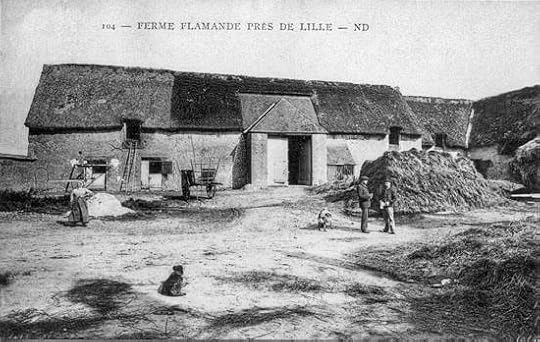
Top photo: a French farm from an old postcard on pierreseche.com
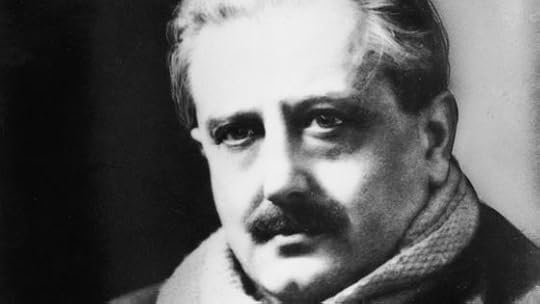
The author from radiofrance.fr
Profile Image for Daisy.
283 reviews100 followers
December 20, 2022
‘Tis the season of good cheer and jollity and so dear readers I offer you Mouchette. The story of a 14 year girl, dirt poor with alcoholic parents who is shunned by the villagers and mocked by her teacher because of her uncouth ways, her rags of clothes and her unwashed appearance. Despite all this she has a spark inside her, an unextinguishable flame of defiance and resilience that carries her through.
Inside of 24 hours this is taken from her and with it any self-respect or hope. She has the only thing she possessed – her virginity- taken from her by an older poacher who she has a crush on. He convinces her there is a cyclone and to shelter with him in a shack. He plies her with drink and rapes her. Returning home, where she tells no-one, she feels fooled and embarrassed as those she mentions the cyclone to mock her description of what was, in fact, only heavy rain.
The destitution is so severe as to be almost unbelievable. Her baby brother screams incessantly in his wet rags, his cries ignored by a sick mother who chooses this night to die. After responding to the kindness (superficial though it is) shown to her in her grief with violence, the villagers resort to describing her as worthless and vermin. Relief comes in the shape of an old woman whose job it to sit with the deceased. She recognises the hopelessness of Mouchette’s existence and gives her a white dress which with overtones of baptism – rebirth being the only option for the motherless and despoiled child- she puts on and walks into the river allowing herself to be taken by it.
A Merry Christmas one and all.
Profile Image for None Ofyourbusiness Loves Israel.
877 reviews174 followers
October 1, 2025
Mouchette is fourteen, but her childhood is already over. She is mocked at school, beaten at home, and dressed in rags so shabby they seem to carry the smell of humiliation in their threads. Her father drinks himself to ruin, her mother coughs herself into the grave, and the baby screams with hunger in a shack that tilts toward collapse.

She slips through life half-feral, clinging to scraps of kindness. A stranger’s absentminded caress, a fleeting moment of song, are like contraband treasures.

One storm-drenched night she encounters Arsène, the village poacher, drunk, paranoid, and epileptic. He believes he has killed another man, Mathieu, in a fight. He pulls her into his hut, suffers a seizure, and then assaults her. The most devastating moment comes afterward, when she accepts this cruelty as if it were proof of her existence. Asked about him later, she says simply, “He is my lover.”

The next day, her mother dies, leaving Mouchette utterly alone. Marks on her body betray what has happened, and she carries a corrosive sense of shame that eats into her flesh and spirit. The villagers offer suspicion instead of solace. Even the tragic destiny Arsène seemed to promise collapses into farce when she discovers that his supposed victim is very much alive, shaving in front of a mirror. She has been deceived, degraded, abandoned, and left with nothing but shame.

The thought of life ahead, filled only with blows, scorn, and toil, presses down with unbearable weight. Mouchette walks to a pond outside the village. An old woman gives her a shroud-like dress, and Mouchette studies her own calloused hands as if they carried the verdict of her life: drudgery, contempt, and nothing more. She steps into the water, lies back, and lets herself sink.

Bernanos does not grant her a noble death. He writes of her ears filling, her body sliding under, the silence closing in. It is one of the most sorrowful drownings in literature, made unbearable by its inevitability.

Mouchette is a wound written into flesh, a child who received too little tenderness to survive. Bernanos forces us to look at what happens when a society abandons its most fragile. This is a short novel, but it leaves the reader shaken, as if the water closing over her head had reached our own throats.

"...She seemed to ache in all her bones, throughout her whole body. In the village, she was thought of as ‘tough,’ but she had never had to bear such a pain before. She had never before had time for introspection, and any subtle distinction between the physical and the spiritual was beyond her grasp. Patiently and uncomprehendingly she suffered in every atom of her being a pain which culminated in a terrible nausea. She raised herself to her knees and stifled a racking dry sob.

She listened again. Still no sound but the eternal dripping of the trees, yet she dared not turn away from the hut. She backed away from it, and stopped for the last time. The path was just below her now. It was not easy to make out, but she could almost follow its curves from the sound of the water gurgling along its ruts. She slid down.

As soon as she felt firmer ground beneath her feet, she could not stop herself running on through the wood. At first she tried to shield her face from the lash of the wet branches, but after a while she lost all awareness of it. She ran, moaning feebly like a hunted animal making a last desperate effort and managing to force out, scarcely beyond reach of the hounds’ jaws, a final bound from its tense muscles.

She reached the edge of the wood before she stopped and found herself on the road, its puddles gleaming feebly as far as she could see...."
This entire review has been hidden because of spoilers.
Profile Image for Czarny Pies.
2,830 reviews1 follower
October 9, 2021
Robert Speaight’s superb biography of Georges Bernanos which I read this year (i.e., 2021) convinced me that I had severely undervalued “La nouvelle histoire de Mouchette” which I had read fifty years earlier for an undergraduate French literature course and hated. Speaight’s judgement is that the great literary skill of Bernanos ”enabled him to turn what might have been a sordid melodrama into a sombre idyll of compassion.” In fact, I had as a 19-year old found the novel to have been a melodrama in dreadful taste.
"Mouchette" has several problems. The author appears to endorse suicide for those whose situation in life is hopeles if their goal is to unite with Christ in Heaven. Bernanos also inteneded Mouchette's sufferings to be a metaphor for those of the innocent victims on both sides of the Civil War in Spain. While this intention is clearly documented in the correspondence of Bernanos, it is not clearly presented in the actual text of the novel.
Depsite its many negatives, the "Nouvelle histoire de Mouchette" was a popular choice for inclusion on first year French Lit courses at Anglo-Saxon universities in the 1970's when I was an undergraduate . It is short and clear both of which are important qualities for English speakers beginning to read French. Moreover, as it addressed the issues of alcoholism and rape it had the virtue of discussing topics that at the time would have been considered inappropriate for secondary school courses. I think Bernano’s treatment of rape and violence still stands up very well in today’s world. All in all, I think it might be time to put “Mouchette” back on the curriculum.
In Canada where I live, the University French departments understand that most of their graduates will wind up teaching in French immersion schools. Thus, the French Lit programs are heavily loaded with novels by Quebecois writers in order to help the future schoolteachers better understand the culture of Canada’s French province. This is a fine goal, but the Catholic literary tradition still should be covered and “Mouchette” is an excellent choice.
The one problem is that the repertory cinema houses of the 1980’s all closed before the end of the century. This meant that the undergraduate studying “Mouchette” has little opportunity to see the outstanding Robert Bresson movie version of “Mouchette” that regularly appeared in the repertory cinema houses when I was an undergraduate and which allowed those who had studied the book compare their interpretations with that of a great film director.
Outside of the academic setting, "Mouchette" rates only two stars. While it addresses difficult issues, I find that it lacks finesse and is painful to read in many places. I suggest that the general reader wishing to make the acquaintance of Bernanos start with the vastly superior "Diary of a Country Priest" or perhaps attend a performance of the "Dialogues of the Carmelites", Poulenc's magnificent opera based on a text by Poulenc.
Profile Image for Baz.
359 reviews396 followers
February 28, 2022
What an astonishingly strange, dark little piece of perfection this was. The intensity of Bernanos’s style, the ruthless psychologizing, made this book a rare gripping read.

To tell you about the 14 year old Mouchette is to ruin the story. This novella intimately follows her trajectory toward an incredibly poignant end that had me holding my breath. I’d recommend reading it knowing as little as possible. But it wonders how life is meant to be lived, how it can possibly be lived, when you’re poor, an outcast, and have only known a certain kind of abject life, of misery and cruelty, devoid of love.

Bernanos elevates this tragic tale with his intelligence and unusual penetration into Mouchette’s psyche. His moral ethics and humanity come from his Roman Catholicism. Apparently it inspired the work of Flannery O’Connor, so there you go. There is a lot of heart in this book, an ounce of which is not in the story, but all of it comes from Bernanos’s passion and attention to his subject.

This reminded me of Skylark by Dezső Kosztolányi, another harrowing, propulsive descent into the darkest, saddest parts of human experience. This kind of philosophical literature is few and far between in English language fiction.
Profile Image for Lucille.
144 reviews23 followers
September 17, 2017
Thirteen reasons why this is a FAR FAR superior book to a more recently published, more widely read, and much more profitable book about a teen girl's suicide:

1. It wan't written on the author's used toilet paper.
2. It wan't written on the author's used toilet paper.
3. It wan't written on the author's used toilet paper.
4. It wan't written on the author's used toilet paper.
5. It wan't written on the author's used toilet paper.
6. It wan't written on the author's used toilet paper.
7. It wan't written on the author's used toilet paper.
8. It wan't written on the author's used toilet paper.
9. It wan't written on the author's used toilet paper.
10. It wan't written on the author's used toilet paper.
11. It wan't written on the author's used toilet paper.
12. It wan't written on the author's used toilet paper.
13. It wan't written on the author's used toilet paper.
Profile Image for Jeanette (Ms. Feisty).
2,179 reviews2,186 followers
October 6, 2011
I recommend treating the introduction as an afterword. Save it till after you've read the novella. There's so little story to be told in this tiny book, and the introduction gives it all away. Shame on the publishers. This happens so often in classics that I've learned not to go near intros. Spoiler City.
Profile Image for Nora.
71 reviews47 followers
March 26, 2008
I watched this film once a day, for a few days. I don't do this with many films- La Strada. Pierrot le Fou I watched upon waking for about a week; it was my version of a cup of coffee and the paper. Umberto D, a nightly salve. But Mouchette- my little savage... this is a brutal and beautiful tale. Raised by generational alcoholics, scorned and abused, shamed daily, Mouchette abhors and desires affection and tenderness- in love with the man who raped her, the fierce and violent world of men is more safe than the uncertainty of the world of women. Classmates and neighbors, teachers, shopkeepers who may judge her, or worse yet touch her, caress her cheek and leave her lifting her face mid-sleep waiting to be kissed, to be touched and acknowledged.
Profile Image for Cody.
992 reviews302 followers
September 13, 2023
Right book, right time. Southern Gothic? Nix, that doesn’t apply. Wrong South but imbued with that same ‘haunted woods/rotten overalls’ inevitability. Le Grande Bad Wolf?

Got it: Bordeaux Bats, a French subset of my American ‘Hillbilly Bats’ section. They, too, only drink young blood, youngblood.

Cannes Bats or Nice Bats both lack the ring, even if that Franch ‘Nice’ rhymes with ‘geese’ and not ‘mice,’ see Vu play and thank you very goddam much. Some of us done done our book learning properlike.
Profile Image for Steven Godin.
2,782 reviews3,390 followers
October 21, 2021

Robert Bresson's film I found to be a really profound experience, with such powerful scenes that were both unbearable and unforgettable, but Bernanos's novel somehow didn't resonate with me as much. I think it's a case of a really good book that I happened to read at the wrong time and in the wrong mood. This bleak and tragic French rural tale sees a poor country girl fall under the spell of a cunning and wicked trickster whilst she is playing truant from school in the woods. Very much the unloved child at home she is also bullied, but the saddest thing of all is that the saddest things haven't even happened to her yet: Could it get any worse for a child? The novel certainly packs one hell of an emotional punch, and any cold blooded, stone hearted person would surely find it difficult not to be moved.
Profile Image for Belle.
57 reviews30 followers
September 14, 2017
For years, I’ve been obsessed with French cinema. Every night I would choose an old French film from my collection and allow myself to be fully immersed in its elusive beauty. I was once struck by the sophistication of French film making after watching Au revoir, les enfants by Louise Malle. I was also deeply enthralled by Hiroshima, Mon Amour and I remember bawling my eyes out while watching Les Quatre cents coups. French cinema has the cinematic glamour of being exceedingly sophisticated and transcendental and it has been my niche since then. There are films that I hold dear, there are films I would re-watch all the time and Mouchette is one of the films that I can’t seem to let it slip into oblivion. The last scene keeps playing in my head and my heart aches every time I think about the little poor wretch and her mental anguish. The film itself has left an indelible mark on my psyche as it resonates with me on an intrinsic level through its exploration of existential dread and contemplation on suicide.

Mouchette by Georges Bernanos was published in 1937 and a few decades later, Robert Bressen turned the novella into a cinematic tour de force, a film so heart-wrenchingly harrowing that some viewers even regarded it as spiritual. The story of Mouchette lacks all trace of exuberance, she’s a gloomy little creature, regarded as a savage by all her schoolmates and teacher. Her headmistress occasionally mocks her appearance and low status by holding up her brutish hand for the whole class to see what a little savage she is. Her father is a drunkard who often beats her senselessly, her mother’s suffering from a life crippling sickness. Mouchette is bound to take care of her infant brother whom she bears no affection toward. As a 14 years old, she’s stuck and feels like she’s already dead inside. She takes other people’s perceptions of her to be true, even though deep down she detests her inculcated condition, but she has no means of escaping from it. She projects her feelings on a man who raped her, despite being fully aware of his false affection.

In a world where she’s been misunderstood and abused all her life, she longs for a glimpse of tenderness and understanding. Moreover, she yearns for someone who would see her as a human being instead of a wild savage who belongs on the periphery of a society. I understand Mouchette’s affection for her rapist and it’s morbidly painful to even fathom that she wants no revenge or no harm to come to him. One time she even said to him before resort to elegiac sobbing, “I would rather kill myself than let anyone harm you”. This demonstrates the intense loneliness she feels along with the shocking fact that she’s aware of the extent of his crime but willing to ignore it for his sake.


Her contemplation on suicide is probably one of the most haunting parts, it reverberates her anguish and intense disgust through sensory details. The thought of death seizes her involuntary and it beckons her. It’s a tragic vision and a foreshadowing of Mouchette’s pitiful ending, superimposed by existential grief. Mouchette’s story illuminates class struggle in rural France. It’s the embodiment of mental affliction borne out of social marginalization and squalid poverty.
Profile Image for Jayaprakash Satyamurthy.
Author 43 books518 followers
February 15, 2021
We follow a young girl, an outsider even in the small town, shading into rural poverty, where she lives, over the course of roughly twenty four hours. In this time, her small, mean life is turned upside down again and again. Love, freedom, betrayal, cruelty, bereavement all come to her in a kind of building crescendo. She exhibits a sullen stoicism through most of it, with moments of anger. She is barely a thinking being, as shown in Bernanos' gentle, stark portrayal. What is there to think about? And underneath the wildness, the sullenness, the flat affect, the flashes of defiance, we learn there is a deep, unanswerable despair. This is a haunting novella, and the source of its power lies in the sense that Bernanos has captured a profound truth in this fiction.
Profile Image for Tuck.
2,264 reviews252 followers
November 7, 2011
i would venture to guess that almost every single person on gr's is of peasant stock and that not too many generations past our grandparents or great gp's or whatever, lived the dirty, diseased, brutal life of rural folks. many, most, people still do, though probably not many post to gr's. Mouchette came to a point in her young life where death was just like life. no different. This Bernanos reminds me very much of Jose Cela's "Pascual Duarte" The Family of Pascual Duarte (Spanish Literature Series) by Camilo José Cela
Profile Image for Mark Summers.
26 reviews2 followers
June 25, 2013
There are works of literature that readers find "strange."

This particular adjective or atmosphere transcends genre and by it I am not referring to the oddness or unreality of horror stories, apocalyptic stories, or science fiction stories. Such books - for all their imaginative richness - are, nonetheless, written as more-or-less straightforward narratives (most commonly written "to form"); they are escapist works (and I mean this as a compliment to them as having purpose and value), designed to give pleasure to the reader, and - therefore - cause the reader no discomfort, evoke in him/her no reflection, no quizzical expression or pause. The strangeness of horror, science fiction, fantasy, and noir is not the strangeness I wish to highlight here.

By contrast to the above, works of literature aesthetically describable as "strange" are works that require real effort to fathom, that do cause a measure of discomfort in the reader (at least to the extent that he/she has to struggle to understand the book), that do evoke reflection, pause, and the re-reading of passages or pages.

Of these books there are two general streaks of strangeness. One, there are what-I-will-call books of "mannered strangeness" - the self-consciously strange, the affectedly strange. Examples of this type include books by David Foster Wallace, Thomas Pynchon, Tom Robbins, William Vollmann, Jorge Luis Borges, and Roberto Bolano (among others). I get no personal satisfaction from reading the "mannered strange." Two, there are the what-I-will-call books of "existential strangeness" - the articulation of life's mysteriousness, its dimensions of seeming absurdities and incomprehensibilities, the articulation of the real behind the factual. The "existential strange" is recognizable and distinctive for the truth it sounds in the soul of the reader. It is less-a-matter of knowing the truth about a particular thing, less-a-matter of knowing some-thing, than it is a matter of recognizing the true, of having the reader's own inarticulable knowing articulated rather exactly and authentically in a work of literature. The "existential strange" speaks of existence and experience; it speaks to reality in its depth. The "existential strange" - quite unlike the "mannered strange" - strikes the reader as having been written effortlessly, flowingly. "Existential strangeness" is beautiful (no matter how dark), is poetic (even as prose), and is honest (especially if fictitious). Examples of "existential strangeness" include everything written by Flannery O'Connor, books by Clarice Lispector, NIGHTWOOD by Djuna Barnes, and (although B.R. Myers [see his A READER'S MANIFESTO: AN ATTACK ON THE GROWING PRETENTIOUSNESS IN AMERICAN LITERARY PROSE] would not agree with me on this) I'd add the works of Cormac McCarthy.

Which leads me to the "existential strangeness" of Georges Bernanos. According to the back cover of the NYRB-edition seen here, "MOUCHETTE stands with Bernanos' celebrated DIARY OF A COUNTRY PRIEST as the perfection of his singular art." I wholeheartedly agree. In an introduction to this edition Fanny Howe wrote, "[In this book Bernanos explores] the question of what a person needs to live in the world. (At least one of the three criteria has to be met for a person to survive: one needs to be useful, to be loved, to be safe. Old people, like the children of the poor, are often deprived of all three.) This is what the story of Mouchette is out to discover. What do we need to live?"

In the novel itself Bernanos wrote, "People generally think that suicide is an act like any other, the last link in a chain of reflections, or at least of mental images, the conclusion of a supreme debate between the instinct to live and another, more mysterious instinct of renouncement and refusal. But it is not like that. Apart from certain abnormal exceptions, suicide is an inexplicable and frighteningly sudden event..." That strikes me as "existentially" true. Later in the book Bernanos would add a gloss of-sorts to this when he writes, "Suicide only really frightens those who are never tempted by it and never will be, for its darkness only welcomes those who are predestined to it. [...] Unless he is mad, the last feeling of the person who kills himself must be one of amazement and desperate surprise."

Strange. MOUCHETTE is a work of "existential strangeness."


Profile Image for Nate D.
1,654 reviews1,254 followers
September 29, 2011
Realism so destitute yet graceful as to attain a kind of shimmering deathly clarity and deep-quarries of potential resonance. Bresson made a film of it. It jumped me at the library with its nyrb cover and only took a day to bolt through.
Profile Image for Lars Meijer.
427 reviews49 followers
January 25, 2019
’Suicide only frightens those who are never tempted by it and never will be, for its darkness only welcomes those who are predestined to it.’

*3,5
Profile Image for Brian James.
Author 106 books226 followers
February 12, 2011
This is one of those novels that doesn't overpower the reader with its sadness, but rather works slowly to overwhelm them in a such a subtle way that the true impact falls upon you only after you've turned the last page. Mouchette is the story of a young girl, who at fourteen, is lost somewhere between the world of childish confusion and grown-up intuition. Told in such beautiful and easy prose, the harshness of the story is elevated into something pleasurable, almost hiding the painful reality of Mouchette's plight.

"Of course, thoughts never passed through Mouchette’s mind in such a logical way. She was vague and jumped quickly from one thing to another. If the very poor could associate the various images of their poverty they would be overwhelmed by it, but their wretchedness seems to them to consist simply of an endless succession of miseries, a series of unfortunate changes. They are like blind men who with trembling fingers count out the coins whose value they cannot calculate."

The emotion of the book comes not from the brutal events that befall Mouchette but from the fact that she barely cares. She has resigned herself to being the 'little savage' that her teacher and townspeople see. She is aware of her ability to suffer through life, but to what end? To become like the adults around her with only new and different pains to come? In much the same way as Kate Chopin's 'Awakening', the reader accepts Mouchette's unwillingness to be bound to that sort of life and curses a world that allows such a decision to become the only appropriate one.

Another amazing novel in the NYRB (New York Review Book) series of reissues of incredible novels that deserve to live on.
Profile Image for Tülay .
236 reviews14 followers
January 27, 2023
, bizzat kendi doğasının dışavurumu olan isyanı anlaşılır bir anlama sahipti. Yalnızdı, artık gercekten herkese karşı yapayalnızdı. Bir Sevgisizlik Öyküsü Georges Bernanos.
Kuzey Fransa'da sefalet icin de yasayan bir aile. Baba alkolik, anne hasta ve kucuk bir kardes . Bu ailede yasayan yasadigi olumsuzluklarla içine cekilmis bir kiz Mouchette. Okulda , evde , sosyal hayatta insanlarin alay konusu olan Mouchette bir gun okuldan erken cikar ve ormanda gezinmeye baslar. Yururken bir avci olan Arsène ile karsilasmasiyla hayatının yonu birden degisir. Bundan sonra Mouchette'in ic dunyasindaki değişimleri yazar okuyucuya yavas yavas anlatmaya baslar. Otekilestirmenin , degersizlik duygusunun cok iyi anlatildigi bir roman yazmis Bernanos. Bize onemsiz gibi gelen alayci sözlerin insan ruhunda nasil derin yaralar actigini tam anlamiyla okuyucuya hissettiren bir roman Bir Sevgisizlik Oykusu. Jeanette Winterson 'un Noel Gunleri isimli kitabinda yer alan "Noel Ruhu hikayesinde gecen "Nefret ne büyük bir hayat israfi " cümlesini hatırladım Bernanos'un kitabını okuyunca. Butun yaralarımızın kaynağı nefret, sevgisizlikten ve ötelenmekten kaynaklı. Oysa bu dünyada insanlarin birbirine verebilecegi tek sey sevgi. Kitabin filmi yonetmen Robert Bresson tarafindan cekilmis. Kitabini okuyun , filmini de izleyin derim.
Profile Image for Konstantin R..
775 reviews22 followers
August 3, 2017
[rating = A+]
Best Book of the Year (for 2014)
A stirring book about adolescence and the power of decision. The girl runs through the rain, meets a friend, gets home late, and becomes engrossed in her own misery. Poverty does not fear itself, it fears realizing that they are poor. Very well written with insight on Mouchette and on her dreary life. The young girl is an outsider and she doesn't know why, just that she must stay solitary. She does not seek pity, but she has not the touch of a loving mother; and that, I suppose, is what happens when children go without loving and protecting families. They are lost and in denial and are looking for trouble. A fast read that speaks volumes on the human race just through one character.
Profile Image for Erma Odrach.
Author 7 books74 followers
January 12, 2010
Mouchette or "little fly" is a story of a destitute 14-year-old girl living in rural France, searching for hope and a better way of life. Her story is very raw and real, and she is "alone, completely alone, against everyone." Having an alcoholic father, she is abused, scoffed at, shamed, humiliated, raped.

Bernanos repeatedly refers to her as an 'animal', and the schoolmistress, along with other villagers, calls her a 'savage'.
An intensely grim but heartfelt rendering of a young girl living in abject poverty. Lyrical and insightful, it's a very tragic and heavy read.
Profile Image for Daniel Polansky.
Author 35 books1,249 followers
Read
November 30, 2018
A series of miserable things happens to a girl in rural France. This is an example of that sort of very self-consciously ‘Catholic’ novel, possessed of a morbid affection for misfortune and portraying despair and salvation are flip sides of the same coin. The older I get the less sympathy I have for this peculiar form of self-indulgence, which seems uncomfortably close to masochism. I’m pretty much with Orwell on Waugh, and even Flannery O’Connor’s immense genius stumbles against her endless parade of limbless unfortunates. But, like both of those authors, I wouldn’t dream of denying Bernanos’s talent and skill. Not for me, maybe for you.
Profile Image for Clint.
38 reviews1 follower
July 3, 2014
Poor Mouchette. Unfortunately (or not), my perception of this story is tainted by my love for the Bresson film, which in its refusal to explore psychological realism creates a sublime vision of a soul in transition. Bernanos' novel, on the other hand, at times reads like an essay on a character rather than a story.
Profile Image for Scott Milton.
44 reviews
July 30, 2024
Kafka spoke of the necessity for books that wound and stab us. Here is such a book.
Profile Image for Sophia Eck.
664 reviews198 followers
October 13, 2025
Mouchette, our titular character, embodies in many ways the meaning of her name in French, “little fly”, in her tendency to flit from place to place haphazardly, and to be the naive victim of quite a brief but taxing story. Mouchette, a 14 year old schoolgirl, flees school one day in her much too large clogs, only slightly bitter about her teacher’s admonishments, only to find herself a bit lost, and a bit stuck in the mud. A man named Arsène, who we soon find out is both deeply epileptic and vocally crude, finds her and shelters her in his “hut”, AKA where he hides his game from hunting, from what she suspects is an incoming “cyclone”, though is in hindsight just a casual storm. The story briefly chronicles the ways Mouchette is deeply naive, as is assumed at her age, while at the same time so much is expected of her in her household, due to her negligent mother and abusive drunkard father. An Alice in Wonderland of sorts, victim to surrounding madness and specialization, Mouchette ferries secrets, uncertainty, and covert information around a strange cast of characters, constantly dirtied and often maligned, and victim of an ever maddening but unfortunately real world. “Any sort of reflection was so unusual for her that she was unaware of the enormous effort she was making to understand. — Her whole life seemed concentrated in one painful spot inside her and seemed to burn as hard and bright as a diamond.” Short enough to read in one sitting, shorter than the life of a little fly, Mouchette is an interesting, odd, and tragic little book.
Profile Image for Mike.
1,432 reviews56 followers
April 17, 2025
A novel that is known mostly for its (in)famous ending and for the Bresson film adaption from the '60s. As with Under Satan's Sun, Bernanos offers a modern update of Naturalism steeped in Catholic suffering, featuring yet another teenage girl who is abused and must reassert her agency through the one true choice that humans have, according to some existentialists. (And maybe this novel might even be considered the Catholic cousin to that movement, as much as to Naturalism.) Even so, the most profound statement in the book was actually written by Fanny Howe in her Introduction: at least one of three criteria must be met to live in this world—to be useful, to be loved, or to be safe. Words to live by. Literally.
Profile Image for Adam.
144 reviews8 followers
Read
March 12, 2025
My first from Bernanos, ability to paint a complete portrait in so short space. Perhaps influenced by Dostoyevsky, a testing of faith, and within this portrait how it disintegrates. I'm presuming his other novels explore these themes. I've not seen the Bresson adaption.
Profile Image for Realini Ionescu.
4,049 reviews20 followers
July 8, 2025
Mouchette by Robert Bresson, adapted from the wondrous book by Georges Bernanos – author of The Diary of a Country Priest http://realini.blogspot.com/2017/06/d...

10 out of 10


‘There is nothing either good or bad, but thinking makes it so’ – Hamlet…having decided on that, there is the exhilaration of watching the film or reading the book, a marvel – as opposed to the Marvel Universe which I refute, in the future, an impossible task, seeing as they have invaded not just exotic planets and galaxies, but the small and big screens – but we can also shiver at the cruelty shown towards the protagonist and animals (such as the rabbits that I fear have been really killed for the production, there were no special effects, and that period was not into showing at the end that ‘no creatures have been harmed during the filming’…besides, this looks like a hypocrisy, given that humanity does kill billions and tortures them in the process, a horror detailed in Sapiens, A Brief History of Humankind http://realini.blogspot.com/2021/02/s... by Magician Yuval Harari and other opera) and try to be ‘A Merit Finder, Not a Fault Finder in the narrative…


In feminist terms, Mouchette is the archetype, the quintessential victim at the hands of male chauvinist pigs, she has to suffer insults, indignities and it gets ever worse, she is abused, raped and her life is hell, in this small French village, about one hundred years ago – alas, it could be today in most places in the world, those that reject ‘Western norms and values’ and say that this is just for America and Europe and they have to keep to other standards, those that keep women in slavery in large parts of the world, in the name of their religion (see Iran, Saudi Arabia, those and other countries were a sexual orientation that does not agree with the majority’s view are sentenced to…death, at least in ‘aggravated cases’ presumably, where they do not seek a ‘cure’) it has not changed for millennia

Things have changed in large parts of the planet, Alhamdulillah, and for some it could look terrible, and outdated, this kind of things does not happen again they say – but there is the caveat mentioned above – albeit it has only been some years since the MeToo movement has exposed what happens in the screen trade, for a Closer Look at what happens there, you could no better than read the astounding Adventures in The Screen Trade http://realini.blogspot.com/2017/02/a... by the twice winner of the Oscar for Best Screenplay, for Butch Cassidy and The Sundance Kid and All The President’s Men, William Goldman, and there is still a long way to go before stories like Mouchette’s are history.


She is just fourteen and that exposes another disgusting, horrendous aspect of women’s’ and girls’ lives, that they were exploited, targeted, sexually abused from a very young age, and changes in the laws have been introduced over the past years, though again, this is true for ‘The Western World’ mostly, and even there you have aberrations, ghastly situations, for instance, in red American states, it was still legal until recently for marriages to be officiated between a girl of fourteen or so and a man (I do not think his age is of importance, but presumably, he could be much older) there is also the invasion of Ukraine, degeneration of large segments of the population of the US and the world to be deplored.


On the bright side, we have still a supremacy of the ‘western values” as analyzed in Why The West Rules for Now http://realini.blogspot.com/2017/10/w... a fabulous magnum opus by Ian Morris, only just as the title indicates, this is For Now, things are already changing fast, as the Russian invasion shows, the rise of the Red Dragon, with the tyranny it will bring to growing areas (taking Taiwan would be just a step, however much it will be opposed, indeed there could be World War III over this, perhaps the terminal one) and not just women will suffer.

We have to highlight the fact that it will be men (as always) that will bring Armageddon (let us hope not, but the clash appears inevitable, two of the latest copies of The Economist show you the details of that) down on women and everybody else, the specter of the suffering of Mouchette looks set to continue to haunt us, on a massive scale, China is no longer a ‘one party state’, for it has become a ‘one man state’, and they will – what am I saying they have been doing it already – confront America and whoever stands in the way.


And the Chinese way is not one favorable to women – actually, it has just one privileged class, the rulers, in particular the despot and they clearly promote a dogma where the powerful dictate, hence their stand on the Russian invasion, and everything else, where they say that the big country has the right to take territory and keep the others, the smaller ones, submissive, which is what the Red Dragon does, bullying states around, claiming islands that are not theirs, they have invaded Tibet, they crashed opposition, freedom in Hong Kong, Uighurs are placed in labor camps, the list is too long

Yes, this was supposed to be about Mouchette and her plight, the Hades she lives in, but I just got mad, and went off on the tangent of the heroine suffered, some of the pain was eliminated in the most advanced democracies, but there is still horror in so many realms and then there is the rise of the Empire of Xi, which will be apocalyptic for all of us, this was the point in a nutshell, and returning to the individual plight, the young woman is called a ‘pute’ by the vile people of the village, who are venomous and stupid.


Mouchette tries to fight back, alas, she is alone against the others, she throws mud at them, to vindicate the metaphorical and literal dirt they pour on her, she walks in the church only after she soiled the shoes thoroughly, the same thing inside the house of one of those villains, she is raped and her life is miserable, one can wonder how to resist in all this, where is the infamous ‘silver lining’, when all we can see are clouds all over the skies and then there is a real tempest, something like a hurricane coming down

She is resilient and admirable in her bravery, strength, determination with which she tries to survive in what is an unbearable atmosphere, when they all gang up upon you, there is no hope, one has to resort to faith in God, I guess, waiting for some help from above, expecting salvation, a life in the paradise to come…if you believe in all that, of course - http://realini.blogspot.com/2022/02/u...


Realini the Revolutionary signs this – this is the link to the Newsweek article that mentions Realini and his presence in the middle of the rebellion that took down Ceausescu http://realini.blogspot.com/2022/03/r...
Profile Image for Aaron McQuiston.
596 reviews22 followers
August 18, 2015
For some reason, it took me a long time to get through these 127 pages and I kept losing my concentration while I was trying to read. I kept having to go back over paragraphs and pages, trying to figure out what I had just read and missed. I would read half a page and then start thinking about what I was going to do that day and what I was going to read next. I could not keep focused, and that is something that rarely happens when I read. I think it might be partly because the introduction really gives away the entire story so I'm plodding through something that I already know.

"Mouchette" is a small, quiet, dirty little novella, that reminds me of another small, dirty little novella, "Child of God," by Cormac McCarthy. Both Mouchette and Lester Ballard have troubles with authority and society, both seem to wander around the woods, both seem to get into trouble. There is also a softness in both of these novels that is muddy and filthy and makes you wonder what bad stuff is going to happen next.

I read this in anticipation of watching the film, and what is strange is the film seems to tell the story better than the book. There are liberties that Bresson took in telling this story that make the viewer understand Mouchette in a deeper way that Bernanos does. I feel like if I were to recommend this story in general to anyone, I would tell them to watch the movie and skip the book. It's a rare thing, but it happens periodically.
Profile Image for Myhte .
521 reviews52 followers
January 7, 2025
she had never before had time for introspection, and any subtle distinction between the physical and the spiritual was beyond her grasp.

there was now something gentle, almost tender, in it. It didn't seem to fit the words she was saying; it was as if she had in her mind other words which she would only dare say when the time came

there was a fathomless dark silence, a silence of all her senses, and a certain voice, almost unintelligible, calling her name, so low that she could scarcely hear it, so familiar, so unique that even before she hard it she could almost feel the two syllables inside her... Mouchette

However well Mouchette might stand up to pain, she had had her fill.

some kinds of despair have their own acceleration

her exhausted will could only survive by being defiant

between wakefulness and sleep, scarcely part of life

He thinks the dead are in heaven, I don't want to argue but I have my own ideas.

she had reached her confidences, some deep inner depth but in vain.

her childhood had gone and left hardly any memories, because, like all creatures born to dream, her early years were like a misty scene which would only appear to her years later
Displaying 1 - 30 of 94 reviews

Can't find what you're looking for?

Get help and learn more about the design.